
















Safe autumn hike in the Alps: snow, ice and when to turn back
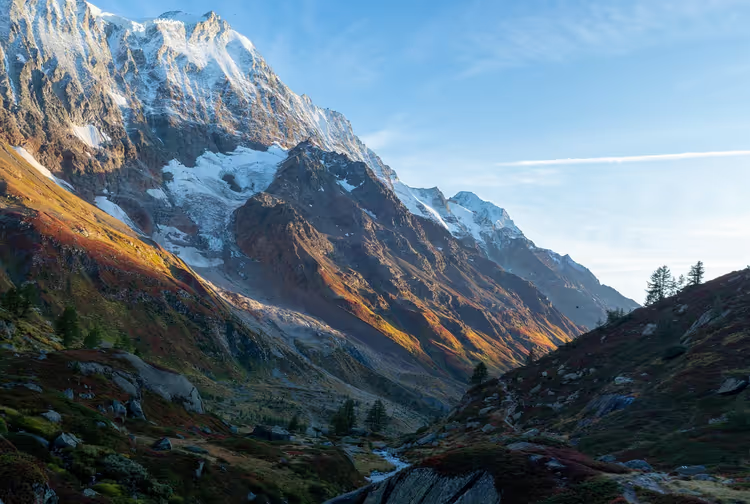
Autumn in the Alps is deceptive. It is still warm in the valley, while above 2000 meters the first snow already lies. Peaks of that height in autumn are often only climbed with crampons and an ice axe (according to the German Alpine Club (DAV)). An autumn hike differs from a summer one not in length, but in conditions: the day is shorter, slopes have crust, and shaded areas have wet leaves. Below in order: route planning, huts, snow and avalanches.
Route planning: what autumn changes
💡 In short:
- Check the altitude and slope condition before heading out: high peaks may require crampons and an ice axe.
- Look at the DAV mountain report and webcams from previous days.
- Start early and allow extra time for the return.
- Hut closing dates and conditions on routes: 09/2026, verified on the official DAV website.
When choosing a route, immediately assess whether it is suitable for autumn. Peaks above 2000 meters often require additional equipment: poles, lightweight crampons or an ice axe (according to the DAV guide to autumn hikes). Exact conditions for the coming weekend are described in the mountain report Bergbericht. Also check webcams and weather from previous days, they show where the snow line has moved.
The second factor: slope orientation. In autumn, stick to south-facing, sunlit slopes: snow does not last as long there, and icy sections thaw earlier. "Whoever wants to be safe stays on sunny trails and chooses lower peaks," says Stefan Winter of the DAV. That way you remove part of the risk before you even start.
Plan your time separately: an autumn day ends early, and after sunset the temperature drops quickly. Allow a reserve for the return and set a turnaround point at which you must turn back regardless of your goal.
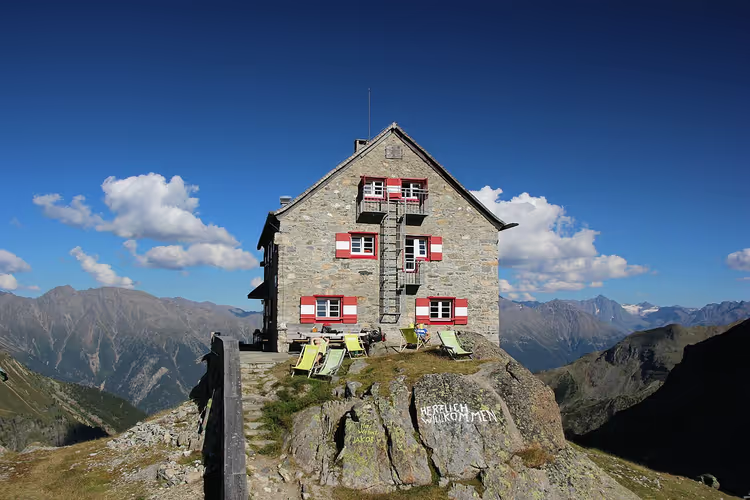
When DAV huts close in 2026
Autumn shows in the details: leaves turn yellow, the first snow falls in the high mountains. For the DAV mountain hut network, this is the signal to close the season. Dates vary: some huts close as early as October, others operate until November or year-round (as of: 09/2026, official DAV website). Plan your overnight stay in advance and check the dates on the specific hut's website.
 © Jobi98 · CC BY-SAPhoto: Jobi98, CC BY-SA (https://creativecommons.org/licenses/by-sa/4.0), Wikimedia Commons
Route length matters more in autumn than in summer. In October, daylight is on average 4.5 hours shorter than in July (according to DAV, verified 12.09.2026). After sunset it gets cold quickly, so a headlamp in your backpack is mandatory. Start early, choose a short route, and when in doubt, turn around earlier.
On the trail: ice, snow and wet leaves
Every autumn, accidents happen in the mountains because even experienced hikers underestimate seasonal hazards. In the valley on a sunny day it still feels like summer, and few people think that snow already lies up high.
Sometimes the opposite happens: it is warmer up high than in the valley. This phenomenon is called a temperature inversion. It is dangerous primarily on the descent: after sweating on a sunny summit, you enter a cold, shaded forest. There, wet leaves lie underfoot, slippery and cold.
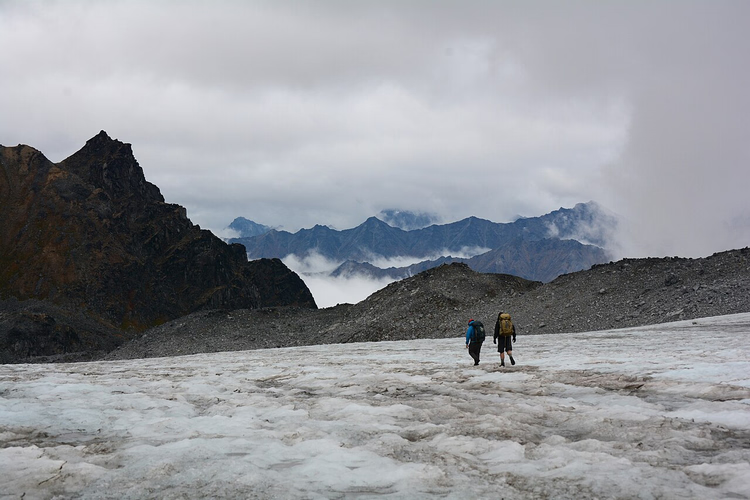
Besides wet leaves, snowfields and ice await on an autumn route. On hard, steep snow, a person accelerates to almost free-fall speed within a few meters, warns the DAV. The best route goes around snow and ice. If there is no safe way around, do not attempt a risky maneuver, turn around instead. On icy sections you need crampons, and on certain routes an ice axe as well. High boots with a stiff toe help kick steps and reduce the risk of twisting an ankle.
Snow hides the terrain: sharp rocks, holes and large boulders are invisible beneath it. Snow-covered karst and snow-buried shrubs are especially treacherous. Poles with wide baskets provide support and let you probe the ground. The edges of a snowfield are also dangerous: if the snow has softened, you sink in and can injure your shin.
When the ground is covered with snow, the trail disappears too. On large, flat snow-covered areas, orientation is especially difficult. Look for stone cairns, signs and markings, and use a GPS device. When in doubt, return downhill following your own tracks. Going further on guesswork is more dangerous than turning around.
Snowfields and assessing your strength
Large snowfields take a lot of energy. You constantly sink in, lift your foot high and break trail. Anyone who misjudges their fitness quickly exhausts themselves, and then mountain rescue has to be called. There are known cases where hikers became so exhausted that they could not even return along their own tracks.
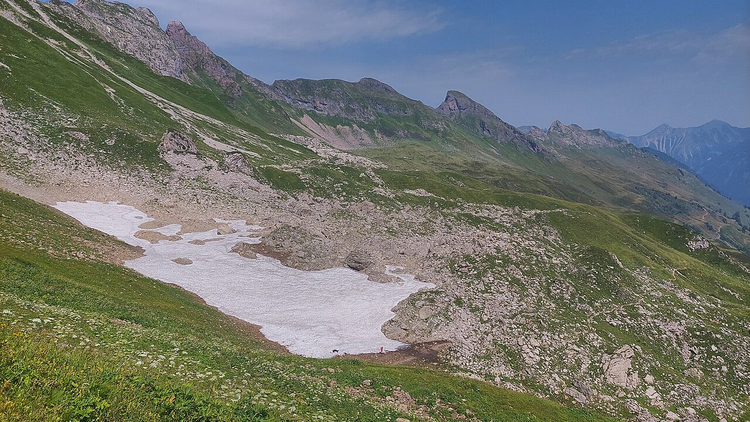
Snowshoes help: they keep you from sinking in and add confidence on snow. If you do not have them, honestly assess whether you and your group have enough strength to cross the field and return. A positive answer does not give you the right to take risks, it merely opens the route, while a negative answer means turning around.
How to cross snowfields
Before stepping onto a snowfield, check the top layer. Only softened crust allows you to kick a reliable step with the edge of your boot (according to the DAV guide to snowfields). If the first steps do not hold, turn around. On frozen and icy sections, you must use crampons, ideally together with an ice axe. Regular poles do not help there: they make stepping easier, but they do not hold you in a fall.
 © Paxson Woelber · CC BYPhoto: Paxson Woelber, CC BY (https://creativecommons.org/licenses/by/3.0), Wikimedia Commons
What should you do when sliding? Quickly roll onto your stomach and brace with your arms, that is how you brake on a slope. Put on gloves in advance, because even on seemingly soft snow, abrasions appear quickly.
Avalanches: a danger even in autumn
Where snow lies, an avalanche is possible, including in autumn. The avalanche bulletin is only issued when there is sufficient snow cover, so you have to assess the situation yourself. Avalanches release on slopes steeper than 30 degrees, most often between 30 and 50 degrees (as of: 09/2026, SLF). Even a small snowfield on a steep slope should not be considered safe.
How do you judge steepness by eye? The test is simple: if you cannot walk straight up and are forced to switchback, the slope is considered steep. Before heading out, check whether the avalanche bulletin has already been issued. Until it is available, avoid snow on steep slopes or turn around.
The right equipment for autumn hikes
In autumn, a few items are added to the summer kit. Pack in your backpack:
- a headlamp;
- spare clothing: a change of shirt, gloves, a hat, a shell layer, a warm jacket, gaiters;
- depending on conditions: crampons or an ice axe;
- stiff mountain boots with a toe for kicking steps, this will not work in approach shoes;
- if needed, poles with wide baskets.
Where to find routes for autumn
A good autumn route is sunny, not too high and varied. On the alpenvereinaktiv.com platform, the DAV has put together a selection, including two multi-day hikes. There are also routes for the lower mountains if the high mountains are already closed by snow.
⁉️🤔 Frequently asked questions
Do I need crampons if there is little snow on the route?
Look at the slope. On a south-facing, sunlit slope, snow has often already melted, and crampons are not needed. But in the shade and at high altitude, lightweight crampons and an ice axe remain essential safety gear. Before heading out, check the mountain report and webcams to understand exactly where snow lies.
When do DAV huts close in autumn?
The dates depend on the specific hut, check its website. In the off-season, some places only have the winter room open for emergencies.
Are avalanches dangerous in October?
Yes, and they are often underestimated. The avalanche bulletin is only issued when there is sufficient snow cover, so in early autumn you assess the situation yourself. Look at the steepness: steep slopes are already avalanche-prone. Large snowfields on such slopes should be avoided.
What should I do if I slip on a snowfield?
Brake immediately, bracing with your arms, legs and ice axe. If you manage to slide down to softer snow, continue by going around the field.
How do I know if a slope is too steep?
If you are switchbacking instead of climbing straight up, the slope is steep. Without an avalanche bulletin, snow on such a slope is best avoided.
In short: what to take on an autumn hike
An autumn hike benefits from an early start, south-facing slopes and a short route. The matrix is simple:
- For any route: take a headlamp and spare clothing.
- If you have snow and ice on the way: take crampons and an ice axe.
- If you have large snowfields: take snowshoes.
Before every outing, check the DAV mountain report.

A small editorial team writing guides for independent travel. We travel ourselves, but we haven’t been everywhere, so we check prices, opening hours and how to get there against official sources.