
















San Marino in one day: towers of Titano, cable car and shopping
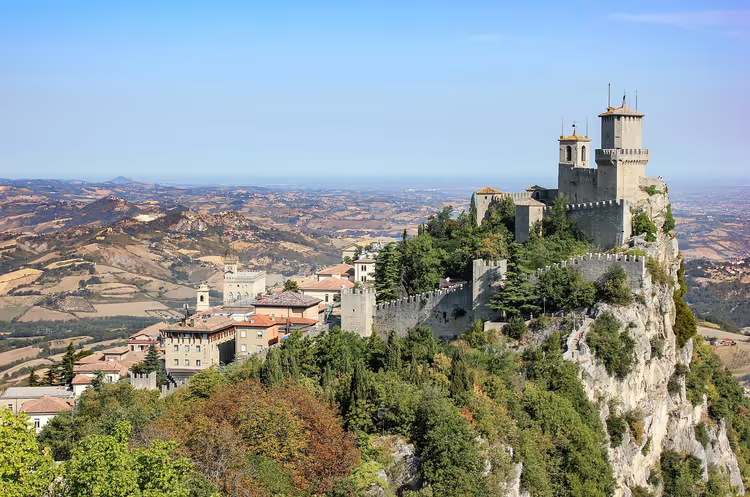
Many people travel to Rimini for the sea and drive right past San Marino. Yet it is one of the smallest countries in the world: the entire state fits into an area of about 61 sq km (as of 09/2026, official tourism portal). At the top of Mount Titano, three medieval towers, a stone old town, and the best viewpoints in the region have been preserved.
Getting here is easier than it seems. A bus runs from Rimini, and the final climb to the historic center takes just a couple of minutes by cable car. Below we have put together a route through the main sights of San Marino, looked at what to try from the local cuisine, and explained why it is worth stopping here for shopping.
Ad: this article contains affiliate links, we earn a commission if you book through them, at no extra cost to you.
San Marino in one day: where to start
💡 In short:
- The cable car from Borgo Maggiore takes you up to the historic center in a couple of minutes; see the schedule and prices in the section on Borgo Maggiore (AASS schedule).
- A combined ticket for the state museums gives access to the towers and museums of the old town; its contents are described in the section on Museo di Stato (State Museums).
- The route through the three towers takes about three hours and runs just over a kilometer along the ridge of Titano (official towers website).
- Prices and opening hours: 09/2026, checked on the official towers website.
One day here is more than enough. In the morning you go up by cable car, walk through the old town from Porta San Francesco to Palazzo Pubblico, and finish at the three towers on the summit. In the evening there is still time for dinner and shopping.
Five facts about San Marino
The country's population is about 33,000 people (official portal).
San Marino is not part of the European Union, but the border with Italy is open here, and the euro is in circulation (country tourism website).
There is no airport of its own: the nearest air hubs are in Rimini and Bologna (Republic of San Marino website).
San Marino mints its own designs on euro coins, which numismatists collect (Republic portal).
San Marino is considered the oldest republic in the world, with its founding dated to 301 AD (tourism portal).
How this small state came to be
According to legend, in 301 AD a stonemason named Marino fled persecution by the Roman emperor into the mountains and built a cell on the top of Monte Titano (official tourism portal). The fame of the holy man grew, pilgrims began coming to him, and the community of free stonemasons gradually expanded.
In the early Middle Ages, a monastery was founded here, independent of both the emperor and the pope. By 855, the settlement had gained the status of a republic (country portal). Since then, the state has been led by two captains regent, elected every six months. The republic is divided into nine castle towns, and almost every one has its own ancient fortress.
What to see in San Marino
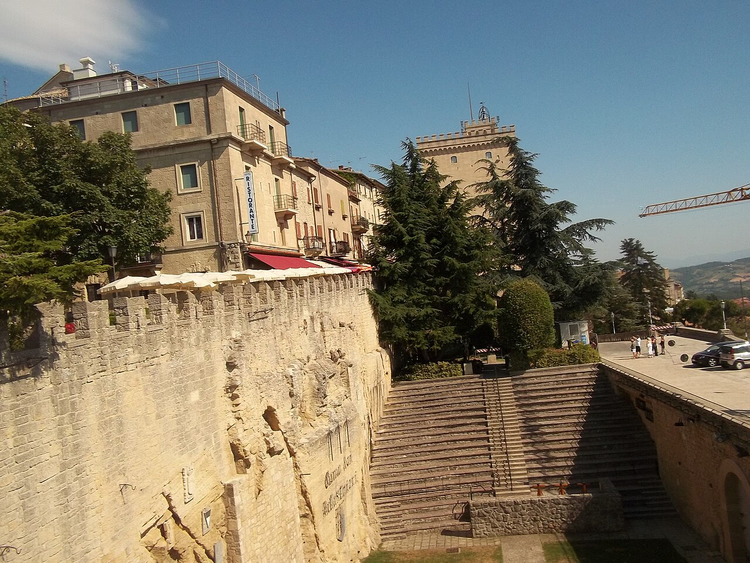
Fortress walls, stone architecture, and panoramas from the cliffs: this is the main reason people come here. The historic center is small, and you can easily walk through it in half a day. Only a few thousand people live in the capital itself, but in summer the streets fill with tourists from all over Europe.
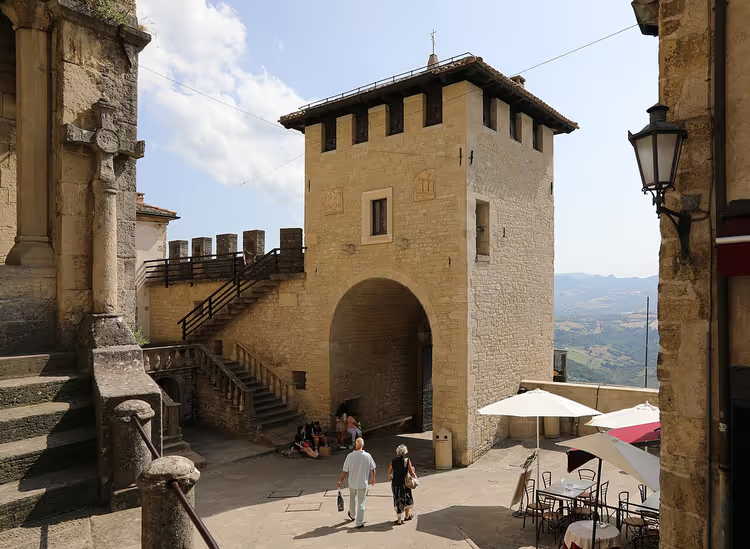
Porta San Francesco
The San Francesco gate is the first entrance to the city. It was built during the Renaissance along with another ring of the fortress wall. From here you enter the very heart of the old town, where the main tourist street begins.
 © Francesco Bini · CC BY-SAPhoto: Francesco Bini, CC BY-SA (https://creativecommons.org/licenses/by-sa/4.0), Wikimedia Commons
Chiesa di San Francesco
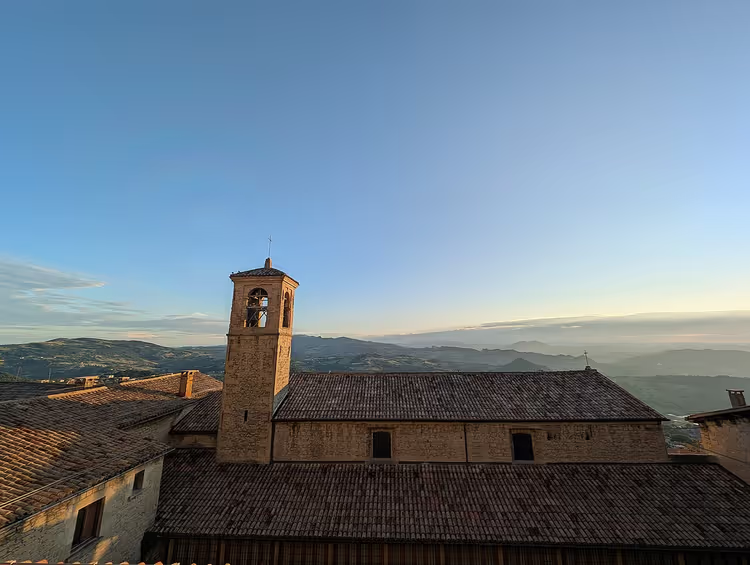
Nearby stands Chiesa di San Francesco, the oldest surviving church in the country. The Museo San Francesco operates alongside it, and admission is included in the combined ticket for the state museums. Stop by if you are interested in religious art and painting.
 © Андрей Романенко · CC BY-SAPhoto: Андрей Романенко, CC BY-SA (https://creativecommons.org/licenses/by-sa/4.0), Wikimedia Commons
Museo di stato and museo della tortura
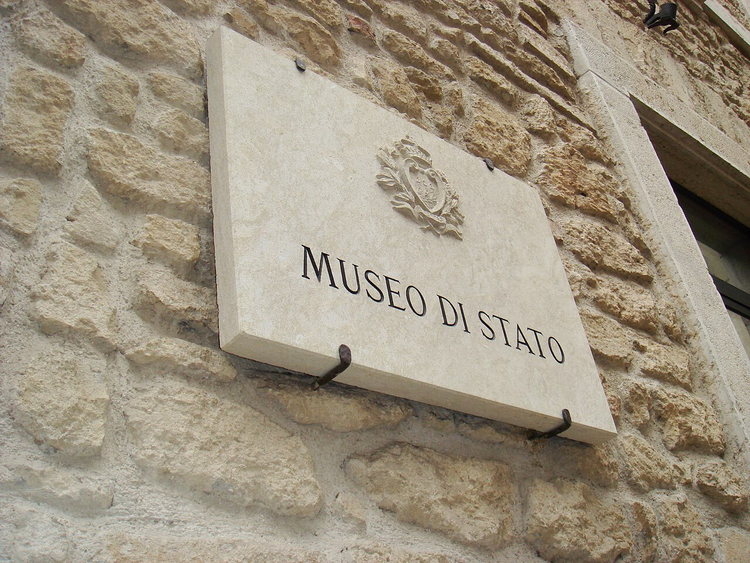
The State Museum houses archaeological finds, ancient coins, weapons, and paintings connected with the history of the republic. The ticket here also includes the First and Second Towers, Palazzo Pubblico, and Museo San Francesco (official museum website).
 © Stefano Bolognini · CC BYPhoto: Stefano Bolognini, CC BY, Wikimedia Commons
The neighboring building houses the Museo di Criminologia Medievale e della Tortura. Its collection includes hundreds of exhibits, some of which were actually used by the Inquisition. The exhibition is intended for an adult audience; it is not worth going in with children.
Cava dei Balestrieri
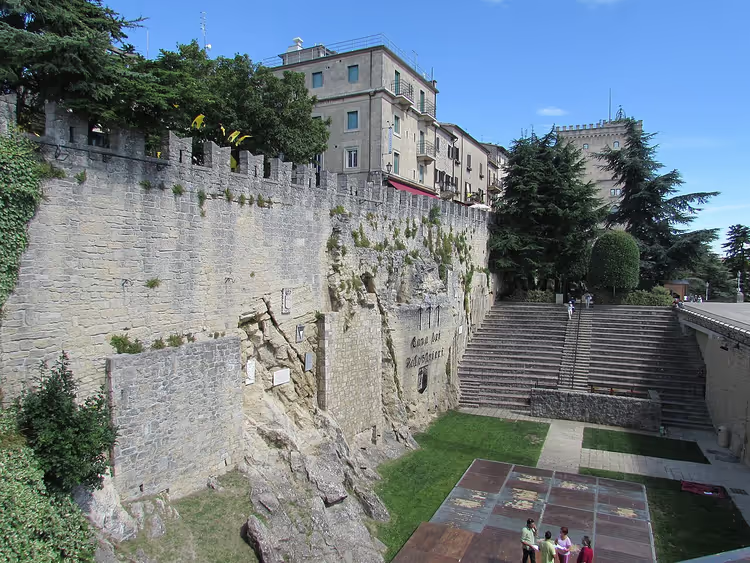
The Cava dei Balestrieri quarry was opened when stone was needed for the restoration of Palazzo Pubblico. Today the republic's crossbowmen train at the bottom of the quarry and hold their competitions there. Part of the Medieval Days program also takes place here.
 © Cezar Suceveanu · CC BY-SAPhoto: Cezar Suceveanu, CC BY-SA (https://creativecommons.org/licenses/by-sa/4.0), Wikimedia Commons
Palazzo Pubblico
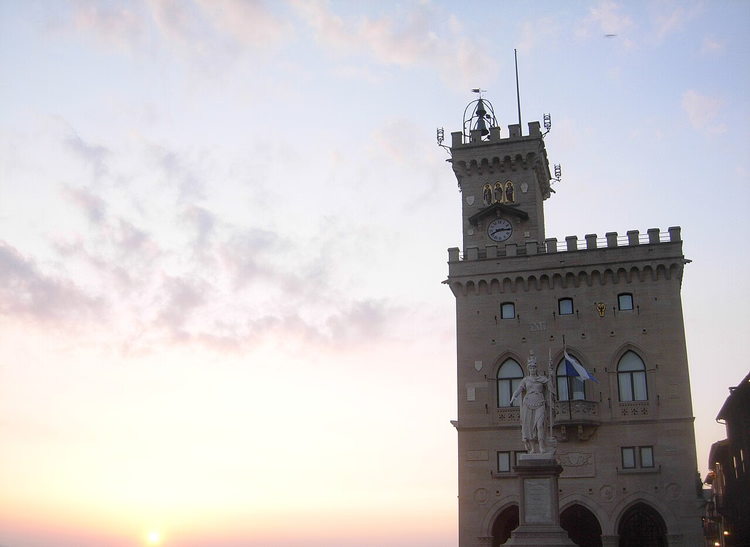
Palazzo Pubblico, the neo-Gothic town hall, stands on the main square of the old town. The facade displays the coats of arms of the republic and its communes. Twice a year, in spring and autumn, the names of the new Captains Regent are announced from the balcony. The ceremony is held in medieval style, and anyone can come and watch.
 © Acediscovery · CC BYPhoto: Acediscovery, CC BY (https://creativecommons.org/licenses/by/4.0), Wikimedia Commons
Basilica di San Marino
Basilica di San Marino houses the relics of the republic's founder. The first church stood on this site as early as the early Middle Ages, and the current neoclassical temple was built in the 19th century. Entry is free, and the relics of Saint Marinus are considered the country's main relic.
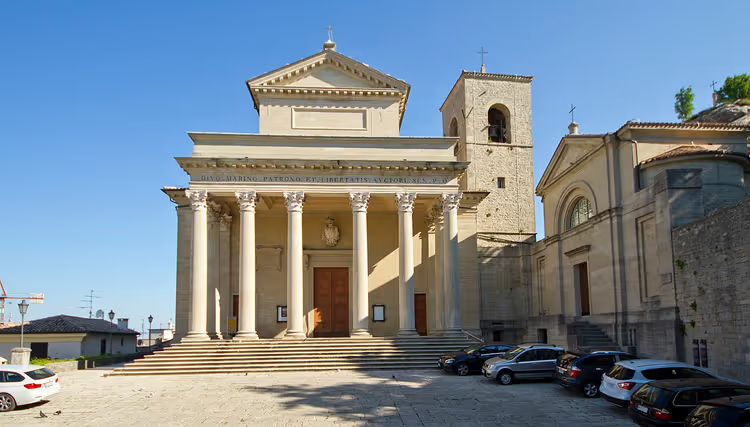 © trolvag · CC BY-SAPhoto: trolvag, CC BY-SA (https://creativecommons.org/licenses/by-sa/3.0), Wikimedia Commons
The three towers of Titano: Guaita, Cesta and Montale
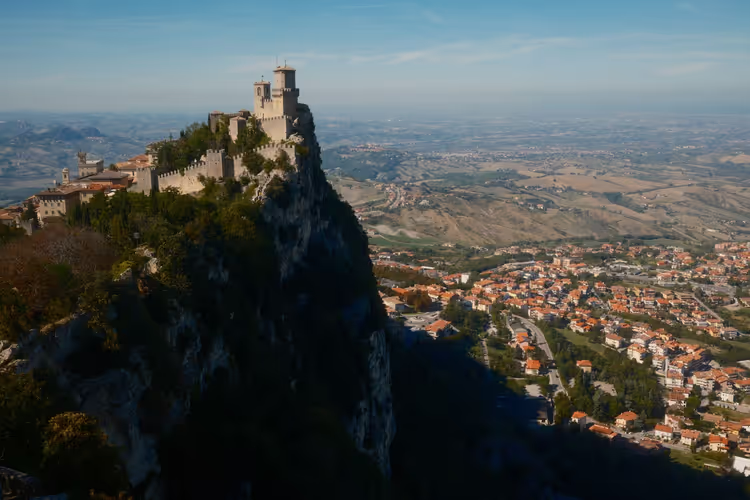
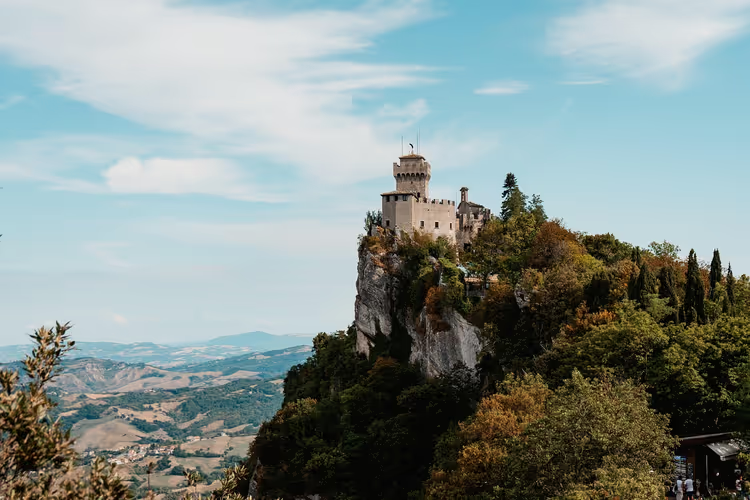
The three towers on the summit of Titano have become the symbol of San Marino and appear on the country's coat of arms. They once served as a fortress and a prison. Today their walls have viewing platforms with views over the entire republic and the expanses of Italy.
 © Terragio67 · CC BY-SAPhoto: Terragio67, CC BY-SA (https://creativecommons.org/licenses/by-sa/4.0), Wikimedia Commons
Tower | Built | Elevation | What's inside |
|---|---|---|---|
Guaita (First) | 11th century | 738 m | stone walkways and a chapel |
Cesta (Second) | 13th century | 756 m | Museo delle Armi Antiche |
Montale (Third) | 14th century | 725 m | exterior only |
As of 09/2026, official towers website.
Guaita, the oldest of the three, stands on a rock with no foundation. Inside you'll see old cells and the chapel of Saint Barbara. Cesta rises on the second peak, and since the mid-20th century it has housed the Museo delle Armi Antiche with a collection of edged weapons and armor. Montale, the smallest and most secluded, is open only from the outside, but it's the one most often photographed.
The path between the towers follows the ridge and takes about three hours with sightseeing. From Piazza della Libertà to Guaita you'll climb in eight minutes, but wear comfortable shoes: the ascents are stone and steep. The Witches' Path between Guaita and Cesta is narrow in places, and you should hold on to the railings here.
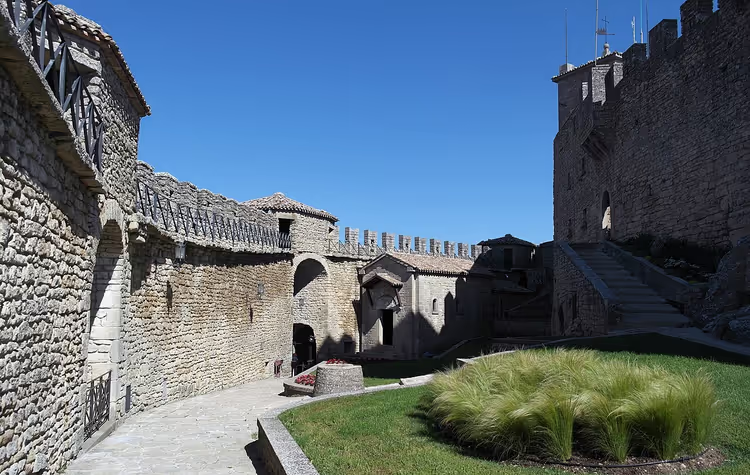 © trolvag · CC BY-SAPhoto: trolvag, CC BY-SA (https://creativecommons.org/licenses/by-sa/3.0), Wikimedia Commons
Cable car and Borgo Maggiore
After the towers, take the cable car down to the commune of Borgo Maggiore. Cabins run every 15 minutes from 07:45, a one-way ticket costs €4, round trip €7, and a day pass costs €10 (as of 09/2026, AASS fares). The ride takes a couple of minutes, and the views of Titano will stay with you for a long time.
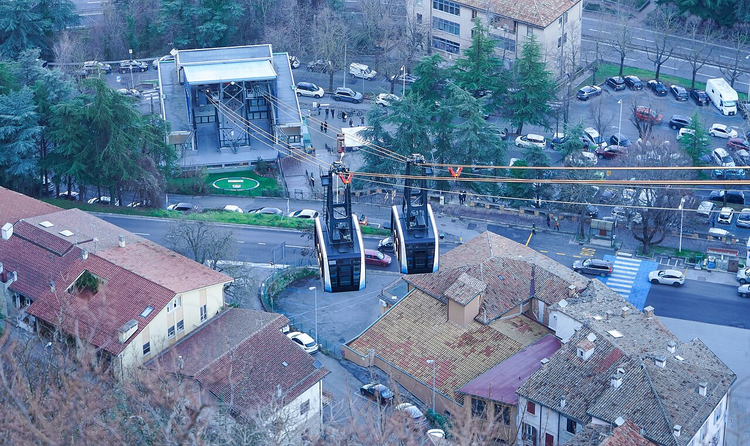 © NikonZ7II · CC BY-SAPhoto: NikonZ7II, CC BY-SA (https://creativecommons.org/licenses/by-sa/4.0), Wikimedia Commons
Montegiardino
Another quiet corner of the republic: Montegiardino, the smallest town-commune in San Marino. Stop by here if you want to see San Marino without the tourist crowds.
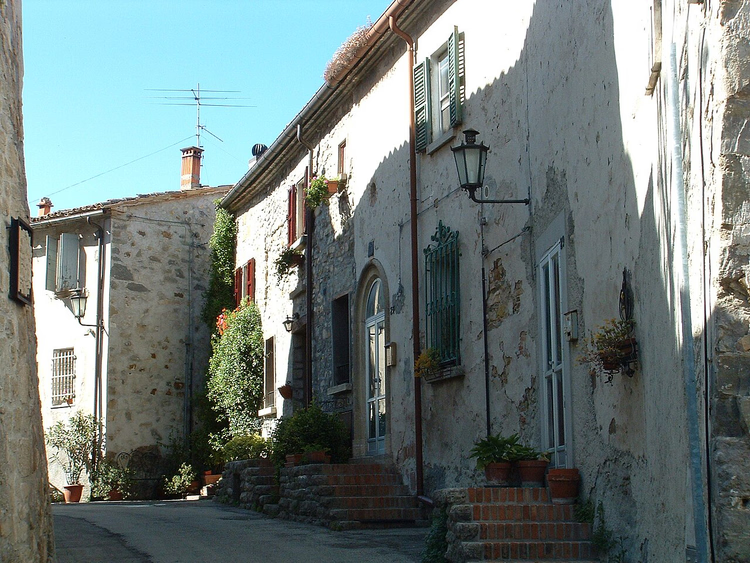 © Eponimm · CC BY-SAPhoto: Eponimm, CC BY-SA (https://creativecommons.org/licenses/by-sa/3.0), Wikimedia Commons
Medieval Days
To feel the spirit of the old republic, come in late July for the "Medieval Days" (event calendar). For three days the city turns into a film set: locals put on historical costumes, medieval music plays in the streets, and crossbowmen perform in the squares. At the market, vendors sell goods made using old techniques and teach you how to make them yourself.
 © EvelinaRibarova · CC BY-SAPhoto: EvelinaRibarova, CC BY-SA (https://creativecommons.org/licenses/by-sa/4.0), Wikimedia Commons
The old town is compact but packed with sights: in one walk you can cover the gates, museums, town hall, basilica, and three towers. Plan your visit for the morning, before it gets hot and the tour groups arrive. Now let's move on to the local cuisine.
Tours and tickets in San Marino
Guided tours, skip-the-line tickets and activities — most offers can be cancelled free of charge.
See offers on GetYourGuideThe widget loads once you give your consent.
What to eat in San Marino
San Marino's cuisine continues the traditions of Italy's Emilia-Romagna. Restaurants serve pasta, lasagna, pizza, prosciutto, and local cheeses. But if you see Faggioli con le cotiche on the menu, a bean soup with bacon, order it without hesitation: it's a typical Sammarinese dish.
For dessert, look for Tre Monti, a wafer cake with chocolate or hazelnut cream. Prices at local restaurants are usually lower than in Italy, and there's no additional service charge here. It's best to book a table for dinner in high season in advance.
 © Daniel Ventura · CC BY-SAPhoto: Daniel Ventura, CC BY-SA (https://creativecommons.org/licenses/by-sa/3.0), Wikimedia Commons
Shopping: a low-tax zone
San Marino is not a duty-free zone, but the purchase tax here is lower, so electronics, perfume, and leather goods are cheaper than in neighboring Italy. People come here for shoes, bags, and jackets, as well as fragrances, sunglasses, and jewelry.
The old town has many small shops and boutiques, so you can combine shopping with a stroll. For major purchases, head to Azzurro Shopping Center, the republic's largest mall. Check the warranty and receipt: local shops operate under European rules.
⁉️🤔 Frequently asked questions
How much does it cost to climb the towers of San Marino?
Climbing the First and Second Towers is included in the combined state museums ticket, which is described in the section on Museo di Stato. The Third Tower, Montale, is only open from the outside and does not allow visitors inside. Check current prices and seasonal opening hours on the state museums website and the three towers website.
How do I get to San Marino from Rimini?
A bus runs from Rimini to San Marino, and the trip takes about an hour. From there, you can take the cable car from Borgo Maggiore or drive up the winding roads. Timetables and cable car prices are listed in the section on Borgo Maggiore (AASS fare information).
Is one day enough for San Marino?
Yes, one day is enough for most travelers. In the morning you explore the old town and museums, in the afternoon you climb to the three towers, and in the evening you have dinner and browse the shops. If you want to take your time, stay overnight in Borgo Maggiore or in the capital.
When is the best time to visit San Marino?
May, June, and September are the best months for a visit. In summer the old town is hot and crowded, but all viewpoints are open. In late July people come for the "Medieval Days" festival, and in winter there are noticeably fewer tourists.
What should I bring back from San Marino?
From San Marino people bring leather shoes and bags, perfume, and euro coins with local designs. The purchase tax in the republic is lower, so some goods cost less than in Italy. Souvenirs featuring the towers are sold in every shop in the old town.
In short: what to book
One day in San Marino is enough to see the old town, climb the three towers, and try the local cuisine. The cable car ride, the combined museums ticket, and dinner in the old town add up to a full but unhurried itinerary.
If you have just one day: take the cable car in the morning and get the combined museums ticket. If you're staying overnight: save the evening for Borgo Maggiore and dinner in the capital. Excursions and tours around the region are easy to browse on GetYourGuide.

A small editorial team writing guides for independent travel. We travel ourselves, but we haven’t been everywhere, so we check prices, opening hours and how to get there against official sources.