
















Tokaj and Nyiregyhaza: a wine route through eastern Hungary
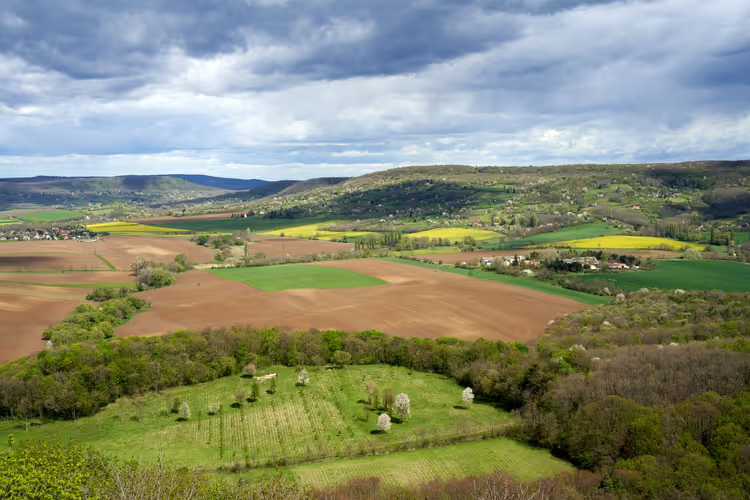
Hungary is known for more than just Budapest. In the northeast of the country lies Tokaj, a wine region that was added to the UNESCO World Heritage List in 2002 (as of 09/2026, UNESCO). People come here for sweet white wines and the underground cellars that run beneath the town.
Nearby, just half an hour away, is Nyíregyháza. Tourists rarely stop in this city, even though it has an old town center, a large zoo, and a thermal aquapark. The train from Budapest makes a route through both cities realistic in two days without rushing, and you won't need a car.
Ad: this article contains affiliate links, we earn a commission if you book through them, at no extra cost to you.
Tokaj and Nyíregyháza: what you need to know
💡 In short:
- From Budapest, take a MÁV train from Keleti station; the journey takes three to four hours (according to Hungarian railways, 09/2026).
- In Tokaj, head straight from the station to the wine cellars, and after lunch take a walk through the vineyards.
- Get to Nyíregyháza by train in twenty to forty minutes and stay overnight in the center.
- Prices and opening hours: 09/2026, verified on the official website
The plan is simple: first the wine capital of Hungary, then a quiet city with a zoo and a thermal resort. Both points are connected by rail, so it's easy to check tickets and schedules in advance.
How to get to Tokaj
The most convenient way to reach Tokaj is by train. Trains depart from two Budapest stations, Keleti and Nyugati, and run to Tokaj station several times a day. The journey takes from three hours (according to the national operator, 09/2026).
Buy your ticket in advance on the carrier's website, where you can also see the current price and schedule.
The cost depends on the train and the day of the week. Morning departures are more convenient because they arrive in Tokaj by lunchtime and leave you half a day for the cellars. Check the schedule the day before: some trains run only on weekdays.
Alternatives: bus and river
In theory, there are alternatives to the train, but in practice they barely work. The largest national bus carrier, Volanbusz, does not sell tickets to Tokaj from Budapest (according to the carrier, 09/2026). There is also no regular service on the Tisza River: river excursions are available only as part of specific programs.
So don't waste a day looking for a bus. The train remains the most predictable option, and the schedule is easy to check on the websites of the carrier and railways.
Tokaj cellars
From the station to the wine cellars in the center it's about a kilometer on foot. Many cellars are open to tourists. Don't arrive too early: most owners unlock their doors closer to noon.
The people of Tokaj have been growing grapes for many generations. The cellars here appeared several centuries ago, and the buildings above them have remained single-story. Locals jokingly call the town "multi-story," except the floors go not up but down. Tokaj's underground passages stretch for dozens of kilometers.
Cellar owners don't just sell wine. They explain how one harvest year differs from another and why sweet wines don't come out every season. Inside, you'll see century-old barrels and walls covered with soft dark-gray mold. It feeds on the alcohol that evaporates from the barrels and in return maintains a special microclimate in the cellar. That is what gives Tokaj wines their characteristic aroma.
If the owner lets you into the back room, take a close look at the masonry and ask how old that wing is. There is little light inside, so keep your phone's flashlight handy. After exploring the cellars, head back to the square: the vineyard slopes await you next.
Tasting: how to become a connoisseur
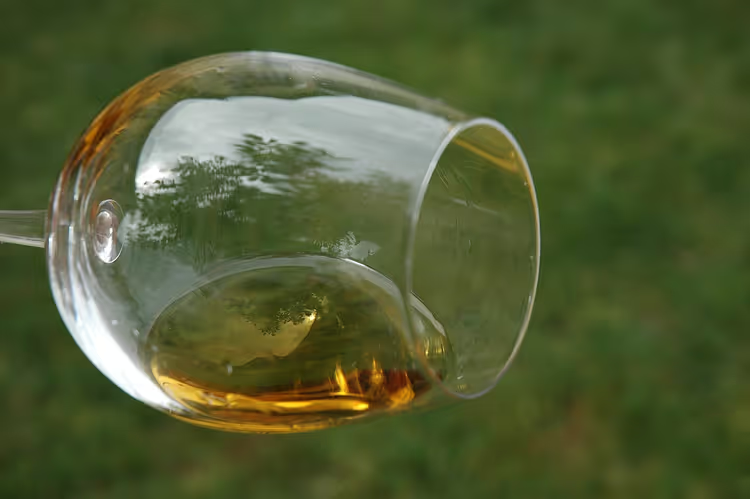
Tokaj wines are almost always white and often sweet or semi-sweet. This style surprises those accustomed to dry wines from Italy and France, but the taste is instantly recognizable: raisins, honey, a touch of spice. The secret lies in grapes that are picked at peak ripeness, sometimes already sun-dried on the vine.
A separate story here is aszú, berries affected by "noble rot." This refers to the botrytis fungus, which dries out the clusters and concentrates the sugar. The region's most expensive sweet wines are made from such grapes, and it is these wines that made Tokaj famous. Ask the winemaker to try different years: the same variety in a hot and a cool season produces different flavors.
You can taste wine right in the cellars in the center. The wineries stand next to each other, so it's realistic to visit several in one evening.
 © clubvino · CC BYPhoto: clubvino, CC BY (https://creativecommons.org/licenses/by/2.0), Wikimedia Commons
A glass costs around a couple of euros, and instead of selling, the owners often put on a short free tasting. A good sign is locals sitting at the entrance: it means the wine here is loved not only by tourists. The main local grape is called Furmint, and it is used to make both dry and sweet versions. To cover more ground on a short trip, book wine tours and tastings in Tokaj on GetYourGuide.
Tokaj vineyards
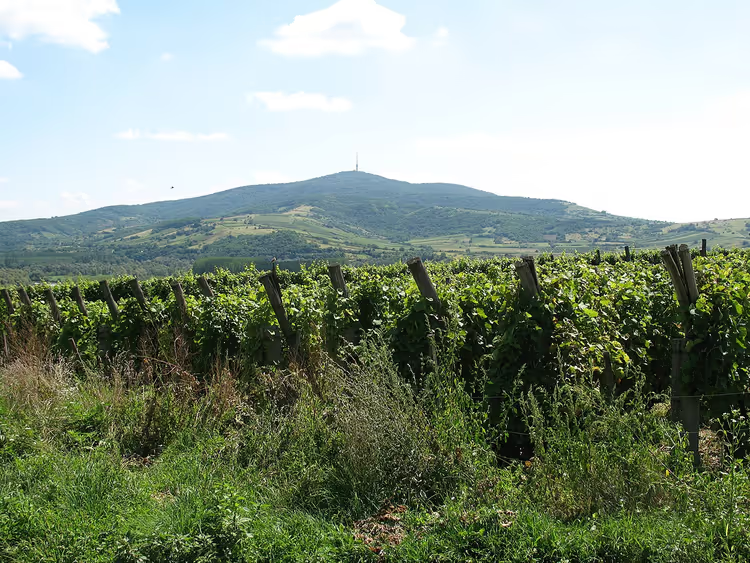
After the tastings, it is worth seeing where the grapes grow. The vineyards cover thousands of hectares on gentle slopes, and access to the plantations is free. The workers are used to tourists and barely pay you any attention.
 © JezW · CC BY-SAPhoto: JezW, CC BY-SA (https://creativecommons.org/licenses/by-sa/3.0), Wikimedia Commons
This is where aszú is born. The grapes are left on the vine until late autumn and wait for noble rot to touch them. Tokaj's fame came from its late-harvest wines, and wine lovers from different countries come here for them. Just walk between the rows and ask about the harvest: locals answer willingly.
The region produces millions of liters of wine every year. Part of that volume goes to neighboring EU countries, and part is bought up by tourists right in the cellars.
What to see in Tokaj
Tokaj has been known since ancient times, but wars have hardly spared its architecture. Most of the old buildings have disappeared, so an hour or two is enough to see the center.
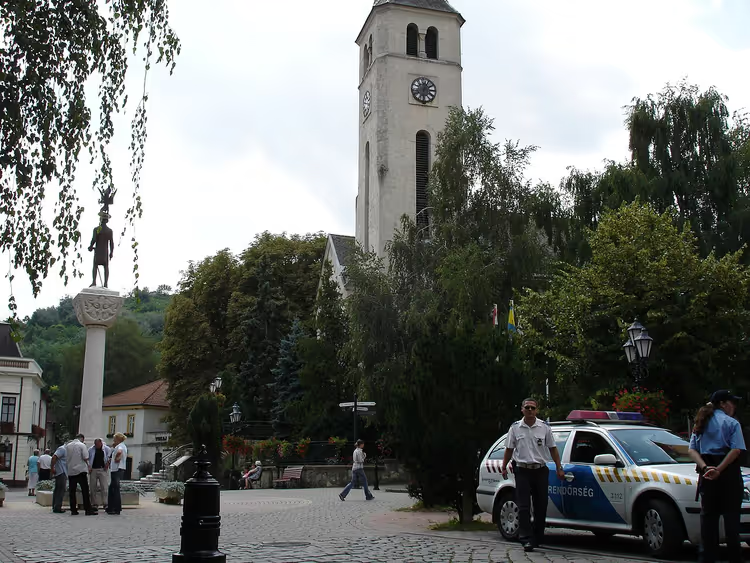
Among the buildings, the Great Synagogue of Tokaj stands out. It is a reminder of the large Jewish community that lived for centuries in northeastern Hungary.
 © Kressl · CC BY-SAPhoto: Kressl, CC BY-SA (https://creativecommons.org/licenses/by-sa/3.0), Wikimedia Commons
Nearby stands the early 20th-century Catholic Church of the Sacred Heart of Jesus. Fans of ruins will enjoy the climb to the remains of Tokaj Castle, and you can finish your walk at the statue of Bacchus.
Next stop: Nyíregyháza
Nyíregyháza lies in northeastern Hungary, not far from the border with Ukraine. The proximity to the neighboring country is noticeable both in the city's appearance and in its cuisine. Nyíregyháza hardly appears in tourist brochures: few people travel to Hungary specifically for it.
How to get to Nyíregyháza
Trains from Tokaj to Nyíregyháza run almost every hour. The journey takes twenty to forty minutes (according to train schedules, 09/2026), and a ticket costs about two euros. You can buy it at the station before departure, and for trips on distant dates it is convenient to book in advance: train tickets across Hungary on Trip.com.
From Budapest you can get here from both Nyugati and Keleti: from one station the train will first take you to Tokaj, from the other first to Nyíregyháza.
Nyíregyháza: impression of the city
Nyíregyháza looks like a calm city where everything you need is gathered in the center. Getting around on foot is convenient: the sidewalks are clean, traffic is quiet, and the sights are just a few minutes' walk apart. The atmosphere is a reminder that the region long lay at the crossroads of cultures.
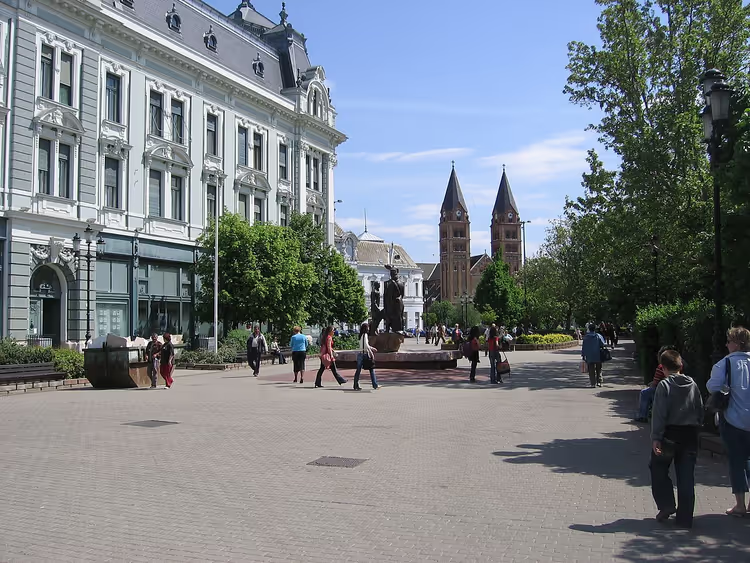
The city's appearance has something of Austrian neatness and something Hungarian. History and modernity go side by side here: old houses sit next to new entertainment venues. In half a day you can easily walk around the center without getting tired.
Kossuth Square
Nyíregyháza's main sights are gathered on one compact square in the center. The locals did not like walking far, so they placed the town hall, the main churches, and a large hotel next to each other.
On Kossuth Square stand the town hall, the Cathedral of Our Lady of the Hungarians, and the Korona hotel. If you get tired of walking, sit down in a café: they serve dishes of eastern Hungarian cuisine here.
City hall
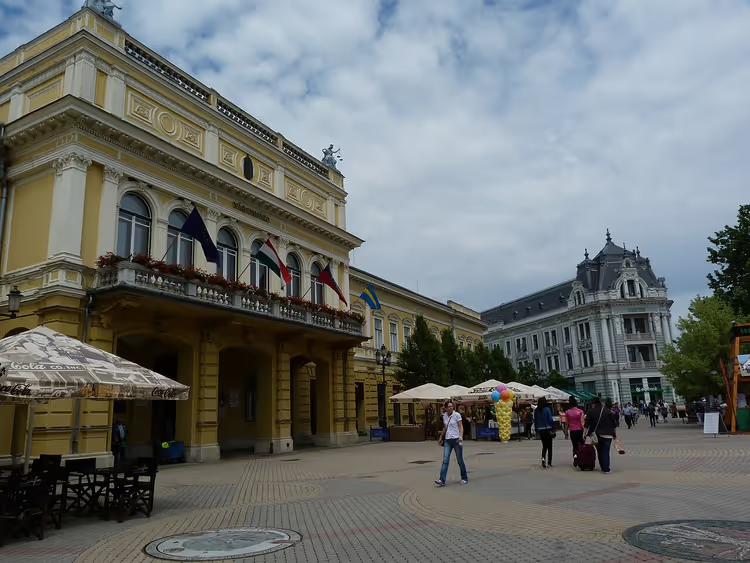
The town hall appeared in Nyíregyháza in the mid-19th century. Its yellow facade is visible from afar, so you are unlikely to walk past it.
 © Derzsi Elekes Andor · CC BY-SAPhoto: Derzsi Elekes Andor, CC BY-SA (https://creativecommons.org/licenses/by-sa/3.0), Wikimedia Commons
Later the building was rebuilt by architect Ignác Alpár, a master of eclecticism. He also designed Budapest's Vajdahunyad Castle. Next to the town hall there is a café where locals relax with ice cream in summer and mulled wine in winter.
Cathedral of our lady of Hungary
Across from the town hall stands the city's most prominent landmark, the Cathedral of our lady of Hungary.
The church was built in the Romanesque style, which was unusual for the early 20th century. Every quarter hour the clock chimes, and the sound carries throughout the center. If you're lucky, you'll catch an organ concert.
St. Nicholas Cathedral
A five-minute walk from Kossuth Square is St. Nicholas Cathedral, the city's main diocesan church.
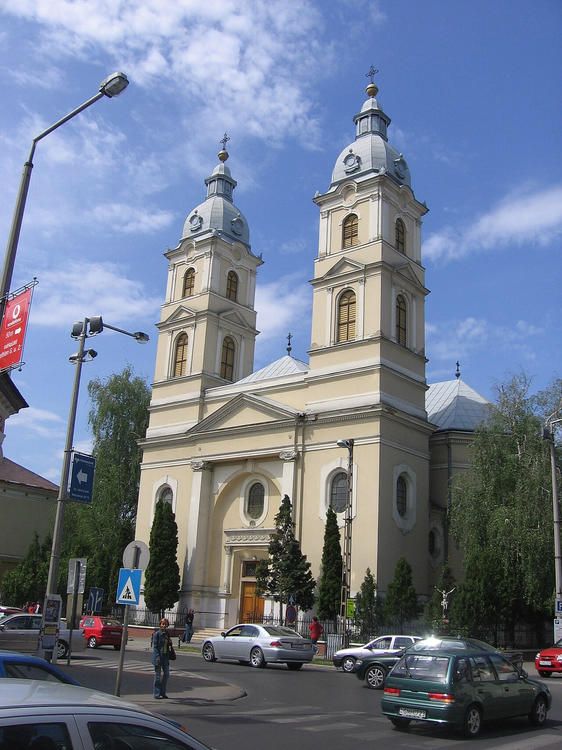
Built in the late 19th century, it combines several styles at once. The church belongs to a Greek Catholic parish: they recognize the Pope's authority but conduct services according to the Byzantine rite. Similar communities exist in other Eastern European countries.
Nyíregyháza Zoo
Nyíregyháza Zoo (Sóstó Zoo) surprises even seasoned travelers. It's considered one of the largest in Hungary, and by European standards it's a notable institution. Plan to spend at least three hours here.
You can get there by city bus: the park is located five kilometers from the center, in a green zone. A significant part of the grounds lies in a real oak forest, so the animals live in nearly natural conditions. Here you'll see spectacled bears, wild yaks, orangutans, Humboldt penguins, Andean condors, and a white lion.
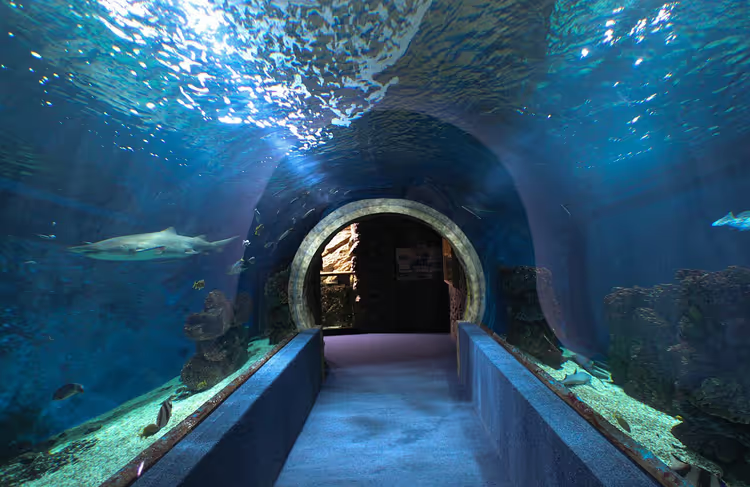
The marine zone is of particular interest. Several times a week, staff put on a tiger shark feeding show, and the panoramic aquarium lets you see the predator up close. In total, the park is home to more than five hundred animal species.
The zoo is open daily from 9 am to 6 pm, and pavilions close half an hour before the end (as of 09/2026, park page).
Tickets and hours in Nyíregyháza:
Place | Adult ticket | Hours |
|---|---|---|
Nyíregyháza Zoo | 8,000 forints, child 5,600 forints (as of 09/2026, website) | daily 9-18 |
Aquarius Water Park | 7,600 forints on weekdays, 7,900 on weekends (as of 09/2026, website) | seasonal, check the website |
Aquarius Water Park
For a relaxing break, the Aquarius thermal water park is a good choice. It runs on water from local thermal springs, which Nyíregyháza is just as famous for as Budapest.
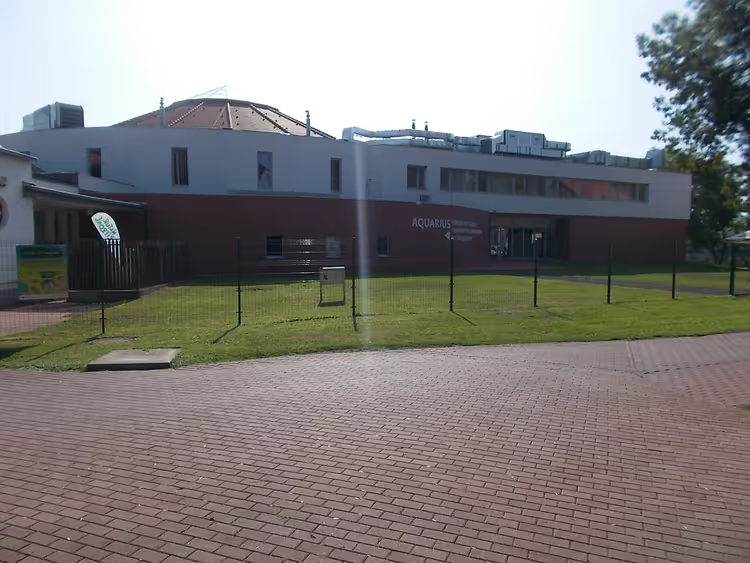 © Globetrotter19 · CC BY-SAPhoto: Globetrotter19, CC BY-SA (https://creativecommons.org/licenses/by-sa/3.0), Wikimedia Commons
Inside you'll find water slides, indoor and outdoor pools, saunas, and relaxation areas. The place is especially convenient for families with children: they have dedicated sections and discounts. Check the resort's website for exact hours: in the off-season, some pools are closed.
What to do in the evening
In the evening, it's worth leaving the main square and heading deeper into the city. For atmosphere, skip the cafés by the town hall and the hotel restaurant, and go to local spots called "kocsma."
A kocsma is an authentic Hungarian pub. People come here not to eat, but to have a drink and talk. The food and beer selection are modest, but the atmosphere is lively and prices are noticeably lower than tourist places: a glass of beer costs around a couple of euros. Locals value these places for unhurried conversation, so don't be surprised if someone joins your table.
Ask locals about places rather than searching online. A search for "kocsma" will return a long list, but the best kocsma will be recommended by a shopkeeper or a taxi driver. Just ask where they go themselves.
Getting around the city in the evening is safe, and public transport runs until late. If you're staying in the center, you can walk back to your hotel.
Tours and tickets
Guided tours, skip-the-line tickets and activities — most offers can be cancelled free of charge.
See offers on GetYourGuideThe widget loads once you give your consent.
⁉️🤔 Frequently asked questions
How do I get from Budapest to Tokaj?
MÁV trains depart from Keleti and Nyugati stations several times a day, and the journey takes three hours or more. Buy tickets in advance on the carrier's website. From the station to the center of Tokaj and the wine cellars it's about a kilometer on foot.
How much does a wine tasting cost in Tokaj?
A glass of wine in a cellar costs around a couple of euros, so a tasting won't break the bank. Many owners, instead of selling a single glass, offer a short free session if you want to try several varieties at once.
How much do tickets to the zoo and water park cost?
An adult ticket to the zoo costs 8,000 forints, a child ticket costs 5,600 forints, and it is open until 6 pm (as of 09/2026, zoo official website). A combined ticket to the Aquarius water park costs 7,600 forints on weekdays and 7,900 on weekends (as of 09/2026, official website). Check prices on the official websites before your trip.
How many days do you need for Tokaj and Nyíregyháza?
One day is enough for Tokaj: wine cellars, tastings, and a short walk around the center. Nyíregyháza deserves a second day, because the zoo and the water park each take several hours on their own. If you are short on time, stay overnight in Nyíregyháza and return to Budapest by direct train in the morning.
When is the best time to visit Tokaj?
The vineyards are at their most beautiful in autumn, during the harvest season, when the grapes for aszú ripen. In summer Tokaj is hot, but open terraces are operating, and the water park in Nyíregyháza is open. In spring and winter there are fewer tourists and tastings are calmer, although some pools are closed.
In short: what is worth booking
Tokaj and Nyíregyháza fit well into a relaxed two-day itinerary. If you have only one day, focus on Tokaj: wine cellars, a tasting, and the vineyards will give you more impressions than a rushed trip to both towns. If you have two days, add Nyíregyháza with its zoo and water park, and stay overnight in the center so you can visit a csárda in the evening.
If this is a wine trip for you, book tastings and tours in advance. And if you are traveling with family, find a hotel in Nyíregyháza on Trip.com.

A small editorial team writing guides for independent travel. We travel ourselves, but we haven’t been everywhere, so we check prices, opening hours and how to get there against official sources.