
















What to see in Batumi in 2026: 17 places with tickets and opening hours
Modern Batumi packs dozens of attractions into a narrow strip between the sea and the mountains. You won't see everything in one day, and rushing will ruin the experience. We've put together 17 places worth adding to your itinerary, from the cable car over the port to the Makhuntseti waterfall in the mountains.
Below you'll find tickets, opening hours, and distances, plus an honest look at the catch for each place. We verified prices and schedules in September 2026 using official websites.
Ad: this article contains affiliate links, we earn a commission if you book through them, at no extra cost to you.
What to see in Batumi: our picks
💡 In short:
- Explore the center on foot: Europe Square, the Seaside Park, and the colonnades are all close together.
- Set aside a separate day for the outskirts: Gonio-Apsaros Fortress and Makhuntseti Waterfall.
- Prices and opening hours: 09/2026, the source is listed for each place, with general information on the Batumi tourism office website.
Batumi is easy to explore by area. The Old Town and the boulevard give you architecture and the sea, the waterfront showcases modern landmarks, and the outskirts cover history and nature. That way you don't waste time looping back and forth.
If you want | Where to go |
|---|---|
See the city from above | Argo Cable Car |
Subtropical plants | Botanical Garden |
Entertain the kids | Dolphinarium |
Ancient history | Gonio-Apsaros Fortress |
An evening walk by the sea | The boulevard and dancing fountains |
Nature outside the city | Makhuntseti Waterfall |
Below we break down each place in order: what sets it apart from its neighbors on the list, how much it costs, and when you should plan to visit.
1. Argo Cable Car
 © Mikhail Kryshen · CC BYPhoto: Mikhail Kryshen, CC BY (https://creativecommons.org/licenses/by/2.0), Wikimedia Commons
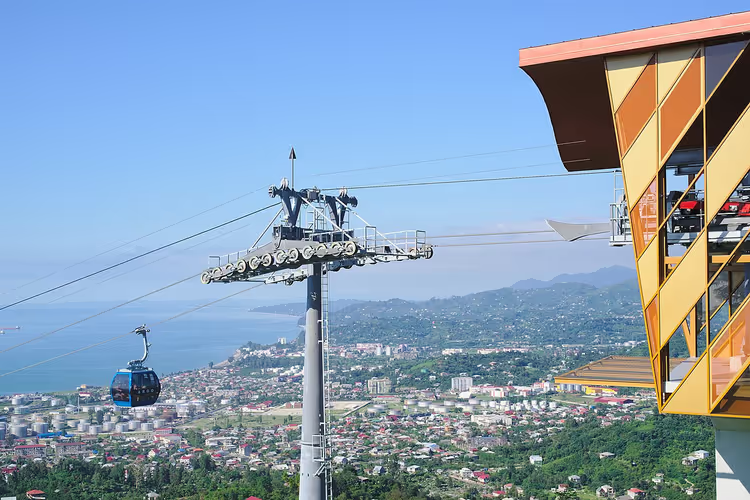
The Argo Cable Car takes visitors from the seaport to the top of Feria Mountain. From the cabin you'll see the port, the rooftops of the Old Town, and terraced gardens on the slopes. The cable car opened in 2013, the ride takes about ten minutes, and a round-trip ticket costs 30 GEL (as of 09/2026, official website).
At the top you'll find an observation deck and a restaurant overlooking the bay. The lower station is by the port, at the intersection of Chavchavadze Street and Gogebashvili Street.
- Who it's for: first-time visitors and anyone who wants a panoramic view without a long climb.
- The catch: in high season a line forms at the lower station, so arrive at opening time.
2. Botanical Garden
 © Sasha India · CC BYPhoto: Sasha India, CC BY (https://creativecommons.org/licenses/by/2.0), Wikimedia Commons
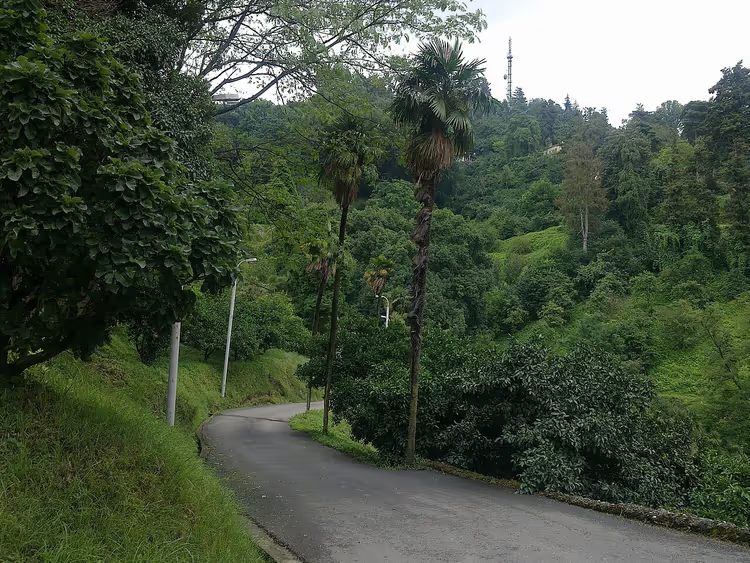
The Botanical Garden is laid out on a slope north of Batumi, right at the water's edge. The collection was started on the initiative of botanist Andrey Krasnov, and today the plants are arranged in tiers, like the Hanging Gardens of Babylon. Eucalyptus, bamboo, cedars, and hundreds of flower species grow here.
Electric carts shuttle you between sections, and there's a garden map on the boards near the entrance. An adult ticket costs about 25 GEL, and the electric cart ride is paid separately (as of 09/2026, travel-batumi.com).
In summer the garden is open from early morning until evening, and in winter it closes earlier. The easiest way to get there is by marshrutka from the lower cable car station or by bus.
- Who it's for: a relaxed half-day walk and plant lovers.
- The catch: the paths go uphill, so it's tougher in the heat.
3. Dolphinarium
 © Андрей Романенко · CC BY-SAPhoto: Андрей Романенко, CC BY-SA (https://creativecommons.org/licenses/by-sa/3.0), Wikimedia Commons
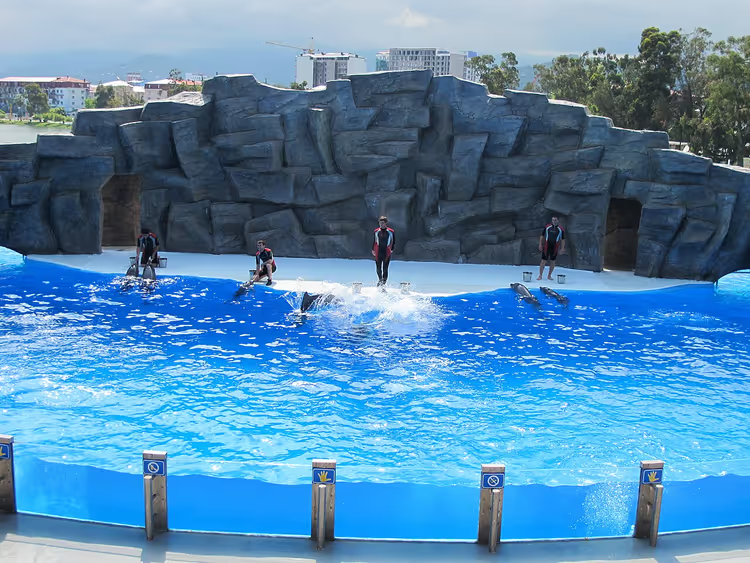
The Batumi Dolphinarium operates in a park on Rustaveli Avenue. The covered amphitheater seats nearly nine hundred spectators, so the show runs in any weather and you don't have to worry about rain.
The show lasts about half an hour and features eight dolphins, and after the performance the bravest visitors can swim with them in the pool. A daytime show costs 30 GEL, evening shows are more expensive, and children under six get in free (as of 09/2026, official website).
- Hours: shows run daily except Monday, three times a day.
- Who it's for: families with children and anyone looking for something to do in bad weather.
- The catch: without a show there's nothing to see at the dolphinarium, so plan around the show schedule.
4. Gonio-Apsaros Fortress
 © dkowi · CC BY-SAPhoto: dkowi, CC BY-SA (https://creativecommons.org/licenses/by-sa/3.0), Wikimedia Commons
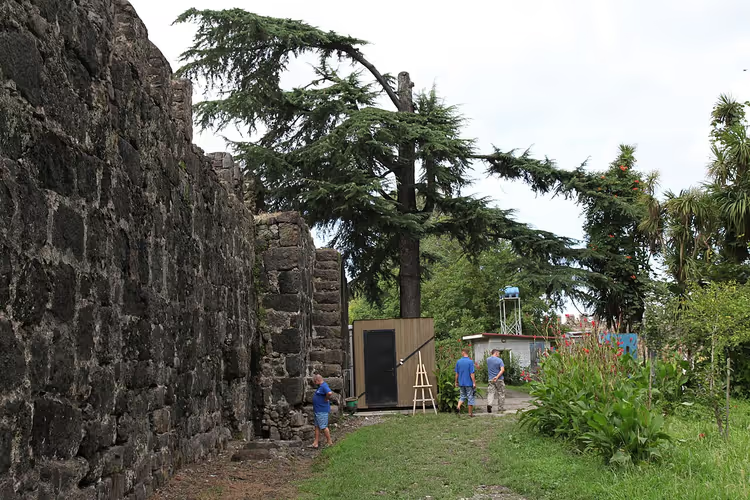
Gonio Fortress stands on the outskirts of Batumi, near the Turkish border. It was founded in the first century AD as the Roman fort of Apsaros to guard the approaches to the gorges of the Chorokhi and Acharistskali rivers.
Inside the walls, archaeologists have found the remains of baths with ancient plumbing, the foundation of a theater, and a hippodrome. Some of the gold artifacts and coins are displayed in the Gonio Treasure museum, which operates right on the fortress grounds.
Admission costs about 10 GEL, and children and students pay less (as of 09/2026, tkt.ge). You can walk along the fortress walls around the perimeter and look down at the valley from above.
- How to get there: by marshrutka toward Sarpi or by taxi from the center.
- Who it's for: history buffs and fans of ancient architecture.
- The catch: without a car or taxi, getting there takes a long time.
5. The "Love" sculpture
 © Robot8A · CC BY-SAPhoto: Robot8A, CC BY-SA (https://creativecommons.org/licenses/by-sa/4.0), Wikimedia Commons
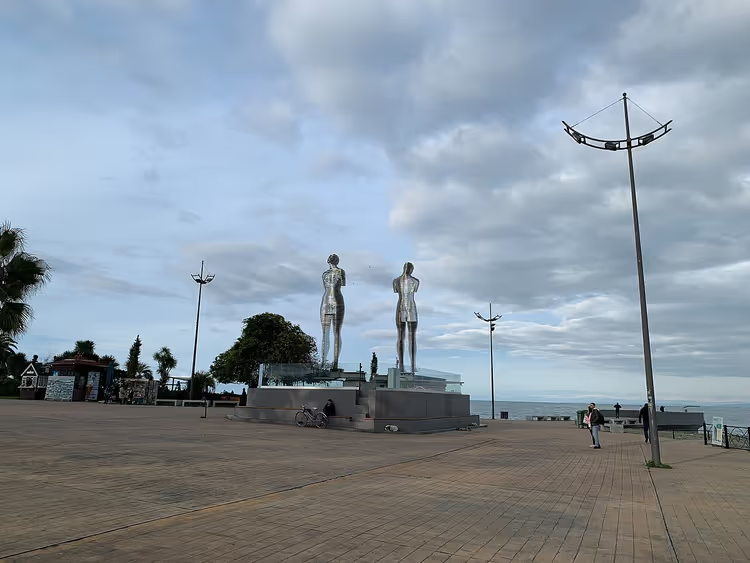
On the Batumi embankment stands the moving sculpture "Love," known from the novel "Ali and Nino." Two metal figures, a man and a woman, slowly come together, pass through each other, and separate again.
The artist, sculptor Tamara Kvesitadze, installed the figures in the early 2010s. The movement cycle repeats every ten minutes, so there are almost always spectators around the sculpture. In the evening, the lighting comes on and the figures look especially striking, so it's worth coming after sunset.
- Cost: free, it's an open-air sculpture on the boulevard.
- Who it's for: for an evening stroll and beautiful photos.
- The catch: in the dark, low light makes shooting difficult, so bring a tripod.
6. Alphabet Tower
 © Andrew Milligan sumo · CC BYPhoto: Andrew Milligan sumo, CC BY (https://creativecommons.org/licenses/by/2.0), Wikimedia Commons
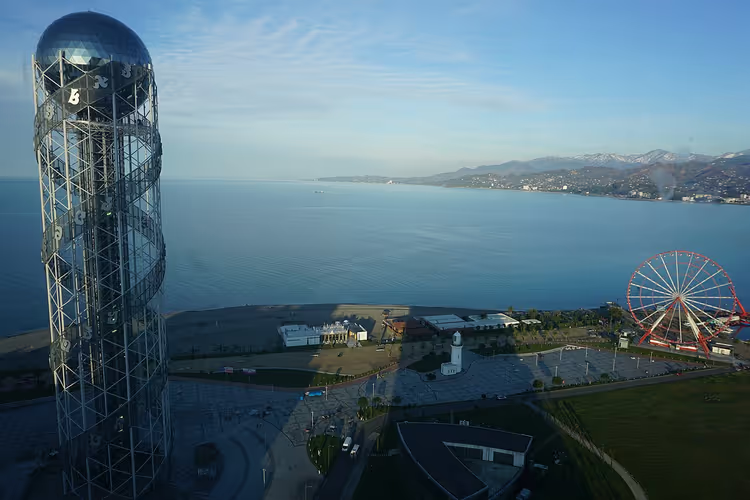
The Alphabet Tower on the embankment is built from metal mesh in the shape of a DNA helix. Its surface is formed by the letters of the Georgian alphabet, one of the oldest in the world, and the project was designed by Spanish architect Domingo Cabo.
A glass sphere with an observation deck is mounted at the top of the tower. The elevator ride up is paid, and inside there are benches and a small souvenir shop. In the evening, the structure is lit up and the letters seem to glow from within, so you'll get a great photo of the city from above.
- Cost: the ride up to the sphere is paid, children are cheaper.
- Who it's for: for panoramic shots and fans of modern architecture.
- The catch: the deck inside the sphere is small, and at peak times you'll have to wait for the elevator.
7. Seaside Park
 © Sosotedrd · CC BY-SAPhoto: Sosotedrd, CC BY-SA (https://creativecommons.org/licenses/by-sa/4.0), Wikimedia Commons
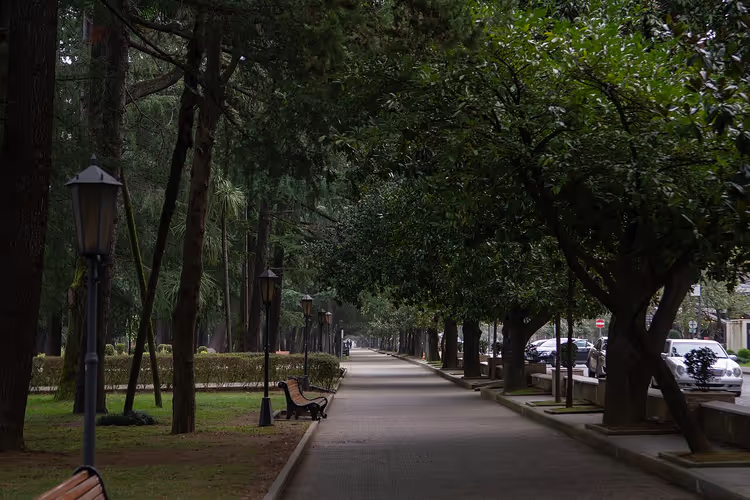
Seaside Park, which locals simply call the Boulevard, stretches along the sea for almost seven kilometers. Its five alleys are lined with palms, bamboo, magnolias, and southern pines, with flower beds and wood and stone sculptures scattered between them.
The park was laid out in the late 19th century on a vacant lot by the shore, and since then it has become the city's main strolling spot. Cafes, a summer theater, and pavilions are open here, and you can enter the park at any time of day for free.
- Cost: free.
- Who it's for: for morning runs, bike rides, and family weekends.
- The catch: on a hot day there's little shade, so walk before noon or after sunset.
8. Dancing Fountains
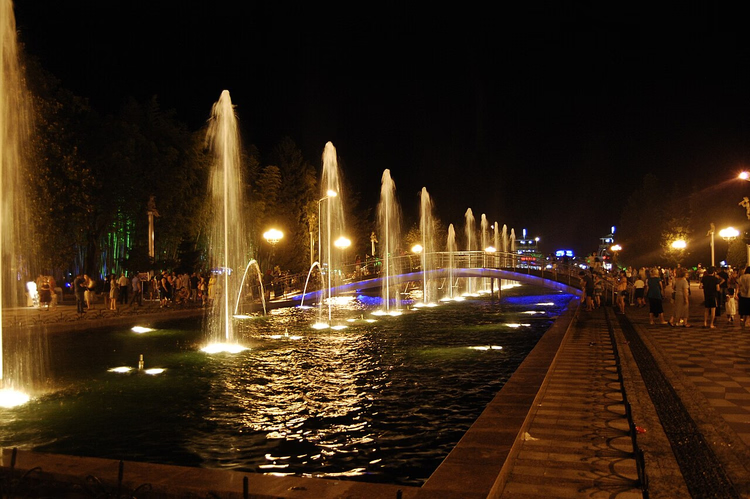 © Andrzej Wójtowicz from Poznań, Poland · CC BY-SAPhoto: Andrzej Wójtowicz from Poznań, Poland, CC BY-SA (https://creativecommons.org/licenses/by-sa/2.0), Wikimedia Commons
The Dancing Fountains in Seaside Park shoot water to music and change their pattern along with the melody. The first fountains of this kind appeared here back in the 1970s, and the modern complex started operating in the 2000s.
In the evening, when the show begins, the jets are lit in different colors. It's cooler near the water, so it's a pleasant place to rest after a hot day. The show is free, but it runs on a schedule, usually after sunset.
- Cost: free.
- Who it's for: for an evening stroll with children.
- The catch: the show runs only on a schedule, so come after sunset.
9. Europe Square
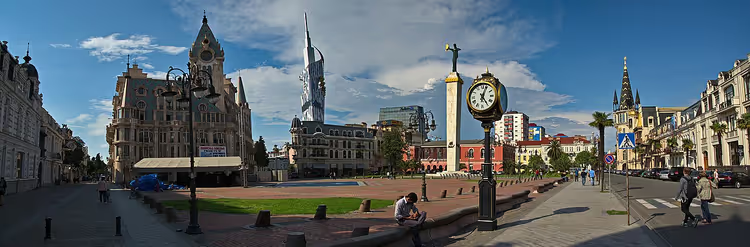 © Uwe Brodrecht · CC BY-SAPhoto: Uwe Brodrecht, CC BY-SA (https://creativecommons.org/licenses/by-sa/2.0), Wikimedia Commons
Europe Square, which locals call Argonauts Square, opens up old Batumi. In the center stands a tall stele with a bronze Medea holding the Golden Fleece, so the square's name reminds you of the legend of the Argonauts.
Beautiful residential buildings with balconies have been preserved around the perimeter of the square, and cafes operate on the ground floors. There are also street clocks with zodiac constellations here. Almost all city tours pass through the square, so it's a convenient place to start your walk.
- Cost: free.
- Who it's for: for getting to know the old town.
- The catch: the square is small, so it won't take you more than half an hour to see it.
10. Astronomical clock
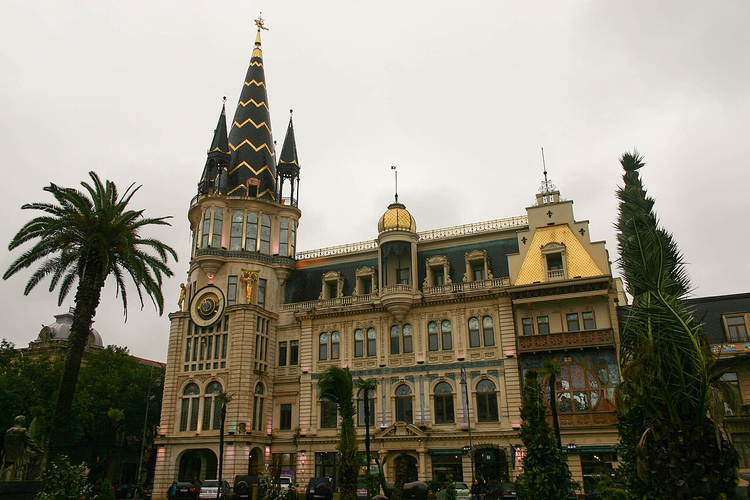 © Красный · CC BY-SAPhoto: Красный, CC BY-SA (https://creativecommons.org/licenses/by-sa/4.0), Wikimedia Commons
The astronomical clock adorns the facade of the former National Bank of Georgia building in the historic center. In addition to the time, it shows the position of the sun, moon, and zodiac signs, and chimes a melody every hour and half hour.
The building with its Gothic towers stands on Rustaveli Avenue. It's easy to reach by bus or on foot from Europe Square. At night the clock is illuminated, so it's worth coming back in the evening when the dials glow against the dark facade.
- How to get there: by bus along Rustaveli Avenue, the stop is right next to the clock.
- Who it's for: lovers of unusual architecture.
- The catch: the mechanism operates inside the building, and you won't be allowed in.
11. Colonnades
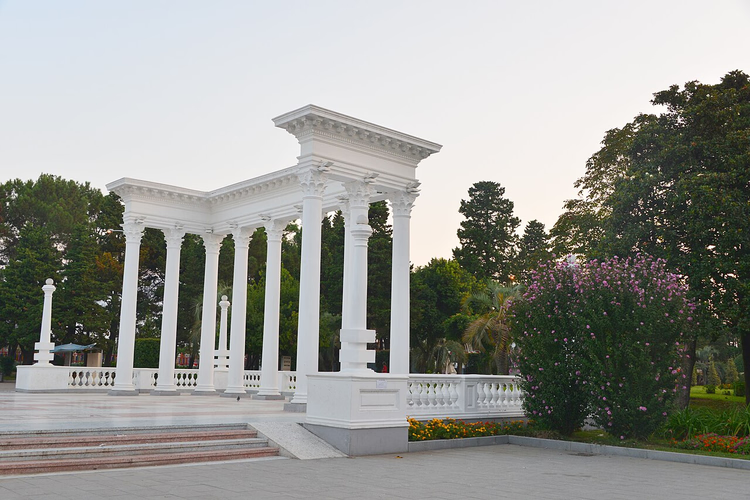 © Андрей Бобровский · CC BYPhoto: Андрей Бобровский, CC BY (https://creativecommons.org/licenses/by/3.0), Wikimedia Commons
The white colonnades at the entrance to the Seaside Park have become a Batumi landmark. They were built in the 1930s based on an idea brought from Sorrento, Italy, and the construction date is laid out at their base.
By day the columns are snow-white, and after dark they're illuminated and seem to glow. You can hear the sea through the arches, which is why people love taking photos and making wishes here. The main boulevard promenade starts nearby, and the sea is just a couple of steps away.
- Cost: free.
- Who it's for: for a stroll along the boulevard and photos by the sea.
- The catch: the columns get crowded during the day; mornings are quieter.
12. House of Justice
 © 23artashes · CC BY-SAPhoto: 23artashes, CC BY-SA (https://creativecommons.org/licenses/by-sa/4.0), Wikimedia Commons
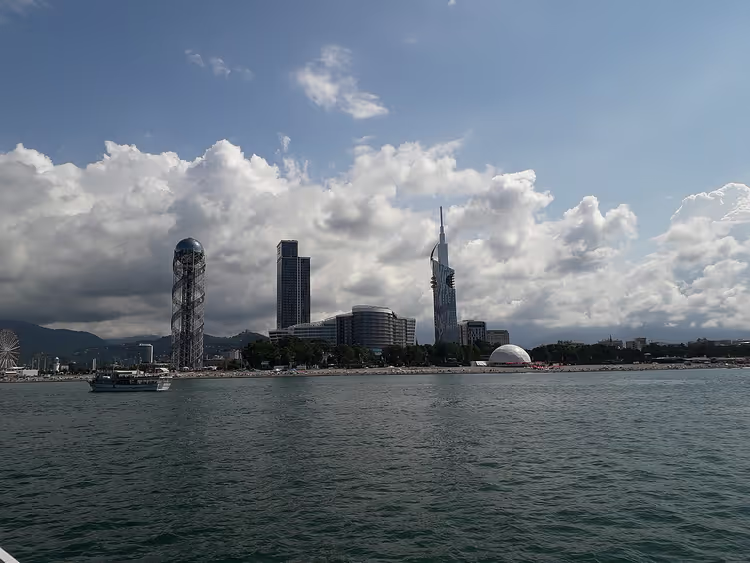
The House of Justice in Batumi is easy to recognize by its upside-down bottle shape. It opened in the early 2010s, and now passports, visas, and residence permits are processed here under a one-stop-shop system.
Inside there are three halls: self-service, fast-track, and long-term processing. In the evening, colorful lighting turns the building into one of the city's most recognizable landmarks, and you can easily spot it from afar. Buses running along Pirosmani Street stop nearby.
- How to get there: by bus to the stop at the House of Justice.
- Who it's for: lovers of modern architecture.
- The catch: entry is by appointment on weekdays only, so you'll mostly be interested in the facade.
13. Cathedral of the blessed virgin Mary
 © User:Ephraim Stillberg , User:Deu · CC BY-SAPhoto: User:Ephraim Stillberg , User:Deu, CC BY-SA (https://creativecommons.org/licenses/by-sa/3.0), Wikimedia Commons
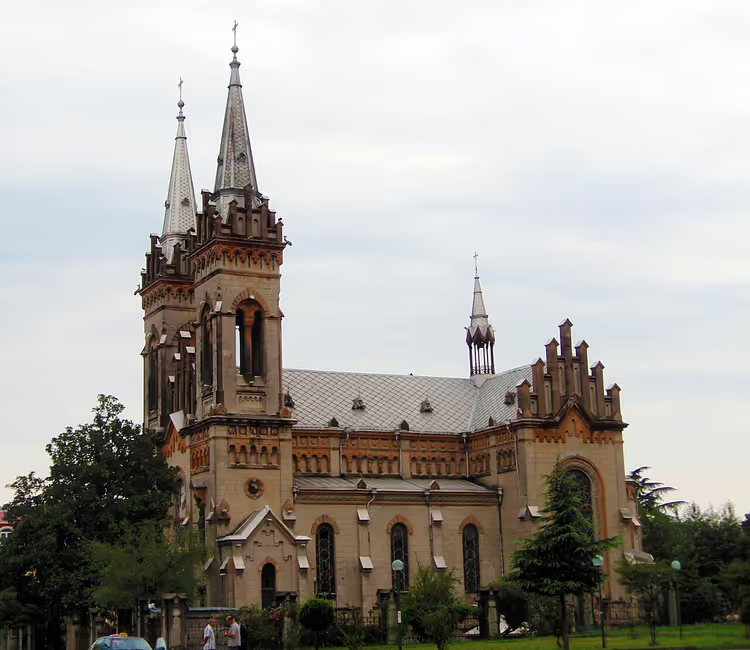
The Cathedral of the Blessed Virgin Mary stands on Chavchavadze Street and stands out with its two neo-Gothic spires. The white walls are decorated with red and blue ornaments, and the large stained-glass windows are reminiscent of churches in France.
The cathedral was built in the early 20th century with funds from local industrialists and later transferred to the Orthodox Church. It is still active today, and entry is open to everyone, but you should observe silence and dress appropriately inside.
- Cost: free entry.
- Who it's for: a quiet introduction to the old town's architecture.
- The catch: visits are limited during services; it's better to come during the day.
14. Church of Christ the Savior
 © Dor Shabashewitz · CC BYPhoto: Dor Shabashewitz, CC BY (https://creativecommons.org/licenses/by/4.0), Wikimedia Commons
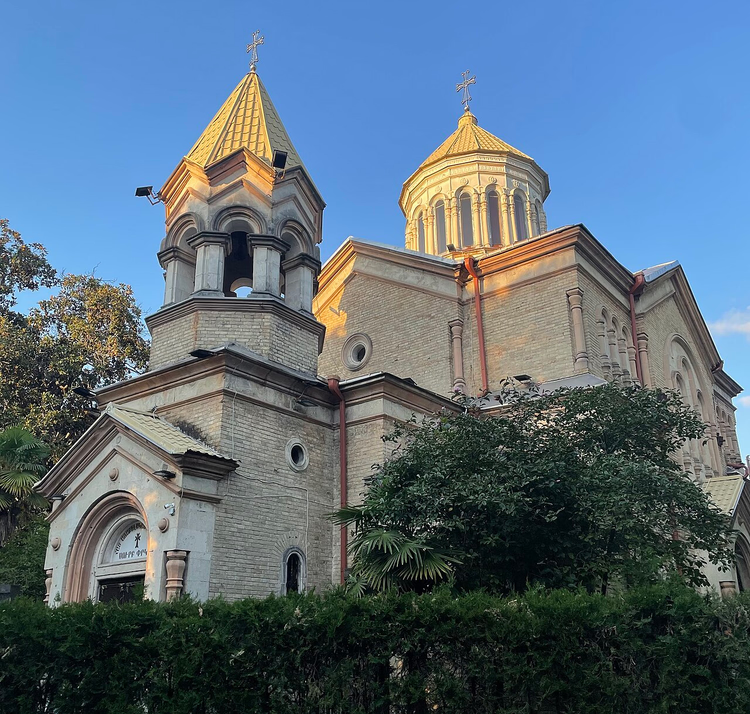
The Armenian Church of Christ the Savior, also known as Surb Prkich, also stands in the old town. It was built in the late 19th century for the Armenian community and is now one of the oldest active churches in Batumi.
The church is small, with a central tower and a cone-shaped dome. Armenian community celebrations take place in the courtyard, along with a Sunday school and a youth center. The church stands on Gamsakhurdia Street, next to other historic buildings, so you'll see it along the way.
- How to get there: on foot from Europe Square or by bus through the old town.
- Who it's for: getting to know the multiethnic history of Adjara.
- The catch: it's an active church, so during services you'll be asked not to disturb.
15. Adjara local history museum
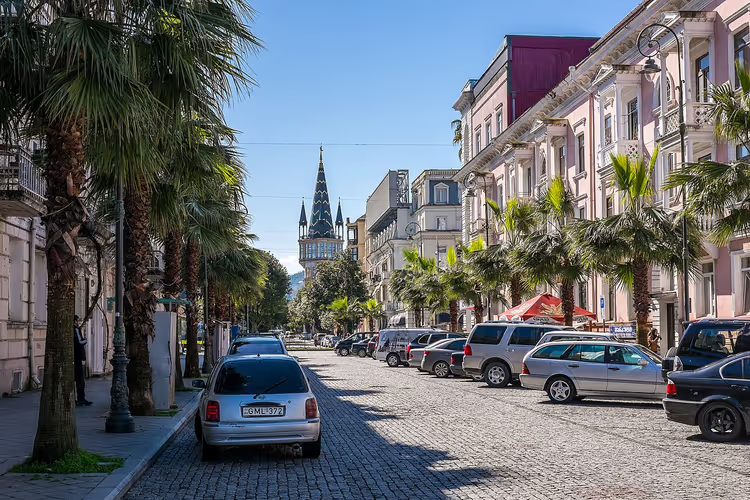
The Adjara Local History Museum began as a school collection assembled by teachers and students. Over time it grew into a major repository of artifacts and moved into the former treasury mansion on Jincharadze Street.
 © jagermesh from Ukraine · CC BY-SAPhoto: jagermesh from Ukraine, CC BY-SA (https://creativecommons.org/licenses/by-sa/2.0), Wikimedia Commons
Thousands of exhibits are kept here: rare books and manuscripts, archaeological finds, and specimens of flora and fauna. The halls recreate the dwellings of local residents, and the courtyard displays a whale skeleton and a model of the first tractor that worked the fields of Adjara. An hour is enough to see both floors.
- Hours: the museum is open every day except Monday.
- Cost: paid entry, with discounts for students and children.
- Who it's for: a rainy day and ethnography enthusiasts.
- The catch: exhibit descriptions are mostly in Georgian; ask about an audio guide on site.
16. Chacha Tower
 © Soghomon Matevosyan · CC BY-SAPhoto: Soghomon Matevosyan, CC BY-SA (https://creativecommons.org/licenses/by-sa/4.0), Wikimedia Commons
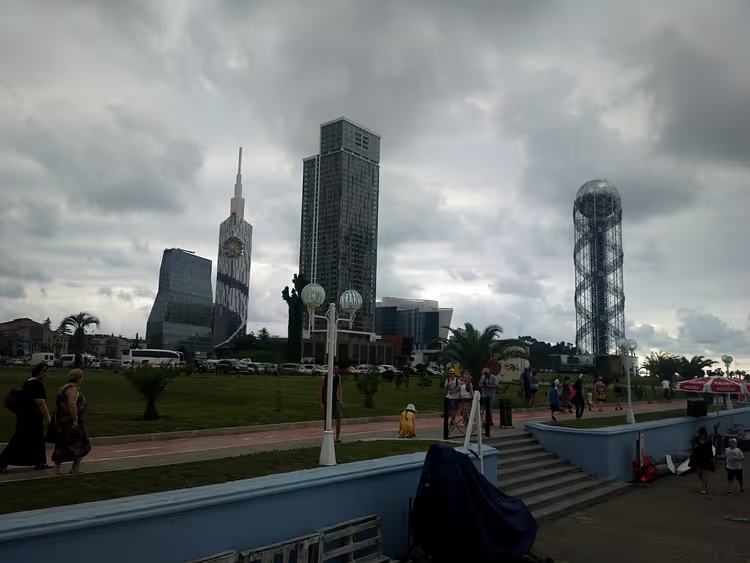
The Chacha Tower on the waterfront is a nod to Georgia's grape vodka, chacha. A clock is mounted on the tall tower, and once a week chacha itself flows from a tap instead of water. The clock tower is visible from the boulevard from afar.
The tasting lasts only a few minutes, and there are always plenty of people who want to take part. The tower stands on Gogebashvili Street, not far from the port and the cable car, so it's easy to stop by on your way.
- Cost: the tasting is free, but you need to arrive at the right time.
- Who it's for: a short stop along the way and a fun photo.
- The catch: the pouring schedule is irregular; you'll only find out the exact time on site.
17. Makhuntseti Waterfall
 © Wojciech Biegun · CC BY-SAPhoto: Wojciech Biegun, CC BY-SA (https://creativecommons.org/licenses/by-sa/3.0), Wikimedia Commons
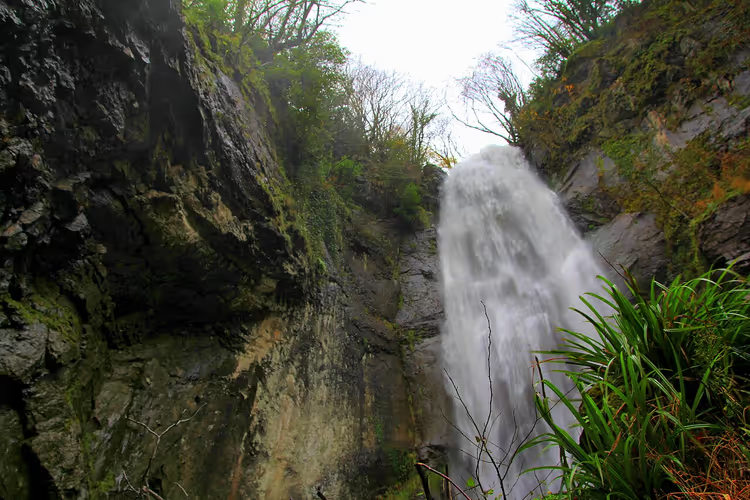
The Makhuntseti Waterfall cascades down the mountain slopes near the village of the same name, east of Batumi. The road to it runs through the gorge of the Adjaristskali River, so even the journey itself offers views of mountains and forests.
Near the waterfall you can walk across the ancient arched bridge of Queen Tamar and stop by the Adjara Wine House. The water in the gorge is cool, and people love having picnics by the waterfall. There's a small fee for parking at the waterfall.
- How to get there: by car or by marshrutka toward Keda, easier with a car rental in Batumi.
- Who it's for: a day in nature and a short trek.
- The catch: without a car it takes a long time to get there, and public transport runs infrequently.
Tours and tickets in Batumi
Guided tours, skip-the-line tickets and activities — most offers can be cancelled free of charge.
See offers on GetYourGuideThe widget loads once you give your consent.
Batumi attractions on the map
All 17 spots are easy to mark on the map before your trip. You can walk around the center, but plan a separate trip for Gonio Fortress and Makhuntseti Waterfall. If you fly into Batumi airport, the easiest way to reach your hotel is with a pre-booked transfer: book a transfer (Kiwitaxi).
Landmarks of Batumi
Places on the map
- 1Argo Cable Car Ride up from the port to Mount Ferria, panorama of the bay and old town
- 2Botanical Garden Terraced plants on a slope by the sea, collection of botanist Krasnov
- 3Dolphinarium Show with eight dolphins under the amphitheatre roof
- 4Gonio-Apsaros Fortress 1st-century Roman fort, the "Treasure of Gonio" museum on site
- 5"Ali and Nino" Love Sculpture Moving metal figures from the novel "Ali and Nino"
- 6Seaside Park Seafront boulevard almost seven kilometres long, palms and magnolias
- 7Dancing Fountains Fountains set to music in the Seaside Park, show after sunset
- 8Europe Square Column with bronze Medea, Argonauts' Square
- 9House of Justice Building shaped like an upturned bottle, passports and visas in one window
- 10Cathedral of the Nativity of the Virgin Mary Neo-Gothic with three domes on Chavchavadze Street
- 11Adjara Museum of Local Lore Mansion of a former treasury, whale skeleton in the courtyard
- 12Chacha Tower Clock tower, once a week chacha flows from the tap
- 13Makhuntseti Waterfall Waterfall near Queen Tamar's bridge, next to the Adjara Wine House
⁉️🤔 Frequently asked questions
Can you see all of Batumi in one day?
No. The cable car, the dolphinarium and the old town will take half a day, and Gonio Fortress and Makhuntseti Waterfall need a separate day. A realistic plan: day one for the center and the boulevard, day two for the outskirts, day three for viewpoints and museums. That way you won't be racing around the city.
What can you see in Batumi for free?
The "Love" sculpture, the colonnades, Batumi Seaside Park and the dancing fountains cost nothing. Europe Square with the Medea monument and the Alphabet Tower from the outside are also open to everyone. You only pay to go up in the glass ball on the tower and for a cable car cabin, but you can walk along the boulevard as much as you like.
When is the best time to go up the cable car?
Arrive at opening time or after lunch on a weekday. In summer and on weekends the line at the lower station gets long, and there are few free tables at the restaurant up top. In the evening the view of the lit-up city is prettier, but there are also more people. Buy your ticket with some time to spare.
How much time should you allow for the dolphinarium?
The daytime show lasts about half an hour, plus time for getting there and queuing at the entrance. Shows run daily except Monday. If you want to swim with dolphins, plan a separate session and book in advance, because spots sell out quickly.
How do you get to Makhuntseti Waterfall?
Marshrutkas toward Keda leave from the bus station, and the ride takes about an hour. By car it's easier: you drive through the Adjaristskali gorge along the river and stop at the Queen Tamar Bridge. There's a small fee for parking at the waterfall, and on the way back you can stop at the Adjarian Wine House.
Video: Batumi attractions in one day
Below is a short video that brings Batumi's main spots together into one route. It makes it easier to understand what you can fit into a day.
In short: what's worth booking
Before your trip, decide what matters more to you: views, history, or nature.
- If you want to see the city from above: take the Argo cable car.
- If you're traveling with kids: book a daytime dolphinarium show.
- If you love history: set aside half a day for Gonio-Apsaros Fortress.
- If you need a day in nature: plan for Makhuntseti Waterfall.
Hotels in the center are convenient for strolling along the boulevard and the old town. See Batumi hotels on Trip.com.

A small editorial team writing guides for independent travel. We travel ourselves, but we haven’t been everywhere, so we check prices, opening hours and how to get there against official sources.