
















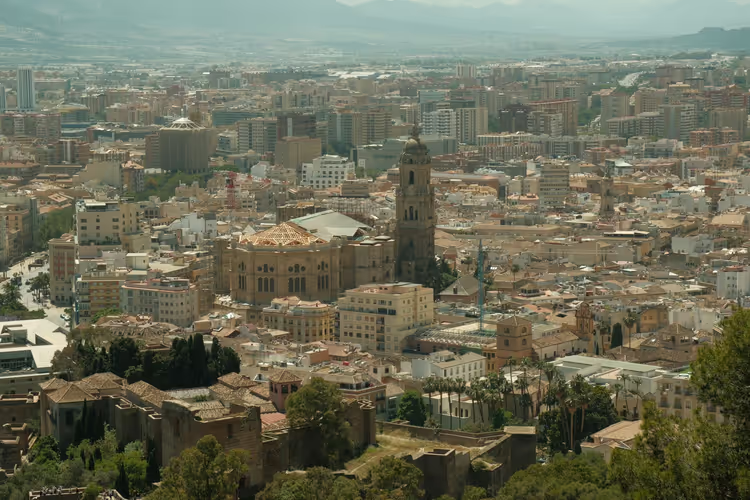
15 Places in Malaga worth seeing in two days
Malaga is compact: the city's 15 main sights can be covered on foot. The old town, the hilltop fortresses, and the waterfront are all close together, within walking distance of each other.
For the Picasso and Pompidou museums, book a time slot in advance: in summer, people queue all the way to the ticket office.
Below are all 15 sights in order: from the cruise port and the Arab fortresses to the Atarazanas market and the botanical garden on the outskirts. For each place we give the price, opening hours, and the honest catch. You can cover them in two days or pick only what suits you.
Ad: this article contains affiliate links, we earn a commission if you book through them, at no extra cost to you.
What to see in Malaga: 15 places for a walk
💡 In short:
- The lower town (the port, Marques de Larios street, the market) can be walked in half a day.
- The upper town (the Alcazaba, Gibralfaro, the Roman theater) sits on a hill, and the climb takes time and energy.
- Almost all museums are closed on Mondays, and in summer they stay open until the evening.
Our pick for tickets and closing days:
Place | Admission | Closed |
|---|---|---|
Alcazaba | €7, free on Sundays from 2:00 PM (as of 09/2026, rates and hours) | none |
Castillo de Gibralfaro | combined ticket with the Alcazaba (fortress tickets) | none |
Picasso Museum | €13, free on Sunday evenings (as of 09/2026, website) | none |
Cathedral | from €6 (as of 09/2026, rates) | none |
Pompidou Center | paid ticket (website) | check |
Automobile and Fashion Museum | paid ticket (website) | Monday |
Museum of Glass and Crystal | paid ticket | Monday |
CAC Malaga | free admission (website) | Tuesday |
La Concepcion Botanical Garden | paid ticket (website) | Monday |
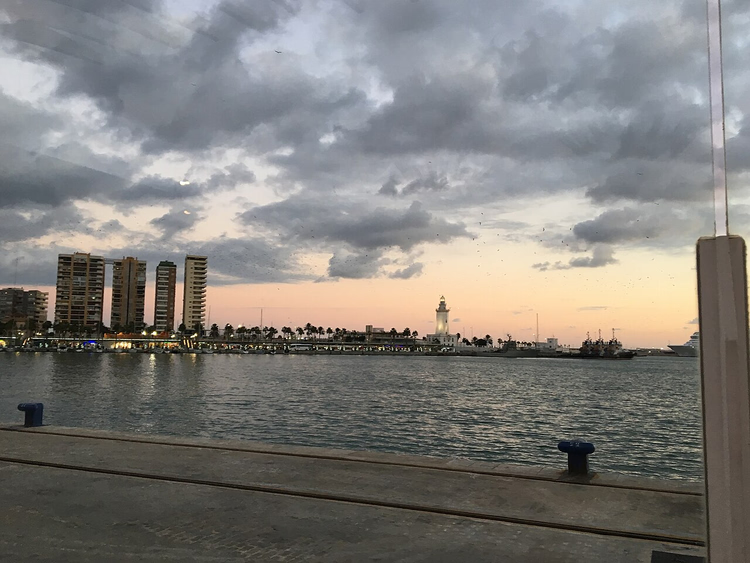
1. Cruise port
 © Viktar Palstsiuk · CC BY-SAPhoto: Viktar Palstsiuk, CC BY-SA (https://creativecommons.org/licenses/by-sa/4.0), Wikimedia Commons
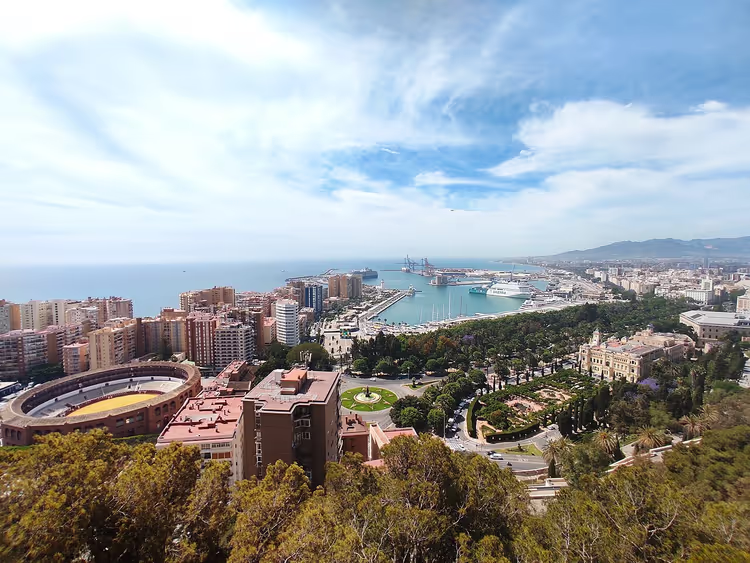
Malaga's history begins in the harbor: the Phoenicians founded a deep-water dock here and turned the city into a trading hub of the Mediterranean. Later the port became a transit point between sea and land, and today huge cruise liners moor along the quays.
From the cruise terminal, the pedestrian promenade Paseo de la Farola with the old La Farola lighthouse leads into the city. Along the way you pass the palm park Paseo Parque, and you can turn off straight to the city beach La Malagueta: it is a few minutes' walk from the dock. Nearby stands the La Malagueta bullring.
- How to get there: buses and taxis run from the terminal to the center, and the walking route follows an avenue.
- Who it's for: those arriving in Malaga on a cruise ship who want to see the center in one day.
2. Alcazaba Fortress
 © Fernando · CC BY-SAPhoto: Fernando, CC BY-SA (https://creativecommons.org/licenses/by-sa/4.0), Wikimedia Commons
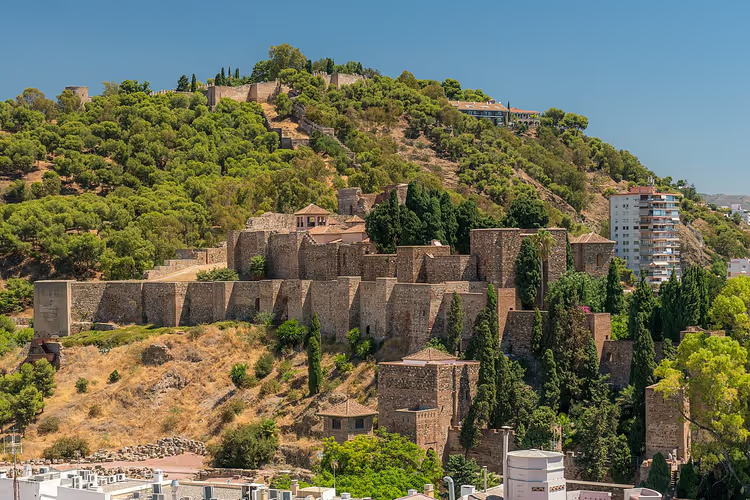
Malaga's Alcazaba is better preserved than other fortresses of its type in Spain. It is a chain of forts with long walls and watchtowers. Inside you'll see the foundations of garrison barracks, a palace among orange trees and fountains, and beyond the walls lies a 1st-century Roman theater.
The climb to the citadel follows a steep, winding road, but the reward is the landscaped gardens at the Governor's Quarters, Cuartos de Granada. From April to October the fortress is open from 9:00 to 20:00, in winter it closes at 18:00, and a ticket costs 7 € (as of 09/2026, verified on the fortress's official website). On Sundays after 14:00 admission is free.
- The catch: the climb follows a steep, winding road, so bring water in the heat.
- How to get there: the entrance is at the Roman Theater, about fifteen minutes on foot from the waterfront.
- Alcazaba and Gibralfaro tickets on Tiqets
3. Gibralfaro Fortress
 © Diego Delso · CC BY-SAPhoto: Diego Delso, CC BY-SA (https://creativecommons.org/licenses/by-sa/4.0), Wikimedia Commons
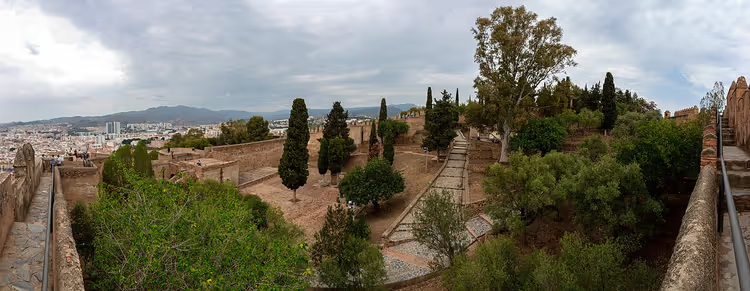
The name Castillo de Gibralfaro comes from the Arabic words "hibral" and "faro," meaning "rock above the lighthouse." The fortress was built by order of Emir Yusuf I to protect the port. Between the inner and outer walls there is a narrow passage to the Alcazaba: spotting this trap from outside is difficult.
In 1492 the fortress passed to the Spanish crown, and King Ferdinand made it his residence. The weapons and armor exhibition tells the story of the Reconquista. In summer Gibralfaro stays open longer than the Alcazaba, and in winter it closes earlier (as of 09/2026, Gibralfaro opening hours). Entry is through the West Gate.
- The catch: it is the highest point in the city, and the climb from the Alcazaba takes real effort.
- Who it's for: those who want a panoramic view of the port and city from above.
4. City Hall
 © Diego Delso · CC BY-SAPhoto: Diego Delso, CC BY-SA (https://creativecommons.org/licenses/by-sa/4.0), Wikimedia Commons
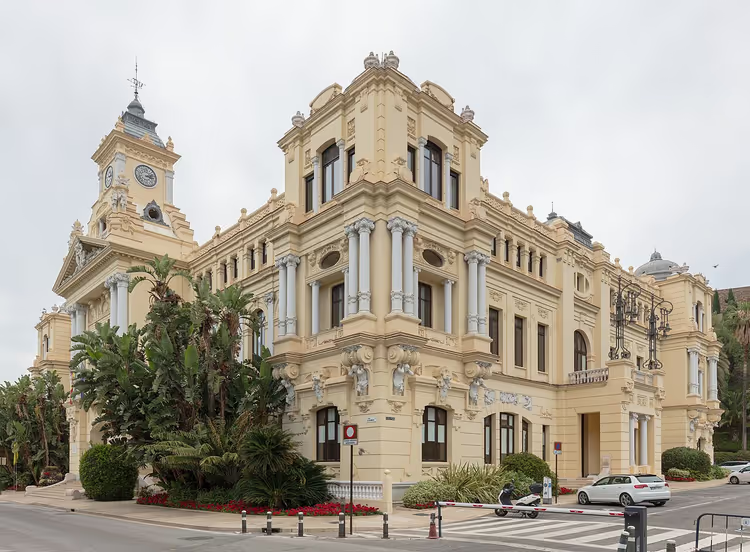
Behind the waterfront park, between Cervantes Avenue and Gibralfaro Hill, stands the Casa Consistorial, the city hall. For a provincial administration building, it was constructed with extraordinary luxury, and its architect, Guerrero Strachan, shaped the city's appearance in the early 20th century.
Moorish style here blends with neo-colonial, baroque and classical elements. The facade is decorated with sculptures of sailors, fishermen and merchants rather than ancient gods. Anyone can enter Casa Consistorial free of charge during working hours. The halls and council chambers impress with their decor, and notice boards display plans for city events.
- Who it's for: those who want to see a grand interior for free and without waiting in line.
5. Plaza de Toros "La Malagueta"
 © Malopez 21 · CC BY-SAPhoto: Malopez 21, CC BY-SA (https://creativecommons.org/licenses/by-sa/4.0), Wikimedia Commons
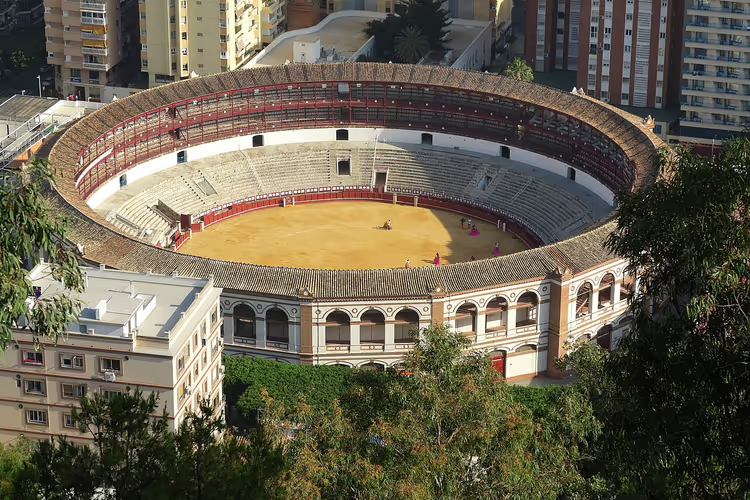
The octagonal La Malagueta arena was designed by Joaquin Rucoba in Moorish style and holds first-category status. The gallery houses the Museum of Matador Antonio Ordonez's Glory. Bullfight tickets are sold only online to combat scalpers, and remaining seats are released just before the event.
Fights start at 13:00 and 17:00, and in April, May, August and September bullfights are held on Sundays (as of 09/2026, Malaga tourist office on bullfighting). A ticket to the Bullfighting Museum costs less than two euros, and the museum itself is open in the mornings and closed on weekends.
- The catch: bullfights are not held every day, and seats in the shade cost the most.
- Not for: those who are uncomfortable with the spectacle of a bullfight itself.
6. Automobile and Fashion Museum
 © Tyk · CC BY-SAPhoto: Tyk, CC BY-SA (https://creativecommons.org/licenses/by-sa/3.0), Wikimedia Commons
Collector Joao Magalhaes opened his collection to the public more than ten years ago. It holds around a hundred rare models, from motorized tricycles to a gilded one-off. The exhibition is rounded out by designer dresses and accessories, so the museum appeals equally to car enthusiasts and fashion lovers.
The museum is open from morning to evening, closed on Mondays (as of 09/2026, official website). Photography is allowed inside, and women's fashion shows are held here regularly.
- Who it's for: couples interested in both cars and fashion.
7. Museum of glass and crystal
 © Jorge Franganillo · CC BYPhoto: Jorge Franganillo, CC BY (https://creativecommons.org/licenses/by/2.0), Wikimedia Commons
The Vidrio y Cristal Museum occupies an 18th-century Roman-style villa with a careful restoration. The name is a bit misleading: besides glass, you'll see furniture, carpets, portraits, bronze, and tapestries. The owner is proud of the stained glass by Pre-Raphaelite masters, displayed with lighting in elegant frames.
Among the exhibits are Venetian colored and sulfide glass, as well as Chinese and Meissen porcelain. The museum is private and small, so people stop by on the way to other central sights. It is open every day except Monday, with paid admission.
- The catch: closed on Mondays, and the rooms are small and fill up quickly with a tour group.
8. CAC contemporary art center
 © Maluoliveira · CC BY-SAPhoto: Maluoliveira, CC BY-SA (https://creativecommons.org/licenses/by-sa/4.0), Wikimedia Commons
CAC Málaga houses hundreds of paintings and installations by contemporary artists across two and a half thousand square meters. It shows works by Louise Bourgeois, the Chapman brothers, Gerhard Richter, Paul McCarthy, Anish Kapoor, and Ron Mueck.
Admission to CAC is free (as of 09/2026, official website). Kids enjoy the interactive pieces, so the museum is easy to combine with a walk around the port. The exhibition program changes several times a year.
- The catch: closed on Tuesdays, the galleries are shut that day.
9. Centre Pompidou
 © Epizentrum · CC BY-SAPhoto: Epizentrum, CC BY-SA (https://creativecommons.org/licenses/by-sa/3.0), Wikimedia Commons
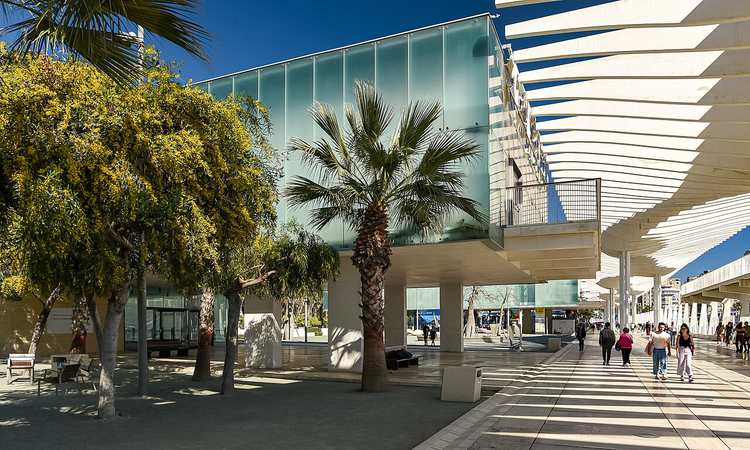
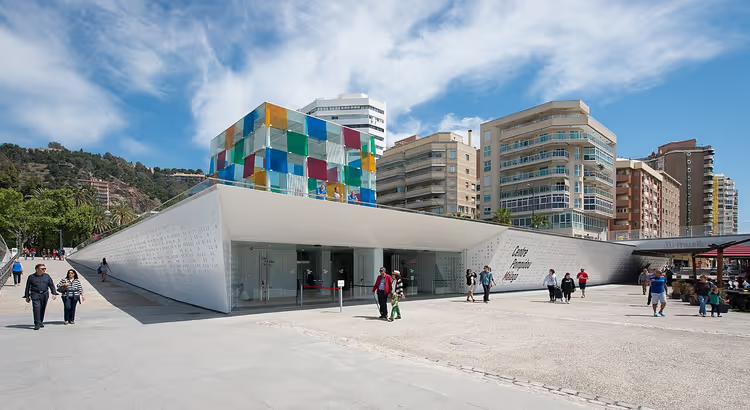
The Centre Pompidou in Malaga opened in 2015 in the glass cube El Cubo on the waterfront (as of 09/2026, official website). It is a branch of the Paris Centre Pompidou. Two underground floors are tucked between the port and the promenade, but the cube's multicolored sides are visible from afar.
The 20th-century painting hall brings together works by Picasso, Chagall, Kandinsky, Magritte, Kahlo, Miro, Bacon and De Chirico. A single ticket also covers the temporary exhibition, so it is better to buy entry online: the weekend crowds are large.
- The catch: part of the exhibition is underground, with no windows or natural light.
- Who it's for: people who love 20th-century art and modern architecture.
10. The Cathedral
 © Euku · CC BY-SAPhoto: Euku, CC BY-SA (https://creativecommons.org/licenses/by-sa/3.0), Wikimedia Commons
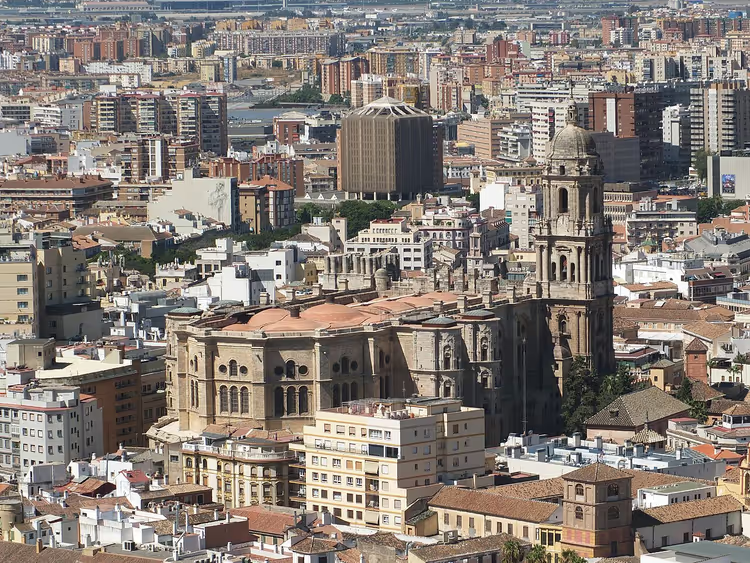
The Cathedral of the Incarnation began construction in the 16th century on the site of a mosque and took more than two centuries to complete. The tower rises almost ninety meters, and the dome forty. The choir stalls hold dozens of figures of Catholic saints by Pedro de Mena, Ortiso de Vargas and Giuseppe Alfaro.
The cathedral also houses a museum of religious objects, some of which are several centuries old. Tickets start at 6 EUR (as of 09/2026, official website); check the exact opening hours there as well.
- The catch: during services, part of the cathedral is closed to visitors.
11. Roman Theatre
 © Diego Delso · CC BY-SAPhoto: Diego Delso, CC BY-SA (https://creativecommons.org/licenses/by-sa/4.0), Wikimedia Commons
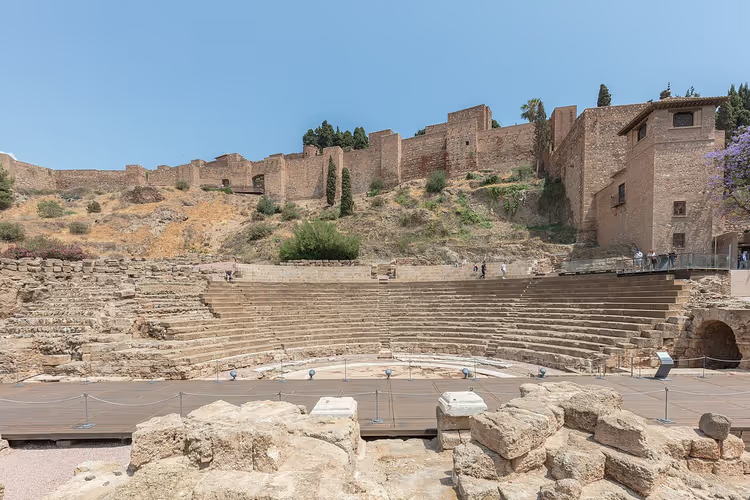
The Roman Theatre was discovered in the middle of the last century, when construction began at the foot of the Alcazaba walls and workers hit ancient stone blocks. The excavations revealed a theatre from the time of Emperor Augustus almost in its original state: only the wooden structures have not survived.
The seating tiers are once again filled with audiences: the theatre is used for concerts and shows. Visiting the theatre is free (as of 09/2026, Malaga tourist office page).
- Who it's for: those who want to see an ancient theatre in the city center without a ticket.
12. Plaza de la Merced
 © Zangarreon · CC BY-SAPhoto: Zangarreon, CC BY-SA (https://creativecommons.org/licenses/by-sa/4.0), Wikimedia Commons
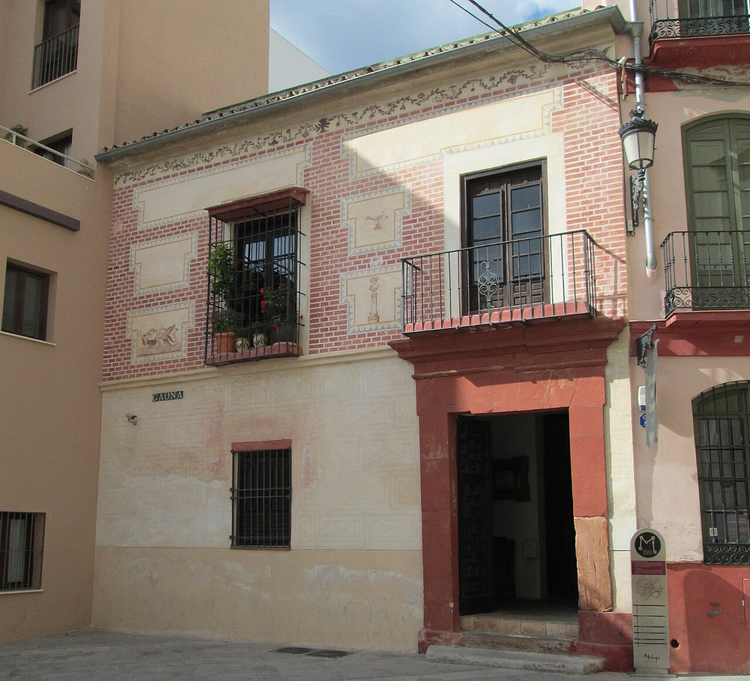
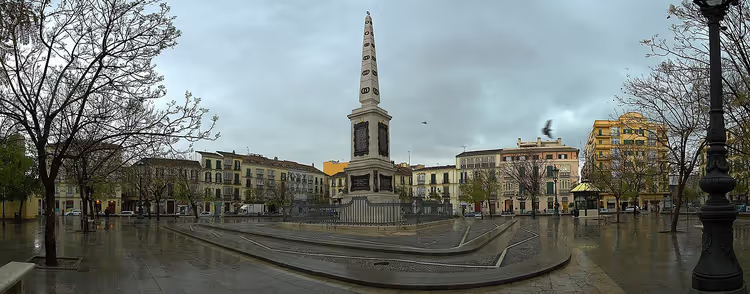
Plaza de la Merced is home to the house where Picasso was born and a monument to the artist. The square's main focal point today is the obelisk to General Torrijos, who fought Napoleon, then sided with the republicans and was executed on his native shore.
You can pay homage to Picasso any day at the house on Granada Street, and a block away is the museum named after him. The square is easy to combine with a walk along Calle Marques de Larios: they are right next to each other. You will pass through here on the way to the Picasso Museum.
- Who it's for: those interested in Picasso who want to see where he was born.
13. Calle Marques de Larios
 © mahr · CC BYPhoto: mahr, CC BY (https://creativecommons.org/licenses/by/2.0), Wikimedia Commons
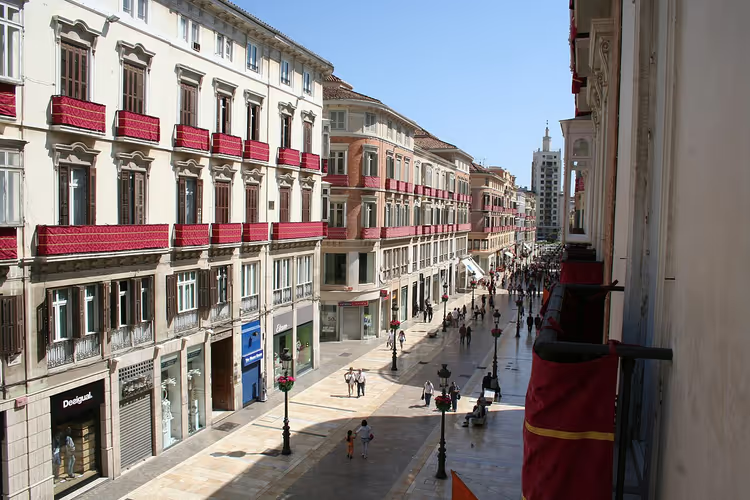
Calle Marques de Larios runs from the waterfront to Plaza de la Constitucion and ends at a 16th-century fountain. For a long time it was called Main Street, and its redevelopment began in the late 19th century. The work was funded by issuing shares, most of which were bought by the Marques de Larios family.
Bombing severely damaged the city's main street, but by the early 2000s it was restored and made pedestrian-only. Today boutiques, cafes and restaurants line both sides, and street musicians perform in the evening. Thanks to lighting shaped like a Gothic nave, Calle Marques de Larios stays alive until morning.
14. Atarazanas Central Market
 © Johannes Schwanbeck from Dresden · CC BY-SAPhoto: Johannes Schwanbeck from Dresden, CC BY-SA (https://creativecommons.org/licenses/by-sa/2.0), Wikimedia Commons
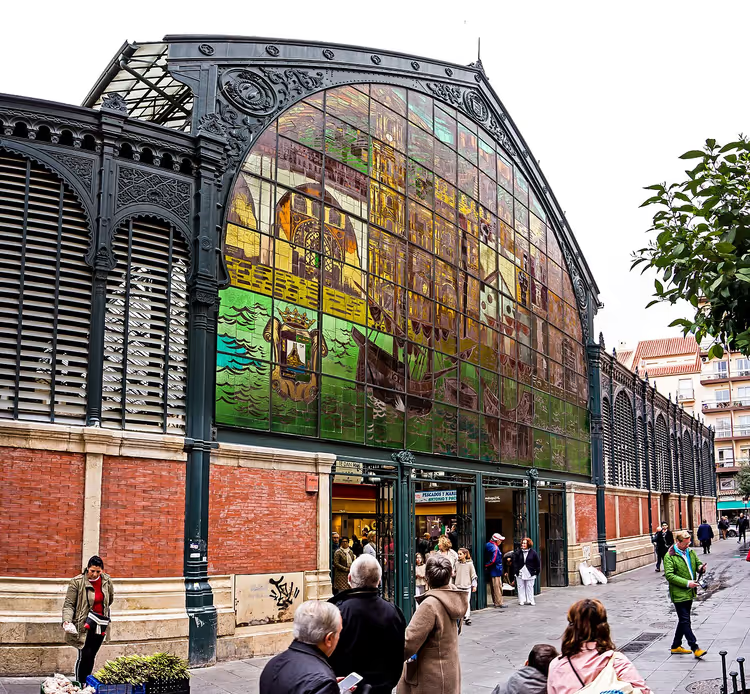
The Atarazanas Market was built in the late 19th century to a design by Joaquin Rucoba on the site of a Nasrid shipyard. The glass-roofed pavilion features a colorful stained-glass window above the entrance, and the galleries are divided by cast-iron columns in Moorish style.
There is always fresh fish, jamón, and fruit here, and the vendors are happy to explain how to prepare the more exotic items. The market is open Monday through Saturday in the first half of the day (as of 09/2026, Málaga tourist office data), and the vendors take Sunday off.
- The catch: most stalls close after lunch, so come before noon.
15. La Concepción botanical garden
 © Daniel Capilla · CC BY-SAPhoto: Daniel Capilla, CC BY-SA (https://creativecommons.org/licenses/by-sa/4.0), Wikimedia Commons
La Concepción botanical garden was laid out by the Loring couple more than a century and a half ago, seven kilometers from the center. French gardener Chamous designed the park in the English style and planted a huge variety of tropical plants that took root in Andalusian soil.
The garden is home to palms, cacti, lemon trees, thousand-year-old olive trees, and cypresses set among ponds, streams, and fountains. From the mirador viewpoints you can see the port and the city in the distance. The garden is municipally owned, admission is by ticket, and it is closed on Mondays (as of 09/2026, official website).
- The catch: the garden is on the outskirts, so you can't walk there without a bus or a car.
Málaga attractions on the map
All fifteen places fit neatly into a map route: the center is walkable, and you take a bus or car to the botanical garden.
Landmarks of Malaga
Places on the map
- 1Cruise Port Pier of Phoenician origin, the Paseo de la Farola promenade
- 2Alcazaba Fortress Chain of 8th-century forts, a palace among orange trees
- 3Gibralfaro Castle Fortress of emir Yusuf I, panorama of the port and city from above
- 4Town Hall Casa Consistorial, Moorish style with neo-colonial features
- 5La Malagueta Bullring Octagonal bullring, the Matador's Hall of Fame museum
- 6Automobile and Fashion Museum About a hundred rare models and designer dresses
- 7Glass and Crystal Museum 18th-century villa, stained glass by Pre-Raphaelite masters
- 8CAC Centre for Contemporary Art Former tobacco factory, free admission
- 9Centre Pompidou Malaga Glass cube on the seafront, the only branch abroad
- 10Cathedral Cathedral of the Incarnation on the site of a mosque, tower almost 90 metres tall
- 11Roman Theatre Amphitheatre from the Augustan era at the foot of the Alcazaba walls
- 12Plaza de la Merced House where Picasso was born, and an obelisk to General Torrijos
- 13Calle Marqués de Larios Pedestrian street from the seafront to Plaza de la Constitución
- 14Mercado Central de Atarazanas 19th-century pavilion on the site of a Nasrid shipyard
- 15La Concepción Botanical Garden Tropical plants in English style, viewpoints overlooking the port
Museum tickets and Málaga tours are best booked in advance: in summer, entry slots for the Pompidou and the Picasso Museum are gone by morning.
Tours and tickets in Malaga
Guided tours, skip-the-line tickets and activities — most offers can be cancelled free of charge.
See offers on TiqetsThe widget loads once you give your consent.
⁉️🤔 Frequently asked questions
How many days do you need for Málaga attractions?
Two days are enough for the main 15 places. On the first day, walk the lower city: the port, Marqués de Larios street, Atarazanas market, and Plaza de la Merced. On the second, head up to the Alcazaba, Gibralfaro, and the Roman theater, and in the evening stop by the Picasso Museum or the Pompidou Center.
When is admission to the Alcazaba free?
The Alcazaba is open to everyone free of charge on Sundays after 2:00 PM (as of 09/2026, Alcazaba rates page). On other days the ticket costs €7. Come at opening time or after lunch to avoid standing in line in the sun.
Which Málaga museums are closed on Mondays?
The Automobile and Fashion Museum, the Glass and Crystal Museum, and La Concepción botanical garden are closed on Mondays. The Picasso Museum is open all week, so it's convenient to schedule it for that day. CAC Málaga is closed on Tuesdays.
What to see in Málaga with kids?
With kids, stop by CAC Málaga: it has plenty of interactive exhibits and admission is free. The botanical garden with its ponds and La Malagueta beach by the port are also good options. The Automobile and Fashion Museum is interesting for both teenagers and adults.
How do you get to La Concepción botanical garden?
The garden lies seven kilometers north of the center, so you can't walk there. The easiest way is by bus or car, and the trip takes about twenty minutes. Admission is by ticket, the garden is closed on Mondays, and tickets are sold only at the on-site ticket office.
Can you walk around Málaga on foot in one day?
Yes, but with caveats. You can cover the lower city and the port in half a day, but the Alcazaba and Gibralfaro sit on a high hill, and the climb eats up time and energy. In one day you can realistically see the center and one fortress; it's better to leave a second day for everything else.
In short: what to book
If you have two days, go up to the Alcazaba in the morning and save the Picasso Museum for the evening: that way you'll avoid the heat.
- If it's your first visit: start with the Alcazaba and the Roman theater, then walk down to the cathedral and Marqués de Larios street.
- If you're traveling with kids: choose CAC Málaga and La Concepción botanical garden.
- If you're short on time: the cruise port, Marqués de Larios street, and Atarazanas market will be enough.
Hotels in Málaga on Trip.com will help you pick a neighborhood near the center, and Málaga tours on GetYourGuide cover tickets and a city guide.

A small editorial team writing guides for independent travel. We travel ourselves, but we haven’t been everywhere, so we check prices, opening hours and how to get there against official sources.