







Bilbao for a weekend: Guggenheim, pintxos and Casco Viejo
Bilbao is not like a typical Spanish city.
You come for the Guggenheim Museum and leave with a new favorite city. Bilbao sits at the mouth of the Nervión River in northern Spain, a few kilometers from the Atlantic. Southern clichés don't apply here: instead of heat and beach promenades, you get Atlantic wind, green mountains, and a heavy industrial history.
Two days are enough for a trip to Bilbao. The museum takes a morning, Casco Viejo with pintxos takes another evening. The Vizcaya Bridge fits nicely into a third day. Planning a weekend like this is easier when you have prices, opening hours, and distances at hand.
The short answer for those reading diagonally: yes, Bilbao is worth a dedicated trip. You'll find the main highlights in the block below.
Ad: this article contains affiliate links. We earn a commission if you book through them, at no extra cost to you.
Why Bilbao is worth a dedicated trip
💡 In short:
- Visit the Guggenheim Museum on a weekday morning: the ticket line is noticeably shorter.
- The metro will take you to Casco Viejo, the station is called exactly that, Casco Viejo.
- Go for pintxos after six in the evening, when the bar counters fill up.
- Prices and opening hours: 09/2026, verified on the museum's official website
Bilbao grew up as a port. The Nervión River gave the city access to the sea, and trade with America brought wealth. For a long time, part of that trade was reserved for the city as a privilege.
The city was not beautiful, though. Metallurgy, shipbuilding, and oil refining added smoke, docks, and warehouses. In the 1980s, industry collapsed, and Bilbao faced a reset. The city chose culture and architecture.
 © Tiia Monto · CC BY-SAPhoto: Tiia Monto, CC BY-SA (https://creativecommons.org/licenses/by-sa/3.0), Wikimedia Commons
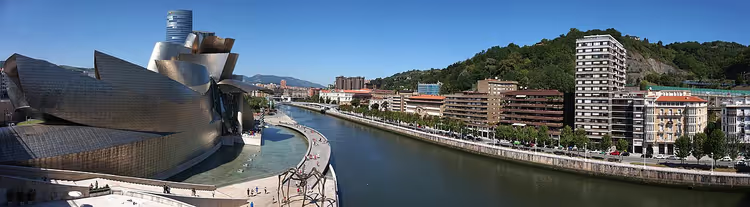
Today you see the result of that reset. The center has become green, new bridges span the river, and the old waterfront has turned into a promenade. For a weekend trip, that's more than enough.
Guggenheim Museum: the story of one building
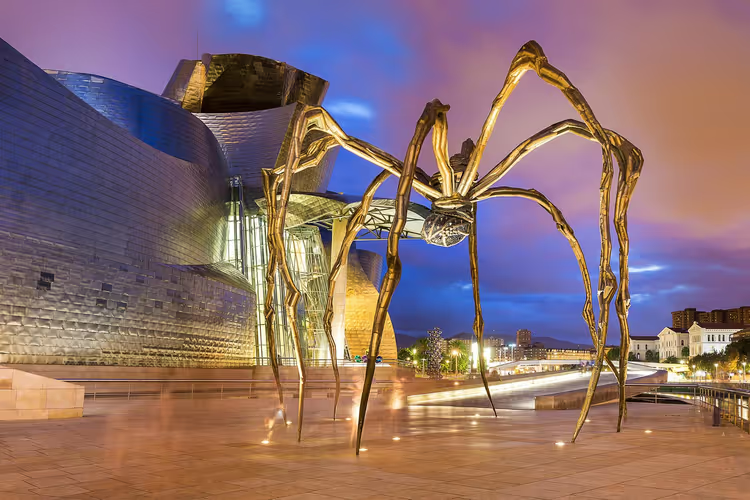
The main reason tourists come to Bilbao stands by the river. The Guggenheim Museum opened in 1997 (as of 09/2026, museum's official website). Negotiations for the project took ten years, and construction took four.
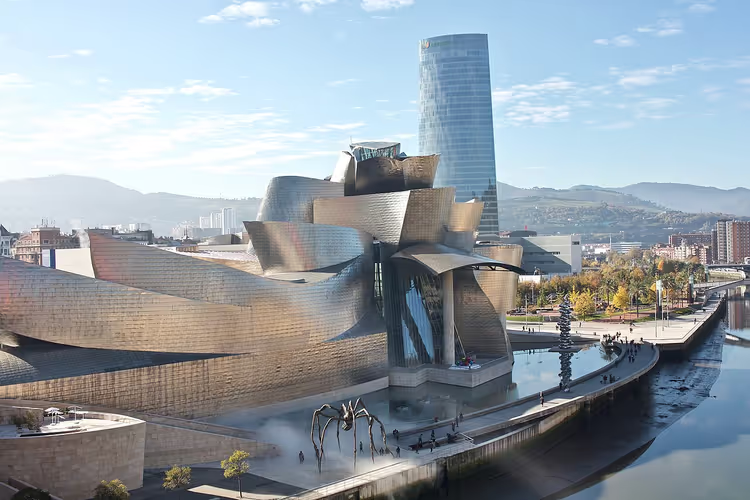
The building was designed by Canadian architect Frank O. Gehry, and it doesn't look like any other museum in Spain. Titanium panels change color depending on clouds and water, so the same facade looks different in the morning and in the evening. Don't rush inside: people take just as many photos outside as in the galleries.
Inside, you'll find a permanent collection and temporary exhibitions, which change regularly. The museum has become a magnet for the entire region, and about a million people visit every year (as of 09/2026, according to the museum).
 © Naotake Murayama · CC BYPhoto: Naotake Murayama, CC BY (https://creativecommons.org/licenses/by/2.0), Wikimedia Commons
Allow at least three hours for the museum. The audio guide is included in the ticket price, so you won't have to pay extra.
Tickets and opening hours
The museum is open Tuesday through Sunday, from 10:00 to 19:00 (as of 09/2026, museum schedule). From mid-June to mid-September, the museum stays open longer. The ticket office closes half an hour before closing time, and the galleries start clearing fifteen minutes before the end of the day.
An adult ticket costs 18 € (as of 09/2026, prices on the museum's website). Students under 26 and visitors over 65 pay 9 €, and children and teenagers enter for free (as of 09/2026, prices on the museum's website).
The museum is actually open on some Mondays, so check the calendar before buying. It's better to buy tickets in advance: you choose your entry time and skip the ticket line. The day before a temporary exhibition closes, the museum offers a discount in the evening hours.
Tours and tickets in Guggenheim Museum Bilbao
Guided tours, skip-the-line tickets and activities — most offers can be cancelled free of charge.
See offers on TiqetsThe widget loads once you give your consent.
A new face for the city
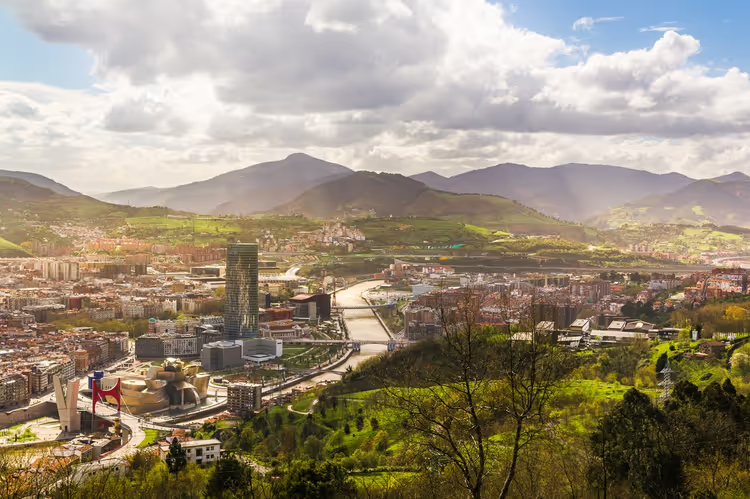
The crisis of the eighties gave Bilbao more than just a museum. The city invested in infrastructure, including with EU funds, and brought in well-known architects.
 © Tommie Hansen · CC BYPhoto: Tommie Hansen, CC BY (https://creativecommons.org/licenses/by/3.0), Wikimedia Commons
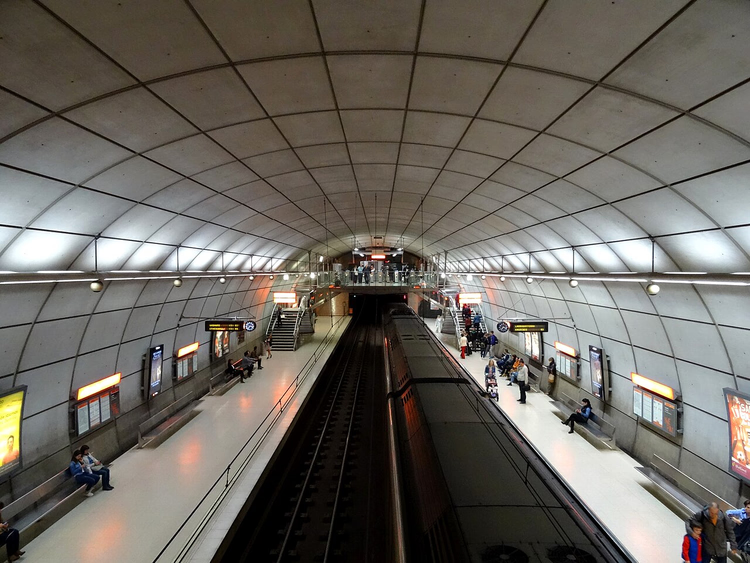
Bilbao's metro was designed by British architect Norman Foster, and the Zubizuri pedestrian bridge over the Nervión was built by Spaniard Santiago Calatrava. The stations with their curved glass canopies have become as much a symbol of the city as the titanium museum.
The practical takeaway for you: the center is easy to explore on foot, and the metro is a lifesaver when it rains. Take a walk along the Abandoibarra riverfront, where you can see both the museum and the bridges.
Museo de Bellas Artes de Bilbao
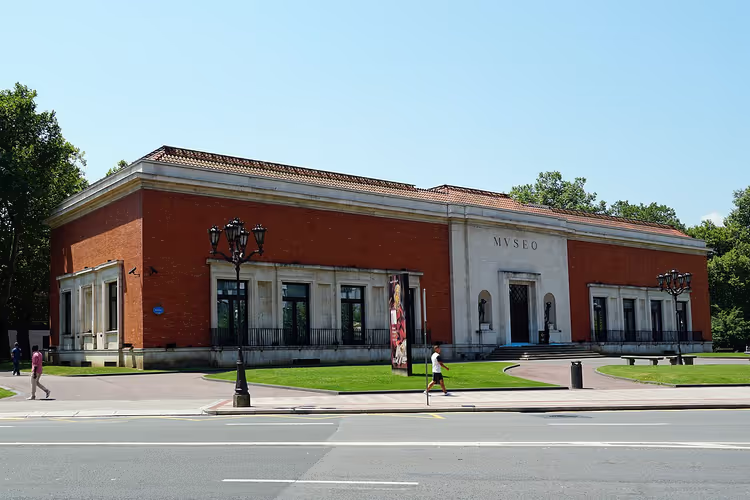
The city's second major museum is a stone's throw from the Guggenheim. The Museo de Bellas Artes de Bilbao has undergone expansion and renovation, and its collection spans old Spanish and Flemish painting, contemporary art, and Basque artists.
It's more convenient to buy a ticket together with the Guggenheim: one purchase, two museums (as of 09/2026, combo ticket and prices).
 © IGOLEA · CC BY-SAPhoto: IGOLEA, CC BY-SA (https://creativecommons.org/licenses/by-sa/4.0), Wikimedia Commons
Allow an hour and a half for the collection. If you're tired of museums, move your visit to the second day.
Casco Viejo and the Basque beret
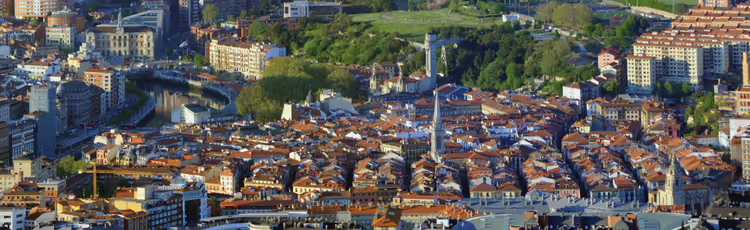
Bilbao's old town is called Casco Viejo. Its historic core is formed by seven streets, the Siete Calles, which lie on the right bank of the river and gave the whole district its name.
 © Mikel Iturbe Urretxa · CC BYPhoto: Mikel Iturbe Urretxa, CC BY (https://creativecommons.org/licenses/by/3.0), Wikimedia Commons
The district is bigger than seven streets. International chain stores, traditional shops, and dozens of bars all operate here. One small shop has been selling Basque berets for over a hundred years.
The pedestrian zones invite you to wander: you move from one shop window to the next without hearing any cars. The local bars serve both traditional and modern Basque cuisine.
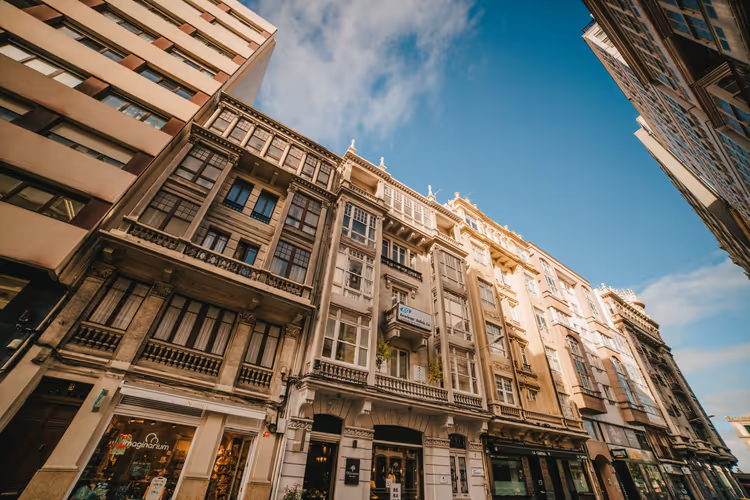
Pay attention to the details: balconies, wrought-iron grilles, old shop signs. Take photos in the morning, while the streets are empty.
In the early eighties the district flooded, and the buildings were badly damaged. Casco Viejo was later fully restored, and today it looks well kept and picturesque. The main leisure and shopping hub for locals and tourists alike is right here.
Teatro Arriaga and Santiago Cathedral
At the very edge of Casco Viejo stands the Teatro Arriaga. The theater had to be rebuilt from scratch after the flood, and today it is one of the city's main stages.
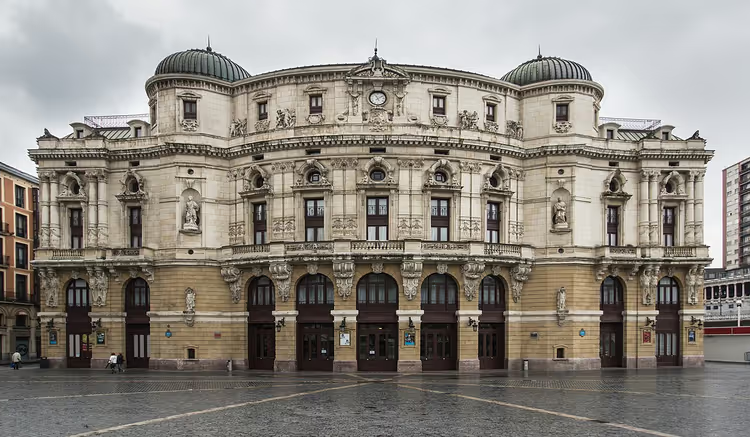 © Pedro J Pacheco · CC BY-SAPhoto: Pedro J Pacheco, CC BY-SA (https://creativecommons.org/licenses/by-sa/3.0/es/deed.en), Wikimedia Commons
From the theater you can reach Santiago Cathedral in a couple of minutes through narrow lanes. The fourteenth-century Gothic cathedral is dedicated to the city's patron saint and is considered the heart of Casco Viejo.
Plaza Nueva
Plaza Nueva lies a few steps from the cathedral. The large square is surrounded by nineteenth-century buildings with arcades, under which small restaurants and bars are tucked away.
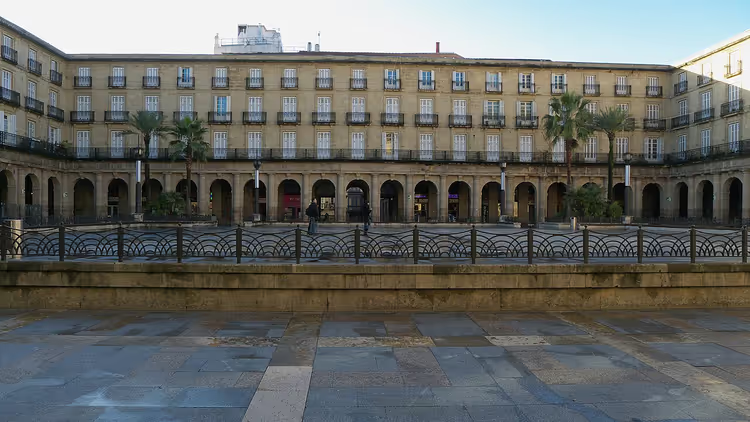 © José Luis Filpo Cabana · CC BY-SAPhoto: José Luis Filpo Cabana, CC BY-SA (https://creativecommons.org/licenses/by-sa/3.0), Wikimedia Commons
The arcades are a good place to take a break in the middle of the day. Small shops on the square sell regional products and souvenirs.
Mercado de la Ribera
In the southeastern part of Casco Viejo, right by the river, stands the Mercado de la Ribera. You'll recognize its stained glass from afar, including the city coat of arms with two wolves.
Inside, the market is divided into levels: fish and seafood on the bottom, meat, vegetables, and fruit on the middle floor. On weekdays and Saturdays the stalls are open from the morning; Sunday is a day off.
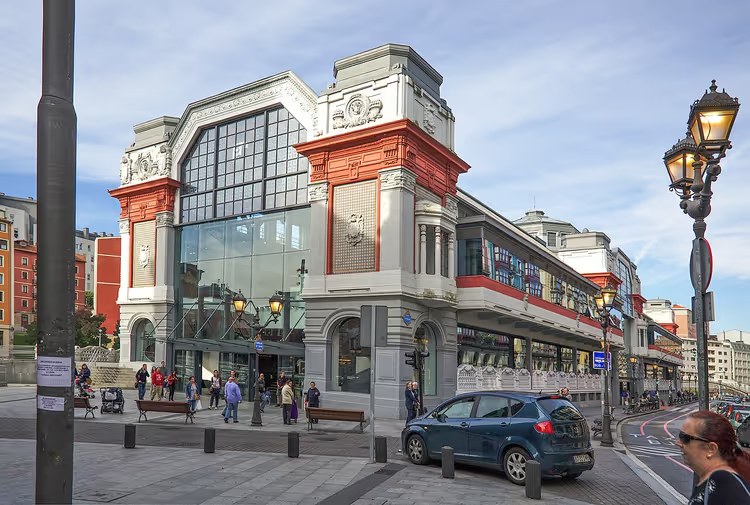 © PA · CC BY-SAPhoto: PA, CC BY-SA (https://creativecommons.org/licenses/by-sa/4.0), Wikimedia Commons
Don't leave right away: the market has gastro bars where you'll be served pintxos and a glass of local wine. That way you can try fresh fish without spending a lot.
San Antón bridge and church
Near the market is one of the city's oldest bridges, San Antón. The bridge was built in the sixteenth century, and the church of the same name was begun a century earlier.
San Antón church took a long time to complete: the tower was only finished in the eighteenth century. Cross the bridge to the other bank, where you'll get a view of the market and Casco Viejo.
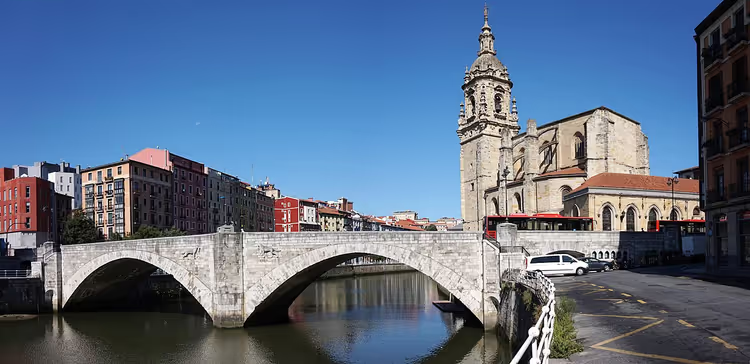 © Tiia Monto · CC BY-SAPhoto: Tiia Monto, CC BY-SA (https://creativecommons.org/licenses/by-sa/3.0), Wikimedia Commons
Jardines Albia and Café Iruña
On the left bank, not far from Casco Viejo, stands Bilbao's main train station. A few minutes' walk from it you'll find the green square of Jardines Albia.
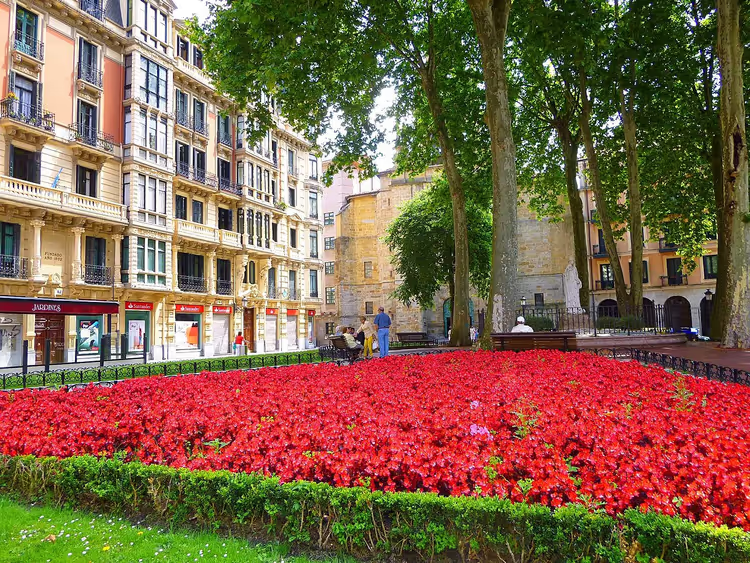
Benches sit under the old trees, and time seems to stand still here. Take a seat in the shade if the day turns out to be hot.
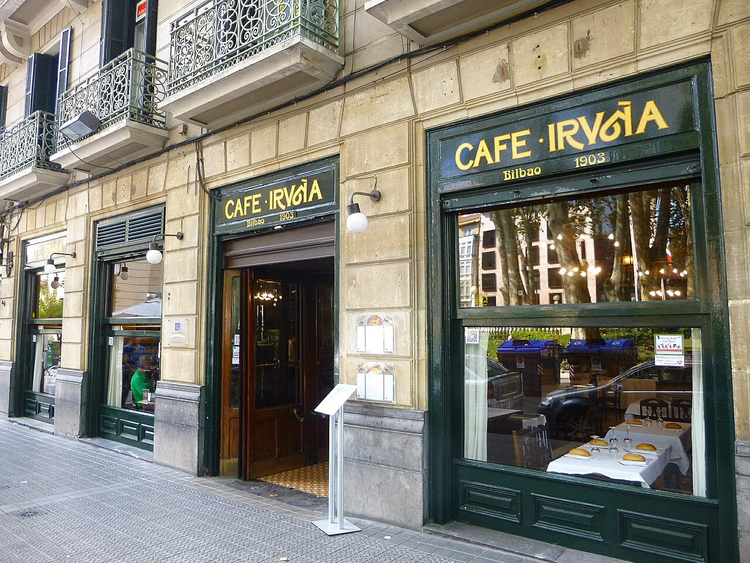
Café Iruña operates on the corner of the gardens. The café opened in 1903 (as of 09/2026, official website) and has been running full days ever since: breakfast, lunch, dinner.
People have been debating art, culture, and sports at Café Iruña’s tables for over a hundred years. Stop by even if you’re not hungry: a single cup of coffee will be enough.
Basque cuisine as an art
Eating well in Bilbao is considered part of the local way of life. The city has an unusually high number of good restaurants, and young Basque chefs, including two Michelin star holders, focus on local ingredients.
Fish and seafood come first. Livestock farming and vegetable growing follow close behind, so the ingredients for the cuisine are sourced within the region itself.
One address deserves a special mention. The restaurant Zortziko at Alda. Mazarredo, 17 operates in four futuristic dining rooms, and the menu starts at 85 € (as of 09/2026, official website). Portions are small, the cuisine is experimental and won't suit every taste.
Pinchos instead of tapas
The main food of Bilbao is called pinchos, or pinchos in Spanish. Spain connoisseurs will tell you they're just ordinary tapas, but pinchos are structured differently. Pinchos are closer to canapés, though even that comparison is incomplete.
Pinchos are made from seafood, fish, salad, cheese, ham or sausage and served on a piece of bread. The name comes from the skewer that holds the snack together: pincho means "skewer" in Spanish.
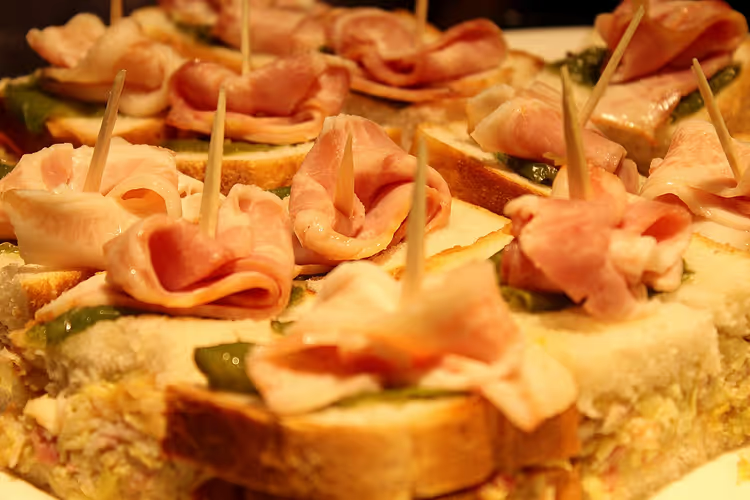 © Nicolas Vollmer from Munich [Allemagne] · CC BYPhoto: Nicolas Vollmer from Munich [Allemagne], CC BY (https://creativecommons.org/licenses/by/2.0), Wikimedia Commons
In bars, cafes and taverns, pinchos are laid out right on the counter, and you take them yourself. They don't count as a free addition to your drink: at the end you'll be charged for the number of skewers.
Every chef prepares pinchos their own way, so Casco Viejo becomes a real bar-hopping route. You go with friends from counter to counter and try different things. Don't overestimate how filling they are: after the third or fourth bar you'll feel noticeably heavier.
Biscay Bridge in Getxo
There's plenty to see around Bilbao, and you don't need a car for it. The Atlantic coast offers beaches, coves and cliffs, while further inland the mountains begin with rich flora and fauna.
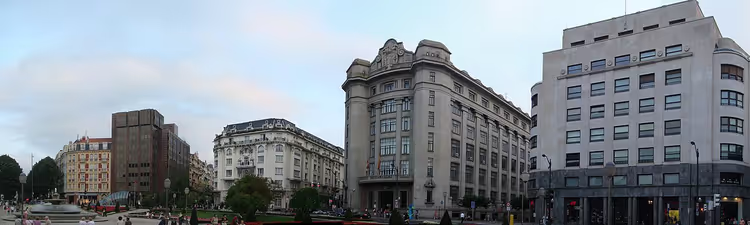 © Pablo Costa Tirado (… · CC BY-SAPhoto: Pablo Costa Tirado (…, CC BY-SA (https://creativecommons.org/licenses/by-sa/3.0), Wikimedia Commons
The area's main engineering landmark stands a few kilometers down the river. The Biscay Bridge, also known as Puente Colgante, was built in 1893 to a design by engineer Alberto de Palacio (as of 09/2026, official bridge website).
The bridge connects Portugalete and Las Arenas in Getxo and is considered the world's oldest transporter bridge. The steel structure rises 50 m, allowing large vessels to pass beneath it (as of 09/2026, according to the bridge operator).
On both banks there's an elevator for nine people that takes you to the top. There, a walkway begins at a height of 50 m, and you cross the river on foot along it. Check the opening hours before your trip (as of 09/2026, Puente Colgante website).
From the walkway you get a view of Bilbao on one side and the river mouth with the port on the other. A suspended gondola right at the water's surface takes you back to where you started.
History of Bilbao and the Euskara language
Bilbao is not a very old city. Its founder is considered to be Diego López de Haro, who in 1300 granted privileges to a small port settlement (as of 09/2026, Bilbao city portal).
At first the city grew slowly. In the time of the Catholic Monarchs, around seven hundred people lived in Bilbao. Later it was ravaged by pirates, and in the nineteenth century the Carlist Wars added to the troubles. The city also endured the Spanish Civil War with great difficulty.
Industrialization only began in the late nineteenth century. Iron smelting had a long tradition, but maritime trade and the port long remained the foundation of its wealth.
The Basque language Euskara is spoken by several hundred thousand people, and in Spain it has the status of a regional official language. It has eight main dialects, which divide into dozens of variants.
Euskara does not belong to the Indo-European language family and is considered very difficult: it has fifteen thousand verb forms alone. In the Basque Country people still tell the legend of the devil who lost a bet because he never managed to learn Basque.
The Basque philosopher and poet Miguel de Unamuno described the city better than any explanation: "Green mountains and the rough Basque sea made us Basques the way we are."
How to get there and when to go
Bilbao Airport is located in Loiu, and the trip to the city center takes less than half an hour (as of 09/2026, Aena).
A bus will take you to and from the airport; the metro does not reach the airport. Within the city, the metro, tram and your own two feet will be enough.
In summer Bilbao is cooler than southern Spain, but rain falls in any month. Bring a windbreaker and comfortable shoes: you'll be walking a lot around Casco Viejo.
Practical tips and the Bilbao Card
The Bilbao Card tourist card gives you access to all types of city transport and discounts at museums, tours, shops, and restaurants. The card is sold for one, two, or three days at tourist offices (as of 09/2026, Bilbao city website).
The main tourist information office is at Plaza del Ensanche, 11. The location is convenient: you can walk there from the center.
 © Ingolf from Berlin , Deutschland · CC BY-SAPhoto: Ingolf from Berlin , Deutschland, CC BY-SA (https://creativecommons.org/licenses/by-sa/2.0), Wikimedia Commons
A rough plan if you are going for a weekend:
Day | What to see | What to book in advance |
|---|---|---|
First | Guggenheim Museum, Abandoibarra waterfront | Museum ticket with an entry time |
Second | Casco Viejo, Plaza Nueva, Mercado de la Ribera | A table at a pintxos bar for the evening |
Third | Vizcaya Bridge, Portugalete, the coast | Train ticket to Getxo |
Pintxos and wine in Casco Viejo will cost you less than dinner at a restaurant near the museum.
What to read before the trip
The San Sebastián & Bilbao guidebook by journalist Petra Sparrer will be useful for your trip. The book includes a pull-out map and seven routes covering sights, beaches, and pintxos bars.
The book was published by Michael Müller Verlag and is about two hundred and forty pages long. You will find tips on culture, gastronomy, and trips along the Atlantic coast.
⁉️🤔 Frequently asked questions
How many days do you need in Bilbao?
Two days are enough for the Guggenheim Museum, Casco Viejo with pintxos, and the waterfront. A third day is convenient for the Vizcaya Bridge and the Atlantic coast around Getxo. If you love museums, add the Museo de Bellas Artes de Bilbao and set aside another half day.
What to see in Bilbao besides the Guggenheim Museum?
Casco Viejo with its seven streets, Santiago Cathedral, Teatro Arriaga, Plaza Nueva, and Mercado de la Ribera with its gastro bars. Add Jardines Albia with Café Iruña and the Museo de Bellas Artes de Bilbao. This program will take you two relaxed days.
How much does the Guggenheim Museum cost?
An adult ticket costs 18 € (as of 09/2026, museum website). Students under 26 and visitors over 65 pay 9 €, and children and teenagers enter free (as of 09/2026, prices on the museum website). The audio guide is included in the price, so you do not need to pay for it separately.
When is the best time to visit Bilbao?
The most comfortable time is from late spring to early fall: warm during the day, but without the southern heat. Rain is possible in Bilbao in any month, so a windbreaker will come in handy even in July. In summer the museum stays open longer.
What are pintxos and how much do they cost?
Pintxos are made from seafood, fish, cheese, ham, or sausage and served on a piece of bread with a skewer. In Casco Viejo bars you take them from the counter yourself, and at the end they count your skewers. The price depends on the bar and the filling, so a dinner of three snacks in different places will cost you less than one restaurant bill.
In short: what to book
Guggenheim Museum ticket should be bought in advance: in summer the line at the ticket office grows, and you choose your entry time. A table for the evening is worth booking if you plan to have pintxos at a popular Casco Viejo bar.
If you have two days, see the museum, Casco Viejo, and Mercado de la Ribera. If you have three days, add the Vizcaya Bridge and the coast in Getxo. If you are traveling with children, start with the museum and then go to Jardines Albia.

A small editorial team writing guides for independent travel. We travel ourselves, but we haven’t been everywhere, so we check prices, opening hours and how to get there against official sources.