
















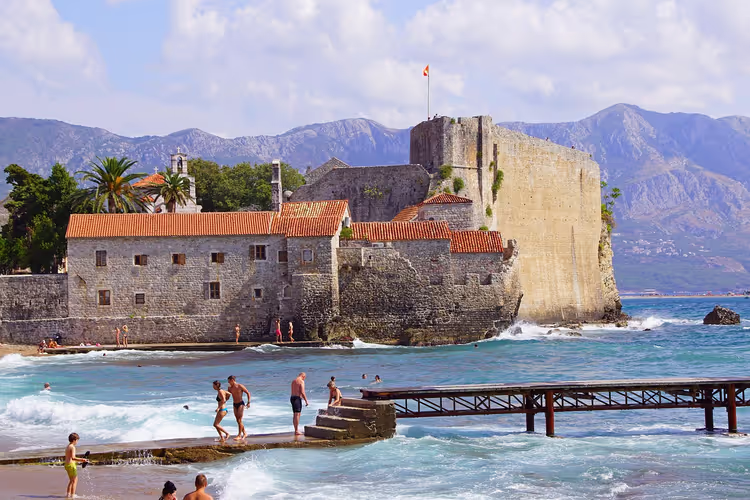
20 Places in Budva: what to see in three days and how much it costs
Budva is compact: you can cover twenty of the city's main sights in two or three walks. Along the way you'll find fortress walls, old churches, and beaches beneath the cliffs. Some places are free, some cost a few euros, and the water park on the hill has been closed for several years now. Below are all twenty points, with a route, opening hours, and honest catches.
Ad: this article contains affiliate links, we earn a commission if you book through them, at no extra cost to you.
What to see in Budva: 20 places
💡 In short:
- Old Town, the Citadel, the library, and the cathedrals can all be covered on foot in one day.
- Set aside separate outings for Mogren Fortress, Kosmač Fortress, Jaz Beach, Sveti Stefan, and Mount Čelobrdo.
- Prices, admission, and opening hours: 09/2026, verified on the official website of the Budva tourism organization
The order in the list is not strict: we went from the Old Town up the coast, then headed into the mountains above Budva. If you only have two days, take the first ten items and leave the rest for your next visit.
If you need | Go here | Admission |
|---|---|---|
The best view of the bay | Mogren Fortress | free |
Swimming beneath the cliffs | Mogren Beach | free |
History in one hour | Archaeological Museum | paid |
A walk on the water | Sveti Nikola Island | boat ticket |
A panorama of the Riviera | Mount Čelobrdo | free |
Something to do on a rainy day | Modern Art Gallery | paid |
1. Citadel
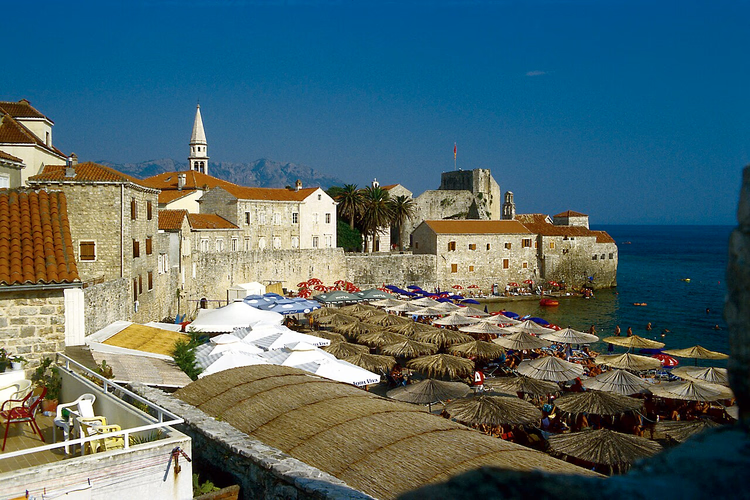
On the southern edge of the Old Town stands the fortress where the city walls began and ended. The first mention of it dates back to 1425 (as of 09/2026, Budva tourism organization website), and the walls were built against the Turks and finished by Venetian craftsmen. The terraces offer the best view of the tiled roofs and the sea.
 © Falk2 · CC BY-SAPhoto: Falk2, CC BY-SA (https://creativecommons.org/licenses/by-sa/4.0), Wikimedia Commons
Today the Citadel is privately owned: a small museum and a restaurant operate inside, and some of the rooms are closed to visitors. You climb stone staircases to the upper terrace, where a modest collection of exhibits stands. Keep your ID handy.
Admission is paid, a ticket costs a few euros. If you want to visit the museum, be prepared to pay separately. City tours usually include the Citadel in their itinerary, so the ticket may be included in the overall price. Check this with the organizer in advance.
- How long: about an hour for everything.
- Who it's for: those who want a panorama and aren't ready to head into the mountains.
- The catch: the museum inside charges a separate fee.
2. Library
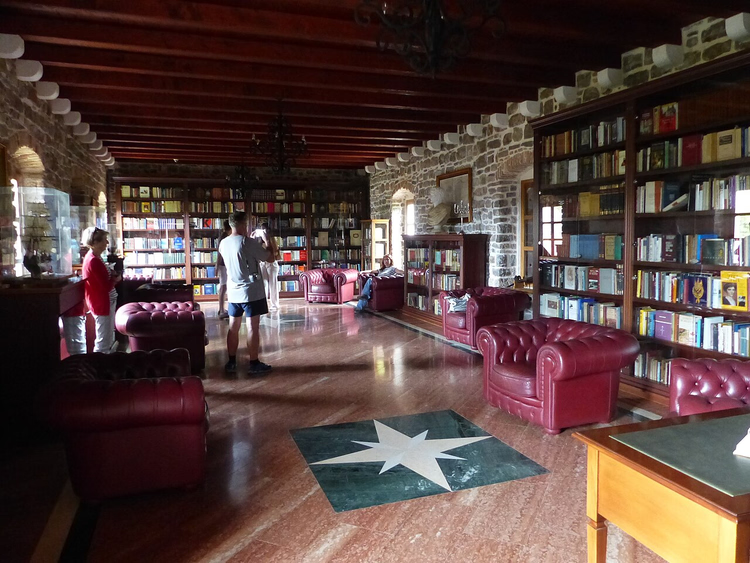
The old library occupies one of the buildings in the Citadel complex. From the outside, the building looks modest, a stone facade with no ornamentation. Inside, you'll find antique finishes and high ceilings. Photography is allowed here, so many people come just for the photos.
 © Wolfgang Sauber · CC BY-SAPhoto: Wolfgang Sauber, CC BY-SA (https://creativecommons.org/licenses/by-sa/4.0), Wikimedia Commons
A restoration center for old manuscripts operates at the library. Locals use the reading room, and the halls host seminars and academic meetings. A separate exhibition tells the story of the building itself.
Admission to the library is free (according to the city tourist office). A separate ticket is required to see the rest of the Citadel.
The library building is part of the same complex as the art gallery and the archaeological museum, so it's convenient to combine your visit. The antique interior details have been preserved almost in their original condition. The reading room opens early in the morning, but it's best to check the schedule in advance: on event days the halls are closed to visitors. If you just need a nice photo, ten minutes in the main hall is enough, and there's plenty of light even on a cloudy day.
- How long: half an hour if you're just looking around the halls.
- The catch: the library is closed on Sundays.
3. Promenade
The promenade runs along the entire coast from the Old Town center to the city outskirts. The pedestrian street is lined with palm trees, with cafes and small shops behind them. It's hot here during the day, so it's better to walk in the morning or after sunset.
 © Shixart1985 · CC BYPhoto: Shixart1985, CC BY (https://creativecommons.org/licenses/by/2.0), Wikimedia Commons
In the evening, music plays on the promenade, and sightseeing boats wait at the pier. Boats leave from here for Sveti Nikola Island and toward Sveti Stefan. Departures run every hour, and a ticket costs a few euros. Put this walk on your first day to get a sense of the city's layout.
Restaurants and open-air cafes line the water, and people fish from the parapet. If you're with children, an hour is enough for a leisurely loop to the end of the promenade and back.
- How long: an hour, more in the evening.
- The catch: in season, it's noisy here in the evening because of music from the bars.
4. Podmaine Monastery
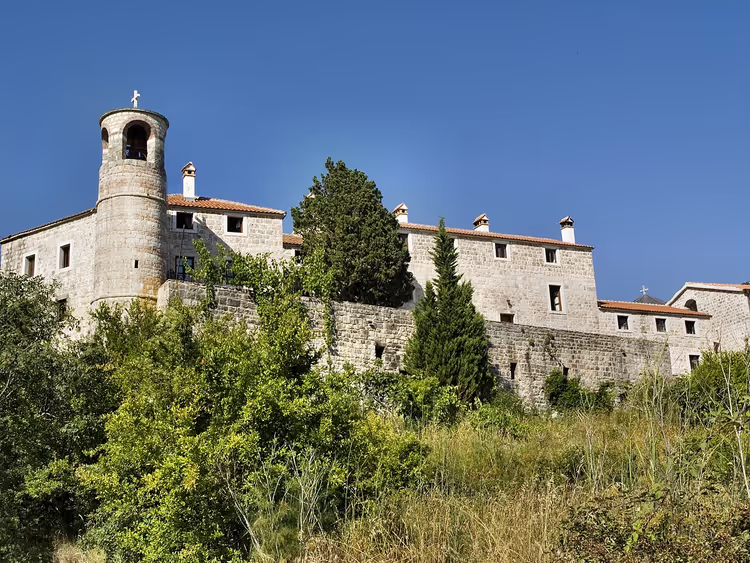
Podmaine Monastery stands two kilometers from the Old Town, away from the tourist streets. The complex is easy to recognize by its light walls without stucco or gilding. The place has a difficult history, but its appearance doesn't show it.
 © Островский Александр, Киев · CC BY-SAPhoto: Островский Александр, Киев, CC BY-SA (https://creativecommons.org/licenses/by-sa/3.0), Wikimedia Commons
The main draw for travelers is the Small Church of the Assumption. Above ground it looks like a single monk's cell, but it actually hides an underground church with frescoes. The murals had to be restored after a major earthquake.
Getting there takes time. You follow the signs, and each one leads you higher up the slope. A taxi from the center will cost a few euros. Come in the morning before the sun gets intense: shade along the route is rare.
The monastery's official name is Podostrog, though locals more often say Podmaine. The site sits close to the sea, so a warm breeze is noticeable even at midday in summer. Besides the Small Church of the Assumption, the complex includes only a few buildings, and it looks modest from the outside, with no stucco, gilding, or bright details. The dome over the underground church is visible only from the nearby viewing area, so look around carefully so you don't walk past it.
- How long: an hour for the walk and the visit.
- The catch: the uphill climb is tiring, especially in summer.
5. Church of the Holy Trinity
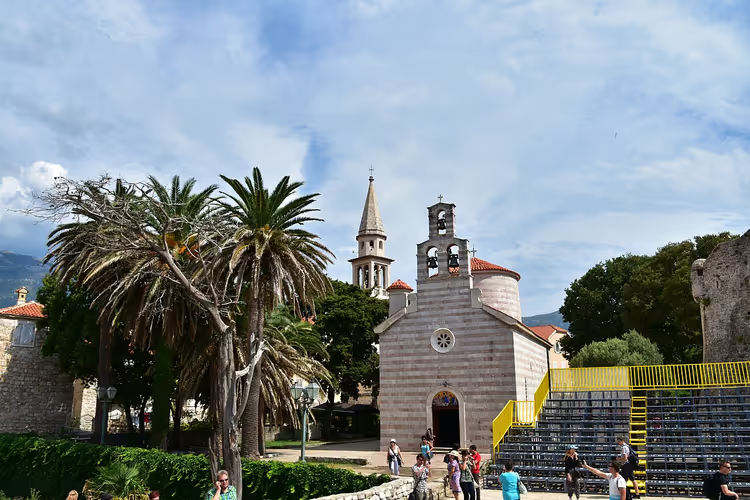
The Church of the Holy Trinity stands on a square in the Old Town and always draws a crowd. The church is young compared to the neighboring buildings, but it has become a focal point. Its appearance mixes baroque details and Byzantine vaults with a large dome.
 © Richard Mortel from Riyadh, Saudi Arabia · CC BYPhoto: Richard Mortel from Riyadh, Saudi Arabia, CC BY (https://creativecommons.org/licenses/by/2.0), Wikimedia Commons
Inside is a reconstruction of an icon by Andrei Rublev, made close to the original. The walls are built of white and red stone, so the church is visible from a distance.
It's convenient to see it on the way to the Citadel. You enter the square, walk around the church, and continue toward the sea. The square is small, so in high season you have to wait for a tour group to disperse.
The square in front of the church works as a crossroads of the Old Town. Someone is always standing here: guided groups, locals, tourists with maps. What draws attention is not only the architecture but also the white and red stonework and fragments of old murals. You can't call it a classic Orthodox church; it doesn't look like the neighboring buildings, and that's exactly what makes it interesting. The visit doesn't take long, and photos come out well from any angle.
- How long: half an hour.
- The catch: the square is small, and in high season it gets crowded.
6. The Budva Ballerina
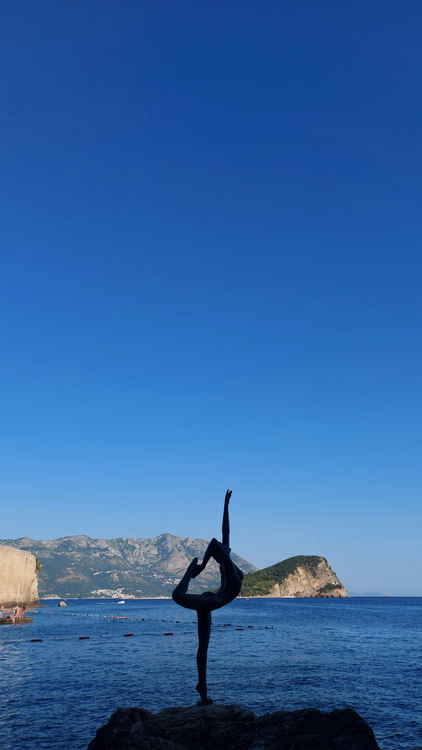
The bronze figure of a dancer stands frozen above the sea between the Mogren beaches. The statue has no official history: neither the sculptor's name nor the exact reason it appeared is known. This mystery has given rise to dozens of versions among locals and visitors, most of them sad.
 © DavidGjorgiev · CC BYPhoto: DavidGjorgiev, CC BY (https://creativecommons.org/licenses/by/4.0), Wikimedia Commons
The easiest way to see it is for guests of the Avala hotel, since the boulder with the figure sits by its wall. Everyone else has to walk from the promenade toward the Old Town. Landmark: a newer building with a concrete canopy; behind it a narrow path begins along the cliffs.
You follow this path and come out right at the Mogren beaches. From there the statue is visible at the very entrance to the beach area. Along the way there are places to stay and spots to photograph the bay from above.
- How long: a half-hour walk from the promenade.
- The catch: the path is narrow and slippery after rain.
7. Mogren Fortress
From the fortress on the cape, fragments of walls and corner watchtowers remain. It was once the most formidable structure on the entire Budva coast. Today the stones are slowly being swallowed by greenery. There is a certain charm in that: it is quiet here and there are almost no people.

There are no official tours here and no tickets are sold. The ruins lie about a kilometer from Budva, between Jaz and Mogren beaches, on a high hill. The trail from the second section of Mogren beach has long been washed out, so it is easier to walk along the coastal highway.
From the bus stop, you walk along the sidewalk for about fifteen minutes. Then a tunnel begins with a sign for Tvrdava Mogren, where you turn left. The dirt road gets badly washed out after rain, so pick a dry day and wear comfortable shoes.
- How long: an hour and a half including the walk.
- Who it's for: those who want a view without the crowds and are willing to walk.
- The catch: the trail from Mogren beach is washed out, so it is better to go up along the highway.
8. Plaža Mogren
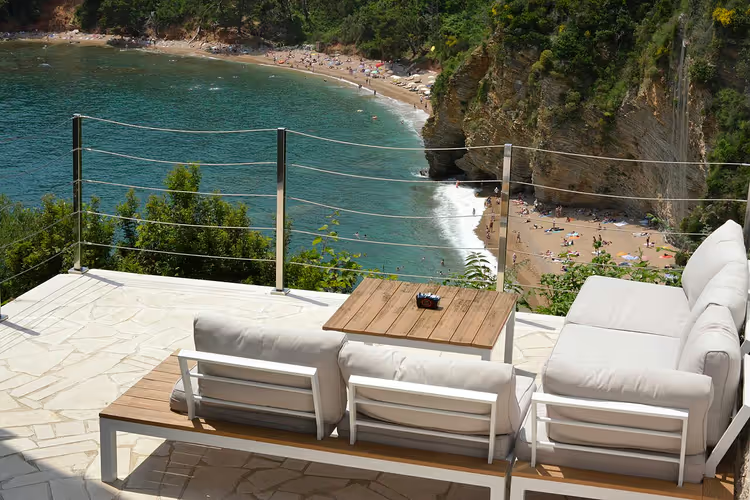
Mogren beach lies beneath the cliffs next to the Old Town, and it is the most recognizable stretch of shore in Budva. Two small coves are connected by a narrow passage that locals carved through the rock. The place got its name from the Spanish navigator Magrini.
 © Miomir Magdevski · CC BY-SAPhoto: Miomir Magdevski, CC BY-SA (https://creativecommons.org/licenses/by-sa/4.0), Wikimedia Commons
Entry is free for everyone. Under Morsko Dobro rules, half of the managed beach remains free of loungers and umbrellas (as of 09/2026, breakdown of Mogren beach). An umbrella and two loungers cost about ten euros. Changing rooms and showers are on site.
From the Old Town you can walk there in about ten minutes along a path that hugs the cliffs. From the Jaz side, the route is longer and follows a winding trail among boulders. In season the place is popular, so grab a spot near the water in the morning.
- How long: half a day.
- Who it's for: swimming beneath the cliffs and photos by the ballerina statue.
- The catch: in July and August it is packed.
9. Church of Santa Maria in Punta
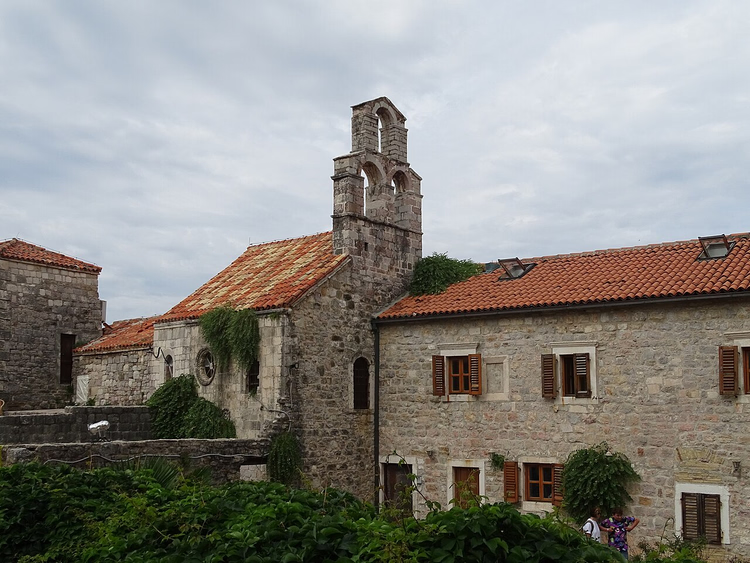
On the site of an ancient sanctuary of Hercules now stands a stark building of gray stone with a red tile roof. At first glance you would take it for part of the Citadel's fortress wall. In fact, it is one of the oldest churches on the Adriatic, although services have not been held here for a long time.
 © Ad Meskens You are free to use this picture for any purpose as long as you credit its author, Ad Meskens . Example: © Ad · CC BY-SAPhoto: Ad Meskens You are free to use this picture for any purpose as long as you credit its author, Ad Meskens . Example: © Ad, CC BY-SA (https://creativecommons.org/licenses/by-sa/4.0), Wikimedia Commons
The church was built by Benedictine monks and remained under their patronage for nearly five centuries. In the fifteenth century the church passed to the Franciscans. There is no rich interior decoration, but the acoustics are excellent: after restoration, classical music concerts are regularly held here (according to the Budva tourist office).
In summer, the Grad Teatar festival takes place within these walls. Theater troupes, puppeteers, readers, and musicians perform under the old beams. You can catch an evening program; the schedule is posted at the entrance.
- How long: half an hour.
- The catch: the church is not active, and the doors are opened mainly for concerts.
10. Sveti Nikola Island
Sveti Nikola Island lies opposite Budva and is considered the wildest corner of the local Riviera. Sheer cliffs, dense greenery, and several beaches with coves draw both tourists and locals here. The island got its name from the ruins of a small church.
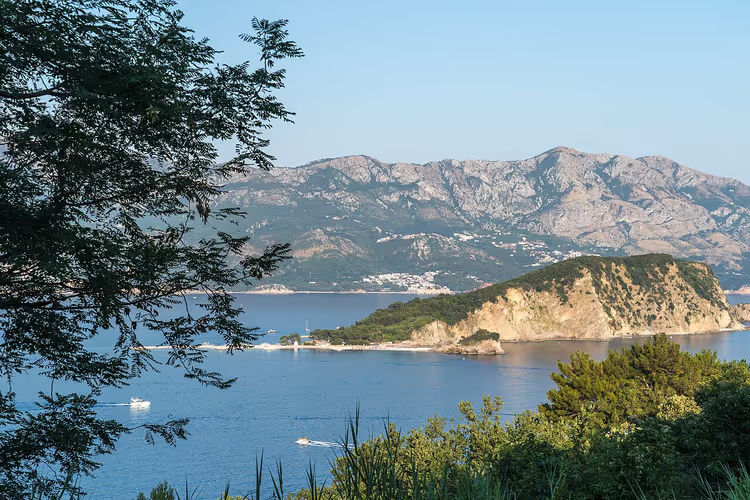 © Alexkom000 · CC BYPhoto: Alexkom000, CC BY (https://creativecommons.org/licenses/by/4.0), Wikimedia Commons
A narrow strip of rocks connects it to the mainland, leading to Slavyansky beach. This path cannot be used: at certain hours it is life-threatening. There is only one safe route, and it goes by water.
Tour formats vary. A group tour with a stop on the island costs about 25 € (as of 09/2026, guide to Budva bay). A private boat for five hours with stops in the coves will run about 150 €. Three hours on the water is enough to swim and walk around the island.
The island has three beaches, all tucked into coves. The coastline is uneven: small inlets alternate with grottoes, and the sea views from here are considered among the best on the Riviera. Birds nest here too, and their calls can be heard long before you reach the shore. If you want a day by the water without crowds, bring your own water and food: there are almost no cafes on the island.
- How long: half a day including travel.
- Who it's for: quiet, clear water, and photos from the cliffs.
- The catch: the walking path over the rocks is dangerous, so you need to get there by boat.
11. Old Town
The Old Town looks like an island of medieval architecture surrounded by modern hotels. From above you see toy-like tile roofs, narrow streets, and white walls with red geraniums. Up close, the walls no longer seem like a backdrop: in places they are up to two meters thick.
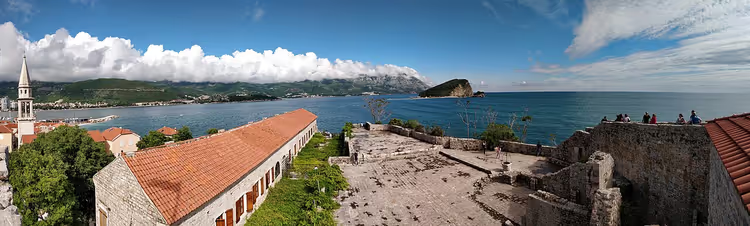 © Jaakko Luttinen · CC BY-SAPhoto: Jaakko Luttinen, CC BY-SA (https://creativecommons.org/licenses/by-sa/4.0), Wikimedia Commons
The main landmark of the area is the Citadel's fortress walls, which have stood in the wind for over a thousand years. Besides the fortifications, the area has churches, museums, and an entertainment center. Five gates lead inside, but only two are considered historic.
You can walk here from any part of Budva: signs stand at every intersection. A taxi from the outskirts asks about five euros, while walking tours of the center cost about two euros. The savings are obvious, so it is better to walk. You can also book Old Town tour tickets in advance.
- How long: half a day for the walls, churches, and museums.
- The catch: a taxi to the center costs about five euros, even though it is not far to walk.
12. Church of St. Sava
The Church of St. Sava is dedicated to the Serbian saint considered the founder of Orthodoxy in Serbia. According to tradition, the church was built in the twelfth century on the spot where Sava set off as a pilgrim to Jerusalem. Later the church passed to the Franciscans.
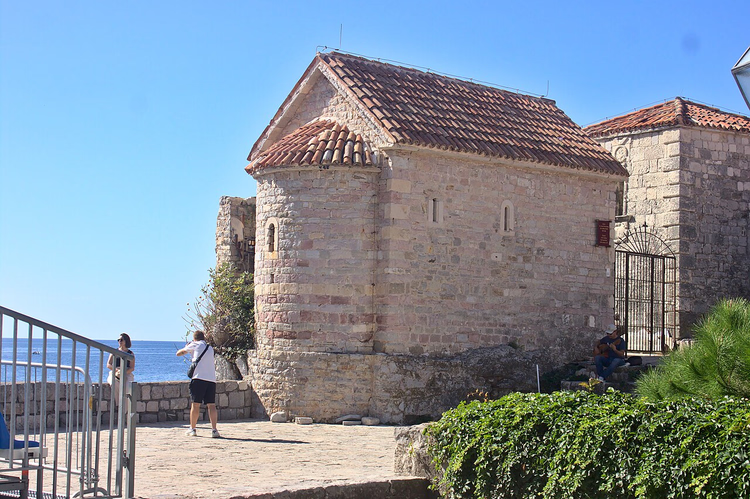 © I would appreciate being notified if you use my work outside Wikimedia. More of my work can be found in my personal gall · CC BY-SAPhoto: I would appreciate being notified if you use my work outside Wikimedia. More of my work can be found in my personal gall, CC BY-SA (https://creativecommons.org/licenses/by-sa/4.0), Wikimedia Commons
The structure is small, three by five meters, and is built directly into the fortress wall. The stone is gray and red, there is no cross above the roof and no bell tower. Locals consider it a sacred place, not just a monument.
Inside, fragments of twelfth-century frescoes survive, the church's main treasure. No services are held here, but visitors are allowed in. The Church of St. Mary sits right next to it and is also worth a look.
- How long: half an hour.
- The catch: no services, the church operates as a monument.
13. Jaz Beach
Jaz beach stands out noticeably among the shores of Budva and consists of two zones. There is sand here, which is a rarity for this city, and the water holds a clean azure hue. The Rolling Stones once performed at this venue, hence its fame as a concert stage.
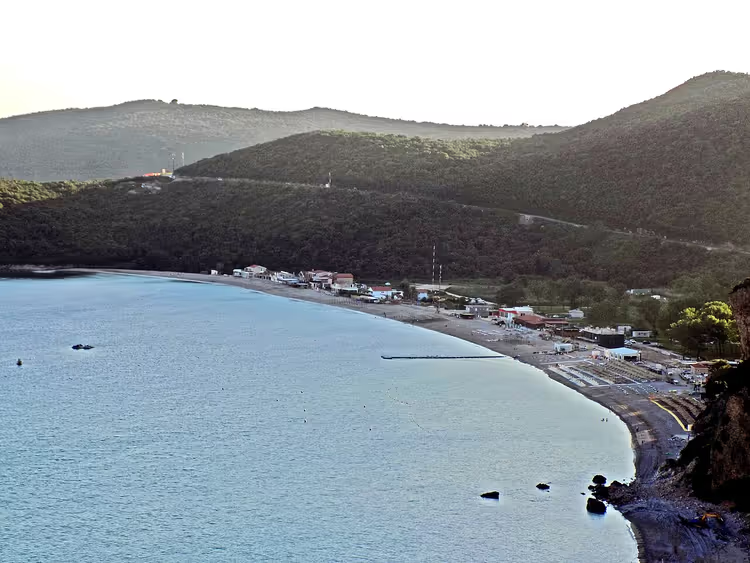 © Milica Buha · CC BY-SAPhoto: Milica Buha, CC BY-SA (https://creativecommons.org/licenses/by-sa/4.0), Wikimedia Commons
The first stretch starts with rocks and boulders, then the stone gives way to pebbles and golden sand. Loungers and umbrellas are available to rent: an umbrella with two sunbeds costs about ten euros. Beach access is free.
Walking here takes a long time along a dusty dirt road. You can get there by public bus from the stop near the Old Town; the landmark for getting off is the Perla cafe. Arrive before noon, while the shore is still empty.
- How long to allow: half a day.
- The catch: it's a long walk, and after rain the road gets washed out.
14. Archaeological Museum
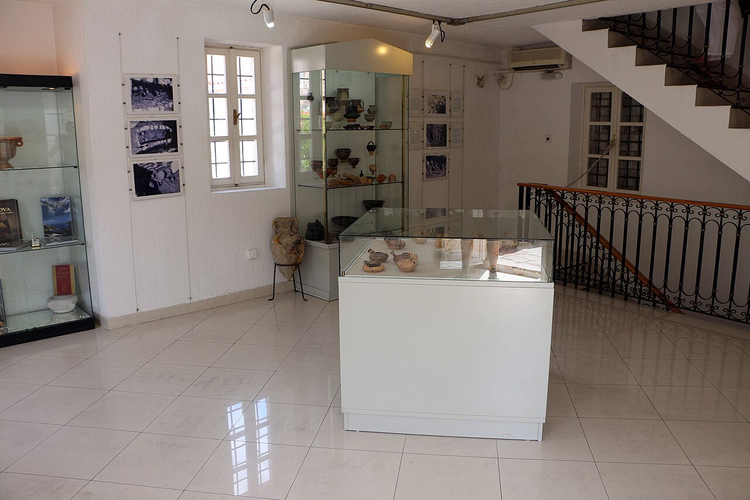
The museum in Budva opened late, only at the beginning of the twentieth century. The town itself is considered one of the oldest on the Adriatic coast, so the collection turned out to be dense. Today the Archaeological Museum has become a familiar part of the Old Town.
 © Sailko · CC BYPhoto: Sailko, CC BY (https://creativecommons.org/licenses/by/3.0), Wikimedia Commons
The exhibition brings together objects from different cultural layers. You'll see traces of the Greeks, Romans, and Venetians, who came here for a couple of centuries at a time and left their mark (as of 09/2026, Budva museums and galleries). Some of the finds date back to antiquity and the early Middle Ages.
The tour starts right from the street. Near the museum walls, the remains of ancient structures are scattered in apparent disorder, and many people walk past without realizing that they're already looking at part of the exhibition. A ticket costs a few euros, and opening hours depend on the season.
The exhibition is arranged so that you move through the layers of history: first Greek finds, then Roman, then Venetian. Many objects were recovered directly from the city's streets and squares, so each one has its own label noting where it was found. The building itself stands in the historic part of town, next to the fortress wall, and fits into the same route as the Old Town. If you're in a hurry, just see the main hall; that's enough for a general impression.
- How long to allow: an hour.
- The catch: some of the exhibits are outside and easy to miss.
15. St. John's Cathedral
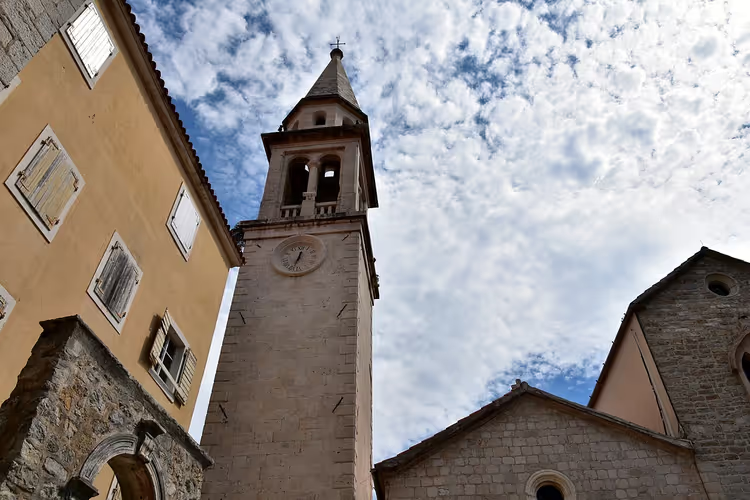
St. John's Cathedral stands in the historic center next to the fortress wall. Its tall bell tower is visible from anywhere in the Old Town and works as a landmark. The Gothic church was built in the thirteenth century on the site of an older church.
 © Richard Mortel from Riyadh, Saudi Arabia · CC BYPhoto: Richard Mortel from Riyadh, Saudi Arabia, CC BY (https://creativecommons.org/licenses/by/2.0), Wikimedia Commons
The previous building was destroyed by an earthquake, and the new church also took a beating. In the seventeenth century the cathedral was fully reconstructed, and the bell tower was added later. Restorers preserved the Gothic details: the rose window, pointed windows, and the unplastered facade.
Inside, the decor is restrained. On the lower walls you'll find remnants of ancient frescoes, while the upper part is simply whitewashed. The cathedral's main relic is the twelfth-century icon of Our Lady of Pontus in the north altar. The Murano glass mosaic depicts John the Baptist.
Inside the cathedral there are several altars, and each one is worth examining separately. Against the south wall is the altar of Our Lady of Health with twelfth-century iconography, and next to it the altar of the Holy Cross with a depiction of the Baptism of the Lord. The north altar is finished in marble, and here is kept the icon of Our Lady of Pontus, the church's main relic. The Murano glass mosaic was assembled in the eighteenth century, and its area reaches forty square meters.
- How much time: an hour.
- The catch: the interior is modest, with almost no marble or gilding.
16. Budva Water Park
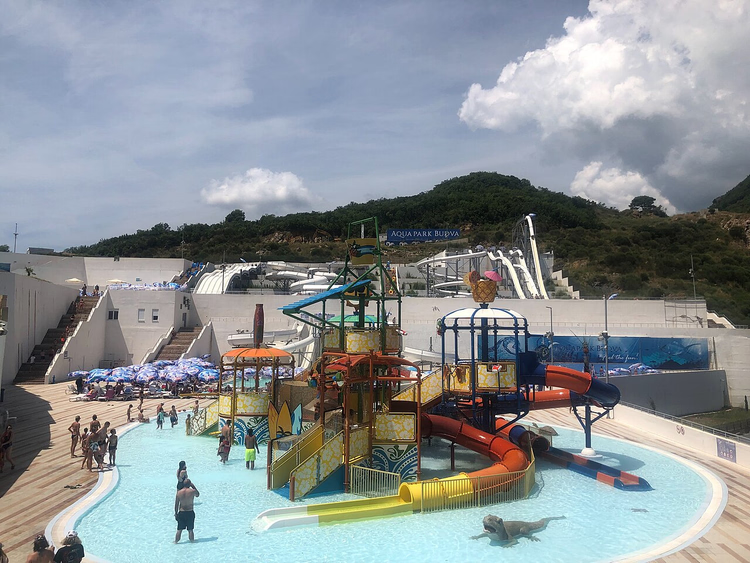
The water park on Topliš Hill opened in 2016 and quickly became the city's main family attraction. The facility is currently not operating: directories list it as permanently closed (as of 09/2026, Aquapark Budva in the city directory). You can no longer plan a day with kids around it.
 © KarenWunderkind · CC BY-SAPhoto: KarenWunderkind, CC BY-SA (https://creativecommons.org/licenses/by-sa/4.0), Wikimedia Commons
The reason for the closure comes down to money and a lawsuit. The tenant Aquaterra solution went years without paying the city, the dispute went to court, and the park dropped out of tourist life (history of the dispute). The site has not been restored so far.
Instead of the slides, choose St. Nicholas Island or Jaz Beach. Both offer swimming and shade, and entry remains free. If you're traveling with kids, these two spots will fill a whole day.
- Who it's for: a reminder for those who found the water park in old guidebooks.
- The catch: the facility is closed and abandoned, and the lawsuit drags on without result.
17. Modern Art Gallery
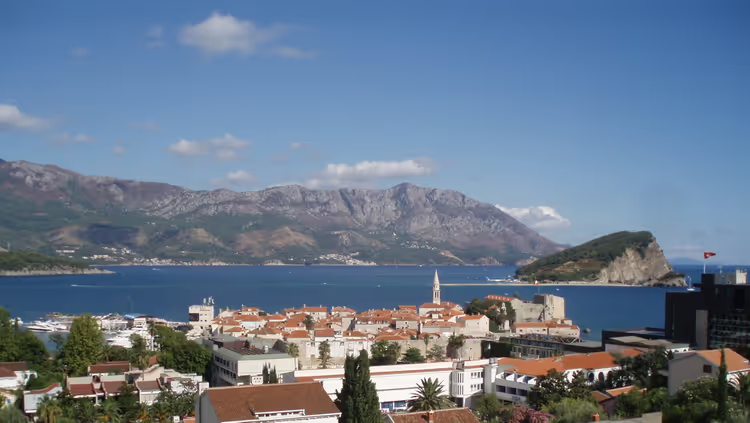
The gallery opened in the early seventies, when Budva began hosting annual artist gatherings. Masters came for plein air sessions and left one work each to the city. The Modern Art Gallery was created to house these gifts.
 © Bratislav Tabaš · CC BY-SAPhoto: Bratislav Tabaš, CC BY-SA (https://creativecommons.org/licenses/by-sa/3.0), Wikimedia Commons
That is how the "Modern Expressionists" collection came together. Tabuti, Dindstrem, Bradley, Jousselin, and Gillet each gave the gallery a painting. Today the halls display works by artists from various countries, including Mexican Andreas Salgo, Egyptian Salah Taher, and Spaniard Oscar Estruga.
The genres are also varied: oil, watercolor, graphic art, sculpture, and photography. In total the collection holds about four hundred items (as of 09/2026, city museums and galleries). Most of the works were created in the second half of the twentieth century. The gallery is named after the artist Jovo Ivanović, who ran it for thirty years.
- How much time: an hour.
- Who it's for: for a rainy day and for those tired of the beaches.
- The catch: the rooms are small, and there are few temporary exhibitions.
18. Kosmač Fortress
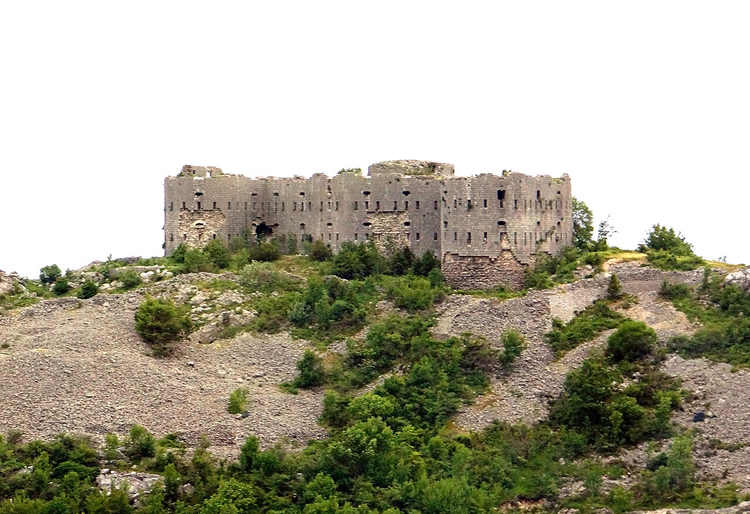
Kosmač Fortress was built in the nineteenth century on a hill above the village of Brajići. From the bus window on the way from Budva to Cetinje you'll see its silhouette at the very top. The fort was built using the new technologies of its time and served as the border between Austria and Montenegro.
 © Dennis G. Jarvis · CC BY-SAPhoto: Dennis G. Jarvis, CC BY-SA (https://creativecommons.org/licenses/by-sa/2.0), Wikimedia Commons
The hill offered an excellent vantage point, so Kosmač was considered an important strategic position. It was held by Austrians and Italians, and the traces of attacks are still visible. The right wing and the central bastion suffered the most damage, and an earthquake added to it.
A narrow drivable road leads to the fortress, but driving on it is unsafe. Many people walk up along a marked trail. The complex is two stories, with bastions and a basement; the window openings and the rifle tower are the best preserved.
- How much time: two hours including the road.
- The catch: the road to the fort is narrow and rough, and driving on it is risky.
19. Sveti Stefan
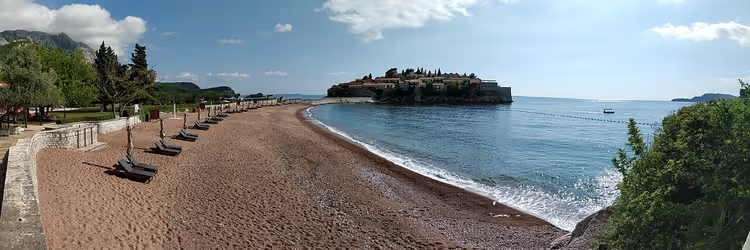
Sveti Stefan stood closed for a long time, but in the summer of 2026 it returned to guests. The Aman Sveti Stefan resort opened on July 1 after five years of renovation and a dispute over beach access (as of 09/2026, The Balkan Guide). Villa Miločer on the mainland welcomed its first guests on May 22.
 © Jaakko Luttinen · CC BY-SAPhoto: Jaakko Luttinen, CC BY-SA (https://creativecommons.org/licenses/by-sa/4.0), Wikimedia Commons
The island looks like a former fishing village on a rock five hundred meters from the shore. The medieval houses have been converted into rooms, with the authentic exterior preserved. The complex has 41 units in total, and rates start at £1,300 per night (opening details).
Only hotel guests can access the island itself. Everyone else views it from the shore and from the water: a boat brings tourists over for about two hours. That's enough time to swim, walk through the pine forest, and take in the surroundings.
- How much time: two hours by boat.
- The catch: the island beach is closed to outsiders; only hotel guests are allowed inside.
20. Chelobrdo Mountain
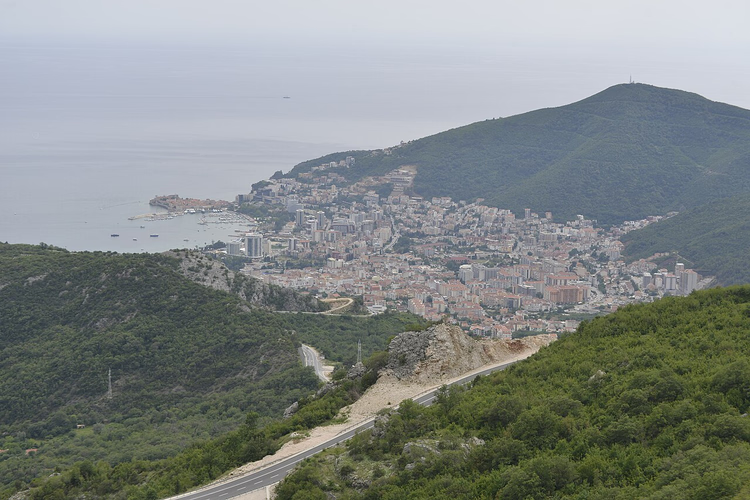
Chelobrdo Mountain works as a natural observation deck over the Budva Riviera. People come up here after visiting the Praskavica Monastery: the views from above make the trip worthwhile. You'll see turquoise water, Sveti Stefan island, and green slopes.
 © Miomir Magdevski · CC BY-SAPhoto: Miomir Magdevski, CC BY-SA (https://creativecommons.org/licenses/by-sa/4.0), Wikimedia Commons
A stone road leads from the monastery to the viewpoint. Higher up stands the Rustovo convent with the Church of the Holy Royal Martyrs of the Romanovs.
By car, you take the road from Przno toward Sveti Stefan, turn before the fork, and continue another two kilometers toward the village of Chelobrdo. At the top there's a monument to war heroes, and nearby a spring with fresh drinking water. The best time to go up: evening, when you can watch the sunset from here.
- How much time: two hours.
- The catch: hard to reach without a car, and the climb is long.
If you'd like to add a boat trip or a guided tour to this list, check out the options below.
Tours and tickets in Budva
Guided tours, skip-the-line tickets and activities — most offers can be cancelled free of charge.
See offers on GetYourGuideThe widget loads once you give your consent.
⁉️🤔 Frequently asked questions
How many days do you need for Budva?
Three days at a relaxed pace is enough for the twenty sights. Spend the first day on the Old Town, the Citadel, the library, and the cathedrals. The second day goes to Mogren and Jaz beaches, the third to St. Nicholas Island, Sveti Stefan, and Chelobrdo Mountain. If you're short on time, keep the Old Town and one beach.
Which Budva attractions are free?
You can see the promenade, both beaches, the narrow streets of the Old Town, and the ruins of Mogren Fortress for free. The old library also lets you in without a ticket. The Citadel, the Archaeological Museum, and the Modern Art Gallery remain paid. Plan your entrance budget in advance if you're doing the museums.
Is the water park in Budva open?
No. The park on Toplis Hill is not operating and is listed as permanently closed. The reason is the tenant's debts and a legal dispute with the city. Restoration hasn't started yet, so you should cross the slides off your plan. With kids, choose Jaz Beach or St. Nicholas Island.
How do you get to St. Nicholas Island?
Only by water. The strip of rocks from Slavyansky Beach is dangerous; you can't walk across it. Group trips to the island cost around €25, and a private boat for five hours runs about €150. Boats depart from the pier on the promenade, and tickets are sold at the entrance.
Can you get inside Sveti Stefan?
Only if you're a guest of the Aman complex. Everyone else has to settle for the view from the shore and from the water. A boat brings tourists over for about two hours, which is enough for a walk and a swim. The island beach is closed to outsiders.
All twenty spots in this selection are marked on the map below. Open it on your phone and build your route at your own pace.
Sights of Budva
Places on the map
- 1Citadel Fortress from 1425 on the southern edge of the Old Town, museum and restaurant inside, paid entry
- 2Promenade Pedestrian promenade along the coast with palm trees and cafés, boats depart from the pier
- 3Podmaine Monastery Two kilometers from the Old Town, the Small Assumption Church with an underground chapel
- 4Holy Trinity Church On a square in the Old Town, masonry of white and red stone, Baroque and Byzantine vaults
- 5Budva Ballerina Bronze figure on a boulder between the Mogren beaches, reached via a path along the cliffs
- 6Mogren Fortress Ruins of walls and watchtowers on a hill, no tickets, best reached by road
- 7Mogren Beach Two coves under the cliffs near the Old Town, free entry, umbrella with loungers around €10
- 8Santa Maria in Punta Church One of the oldest churches on the Adriatic, no services held, Grad Teatar festival in summer
- 9St. Nicholas Island Three beaches in coves, reachable only by boat, group tour around €25
- 10Old Town Medieval buildings with tiled roofs, walls up to two meters thick, five gates
- 11St. Sava Church A church measuring three by five meters, built into the fortress wall, 12th-century frescoes
- 12Jaz Beach Two zones of sand and pebbles, The Rolling Stones once played here, free entry
- 13Archaeological Museum Finds from the Greeks, Romans and Venetians, part of the exhibit stands right on the street
- 14St. John's Cathedral 13th-century Gothic church with a tall bell tower, icon of Our Lady of Pontia
- 15Kosmač Fortress 19th-century fort on a hill above the village of Brajići, best reached on foot along the trail
- 16Sveti Stefan The Aman resort island reopened on July 1, 2026, access only for hotel guests
- 17Čelobrdo Hill A natural viewpoint above the Riviera, near Rustovo Monastery and a spring, best at sunset
In short: what's worth booking
The matrix is simple. If you have one day, go for the Old Town with the Citadel and Mogren Beach. If you're traveling with kids, put Jaz Beach first and skip the water park. If you want a view without the crowds, head up to Mogren Fortress or Mount Chelobrdo.
Two things are better to arrange in advance: accommodation in season and a city tour. Hotels in Budva on Trip.com sell out from May through September, and tickets for Old Town walking tours are easier to get before you arrive. You can decide the rest on the spot: Citadel and museum entry is bought at the ticket office.

A small editorial team writing guides for independent travel. We travel ourselves, but we haven’t been everywhere, so we check prices, opening hours and how to get there against official sources.