
















What to see in Lyon in three days: Fourviere, Old Town and museums
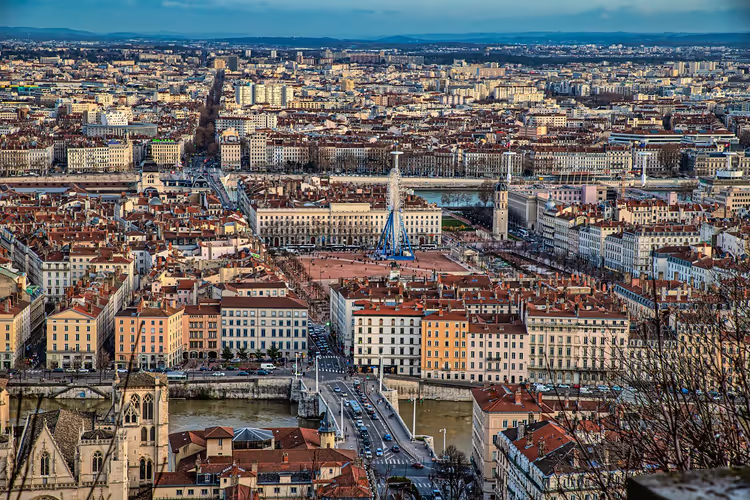
Lyon is often bypassed on the way to the south of France. And for no good reason: more than two thousand years of history fit into 420 hectares of the Old Town here. You can't cover all 30 places on the list in one day. It's realistic to fit them into two or three days if you stick to the two riverbanks and one hill.
We've gathered Lyon's main attractions: Roman ruins next to a Gothic cathedral, Renaissance courtyards, museums, and parks. Where it matters, you'll find hours, prices, and directions, plus an honest catch for each place.
Ad: this article contains affiliate links, we earn a commission if you book through them, at no extra cost to you.
Lyon stands on two rivers, the Rhône and the Saône, and that shapes any route. The east bank is home to the newer districts, Parc de la Tête d'Or, and the stadium. The west bank holds the Old Town and Fourvière Hill. Between them lies the peninsula with the main squares and museums. This triangle is easy to walk, and you cross the rivers by bridges.
It's best to plan your sightseeing in sections. Set aside half a day for Fourvière Hill: the basilica, the metal tower, the ancient theater, and Musée Lugdunum are all close together. Give the second half of the day to the Old Town, along with the cathedral, the traboules, and the museums. Parc de la Tête d'Or with its zoo and botanical garden will take half a day, and allow more time if you're with kids. The museums on the peninsula are a good fit for rainy weather, and the riverbanks are best saved for the evening.
Some attractions are free, and the rest require payment, so plan your budget in advance.
What to see in Lyon: a quick plan
💡 In short:
- More than half of the list is concentrated in two spots: Fourvière Hill and the Old Town on the banks of the Saône.
- Free: Fourvière Basilica, the ancient theater, Saint-Jean Cathedral, Parc de la Tête d'Or, the zoo, and the botanical garden.
- Paid: museums and the aquarium. Buy tickets online to avoid waiting at the ticket office.
- Astronomical clock schedule at the cathedral: 09/2026, verified on the official website of Saint-Jean Cathedral. Check other prices and hours on the attractions' websites.
1. Palais de la Bourse
 © Kent Wang · CC BYPhoto: Kent Wang, CC BY (https://creativecommons.org/licenses/by/4.0), Wikimedia Commons
The Palais de la Bourse stands on Rue de la République and recalls Lyon's commercial power in the 19th century. The decision to build it was made in 1853. The first stone was laid in 1856, and the grand opening took place in 1860. Emperor Napoleon III attended the ceremony. The entire construction took four years.
Inside, four pavilions are connected by a large hall painted by local artists. The building housed the commercial court, a bank, and the silk merchants' association. It was also here that President Sadi Carnot was shot dead in 1894, and the spot is marked. Today the Chamber of Commerce and Industry meets here.
The building stands on a busy pedestrian street, and you'll walk past it on any route through the center. It's best viewed from the square, where you can see the entire facade.
- How to get there: Rue de la République in the center, between Place Bellecour and the city hall.
2. Bartholdi Fountain
 © Otourly · CC BY-SAPhoto: Otourly, CC BY-SA (https://creativecommons.org/licenses/by-sa/3.0), Wikimedia Commons
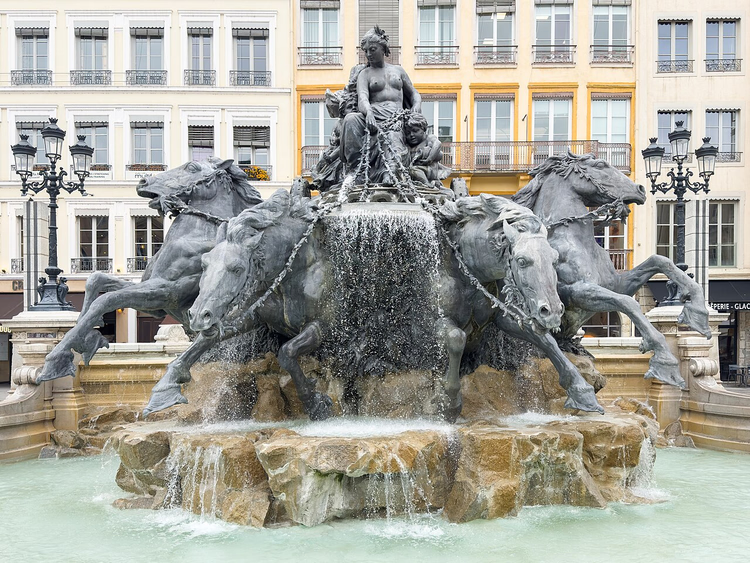
The Bartholdi Fountain stands on Place des Terreaux and has long been a symbol of Lyon. It appears on postcards, calendars, and magnets that tourists eagerly buy. The young Frédéric Bartholdi's design won a competition in Bordeaux in 1857, but construction was frozen at the time.
Everything changed in 1886, when the same sculptor finished the Statue of Liberty for New York. Bordeaux considered the fountain too expensive, but Lyon agreed, and the fountain was unveiled in 1892. At the center sits a woman personifying France, driving a team of four horses, and these horses represent the country's main rivers. The fountain has long been recognized as a historic monument, and the state is responsible for its preservation.
The evening lighting comes on at around 6:00 PM, so during the day the sculptural group looks dull. If you want a good shot, come at dusk, when the lights are switched on.
- Cost: free.
3. Théâtre des Célestins
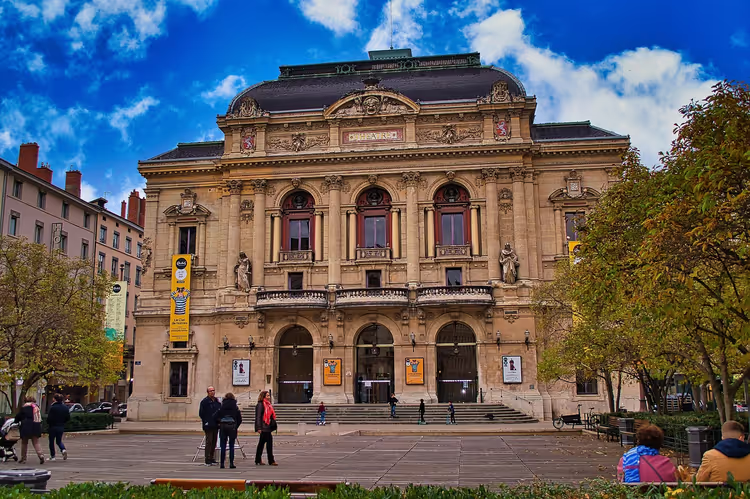
The Théâtre des Célestins has been operating for more than two hundred years and was built on Italian models. Sarah Bernhardt and Jean Marais performed on its stage, and Napoleon Bonaparte himself visited the auditorium. The theater got its name from a monastic order: a Celestine monastery once stood on the banks of the Saône.
The Société des Célestins erected the building in the 18th century, and at first it was a variety theater. A fire in 1871 nearly destroyed the structure, and the new auditorium could no longer accommodate everyone who wanted to attend. Gaspard André won the competition for the best design, and in 1877 audiences entered the new theater. Another fire broke out three years later, and André rebuilt the building again. The most recent restoration took place in the early 21st century.
- Tickets: sold at the box office and online; a quarter of an hour before the start, there are sometimes last-minute tickets at a symbolic price.
4. Amphitheater of the Three Gauls
 © User:Otourly · CC BY-SAPhoto: User:Otourly, CC BY-SA (https://creativecommons.org/licenses/by-sa/3.0), Wikimedia Commons
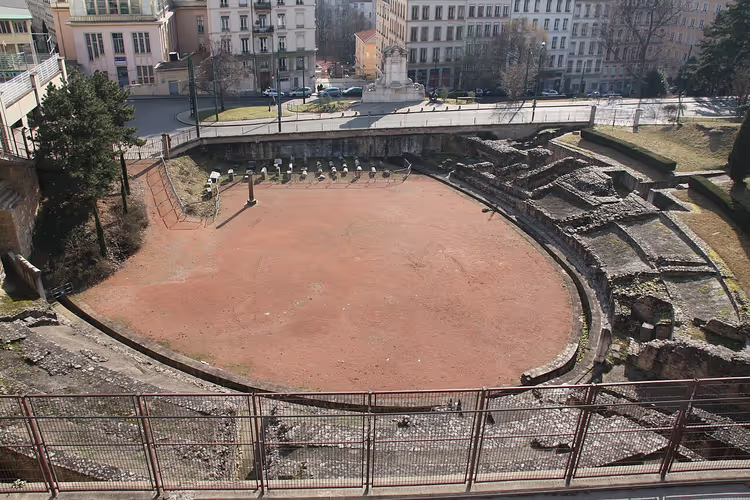
The Amphitheater of the Three Gauls is a reminder that Roman Lugdunum once stood on the site of Lyon. The Three Gauls were three provinces of the empire whose lands lay in what is now France. The arena was built around 19 AD on the site of a Gallic settlement.
Later the amphitheater became infamous for a grim reason: the first Christian martyrs were thrown to the lions here. According to legend, neither the predators nor the bulls touched Saint Blandina, and she was then killed by the sword. A monument to the martyr now stands on the site.
The amphitheater served as a meeting place for representatives of the three Gallic provinces, hence its name. Next to the arena stood an altar dedicated to Rome and Augustus, and delegates from all over Gaul came here to confirm their loyalty to the empire. For the city, this was an important political center, not just a place for spectacles.
What remains of the structures are earthen ramparts and rows of stone steps, but the scale of ancient Lugdunum is easy to feel here. There's no need to climb anywhere: everything is visible from the level of the arena, with trees growing nearby and a view over the city. The ruins make a strong impression, and your photos will turn out striking. The visit takes no more than half an hour, and you can easily combine it with a walk up the hill to the basilica and the ancient theater.
5. Basilica of Notre-Dame de Fourvière
 © Dennis G. Jarvis · CC BY-SAPhoto: Dennis G. Jarvis, CC BY-SA (https://creativecommons.org/licenses/by-sa/2.0), Wikimedia Commons
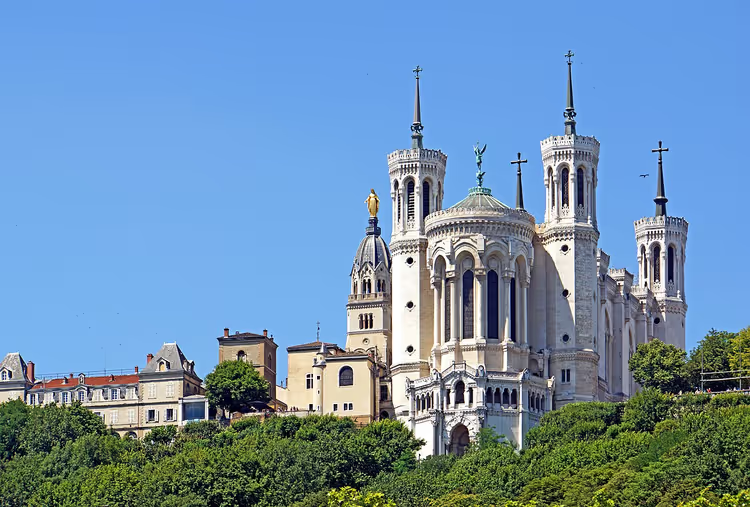
The Basilica of Notre-Dame de Fourvière stands at the top of the hill next to the metal tower. It was built in the late 19th century to a design by Pierre Bossan and consecrated in 1896. The church is dedicated to the Virgin Mary, and the crypt is dedicated to Saint Joseph.
The site's history is tied to two times the city was saved. In the 17th century, residents prayed on the hill for the plague to recede, and the epidemic began to subside. In 1870, the Prussian army was approaching Lyon, the townspeople again asked the Virgin Mary for protection, and Bismarck's troops did not take the city. The basilica was built in gratitude. The decoration was only finished in the mid-20th century, and the upper church is the most richly adorned.
- Cost: admission is free.
6. Metal tower on Fourvière
The metal tower was erected after the success of the Eiffel Tower in Paris. For the 1894 World's Fair, a younger sister of the Parisian tower was to appear on Fourvière Hill. The design was made by the architect Collet. For a time, the tower was to be named the Avelan Tower in honor of the Russian admiral Avelan, but that option was rejected.
The tower is 89 meters tall. The first floor once had a waiting room, the second housed a restaurant, and visitors went up to the observation deck for a view of the Alps. During World War II, there were plans to melt the tower down, but it survived. In 1953, it was bought by French radio and television, and it now serves as an antenna.
The tower stands a stone's throw from the basilica, and you can see both in an hour. Linger on the viewing terrace by the basilica: from there you can see the whole city, both rivers, and the Alps on the horizon, and in the evening people come here for the sunset. The tower itself no longer admits visitors inside, but from below it looks imposing and makes a good photo.
7. Ancient theater on Fourvière hill
 © Jean-Christophe BENOIST · CC BYPhoto: Jean-Christophe BENOIST, CC BY (https://creativecommons.org/licenses/by/4.0), Wikimedia Commons
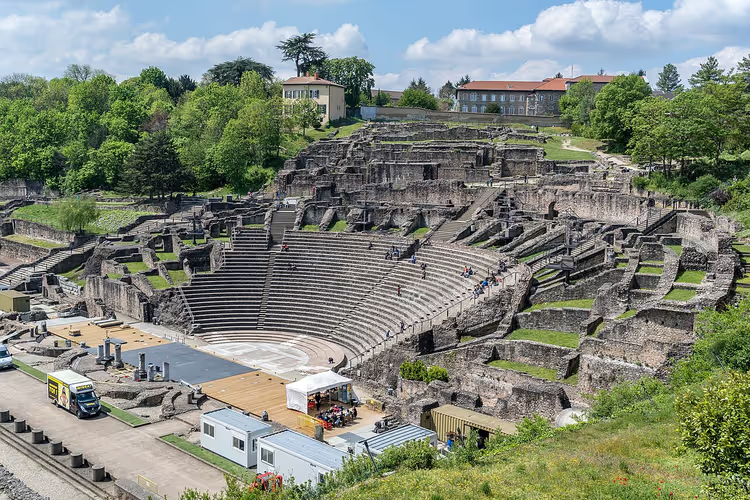
The ancient theater forms a single ensemble with the odeon and stands next to the basilica. Construction began under Octavian Augustus, when the arena with a diameter of about 90 meters appeared. The steps rose in a semicircle, and two and a half dozen sectors fanned out. The orchestra was paved with colored marble.
Stone for the construction was brought from the city of Glanum, and in the 2nd century a third tier was added. The theater held up to 10,000 spectators, and comedies with music were most often performed here. The season ran from spring to autumn. In the 19th century the theater was excavated, and in 1933 it was decided to restore it. Today the Nuits de Fourvière festival takes place here every year.
- Cost: admission is free, you only pay for festival performances.
8. Musée Lugdunum
 © Andrzej Otrębski · CC BY-SAPhoto: Andrzej Otrębski, CC BY-SA (https://creativecommons.org/licenses/by-sa/4.0), Wikimedia Commons
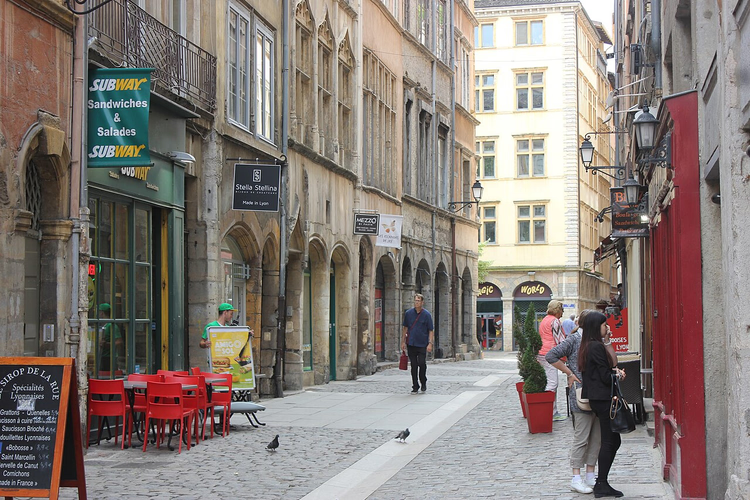
Musée Lugdunum, the museum of Gallo-Roman civilization, stands on Fourvière hill next to the ancient theater. Archaeologists established that a Roman settlement existed here, and the museum opened right on the site of the finds in 1975. The building was designed by Bernard Zehrfuss, and it is built into the slope so that it barely disturbs the landscape.
The collection is made up of finds from the site of Lugdunum. There are statues, jewelry of noble citizens, ceremonial and everyday clothing, and household items. The model of the Roman settlement, the mosaic with chariot races, the bronze ceremonial chariot, the calendar, and the altar deserve special attention. The owners hid silver items in a cache around the 3rd century, and now this is one of the museum's main treasures.
The visit takes about two hours, and you will follow the entire path of Lugdunum from a Roman camp to the capital of Gaul. The halls spiral downward, so the climb up the hill will not tire you out. The museum stands right next to the ancient theater, so both sites are easy to see in one outing. If you come with children, get an audio guide: there are many exhibits, and without explanations they quickly get bored.
9. Rue Saint-Jean
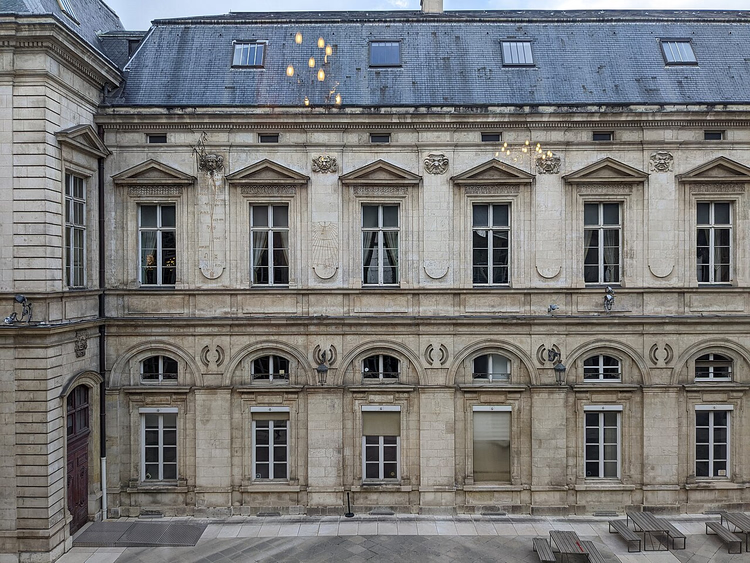
Rue Saint-Jean lies at the foot of Fourvière hill in the quarter of the same name. Old Lyon covers more than 420 hectares and is divided into several quarters, and Saint-Jean was once the political center of the city. The main street of the quarter also bears the name Saint-Jean.
It is easy to spend half a day here: the Gothic cathedral, old houses, and museums stand close together. The Museum of Miniatures is housed in an old building, and nearby rises the Manécanterie, a striking example of Romanesque style. No one leaves without photographing the 17th-century Tour Rose. According to legend, its walls are stained with the blood of a beauty who died of unhappy love, but in fact the tower was repainted for the filming of The Three Musketeers.
If you want to explore the alleys without a map, take a tour of Old Lyon on GetYourGuide.
10. Lyon Cathedral
Lyon Cathedral, or Saint-Jean Cathedral, is dedicated to John the Baptist and serves as the cathedral of the Archbishop of Lyon. The first stone was laid in the 12th century on the site of an older church, and the facade was finished only by the end of the 15th century. Because of the long construction, Romanesque and Gothic styles are mixed in the architecture.
Inside there is a 14th-century astronomical clock: it shows the time, the position of the Sun and Moon, and the rising of bright stars. Four times a day the clock chimes, and figurines act out small scenes; this now happens at 12:00, 14:00, 15:00, and 16:00 (verified on 09/15/2026 on the cathedral's official website). In the "archaeological garden" you can see the ruins of 11th-century churches and a 4th-century baptistery.
The cathedral is open daily, admission is free. On major holidays tourists are allowed in only in the morning, so on those dates come early. The 13th and 14th ecumenical councils took place here, Pope John XXII was crowned here, Henry IV and Marie de' Medici were married here, and Richelieu received the rank of cardinal here. The interior suffered from the Huguenots in the 16th century and during the revolution, and the church was restored only in the first half of the 20th century. The 19th-century organ is worth a separate look.
- The catch: on major holidays access is only in the morning.
11. City Hall
 © Danichou · CC BY-SAPhoto: Danichou, CC BY-SA (https://creativecommons.org/licenses/by-sa/3.0), Wikimedia Commons
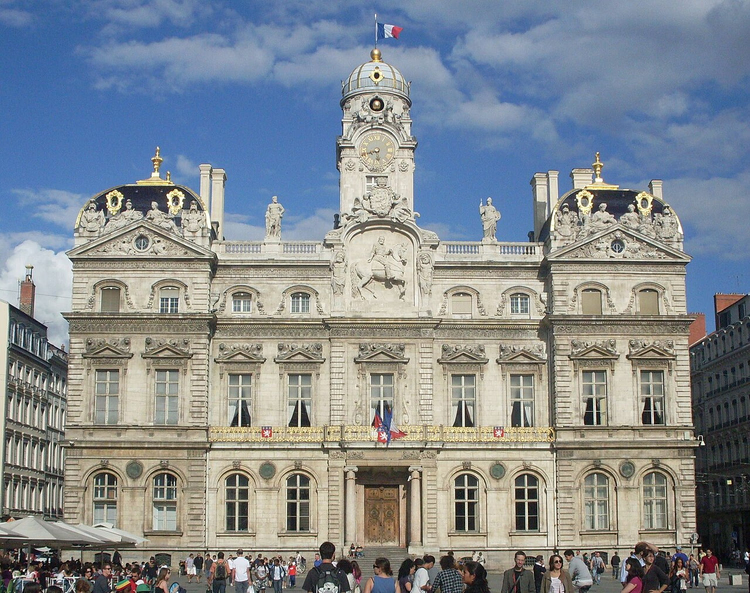
Lyon City Hall stands on Place des Terreaux and is considered a national historic monument. Before it was built, trade took place on the square, and the area was dirty. In the 17th century a city hall was erected here, and the square became the administrative center of the city.
Soon after construction, the building was badly damaged by fire, and the court architect Jules Hardouin-Mansart took on the restoration. That is when sculptures appeared on the facade: King Henry IV on horseback and women personifying the Saône and the Rhône. The city hall has 65 bells, and the inner courtyard is especially beautifully designed. Inside, ceiling and wall paintings, expensive furniture, and stucco work have been preserved, but most of the building is occupied by city administration offices.
12. Musée Miniature et Cinéma
 © Arnaud 25 · CC BY-SAPhoto: Arnaud 25, CC BY-SA (https://creativecommons.org/licenses/by-sa/4.0), Wikimedia Commons
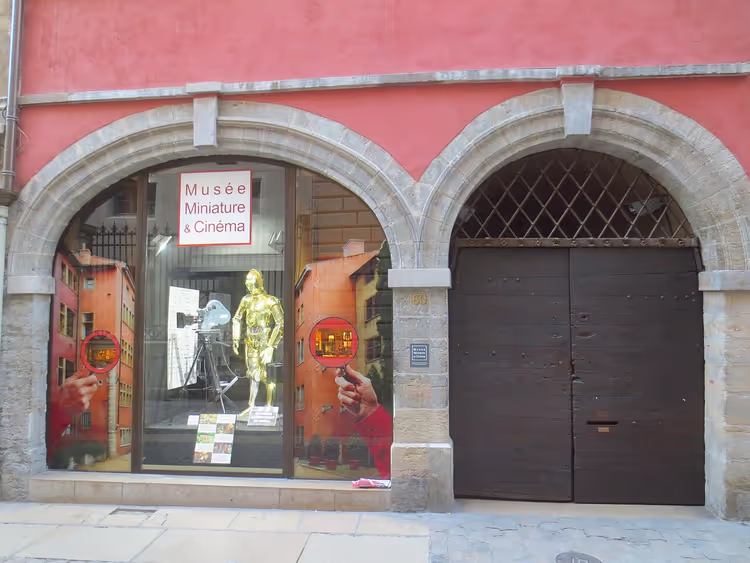
Musée Miniature et Cinéma occupies a 14th-century mansion in Old Lyon. The museum was founded by Dan Ohlmann, who traveled widely and collected rare objects. Part of the exhibition is devoted to cinema: here you can see Schwarzenegger's jacket from The Terminator along with weapons, Indiana Jones's hat, and items from Star Wars.
The main attraction here is the miniatures. Historical interiors and famous theaters are recreated in the smallest detail, and masters spend about six months on each work. You will examine entire blocks with tiny rooms, furniture, and people, and it is absorbing for a long time. The set from Perfume, assembled with the same precision, deserves special attention. A horror film section is open for adults.
Ohlmann made miniatures himself and brought rare items from the US, and the museum's current staff continue his work and add to the collection. The visit takes about an hour, and you can comfortably go through all the halls. The mansion is small, so crowds are not as bothersome here as in large museums.
- The catch: the horror section is not suitable for impressionable children.
- Cost: admission is paid, check the current price on the museum's website.
13. Musée des Confluences
 © Fred Romero from Paris, France · CC BYPhoto: Fred Romero from Paris, France, CC BY (https://creativecommons.org/licenses/by/2.0), Wikimedia Commons
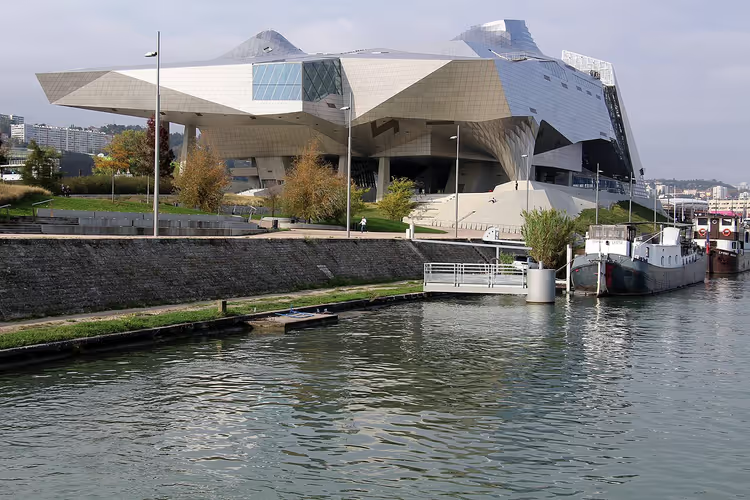
Musée des Confluences stands on the spit where the Rhône and the Saône meet. The building was constructed by the firm Coop Himmelb(l)au, and construction was completed in 2014. The forms are so unusual that the project seems to come from the future: the hall resembles a crystal, and locals call the museum "the Hole" because of the opening in the center.
The museum's area is more than 29,000 square meters, so the "crystal" is visible from afar. The exhibitions are devoted to natural history and answer the question of where humanity came from. Some halls are given over to temporary exhibitions, and conferences, lectures, and meetings with scientists also take place here. The museum is closed on Mondays; check exact hours and tickets on the museum's official website.
14. Trinity Chapel
Trinity Chapel stands in the building of a lycée next to the Palais de la Bourse. There are few tourists here; those interested in history come. The chapel was built in the 17th century on the land of a Jesuit college, and it opened in 1622. The architect gave it Baroque features, and the citizens were impressed by the new building.
In 1802 Napoleon proclaimed the Italian Republic in this building, and the college became an imperial lycée. The physicist André-Marie Ampère lectured here. The interiors are finished in marble, the wall panels were made by the sculptor Pierre David, and the chandeliers are styled after the 17th century. Today exhibitions and concerts take place in the chapel, the most famous of which is the Early Music Festival.
15. Musée Gadagne

Musée Gadagne stands in the Saint-Paul quarter and combines two museums: the Lyon History Museum and the Puppet Museum. The building was constructed in the 16th century as a mansion for the wealthy Gadagne family. When the Gadagne brothers quarreled, they divided the house into two halves and lived apart, and getting from one part to the other was not easy.
Today the parts of the building are connected by galleries, and a medieval garden has been preserved in the courtyard. After restoration, the History Museum displays around 80,000 exhibits about city life from the Middle Ages onward. Puppets are given 9 rooms: the collection was opened to the public in 1950, and a separate museum appeared in the early 2000s. It houses dolls from around the world.
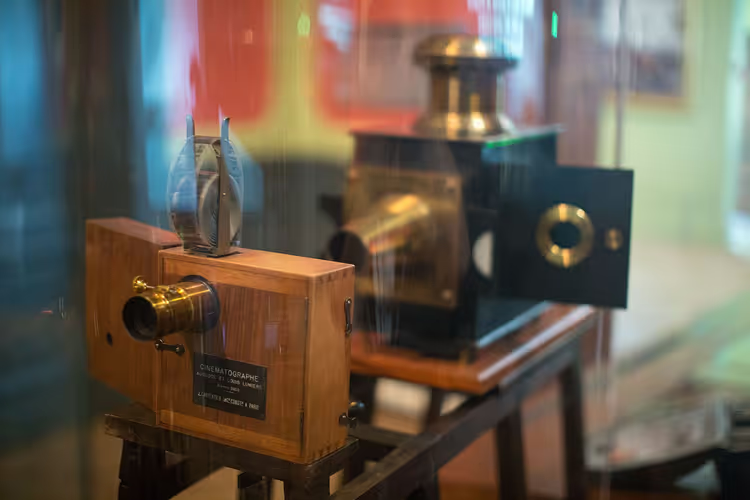
16. The Lumière brothers house museum
 © Victorgrigas · CC BY-SAPhoto: Victorgrigas, CC BY-SA (https://creativecommons.org/licenses/by-sa/4.0), Wikimedia Commons
The Lumière Brothers House Museum tells the story of how cinema was born in Lyon. Auguste and Louis Lumière did not think they were creating a new art form; they simply shot the first short film. The film "Workers Leaving the Lumière Factory" hit the screen in 1895 and unexpectedly turned a profit.
The first films were documentary in nature: no script, no sets, no actors, and the title told you what it was about, such as "Baby's Breakfast" or "Arrival of a Train." The museum is located on the grounds of the former factory, and the exhibits tell the story of the brothers' lives. Nearby stands the "First Film Hangar," where old films are screened and meet-and-greets with actors are held.
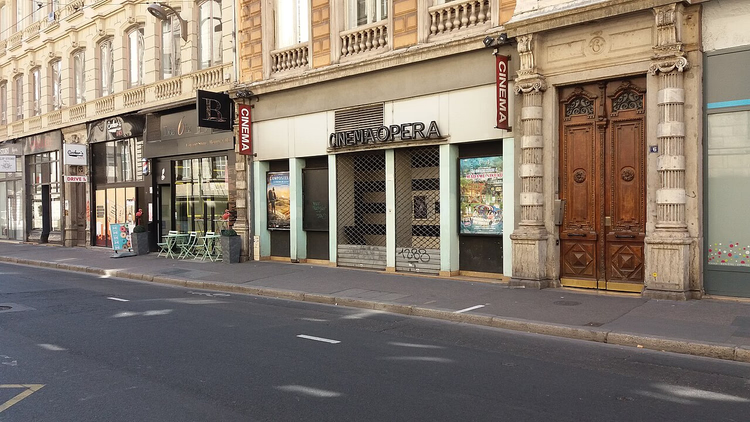
17. Lyon Opera House
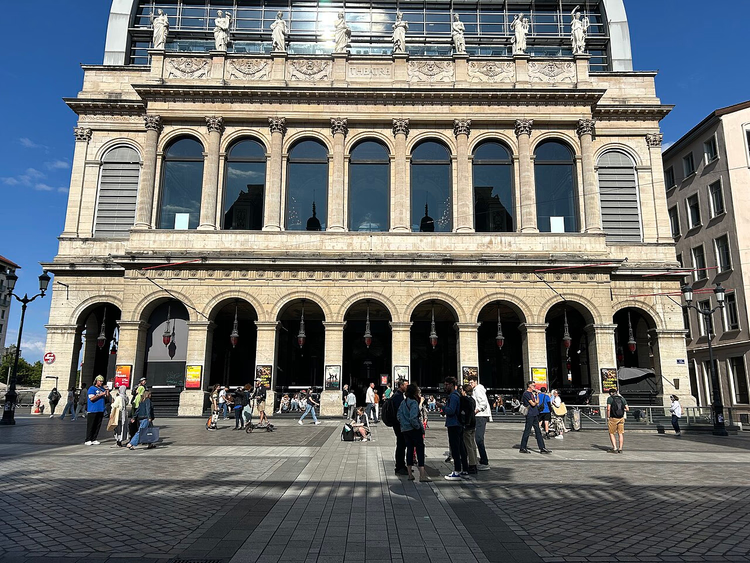
The Lyon Opera House stands on a site that has already seen three theaters. The first was built in the mid-18th century, but the hall proved too cramped, and the building was demolished in 1826. A new theater seating 1,200 people took its place, opening in 1831 with a production of "La Dame Blanche." Mussorgsky's "Boris Godunov" and other operas were also staged here.
 © Corentin Eustacchi · CC BY-SAPhoto: Corentin Eustacchi, CC BY-SA (https://creativecommons.org/licenses/by-sa/4.0), Wikimedia Commons
In 1985, the theater was slated for a complete rebuild, with only certain details preserved. Jean Nouvel designed the project, and work was completed by 1993. The building grew taller and gained a glass dome that now houses the ballet company. Eight sculptures of muses from the old building were kept on the facade. Despite the new dimensions, seating capacity did not increase: the hall holds about 1,100 people.
If you want to catch an opera or ballet, book tickets in advance, otherwise only expensive seats will be left.
18. Church of Saint Paul
The Church of Saint Paul stands on the banks of the Saône and is mentioned in the city's earliest documents. Lyon was one of the first ecclesiastical centers in this part of Europe, which is why remnants of old churches survive here. The building is small but architecturally interesting, and it is done in the Romanesque style.
Chapels were built around the central nave. The right one has an unusual stone vault, the left one features beautiful medallions. In the 19th century, a spire, a portal on the west side, and small columns were added, but these elements did not disrupt the church's Romanesque character. The acoustics inside are excellent, and that is one reason why even people who had not planned to visit churches stop in.
19. Aquarium du Grand Lyon
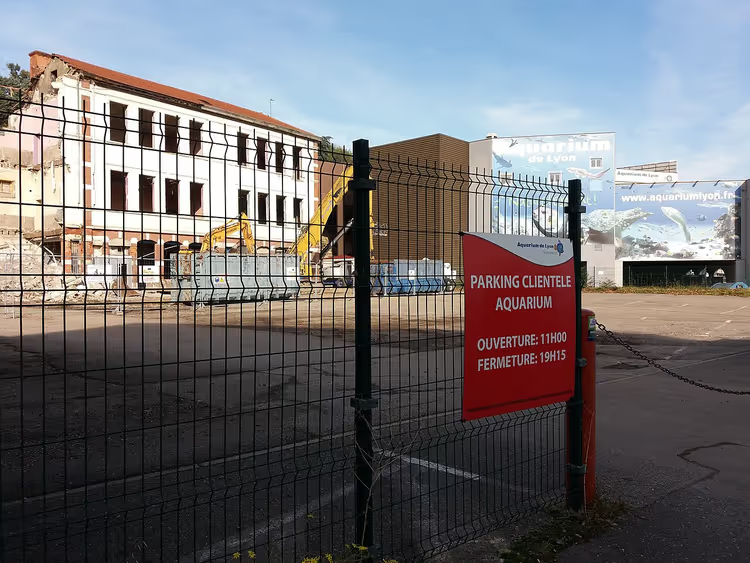
Aquarium du Grand Lyon opened in 2002 in the suburb of La Mulatière. It is not one aquarium but about fifty, with a total water volume of around one million liters. You can see which fish live in local waters and which inhabit tropical seas and oceans.
The tank with sharks and rays gets the most attention. Everything is arranged so it feels like a sunken ship lies on the seabed. Sturdy glass reliably protects the inhabitants. Besides the guided tour, there are fish feedings, and some of the residents can be petted. For kids, that is usually the highlight of the trip.
The visit takes an hour and a half to two hours, and you can cover all the halls without rushing. On weekends it gets crowded and noisy, so come at opening time. Behind the glass you can see not only fish but also the keepers at work: they feed the animals and clean the tanks on a schedule.
- Cost: paid entry, tickets are cheaper online.
20. Old Palace of Justice
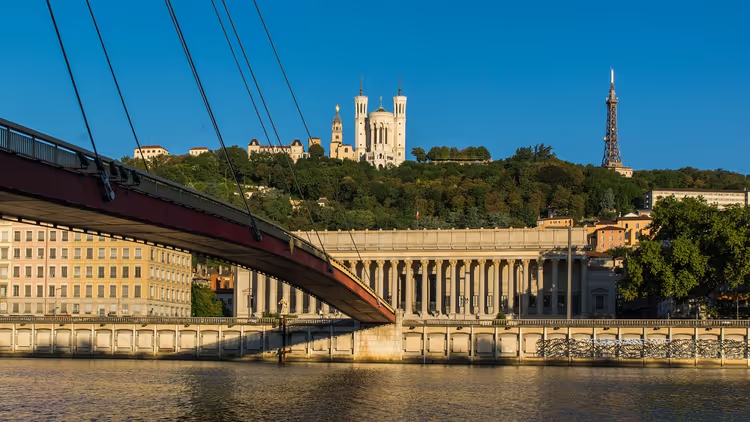
The Old Palace of Justice stands on the banks of the Saône. A medieval palace once stood on this site, then a prison, and the current building was constructed in 1842. The look is austere and neoclassical, with 24 columns adorning the facade. The scale is impressive too, as the palace occupies an entire city block.
A new courthouse was built in 1995, and most courts have since moved there. But the old palace is not empty: the Rhône department's criminal court and the court of appeals sit here. The exterior has been preserved as it originally was, so it is worth coming for the architecture and the view of the river.
21. Musée des Beaux-Arts
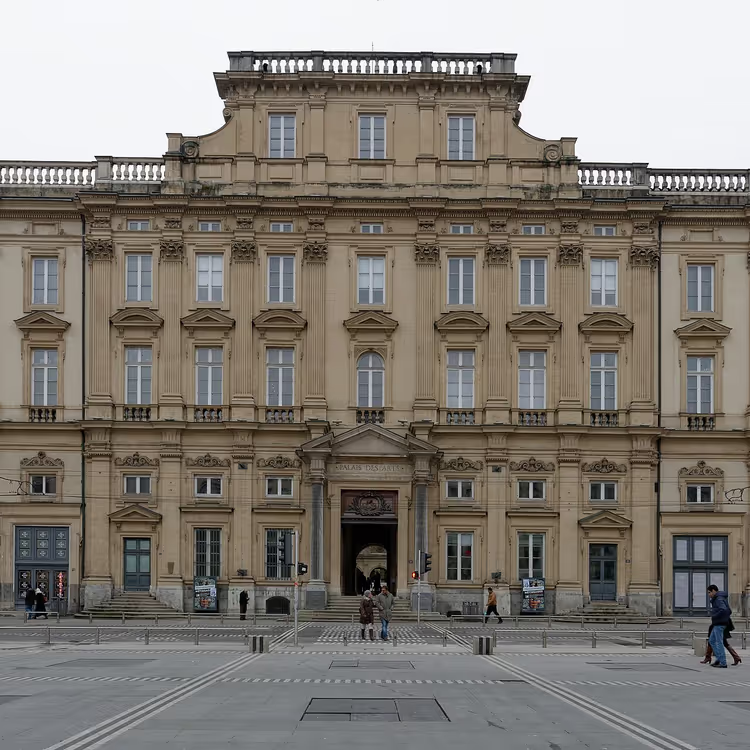 © Jastrow · CC BYPhoto: Jastrow, CC BY (https://creativecommons.org/licenses/by/2.5), Wikimedia Commons
Musée des Beaux-Arts occupies a former convent, and the building itself deserves attention. The convent was well known among the nobility, and even members of the royal family visited. In the 17th and 18th centuries, monarchs ordered renovations, which brought a baroque refectory and a beautiful staircase. A late-20th-century restoration returned the building to its former splendor.
The main draw here is the collections. Paintings by artists from the 14th to 20th centuries fill 35 rooms: Rubens, Rembrandt, Matisse, Picasso, Modigliani. Two sections are devoted to sculpture, the Ancient Egypt department displays vessels and sarcophagi, and there is a prints and drawings room and a coin collection. A leisurely visit easily takes half a day, so plan it for the morning.
If you want to save time at the ticket office, check Lyon museum tickets on Tiqets in advance.
22. MAC Lyon
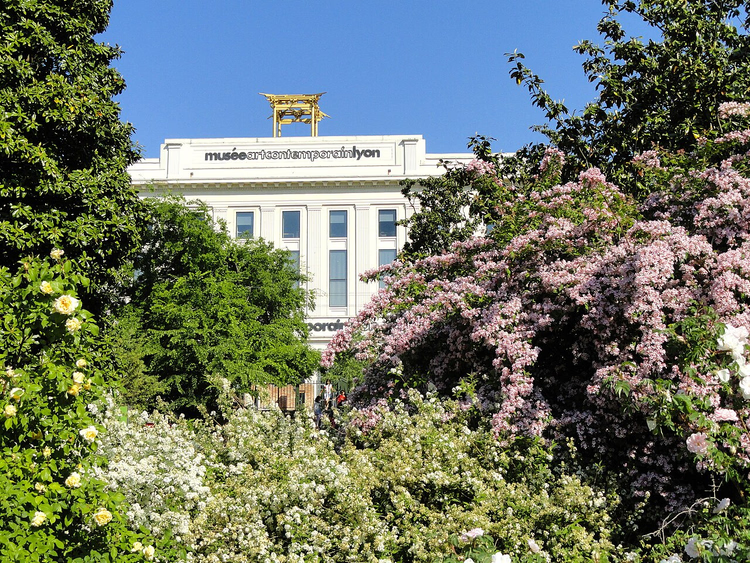
MAC Lyon opened in 1984 in a building on the banks of the Rhône. Artists of the second half of the 20th century asked the city for a museum for contemporary work, and the authorities agreed. Another difference was that artists could work right here, on their own canvases.
The museum shows two facades: a neoclassical one facing the park, and a pink one overlooking the river. It houses one of the best collections of installations, along with paintings, statues, photographs, and films. Exhibitions change often, and the Contemporary Music Festival takes place every year. The museum has a cafe, a library, and a bookshop.
23. Parc de la Tête d'Or
Parc de la Tête d'Or covers about 105 hectares in the north of the city. It features a large artificial lake with islands, a botanical garden, a zoo, and recreational areas. The name translates as "golden head": legend has it that a head of Christ cast in gold is buried somewhere here. Around 3,000 people worked on the park, but the treasure was never found.
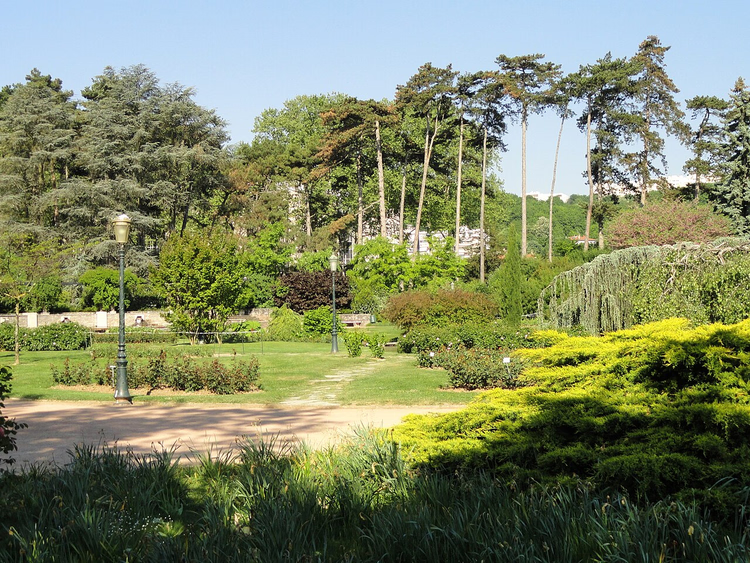
The legend was born along with the lake, as if the head lies at the bottom, filled with the "tears of Christ." The park opened in 1857 and hosted two famous exhibitions, the World's Fair and the Colonial Exhibition. The land was divided between Lyon and Villeurbanne, and only in 1894 did a decree by the President of France transfer the land to the city. Eight entrances lead into the park, with the main one adorned by the "Gate of the Children of the Rhône." It is convenient to walk through the park from the contemporary art museum to the lake if you are strolling around the peninsula.
A sightseeing train is a convenient way to ride around the lake. The largest of the four islands has a velodrome, and another holds a monument to residents who died in World War I. The park is simply pleasant for walking along paths among lawns and old trees. Rent a boat if you want to see the lake from the water. In summer, grab a spot on the lawn in the morning; by midday the shade near the water is all taken. It is easy to spend half a day in the park: you will have time to walk around, visit the zoo and botanical garden, and grab a bite at the cafe by the entrance.
24. Zoo
 © Romainberth · CC BY-SAPhoto: Romainberth, CC BY-SA (https://creativecommons.org/licenses/by-sa/3.0), Wikimedia Commons
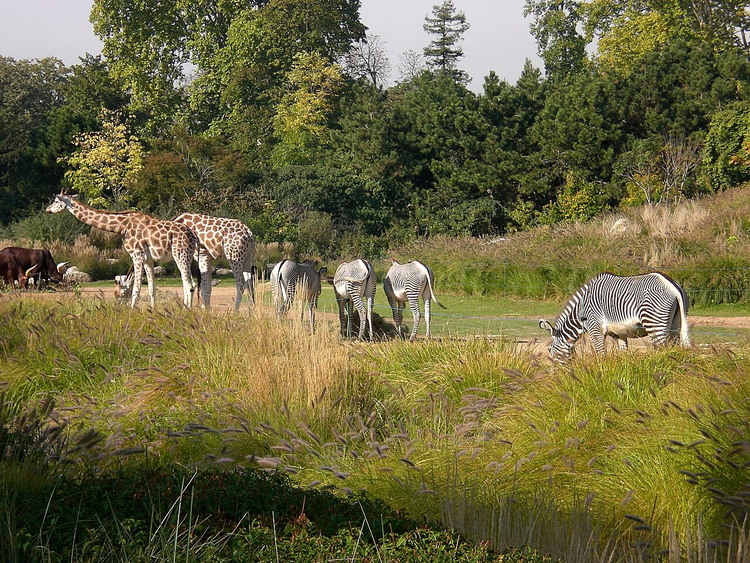
The zoo in Parc de la Tête d'Or appeared almost immediately, but at first it was more of a farm with domestic animals. Today the zoo surprises in a different way: as you walk along the paths, you will not notice how you end up inside. There are no familiar cages or cramped enclosures, and it feels as if the animals and birds live in their natural environment.
Geese cross the road importantly, squirrels leap from branch to branch, and pink flamingos stand by the water. Zebras and antelopes graze on the lawns, and ostriches stroll about. Crocodiles are separated by a glass wall, with a pool built for them, and the predatory reptiles feel calm there.
Giraffes and lions are visible from a safe distance. Kids usually linger at the monkey enclosure: it is set up like a real jungle, and the primates swing from the branches. Entry to the zoo is free, as is the entire park.
25. Botanical garden
 © Юрий Д.К. · CC BYPhoto: Юрий Д.К., CC BY (https://creativecommons.org/licenses/by/4.0), Wikimedia Commons
The botanical garden in Parc de la Tête d'Or began as a small plot in another part of the city. The first garden was laid out by Jean-Emmanuel Gilibert in 1792 on monastery grounds, right in the middle of the revolution. About 65 years later, the expanded garden was moved to Parc de la Tête d'Or by Nicolas Seringe, who also became its director.
The garden covers about 8 hectares and contains more than 15,000 species of trees, shrubs, and flowers. Many of them are rare and endangered in the wild. In the late 19th century, greenhouses for heat-loving plants began to be built, and now there are many of them: large and small, cold and warm, and even ones for carnivorous and aquatic plants.
The rose garden was opened by Princess Grace Kelly of Monaco. Today about 30,000 rose bushes grow here, and in summer a thick fragrance hangs over the paths. One rose garden is historical and tells the story of rose breeding, while the other is used to develop new varieties. There is also a greenhouse, winter and alpine gardens, a nursery, and a botanical school. Admission is free.
26. Mini World Lyon
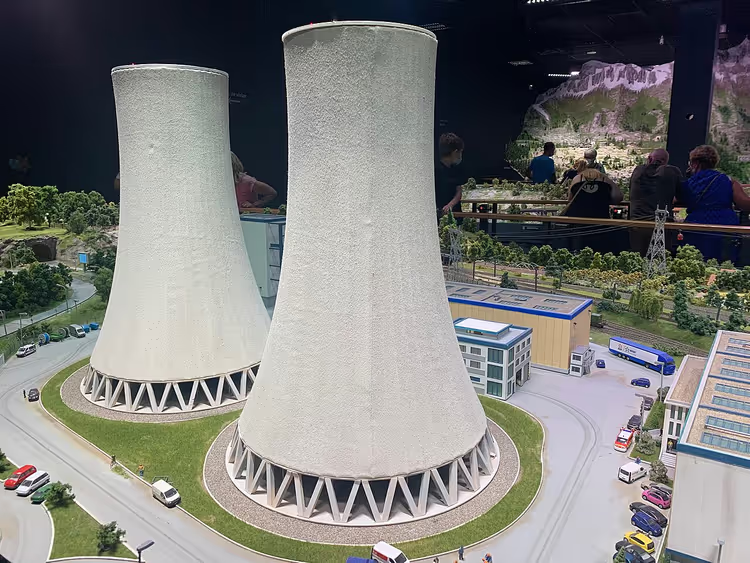
Mini World Lyon is located in the suburbs and opened relatively recently. It is a 4,500-square-meter pavilion that houses an entire fairy-tale world. Tiny people, cityscapes, and a miniature town that you just want to peer into.
Trains run along the tracks, cars move, streetlights glow, and snow-capped mountains rise in the distance. You can see replicas of famous landmarks and everyday scenes. The park makes a big impression on both children and adults, and a visit takes a couple of hours.
27. Groupama Stadium
 © Zakarie Faibis · CC BY-SAPhoto: Zakarie Faibis, CC BY-SA (https://creativecommons.org/licenses/by-sa/4.0), Wikimedia Commons
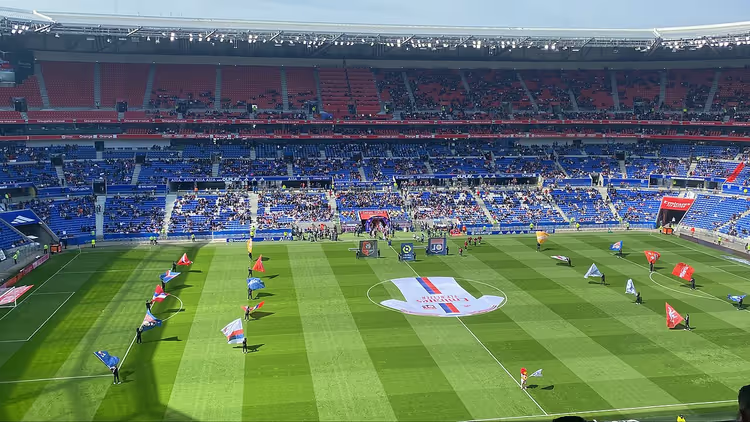
Groupama Stadium, also known as Parc Olympique Lyonnais, is located in the suburbs, 10 km from the center, and is the home arena of Olympique Lyonnais. The stadium seats almost 60,000 spectators. The city had long needed a new stadium, but money was always short, and only the 2016 European Championship got things moving.
Construction began in 2012 and cost more than 400 million euros. The opening took place in 2016 with a match between Olympique Lyonnais and Troyes, and the home team won. Since then, many historic matches have been played here, including 6 games of the 2016 European Championship. The stadium meets modern standards: about 6,000 VIP seats, a conference hall, and its own supermarket.
If you want to see the arena from the inside, come to a match: on regular days you cannot get inside.
28. Parc Blandan
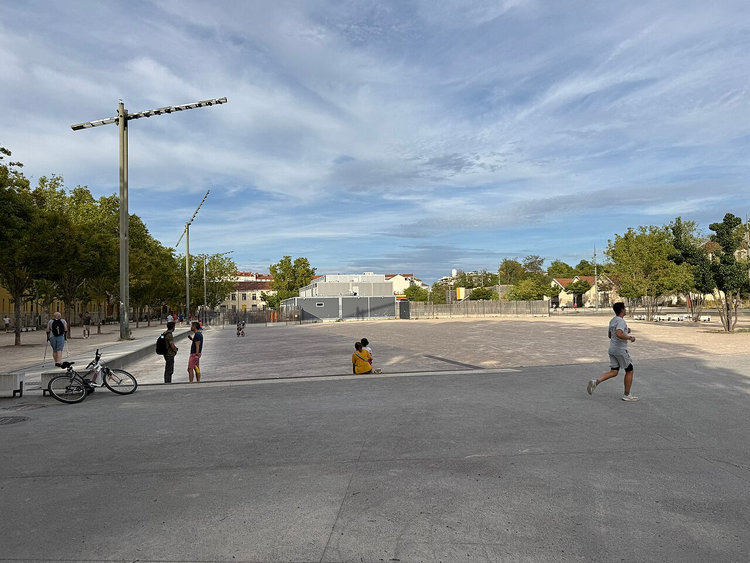
Parc Blandan opened in 2013 on the site of the Sergeant Blandan barracks. The public park covers about 17 hectares, and the central square is laid out where the parade ground used to be. Fragments of the 19th-century fort's fortifications remain, and they have been integrated into the new landscape.
 © Chabe01 · CC BY-SAPhoto: Chabe01, CC BY-SA (https://creativecommons.org/licenses/by-sa/4.0), Wikimedia Commons
Young visitors are thrilled by the wooden wall with secret passages and slides. There is a garden with a large lawn, perfect for a picnic. Young people come to the skate park: skateboards, rollerblades, and bicycles are allowed here. Many people walk their dogs along the paths.
29. Hôtel-Dieu
Hôtel-Dieu is a former historic hospital, a whole complex of buildings recognized as a historic monument. There is no longer a hospital here, but it was once one of the "houses of God." Such centers stood next to churches and monasteries; the first "house of God" appeared as early as the 6th century, and in the 12th century another one opened near the bridge over the Rhône.
At first, it could accommodate a dozen patients cared for by Benedictine monks. Over time, the number of beds grew to almost 200. For a while, François Rabelais worked here as a physician, and during those years he wrote "Gargantua and Pantagruel." In the 17th century, the hospital was rebuilt, with new wings and a chapel added.
In the early 21st century, the complex was recognized as a monument, departments were moved to other hospitals, and restoration began. Now the buildings house a hotel, a shopping center, and offices. Even without going inside, it is worth seeing the main facade with sculptures, the large dome with angels, and the small dome above the church. The 17th-century chapel dedicated to the Virgin Mary retains baroque details.
30. Traboules
 © Chabe01 · CC BY-SAPhoto: Chabe01, CC BY-SA (https://creativecommons.org/licenses/by-sa/4.0), Wikimedia Commons
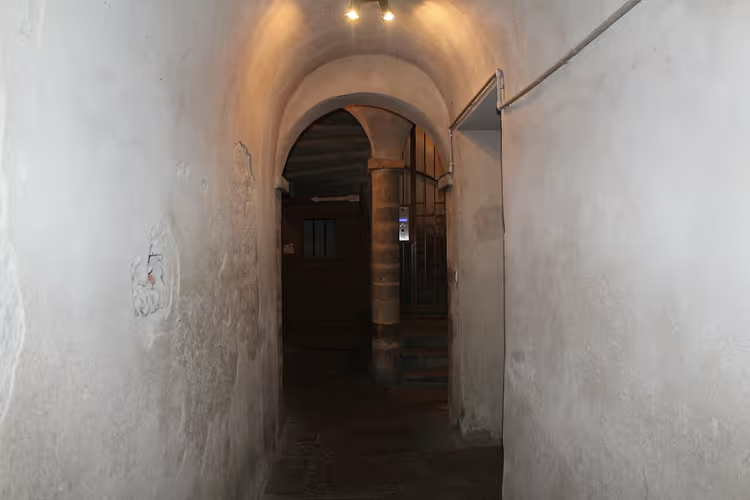
Traboules are pedestrian passages through city blocks that let you get from one street to another. They look different: sometimes a simple corridor, sometimes a complex route with stairs and covered galleries. There is no definitive answer as to where they came from, but there are several theories.
According to one, in the 4th century the settlement was going through a crisis, and residents moved down from the hills to the banks of the Saône to stay closer to the water. The first streets appeared below, and to move quickly between them, the first traboules were created. There is no evidence for this theory. What is known is different: when water began to be drawn from wells in courtyards, traboules were opened so that neighbors from different buildings could also reach the water.
In some places, there were separate passages for the nobility and for commoners, so that the classes would not run into each other. In the 19th century, the Croix-Rousse hill was being developed, and traboules helped residents get down from the hill to the center in minutes. During World War II, Resistance fighters who knew the city by heart moved through these passages. The network of traboules made it possible to cross an entire block without going out onto the street, and this saved lives more than once.
To see the traboules, head to the old quarters. Some passages belong to the city, some are private property, but you can usually see all of them; the private ones are open until 7 or 8 pm. The most famous include the Long Traboule, which connects four courtyards, the Pink Tower Traboule with a staircase inside, and the Cour des Voraces with an open gallery spanning three buildings.
It is best to explore the traboules during the day and early in the week, when there are fewer groups. Some passages close in the evening, so do not put off your walk until late. Start in the Saint-Jean quarter and climb up to Croix-Rousse, and you will pass several famous traboules in a row. Wear comfortable shoes: inside there are steep steps and narrow galleries, and in some places you have to duck. Do not open the doors of residential buildings; people live there.
Besides these 30 places, Lyon has Place Bellecour with its tree-lined walks and the statue of Louis XIV, Place Carnot with the monument to the Republic, and Place du Gouvernement with its cobblestone pavement and an old tree in the center. Rue Mercière is lined with Renaissance-era houses, and 27 bridges cross the Rhône and the Saône, especially beautiful in the evening when the lights come on.
If you happen to be in town for a city festival, you are in luck. The Festival of Lights has been held since the 19th century in honor of the Virgin Mary, who protected the city from the plague: on that day thousands of lights come on, and residents put candles in their windows. The date of the festival varies. In summer, Nuits de Fourvière takes place with a festival of music, theater, and film, and in late May there is the Nuits Sonores electronic music festival.
Tours and tickets in Lyon
Guided tours, skip-the-line tickets and activities — most offers can be cancelled free of charge.
See offers on GetYourGuideThe widget loads once you give your consent.
Lyon attractions on the map
It is convenient to gather all 30 places on one map in advance, so you do not have to rush back and forth between the banks. Keep the old town and Fourvière together, the museums on the peninsula together too, and the parks in the north separately. The main points of the route are marked below.
Lyon landmarks
Places on the map
- 1Palais de la Bourse 19th-century building on Rue de la République, now the Chamber of Commerce
- 2Bartholdi Fountain Symbol of Lyon by the sculptor of the Statue of Liberty, evening illumination
- 3Théâtre des Célestins 18th-century theatre on the site of the Celestine monastery
- 4Amphitheatre of the Three Gauls Roman arena where the first Christians were thrown to wild beasts
- 5Basilica of Notre-Dame de Fourvière Late-19th-century basilica atop Fourvière hill, free admission
- 6Fourvière Metal Tower Younger sister of the Eiffel Tower, now used as an antenna
- 7Ancient theatre on Fourvière hill Roman arena for 10,000 spectators, free admission
- 8Musée Lugdunum Museum of Gallo-Roman civilisation on the site of Roman finds
- 9Rue Saint-Jean Main street of the district at the foot of Fourvière hill
- 10Lyon Cathedral Saint-Jean Cathedral with a 14th-century astronomical clock
- 11City Hall Historic city hall on Place des Terreaux, a national monument
- 12Musée Miniature et Cinéma Interior miniatures and film props in a 14th-century mansion
- 13Musée des Confluences Natural history museum in a crystal-shaped building at the river confluence
- 14Chapel of the Trinity 17th-century chapel in a lycée building where Ampère lectured
- 15Musée Gadagne Historical museum of Lyon and puppet museum in a 16th-century mansion
- 16Lumière Brothers House Museum Museum on the site of the factory where the first film in the world was shot
- 17Lyon Opera Jean Nouvel's theatre with a glass dome, hall for 1,100 seats
- 18Church of Saint-Paul Romanesque church on the bank of the Saône with good acoustics
- 19Aquarium du Grand Lyon Fifty tanks in the Lamulatière suburb, sharks and rays
- 20Old Palace of Justice Neoclassical 1842 building with 24 columns on the Saône bank
- 21Musée des Beaux-Arts Paintings by Rubens, Rembrandt, Picasso in a former monastery building
- 22MAC Lyon Museum of contemporary art on the bank of the Rhône
- 23Parc de la Tête d'Or 105-hectare park with a lake, a zoo and a botanical garden
- 24Zoo Zoo in Parc de la Tête d'Or without cages, free admission
- 25Botanical Garden 8-hectare garden with a rose garden and greenhouses, free admission
- 26Mini World Lyon Pavilion with miniature cities and trains in the suburbs
- 27Groupama Stadium Stadium of Olympique Lyonnais for nearly 60,000 spectators
- 28Parc Blandan 2013 park on the site of barracks, skate park and lawns
- 29Hôtel-Dieu Former historic hospital, an architectural landmark on the riverbank
⁉️🤔 Frequently asked questions
How many days do you need for Lyon's sights?
Two days is enough for the main things. Split the first day evenly: in the morning, Fourvière Hill with the basilica, the ancient theater, and Musée Lugdunum; after lunch, Old Town, Saint-Jean Cathedral, and the traboules. Give the second day to the museums on the peninsula and Parc de la Tête d'Or. Add a third day if you want to see everything without rushing.
What's free and what's paid?
You can see the Fourvière Basilica, the ancient theater, Saint-Jean Cathedral, Parc de la Tête d'Or, the zoo, and the botanical garden for free. You'll have to pay for museums, the aquarium, and the opera. Museum tickets are cheaper online, and there can be a line at the ticket office in summer.
How do you get to Fourvière Hill?
A funicular runs up the hill from the Vieux Lyon station in Old Town, and there are also bus routes. Walking up takes a while, but you get views of the city along the way. At the top, the basilica, the metal tower, the ancient theater, and the Lugdunum museum are all close together.
What should you see with kids?
Kids usually enjoy the zoo and botanical garden in Parc de la Tête d'Or, the aquarium, and the Mini World Lyon miniature park. The Musée Miniature et Cinéma has a horror film section that's best avoided. The zoo and park are free, so the day won't cost much.
When should you go to Lyon?
The best time is May, June, and September, when there's no intense heat and fewer tourists. In December the city hosts the Festival of Lights, but hotel prices go up on those dates. In summer, the "Nuits de Fourvière" festival takes place in the ancient theater.
In short: what's worth booking
Lyon is easy to divide by riverbanks and by interests. If you have two days, start with Fourvière Hill, then head down to Old Town after lunch. If you're traveling with kids, set aside a day for Parc de la Tête d'Or with the zoo and for Mini World Lyon. If you want museums, put Musée des Confluences and Musée des Beaux-Arts on your list.
Hotels in the center get booked up quickly, especially in summer and during the Festival of Lights: see Lyon hotels on Trip.com. If you're traveling by train, check schedules on Trip.com.

A small editorial team writing guides for independent travel. We travel ourselves, but we haven’t been everywhere, so we check prices, opening hours and how to get there against official sources.