
















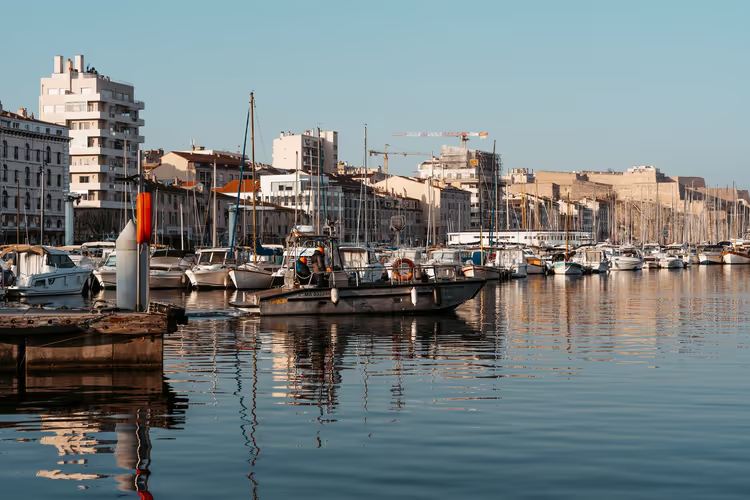
What to see in Marseille: 30 places with tickets and opening hours
Marseille is easy to mistake for a postcard. You see the Old Port, yachts, and the sea. Then you hit a traffic jam on the waterfront in nearly thirty-degree heat. The city is ancient, loud, and full of contrasts: in a single day you can easily go from a 16th-century fortress to a museum made of concrete and glass.
We put together 30 places in Marseille and its surroundings worth seeing. For each one we have opening hours, a price or an honest "free entry", plus a tip on how to get there without a car. The Château d'If is the logical first stop on the route.
Most city museums close around 6:00 PM, and they share a common day off, Monday (as of 09/2026, Marseille museums page). Plan museums for the second half of the week so you don't run into closed doors.
Ad: this article contains affiliate links. We earn a commission if you book through them, at no extra cost to you.
How to plan your trip to Marseille
💡 In short:
- 30 places are realistic to cover in 3-4 days: more than half are in the center, near the Old Port.
- Set aside a separate morning for the Château d'If, the calanques, and the Frioul Islands: they are only reachable by boat.
- Tickets and opening hours: 09/2026, verified on the official Château d'If website and the city museums page.
The Marseille metro is compact, and you can walk through the historic center. The main points are connected by boulevards, so you'll easily hit your step count between museums. Wear comfortable shoes: the Old Town cobblestones wear down soles quickly.
Start your day early. By 11:00 AM, groups are already gathering at the Château d'If and along the waterfront, and ticket lines are growing. See popular spots like Mucem and the basilica before noon or after 4:00 PM.
Boats to the islands depart from the Old Port, so a sea excursion is easy to combine with seeing the port and Le Panier. If you want to save time at ticket offices, buy some tickets online in advance.
1. Château d'If
 © Rémih · CC BY-SAPhoto: Rémih, CC BY-SA (https://creativecommons.org/licenses/by-sa/4.0), Wikimedia Commons
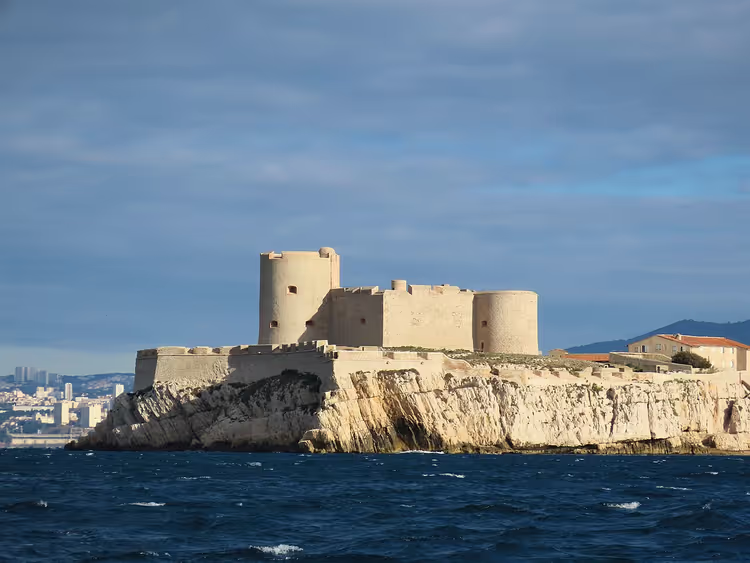
The Château d'If is familiar to everyone from the novel The Count of Monte Cristo. The fortress on a rocky island just off the coast has long been the city's calling card. It was built in the first half of the 16th century to defend against attacks from the sea, and from 1580 it became a prison.
Over its prison centuries, the stone cells held Huguenots, leaders of the Paris Commune, and political prisoners. Escaping from here is nearly impossible: the island is separated from the shore, and the currents around the rocks are too strong. In 1890 the fortress opened to visitors.
On the first floor you'll see Edmond Dantès' cell and Abbé Faria's tunnel. On the second floor is the Man in the Iron Mask's cell. After the tour, relax at the island café with a view of the city. The boat departs from the Old Port: in summer roughly every 20 minutes, less often in winter, about 1.5 hours. The ticket costs €7, entry is free for visitors under 26 (as of 09/2026, price and hours on the Château d'If website).
2. Abbey of Saint-Victor
 © Bjs · CC BY-SAPhoto: Bjs, CC BY-SA (https://creativecommons.org/licenses/by-sa/4.0), Wikimedia Commons
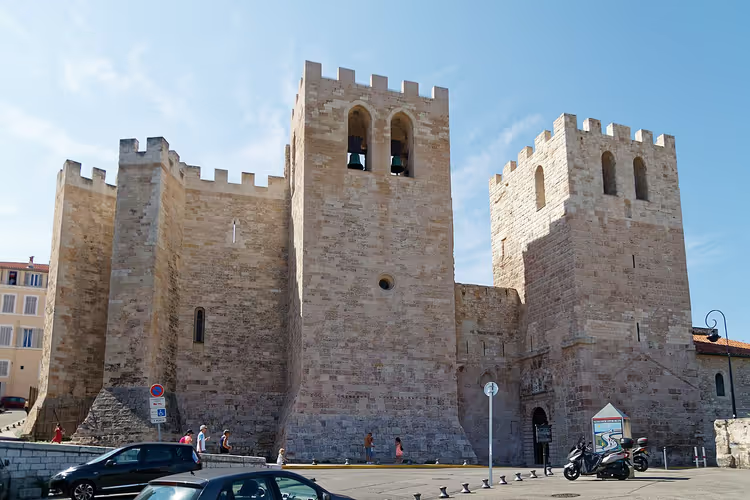
The Abbey of Saint-Victor is called the southern cradle of Christianity in France. The monastery was founded by Saint John Cassian in the early 5th century on the burial site of the martyr Victor of Marseille. Over the centuries the monastery was repeatedly destroyed and rebuilt; it served the faith until the French Revolution, then fell into decline.
The abbey became a historic monument in 1840, but it was only restored more than a hundred years later. From earlier times you'll find the large crenellated wall and the upper church with its crypt. Look for the church entrance opposite the Old Port bay, through the Tour d'Isarn.
Inside you'll see a Carrara marble sarcophagus, a white marble altar from the 5th century, and a statue of Saint Victor. The underground crypt holds marble sarcophagi from the 4th and early 5th centuries and bishops' tombs. The main relic, a statuette of the Black Madonna, leaves the crypt only for the feast of Candlemas.
The church and crypt are open daily from 9:00 AM to 7:00 PM (as of 09/2026, Marseille tourist office). Masses are held on weekdays at 6:30 and 9:00 AM, on Sundays at 9:00 and 11:00 AM, accompanied by a mid-19th-century organ. You can get there by bus: from the Old Port take lines 82 and 83, from Notre-Dame de la Garde line 60.
3. Le Panier
 © Zairon · CC BY-SAPhoto: Zairon, CC BY-SA (https://creativecommons.org/licenses/by-sa/4.0), Wikimedia Commons
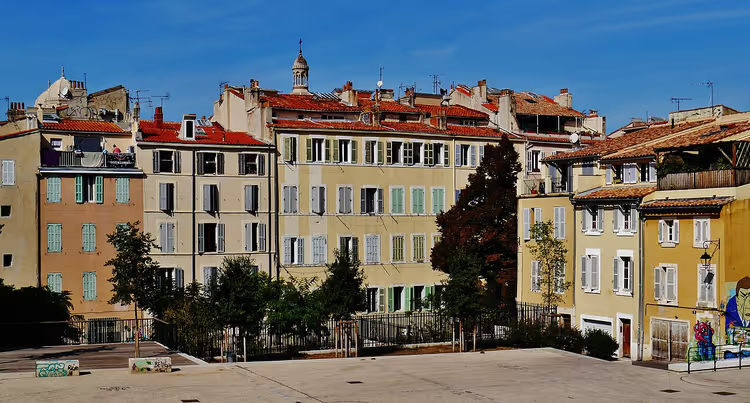
Le Panier is the most picturesque and authentic quarter of the Old Town. Its history goes back to 600 BC, when the Greeks founded a settlement by the port. Today the district looks like an open-air museum: narrow streets are lined with houses from the 16th and 17th centuries.
As you stroll through, you'll stop at the white-and-pink Vieille Charité almshouse, built of stone in the Baroque style.
Also noteworthy is the three-hundred-year-old Hôtel de Cabre mansion, where Gothic combines with Renaissance details. Walking past the Maison Diamantée, with its facade of stones cut like diamonds, is hard too: its halls house the Museum of Old Marseille. Beyond that, the painted old houses, small galleries, and cozy cafés are worth your attention, including the historic 13 Coins bar, which is over 200 years old.
4. La Canebière
 © Chabe01 · CC BY-SAPhoto: Chabe01, CC BY-SA (https://creativecommons.org/licenses/by-sa/4.0), Wikimedia Commons
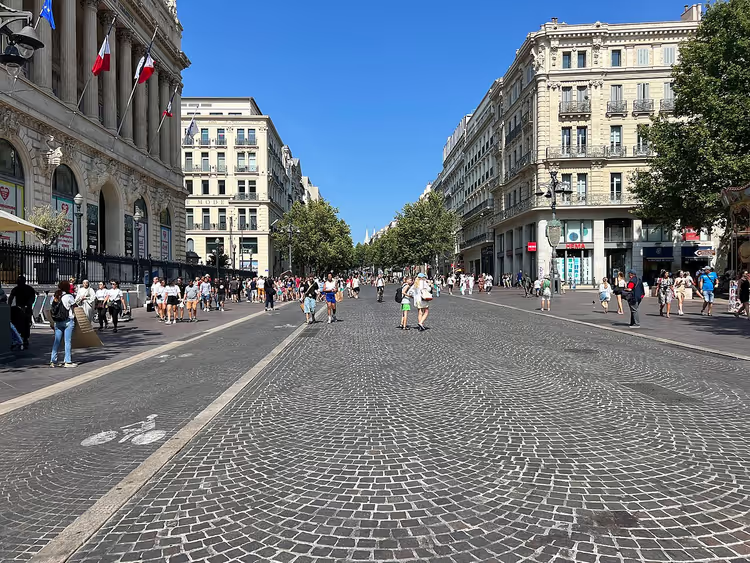
La Canebière runs for a kilometer from the Old Port to the Église Saint-Vincent-de-Paul. Here, on the city's main street, you can see several striking sights in just a couple of hours. Start with the Mercure Beauvau hotel, where composer Frédéric Chopin and writer George Sand once stayed.
Nearby stands the former Hôtel du Louvre et de la Paix, its facade adorned with four caryatids. They symbolize Europe, Asia, America, and Africa. The building now houses a C&A store, where you can step inside to see the old staircase and two salons with 19th-century interiors. A plaque on the building commemorates the first screening of the Lumière brothers' film "L'Arrivée d'un train."
Walk along Allées de Meilhan with its three-window houses and head to the metal music pavilion from 1911. Nearby you'll see a fountain from the 1930s and a monument to the soldiers who defended Marseille in 1870.
The street's main landmark is the Église Saint-Vincent-de-Paul with its 69-meter Gothic spires. The church's foundation dates to 1888. Inside, you'll be impressed by the stained glass windows with biblical scenes, the carved wooden pulpit, and the marble altar finished with onyx, colored enamel, and gilded bronze.
Three metro stations serve the street: Vieux-Port at one end, Canebière in the middle, and Noailles at the other end. From Marseille, it's easy to take a day trip to Nice, Cannes, or Toulon: trains and buses depart from Saint-Charles station, see train and bus tickets here.
5. Parc Borély
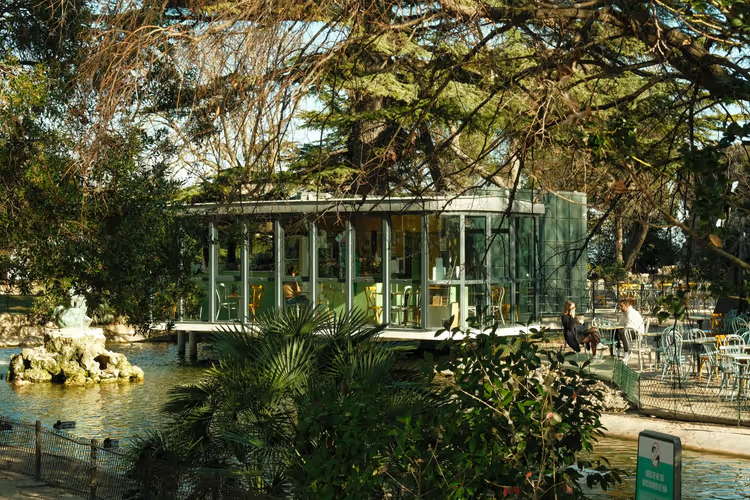
Parc Borély is named after its founder, Joseph Borély, from a prominent city family. It was laid out in the 18th century, and by the mid-19th century it had become a public and beloved recreation spot for residents. It features several themed gardens created in French and English styles.
As you stroll through the park, you'll pass an herb garden, a vine garden, and Mediterranean, Japanese, and Chinese corners. A botanical garden with a vibrant palette of exotic plants was recently added.
In the park you'll see many sculptures and a miniature replica of Notre-Dame de la Garde made from living plants. Picturesque waterfalls, ponds with birds and otters, and peacocks on the lawns complete the scene. The park's centerpiece is the 18th-century Château Borély, which now houses two museums: one of decorative arts and an archaeological museum. The park spreads out next to Prado Beach, so after your walk you can take a swim in the sea. It's open from 6:00 AM to 9:00 PM, and admission is free.
6. Musée des Beaux-Arts
 © Jan Drewes (www.jandrewes.de) · CC BY-SAPhoto: Jan Drewes (www.jandrewes.de), CC BY-SA (https://creativecommons.org/licenses/by-sa/2.5), Wikimedia Commons
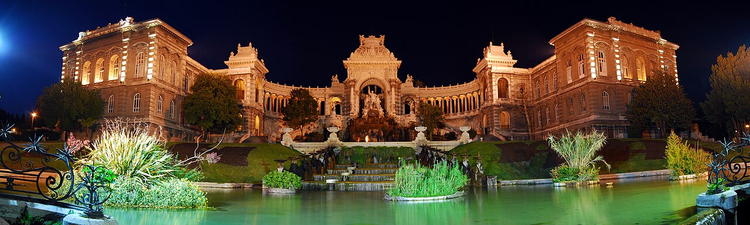
Musée des Beaux-Arts occupies the east wing of the Palais Longchamp, which was built between 1839 and 1869. On the approach to the palace, visitors can't help but marvel at the Château d'Eau cascade fountain, considered one of the most beautiful in the world. The museum's collection began to take shape in 1801-1804 from works of art confiscated from the bourgeoisie during the French Revolution.
The museum's pride is its collection of paintings, drawings, and sculptures by Pierre Puget, one of the outstanding masters of the Baroque. A significant part of the collection is devoted to French painting: seascapes by Claude Vernet, canvases by Jean Millet, Gustave Courbet, and masters of Provence.
The next section introduces you to Italian painting of the 16th-18th centuries, including works by Tiepolo, Vasari, and Perugino. The golden age of Spanish painting is represented by canvases by Antonio Pereda and José de Ribera. Among the Flemish artists on display are Rubens, Jan Brueghel the Younger, and Frans Snyders. The collection is rounded out by sculptures, including a famous work by Auguste Rodin, donated by the artist himself. The museum is open Tuesday through Sunday from 10:00 to 18:00 (as of 09/2026, city museum schedules).
Book tickets to Marseille museums on Tiqets
7. Mucem
 © Olena Ilnytska · CC BY-SAPhoto: Olena Ilnytska, CC BY-SA (https://creativecommons.org/licenses/by-sa/4.0), Wikimedia Commons
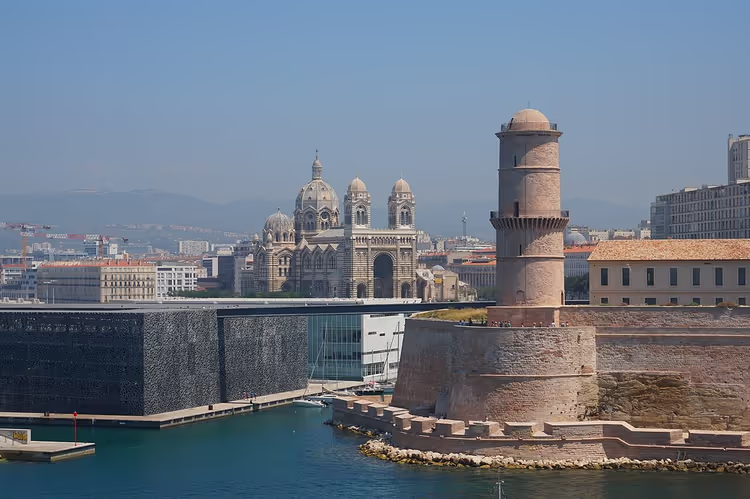
Mucem opened in 2013, when Marseille was designated a European Capital of Culture. A modernist building was constructed specifically for the museum: two rectangular blocks nested one inside the other. The inner box with the galleries rests on a thin forest of fiber-reinforced concrete columns, while the outer shell of openwork concrete protects the exhibits from the sun.
Only part of the glass wall remains open beneath the canopy. Between the inner and outer walls, a ramp rises from the ground floor to the roof, which is connected to Fort Saint-Jean by a bridge suspended over the sea.
The exhibitions tell the story of the Mediterranean peoples from the time of the Roman Empire to the present day: paintings, coins, everyday objects, technology, furniture, and documents. There are also provocative exhibits, such as a pregnant man and a statue of Aphrodite made of aluminum and glitter. There is no museum like this anywhere else in the world.
You can visit daily except Tuesday from 10:00 to 19:00 (as of 09/2026, Mucem website). One ticket gives access to all permanent and temporary exhibitions. Mucem tickets on Tiqets are worth buying in advance so you don't have to wait at the ticket office.
8. Cathédrale de la Major
 © Guiguilacagouille · CC BY-SAPhoto: Guiguilacagouille, CC BY-SA (https://creativecommons.org/licenses/by-sa/3.0), Wikimedia Commons
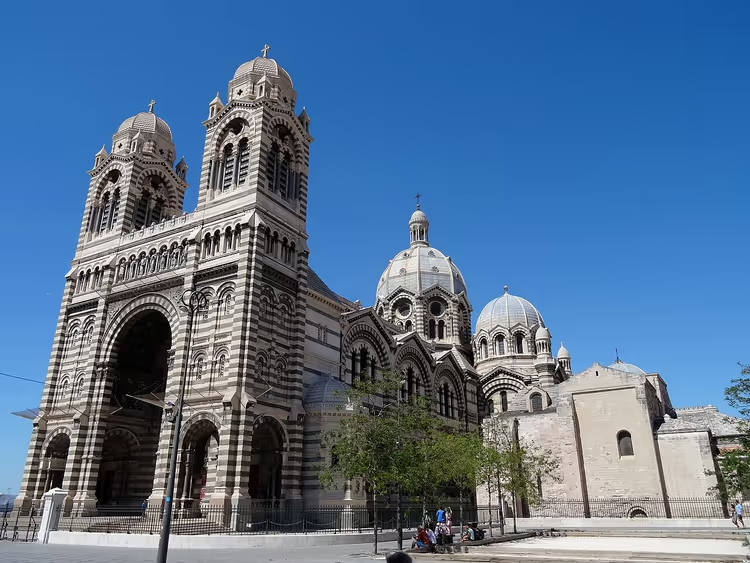
Cathédrale de la Major was built in the second half of the 19th century over about 40 years, with three architects working on the project in succession. Each architect made their own contribution, which is why the Byzantine style with round domes and balustrades is interwoven with elements of Romanesque and Gothic architecture.
No expense was spared on the finishing materials: Carrara marble and onyx brought from Africa. The cathedral draws attention with its striped facade, where white marble alternates with green. Inside, the walls are also two-toned, in beige and reddish marble.
Upon entering, your gaze will be drawn to the massive altar with a dome and columns at the center. The interior combines Venetian mosaics with sculptures of saints and bas-reliefs, while stained glass, frescoes, and bronze decor create a special atmosphere. The cathedral is open Tuesday through Thursday from 9:00 to 12:00 and from 14:30 to 17:30, and Friday through Sunday from 14:30 to 18:00 (as of 09/2026, cathedral opening hours). The easiest way to get there is by metro to Colbert station.
9. Muséum d'histoire naturelle
 © Moumousse13 · CC BYPhoto: Moumousse13, CC BY (https://creativecommons.org/licenses/by/2.5), Wikimedia Commons
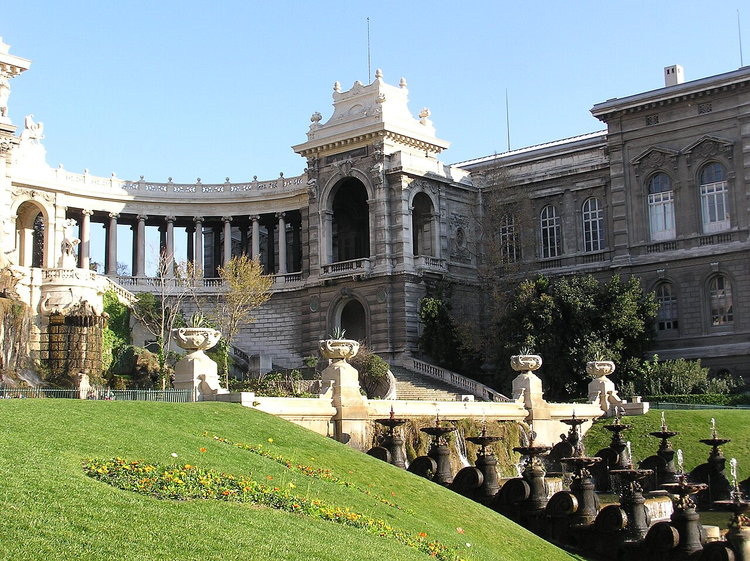
Muséum d'histoire naturelle is located in the right wing of the Palais Longchamp. It was founded in 1819, so the museum is now more than two hundred years old. The exhibitions are divided by natural science disciplines: paleontology, botany, zoology, mineralogy, human evolution, and the flora and fauna of Provence.
The paleontology collection contains thousands of specimens of extinct animals. The Mediterranean botany section consists of herbaria, seeds, and plants. The zoology section spans several rooms and displays thousands of species of global and Mediterranean fauna.
The mineralogy collection showcases the planet's soil types and native elements: gold, salt, ore. The collection of stones, including precious ones, is especially captivating here. A separate exhibition introduces you to finds from archaeological excavations and traces human evolution. The collection of seashells, one of the largest in the world, draws great interest. Palais Longchamp is easy to reach by metro to Longchamp station. The museum is open daily from 10:00 to 18:00, except Mondays (as of 09/2026, Muséum opening hours).
10. Stade Orange Vélodrome
 © Bernard Ddd · CC BY-SAPhoto: Bernard Ddd, CC BY-SA (https://creativecommons.org/licenses/by-sa/2.0), Wikimedia Commons
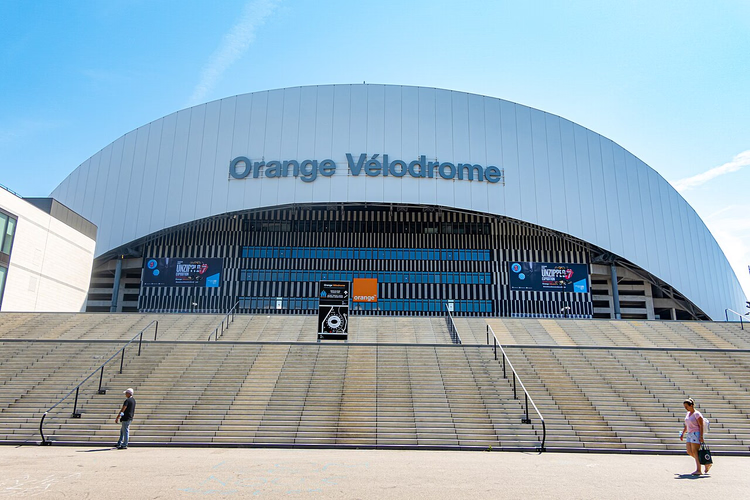
Sports fans can head to Stade Orange Vélodrome near the city center. The stadium was built in the 1930s and is known for hosting FIFA World Cup and UEFA European Championship matches. Despite the name, there is no velodrome here: it was dismantled in 1984 ahead of the European Championship to expand the arena.
After renovation, the stadium seats about 67,000 fans. Today the arena is home to Marseille's Olympique club for training and home games. Since 2014, a roof covers the stands. The easiest way to get there is by metro to Rond-Point du Prado station.
11. Basilica of Notre-Dame de la Garde
 © Bybbisch94, Christian Gebhardt · CC BY-SAPhoto: Bybbisch94, Christian Gebhardt, CC BY-SA (https://creativecommons.org/licenses/by-sa/4.0), Wikimedia Commons
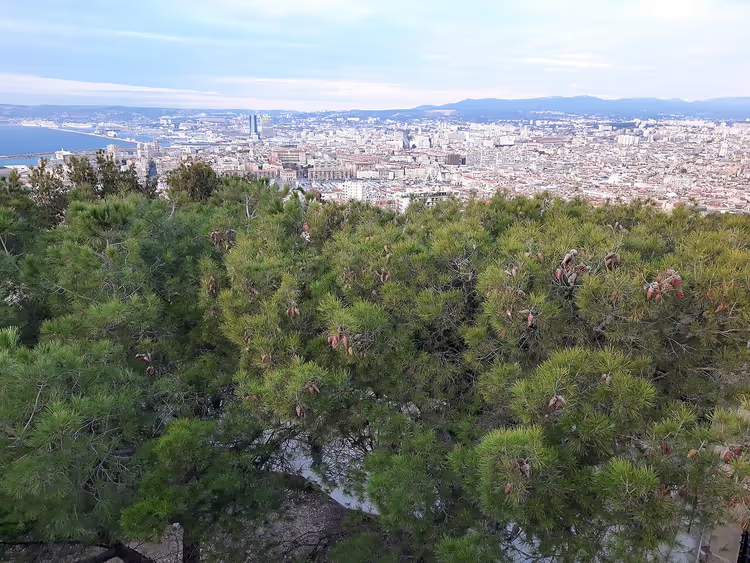
The Basilica of Notre-Dame de la Garde rises atop a 150-meter hill, and its bell tower is crowned with a gilded figure of the Virgin Mary. The people of Marseille venerate the church as the city's heavenly patroness. The first church building stood here from the early 13th century, and in the 16th century a fortress was built around it.
In the late 18th century, the church was looted and fell into disrepair, and the fortress was turned into a prison for nobles. The church was returned to the Catholic Church in the early 19th century. The current basilica was built between 1853 and 1864. Inside, it is divided into an upper church and a lower church, the crypt.
The upper space is decorated with a mosaic of the Assumption of the Virgin and panels made of Venetian colored fragments. The floor impresses with Roman-style patterns. The interior features a white marble altar and columns of white and red marble. In the crypt, two 19th-century marble statues will catch your eye: Bishop of Marseille Charles de Mazenod and Pope Pius IX.
The basilica is open from October to March from 7:00 to 18:15, and in the remaining months visiting hours are extended by one hour (as of 09/2026, basilica opening hours). Buses run here from the Old Port, and the climb to the observation deck is worth arriving in the morning for. Find guided tours of Marseille on GetYourGuide.
12. Musée d'Histoire de Marseille
 © Jean-Pierre Dalbéra from Paris, France · CC BYPhoto: Jean-Pierre Dalbéra from Paris, France, CC BY (https://creativecommons.org/licenses/by/2.0), Wikimedia Commons
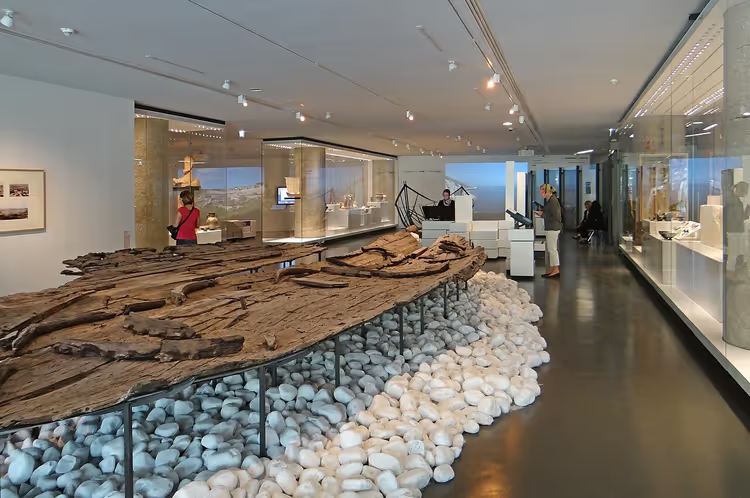
Musée d'Histoire de Marseille emerged from accidental ancient finds in the city center, discovered at the site of a shopping center construction. This is how the museum complex came together: one part occupied the museum building, another became an open-air gallery called the "Garden of Ruins." The exhibition traces the history of the port city from its founding in the 6th century BC to the mid-20th century.
Everyday objects showcase the Greek, Roman, early Christian periods and the Middle Ages. Separate rooms cover Marseille's incorporation into France, the monarchy, the French Revolution, and the two world wars. Historical eras are represented by building fragments, sculptures, tools, clothing, and jewelry.
The collection of sunken ships of the Mediterranean leaves a strong impression, and the oldest exhibit is more than 2,500 years old. The museum is open daily from 10:00 to 18:00, except Mondays, with free admission on Sundays (as of 09/2026, Marseille History Museum schedule). You can get there by metro to Colbert and Vieux-Port Hôtel de Ville.
13. Palais Longchamp
 © kallerna · CC BY-SAPhoto: kallerna, CC BY-SA (https://creativecommons.org/licenses/by-sa/4.0), Wikimedia Commons
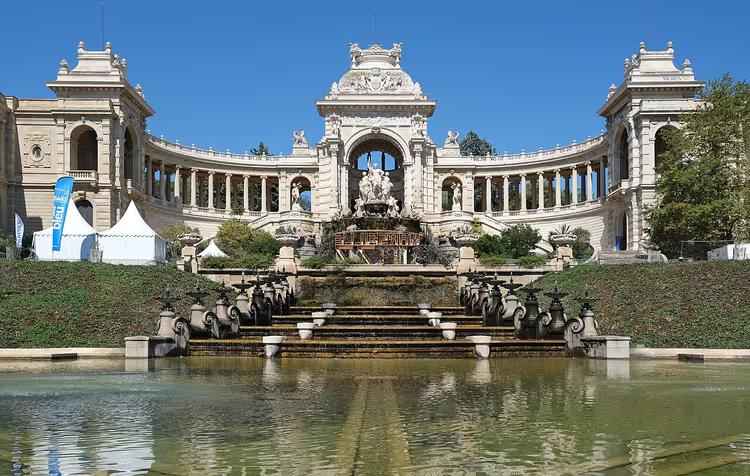
Palais Longchamp is a lavish architectural ensemble consisting of a sculptural fountain group and a two-wing palace. The palace facade is notable for its triumphal arch and symmetrical Corinthian colonnade. In front of it, the Château d'Eau cascade fountain with its group of sculptures appears in full splendor.
The composition features four bulls guided by a woman personifying the Durance River. Nearby you will see two ladies, and beside them children with ears of wheat and bunches of grapes. From the fountain, the water flows into the middle basin, from where it cascades into 12 bowls along the steps. Behind the fountain, the eye is drawn to a grotto-like arch with birds, nymphs, and flowers.
The arched vault is decorated with the coat of arms of Marseille, surrounded by two mermaids. The symmetrical wings of the palace, with their richly decorated interiors, house the Muséum d'histoire naturelle and the Musée des Beaux-Arts. At night, the palace is enchanting when illuminated. Opposite lies a French-style park with an observatory and a botanical garden with centuries-old elms, plane trees, and oaks. The easiest way to get there is by metro to Cinq Avenues Longchamp station.
14. Fort Saint-Nicolas
 © Bjs · CC BY-SAPhoto: Bjs, CC BY-SA (https://creativecommons.org/licenses/by-sa/4.0), Wikimedia Commons
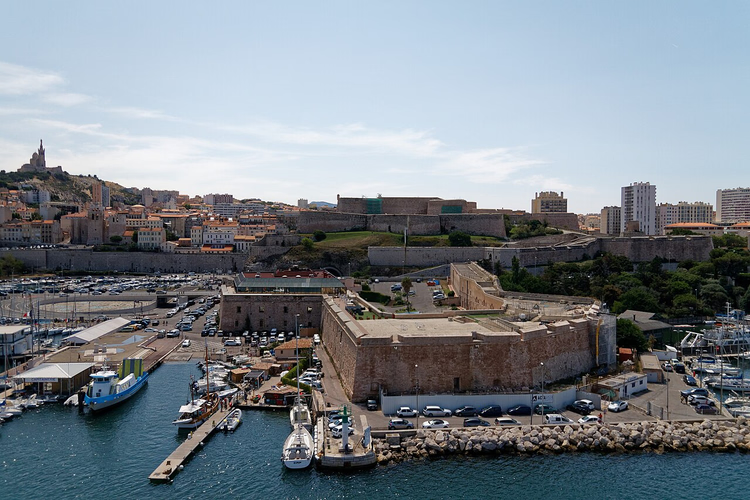
Fort Saint-Nicolas was built in the 17th century by order of King Louis XIV in just four years. Its purpose was unusual: the fort was meant to intimidate the people of Marseille themselves, who had staged uprisings. The walls were built from pink stone brought from Couronne, and the cannons were aimed at the city.
Previously, on the site of the stone citadel stood a 13th-century chapel belonging to the Abbey of Saint-Victor. In the 14th century, it was given the role of a chain tower: a chain was attached to the wall to block hostile ships from entering the port waters. During the French Revolution, the fort was partially destroyed by townspeople, and patches of gray stone appeared in the wall.
From the first half of the 19th century until the end of World War II, the fortress housed a prison. When construction began on the boulevard leading to Palais du Pharo, the citadel was cut into two parts. Only one part is open to tourists, while the center of the fortress, occupied by the Foreign Legion, is closed. On the fort grounds, the old mill building has been turned into a memorial to the victims of wars. Opening hours are from 9:00 to 18:00, entry through the eastern gate (as of 09/2026, Fort Saint-Nicolas opening hours).
15. Calanques National Park
 © kallerna · CC BY-SAPhoto: kallerna, CC BY-SA (https://creativecommons.org/licenses/by-sa/4.0), Wikimedia Commons
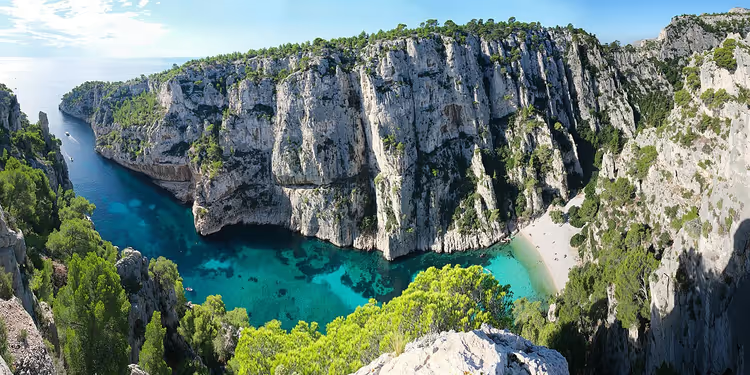
The coastline from Marseille to the town of Cassis is carved by nature into picturesque coves, which in French are called calanques. These rocky inlets with turquoise water form the basis of Calanques National Park, protected by the state. For excursions, the park territory is divided into three sections.
The first two groups of calanques can be visited on your own: by bus, car, or boat. Buses to the park depart from Place Castellane. Leave early: in summer, parking lots near the entrances are already full by midday, and the trails offer little shade.
The easiest way to see the coves without a long hike is a boat trip from the Old Port. The boat passes by the cliffs, and you have time to swim and take panoramic photos from the water. See boat tours of the calanques on GetYourGuide. Bring a hat and water.
16. Musée Grobet-Labadié
 © Robert Valette · CC BY-SAPhoto: Robert Valette, CC BY-SA (https://creativecommons.org/licenses/by-sa/3.0), Wikimedia Commons
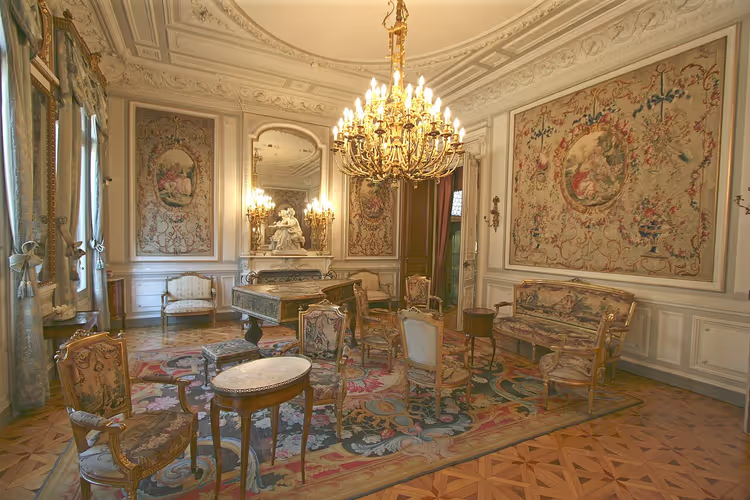
Musée Grobet-Labadié is named after the couple who donated their art collection to the people of Marseille along with their 19th-century mansion. The exhibition includes the living rooms of the house with rare antique furniture, cultural objects, and paintings.
Walking through the ground floor, you will see a reception room with paintings, a salon with an antique harpsichord, a boudoir, and a dining room with furniture from the 17th and 18th centuries. A rare porcelain collection also awaits you here.
On the second floor, you will find the early art study with a collection of decorative objects and European and Asian paintings from the 14th to 16th centuries. The cabinet of curiosities displays items the owners considered amusing.
The most interesting collection awaits you on the third floor. Here, the collection of locks and keys dating back to the 14th century is impressive. The reception room surprises with an exhibition of rare 15th-century carpets and a collection of sculptures. The museum's main highlight is also striking: the music room of the owner Louis Grobet, with extremely rare painted instruments from various countries dating from the 17th to 19th centuries. The museum welcomes visitors daily from 10:00 to 18:00, except Mondays (as of 09/2026, opening hours of this museum), and is located next to Cinq Avenues Longchamp metro station.
17. Vieille Charité
 © Vincent 13 · CC BY-SAPhoto: Vincent 13, CC BY-SA (https://creativecommons.org/licenses/by-sa/3.0), Wikimedia Commons
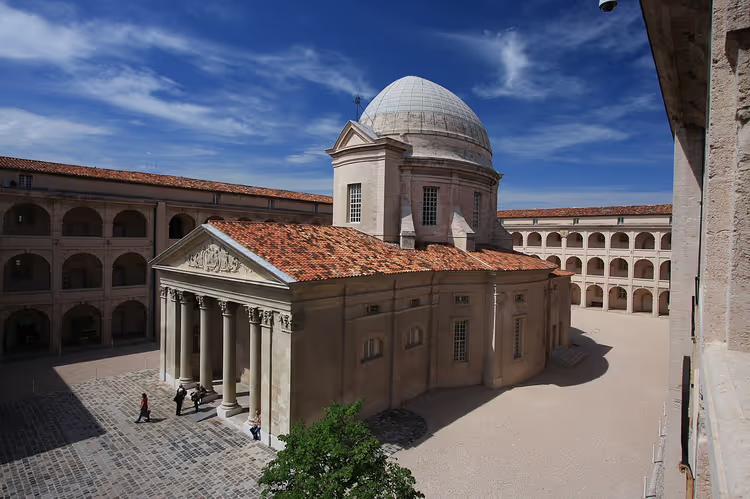
Vieille Charité, formerly an almshouse, stands in the center of the historic Le Panier district, not far from Cathédrale de la Major. The building was constructed in the Baroque style in the first half of the 17th century, and in 1707 a church was built next to it. The material used was white and pink Couronne stone.
The imposing building is rectangular in shape with four wings that have no windows on the outer facade. Each wing consists of three floors with arcaded galleries opening onto the inner courtyard. In the center of the courtyard stands a church in the Italian Baroque style with an oval dome.
The pediment of the church facade depicts an allegorical figure of Charity surrounded by pelicans with their chicks. The church entrance is adorned with four Corinthian columns. The almshouse received its first beggars in 1641. Today it houses two museums: archaeology and the arts of Africa and Oceania. Opening hours are from 10:00 to 18:00, Tuesday through Sunday (as of 09/2026, city museums), and Colbert Hôtel de Région metro station is nearby.
18. Old Port
 © Ingo Mehling · CC BY-SAPhoto: Ingo Mehling, CC BY-SA (https://creativecommons.org/licenses/by-sa/3.0), Wikimedia Commons
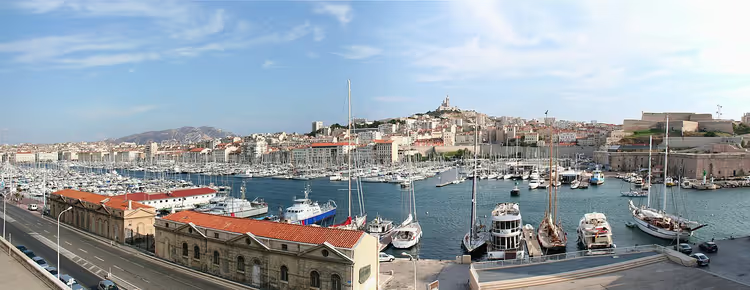
The Old Port gave rise to Marseille: six centuries before our era, Phocaean Greeks landed here, and the settlement was named Massalia. In the 5th century, the Abbey of Saint-Victor appeared here. From the 10th to 13th centuries, piers, warehouses, and shipyards where military vessels were built were established along the bay's shoreline.
From the 15th to the 18th century, construction of wealthy mansions began here, which today are listed among the city's landmarks. Until the construction of the new port in the 19th century, this harbor was the city's maritime gateway. Today, the area is favored by yachtsmen and seafood vendors.
People come here to admire the yachts and take a sea excursion: from the water you will see the city panorama or sail to the Château d'If. The fish market on Quai des Belges impresses with its selection of Mediterranean seafood, and you can try it at any restaurant near the port. Book sea excursions and bay cruises on GetYourGuide.
19. Ombrière du Vieux-Port
 © Georges Seguin ( Okki ) · CC BY-SAPhoto: Georges Seguin ( Okki ), CC BY-SA (https://creativecommons.org/licenses/by-sa/4.0), Wikimedia Commons
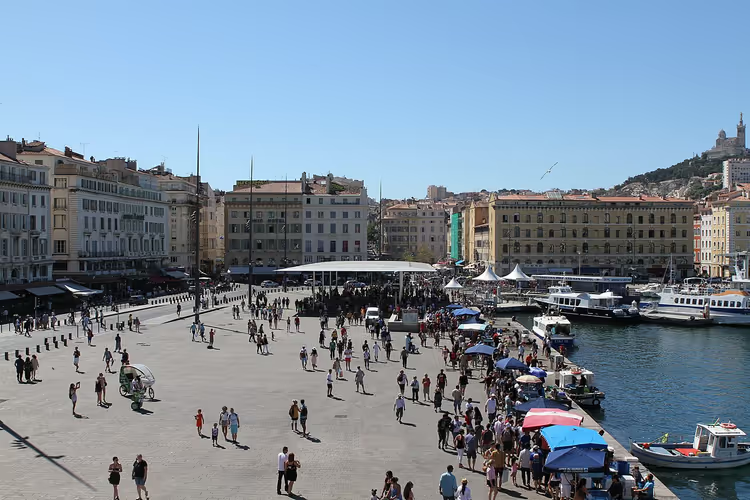
The city's central waterfront gained a modern landmark in 2013: the mirrored Ombrière canopy designed by Norman Foster. The structure is built as a canopy of polished steel and rests on discreet thin columns. The mirrored surface reflects the surroundings of the Old Port and has noticeably transformed the waterfront.
French designer Michel Desvigne worked on the square's landscape design. He laid the surface under the canopy with light granite paving on a single level, making the structure visually lighter. Tourists enjoyed looking at themselves in the mirrored "sky" so much that the waterfront was made pedestrian-only. Today the pavilion is used for fairs and city events.
20. Cité radieuse Le Corbusier

The Cité radieuse project, a "city within a city," was designed by architect Le Corbusier. The idea was realized as a residential complex on Boulevard Michelet, built in 1952 for about 1,600 residents and 337 apartments. Each apartment has a balcony with sun screens for cross-ventilation.
One of the main innovations is placing regular and split-level apartments in separate sections. The apartments on 18 floors run along each side of the building. The building is known for its five corridors, its "interior streets." Along the middle, commercial street, residents reach shops and services.
Without leaving the building, residents relax in the rooftop garden, run on the track, work out in the gym, swim in the pool, and leave their little ones at the kindergarten. Reinforced concrete was used for construction, and the building's volume is supported by massive columns, under which a square is laid out. To see Cité radieuse, take bus No. 22, No. 521, or B1 and get off at the Le Corbusier stop.
21. Petit Train de Marseille
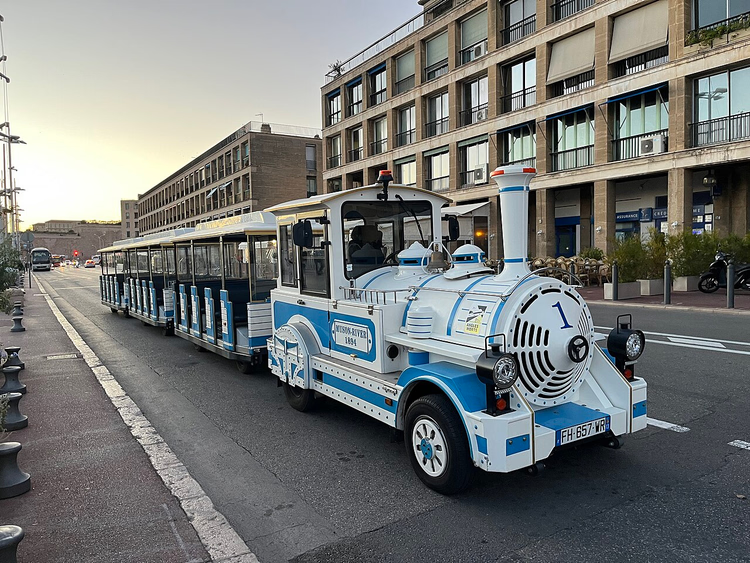
A convenient way to get your first look at the city is the Petit Train tourist mini-train, which departs from the Old Port area opposite the city hall. Two routes run from April 1 to December 31, and a third operates in summer.
The first route goes through the Old Town: you will pass the Hôtel de Cabre mansion, the Cathédrale de la Major, and the Saint-Laurent church. The train stops near Vieille Charité, where you can get to know the Le Panier district and its Lenche and Moulins squares.
The goal of the second tour is the Basilica of Notre-Dame de la Garde. The train follows the coast to reach it, passing the fort, Palais du Pharo, and the Abbey of Saint-Victor along the way. At the foot of the high hill, the train stops so you can visit the basilica.
The third route runs in summer. The Petit Train does not go to the Frioul Islands; you can only get there by boat from the Old Port.
22. Plage des Catalans
 © Patrick Nouhailler's… · CC BY-SAPhoto: Patrick Nouhailler's…, CC BY-SA (https://creativecommons.org/licenses/by-sa/3.0), Wikimedia Commons
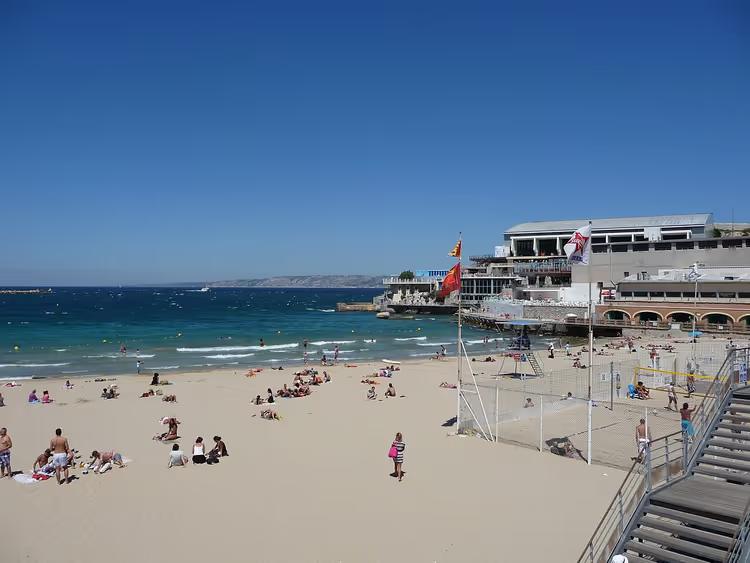
Plage des Catalans lies close to the center, a 15-minute walk from the Old Port. The beach is not particularly elegant, but it is convenient for relaxing after sightseeing. The bottom here is sandy and shallow, with no rocks or sudden drop-offs, and big waves are rare.
A light breeze takes the edge off the summer heat. Because of the port's proximity, the water in the area is not perfectly clean, so people do not come here for clarity. A special highlight of the beach is a section of oddly shaped rocks that are good for sunbathing and taking selfies. The boulders are scattered among the sand and do not block the way.
The beach became known for its volleyball courts, where fans of the game gather. There are no loungers or umbrellas at Catalans: you come with your own towel and settle wherever you find a spot. In the evening, young people have picnics here and relax in the coastal bars.
23. Plage du Prado
 © Exilexi · CC BY-SAPhoto: Exilexi, CC BY-SA (https://creativecommons.org/licenses/by-sa/4.0), Wikimedia Commons
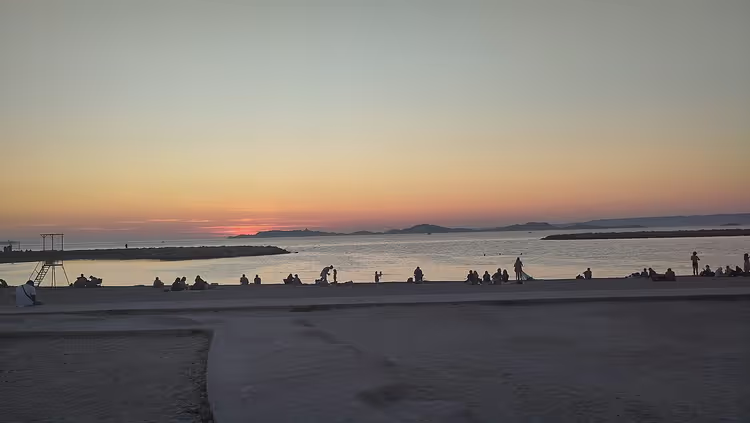
Plage du Prado is a complex of artificial beaches stretching along the city coastline. A large seaside park was laid out on fill made from rock left over from metro construction. The beaches occupy most of the complex's length, while the remaining area is given over to parks, sports grounds, and docks.
The best beaches for swimming are Roucas Blanc, Bonneveine, Vieille Chapelle, and Borély. Several sections with waves are set aside for water sports: windsurfing, kiting, water skiing, and diving. Sailing schools for boats and canoes operate here.
There are plenty of beach volleyball courts and soccer fields along the shore. The beaches have parking, changing rooms, showers, and toilets, with rental points and cafes nearby. You can get there by bus No. 19 from the Rond-Point du Prado stop or bus No. 83 from the Old Port.
24. Observatoire de Marseille
Observatoire de Marseille brings together an astrophysics laboratory, the Haute-Provence Observatory, a stellar interferometry laboratory, and the Gassendi department. The first observations here date back to 1702, when the observatory was founded by the Jesuits. In the second half of the 18th century, it received the status of the Royal Observatory of the Navy, where two experienced astronomers began working.
At that time, the observatory acquired a telescope that was powerful for its era. Over its history it has changed, but it has never changed its field of activity: it has conducted scientific observations and searched for asteroids. Its staff holds a whole series of discoveries.
You can visit the observatory on a guided tour, where you will see historic and modern instruments for studying the universe. It is located in Longchamp Park near Palais Longchamp, and visits should be confirmed in advance (as of 09/2026, observatory visits). The observatory is convenient to visit on the same day as the palace museums.
25. Palais du Pharo
 © Remontees · CC BY-SAPhoto: Remontees, CC BY-SA (https://creativecommons.org/licenses/by-sa/4.0), Wikimedia Commons
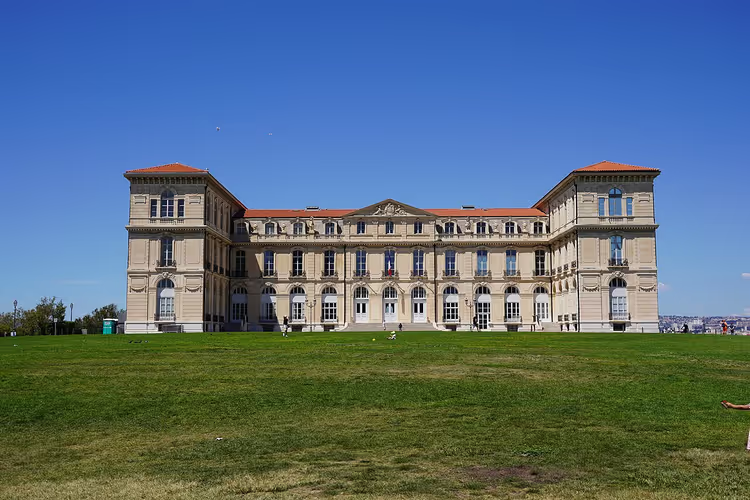
Palais du Pharo, built of pink stone, shines on a high hilltop of the cape of the same name near the sea. It is supported by the cliffs of the steep shore. The building was constructed for Louis Napoleon in the second half of the 19th century.
The palace facade is decorated with elaborate stucco, elegant balconies, and false columns. The window openings are rounded, and flowerbeds and shrubs are laid out on both sides of the grand staircase. The palace windows offer a wide panorama of Marseille and the Château d'If.
The building had many rooms decorated in Empire and neoclassical styles. In the early 20th century, two wings were added to the palace, which disrupted its style. The palace is surrounded by a landscaped park with viewing platforms, from which it is pleasant to admire the city panorama. Sitting in the terrace restaurant, you will look out over the seascape of the harbor. The palace is especially beautiful in the evening illumination. You can get there by metro to Vieux-Port station, then by bus No. 83.
26. Église des Augustins
 © Zairon · CC BY-SAPhoto: Zairon, CC BY-SA (https://creativecommons.org/licenses/by-sa/4.0), Wikimedia Commons
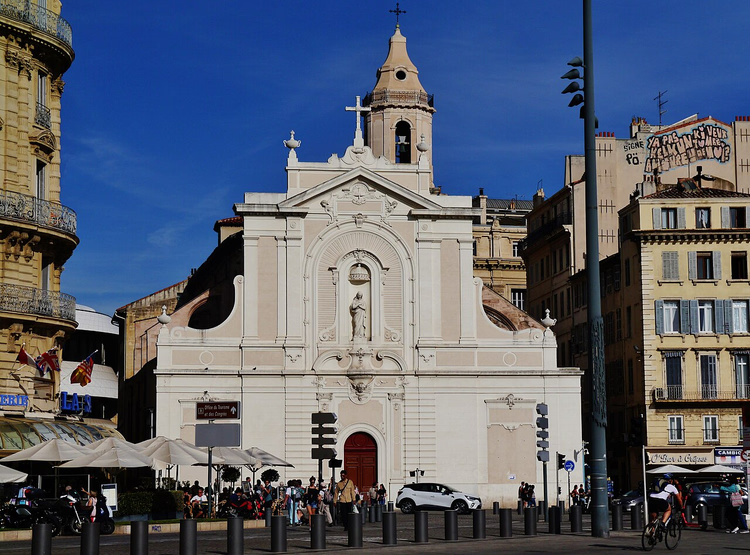
The snow-white facade of Église des Augustins (Saint-Ferréol) adorns the Old Port embankment. Its building took more than a hundred years to construct, from 1447 to 1588. The church has several chapels built by different craft guilds in honor of their patron saints. The snow-white facade and the octagonal neoclassical bell tower were built in the early 19th century.
In a niche below the pediment, you are greeted by the statue of the Immaculate Conception by the sculptor Coulange. A statue of Jesus Christ stands above the portal. Other walls of the facade show features of Baroque and Romanesque styles. The interior of the church is divided into three naves, with six chapels along the sides.
The central place in the interior is given to the altar of Saint Peter and a 17th-century pulpit with wooden sculptures. Among the relics you will see the remains of a tomb, a reliquary of Saint Louis of Anjou, a gilded bust of Saint Ferréol from the 18th century, and a baptismal font with a high relief of an angel. The church is open daily from 9:00 to 18:00, admission is free (as of 09/2026, church hours).
27. Fort Saint-Jean
 © Robert Valette · CC BY-SAPhoto: Robert Valette, CC BY-SA (https://creativecommons.org/licenses/by-sa/3.0), Wikimedia Commons
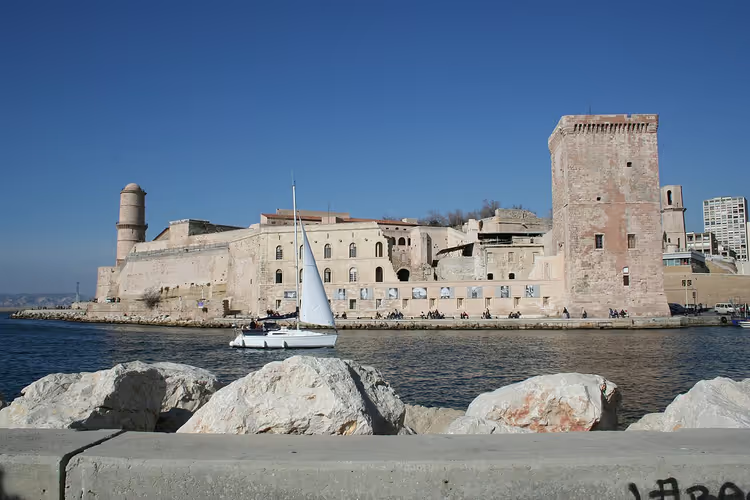
Originally, from the 12th century, a fortress of crusader knights stood on the site of Fort Saint-Jean. The new fortress was built in 1660 during the time of Louis XIV. The goal was to intimidate the residents after a city uprising: the cannon muzzles were pointed toward the city. After the French Revolution, the fortress was turned into a prison for noble captives.
During World War II, ammunition depots were located here, and after an explosion in one of them, part of the fortress was badly damaged. Today, the ancient Tour du Roi René, the old lighthouse, and the ruins of the barracks are of interest. The Chapel of Saint John and a monument to prisoners of Nazi camps are also preserved here.
After restoration in 2013, the fort became home to two sections of the Museum of Mediterranean History: the Mediterranean Gallery and Time Off. The fort is connected to the museum's new building by a footbridge. You can see the fort and the exhibition daily except Tuesday: in summer from 11:00 to 19:00, in winter until 18:00 (as of 09/2026, official Mucem website).
28. Île du Frioul
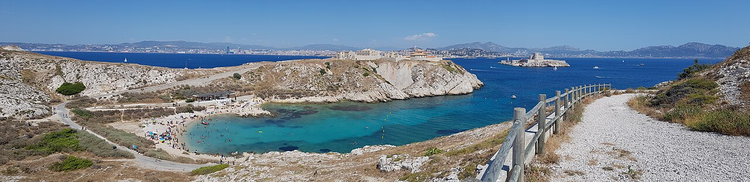
The Île du Frioul archipelago consists of two large islands, Ratonneau to the north and Pomègues to the south, as well as two small islets, including the famous If. The large islands are connected by a causeway, behind which lies a harbor with boat moorings and a row of residential houses.
 © Anfrx · CC BY-SAPhoto: Anfrx, CC BY-SA (https://creativecommons.org/licenses/by-sa/4.0), Wikimedia Commons
Ratonneau and Pomègues have the status of protected zones within the Calanques National Park. Hundreds of plant species grow on the rocky landscape, many birds live here, and one of the caves preserves wall inscriptions from the Paleolithic era.
Most bays on the islands are suitable for swimming. The Ratonneau shore is known for its ancient fort and the public Saint-Estève beach, which has showers, toilets, and lifeguards on duty. A road with tourist road trains connects the beach to the harbor. The best viewpoint in the archipelago is Cap de Croix. Trails are set up for walks, and on southern Pomègues you can see fragments of a medieval fortress. Book Frioul Islands tours on GetYourGuide.
29. Palais de la Bourse
 © Robert Valette · CC BY-SAPhoto: Robert Valette, CC BY-SA (https://creativecommons.org/licenses/by-sa/3.0), Wikimedia Commons
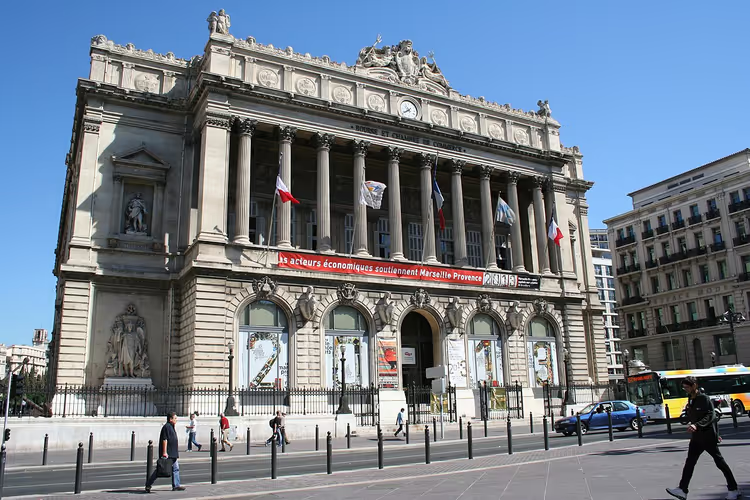
Palais de la Bourse was built in 1860 for the city's Chamber of Commerce. The monumental neoclassical building has a facade with massive Corinthian columns. The main facade is framed by porticos of ten columns, beneath which are five arched doors edged with stone. The roof is crowned with the city's coat of arms and bas-reliefs.
The pediment features a clock made by a famous French master. On the side portals you will see Corinthian pilasters and sculptures of seafarers, symbols of trade and shipping. The grand hall's interior is dominated by black and white marble, and the ceiling is decorated with a relief panel.
Covered galleries line the perimeter of the hall, where stockbrokers once worked. Today, in addition to brokerage offices, the palace houses shops and cultural institutions: the Museum of Maritime Trade, a public library, and exhibition halls. Shops are open Monday through Saturday from 10:00 to 19:30 (as of 09/2026, Palais de la Bourse hours), and the Vieux-Port Hôtel de Ville metro station is nearby.
30. Jardin des Vestiges
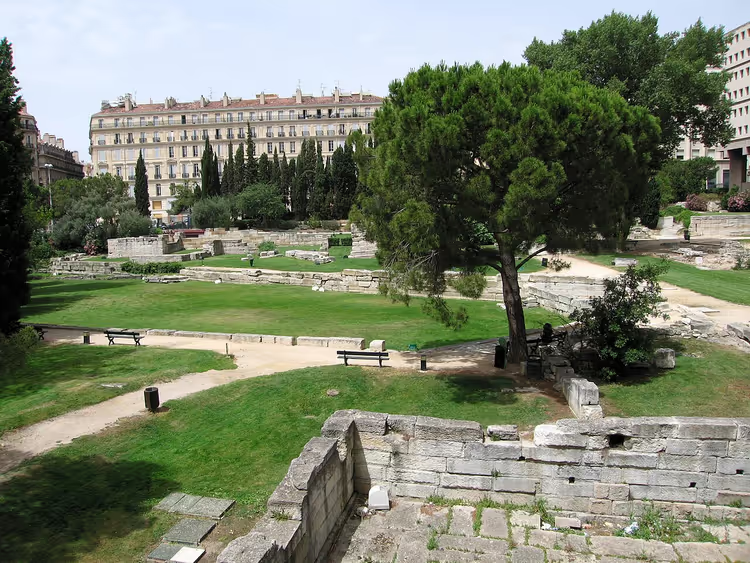
Jardin des Vestiges, the Garden of Ruins, stands in striking contrast among the high-rise buildings. It holds the status of a national park, created around the ruins of Massalia, the cradle of the city. Massalia was founded around 600 BC and destroyed by the warriors of Gaius Julius Caesar for disobedience.
The city was reborn centuries later as Marseille. The ancient ruins were discovered during construction of the Central Bourse. Visitors to the Garden of Ruins walk along paths created back in the Roman era, and the former docks have been turned into green lawns.
In the hewn stones laid out across the garden, you can see holes made by ancient builders for wall masonry. The foundations of residential houses, ruins of fortress walls, and defensive towers from the 4th to 1st centuries BC transport you back to antiquity. The sense of presence is heightened by burial urns, stone slabs, and ancient boats in the open air. You can expand your knowledge of Massalia's history at the nearby Musée d'Histoire de Marseille. The garden is open every day except Sunday from 9:00 to 18:30 (as of 09/2026, garden hours); you can get there by metro to Vieux-Port or Noailles.
Where to stay in Marseille
The center is convenient for a short trip: you can walk to museums and the port. If you arrive by car, look at the area around Rond-Point du Prado, where parking is easier. Hotel prices in Marseille on Trip.com.
To avoid overpaying, compare museum ticket prices in advance. Below is a single widget showing tickets with prices and time slots.
Tours and tickets in Marseille
Guided tours, skip-the-line tickets and activities — most offers can be cancelled free of charge.
See offers on TiqetsThe widget loads once you give your consent.
⁉️🤔 Frequently asked questions
How many days do you need to see the main sights in Marseille?
Two full days are enough for the center: in that time you can cover the Old Port, Le Panier, La Canebière, and the main museums. For the Château d'If, the calanques, and the Frioul Islands, add half a day for each. The optimal route covering all 30 places is 3 to 4 days without rushing, especially in summer, when the heat makes you want a break by the sea.
Do you need a car in Marseille?
In the center, a car is more of a hindrance: parking is paid, streets are narrow, and the main sights are within walking distance or reachable by metro. A car is useful for trips to the calanques, Cassis, and other towns in Provence. If you rent a car only for a day trip, compare prices and terms from different rental companies in advance.
When is the best time to visit Marseille?
The most comfortable months are May, June, and September: warm, but without the August heat and crowds. In July and August, beaches and ticket offices are crowded, but the water in the coves is warmest. In winter the city is quieter, but some boat trips to the islands run less frequently.
How much does it cost to see the sights?
Much of Marseille is free: the Old Port, beaches, Parc Borély, Jardin des Vestiges, and churches can be visited without a ticket. City museums charge admission, but on Sundays Musée d'Histoire de Marseille is free.
How do you get to the Château d'If and Frioul Islands?
Boats depart from the Old Port: in summer roughly every 20 minutes, less often in winter. Separate services run to the Frioul Islands, where you can walk along protected trails and swim in the coves.
Marseille attractions on the map
All 30 points are easy to view on a single map. Open it on your phone and plan your route by day: that way you won't cross the city twice.
Sights of Marseille
Places on the map
- 1Château d'If Prison-fortress from "The Count of Monte Cristo"
- 2Saint-Victor Abbey France's southern cradle of Christianity, with a crypt
- 3Le Panier The most picturesque quarter of the Old Town
- 4La Canebière Main street of the city, a kilometre long
- 5Borély Park Themed gardens and an 18th-century château
- 6Musée des Beaux-Arts Collection of Pierre Puget and Baroque masters
- 7Mucem Museum of Mediterranean civilisations in lattice concrete
- 8Cathédrale de la Major Striped facade of marble and onyx
- 9Muséum d'histoire naturelle Palaeontology, zoology and a shell collection
- 10Stade Orange Vélodrome Home ground of the "Olympique" football club
- 11Basilica of Notre-Dame de la Garde Patroness of the city atop the hill
- 12Musée d'Histoire de Marseille History of the port and an open-air "Garden of Ruins"
- 13Palais Longchamp Cascading Château d'Eau fountain and two museums
- 14Fort Saint-Nicolas 17th-century fortress built to intimidate the city
- 15Calanques National Park Rocky coves with turquoise water
- 16Musée Grobet-Labadié Mansion with a collection of clocks, carpets and a harpsichord
- 17Vieille Charité Former almshouse, museums of archaeology and African art
- 18Old Port (Vieux-Port) Harbour where the history of Marseille began
- 19Ombrière du Vieux-Port Norman Foster's mirrored canopy
- 20Cité radieuse Le Corbusier Le Corbusier's "city within a city" housing complex
- 21Petit Train de Marseille Tourist mini-train with three routes
- 22Plage des Catalans Beach with oddly shaped rocks near the centre
- 23Plage du Prado Complex of artificial beaches for water sports
- 24Observatoire de Marseille Observatory with observations dating back to 1702
- 25Palais du Pharo Palace of Louis Napoleon with a view of Château d'If
- 26Église des Augustins Snow-white facade on the Old Port waterfront
- 27Fort Saint-Jean Crusader fortress linked by a bridge to Mucem
- 28Frioul Islands Archipelago of protected islands off Château d'If
- 29Palais de la Bourse Chamber of Commerce palace with a maritime trade museum
- 30Jardin des Vestiges Garden amid the ruins of ancient Massalia
Car rental in Marseille
If you plan to drive to the calanques or into Provence, a car gives you freedom. In central Marseille, parking is paid and tight, so rent a car for the day you head out, not for the whole vacation. Below, pick a car for your route.
Find hotels
Compare prices across booking sites and filter for rooms with free cancellation.
Compare prices on Discover CarsThe widget loads once you give your consent.
You can compare terms and prices from different rental companies through DiscoverCars. Take full insurance and check the deposit before signing the contract.
In short: what to book
Marseille is easy to divide by interests. If you have little time, go for the center and a boat trip. If you are traveling with children, put Prado Beach and the Petit Train first. If you love history, start with the Château d'If, Vieille Charité, and Musée d'Histoire de Marseille.
- Culture and museums: Marseille museum tickets on Tiqets.
- Sea and islands: boat tours on GetYourGuide.
And Marseille hotels on Trip.com will help you choose accommodation in the center. In summer, ticket office lines grow from the morning, so an online ticket saves you time and stress.

A small editorial team writing guides for independent travel. We travel ourselves, but we haven’t been everywhere, so we check prices, opening hours and how to get there against official sources.