
















What to see in Pattaya: 30 places, ticket prices and opening hours
Pattaya stretches along the Gulf of Thailand for twenty kilometers. Over a week of vacation, it's easy to get lost in the list of places, and you risk spending all your days on one beach.
Some come here for temples and gardens, others for water parks, still others for night shows. We've put together thirty top Pattaya attractions. Admission to the Sanctuary of Truth costs 500 baht for an adult, more in the evening (as of 09/2026, museum website). With this list, you'll decide what to see on your first trip and what to save for a second one.
💡 In short:
- Two days are enough for central Pattaya; add another two or three for the outlying sites down to Bang Saray.
- Arrive at opening time or in the evening; midday at the main temples is hot and crowded.
- Prices and opening hours: 09/2026, verified on the official Sanctuary of Truth website.
Ad: this article contains affiliate links, we earn a commission if you book through them, at no extra cost to you.
1. Mini Siam Park
 © Evgeniy Metyolkin · CC BY-SAPhoto: Evgeniy Metyolkin, CC BY-SA (https://creativecommons.org/licenses/by-sa/3.0), Wikimedia Commons
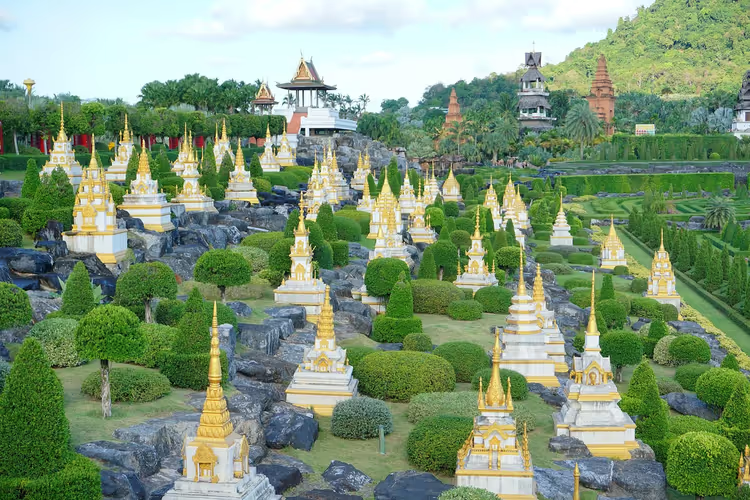
Mini Siam was built as a miniature park where famous structures stand at a scale of one to twenty-five. The grounds are divided into two parts: the Thai section shows temples of Thailand and its neighbors, while the European section gathers landmarks from the rest of the world.
In total, the park has more than a hundred models, with flower beds and working fountains between them. A couple of hours is enough to cover both zones without rushing. Come in the evening: you'll see the models in daylight, and after sunset under night lighting. The park is open from seven in the morning to ten at night. The catch: during the day there's little shade on the paths, so bring water.
2. Sanctuary of Truth
 © Luka Krstulović · CC BY-SAPhoto: Luka Krstulović, CC BY-SA (http://creativecommons.org/licenses/by-sa/3.0/), Wikimedia Commons
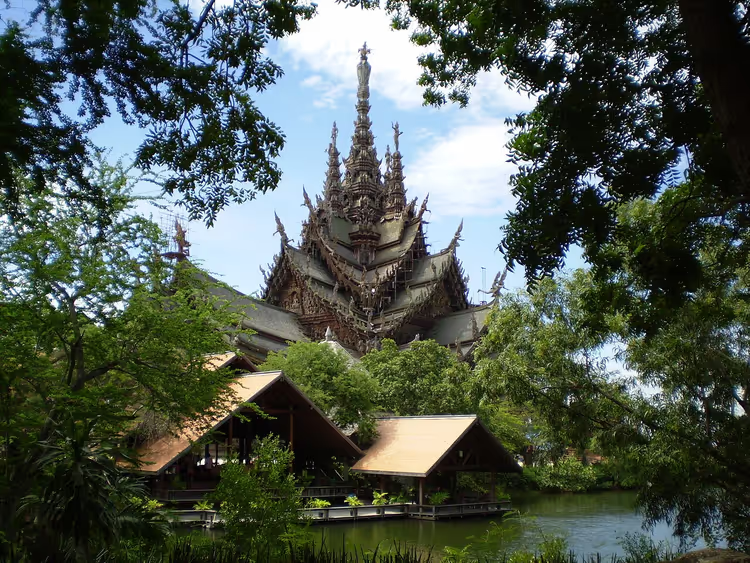
The Sanctuary of Truth has been under construction from teak wood since the early eighties, and there's no end in sight yet. It's the largest wooden structure in the world, built without a single nail. The idea came from millionaire Lek Viriyaphant, and after his death his son has been overseeing the construction. Inside there are four halls: Thailand, China, India, and Cambodia, one for each Eastern religion.
Adult admission costs 500 baht during the day and 700 baht for the evening program (as of 09/2026, official website). During the day, the museum is open from eight in the morning to six in the evening; the evening program runs from six thirty to eight thirty. Inside, you'll be given a hard hat: work never stops, and you walk through the halls wearing a helmet. Nearby there's a mini zoo and boat trips around the bay. The catch: without a guide, some of the carvings remain hard to understand.
3. Wat Yansangwararam
 © Mastertongapollo · CC BY-SAPhoto: Mastertongapollo, CC BY-SA (https://creativecommons.org/licenses/by-sa/4.0), Wikimedia Commons
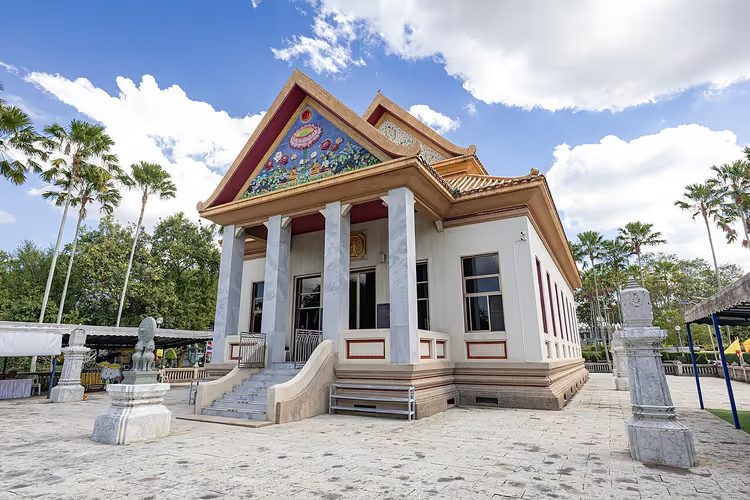
Wat Yan covers one hundred forty-five hectares, and across that area there are about ten structures from different eras. The main temple, Wat Yansangwararam, is open only to monks; nearby stand a white stupa with Buddha relics and a Chinese emperor's palace. Set apart is the Phra Mondop chapel, called the Buddha's Footprint: inside is a preserved footprint. Three hundred steps lead up to the chapel, and the upper platform offers a view of the surrounding area.
Entry to the grounds is free; you only pay for the climb to the Buddha's Footprint. The complex is open from eight in the morning to four in the afternoon. One of the two lakes is covered in pink lotus, and there are pavilions around it for resting. The catch: public transport barely runs here, so take a taxi or a car.
4. Wat Ang Sila
 © Sergey S. Dukachev · CC BY-SAPhoto: Sergey S. Dukachev, CC BY-SA (https://creativecommons.org/licenses/by-sa/3.0), Wikimedia Commons
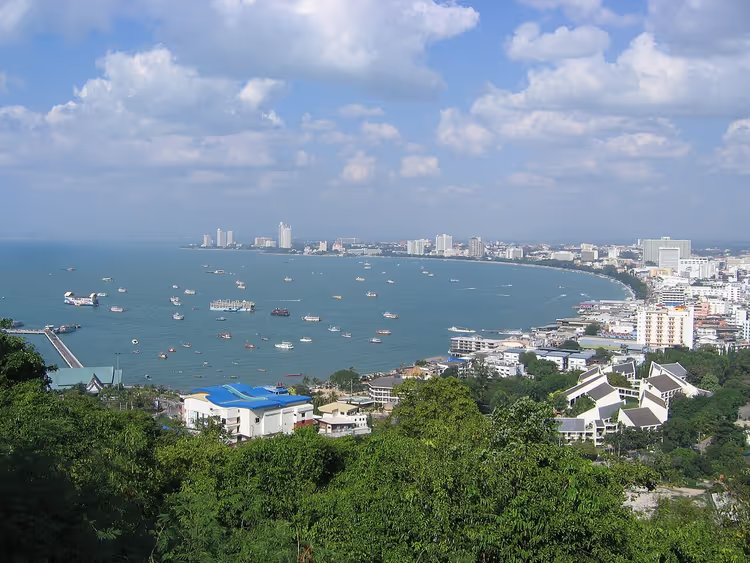
Wat Ang Sila is called the Red Dragon Temple, and it lives up to that nickname. The red and gold temple was built around the early eighteenth century and is dedicated to Chinese Buddhism. Dragons wrap around the columns, huge incense burners stand in the courtyard, and the walls inside are covered with murals. You can strike a large drum to cleanse your karma or ring a bell and make a wish.
Photos here come out vivid: the red color in the sun creates strong contrast. The temple is open every day from eight in the morning to half past seven in the evening, and entry is free. The catch: on weekends tour buses arrive, and the main altars get crowded.
5. Heaven and Hell Temple
 © Schweigeblick · CC BY-SAPhoto: Schweigeblick, CC BY-SA (https://creativecommons.org/licenses/by-sa/4.0), Wikimedia Commons
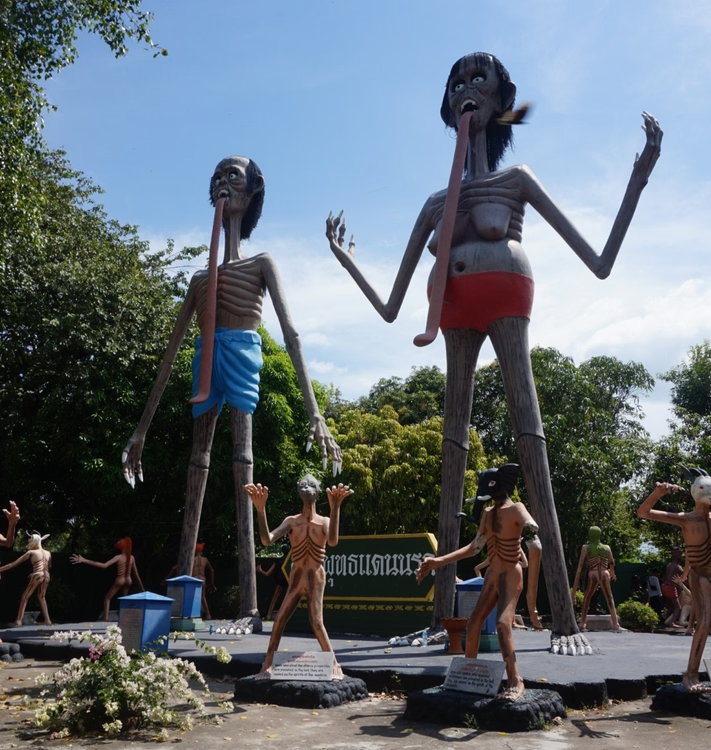
This is the most polarizing place on our list. The garden gives a visual answer to the question of what awaits a person after death, dividing everyone into the righteous and the sinners. Heaven gets the smaller part, where figures in meditation poses stand among the greenery.
The creators gave hell seventy percent of the grounds. It starts with a sign that reads "Welcome to Hell," followed by two giant figures of a man and a woman. Around them are sculptures with animal heads, each representing a different sin, and further on are scenes of punishment.
Thais come here at least once a year and bring their children. It is believed that money thrown at the figure of the sin you want to address cleanses your karma. The garden is open from eight in the morning to six in the evening, and entry is free. The catch: sensitive people may find the punishment scenes heavy, even though the grotesque style here is deliberate.
6. Chicken King's Palace
 © Ruslik0 · CC BY-SAPhoto: Ruslik0, CC BY-SA (https://creativecommons.org/licenses/by-sa/4.0), Wikimedia Commons
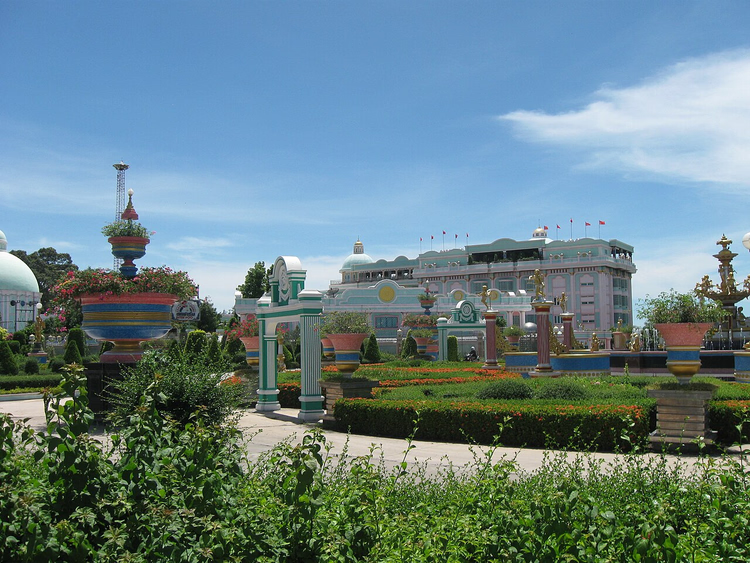
The Chicken King's Palace, or Sukhawadee, was built by billionaire Panya Chotitawan. He owns Saha Farms, Thailand's largest chicken supplier, hence the nickname. The six-story mansion in pink and blue tones stands on the seashore, with a park and ponds nearby, and peacocks strutting along the paths.
The interiors mix baroque, rococo, and Asian motifs: from copies of the Mona Lisa to antique knights. The grounds include a temple to the goddess Guan Yin and a Buddha tower about ten meters tall. You can have lunch at the restaurant and watch a Thai show. Entry costs five hundred baht, or eight hundred baht with dinner and the show. The complex is open from half past eight in the morning to six in the evening. The catch: the interiors are eclectic, so fans of strict style won't enjoy it here.
7. Khao Chi Chan
 © song songroov · CC BYPhoto: song songroov, CC BY (https://creativecommons.org/licenses/by/3.0), Wikimedia Commons
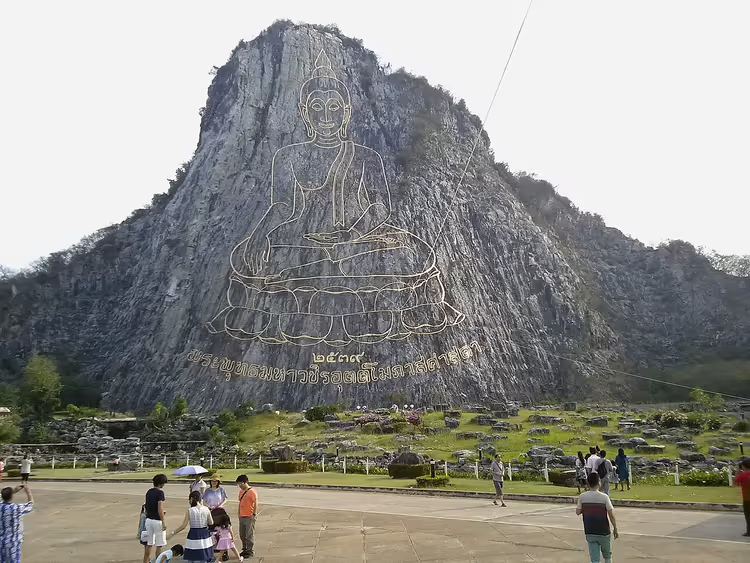
On Khao Chi Chan mountain, gold plates have been arranged into an image of a seated Buddha. The picture measures one hundred thirty by seventy meters, making it the largest Buddha image in the world. The gift was made by the son of King Rama IX for the fiftieth anniversary of his father's reign, and funds for it were raised across the kingdom.
Besides taking photos against the mountain, there isn't much else to do here, so combine your visit with nearby sites. In the park at the foot, you can get a framed photo taken for a small fee. Entry is free, and the viewing area is open from six in the morning to six in the evening. The catch: it's hard to reach without a car, as buses don't come here.
8. Big Buddha Hill
 © Alharomain354 · CC BY-SAPhoto: Alharomain354, CC BY-SA (https://creativecommons.org/licenses/by-sa/4.0), Wikimedia Commons
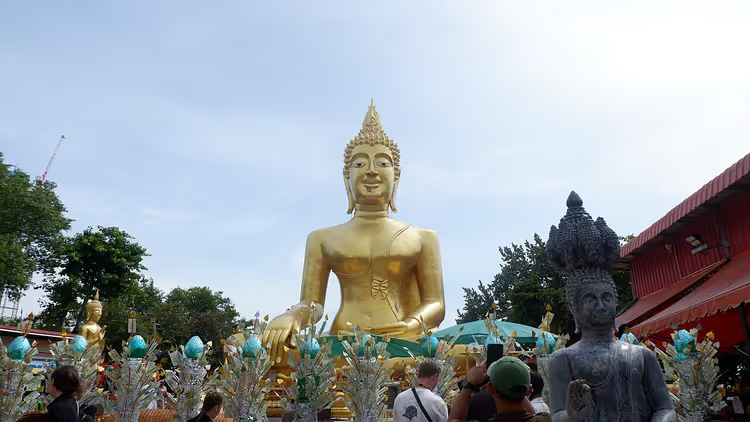
On Pratamnak Hill stands a fifteen-meter Buddha statue, reached by one hundred twenty steps. The staircase is guarded by seven-headed Naga dragons. At the top, besides the golden statue, you'll see twenty smaller figures, seven of which represent the days of the week. Using the chart nearby, you can figure out your birth day and make an offering to the corresponding statue.
The hill offers a good view of Pattaya, which is why people climb up here. Entry is free, and the viewing area is open from seven in the morning to ten in the evening. At the foot, a monk will perform a blessing and tie a string around your wrist for a small donation. The catch: at midday the climb is tough, so it's better to go in the morning.
9. Floating Market
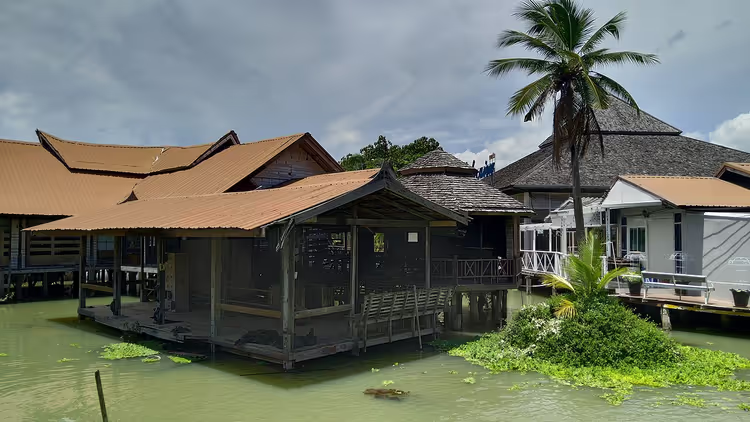 © Jonashtand · CC BY-SAPhoto: Jonashtand, CC BY-SA (https://creativecommons.org/licenses/by-sa/4.0), Wikimedia Commons
The floating market shows life in a Thai stilt village, the kind that used to be found throughout the kingdom. The village was built specifically for tourists, but it turned out colorful: you're taken by boat past houses connected by walkways. Almost every house has a shop, and on the platforms there are dance performances, fights, and massage.
The stalls mostly sell food, and you can also buy it from boats cruising along the river. The area is divided into four regions of Thailand, each with its own products and crafts. Prices here are inflated and unique items are few, but it's easy to eat well and get great shots. Entry is paid, around two hundred baht. The market is open every day from ten in the morning to nine in the evening. The catch: by midday the aisles get crowded.
10. Elephant village
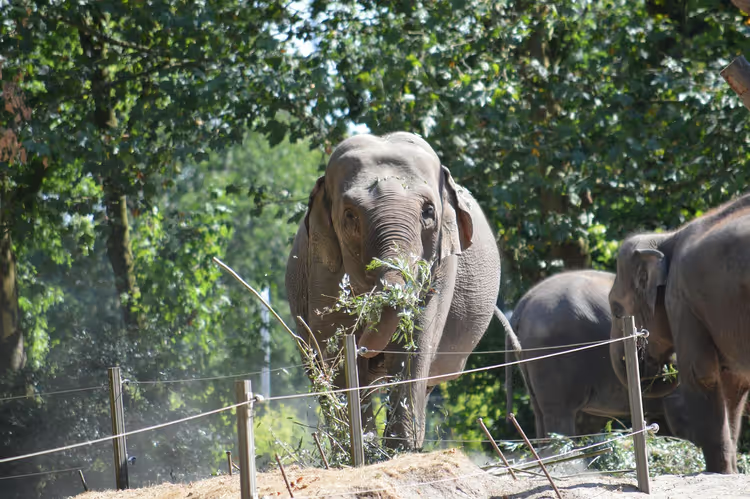
The elephant village appeared more than fifty years ago as a sanctuary for old and sick animals. The reserve still operates on its own funds, without government support. Today it is home to about thirty elephants and employs more than a hundred staff members. The elephants here paint, play instruments, dance, and even give guests massages. Three shows run every day.
You can feed the animals and head out on a jungle ride on an elephant's back. The reserve is open from eight in the morning to six in the evening. Admission costs six hundred and fifty baht, an hour-long elephant ride costs more, and longer routes are also available. Before your trip, compare insurance options. The catch: some programs run on a schedule, and without one you will only catch the feeding.
11. Tiffany and Alcazar shows
Tiffany and Alcazar sit across from each other and compete for the same audience. Tiffany has operated since the mid-seventies and became the first show of its kind in the country. About a hundred performers take part in the production, and the venue is lavishly decorated: costumes, sets, live lighting.
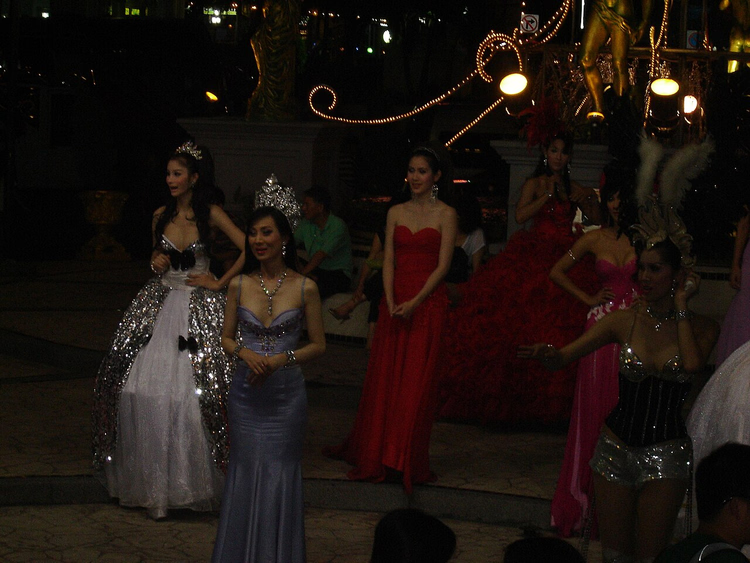 © nakhon100 · CC BYPhoto: nakhon100, CC BY (https://creativecommons.org/licenses/by/2.0), Wikimedia Commons
The program does not offend viewers' sensibilities. It is a vibrant song-and-dance show with parodies of cultures from different countries. Both shows run every evening, Tiffany has three sessions, Alcazar has four, with extra ones added on weekends. Tiffany tickets are sold in three categories, with seats closer to the stage costing more. Tours and shows in Pattaya on GetYourGuide will help you pick an evening.
Viewers who have seen both shows note that Tiffany has a stronger production, which explains the price difference. Tiffany tickets range from eight hundred to one thousand four hundred baht, Alcazar from five hundred to one thousand two hundred. The catch: after the finale, performers come out to the audience for photos together, and they expect tips for a picture.
12. Alangkarn theater
Alangkarn offers not a cabaret but a full-scale stage production with professional actors. Over three hours you will travel through the main periods of Thai history and get acquainted with traditional arts. The production uses sets, costumes, fireworks, special effects, and even elephants.
The theater puts on one show per evening, but the production quality is high. Before the show starts, you can have dinner at the theater's restaurant. The show runs every day except Wednesday and starts at six in the evening. Tickets cost from eight hundred to one thousand five hundred baht, with the price depending on the seat and whether dinner is included. The catch: getting there without a car is inconvenient, as the theater is located outside the city.
13. Mimosa city of love
Mimosa city of love is designed as a French town with narrow streets, canals, parks, and its own town hall. The shopping area has more than three hundred stores, and the entertainment section offers a maze and a haunted house. Nearby there is an aquarium with small sharks and an aviary.
Every evening a show takes place at the square by the Fountain of Love, with several performances per night. The wedding zone offers staged photo shoots, and musicians play in the streets. The complex is open from ten in the morning to eleven at night, and admission costs six hundred baht. The catch: essentially it is a shopping mall, and people do not come here just for the attractions themselves.
14. Cartoon Network Amazone water park
 © Phong Phat G · CC BY-SAPhoto: Phong Phat G, CC BY-SA (https://creativecommons.org/licenses/by-sa/3.0), Wikimedia Commons
The water park has operated since the mid-2010s and was built by the TV channel in a cartoon style. Each of the ten zones is dedicated to its own character. The most extreme zone with tall slides is called Omniverse, the Adventure Zone is for teenagers, and the Cartoonival Zone with one and a half hundred attractions is open for little ones.
There is also a lazy river and a large pool. The park prides itself on the Surf Arena attraction, which simulates a surfing wave. Cafes and restaurants on the grounds are expensive. An adult ticket costs about one thousand six hundred baht, and the water park is open from ten in the morning to six in the evening. The catch: food and drinks inside cost more than city prices, so bring water with you in permitted containers.
15. Ramayana water park
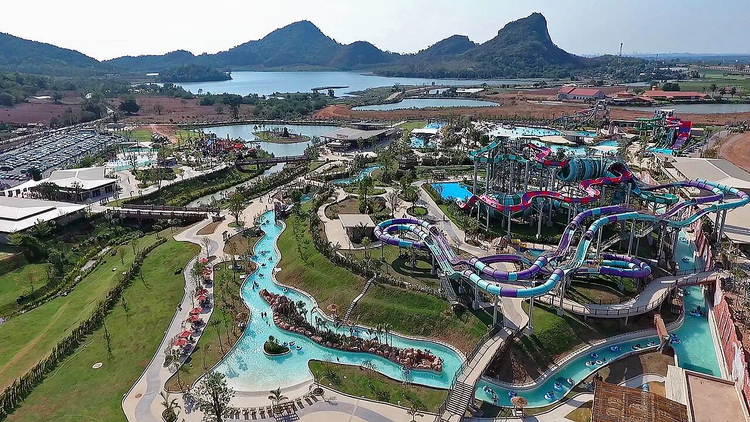 © Ramayana Water Park · CC BY-SAPhoto: Ramayana Water Park, CC BY-SA (https://creativecommons.org/licenses/by-sa/3.0), Wikimedia Commons
Ramayana opened later and is considered the largest water park in Asia. It has more than twenty slides, and the park itself is designed as a forgotten ancient city with algae-covered swamps. You will find both extreme drops and gentle ones, plus a wave pool and a lazy river.
Beyond the water, the park has a large land area: sports grounds, elephants you can feed, and a floating market. There are two children's playgrounds, and on some attractions the tubes are lifted automatically. The restaurant area is more varied than at the neighboring water park, and prices are lower. Check adult ticket prices and opening hours on the official Ramayana website (as of: 09/2026). Parents can head to the fish spa or get a massage while the kids ride. The catch: in high season, lines for the top slides can reach half an hour.
16. Military beach
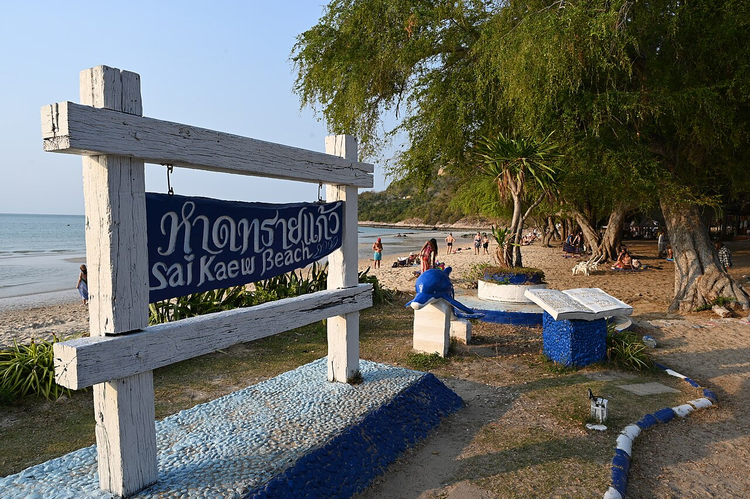 © PattayaPatrol · CC BY-SAPhoto: PattayaPatrol, CC BY-SA (https://creativecommons.org/licenses/by-sa/4.0), Wikimedia Commons
Military beach, or Sai Kaew, lies in the Bang Saray area twenty kilometers from Pattaya. The shore belongs to the Royal Thai Navy school, so order and cleanliness are strictly maintained. The beach strip is about five hundred meters long, the sand is white-gray, and palm and broadleaf trees provide shade from the sun.
The infrastructure is low-key: changing rooms, showers, a few cafes, and water activities like banana boat rides. There are no noisy bars or discos here. From a glass-bottom boat you can view coral reefs or take a trip to a nearby island to see monkeys. Admission is paid, one hundred baht per person. The catch: without your own transport, getting to the beach takes a long time, as the bus requires transfers.
17. Walking Street
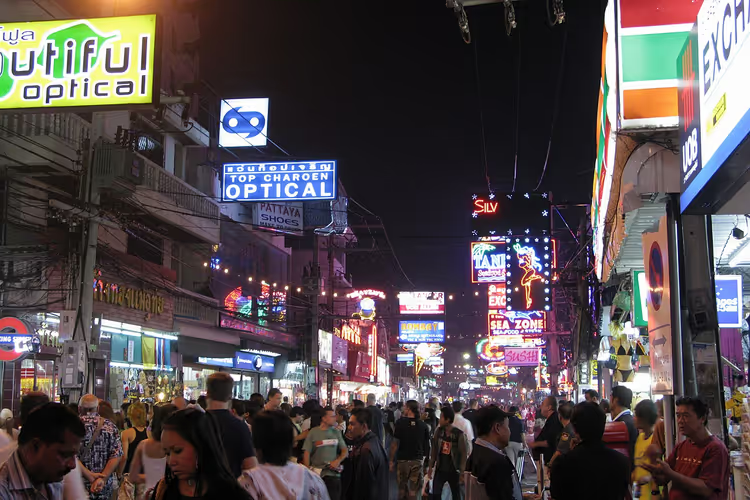 © Vyacheslav Argenberg · CC BYPhoto: Vyacheslav Argenberg, CC BY (https://creativecommons.org/licenses/by/4.0), Wikimedia Commons
Walking Street has become a calling card not only for the resort but for the entire country. The street is short, and you can walk through it in five minutes. During the day it is empty, and you will hardly understand why it is so famous.
After dark, the street is closed to cars, and bars, restaurants, and nightclubs light up on both sides. This is the center of nightlife with adult shows, but you'll also find regular bars and hotels. It stays noisy here until two in the morning. If continuing the evening isn't in your plans, just walk along the pedestrian street for the atmosphere. There's plenty of accommodation nearby, hotel prices in Pattaya on Trip.com. The catch: it's easy to lose your phone in the crowd, so keep valuables in a closed bag.
18. Khao Kheow Zoo
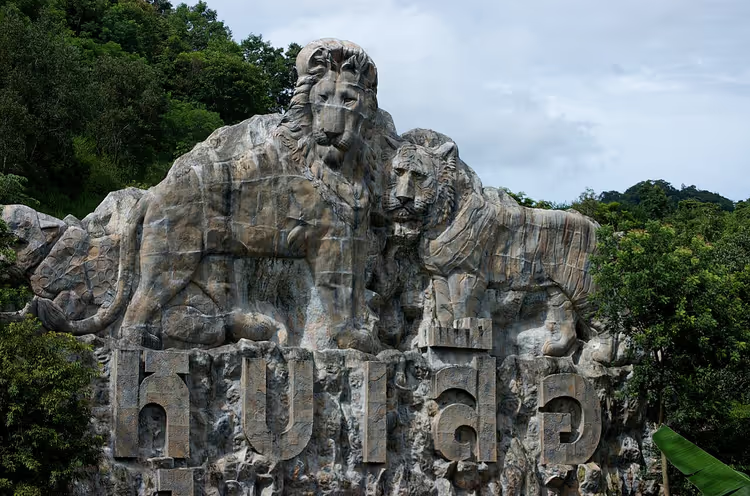 © Dean Croshere from Jomtien, Thailand · CC BYPhoto: Dean Croshere from Jomtien, Thailand, CC BY (https://creativecommons.org/licenses/by/2.0), Wikimedia Commons
The zoo opened almost half a century ago and has been constantly expanding ever since. It's an open-type zoo: animals live in conditions close to their natural habitat rather than in cramped enclosures. Today the grounds cover eight hundred hectares, making it one of the largest zoos in the world. It's home to about eight thousand animals, birds, and reptiles, including rare species.
The park is divided into themed zones: Savannah, the antelope park, the cat valley, monkey island, and the butterfly garden. To see everything at a leisurely pace, you need more than one day, so take a car or rent a golf cart. Many animals can be fed. In the evening, the "Night Safari" attraction runs: from six to eight you ride through the grounds in the dark. Adult admission costs four hundred baht, and the zoo is open from eight in the morning to six in the evening. The catch: without transport, you'll only see a small part of the grounds.
19. Underwater world Pattaya aquarium
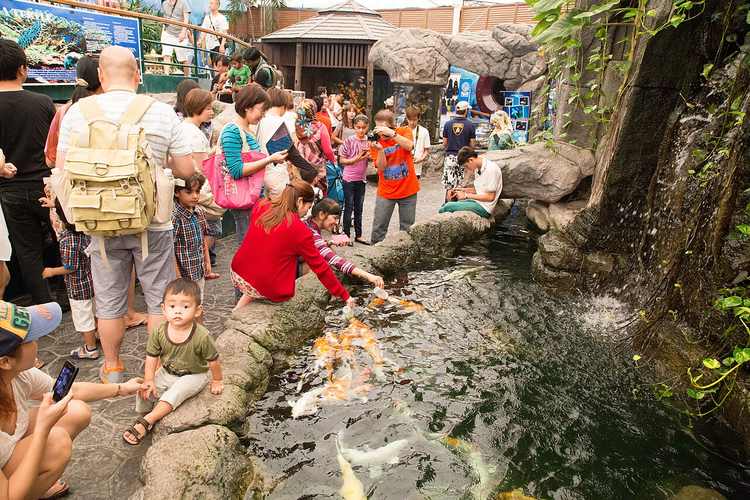 © Aleksey Maramzin · CC BY-SAPhoto: Aleksey Maramzin, CC BY-SA (https://creativecommons.org/licenses/by-sa/4.0), Wikimedia Commons
The aquarium is home to about two and a half thousand inhabitants from more than two hundred species. It houses both residents of the Gulf of Thailand and rare specimens brought from other seas. An underwater tunnel about one hundred meters long runs through the center of the exhibit, making you feel like you're on the seabed.
The tunnel is divided into zones: coral reefs, a shipwreck with a model of a sunken vessel, the Amazon River, and cartilaginous fish with sharks and rays. In the touch pools, you can pet turtles, starfish, and bamboo sharks. Fish are fed here several times a day, and you can feed the carp from a bottle. Admission costs five hundred baht, and the aquarium is open from nine in the morning to six in the evening. The catch: on weekends the tunnel is crowded, and it's hard to get a shot without people in it.
20. Million-year stone park and crocodile farm
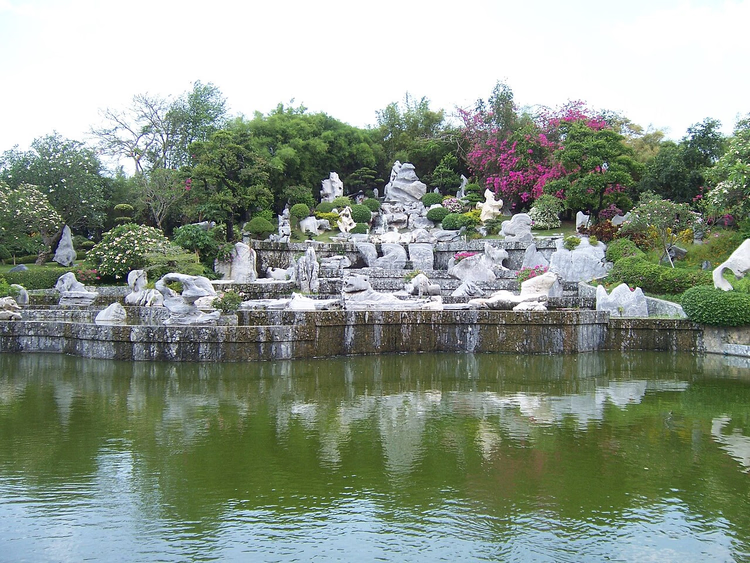 © TrapperFrank · CC BYPhoto: TrapperFrank, CC BY (https://creativecommons.org/licenses/by/2.5), Wikimedia Commons
The stone park and crocodile farm sit on the same grounds not far from Pattaya. The first is an oriental garden decorated with boulders of whimsical shapes. The giant stones resemble animals and birds; part of the collection was assembled by a Thai businessman. The fossilized trees, whose age is hard to imagine, are especially striking.
After a good walk through the garden, you move on to the crocodile farm, which houses about sixty thousand reptiles. Here you can feed crocodiles chicken from a fishing rod. During the show, trainers perform tricks, including the signature one: a head inside a crocodile's mouth. At the local restaurant you can try crocodile meat and eggs, and buy leather goods as souvenirs. It is open from eight in the morning to half past six in the evening; an adult ticket costs five hundred baht. The catch: the animal shows may seem cruel, so decide in advance.
21. Three Kingdoms Park
 © baloun · CC BY-SAPhoto: baloun, CC BY-SA (https://creativecommons.org/licenses/by-sa/3.0), Wikimedia Commons
Three Kingdoms Park was built around the novel Romance of the Three Kingdoms and is dedicated to the era when China was divided into three warring states. The place is small; an hour is enough for a leisurely stroll. Among the buildings, three pagodas stand out: one large and two smaller ones, and you can walk through them freely. The upper floor offers a view of the park, and a statue of the founder stands in front of the large pagoda.
The landscape was laid out according to feng shui principles: fossilized trees, a dragon fountain, sculptures of warriors and horses. A wall with a gallery of about fifty paintings illustrating the novel draws attention. In the park you can rent traditional Thai clothing and take photos against the backdrop of the pagodas. It is open from ten in the morning to five in the evening, an hour longer on weekends; a ticket costs one hundred fifty baht. Call before you go: the park was closed for renovation for a while. The catch: you can only get there by car or taxi.
22. Pattaya Park Tower
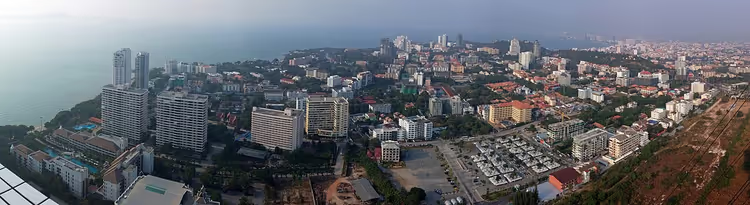 © Michael Karavanov · CC BY-SAPhoto: Michael Karavanov, CC BY-SA (https://creativecommons.org/licenses/by-sa/3.0), Wikimedia Commons
The tower belongs to the Pattaya Park Beach Resort hotel. It is two hundred forty meters tall, which is fifty-six floors. Nothing in the city is higher, so people come here for the panorama. On the observation deck and in the panoramic restaurants on the upper floors you get a three-hundred-sixty-degree view, and part of the dining room rotates slowly.
The most famous attraction is called Tower Jump: a descent from the fifty-sixth floor in a cabin, an open cradle, or on a zip line. Witnesses insist the descent is neither fast nor scary. A ticket for the observation deck alone costs two hundred baht; with one of the descent options and a drink it is four hundred baht. The buffet in the restaurants costs six hundred baht. The attraction runs from ten in the morning to seven in the evening, the restaurants until ten. The catch: in cloudy weather the view from above is blocked, so check the forecast.
23. Sheep farm
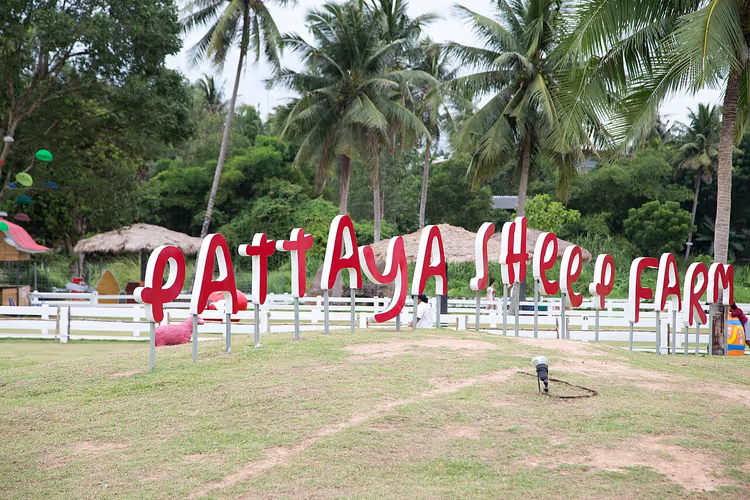 © Aleksey Maramzin · CC BY-SAPhoto: Aleksey Maramzin, CC BY-SA (https://creativecommons.org/licenses/by-sa/4.0), Wikimedia Commons
The sheep farm is a good choice for a trip with children, but adults also find it relaxing here. A large field is grazed not only by sheep, but also by piglets, donkeys, and rabbits. Bright figures and gazebos are placed among the haystacks, creating a pastoral scene for photos.
All the animals can be fed; every ticket comes with a bunch of grass, and lambs can be bottle-fed. You can ride catamarans on a small lake, and there are trampolines, a Ferris wheel, and go-kart rentals. A parrot show runs several times a day, and there is a steakhouse nearby. A ticket costs fifty baht; almost all the attractions inside are paid, and the bird show costs about two hundred fifty baht. The farm is open from nine in the morning to seven in the evening. The catch: it is hard to get here without a car; buses do not stop here.
24. Naklua fish market
The Naklua fish market is in the northern part of the city, but people come here from all over Pattaya. The selection is impressive: shrimp, mussels, octopus, crabs, cuttlefish, lobsters, and dozens of fish species. You have probably never seen much of this before.
The abundance is easy to explain: a fishing village is just ten meters from the market, so the product's journey to the stall is short. Besides fish, they sell vegetables, fruit, dishes, and clothing here. Grills stand at the entrance: for a small fee your purchase will be cooked any way you like. The market opens early in the morning and closes by six in the evening. Come in the first half of the day, otherwise you risk seeing half-empty stalls. The catch: you need to bargain right away; by evening the selection is worse.
25. Sriracha Tiger Zoo
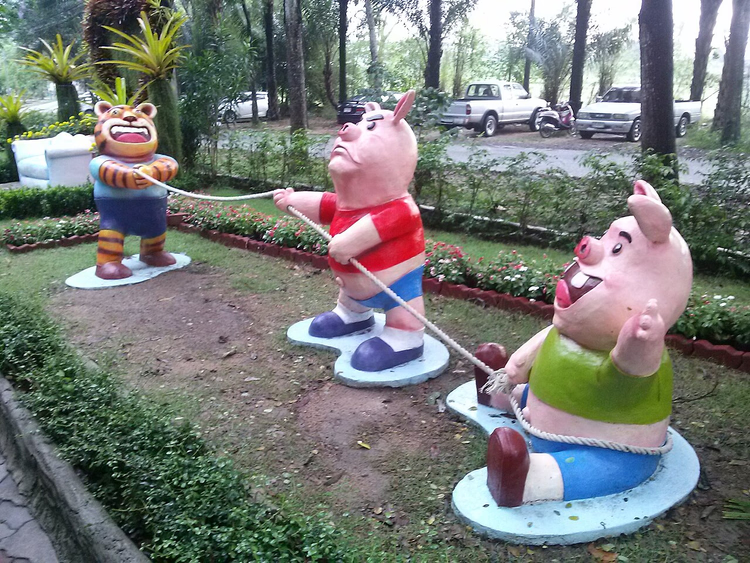 © song songroov · CC BYPhoto: song songroov, CC BY (https://creativecommons.org/licenses/by/3.0), Wikimedia Commons
The zoo opened as a sanctuary for Bengal tigers, hence the name. Over time the roster of residents grew: now camels, crocodiles, elephants, ostriches, roe deer, and even scorpions live here. Crocodile, tiger, and elephant shows run daily, as do pig races.
The most spectacular show is called "Scorpion Queen": a female trainer enters the arena covered in scorpions. A separate enclosure is called "Happy Family," where a tigress nurses piglets and a sow feeds tiger cubs. Visitors can bottle-feed a tiger cub for an extra fee. The zoo is open from eight in the morning to six in the evening; an adult ticket costs four hundred fifty baht. The catch: some shows are built around animals, and not all guests like that.
26. Nong Nooch tropical garden
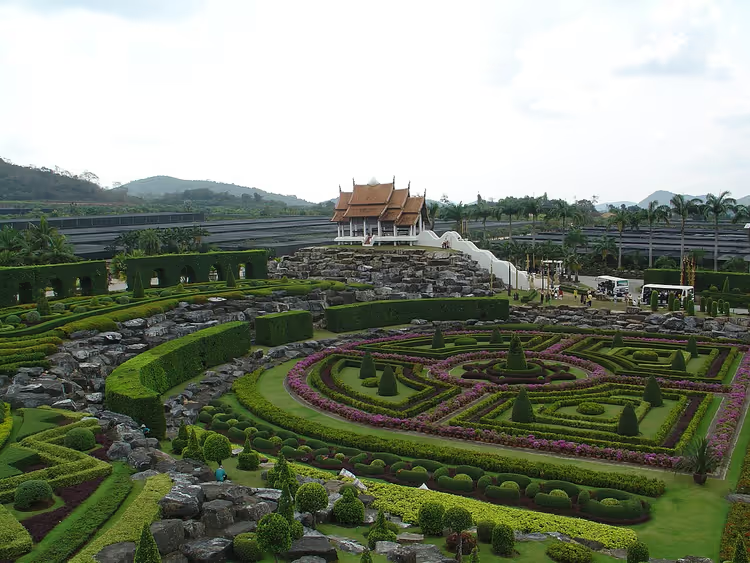
Nong Nooch is among the largest garden and park complexes in the world. The founder, Madame Nongnooch, envisioned the garden in the style of French and Italian gardens, but the Thai love of abundance won out. Today there is a French formal garden, a huge orchid garden, a palm collection of more than a thousand species, cacti, dwarf trees, and stones.
You walk around the grounds on elevated walkways with sun canopies. Among the structures, a nearly life-size Stonehenge, a traditional Thai house, and Chinese pagodas above the French garden are of interest. There are a great many sculptures and animal figures here.
The pot garden deserves special attention, and the elephant show runs several times a day and fills the stands. A second show, a folklore performance, also runs daily. A small zoo operates on the grounds and is convenient to visit between shows. A dinosaur avenue with huge statues recently opened; the exhibition keeps growing, so something new appears here every year.
At the end, take a look at the car park of the current owner, the founder's son. Check prices and show schedules on the official Nong Nooch website (as of 09/2026). A full ticket with both shows costs more than basic entry: check the difference at the ticket office. The garden is open from eight in the morning to six in the evening. The catch: it is unrealistic to see everything in one visit, so choose your zones in advance.
27. Silver Lake Vineyard
 © Phong Phat G · CC BY-SAPhoto: Phong Phat G, CC BY-SA (https://creativecommons.org/licenses/by-sa/3.0), Wikimedia Commons
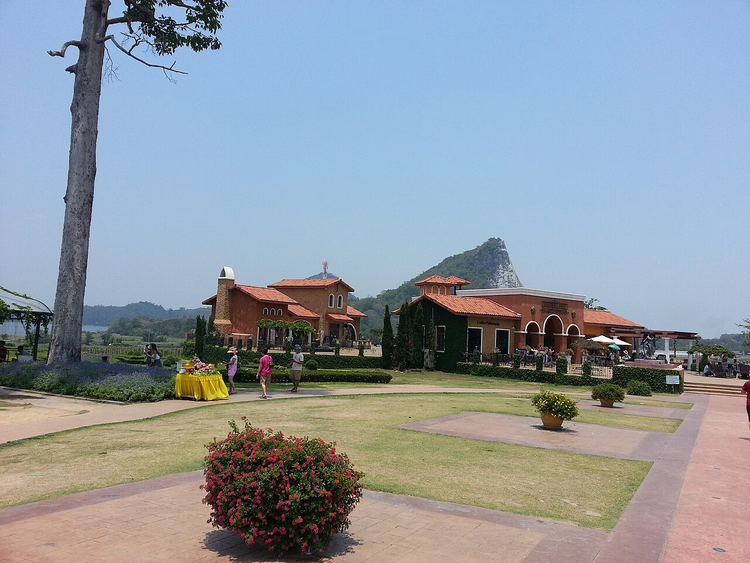
Silver Lake looks like a little piece of Italy among the palms, against the backdrop of the Golden Buddha Mountain. The vineyard belongs to a wealthy Thai family that earns money not only from wine, but also from the experience itself. Besides the vines, you will find an Italian piazza with neat little houses and a fountain, where you can have a snack or dinner.
Gazebos for photos stand on the lake shore, and tall cypresses, atypical for these parts, grow nearby. To soak up the atmosphere, take a tour on a small bus-trailer: it stops at a windmill and in the flowering gardens.
You can walk around the park with flower beds, sculptures, and benches for free. A tour of the wine cellar costs one hundred baht and includes a small bottle of grape juice. For two hundred fifty baht you also get a ride through the vineyard and two glasses of wine. The local wine is worth trying: it is made using Italian technology. The vineyard is open from nine in the morning to six in the evening. The catch: the wine here is more expensive than store-bought, and the taste is an acquired one.
28. Gems Gallery jewelry factory
Thailand is famous for its gemstones: sapphires and rubies are mined here. Pattaya is home to a branch of Gems Gallery, one of the largest jewelry factories in the world. The branch covers fifteen thousand square meters and employs more than two thousand people.
In addition to the showroom and sales floor, there is a museum here that appeals to more than just jewelry lovers. In makeshift mine carts, you descend into a quarry and watch how minerals form and how they are mined. In the next room, jewelers work right before your eyes.
Next, you will see every stage: shaping, cutting, polishing, and stone treatment. The final room displays finished jewelry, each piece backed by a lifetime warranty. Silver is cheaper because it is mined within the country itself. After the tour, you can relax in a lounge area with refreshments. Admission, like the transfer, is free regardless of whether you buy anything. The factory is open from eight in the morning to five in the evening. The catch: the tour smoothly turns into a sales pitch, and you can feel the pressure from the salespeople.
29. Koh Lan
 © Stefan Fussan · CC BY-SAPhoto: Stefan Fussan, CC BY-SA (https://creativecommons.org/licenses/by-sa/3.0), Wikimedia Commons
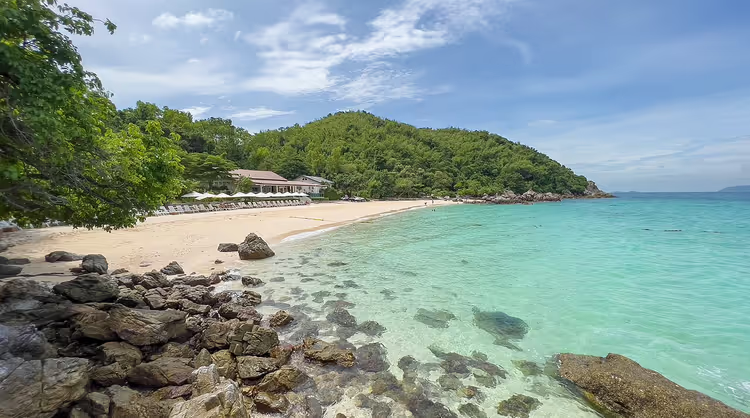
Koh Lan is the closest island to Pattaya, and its name translates as "coral." People come here for genuine tropical nature, white sand, and clear water that the beaches of the city itself cannot boast. The island is small: four kilometers long and two and a half wide.
Koh Lan has six or seven beaches, a small temple, a Buddha statue, and a couple of viewpoints. Shops, cafes, and activities operate on almost all beaches except the most remote ones.
You can get there by speedboat or by ferry, which takes about an hour and runs on a schedule. The ferry does not wait until enough passengers have gathered, but the trip takes longer. It is easy to stay overnight on the island: there are plenty of hotels, guesthouses, and restaurants. With a guided tour, you will reach the best beaches without transfers. The catch: on weekends, the popular beaches are crowded with visitors, so come in the morning.
30. Koh Samet
 © Bjørn Erik Pedersen · CC BY-SAPhoto: Bjørn Erik Pedersen, CC BY-SA (http://creativecommons.org/licenses/by-sa/3.0/), Wikimedia Commons
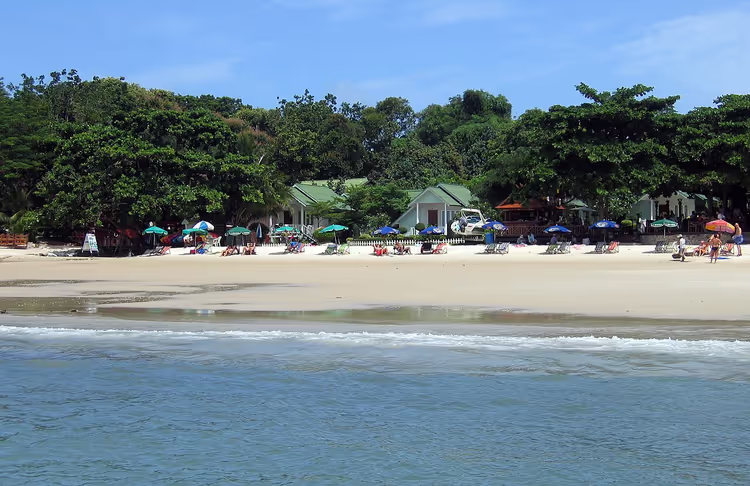
Koh Samet lies farther from Pattaya, about an hour and a half away, and is part of a national park. The island stretches for seven kilometers and reaches four kilometers at its widest point. The pier, the only temple, and a fishing village are in the north, rocky shores are in the west, and the east is full of long sandy beaches.
There are no real landmarks on Koh Samet, but there are plenty of hotels, restaurants, and shops. People come here for seclusion, fishing, forest walks, and beautiful sunsets from the viewpoints. From the local cuisine, fried seahorses are recommended, a dish you will not find anywhere else.
There is an entrance fee for the national park if you are not staying near the main pier. From the mainland province of Rayong to Koh Samet is about seven kilometers. The easiest option is to buy a ready-made transfer at a Pattaya tourist office, so you do not have to figure out the logistics yourself. The catch: during the season, accommodation on the island gets more expensive, so book in advance.
Practical tips before your trip
Opening hours vary from place to place, and this is worth keeping in mind when planning. Temple complexes close early, sometimes as early as four in the afternoon, while parks, water parks, and evening shows stay open until dark. Check the hours in advance, otherwise you risk arriving just as a place closes and seeing only the gates.
When entering Buddhist temples and palaces, wear clothing that covers your shoulders and knees. A light scarf or shawl works well to cover bare shoulders. At many sites, you are asked to remove your shoes at the entrance, so choose sandals without complicated fastenings.
Some entrance fees are easier to pay in cash, especially at small temples and markets, while large parks accept cards. Keep small bills on hand for donations and photos. Where admission is free, visitors are often asked to leave a small amount for the upkeep of the grounds.
Many places come in pairs, and one outing covers two or three stops at once. The Sanctuary of Truth is easy to combine with the fish market in Naklua, and Khao Chi Chan with Wat Yan and the Silver Lake vineyard. This way you save time on the road and spend less time stuck in traffic on Sukhumvit Road.
Keep water, a hat, and sunscreen with you: there is little shade in open areas. For water parks, bring a towel and a change of clothes; for temples, a scarf. A charged phone will help with maps and calling a taxi, especially outside the city.
Evening shows and water parks sell out faster on weekends, so it is better to get tickets for a specific session in advance. Island trips start from the pier in the morning, so you can reach the beach before the tour groups arrive. If you are traveling with children, leave some buffer in your plan: the heat tires them out quickly.
Beaches within the city are fine for a quick swim, but for clear water, head to the islands. On Sundays and holidays, locals come to the shore with their families, so on those days choose a remote bay.
The strongest shots come at the Sanctuary of Truth at sunset, at the golden Buddha on Khao Chi Chan mountain, and at the Silver Lake vineyard. Go there in soft light; during the day, the image gets washed out and loses depth.
⁉️🤔 Frequently asked questions
How many days do you need for Pattaya?
Two days are enough for the city itself: temples, parks, and Walking Street are all close to each other. For water parks, zoos, and gardens, add another two or three days. A week lets you include the islands and avoid rushing from place to place.
What to see in Pattaya with kids?
Kids enjoy the Cartoon Network Amazone and Ramayana water parks, Khao Kheow Zoo, and the sheep farm. At the elephant village, they can feed the animals, and at Military Beach they can swim safely. Keep a day in reserve for Koh Lan.
When is the best time to visit Pattaya?
The dry season runs from November to February, when there is less rain and the heat is milder. From March to May, the heat is intense, and from June to October, short downpours occur. In high season, accommodation prices are higher, so book in advance.
How much do tickets to the main attractions cost?
Prices depend on the site: temple entry is usually free or symbolic, while water park and show tickets cost more. Current rates and opening hours are worth checking in advance, for example on the official Sanctuary of Truth website (as of 09/2026). Always ask about children's rates at the ticket office.
How to get around Pattaya?
In the center, walking is convenient, and between districts you can use local pickup taxis or regular taxis. For distant sites, hire a car with a driver for the day or rent a car. Islands and far-off beaches are easiest to visit with an organized trip.
Tours and tickets in Pattaya
Guided tours, skip-the-line tickets and activities — most offers can be cancelled free of charge.
See offers on GetYourGuideThe widget loads once you give your consent.
In short: what to book
If you are visiting for the first time, start with the Sanctuary of Truth and Big Buddha Hill. With kids, choose the water parks and the sheep farm, and for a relaxed day, Military Beach or Koh Lan works well.
Tickets for shows and water parks are cheaper to buy in advance, so you do not stand in line at the ticket office in the heat. Accommodation in the center also sells out quickly. It is convenient to arrange your hotel and trips in advance: tickets and tours on GetYourGuide.

A small editorial team writing guides for independent travel. We travel ourselves, but we haven’t been everywhere, so we check prices, opening hours and how to get there against official sources.