
















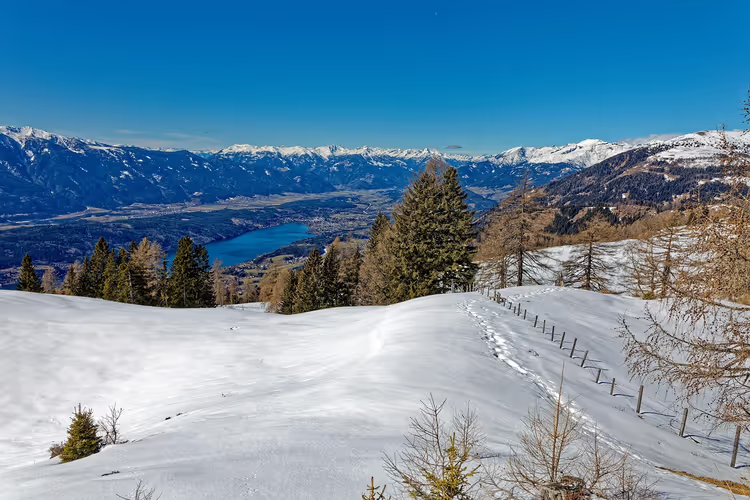
Spring hike on snow and ice: how to go and when to turn back
A spring morning in the mountains is deceptive, and the price of carelessness can be painful. On the southern slope the snow has already melted, while in the shade underfoot there is still ice and crust. One careless step on that kind of surface ends in a sprain or a fracture.
Spring adds things to the trail that summer does not have: nights are still cold, days are short, and snow holds high in the mountains until the end of May. So you need to plan your outing differently than you would in July.
Below we have gathered how to read the terrain and slope aspect, what to put in your pack, how to walk on firn, and when it is wiser to turn back.
Ad: this article contains affiliate links, we earn a commission if you book through them, at no extra cost to you.
How to plan a spring hike
💡 In short:
- Look at the slope aspect: south is already dry, while north and shade hold snow until late spring.
- Check conditions via webcams and by calling the mountain hut.
- Take crampons if hard crust or ice remains on the route.
- Allow more time, because you move more slowly than usual on snow.
- Conditions and route safety: 09/2026, according to the German Alpine Club (DAV).
Slope aspect matters more than it seems and determines the difficulty of the whole outing. By April, southern slopes are already dry, while northern and shaded slopes hold snow in couloirs and even in the forest. Look at the map in advance and choose a route where snow remains only on the approaches.
Webcams show the real picture better than any forecast, so open several cameras in one area and compare. Somewhere the trail is already clear, and somewhere hard crust still lies.
Mountain hut owners know the conditions on the ground better than reports and forecasts. Call and ask whether crampons are needed on the upper section: that is faster than driving there and turning around at the start of the climb.
Count your time with a buffer, because you move noticeably more slowly than usual on snow. Daylight is still short, and a heavy pack with winter gear further reduces your speed. Plan your outing so you return before dark.
Check your own fitness after winter too, otherwise it is easy to overestimate your strength on the first slope. A free tool from the German Alpine Club helps you assess your form and choose a manageable route.
We checked the tips below on 12.09.2026 against the materials on the official DAV website.
Where danger lurks in spring
Warm sun does not cancel the cold in the shade and wind, so on a pass you can easily freeze in a light jacket. A change layer to put on top works better than one warm item.
Looking at the mountain is deceptive, because you see only part of the route. Around the next bend the route may enter snow, and even a clear summit does not guarantee a dry trail on the ascent.
At night the snow refreezes, so in the morning it is especially treacherous. Ice turns the trail into a skating rink, and under slushy snow the ground is often glazed. Crampons give you grip, but firn also requires a careful step.
If you start sliding on a slope, brake immediately and do not try to stand up. Lie on your stomach, spread your arms and legs, and press into the snow until the movement stops.
Avalanches are typical of spring, and wet slides make traversing slopes dangerous. Warning services publish reports daily until May, so read them before you set out (according to Lawinenwarndienst Bayern).
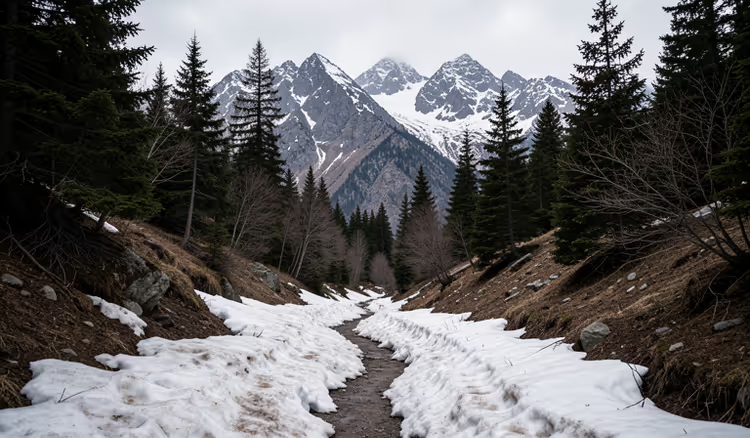 AIIllustrative image: AI-generated
How to ascend and descend safely
Technique on snow matters more than speed, so below are rules that reduce the risk of falling and breaking through.
 © Stan Shebs · CC BY-SAPhoto: Stan Shebs, CC BY-SA (https://creativecommons.org/licenses/by-sa/3.0), Wikimedia Commons
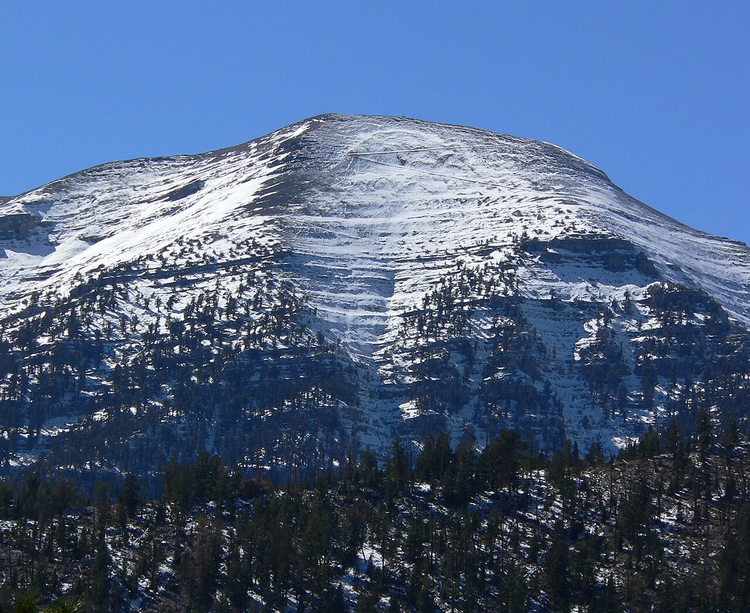
Do not walk under breaks in the snowpack. Such cracks are called "fish mouths," because they tear unexpectedly and dump wet snow downhill.
When crossing a snowfield, vary your step and make small steps, using the whole footprint. On a steep slope, first kick steps, especially on the descent, and use existing tracks from others.
Sometimes people descend firn by boot-skiing, but that requires technique. You need to be able to judge the steepness and see the end of the field, and without that skill it is better not to do it.
Crampons or light ice spikes give reliable purchase on ice and snow. In deep snow at high altitude, snowshoes help, and then, as on any winter objective, read the avalanche forecast and take a beacon, probe, and shovel.
Poles help you keep your balance, and gaiters keep snow out of your boots. Cross snow bridges and rock debris carefully, where it is easy to break through and get injured.
Most importantly, have the courage to turn back. Learn to assess danger, and in a doubtful situation, give up continuing the hike. Sometimes the best option is a long picnic on a dry meadow.
Respect for nature and wildlife
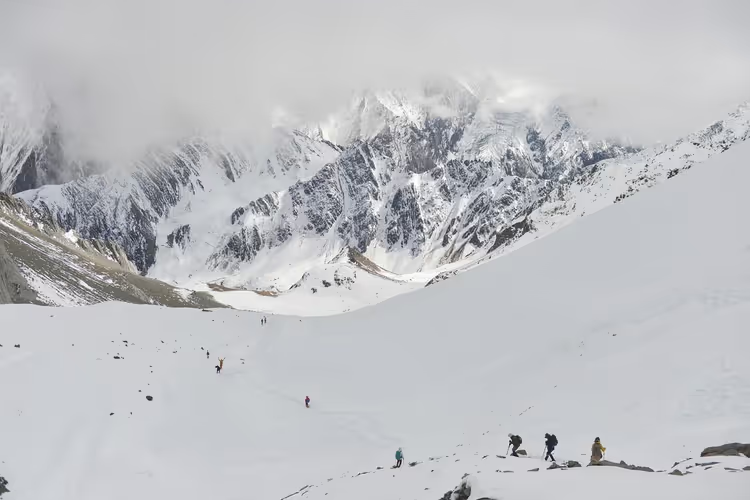
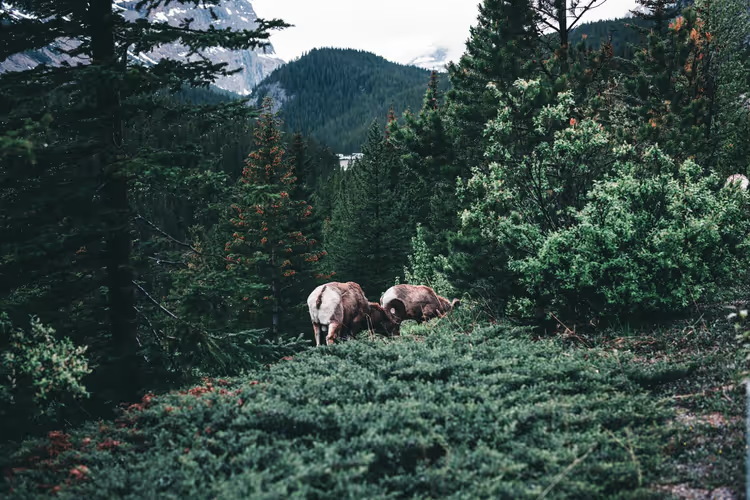
In spring, animals and birds wake up in the mountains, so stay on the trail and do not wander off to wild nesting areas.
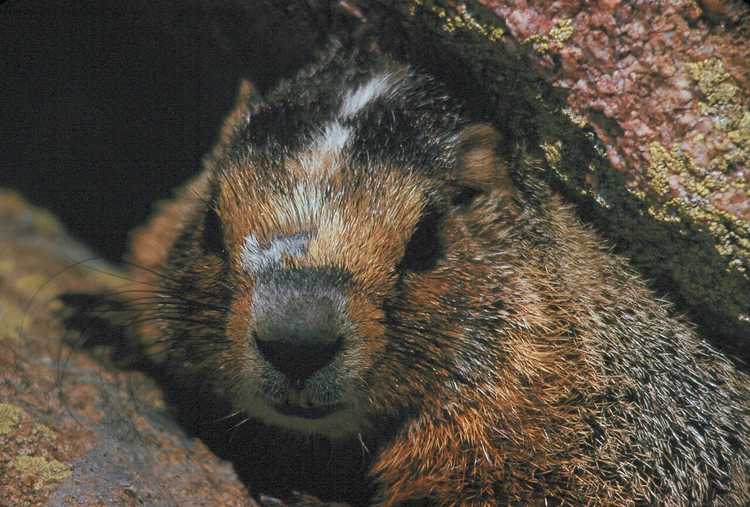 © Garst, Warren, 1922-2016, photographer · CC BY-SAPhoto: Garst, Warren, 1922-2016, photographer, CC BY-SA (https://creativecommons.org/licenses/by-sa/4.0), Wikimedia Commons
Do not make noise near rocks and bushes, because young animals are skittish, and extra stress is dangerous for them. Keep dogs on a leash, especially in the forest.
Take your trash with you: after the snow melts, meadows look clean, but under the grass a winter trace remains.
Spring bike check
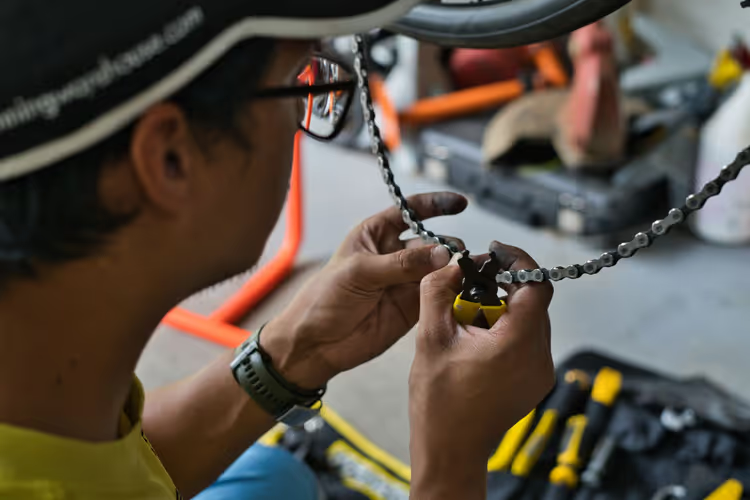
Spring also starts the cycling season, so before your first ride check the brakes, tire pressure, chain, and fastenings.

Spin the pedals and run through the gears, then lubricate the chain and pump up the tires. A loose wheel or saddle mount is easy to tighten at home rather than on the road.
After the check, start with a short route to get a feel for the bike and avoid going far with a fault.
What to take on a snowy route
Pack your bag for the weather, not the calendar, because in April you walk on snow in a T-shirt in the sun. A jacket will come in handy an hour later, when the wind picks up on an open section.
Take crampons, warm change clothes, sunglasses, and sunscreen. Your skin is pale after winter and burns easily, so take sunscreen even on a cloudy day. Poles and gaiters will also help on wet snow.
Keep your phone charged, download offline maps, and mark your exit point. If the trip goes abroad, set up an eSIM in advance so you are not left without a connection on the route.
Condition on the route | What to put in your pack |
|---|---|
Ice and hard crust in the morning | crampons, poles |
Deep snow at high altitude | snowshoes, gaiters, avalanche beacon |
Sun and wind on the pass | change layer, sunglasses, sunscreen |
Trip abroad | eSIM |
⁉️🤔 Frequently asked questions
Who do you call if something goes wrong in the mountains?
In most European countries, the single number 112 works, and mountain rescue services take the call (according to DAV). Save the number in advance and give the dispatcher your coordinates, not just the name of the peak. In gorges, reception often drops, so do not stray far from the marked trail.
Do you need crampons for a spring trail?
Not always, because crampons are only needed where hard crust or ice remains. More often that means steep climbs and passes, while for flat walks on slushy snow, trekking boots are enough. Ask the hut owners what conditions are like on the upper section.
Can you hike in shorts in spring?
During the day in the sun, shorts are comfortable, but in the morning and in the shade it is cold, because the wind often blows on a pass. Take a layer to put on top and put it on at every stop. If you are already cold at the start, it will only get worse.
When should you turn back?
Turn back as soon as you doubt that you can pass a section safely. Ice, deep wet snow, fatigue, or gathering dusk are all reasons to stop. Turning around is not weakness but part of planning, so it is better to return and come again than to call rescuers.
Is insurance mandatory for mountain hikes?
Whether insurance is mandatory depends on the rules of the specific country. In mountain areas, rescue operations are sometimes paid, so check what the policy covers: the hike itself, rescue, and treatment of injuries.
In short: what is worth booking
Remember the main point: in spring, aspect, technique, and time buffer decide everything. Check the slope via cameras and a call to the hut, and read the avalanche report.
A selection matrix for your first outings:
- First hike after winter: take a short route and allow a time buffer.
If you are going to the mountains abroad, compare insurance options before you leave.

A small editorial team writing guides for independent travel. We travel ourselves, but we haven’t been everywhere, so we check prices, opening hours and how to get there against official sources.