
















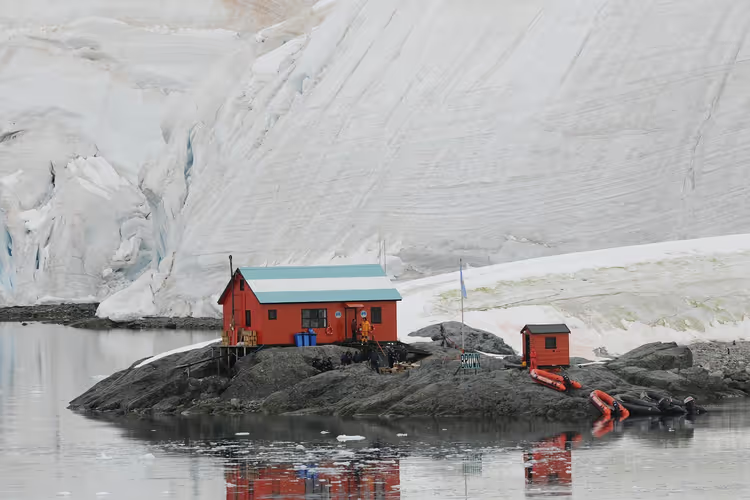
McMurdo Dry Valleys: where snow does not linger in Antarctica
The driest deserts on the planet are in Antarctica. This is not a paradox, but a fact: among the ice there are valleys where snow barely stays on the ground. They are called the McMurdo Dry Valleys. This zone covers about 4,500 km², which is roughly 0.03% of the continent (according to the McMurdo Dry Valleys reference). Here you will see Martian landscapes, rust-red waterfalls, and lakes saltier than the Dead Sea. Below you will learn how it all works, what scientists have found, and how to get there.
The McMurdo Dry Valleys: a scientific sensation
💡 In short:
- The McMurdo Dry Valleys are the largest ice-free region of Antarctica.
- Inside are three large valleys: Victoria, Wright, and Taylor.
- McMurdo Station and Scott Base operate nearby, so the area has been studied better than many parts of the continent.
The boundaries of the dry deserts were defined by polar explorers. The valleys lie on the coast of Victoria Land. The English name for the zone, McMurdo Dry Valleys, has also become established in scientific literature.
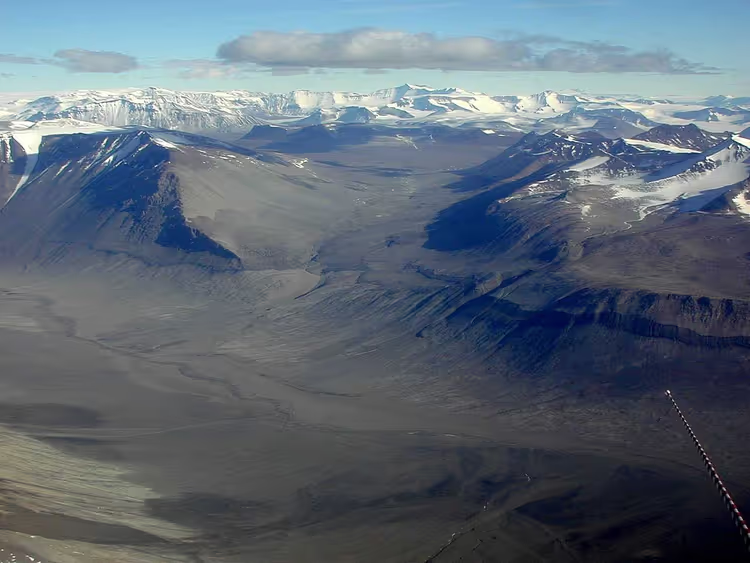
The valleys were discovered in the early 20th century, and from the 1950s permanent stations appeared nearby: McMurdo Station (USA) and Scott Base (New Zealand) (according to McMurdo Dry Valleys).
The discovery became a scientific sensation. Ice-free land on the continent is scarce, and the McMurdo Dry Valleys became the largest such area. The second driest place on Earth is the Chilean Atacama Desert, but even it falls short of the McMurdo zone. It has not rained here for about two million years (according to the description of the dry valleys). If you are drawn to extreme geography, remember this name.
Climate: why snow does not stay
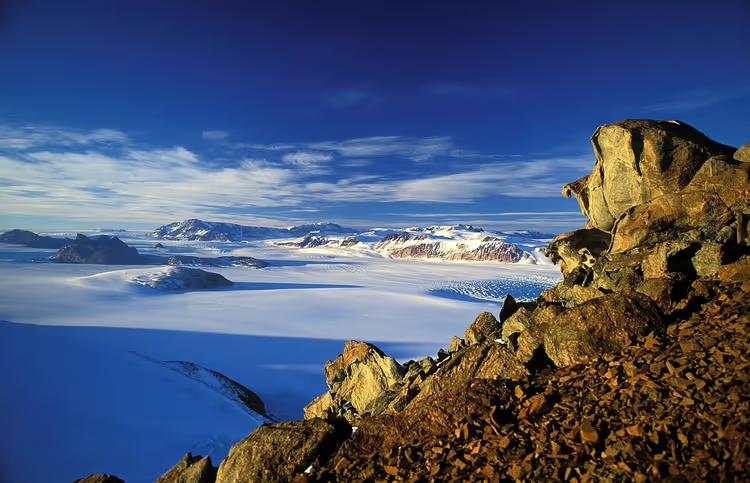
The valleys lie in the snow shadow of the Transantarctic Mountains. Peaks above 3,000 m intercept moisture, so only dry air currents reach the valley floor (according to the climate of the McMurdo Dry Valleys).
The paradox is explained by wind. Katabatic winds blow constantly in the valleys. Heavy cold air rolls down the slopes under the force of gravity, and its gusts can reach hurricane force. Moisture does not have time to settle, and the dry air removes snow directly: ice turns into gas, bypassing liquid water.
 © Hannes Grobe , Alfred Wegener Institute · CC BY-SAPhoto: Hannes Grobe , Alfred Wegener Institute, CC BY-SA (https://creativecommons.org/licenses/by-sa/2.5), Wikimedia Commons
Precipitation here is about 100 mm per year, and almost all of it is snow. But it does not stay: wind and dry air quickly carry it away. Temperatures are also extreme: a minimum of -65.7 °C was recorded at Lake Vida, and a maximum of +12 °C at Taylor Glacier (as of 09/2026, McMurdo Dry Valleys). You will not find familiar weather here, but you will see a rare climate.
Despite the dryness, there is water in the valleys. The Onyx River flows through Wright Valley, the longest river in Antarctica. In summer it is fed by glacial meltwater, and nearby lies Lake Vida (according to rivers and lakes of the valleys). In total, more than 6,000 lakes and ponds are counted here.
The valley floors resemble Mars, which is why NASA has been testing landers and rovers here since the 1970s (according to NASA testing in the valleys). For you, this means the landscape around you will not look earthly: loose gravel, polygonal cracks in the ground, and an almost complete absence of plants.
Ice-covered lakes and Blood Falls
The most famous lakes of the valleys are covered with permanent ice. The water beneath it is so salty that its salinity is two to three times higher than ocean water (according to salty lakes of the valleys).
It is exactly such a lake that feeds Blood Falls in Taylor Valley. From time to time, a stream of rusty-red water bursts out of Taylor Glacier and flows down the ice toward Lake Bonney.
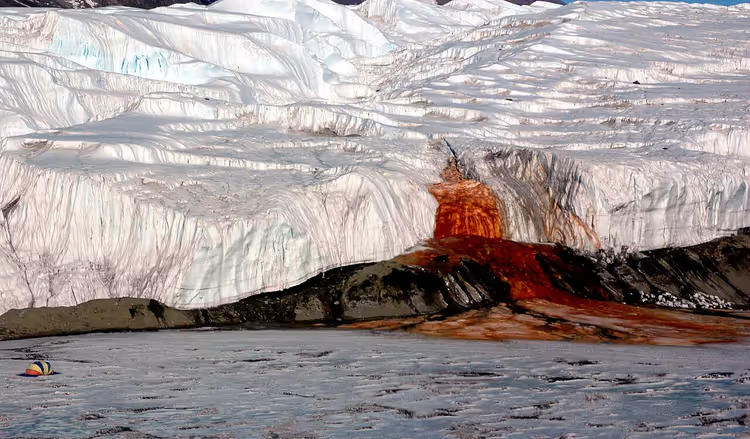
The red color comes from iron oxides: when exposed to air, ferrous iron oxidizes (according to composition of Blood Falls water). The falls were first described by Australian geologist Thomas Griffith Taylor in 1911, and both the glacier and the valley were named after him. In the subglacial water, researchers found bacteria that survive without oxygen and use iron and sulfur.
Scientists believe this ecosystem has been isolated for about 1.5-2 million years (according to microbes beneath Taylor Glacier).
What researchers found in the dry valleys
The main question is this: why do penguins and seals live in the ice, while there is nothing in the valleys? The answer is simple: the air is too dry for either plants or animals to survive.
But it was not always this way. In Victoria Valley, researchers have found mummified seal carcasses that have been preserved in the dry air for thousands of years (according to seal mummies in Victoria Valley). This means the climate here was once milder, and you can see traces of those changes.
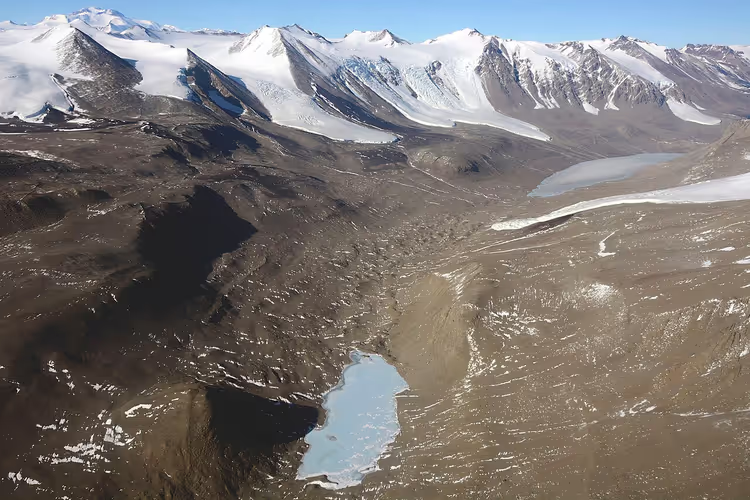
Later, traces of microorganisms were also found: bacteria live in rock cracks, getting by on a drop of moisture and light. And in 2013, in University Valley, no active life was found in the permafrost at all. This is the first place on the planet where humans have found no microbes (according to life in the valley permafrost).
Today, polar researchers are working on these puzzles. They build theories about how the climate of the ice continent changed, but there is no direct answer yet. The valleys remain a convenient model for studying Mars and icy moons like Europa.
Antarctic tourism: how to get to the valleys
Antarctica is open to travelers, but on its own terms. The season runs from November to March, the Antarctic summer (according to the Antarctic tourism season).
Most cruises depart from Ushuaia, a port on the edge of Argentina. Voyages last from 10 days to three weeks, and prices start at about 6,490 US dollars per person in a shared cabin (as of: 09/2026, Terra Nova Expeditions). In 2025, about 124,000 cruise tourists visited the continent (according to Antarctic cruise statistics). You will need a passport and time to spare.
The McMurdo Dry Valleys lie away from the usual routes. Most ships head for the Antarctic Peninsula, and only a few reinforced vessels go to the Ross Sea and McMurdo Station. A tourist can hardly get into the valleys themselves: landings there are restricted, and the area is part of a specially protected zone.
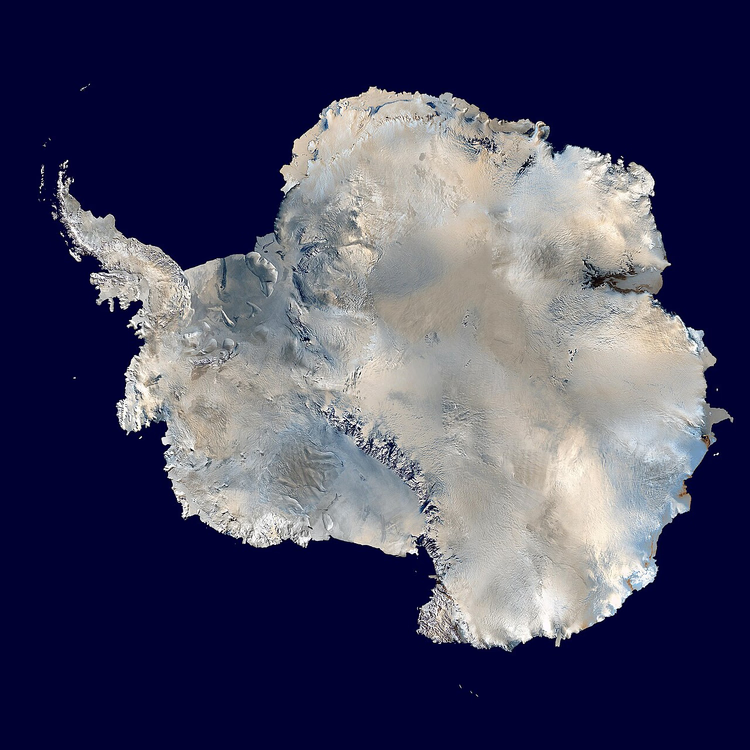
Any trip requires a permit under the Antarctic Treaty, and operators are united under IAATO (according to the rules for visiting Antarctica). If you want to see the ice continent, start with the practical side: cruises to Antarctica from Ushuaia are covered in a separate article.
McMurdo on the map
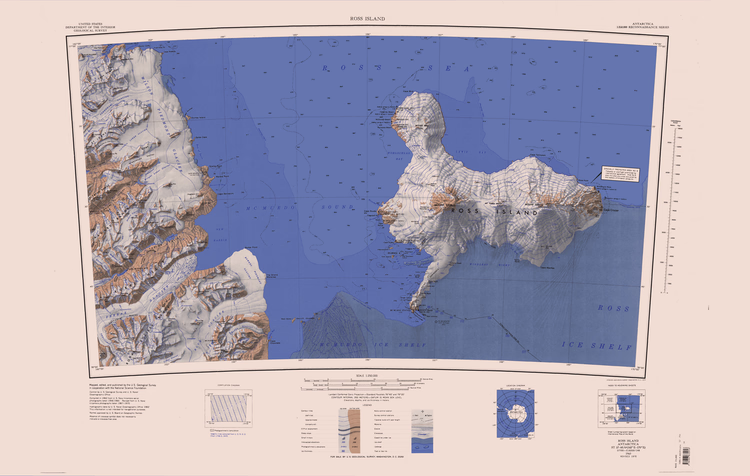
The Dry Valleys lie west of McMurdo Sound, by the Ross Sea. The center of the area is at about 77° south latitude and 162° east longitude (according to the coordinates of the McMurdo Dry Valleys). Open the map below to get a sense of the valleys' position relative to the stations and Mount Erebus.
⁉️🤔 Frequently asked questions
Where are the McMurdo Dry Valleys?
On the coast of Victoria Land in East Antarctica, west of McMurdo Sound and the Ross Sea. This is the largest ice-free region of the continent.
Why did a snowless desert appear in Antarctica?
Wind and terrain decide everything. The Transantarctic Mountains block moist air, and katabatic winds blow snow off the slopes. Moisture evaporates directly, and ice turns into gas. Precipitation here is extremely low. That is why the valleys remain one of the driest and coldest deserts on the planet.
Can a tourist get into the Dry Valleys?
Regular cruises go to the Antarctic Peninsula, while the valleys lie by the Ross Sea. Getting here is realistic only on a few reinforced vessels, and such voyages are rare. Landings in the valleys are restricted, and the area is part of a specially protected zone. A trip requires a permit under the Antarctic Treaty.
What is Blood Falls?
It is a flow of rusty-red water from Taylor Glacier. The color comes from iron oxides: the subglacial water is rich in ferrous iron, which oxidizes on contact with air.
When should you go to Antarctica and how much does a trip cost?
The season runs from November to March, the Antarctic summer. Most voyages depart from Ushuaia in Argentina. A cruise takes from ten days to three weeks. Prices start at several thousand US dollars per person in a shared cabin, depending on the vessel and season.
In short: what to book
The McMurdo Dry Valleys show that a desert can exist among ice. Snow barely lingers here, and the landscapes look more like Mars. The decision matrix is simple: if you have the time and specifically want the valleys, look for the rare flights to the Ross Sea. If you want the baseline experience, take the classic cruise to the Antarctic Peninsula from Ushuaia. Before buying, check the season, permits, and prices with the operator, and look for an overview of options in the article about Antarctic cruises.

A small editorial team writing guides for independent travel. We travel ourselves, but we haven’t been everywhere, so we check prices, opening hours and how to get there against official sources.