

















Dangerous airports of the world: 17 runways where approach requires skill
There are places in the world where a routine landing turns into a thrill ride. On St. Maarten, airliners pass over Maho Beach at under 30 meters (according to the official Princess Juliana Airport website). In Scotland, the runway is flooded by the tide twice a day, and in Lesotho it ends at a cliff edge.
Here are 17 airports and airstrips that are called the most dangerous and most unusual in the world. For each one, you will see what exactly makes the approach difficult: terrain, engineering, nearby buildings, or the schedule. We verified runway, approach, and operating schedule data against official airport websites in September 2026.
1. Princess Juliana airport (St. Maarten)
💡 In short:
- Planes approach over Maho Beach, and the runway begins right behind the beach.
- The runway is short for long-haul airliners, so braking has to start immediately after touchdown.
Princess Juliana Airport occupies the Dutch side of the island of St. Maarten. The runway here is just over two kilometers long. For heavy aircraft flying across the Atlantic, that is not enough. The approach is built over Maho Beach, and you see planes directly overhead.
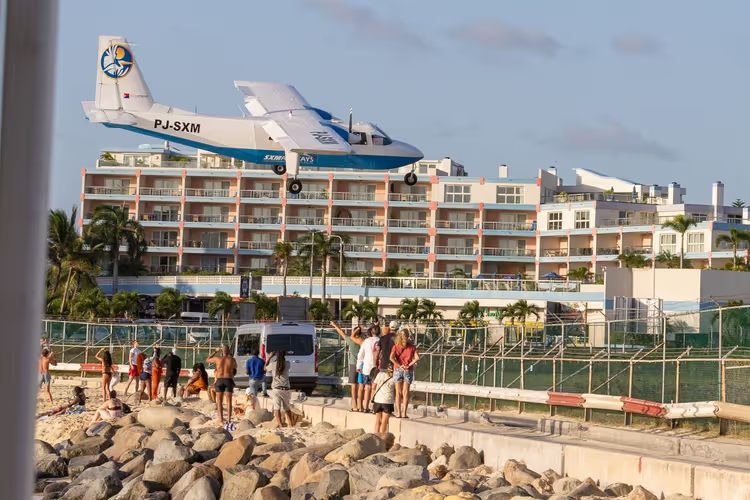
Vacationers get used to the roar. Wind gusts from the beach have become part of the local scenery, and airliners are filmed right from the sand. Warning signs about jet blast hang by the fence: on takeoff it can knock you off your feet, so standing behind the engines is not a good idea. Because of the low flyovers, the airport consistently appears on lists of the world's most dangerous.
2. Kai Tak Airport (Hong Kong)
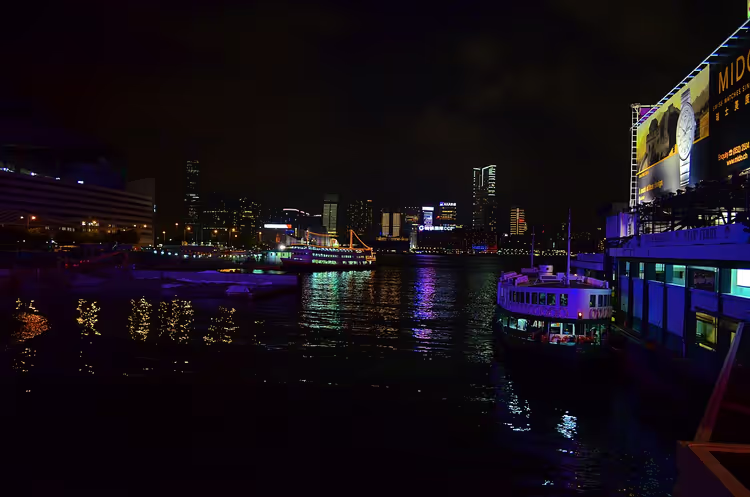
Kai Tak, Hong Kong's old airport, is still studied in classes on difficult approaches. Airliners entered Kowloon Bay with a steep turn of almost fifty degrees and at the last moment, lining up with a hill marked with a checkerboard pattern. Controllers called it the "checkerboard," and pilots saw the landmark seconds before touchdown.
The approach passed directly over residential neighborhoods: planes flew past balconies and windows. Add high hills and wind gusts that changed direction every hour. The extreme landings ended more than a quarter century ago, but footage from Kai Tak can be found in any aviation compilation.
 © Subhashish Panigrahi · CC BY-SAPhoto: Subhashish Panigrahi, CC BY-SA (https://creativecommons.org/licenses/by-sa/3.0), Wikimedia Commons
3. Paro Airport (Bhutan)
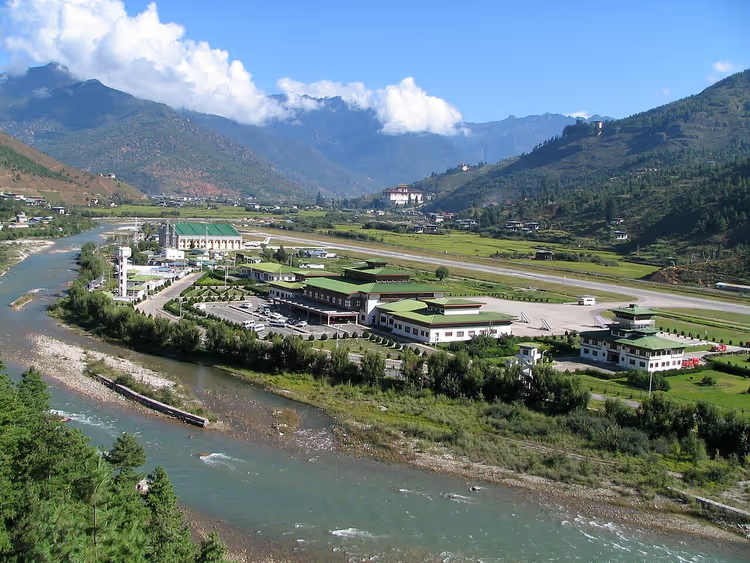
Paro remains Bhutan's only paved runway. Fewer than ten pilots in the world hold a landing certificate here, and it is not about a shortage of personnel. The runway lies in a valley, so the pilot has to fly around a mountain and descend to within a few dozen meters of the rooftops.
The approach here is visual only, so flying weather decides everything. Takeoff is the hardest part: there is a mountain straight ahead on the departure path, and ridges nearly five kilometers high all around, so altitude is gained in a spiral. If you are flying to Paro, allow an extra day for weather.
 © Douglas J. McLaughlin · CC BYPhoto: Douglas J. McLaughlin, CC BY (https://creativecommons.org/licenses/by/2.5), Wikimedia Commons
4. Gibraltar airport (North Front)
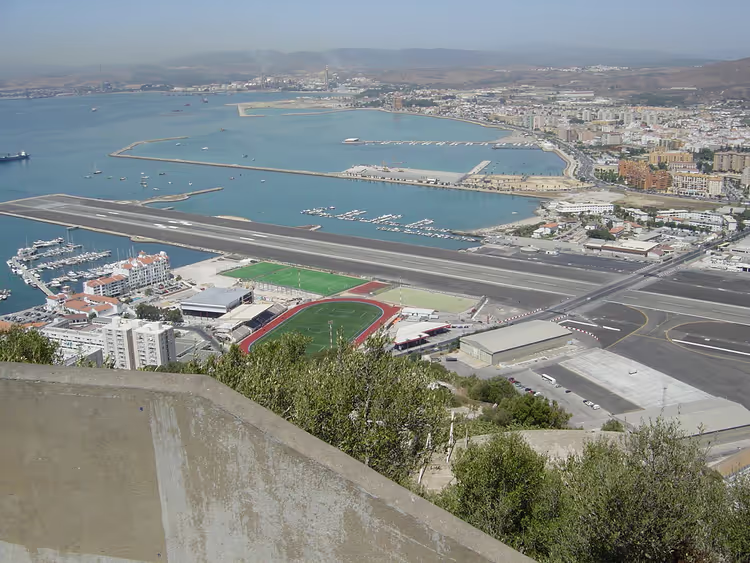
North Front serves Gibraltar, a British overseas territory of less than seven square kilometers. On that amount of land there is room for one runway, and it cuts across the entire peninsula. The airport sits less than a kilometer from the city center.
The runway used to intersect with the road to the Spanish border. During landings and takeoffs, traffic was stopped with barriers, like at a railroad crossing. Since 2023, cars go through a tunnel. No collision between an aircraft and a car has ever been recorded here, although the setup looked risky.
 © Jnpet · CC BY-SAPhoto: Jnpet, CC BY-SA (http://creativecommons.org/licenses/by-sa/3.0/), Wikimedia Commons
5. Mariscal Sucre airport (Quito)
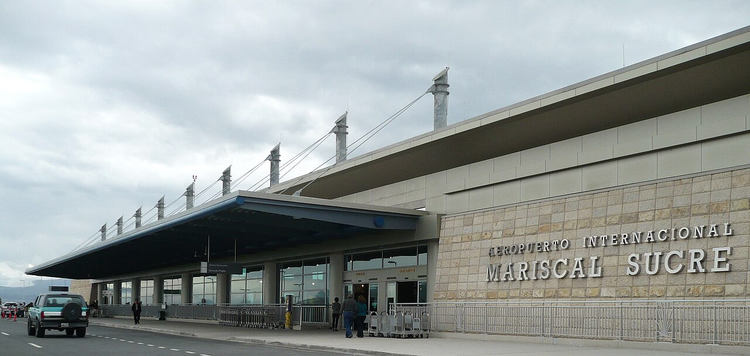
Mariscal Sucre serves Quito, the capital of Ecuador, and sits at nearly three thousand meters above sea level. The terminal here is modern, and waiting for your flight is comfortable. But the runway is surrounded by active volcanoes that spew ash and add to the crew's workload.
Even on a sunny day, only an experienced pilot can land a plane here: the surface quality and runway profile are far from ideal. Add a tropical downpour, and the task becomes twice as hard. Mountainous terrain and volcanic ash keep Quito on lists of the world's most challenging airports.
 © Jordy Vaca · CC BY-SAPhoto: Jordy Vaca, CC BY-SA (https://creativecommons.org/licenses/by-sa/3.0), Wikimedia Commons
6. Barra Airport (Scotland)
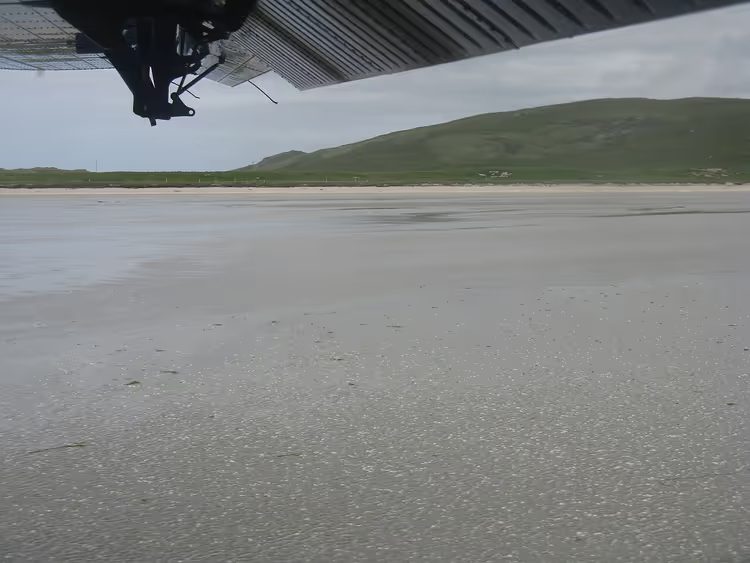
Barra is often called the only airport in the world where scheduled flights land on a beach. The runways are marked directly on the sand of Traigh Mhòr, and the schedule follows the tides (according to the official website of operator HIAL).
 © M J Richardson · CC BY-SAPhoto: M J Richardson, CC BY-SA (https://creativecommons.org/licenses/by-sa/2.0), Wikimedia Commons
At high tide, the runways go underwater. Flights are out of the question. Night flights are also ruled out here. Verified on 13.09.2026 on the official HIAL website: in an emergency, staff lay reflective strips along the shore, light the runway with vehicle headlights, and guide the aircraft in manually.
For you, this is one of the most spectacular views from the window: waves below, and the Scottish coast on both sides. Just don't be surprised if your flight is pushed back a couple of hours because of the water.
7. Gisborne airport (New Zealand)
Gisborne in eastern New Zealand is known for its proximity to a railway. The runway crosses the railroad tracks, although the line is almost inactive today. There are only a handful of such crossings in the world.
 © Phillip Capper from Wellington, New Zealand · CC BYPhoto: Phillip Capper from Wellington, New Zealand, CC BY (https://creativecommons.org/licenses/by/2.0), Wikimedia Commons
In the past, domestic flights yielded to trains, and trains yielded to flights. Nowadays trains run rarely here, so you are unlikely to encounter one at the crossing.
8. Matekane air strip (Lesotho)
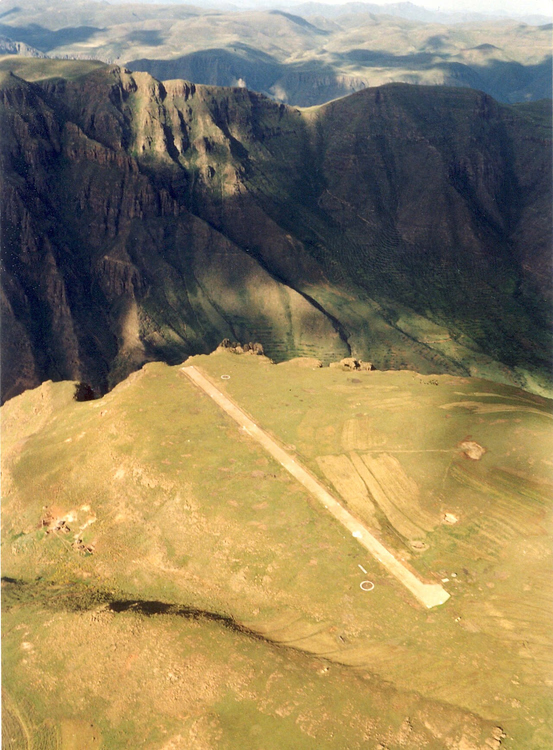
Matekane in Lesotho shows what a runway on the edge of a cliff looks like. It is about four hundred meters long, and it ends in a precipice. Beyond that point there is air, not more pavement.
The pilot drops off the cliff and only then gains altitude, so a standard approach is impossible here. Flights are operated on small aircraft, and you will remember your seat on such a plane for a long time.
 © Tom Claytor; http://www.claytor.com · CC BYPhoto: Tom Claytor; http://www.claytor.com, CC BY (https://creativecommons.org/licenses/by/4.0), Wikimedia Commons
9. Funchal Airport (Madeira)
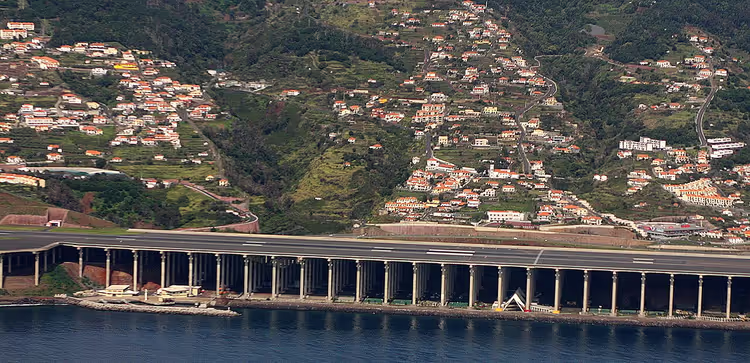
Funchal Airport on Madeira is known for its runway, which partly stands on a viaduct over the ocean. It was extended onto concrete pillars when the island ran out of flat land. The island is mountainous, so the runway comes into view at the last moment, after a turn over the water.
The approach is flown visually, so wind and cloud cover decide a lot. The mountains will seem closer than you expect: the airliner heads straight for the slope, then turns right onto the runway. The airport received an award for its engineering solution, and its viaduct has become a local landmark.
 © Jarvin - Jarle Vines · CC BY-SAPhoto: Jarvin - Jarle Vines, CC BY-SA (https://creativecommons.org/licenses/by-sa/3.0), Wikimedia Commons
10. Toncontín Airport (Tegucigalpa)
Toncontín serves Tegucigalpa, the capital of Honduras, and sits in hilly terrain. The runway here is short, with mountains all around, so the approach demands maximum precision from the crew. The turn has to be made at a dangerously low altitude.
Pilots fly the aircraft into a valley between the hills, and there is almost no room for error. It is precisely because of the terrain that Toncontín remains on lists of the most difficult airports in Central America.
 © Charles from Port Chester, New York · CC BYPhoto: Charles from Port Chester, New York, CC BY (https://creativecommons.org/licenses/by/2.0), Wikimedia Commons
11. Tenzing-Hillary Airport (Lukla)
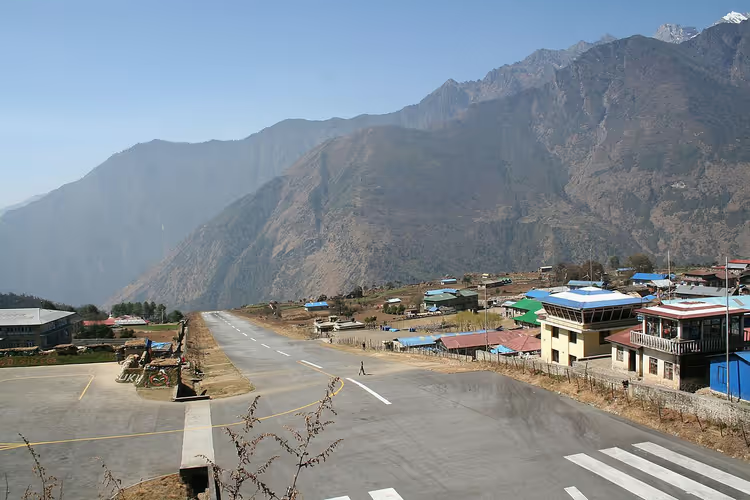
Tenzing-Hillary Airport in Lukla is named after the first conquerors of Everest and serves as the gateway to Himalayan treks. It is one of the busiest in Nepal and receives those heading to base camp. The runway is short, sloped, and ends in a precipice.
The approach takes place in the mountains, where wind gusts and cloud cover change every half hour. If you are planning to go to Lukla, keep a couple of spare days: departures are often delayed due to weather. Beyond the runway there is only a drop-off, so landing requires full concentration from the crew.
 © Reinhard Kraasch · CC BY-SAPhoto: Reinhard Kraasch, CC BY-SA (https://creativecommons.org/licenses/by-sa/4.0), Wikimedia Commons
12. Kansai Airport (Osaka)
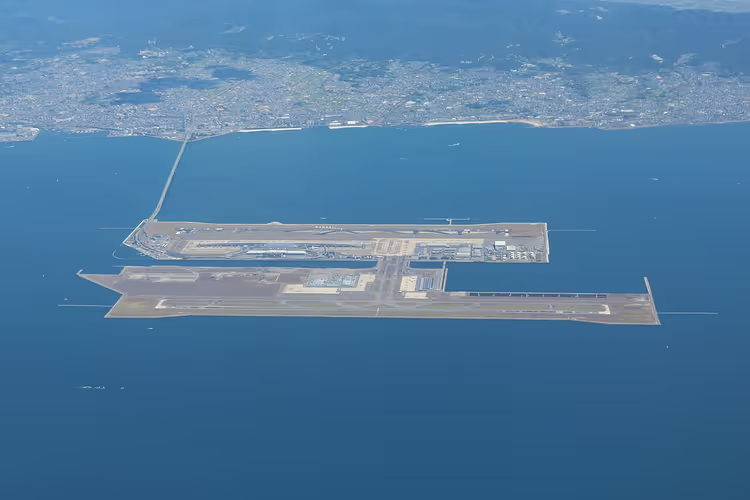
Kansai was built on an artificial island in Osaka Bay; it is the world's first major airport on reclaimed land (according to the airport operator). A bridge more than four kilometers long connects the island to the shore. It opened more than thirty years ago.
Since then, the project has been fighting subsidence: the island is gradually sinking, and the ground settled faster than calculated. At one point the idea was considered a failure, but the sinking was slowed, and today the airport operates normally. A flight over the bay gives you a rare view: a long runway amid the water, with nothing but sea all around.
 © Ankou1192 · CC BY-SAPhoto: Ankou1192, CC BY-SA (https://creativecommons.org/licenses/by-sa/4.0), Wikimedia Commons
13. Kuala Lumpur Airport
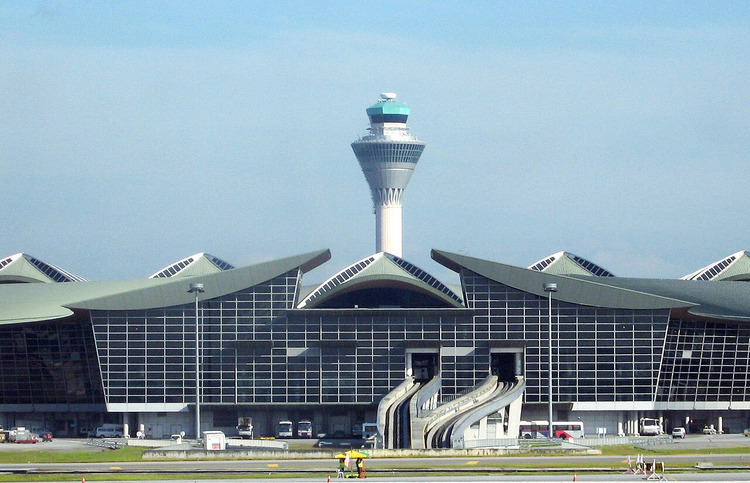
Kuala Lumpur is Malaysia's main air gateway and one of the most technologically advanced airports in Asia. The complex consists of several terminals, and the main hall is covered by a huge glass and metal dome.
The main terminal has been recognized as the best in the world, and the airport itself has won awards for sustainable solutions. For you, this means clear navigation and plenty of connections, but the distances between terminals are long, so allow extra time for transfers.
14. Juancho E. Yrausquin airport (Saba)
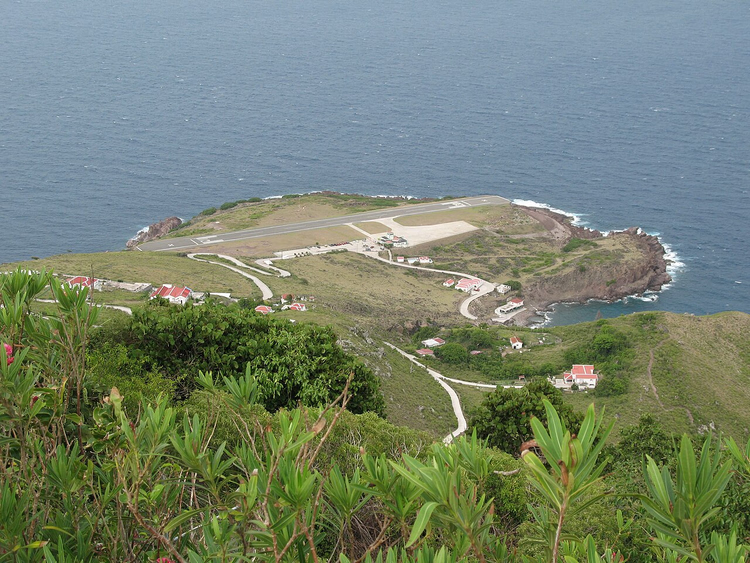
Juancho E. Yrausquin Airport on the island of Saba is known as the airport with the shortest runway in the world. It sits at the very edge of the island, with the ocean right behind it. Takeoffs and landings here are performed by small planes arriving from neighboring islands.
It feels as if the aircraft is about to go over the cliff: only a few hundred meters remain for the takeoff roll. The approach and takeoff at Saba are considered among the riskiest in the Caribbean, but in return you get shots you cannot capture at a large airport.
 © Md2b at English Wikipedia · CC BY-SAPhoto: Md2b at English Wikipedia, CC BY-SA (https://creativecommons.org/licenses/by-sa/3.0), Wikimedia Commons
15. Ronald Reagan Washington National Airport (Washington)
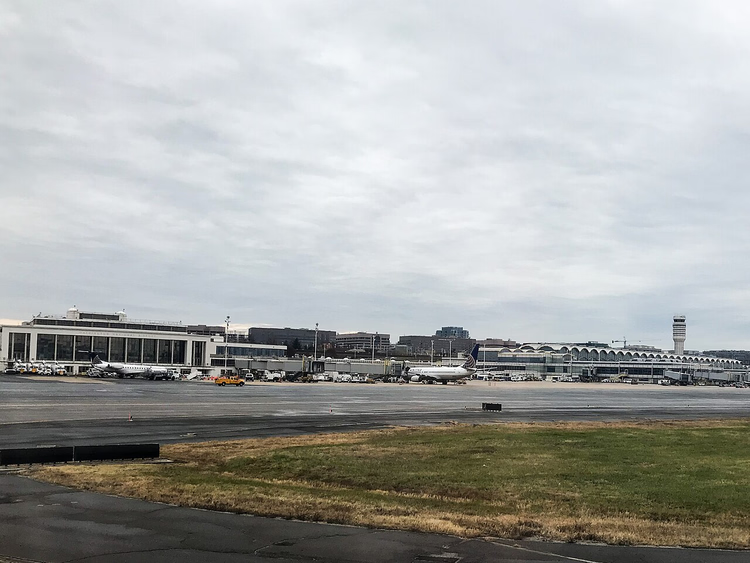
Ronald Reagan Washington National Airport sits in Washington near government buildings. The surrounding airspace is restricted, so crews are guided along the Potomac River and over the water. Maneuvering over strategic sites is not allowed.
 © Fletcher · CC BYPhoto: Fletcher, CC BY (https://creativecommons.org/licenses/by/4.0), Wikimedia Commons
The approach is designed so the aircraft does not pass over the White House, the Capitol, or the Pentagon. Pilots need precise navigation, and you get a view of the city center from low altitude. You will see the historic landmarks of the US capital right from the airplane window.
16. Courchevel Airport (France)
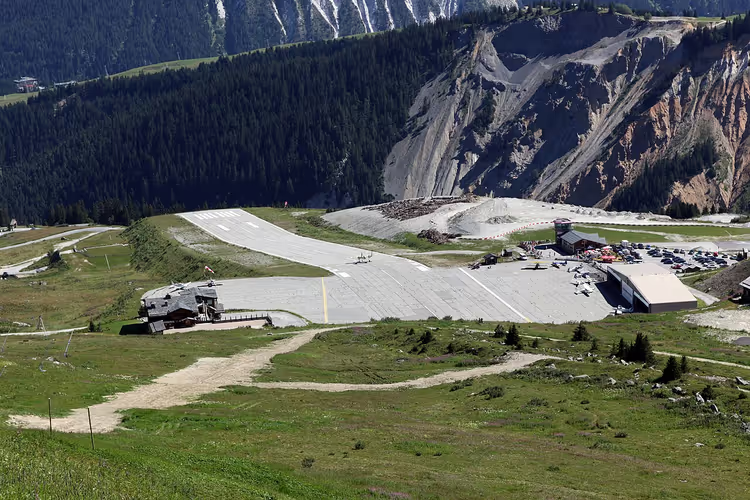
Courchevel in the Alps is known for more than just skiing. The runway of the local altiport sits at an altitude of 2,006 meters and is cleared of snow every day in winter so planes can land (according to the resort's official website).
The gradient here exceeds eighteen percent, and the runway length is about five hundred meters. The takeoff roll goes downhill toward the cliff, while landing is performed uphill. If you are flying here in winter, confirm the departure time in advance: snow and wind affect the schedule.
 © MartinPUTZ · CC BY-SAPhoto: MartinPUTZ, CC BY-SA (https://creativecommons.org/licenses/by-sa/3.0), Wikimedia Commons
17. Innsbruck Airport (Austria)
Innsbruck Airport sits almost in the city center. The runways are surrounded by residential buildings and city streets, a rare arrangement for a major airport. The city lies in the Inn River valley, with high mountains all around.
The approach is flown only along established procedures, with pilots entering the valley above the rooftops. For you, this is a convenient gateway to Tyrol: the drive from the airport to central Innsbruck is very short.
 © kitmasterbloke · CC BYPhoto: kitmasterbloke, CC BY (https://creativecommons.org/licenses/by/2.0), Wikimedia Commons
⁉️🤔 Frequently asked questions
Why are these airports considered dangerous?
The danger comes from three things: a short runway, difficult terrain, and weather. In Gibraltar, a road crossing the runway adds to this; in Lesotho, the runway ends at a cliff; and in Saint Martin, airliners pass low over the beach. Flights operate here every day, but they demand precision from the crew.
Can you watch planes land at Maho Beach?
Yes, on Saint Martin the approach goes directly over Maho Beach, and it is open public area. Just stand to the side of the flight path and stay away from the engines. Keep in mind that with a westerly wind, planes do not land over Maho Beach.
When is the best time to fly to Barra and Lukla?
In Barra, the tide decides everything, so flights are scheduled in the window between tides, and night flights are not possible. In Lukla, mountain weather is the problem: wind gusts and cloud cover change every half hour. If you are planning a trek from Lukla, keep a couple of buffer days and do not book a connection for the same day.
Is Kansai really sinking?
The island under the airport has been settling since it opened, but today Kansai operates normally. Passengers are not affected, but engineers monitor the level constantly.
What should you do if a flight to one of these airports is rescheduled?
Look at the schedule, not just the ticket price. In Barra and Lukla, departures are shifted because of water and weather, so a same-day connection is an unnecessary risk. Leave a buffer of at least a few hours, and check the departure time on the airport's website the day before.
In short: what to book
This list can be turned into a trip plan. Several of these airports receive regular flights, so you can experience a challenging approach from an ordinary passenger seat.
If you want the most spectacular experience, book a flight to Saint Martin and head to Maho Beach for the landing.
Before buying a ticket, check Barra's schedule on the Highlands and Islands Airports operator website and Kansai's operations on the airport operator's website.

A small editorial team writing guides for independent travel. We travel ourselves, but we haven’t been everywhere, so we check prices, opening hours and how to get there against official sources.