
















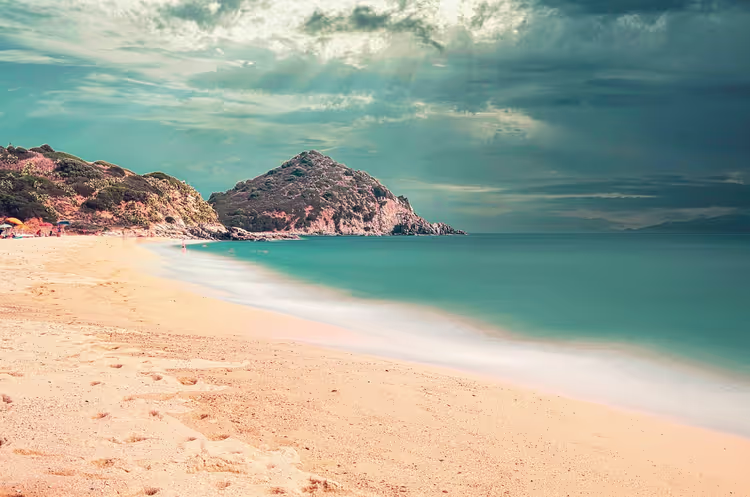
The sea in Italy without queues: 20 beaches for June and September
In August, the Italian coast is packed. Free spots on wild stretches are gone by nine in the morning, and you spend longer looking for parking than driving to the water. Quiet beaches in Italy do exist, though, and there are more of them than the photos suggest.
Here's the key point: these places aren't hidden, they're inconvenient. To reach half of them, you walk twenty to forty minutes over rocks or get there by boat. In return, you get clear water, cliffs without tour groups, and shade you don't share with anyone.
Below are twenty beaches from Sardinia to Basilicata. For each one, you'll find the region, access, difficulty of the descent, and the month when it's truly empty.
How to find a quiet beach in Italy
💡 In short:
- Best months: June, the first week of July, and September. During the week of Ferragosto, nowhere will be empty.
- Rocky descents and boat-only access filter out the crowds, so bring closed-toe sneakers and water.
- Check the protected area status: swimming is often prohibited in zone A, and some beaches require online booking.
- Beach access, infrastructure, and rules: as of 09/2026, according to the official Italian tourism portal.
A rocky shore and the absence of a beach bar filter out those who are used to loungers. This kind of shoreline works as a filter: the more inconvenient the descent, the emptier the water and the fewer people around you.
When to go and how to avoid August
In June, the sea in the south is already warm, and the beaches are empty. You can claim the Sicilian and Calabrian coves first, and this month suits the Ionian coast best. The second calm window begins in the first week of July, before the general vacation wave kicks in.
Many consider September the best month for this kind of route. The water stays warm after summer, the crowds thin out, accommodation prices drop, and some summer restrictions are lifted. Within the week, Tuesday and Wednesday remain the quietest, and this rule holds even at the height of the season.
Distance and trails don't always save you from the crowds. The week of Ferragosto in mid-August leaves people even on the most inconvenient stretches, and the difference between the twenty beaches disappears then. Plan your trip before or after it.
Difficulty in the table is marked with dots: ●○○○ easy, ●●○○ moderate, ●●●○ hard, ●●●● for experienced hikers only.
20 Quiet beaches: table and regions
Beach | Region | Access | Difficulty | Infrastructure | Kids |
|---|---|---|---|---|---|
Cala Tinnari | Sardinia | on foot or by boat | ●●●○ | none | no |
Spiaggia dei Corbezzoli | Sardinia | 5-minute walk | ●○○○ | none | yes |
Cala Sisine | Sardinia | on foot or by boat | ●●●● | none | no |
Spiaggia di Caminia | Calabria | car and short path | ●○○○ | kiosks | yes |
Spiaggia di Ferruzzano | Calabria | car | ●○○○ | minimal | yes |
Punta Bianca | Sicily | 10-minute walk | ●●●○ | none | yes |
Cala Buguto | Sicily | descent over rocks | ●●○○ | none | no |
Spiaggia del Sospetto | Apulia, Gargano | on foot from Calenelle | ●●○○ | none | yes |
Cala della Sanguinara | Apulia, Gargano | trail through the forest | ●●●○ | none | no |
Spiaggia di Zaiana | Apulia, Gargano | 10-minute walk | ●●○○ | none | yes |
Spiaggia di Torre Borraco | Apulia, Ionian coast | car | ●○○○ | none | yes |
Punta Aderci | Abruzzo | on foot, trail about 5 km | ●●○○ | none | yes |
Cala Grande | Tuscany | steep descent | ●●○○ | none | no |
Mezzavalle | Marche | steep 20-minute descent | ●●●○ | bar, shower | no |
Punta Crena | Liguria | swim, SUP, or rope descent | ●●●● | none | no |
Cala Battaglia | Lazio, Ventotene | boat only | ●●○○ | none | no |
Cala Feola | Lazio, Ponza | 15-minute walk | ●○○○ | none | yes |
Cala Bianca | Campania | boat or kayak | ●●○○ | none | no |
Spiaggia di Terzo Cavone | Basilicata | car | ●○○○ | none | yes |
Baia di Ieranto | Campania | 45-minute walk | ●●●○ | none | yes |
Below, the same twenty places in detail. You'll see exactly what awaits you at the end of the descent and how to get there.
1. Cala Tinnari, Sardinia
Cala Tinnari on the Costa Paradiso in northwestern Sardinia rewards those who make the walk. You'll find a cove of polished gray and pink pebbles, with water shifting from light turquoise to deep blue.
- How to get there: about a 40-minute walk from Li Cossi beach or by boat from the port of Costa Paradiso (see map).
- Difficulty: ●●●○, a trail over granite rocks.
- The catch: no infrastructure, bring your own water and food.
2. Spiaggia dei Corbezzoli, Sardinia
Right at the gates of the glamorous Costa Smeralda lies an almost forgotten spot. Tourists barely know Spiaggia dei Corbezzoli in the Gulf of Saline: there are no signs, and the trailhead is marked only by a gap in the dense maquis. The beach has coarse pinkish sand, and the clear water is full of fish.
- How to get there: take the SP13 toward Palau, about 250 meters after the La Iaciola parking lot (see map).
- Difficulty: ●○○○, a short 5-minute trail.
- The catch: no infrastructure at all, bring water.
3. Cala Sisine, Sardinia
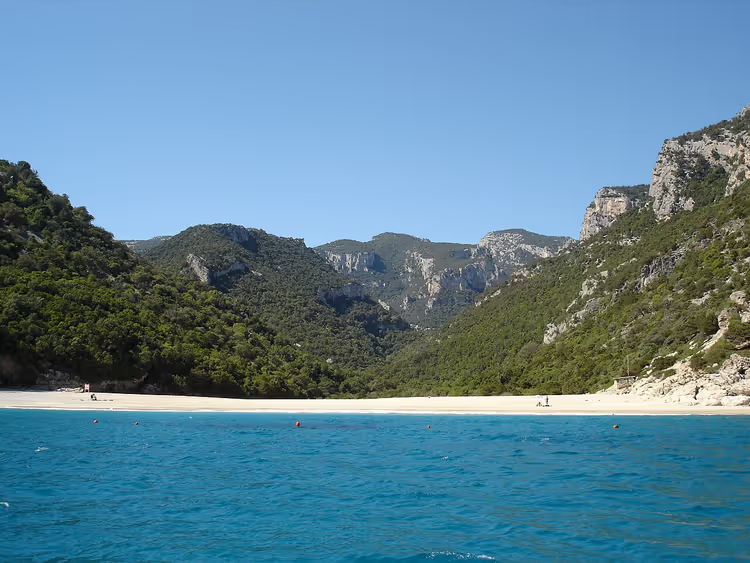 © Flickr user clurr · CC BYPhoto: Flickr user clurr, CC BY (https://creativecommons.org/licenses/by/2.0), Wikimedia Commons
Among the famous coves of the Golfo di Orosei, Cala Sisine demands the most effort and, in return, preserves a meditative silence. The beach lies inside a vast natural amphitheater of limestone walls, and the water near the shore is emerald, quickly deepening into dark blue. A striking rock arch closes off the cove from the north.
- How to get there: boat from Cala Gonone, about 45 minutes, or a 3-4 hour hiking trail from Golgo (see map).
- Difficulty: ●●●●, part of the Selvaggio Blu route.
- Not for: anyone without physical fitness and sturdy footwear.
4. Spiaggia di Caminia, Calabria
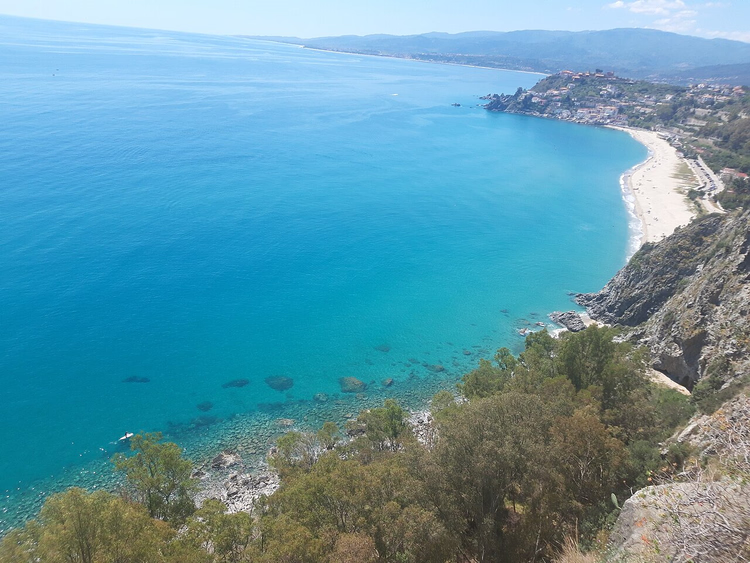 © Spissana · CC BY-SAPhoto: Spissana, CC BY-SA (https://creativecommons.org/licenses/by-sa/4.0), Wikimedia Commons
On the Costa degli Aranci in the Gulf of Squillace, the Ionian Sea shows its best side. Caminia remains the main star of this stretch: there are no large hotels, but there is a free beach and two characterful kiosks. Behind the sandy strip stand the ruins of the Byzantine church of Panaja, and by kayak you can reach the sea caves.
- How to get there: take the SS106 Ionica, exit at Caminia (see map).
- Difficulty: ●○○○.
- The catch: parking is paid in season, arrive before 9 a.m.
5. Spiaggia di Ferruzzano, Calabria
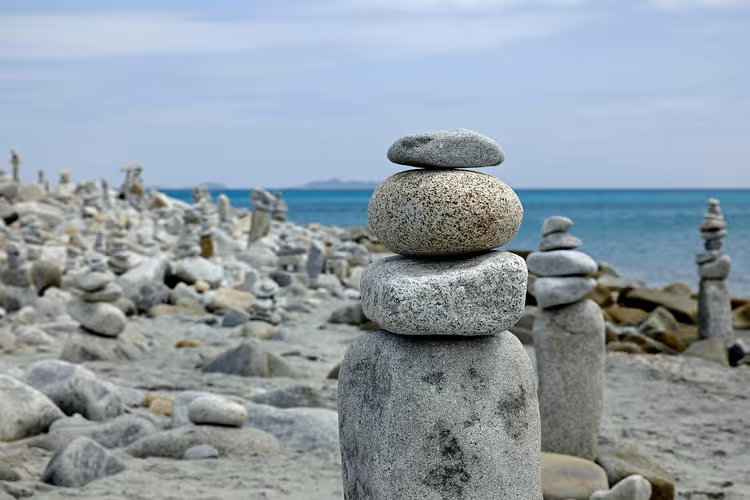
Ferruzzano Marina on the Costa dei Gelsomini looks as if time has stopped here. This stretch in southern Calabria, not far from Reggio Calabria, seems almost untouched, and a railway separates the beach from the foothills.
- How to get there: take the SS106, turn toward Ferruzzano Marina (see map).
- Difficulty: ●○○○.
- The catch: no lounger reservations or large hotels, rely on yourself.
6. Punta Bianca, Sicily
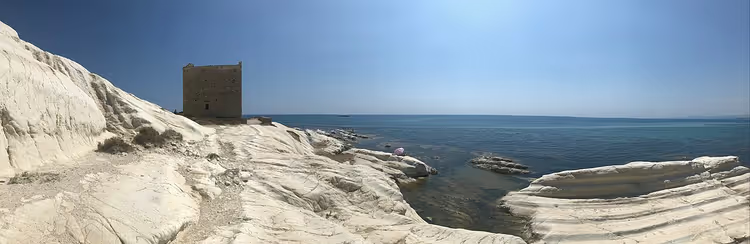 © Davide Mauro · CC BY-SAPhoto: Davide Mauro, CC BY-SA (https://creativecommons.org/licenses/by-sa/4.0), Wikimedia Commons
Punta Bianca resembles the famous Scala dei Turchi, but there are no crowds here. The white limestone headland near Agrigento glows brightly against the clear water, and there is no service here at all.
- How to get there: take the SS115 to the parking lot, then about 10 minutes on foot over uneven ground (see map).
- Difficulty: ●●○○.
- The catch: bring water and shoes, there is almost no shade.
7. Cala Buguto, Sicily
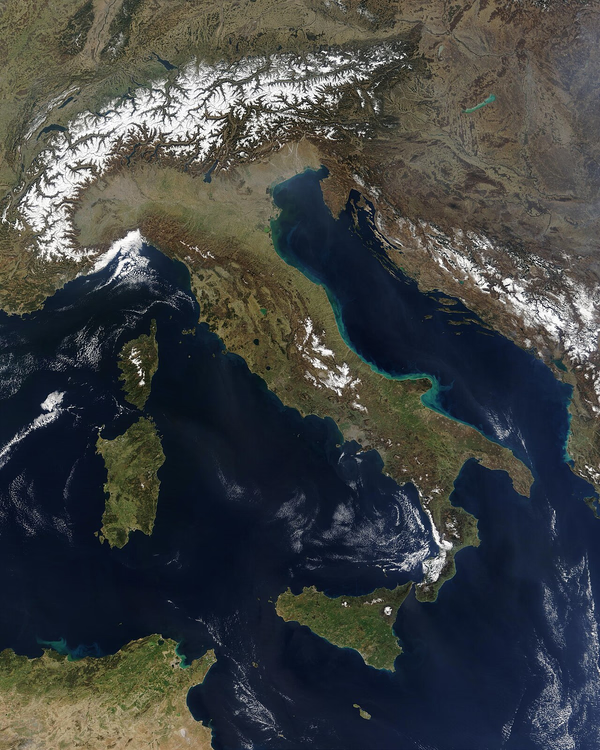
At the foot of Monte Cofano hides one of the most striking coves in western Sicily. While the main beach at Cornino is crowded, Cala Buguto stays quiet, and you only need to walk a few hundred meters over the rocks. The water here is unusually clear because of cold freshwater springs under the mountain, and for divers there is a statue of the Madonna of Custonaci at depth.
- How to get there: from Cornino over the rocks, about 15 minutes; from Trapani, 30 minutes by car (see map).
- Difficulty: ●●○○.
- The catch: the springs are cold, and the water turns sharply refreshing at depth.
8. Spiaggia del Sospetto, Apulia
Near Vico del Gargano, one of the most picturesque towns in Italy, hides a beach that locals respectfully call Spiaggia del Sospetto. The cove of sand and fine pebbles remains an oasis of silence.
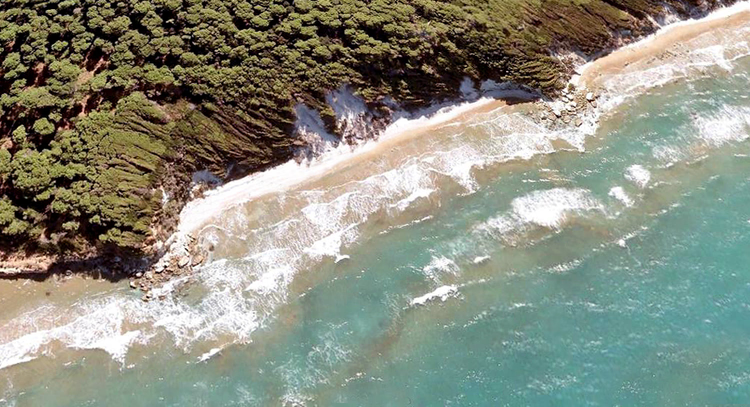 © Photorules · CC BY-SAPhoto: Photorules, CC BY-SA (https://creativecommons.org/licenses/by-sa/3.0), Wikimedia Commons
- How to get there: first walk past the "100 Scalini" beach, then continue along the shore (see map).
- Difficulty: ●●○○.
- The catch: this route deters most people, but the water and the view of the Adriatic are worth it.
9. Cala della Sanguinara, Apulia
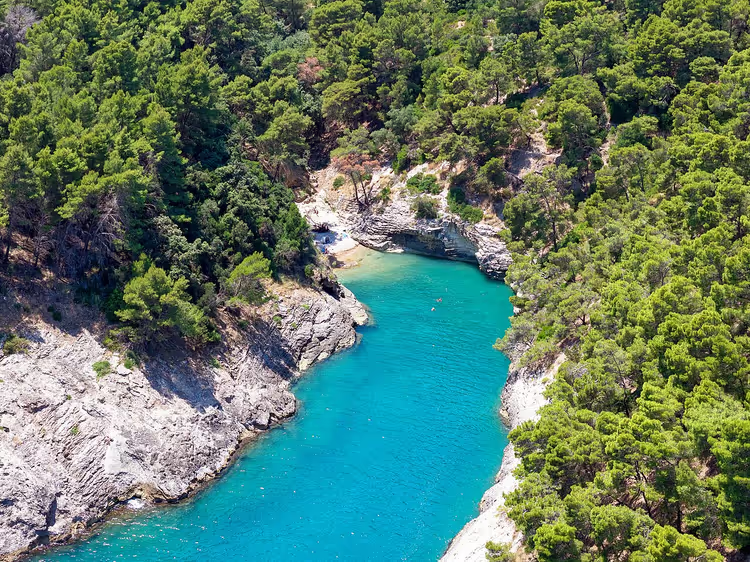 © Matteo Nuzziello · CC BY-SAPhoto: Matteo Nuzziello, CC BY-SA (https://creativecommons.org/licenses/by-sa/4.0), Wikimedia Commons
Cala della Sanguinara lies south of Vieste, and the road runs through a shady pine forest typical of the Gargano. The small pebble beach is sheltered from the wind, and the water glows with an almost unreal azure color.
- How to get there: south of Vieste along the road through the pine forest (see map).
- Difficulty: ●●●○.
- The catch: the climb back up the hill, you need proper shoes.
10. Spiaggia di Zaiana, Apulia
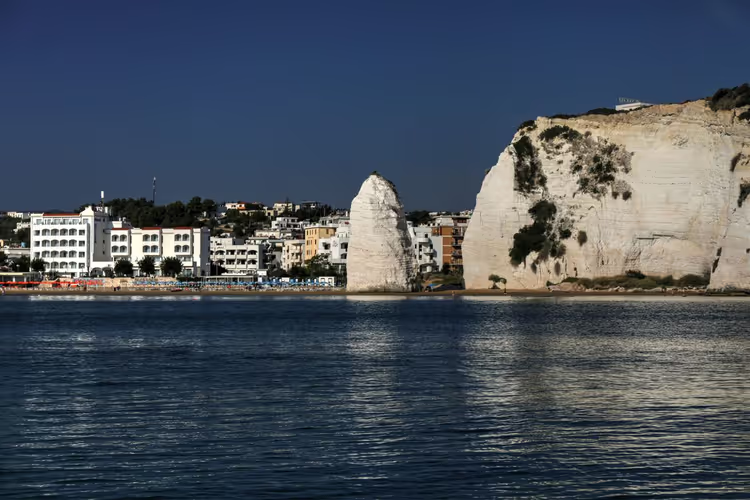
On the panoramic road between Peschici and Vieste, no sign points to this place. Only a weathered marker and a trail through holm oaks lead you down to Spiaggia di Zaiana. The cove opens up between high cliffs. The water here is transparent and emerald, and the bottom near the shore is even.
- How to get there: SP52 between Peschici and Vieste, turn toward Manaccora, free parking on the cliff (see map).
- Difficulty: ●●○○, about a 10-minute descent.
- Who it's for: families who value nature more than a beach club.
11. Spiaggia di torre borraco, apulia
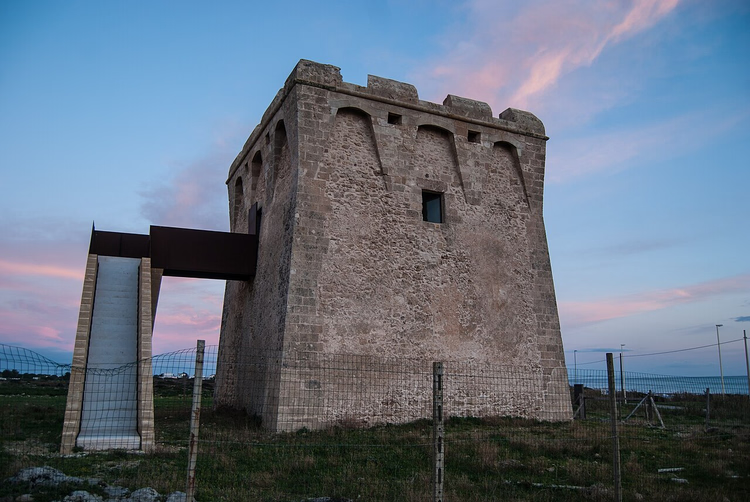 © Andrea Fistetto © 2014 · CC BY-SAPhoto: Andrea Fistetto © 2014, CC BY-SA (https://creativecommons.org/licenses/by-sa/3.0), Wikimedia Commons
Beneath an ancient Saracen tower on the Ionian coast of Apulia stretches Spiaggia di Torre Borraco. Fine white sand and turquoise water evoke the Caribbean here, while the mouth of a cold river creates unusual currents and crystal-clear visibility.
- How to get there: by car to the beach in the province of Taranto (see map).
- Difficulty: ●○○○.
- The catch: mostly locals know about this spot, check the facilities on site.
12. Punta Aderci, Abruzzo
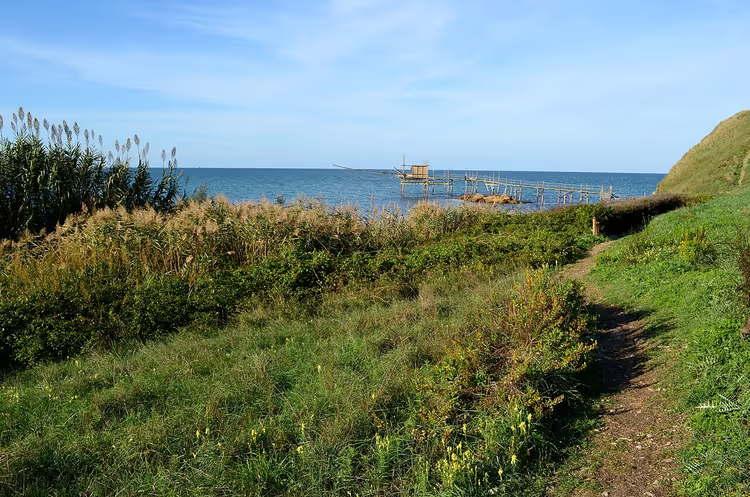 © Mario Forgione · CC BY-SAPhoto: Mario Forgione, CC BY-SA (https://creativecommons.org/licenses/by-sa/4.0), Wikimedia Commons
The Punta Aderci nature reserve on the Adriatic coast is almost untouched by concrete. Flat limestone rocks, wild dunes, and maquis shape the landscape, and the water here is unusually clean for the Adriatic.
- How to get there: from Vasto toward the reserve, a flat panoramic trail of about 5 km (see map).
- Difficulty: ●●○○.
- Who it's for: morning walks, you'll see herons and sometimes dolphins here.
13. Cala Grande, Tuscany
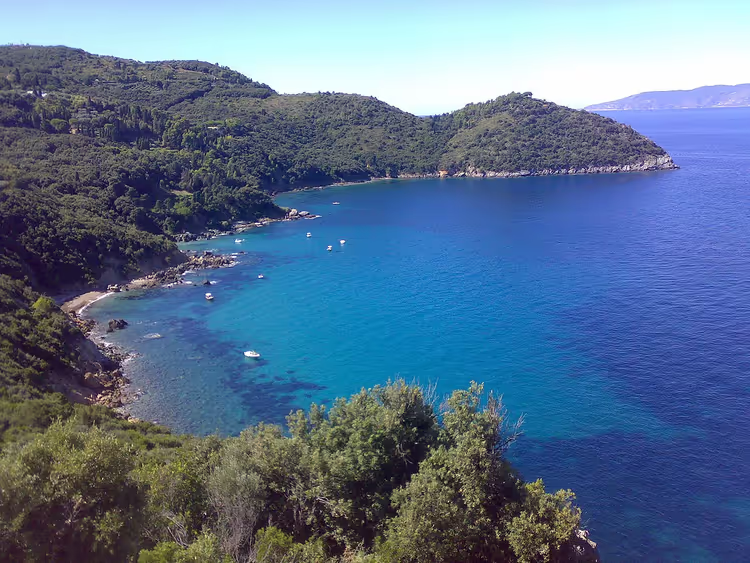 © Ceppicone · CC BY-SAPhoto: Ceppicone, CC BY-SA (https://creativecommons.org/licenses/by-sa/3.0), Wikimedia Commons
On the wild side of Argentario hides Cala Grande. Three small white pebble beaches lie in a sheltered cove, and the steep descent from the panoramic road scares off most visitors, so you usually share the place with a couple of sailboats.
- How to get there: SP65 from Porto Santo Stefano, descend at the 3.9 km marker (see map).
- Difficulty: ●●○○, 10-15 minutes down.
- The catch: good shoes are essential, the descent is rocky.
14. Mezzavalle, Marche
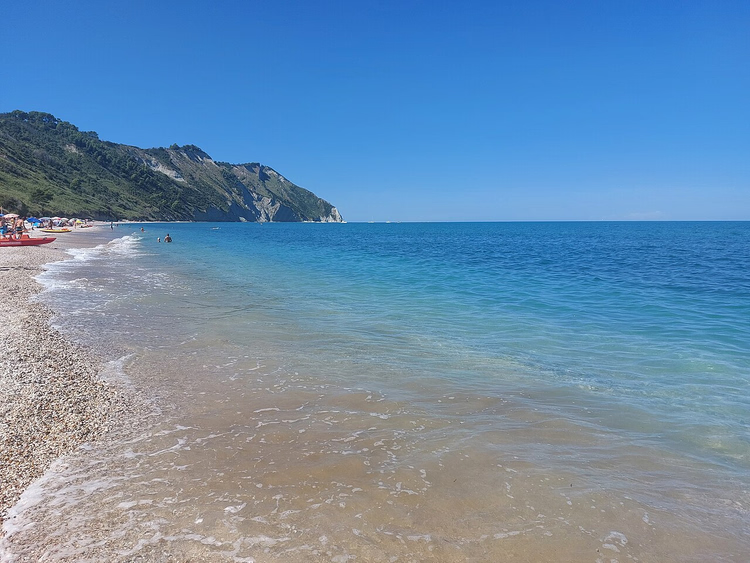
For many, this is the most beautiful beach in Marche. Mezzavalle on the Riviera del Conero is completely free of development, and access comes at the price of a steep twenty-minute descent. There is only a small bar and showers. Walk north toward the Trave rock, where it's quiet even on busy days.
 © Diego Baglieri · CC BY-SAPhoto: Diego Baglieri, CC BY-SA (https://creativecommons.org/licenses/by-sa/4.0), Wikimedia Commons
- How to get there: toward Conero from Ancona, about a 20-minute descent (see map).
- Difficulty: ●●●○.
- The catch: flip-flops are dangerous, you need sneakers.
15. Punta Crena, Liguria
 © Terensky · CC BYPhoto: Terensky, CC BY (https://creativecommons.org/licenses/by/3.0), Wikimedia Commons
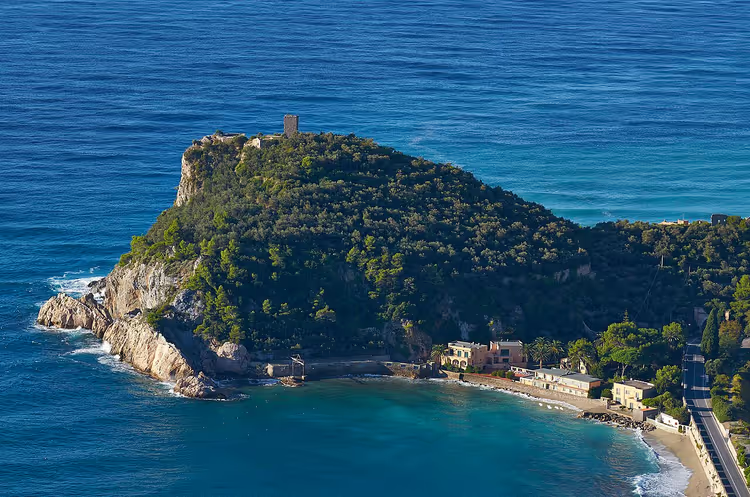
Punta Crena has long been a Ligurian legend. The tiny cove is squeezed between high cliffs, and you can only reach it by swimming, on a SUP, or via an extremely steep trail with a fixed rope. Motorboats are banned here, so the water stays transparent and you share the silence with no one.
- How to get there: by swimming, on a SUP, or via the rope from the shore side (see map).
- Difficulty: ●●●●.
- Not for: anyone without training and gear, especially with children.
16. Cala Battaglia, Lazio
 © Sailko · CC BYPhoto: Sailko, CC BY (https://creativecommons.org/licenses/by/3.0), Wikimedia Commons
The island of Ventotene is itself a refuge for those seeking quiet, and Cala Battaglia amplifies that feeling. Dark volcanic sand contrasts sharply with the bright turquoise of the sea, and even in August mass tourism doesn't reach here.
- How to get there: only by water, by boat from Ventotene (see map).
- Difficulty: ●●○○.
- The catch: the beach is small, in August spots are taken early.
17. Cala Feola, Lazio
Cala Feola is known for the natural pools the sea has carved into the light tuff. It's one of the main spots on the island of Ponza, and in June and September the cove is at its most charming: the light is softer, the water still warm, and there are almost no people.
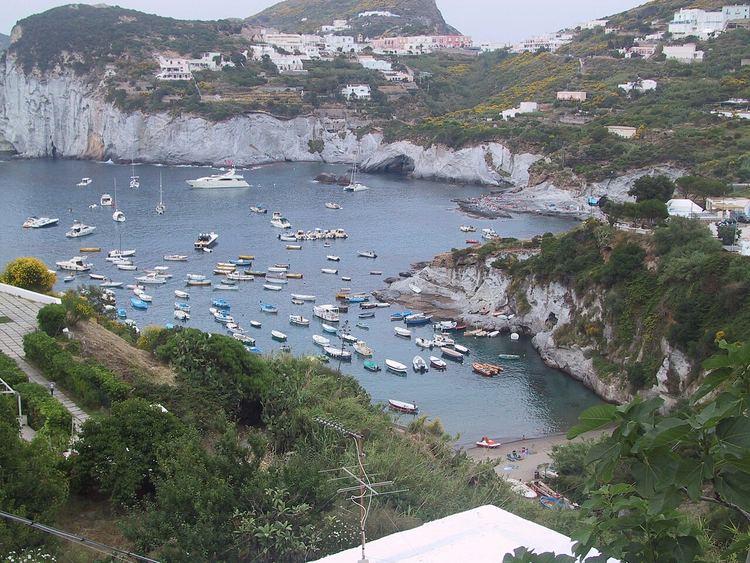
- How to get there: ferry from Formia or Anzio, then the island bus to Le Forna and a 15-minute walk (see map).
- Difficulty: ●○○○.
- Who it's for: those who combine swimming with exploring the island.
18. Cala Bianca, Campania
 © Anna Eden 86 · CC BY-SAPhoto: Anna Eden 86, CC BY-SA (https://creativecommons.org/licenses/by-sa/4.0), Wikimedia Commons
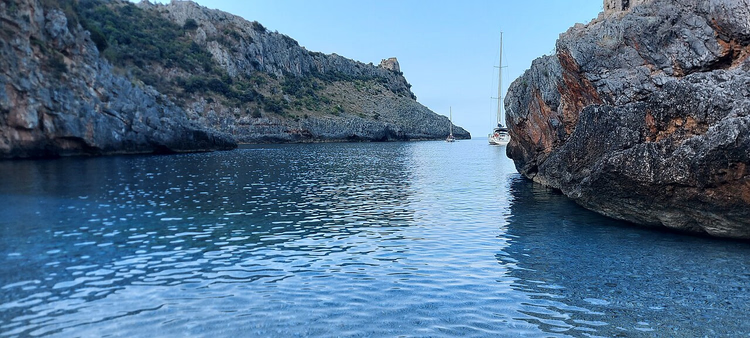
In Palinuro, one of the best corners of Cilento, it's easy to escape the crowd on the water. Cala Bianca lives up to its name: white pebbles and almost unreal clear water, with the cove itself lying in the heart of the Costa degli Infreschi marine reserve.
- How to get there: by kayak or small boat from the port of Palinuro (see map).
- Difficulty: ●●○○.
- The catch: in season you need to book a boat and a spot in the reserve zone.
19. Spiaggia di terzo cavone, basilicata
Spiaggia di Terzo Cavone looks like the ideal free beach: endless open space, fine golden sand, and a wild pine grove that provides shade. Nearby lies the WWF oasis Policoro Herakleia, so nature here is still intact. Sea turtles come ashore here, and in spring they lay their eggs.
- How to get there: along the SS106 toward Scanzano Jonico Marina (see map).
- Difficulty: ●○○○.
- Who it's for: families and lovers of long walks on the sand.
20. Baia di Ieranto, Campania
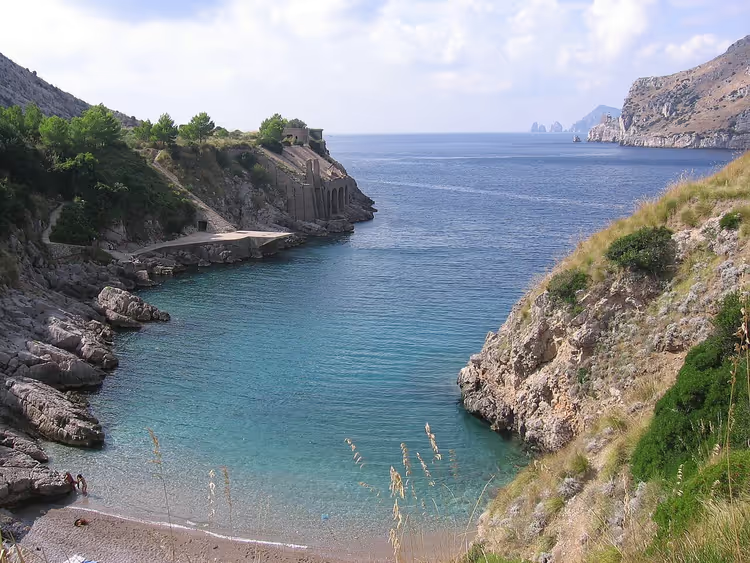 © Thomas Möllmann · CC BY-SAPhoto: Thomas Möllmann, CC BY-SA (http://creativecommons.org/licenses/by-sa/3.0/), Wikimedia Commons
Possibly the most impressive beach on the Sorrento Peninsula. The trail from Nerano takes about 45 minutes and deters most day-trippers, and the site is maintained by FAI. The cove offers a view of the Faraglioni off Capri, and at midday the water glows emerald. The Romans left their mark here too.
- Getting there: from Nerano along the FAI trail, about 45 minutes on foot (following the map).
- Difficulty: ●●●○.
- The catch: parking in Nerano is paid, and the trail is rocky in places.
Access rules: reserves and restrictions
Many beautiful beaches in Italy have gained restrictions in recent years, and this applies precisely to the places on this list. Check three things before you go.
- Protected areas: if the beach lies within a marine reserve, find out its category. In so-called zone A areas, swimming is often strictly prohibited.
- Booking: popular beaches require online reservations in high season. For Cala Violina in Tuscany, the entry fee is €1, as of 09/2026, official booking site.
- Environmental rules: local bans on smoking and single-use plastics apply on many stretches, and fines are issued on the spot.
The Costa degli Infreschi e della Masseta marine reserve was established in 2009, as of 09/2026, Ministry of the Environment website. There you will also find the rules for Cala Bianca from our list, and boat mooring and diving must be booked in advance.
The Conero park area has its own rules, verified on 09/12/2026 on the Conero park website. The Riviera del Conero is a rarity for the Adriatic because development has barely touched this coastline.
⁉️🤔 Frequently asked questions
Can you swim in Italy's marine reserves?
Swimming is allowed in most reserves, but there are exceptions. In zone A areas, for example around certain islands, entering the water is prohibited year-round. In zones B and C you can swim freely, but with restrictions for boats. Before your trip, check the zone category, since the rules change every season.
When is the water warmest in Italy?
The water stays warmest in September, after the peak season has passed. In summer it warms up faster in the south, then gradually cools down by October. For you, this means swimming in September is usually more comfortable than in June, and there are noticeably fewer people on the beaches.
Do you need to book a beach in advance?
Some beaches require online booking, but most places on the list remain open. Booking is needed where there is a protected area or a limit on cars, for example at Cala Violina. Book a few days ahead; in August spots fill up fastest.
Is a quiet beach suitable for kids?
It depends on how difficult the descent is. Where you need a rope or a boat, it's not worth trying with children. Zaiana, Caminia, Torre Borraco and Terzo Cavone work well for families: flat seabed and easy access.
How do you get to these beaches without a car?
Half the list is accessible only by car, but the island and boat options work without one. Ferries run to Ponza and Ventotene, and Cala Bianca and Baia di Ieranto can be reached by boat or on foot. For the rest, plan on renting a car.
In short: what's worth booking
Most beaches on the list are free and require no booking. Online reservations and fees apply to protected areas, popular beaches, boats and parking.
- If you're traveling with kids: Caminia, Zaiana and Terzo Cavone.
- If you want wild nature and are ready to walk: Cala Sisine, Punta Crena and Baia di Ieranto.
- If you're without a car: the islands of Ponza and Ventotene, with ferries running to them.
- If quiet matters in season: spots with no road access, such as Punta Crena and Cala Battaglia.
Book a boat and a spot in a protected area in advance, and plan your trip for June or September.

A small editorial team writing guides for independent travel. We travel ourselves, but we haven’t been everywhere, so we check prices, opening hours and how to get there against official sources.