
















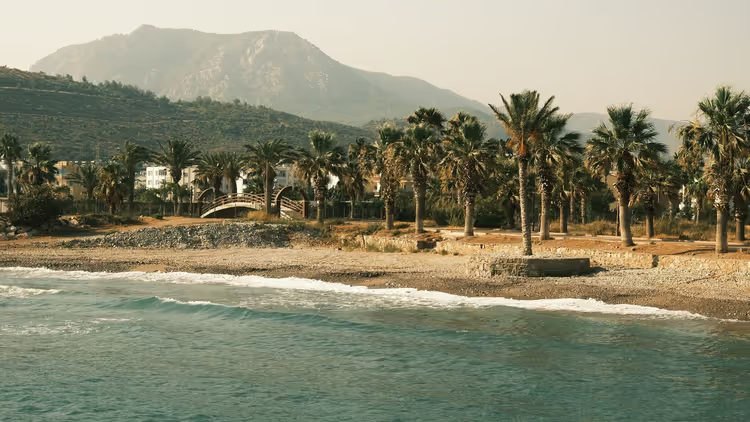
10 Things to do in Cyprus worth leaving your hotel for
Cyprus is easy to reduce to two weeks on the beach and a hotel with a pool. Then half the island stays off your radar. The Troodos Mountains, old Paphos, and donkey farms in the foothills lie beyond the coast, and from anywhere in the south you can reach them in a day. It's doable without a car too: some routes can be replaced with guided tours. Below are ten activities that work both for a short trip and a long vacation. We checked prices against official websites in September 2026.
Ad: this text contains affiliate links, we earn a commission from them, the price for you stays the same.
How the island is laid out and where to go
💡 In short:
- The south is compact: Limassol, Paphos, Ayia Napa, and Larnaca sit on the same side and are connected by intercity buses.
- Mix beach days with trips inland: mountains, villages, and old towns give you a completely different trip.
- Prices: 09/2026, checked on the official WaterWorld website.
The island is smaller than it looks on the map. Having your own car gives you freedom, but even without one you can cover the essentials: buses run between resorts, and the coastlines are easy to walk along. Plan one trip inland for every two beach days, so the trip doesn't turn into a race.
Below is a list of ten ideas: from the antiquities of Paphos to the wine villages of Troodos. For each item you'll find how to get there, the approximate cost, and an honest catch. If you're short on time, pick two or three inland trips and leave the rest for next time.
Idea | Who it's for | Best time |
|---|---|---|
Old Paphos | those traveling for history | morning or evening |
Aphrodite's Rock | a short stop along the way | before noon |
Ayia Napa | beaches and nightlife | June and September |
WaterWorld water park | families and groups | a weekday |
Troodos | cool air and monasteries | spring and autumn |
1. Old Paphos and the Tombs of the Kings
Paphos is first on the list not out of deference to antiquity. Here the fortress on the Kato Paphos waterfront, the mosaics of Roman villas, and the rock-cut Tombs of the Kings all sit side by side. Old Paphos is a UNESCO World Heritage Site, and signs lead from the port to the archaeological zone. You can cover the walk in half a day if you set out in the morning and don't rush.
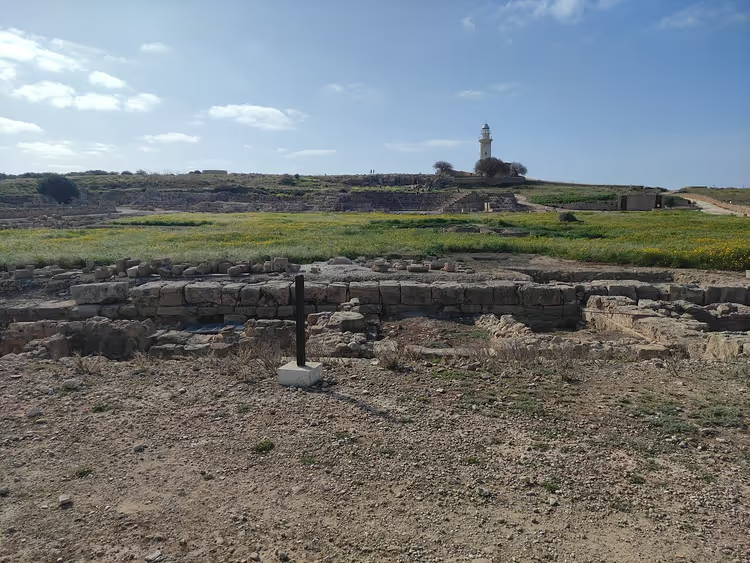 © Fry72, Karel Frydrýšek · CC BY-SAPhoto: Fry72, Karel Frydrýšek, CC BY-SA (https://creativecommons.org/licenses/by-sa/4.0), Wikimedia Commons
In the morning it's quieter here: you read the plaques by the mosaics without the crowds.
- How to get there: intercity bus from Limassol or Larnaca, then walk along the port.
- Cost: tickets are sold on site, opening hours differ in winter and summer.
- Who it's for: those who like walking and reading the plaques by the mosaics.
- The catch: in summer the open areas get scorching hot at midday, bring water and a hat.
2. Aphrodite's Rock near Paphos
 © This photo was taken by Anton Zelenov . Please credit this with : Photo : Anton Zelenov in the immediate vicinity of the image. If you use one of my photos, please email me (account needed) or leave m · CC BY-SAPhoto: This photo was taken by Anton Zelenov . Please credit this with : Photo : Anton Zelenov in the immediate vicinity of the image. If you use one of my photos, please email me (account needed) or leave m, CC BY-SA (https://creativecommons.org/licenses/by-sa/4.0), Wikimedia Commons
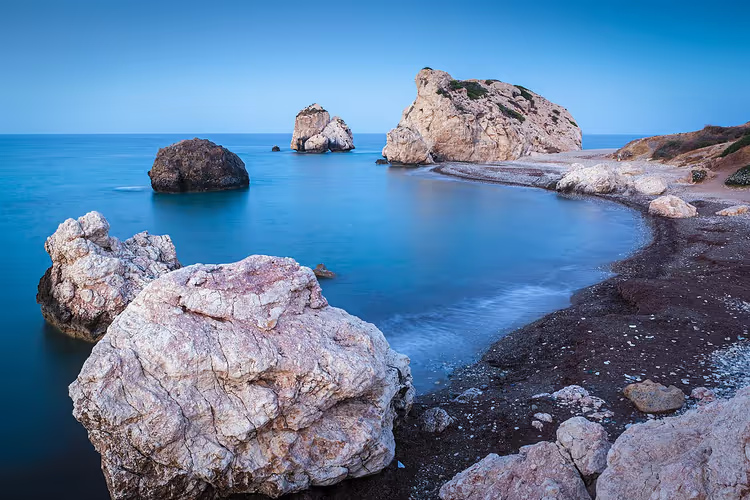
Aphrodite's Rock (Petra tou Romiou) stands on the south coast between Paphos and Limassol, almost right by the road. According to myth, this is where the goddess emerged from the sea foam. The view of the boulder in the water opens up from a viewing platform above the highway, so you can make the stop along the way. Go into the water on a calm day: near the rocks there is coarse pebble and a noticeable swell.
- How to get there: your own car, a taxi, or a bus stop on the coastal road.
- Cost: free entry, free parking.
- Who it's for: a short stop and photos with water and rock.
- The catch: the wind here is stronger than on Limassol beaches, and there are no umbrellas.
3. Ayia Napa and club nights
Ayia Napa lives in two seasons: beaches by day, clubs along the central streets by night. During the day the area looks calm, and the beaches start a couple of blocks from the bars. If you're going for the music, pick a Friday-to-Saturday night and keep in mind that after closing time taxis get more expensive and the line grows.
 © Максим Улитин · CC BYPhoto: Максим Улитин, CC BY (https://creativecommons.org/licenses/by/3.0), Wikimedia Commons
It's better to head back to Limassol or Paphos early. For a first trip, one night is enough: see the center, then decide whether it's worth coming back.
- How to get there: intercity bus by day, taxi or transfer at night.
- Cost: club entry is usually paid, and drinks inside cost more than at stores.
- Who it's for: groups and those going for the nightlife.
- Not for: a quiet vacation with kids, the noise lasts almost until morning.
- The catch: the line to popular clubs grows after midnight, come earlier.
4. WaterWorld water park in Ayia Napa
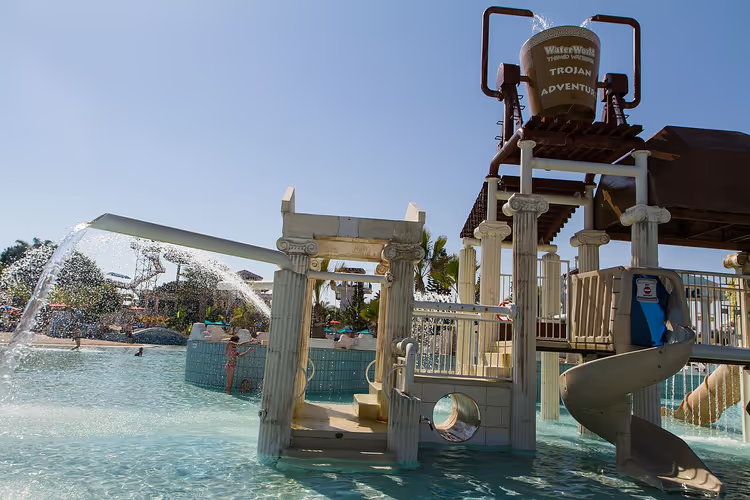
The WaterWorld water park is themed around Greek myths and has more than 30 slides and attractions (as of 15.09.2026, the park's official website). An adult ticket for the 2026 season costs €49 when purchased online instead of €52 at the gate, a child ticket for ages 3-12 costs €32 instead of €34, and toddlers under two get in free (as of 15.09.2026, the park's price list). Online tickets include a free second day, valid in September or October. If you arrive at opening time, the slides and wave pool will be empty.
 © Максим Улитин · CC BYPhoto: Максим Улитин, CC BY (https://creativecommons.org/licenses/by/3.0), Wikimedia Commons
Plan at least half a day for the whole park, ideally a full day: the grounds are large, and lines eat up time. A change of clothes and sunscreen will come in handy.
- How to get there: Ayia Thekla road 18, from central Ayia Napa by bus or taxi.
- Cost: online tickets are cheaper than at the gate, with a free second day (as of 15.09.2026, the park's official website).
- Who it's for: families with kids and groups for a full day: there are nine restaurants and bars on site.
- The catch: in July and August the lines for the top slides are long; September is more comfortable.
5. Donkey farms in the foothills
Donkey rides, rural life, and tastings are all in one place, so a farm visit is easy to combine with lunch in a village. You'll see how cheese and bread are made, sample homemade sweets, and take a ride around the ring on a donkey. Kids usually enjoy the animals more, while adults enjoy talking with the owners about farm life. Check visiting hours in advance: the farms receive guests on a schedule.
- How to get there: by car or an organized tour; public transport doesn't go here.
- Cost: admission is paid; the exact price is confirmed when you book a time slot.
- Who it's for: families with kids and anyone tired of lounging on a sunbed.
- The catch: getting there without a car is inconvenient, and in the midday heat the animals are sluggish.
6. Monasteries and churches of Troodos
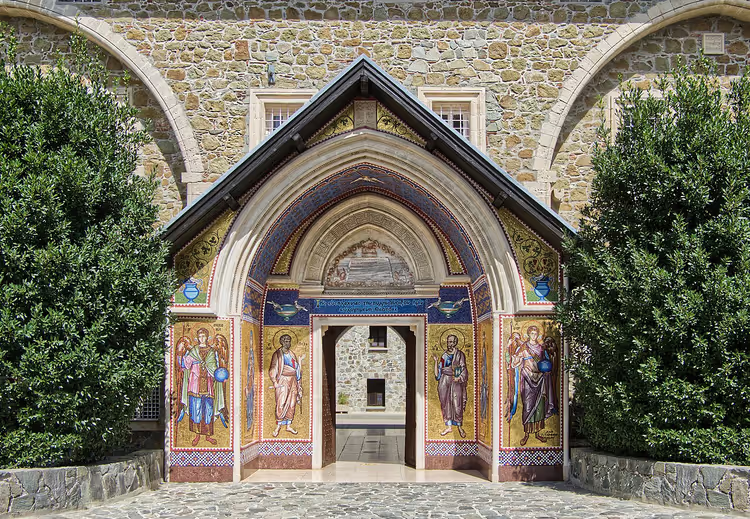 © Berthold Werner · CC BY-SAPhoto: Berthold Werner, CC BY-SA (https://creativecommons.org/licenses/by-sa/4.0), Wikimedia Commons
The island's main shrines are in the mountains: Kykkos Monastery with its revered icon and the painted churches of Troodos. The frescoes in these churches are listed as a World Heritage Site, and the island's religious routes are described on the Cyprus tourism office portal. It's noticeably cooler in the mountains than on the coast, so you can easily combine the trip with lunch at a village tavern. It's best to cover your shoulders and knees: active monasteries have a dress code.
- How to get there: by car or a tour from Limassol and Paphos; the mountain roads are winding.
- Cost: entry to most churches and monasteries is free, with optional donations.
- Who it's for: those traveling for history, not just for the sea.
- The catch: it's windy at the passes; a light jacket is useful even in summer.
7. The sea, boats, and fishing
If the beach isn't enough for you, head out to sea: coastal cruises and boat fishing depart from the ports of Paphos, Larnaca, Limassol, and Ayia Napa. The captain provides the tackle, but the catch depends on the season, so don't expect a guaranteed trophy. For your first trip, book a morning departure: the sea is calmer and the sun is gentler. Routes to Cape Greco and the Blue Lagoon are easy to choose by duration: boat trips and cruises on GetYourGuide.
- How to get there: ports in Limassol, Larnaca, Paphos, and Ayia Napa, a short walk from the waterfront.
- Cost: the price depends on the trip length and boat type, including tackle.
- Who it's for: those who want to trade the sunbed for the water and a view from the deck.
- The catch: in strong winds trips are canceled, and rough seas can ruin the day for people prone to seasickness.
8. Renting a car and longer trips
Traffic on Cyprus is left-hand, so the first half hour in a city feels unusual. But your own car opens up villages, donkey farms and mountain roads where buses don't go. To rent, you need a driver's license, passport and a card for the deposit. Inspect the body and interior before signing, and take insurance with no deductible. Compare car rental prices on DiscoverCars in advance: in season, cheap classes sell out quickly.
- How to get there: rental is available at Larnaca and Paphos airports and in tourist centers.
- Cost: depends on the season and car class, the deposit is held on your card.
- Who it's for: for those planning two or more trips inland.
- The catch: parking in old centers is paid and tight, and finding a spot in the evening is harder.
9. Cypriot cuisine and Commandaria wine
Cypriot cuisine deserves its own place on the list of impressions. Order meze to try a dozen dishes in one dinner, and get grilled halloumi with village bread. Commandaria wine has been made on the island since ancient times, and wine routes are described on the same tourism office portal. You should get to a village tavern rather than limiting yourself to the hotel: portions are more generous there and the bill is lower.
- How to get there: taverns are in every village, tourist centers are more expensive.
- Cost: dinner in a village is cheaper than on the resort's first line.
- Who it's for: for those who travel for food and wine, not just for the sea.
- The catch: meze is large, for two people order one set and add more as you go.
10. Souvenirs that will make it home
About souvenirs, in short: buy what you can't find at the store near your home. Commandaria wine, carob syrup, olive oil, spices and Lefkara embroidery are exactly what people bring back for. Pack pottery and icons so they survive the flight, and look for cosmetics made with local herbs in specialty shops. Before checkout, check how much your bottles weigh: alcohol quickly eats up your baggage allowance.
- How to get there: Larnaca and Paphos markets, shops in villages and near monasteries.
- Cost: prices at the most touristy spots are higher than in villages.
- Who it's for: for those bringing gifts to family and colleagues.
- The catch: glass and ceramics require packing, otherwise they'll arrive as shards.
⁉️🤔 Frequently asked questions
How much does a day at WaterWorld water park cost?
An adult online ticket for the 2026 season costs 49 €, a child ticket for ages 3-12 costs 32 €, and toddlers under two enter free (as of 15.09.2026, tickets on the official website). The same tickets at the box office cost several euros more, and online purchases include a free second day. That way you turn one visit into two.
How many days do you need for a first trip to Cyprus?
A week is enough to cover the beaches and two trips inland: old Paphos and the Troodos mountains. For a short trip, leave one day for the water park and one evening in Ayia Napa. The rest is sea, food and villages near your hotel. You don't need to rush: distances in the south are small.
Do you need a car if you're staying on the coast?
For beaches, no: intercity buses run between resorts, and it's easy to walk along the waterfronts. A car is needed for farms, monasteries and mountain villages, where public transport hardly goes. If you don't want to drive on the left, take excursions with transfers.
When is the best time to go to fit everything in?
Beach season runs from late spring to October, with peak heat in midsummer. September and the first half of October offer a warm sea and comfortable walks around towns. In spring the island is green, but the water is cooler and evenings are fresh. In winter, museums and monasteries are open, but beaches empty out.
What should you order at a tavern if it's your first time in Cyprus?
Start with meze and grilled halloumi, then get the fish of the day and meat on coals. Commandaria or a local dry wine goes well with the food.
In short: what's worth booking
Cyprus forgives improvisation, but a few things are better kept under control in advance. The water park, boat trips and a car in season are booked days ahead because options melt away. If you have a week: take a trip to Paphos, a day in Troodos and an evening in Ayia Napa. If you're with kids: plan WaterWorld and a donkey farm. If you only want the sea: stick to beaches and one boat trip. For stays near the nightlife, check hotels in Ayia Napa on Trip.com and choose options within walking distance of the center.

A small editorial team writing guides for independent travel. We travel ourselves, but we haven’t been everywhere, so we check prices, opening hours and how to get there against official sources.