
















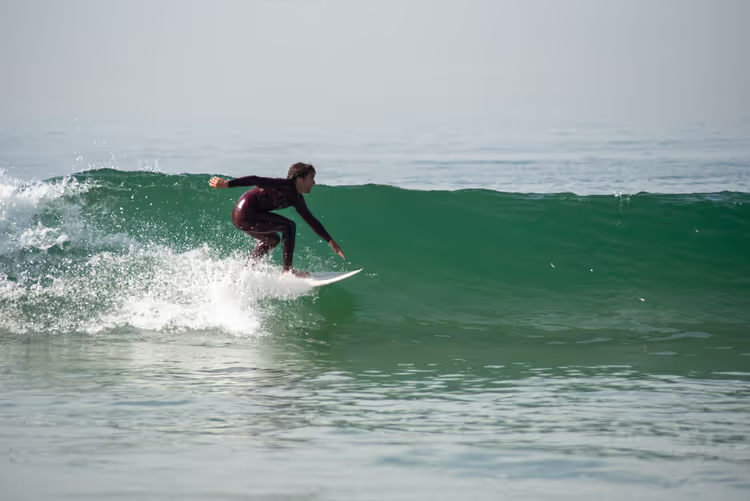
Where to surf in Portugal: 7 spots for beginners and pros
The Atlantic doesn't quiet down along the coast of Portugal for almost the entire year. Here you can catch both your first whitecaps and waves the size of a house, so you should choose a spot based on your level, not just your vacation dates.
Below are seven spots with verified details: five on the central and northern coast, and two more in the south of the country. For each one, we've put together the right skill level, how to get there, and an honest catch.
When to go and how to choose a spot
💡 In short:
- From early fall through spring, the strongest waves reach the shore (according to Visit Portugal).
- From May through September, the ocean is calmer, so it's easier for a beginner to get up on a board for the first time.
- Lessons and gear rental are offered by surf schools at almost every spot along the coast.
- Spot access and wave season: 09/2026, verified on the official Portugal tourism portal.
The ocean along the Portuguese coast never goes still for a single month, so the surfing season here lasts all year round. In summer, the waves are gentler, and beginners feel more confident. From early fall, the sea turns wild, and more experienced surfers head out to the spots (as of: 09/2026, Visit Portugal).
 © Dietmar Rabich · CC BY-SAPhoto: Dietmar Rabich, CC BY-SA (https://creativecommons.org/licenses/by-sa/4.0), Wikimedia Commons
The choice depends not only on the season but also on the beach itself. There are bays where the wave is almost always small, and there are stretches you'd better avoid without experience and preparation.
Period | Waves | Who it suits |
|---|---|---|
May-September | Gentler and lower | Beginners and families |
October-April | Higher and more powerful | Confident surfers and pros |
Our picks by level:
Spot | Level | What makes it good |
|---|---|---|
Nazaré | Pro | Giant waves at Praia do Norte |
Peniche | Beginner and pro | Supertubos barrels and windy beaches |
Ericeira | Beginner and pro | Europe's first surfing reserve |
Espinho | Beginner | Calm water at Praia da Baía near Porto |
Figueira da Foz | Pro | Marathon wave at Praia de Buarcos |
Sagres | Beginner and pro | Ocean on three sides and southern warmth |
Costa Vicentina | Pro | Wild waves inside a natural park |
1. Nazaré
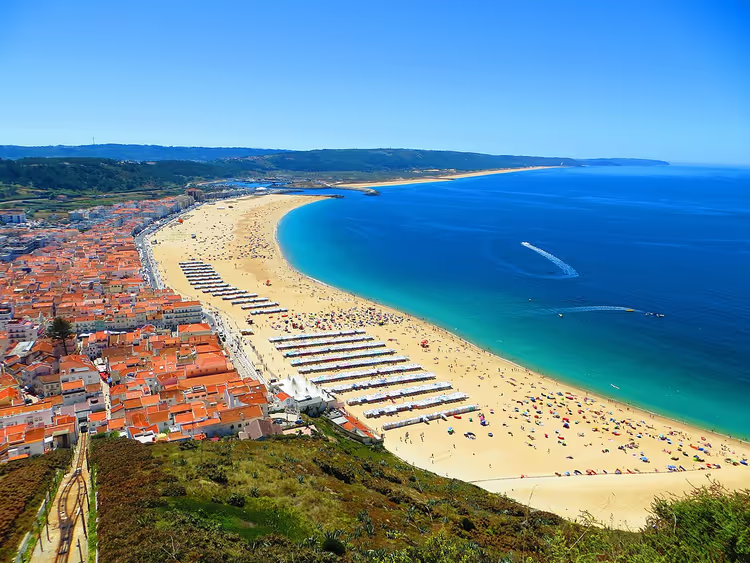
Even people far from surfing have heard of Nazaré, where waves sometimes reach the height of a ten-story building. The reason is an underwater canyon: it stretches for 230 km and drops down to 5,000 m (as of: 09/2026, Visit Portugal).
 © Mister No · CC BYPhoto: Mister No, CC BY (https://creativecommons.org/licenses/by/3.0), Wikimedia Commons
For the giants, people head to Praia do Norte. German surfer Sebastian Steudtner rode a 26.21 m wave here on October 29, 2020 (as of: Guinness World Records). The best place to watch is from the viewpoint at Fort São Miguel Arcanjo.
By mid-spring, the ocean calms down, and the waves here become accessible to confident surfers.
- Who it's for: experienced surfers who need a big wave.
- Not for: beginners who are just learning to stand on a board.
- The catch: in high season, the town is packed with tourists.
If you don't have much experience, the town beach Praia da Nazaré behind the lighthouse will suit you. The ocean is calmer there, and you can learn without rushing. Nazaré itself is small, but it has narrow streets, restaurants, and souvenir shops.
2. Peniche
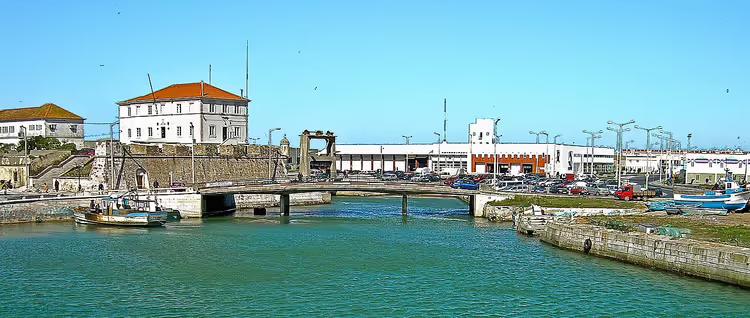
Peniche is called the surf capital of Portugal, and the name is well earned. The peninsula faces the ocean on two sides: to the north you'll find the beaches of Belgas, Almagreira, Lagido, and Norte, and to the south Molhe Leste, Medão Grande, Consolação, and Batel (according to Visit Portugal).
 © Vitor Oliveira from Torres Vedras, PORTUGAL · CC BY-SAPhoto: Vitor Oliveira from Torres Vedras, PORTUGAL, CC BY-SA (https://creativecommons.org/licenses/by-sa/2.0), Wikimedia Commons
On the south shore you'll find Praia do Medão Grande, which locals call Supertubos because of the wave shape. Every year it hosts the Meo Rip Curl Pro, a stop on the World Surf League Championship Tour (according to Visit Portugal).
The town sits on a peninsula connected to the mainland by a narrow isthmus. The main draw here is the cliffs and headlands: you can spend hours just taking in their beauty. If you like fishing, join the anglers near the Farol do Cabo Carvoeiro lighthouse.
- Who it's for: beginners and experienced surfers on the same coastline.
- The catch: the wind, which you can hardly escape, so bring a jacket and a beanie for the evening.
3. Ericeira
Ericeira grew out of a fishing village in the municipality of Mafra, and it's about 40 km from Lisbon, roughly a half-hour drive (as of 09/2026, Visit Portugal).
 © Jules Verne Times Two · CC BY-SAPhoto: Jules Verne Times Two, CC BY-SA (https://creativecommons.org/licenses/by-sa/4.0), Wikimedia Commons
This coastline was recognized as the first World Surfing Reserve in Europe and the second in the world by the Save the Waves Coalition. Within its boundaries there are several world-class waves.
Beginners have places to get on a board here too: Praia do Sul and Foz do Lizandro are sheltered from the wind, so learning there is calmer. Experienced surfers head to Coxos, Ribeira d'Ilhas and Baía dos Dois Irmãos, which are considered the most challenging in the region (according to Visit Portugal).
Today it's a small resort town with hotels, restaurants and souvenir shops. Come in the morning, because by midday the popular spots get crowded.
- Who it's for: those who want to combine their first waves with city life.
- The catch: the spots are scattered along the coast, so getting around without a car is inconvenient.
4. Espinho
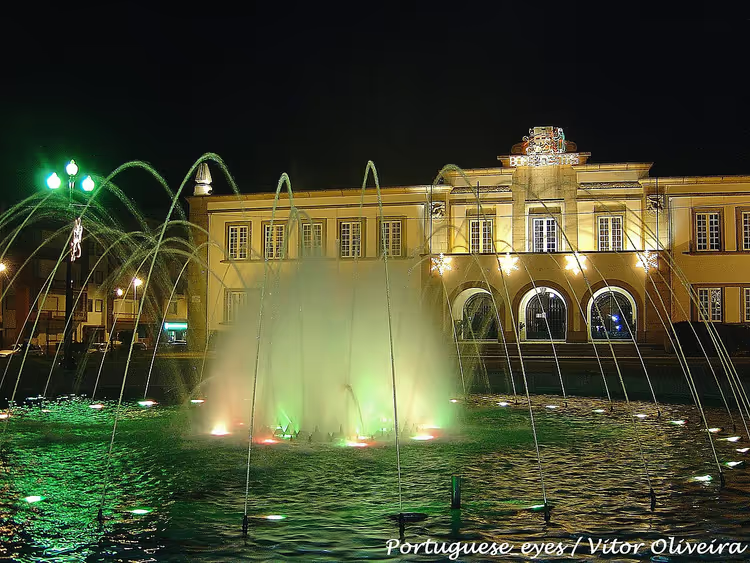
Espinho sits right next to Porto, and if you get bored, you can hop on a train and quickly find yourself in the northern capital. By Portuguese standards it's a large town, although it has few sights. But in the evening there's a lively atmosphere, helped by the casino right on the shore.
 © Vitor Oliveira from Torres Vedras, PORTUGAL · CC BY-SAPhoto: Vitor Oliveira from Torres Vedras, PORTUGAL, CC BY-SA (https://creativecommons.org/licenses/by-sa/2.0), Wikimedia Commons
For surfers there are two zones: near Praia da Baía the waves are calmer, so there are more beginners there, while closer to Praia da Frente Azul the water gets more powerful and experienced surfers head there.
- Who it's for: those who combine surfing with a city break.
- The catch: there are no big museums or parks here, so for cultural activities you go to Porto.
5. Figueira da Foz
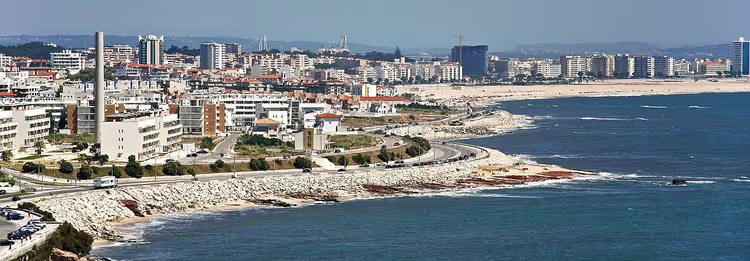
Figueira da Foz lies almost halfway between Lisbon and Porto, and its historic center is made up of elegant architecture. Nearby, the Mondego River flows into the ocean, originating at the highest mountain in mainland Portugal.
 © Vitor Oliveira from Torres Vedras, PORTUGAL · CC BY-SAPhoto: Vitor Oliveira from Torres Vedras, PORTUGAL, CC BY-SA (https://creativecommons.org/licenses/by-sa/2.0), Wikimedia Commons
The waterfront is built up with modern high-rises, which is unusual for Portugal, but the sandy stretch here is wide and there is room for everyone. In winter, Praia de Buarcos produces waves up to 800 m long, considered the longest in Europe. Praia do Cabedelo hosted Portugal's first world surfing championship in the 1980s (as of 09/2026, Visit Portugal).
If you came to catch waves, both beaches are worth putting next to each other in your itinerary. They are separated by the Mondego estuary, so allow time for the drive between them.
- Who it's for: surfers who love long lines and longboards.
- The catch: the shore is built up with high-rises, so you won't see a resort panorama.
6. Sagres
Sagres opens the southern part of the list, where it's warmer. Here surfing is easy to combine with a beach vacation.
 © Georges Jansoone · CC BYPhoto: Georges Jansoone, CC BY (https://creativecommons.org/licenses/by/2.5), Wikimedia Commons
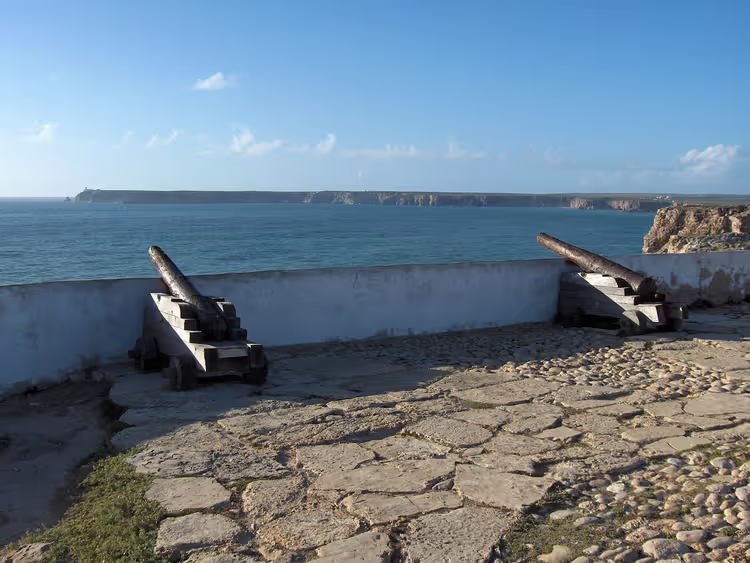
The town occupies a high headland on the country's southwestern tip, so the ocean surrounds it on three sides and the waves here are powerful and frequent. The headland was once considered the edge of the earth.
The beaches of Mareta, Tonel, and Martinhal sit along the rocky shores, and there is room for both beginners and experienced surfers. People come here from September through May, and in winter the beaches are almost empty.
- Who it's for: those who want waves and sun in one trip.
- The catch: in July and August, accommodation in the south gets more expensive.
7. Costa Vicentina
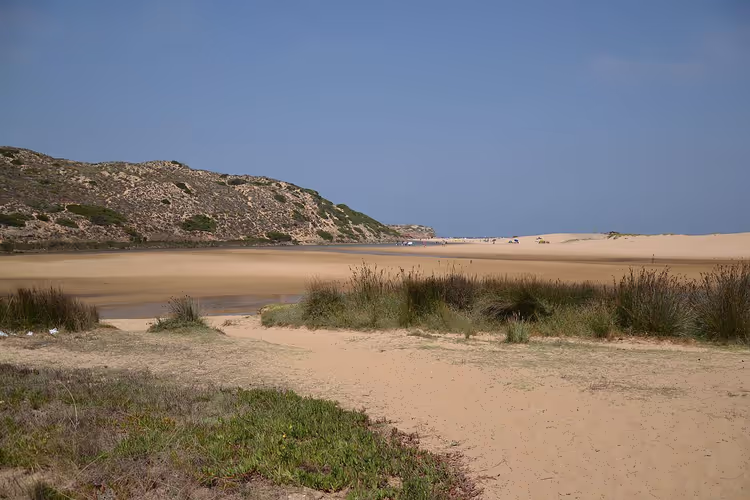
The Costa Vicentina natural park stretches along the wild western shore of the south, and Praia da Arrifana near the fishing town of Aljezur is surrounded by scenic cliffs. The waves here are wild, so they are more suited to intermediate and pro surfers.
 © Rossella Vignola (OBC) · CC BY-SAPhoto: Rossella Vignola (OBC), CC BY-SA (https://creativecommons.org/licenses/by-sa/4.0), Wikimedia Commons
Beginners are better off going to Praia do Amado, where the wave is gentler and learning is easier. Between sessions, you can walk through the park's forests and look down at the ocean from above. The sunset here is worth a separate trip.
- Who it's for: intermediate and pro surfers who love wild nature.
- The catch: the spots are far from each other, so you'll need a car.
⁉️🤔 Frequently asked questions
Do I need my own board and wetsuit?
No, the school will pick a board for your level and a wetsuit for the season. Bringing your own board is only worth it for experienced surfers who already know their waves.
How does the south differ from the center?
Waves in Sagres and Costa Vicentina come from the Atlantic year-round. In July and August, accommodation there is more expensive and there are noticeably more people.
In short: what to book
If you have little experience, go for a town beach in Nazaré, Praia do Sul, or Praia do Amado. If you are confident on a board, your route runs through Praia do Norte, Supertubos, and Coxos. If you are traveling with family and want warmth, look south and choose Sagres.
Pick a spot that matches your level, check the wave forecast, and book accommodation in advance. In high season, there are few available places on the coast, and prices go up.

A small editorial team writing guides for independent travel. We travel ourselves, but we haven’t been everywhere, so we check prices, opening hours and how to get there against official sources.