
















What to see in Toronto: 12 main places and practical tips
Toronto is one of the largest cities in Canada. Downtown skyscrapers, a huge zoo, and world-class museums all sit side by side here.
Many people come for two or three days and only manage to see the CN Tower. We put together 12 places that are worth your time, and added distances, opening hours, and an honest catch for each one.
You can save on tickets right away by buying them online in advance.
Ad: this article contains affiliate links, we earn a commission if you book through them, at no extra cost to you.
What to see in Toronto: our picks
💡 In short:
- Start with the CN Tower and the historic center, and save museums for a weekday morning.
- Buy tickets online: that way you skip the ticket counter and pick a convenient time.
- Prices and opening hours: 09/2026, verified on the official Toronto Zoo website.
Below is a table for quickly choosing a place.
Place | Why it is interesting | When to go |
|---|---|---|
Toronto Zoo | one of the largest zoos in the world | weekday morning |
CN Tower | observation decks and the 360 restaurant | clear weather, before sunset |
Rogers Centre | baseball under a retractable roof | game day |
Toronto City Hall | futuristic towers and an ice rink in winter | evening |
Hockey Hall of Fame | the Stanley Cup and the greatest players | morning |
Royal Ontario Museum | ancient Egypt and the glass "Crystal" | Tuesday to Sunday |
Art Gallery of Ontario | Henry Moore and Canadian painting | first Wednesday of the month |
Ontario Science Centre | closed, you need an alternative | not operating |
Yonge Street | the city’s main axis and Eaton Centre | during the day |
Bay Street and Distillery District | skyscrapers and the old distillery quarter | afternoon |
High Park | pond, cherry blossoms, and a free zoo | spring, morning |
Niagara Falls | a waterfall an hour and a half from the city | full day |
One day is enough if you pick three places in a row.
 © Martin St-Amant ( S23678 ) · CC BY-SAPhoto: Martin St-Amant ( S23678 ), CC BY-SA (https://creativecommons.org/licenses/by-sa/3.0), Wikimedia Commons
Toronto Zoo
Toronto Zoo occupies a huge area in the Rouge River valley on the east side of the city. The zones are organized by continent: from the African savanna to the northern tundra.
A mini train with cars runs through the grounds. Without it, you will not be able to cover the whole zoo in a day. Plan for at least half a day.
It is home not only to North American animals, but also to species from other continents. Many species are part of international conservation programs. Staff also run dedicated programs for children: there is a summer camp and overnight camping right on the grounds.
The zoo is convenient for families: the paths are wide, and there are cafes and picnic areas. Part of the route goes uphill, so wear comfortable shoes.
- How to get there: about 35 km from downtown, by car or by GO train to Rouge Hill station, then by bus (per the map).
- Tickets: dynamic pricing, 5% off when you buy more than three days in advance (as of 09/2026, Toronto Zoo).
- Time: from four hours, ideally a full day.
- The catch: the rate depends on the date, and tickets cost more on popular days (per the official website).
CN Tower
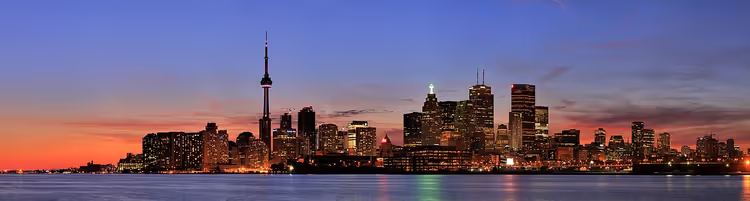
The CN Tower rises to 553 meters and remains the city’s main landmark (per the tower’s website, 09/2026). The observation decks are open to visitors, and the 360 restaurant operates on the upper level.
 © Antony-22 · CC BY-SAPhoto: Antony-22, CC BY-SA (https://creativecommons.org/licenses/by-sa/4.0), Wikimedia Commons
High-speed elevators take you to the top in just a few minutes. The glass floor in one of the galleries gives you a view of the city directly under your feet. On a clear day, the panorama stretches for dozens of kilometers.
You do not need a separate ticket for dinner at 360 Restaurant. Sunset slots go faster, so book your time in advance.
From Union Station, you can walk to the tower in five minutes (per the map).
- Address: 290 Bremner Blvd, next to Union Station (according to the official website, 09/2026).
- Tickets: online for a specific time slot.
- Time: one and a half to two hours.
- The catch: dinner at the 360 Restaurant requires a minimum spend of 75 CAD per person (as of 09/2026, CN Tower).
Rogers Centre
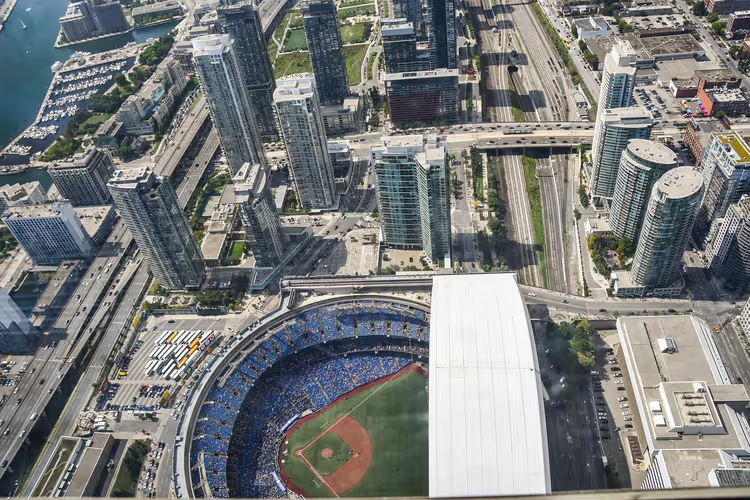
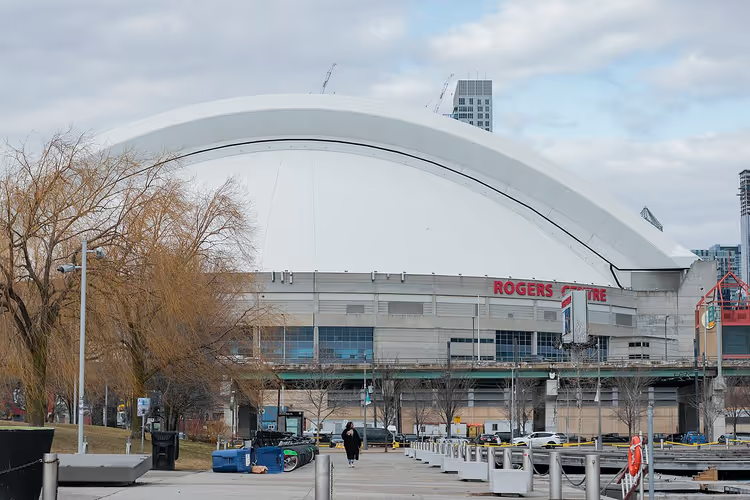
Rogers Centre, formerly SkyDome, sits at the foot of the CN Tower. It is the home stadium of the Toronto Blue Jays and has a retractable roof: in good weather, it is opened right during the game.
 © Fabian Roudra Baroi · CC BY-SAPhoto: Fabian Roudra Baroi, CC BY-SA (https://creativecommons.org/licenses/by-sa/4.0), Wikimedia Commons
A whole little town is hidden under the stands: restaurants, a theater, and a hotel. Stadium tours run on days without games.
Check the Blue Jays schedule. Baseball is popular in Toronto, and weekend tickets sell out in advance.
- Getting there: on foot from Union Station (see map).
- Time: one hour for the tour, three to four hours for a game.
- The catch: you can only get inside with a game ticket or on a tour.
Toronto city hall and Nathan Phillips square
Toronto City Hall draws attention with its two curved towers and the "flying saucer" council chamber between them. The architects wanted to show the city of the future.
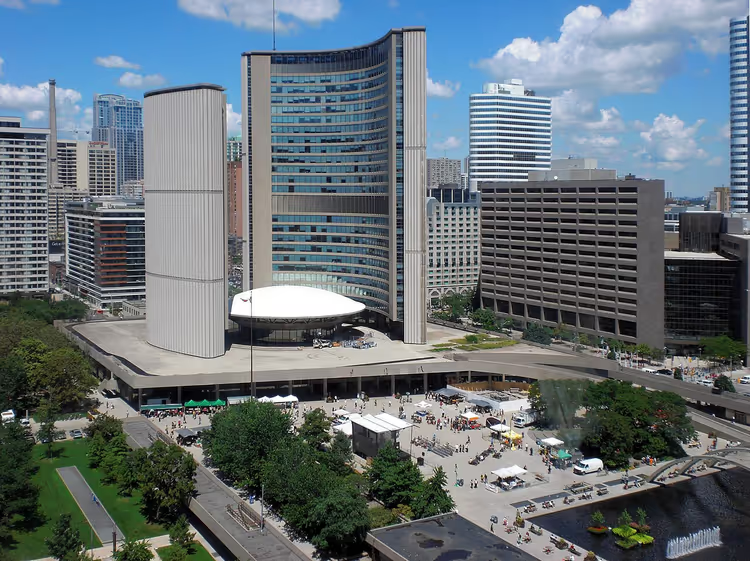 © Jerome Decq · CC BYPhoto: Jerome Decq, CC BY (https://creativecommons.org/licenses/by/2.0), Wikimedia Commons
The square in front of City Hall is active all year round. In winter, an ice rink is set up here; in summer, concerts and markets take place. Tourists come here in the evening, when the lights are turned on.
Nearby stands Old City Hall, a historic courthouse. Together with City Hall, it makes a great photo opportunity.
- Cost: the square and lobby are free to visit.
- Time: half an hour to an hour.
- The catch: the square is open-air, so there is nowhere to hide from rain or heat.
Hockey Hall of Fame
Canada lives and breathes hockey, and the Hockey Hall of Fame explains why. The collection is housed in the Brookfield Place complex, a short walk from Union Station.
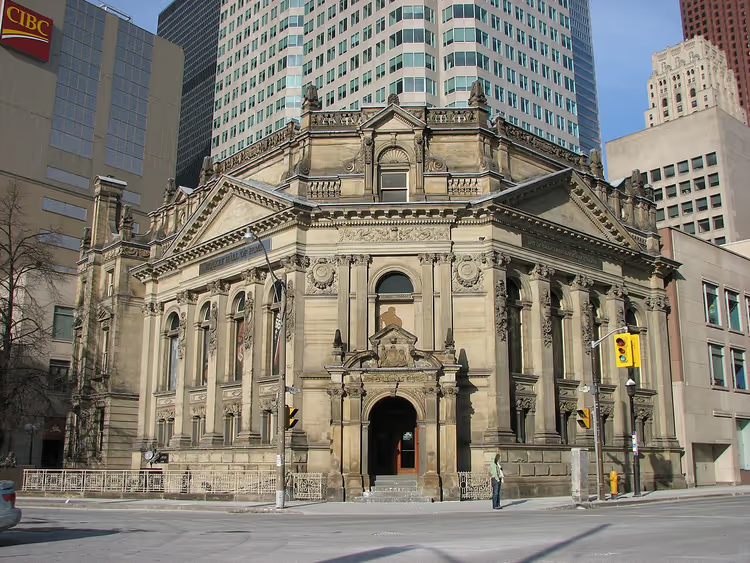 © Ian Muttoo · CC BY-SAPhoto: Ian Muttoo, CC BY-SA (https://creativecommons.org/licenses/by-sa/2.0), Wikimedia Commons
The main exhibit is the Stanley Cup, which stands in a separate room. Nearby, interactive zones let you shoot a puck at a real goal and try on goalie equipment.
- Where: Brookfield Place complex on Yonge Street (according to Hockey Hall of Fame, 09/2026).
- Time: one and a half to two hours.
- The catch: the museum is entirely dedicated to hockey, so companions with no interest in the game will be bored.
Royal Ontario Museum (ROM)
The Royal Ontario Museum is considered the largest museum in the country. The collection includes about 13 million objects across 40 galleries (according to ROM, 09/2026).
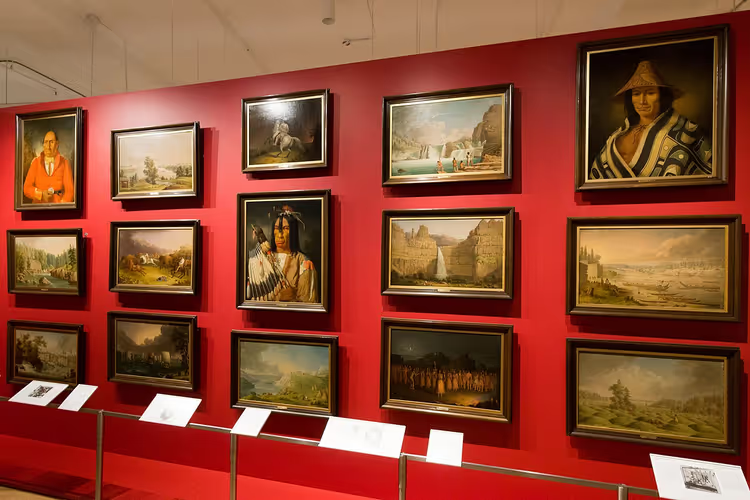
The glass "Crystal" by Michael Lee-Chin deserves special attention: it looks like an exhibit itself. Inside, you will find galleries of Ancient Egypt, Ancient Greece, and Africa, as well as the history of Canada.
The museum is closed on Mondays and open from morning to evening on other days (according to the ROM schedule, 09/2026). On the third Tuesday of the month, evening admission is free.
- Cost: general admission; free on the evening of the third Tuesday of the month (as of 09/2026, museum schedule).
- Time: two to three hours.
- The catch: closed on Mondays, and on the free evening there is a line at the entrance.
Art Gallery of Ontario (AGO)
The Art Gallery of Ontario holds more than 90,000 works (according to AGO, 09/2026). It is also home to the largest public collection of Henry Moore's work.
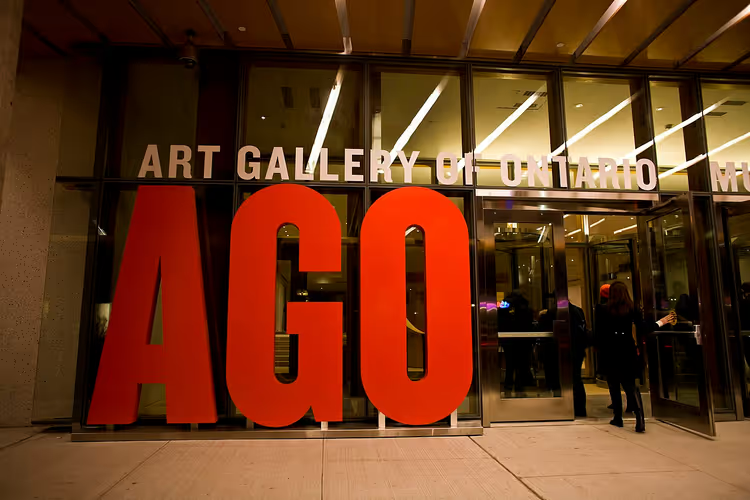 © Owen Byrne from Ottawa, Canada · CC BYPhoto: Owen Byrne from Ottawa, Canada, CC BY (https://creativecommons.org/licenses/by/2.0), Wikimedia Commons
The collection spans Canadian painting, European art, and photography. The connections between buildings let you move through several eras in a single evening.
The address is easy to navigate: 317 Dundas Street West, closest subway station St. Patrick (according to AGO, 09/2026). On the first Wednesday of the month, evening admission is free, and visitors under 25 from Ontario always get in free.
- Cost: general admission; free on the evening of the first Wednesday of the month (as of 09/2026, AGO).
- Time: two hours minimum.
- The catch: the collection is huge, so in one visit you will only see part of the galleries.
Ontario Science Centre
The Ontario Science Centre has been closed since June 21, 2024. The building on Don Mills Road was deemed unsafe: engineers found serious problems in the roof panels (according to the official statement, 09/2026).
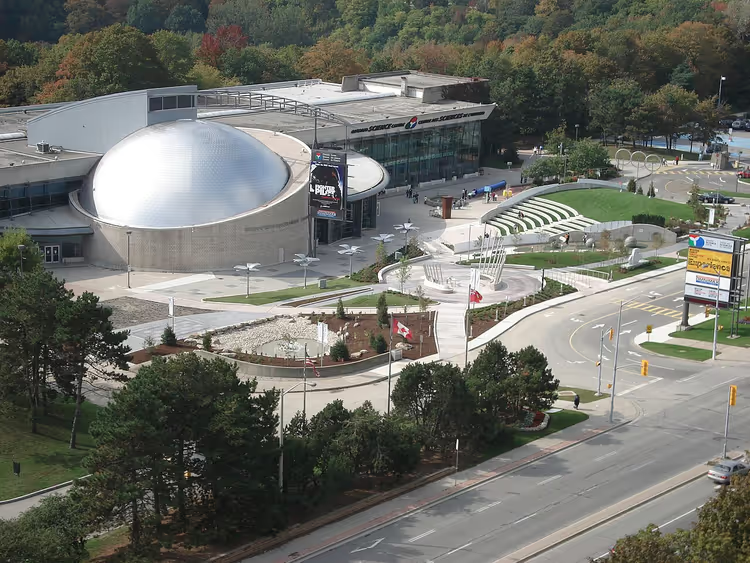
Before the closure, the centre featured hundreds of interactive exhibits, from botany to physics. Any visitor could conduct their own experiment. The OMNIMAX theater with its hemispherical screen closed along with the building.
If you were planning a visit, check the news. Authorities are looking for a temporary location and deciding the fate of the collection. Many guidebooks still describe the centre as open.
- Status: closed since 06/21/2024 (as of 09/2026, Closure announcement).
- Hours: not operating.
- The catch: you can't go inside, and part of the exhibition is inaccessible.
Yonge Street
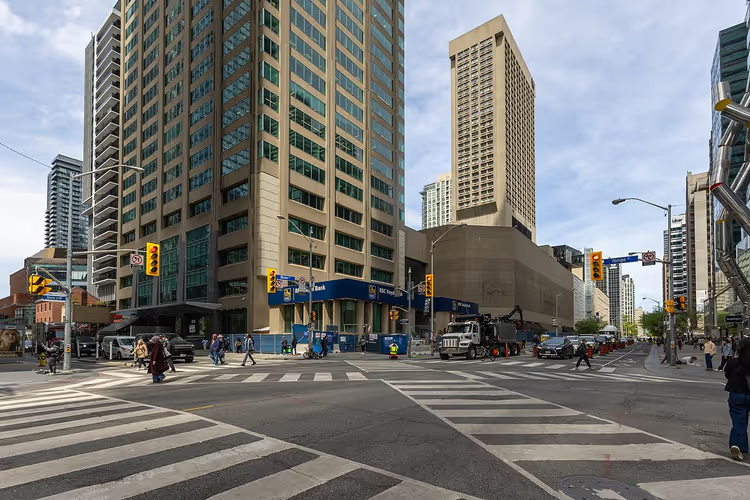
Yonge Street divides the city into western and eastern halves. House numbers are counted from it, which is why the street has long been Toronto's main axis.
 © Dillan Payne · CC BY-SAPhoto: Dillan Payne, CC BY-SA (https://creativecommons.org/licenses/by-sa/4.0), Wikimedia Commons
The busiest stretch runs from the Eaton Centre shopping mall to Bloor Street. Here you'll find shops, cafes, and street musicians.
The street's history is often embellished. Yonge Street is not the longest street in the world, although such headlines still appear. Think of it as a convenient route through the center.
- Cost: free.
- Time: an hour of walking.
- The catch: it's a noisy traffic artery; for a quiet stroll, head to the Distillery District.
Bay street and the distillery district
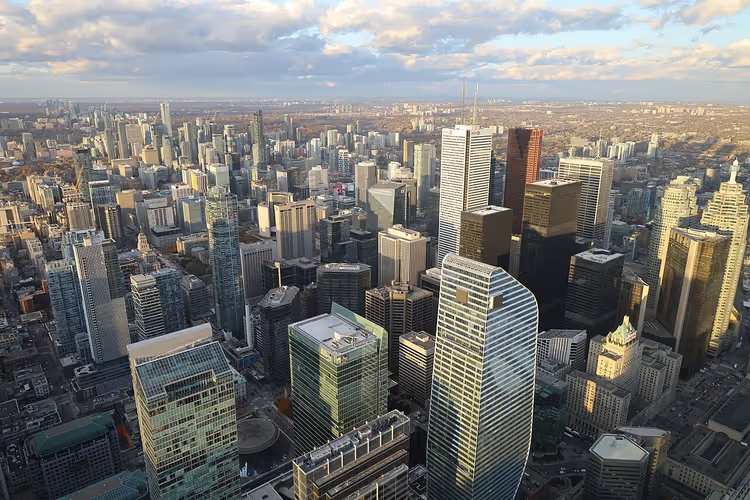
The city's business center grew up on Bay Street. Glass towers stand close together, and beneath the streets lies PATH, an underground labyrinth of walkways, shops, and food courts. In winter, locals use it instead of the streets.
 © Chicken4War · CC BY-SAPhoto: Chicken4War, CC BY-SA (https://creativecommons.org/licenses/by-sa/4.0), Wikimedia Commons
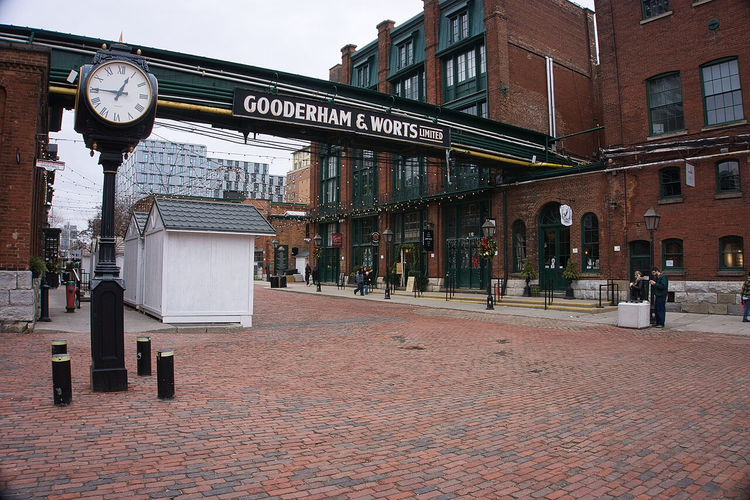
Within walking distance is the Distillery District, the old distillery quarter. Victorian-era brick buildings now house galleries, workshops, and restaurants, and cars are not allowed inside. In winter, a Christmas market operates here.
- Getting there: to Bay Street on foot from Union Station or by subway to King station; to the Distillery District, continue walking east (use a map).
- Cost: entry to the district is free.
- Time: two to three hours with lunch.
- The catch: in PATH it's easy to get lost without navigation; signs aren't everywhere.
Toronto parks and high park
There's more greenery in the city than it seems. Besides small squares, there are large parks with ponds and trails. The most famous among locals is High Park in the west.
 © Chensiyuan at English Wikipedia · CC BY-SAPhoto: Chensiyuan at English Wikipedia, CC BY-SA (http://creativecommons.org/licenses/by-sa/3.0/), Wikimedia Commons
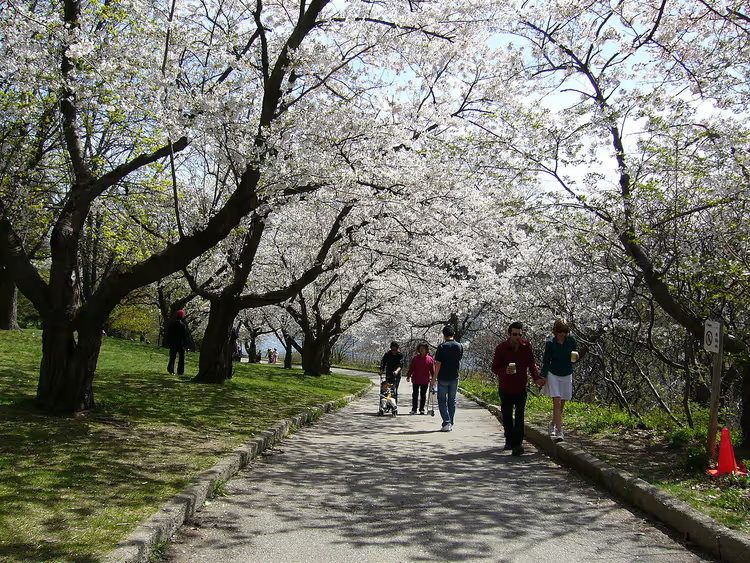
High Park has Grenadier Pond, running trails, and a small free zoo. In spring, people come here to see the cherry blossoms, but the trees bloom for less than two weeks.
Bring a blanket and water. The park is large, and there are few cafes on the grounds.
- Cost: free.
- Time: one to two hours.
- The catch: during cherry blossom season the park is packed; come in the morning.
Niagara Falls
Niagara Falls is one of the top day trips from Toronto.
 © Robert F. Tobler · CC BY-SAPhoto: Robert F. Tobler, CC BY-SA (https://creativecommons.org/licenses/by-sa/4.0), Wikimedia Commons
Sightseeing boats take visitors to the base of the falls. Nearby, there are observation decks and a park with evening lighting.
It's best to plan the trip for a full day. If you don't want to drive, take a day tour with transfer included.
- Getting there: about 130 km, one and a half to two hours by car (use a map).
- Cost: access to the falls is free, attractions are paid.
- Time: a full day.
- The catch: in summer the observation decks are crowded; arrive at opening time.
Tours and tickets in Toronto
Guided tours, skip-the-line tickets and activities — most offers can be cancelled free of charge.
See offers on GetYourGuideThe widget loads once you give your consent.
Above are three tour options for Toronto and the surrounding area, including trips to Niagara Falls.
⁉️🤔 Frequently asked questions
How many days do you need in Toronto?
For a first visit, two to three days is enough. On the first day you'll see the CN Tower, City Hall, and Yonge Street. Dedicate the second day to the ROM and AGO museums, and the third to the zoo or a trip to Niagara Falls.
What can you see in Toronto for free?
Nathan Phillips Square, a walk along Yonge Street, the Distillery District, and parks like High Park are free. The Royal Ontario Museum has a free evening on the third Tuesday of the month, and the Art Gallery of Ontario does the same on the first Wednesday of the month.
How do you get from Pearson Airport to downtown?
The UP Express train runs from Pearson Airport to Union Station. It avoids traffic and brings you right into the city center. Taxis and Uber cost more during rush hour because they sit in traffic along with everyone else.
Is a day trip to Niagara Falls worth it?
Yes, if you're willing to spend a full day. You can take a day tour from Toronto, and the transportation and viewing points will be arranged for you.
What is closed in Toronto in 2026?
The Ontario Science Centre has been closed since June 21, 2024; the building was deemed unsafe. Plan to visit the Royal Ontario Museum or the Art Gallery of Ontario instead. Check the official website for news about the centre's new location.
In short: what to book
Toronto is easy to explore by neighborhood: the center around the CN Tower and the museum district on Bloor. Buy zoo and museum tickets online to save time and money.
If you have one free day: take a city tour. If you're traveling with kids: plan for the zoo. If you want to cover everything on foot: stay downtown near Union Station.
- If it's your first visit: Toronto tours and tickets on GetYourGuide.
- If you need a base downtown: hotels near Union Station.
- If you're planning a trip to the falls: train and bus tickets.

A small editorial team writing guides for independent travel. We travel ourselves, but we haven’t been everywhere, so we check prices, opening hours and how to get there against official sources.