







Troodos in Cyprus: 4 villages, Kykkos Monastery and Caledonia Waterfall
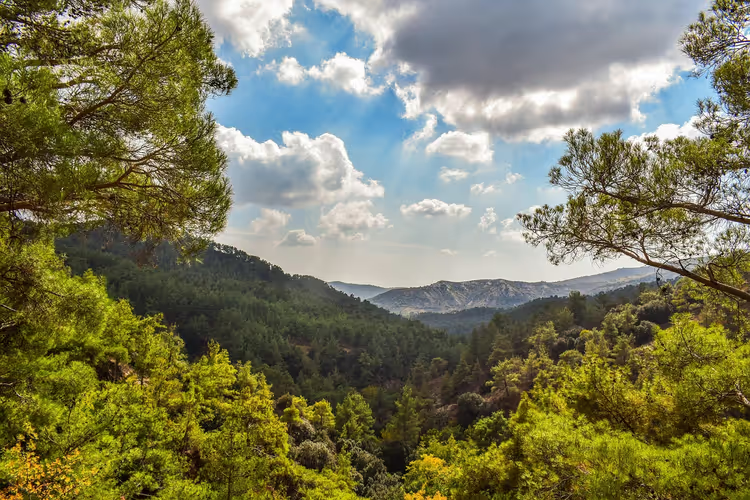
Most visitors to Cyprus never make it up into the mountains. That's a shame. Troodos covers about a third of the island, and its highest point, Olympos, rises to 1,952 m (as of 09/2026, Visit Cyprus). Here you trade the beach heat for pine forests, stone villages, Byzantine churches, and waterfalls.
Below is a working itinerary for Troodos: an overview of the mountains, four villages, six main attractions, three wineries, cafes, and one proven hotel. At the end you'll find practical tips on driving and the best season.
Ad: this article contains affiliate links. We earn a commission if you book through them, at no extra cost to you.
1. Troodos mountains overview: the essentials
💡 In short:
- Troodos is the largest mountain range in Cyprus.
- The most convenient way to get around the mountains is by rental car; the roads are good but very winding.
- Split the trip like this: one day for the villages, one for Kykkos Monastery and Caledonia Waterfall.
- Prices and opening hours are current as of 09/2026 (as of: Visit Cyprus).
Five points that shape the route
These places give you a general sense of the mountains. Plan them as separate half-days, not as checkboxes on a long list.
- Olympos and the Artemis Trail. The most famous hiking route in Troodos loops around the highest mountain in Cyprus.
- Omodos. The region's main mountain village and a convenient base near the wineries.
- Kykkos Monastery. If you're choosing one church for the whole trip, make it this one.
- Marathasa Wines. The island's most architecturally striking winery.
- Kakopetria. A quiet village in the north of the mountains with the Thymises Boutique Hotel.
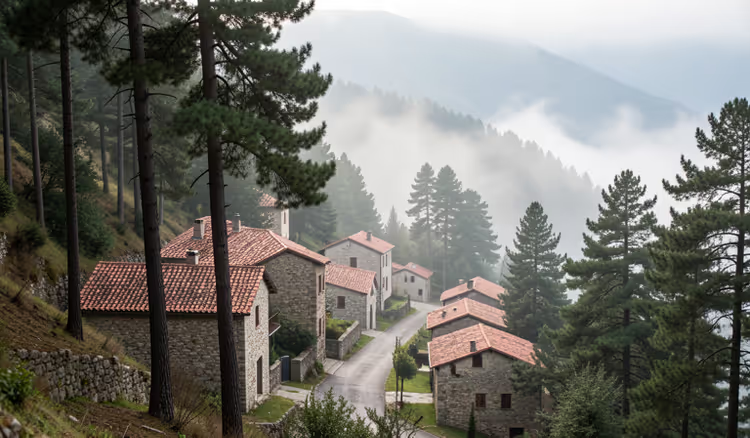 AIIllustrative image: AI-generated
What to know about Troodos
- The mountains cover a large area, so you won't see all of Troodos in one day.
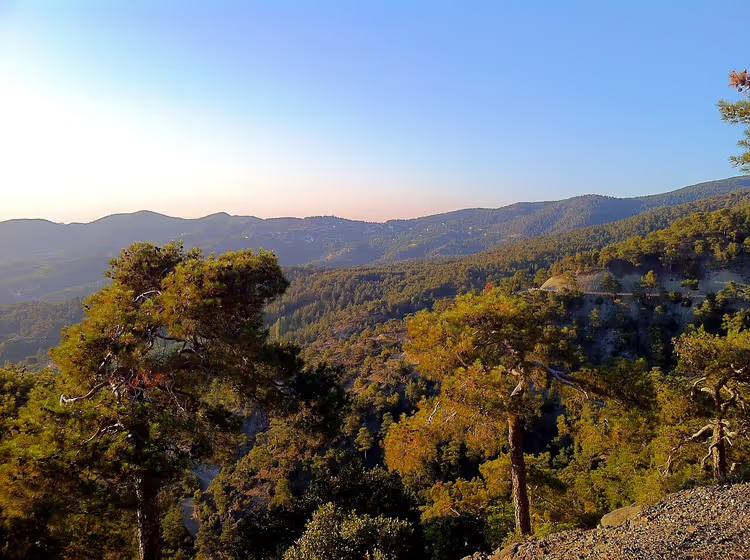
- The slopes are densely forested, so the landscape here is green rather than sun-scorched.
- Part of Troodos is the island's official wine region, with several wine routes marked across the area (as of 09/2026, Troodos Geopark).
- The mountains are cooler than the coast all year round.
- The region holds UNESCO Global Geopark status, and its painted churches are listed as World Heritage sites (as of 09/2026, official Troodos Geopark website).
So it's worth packing a warm layer for the trip. In summer you ascend into different weather: at altitude, breathing is easier than by the sea.
 © Tech bro · CC BY-SAPhoto: Tech bro, CC BY-SA (https://creativecommons.org/licenses/by-sa/3.0), Wikimedia Commons
2. Best villages in Troodos
The villages are the main reason to go to Troodos. Below are four worth including in your route: two larger and tourist-oriented, two small and quiet.
 © Marek Ślusarczyk ( Tupungato ) Photo portfolio · CC BYPhoto: Marek Ślusarczyk ( Tupungato ) Photo portfolio, CC BY (https://creativecommons.org/licenses/by/3.0), Wikimedia Commons
Omodos
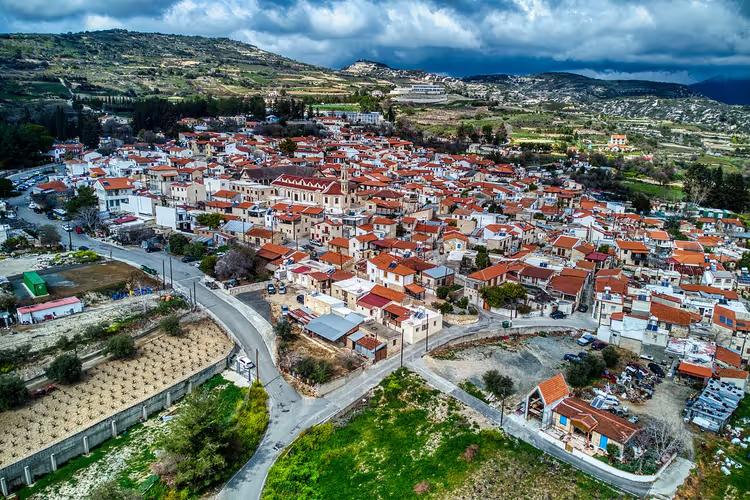
Omodos, along with Pano Lefkara, is considered the most famous mountain village in the region. There are more visitors here than in the neighboring villages, but in the off-season the streets are almost empty. The center was recently renovated, and now it photographs well. Allow 1.5 to 3 hours for a walk, more if you also want to have lunch (as of 09/2026, Visit Cyprus website).
- Timios Stavros Monastery: the village's main attraction. The monastery stands right in the center and looks modest from the outside, but inside it is unexpectedly ornate. Admission is free.
- Stou Kir Yianni: a tavern in the historic center with a cozy courtyard.
- Oenou Yi Winery: a well-known winery a couple of minutes from the village, covered in chapter 4.
- The catch: in summer it is crowded here and there are many souvenir shops.
 © Hagai Agmon-Snir حچاي اچمون-سنير חגי אגמון-שניר · CC BY-SAPhoto: Hagai Agmon-Snir حچاي اچمون-سنير חגי אגמון-שניר, CC BY-SA (https://creativecommons.org/licenses/by-sa/4.0), Wikimedia Commons
During the day, many wine shops in central Omodos pour local wine. Walk a little away from the main street and you will find quiet courtyards without the crowds.
Kakopetria
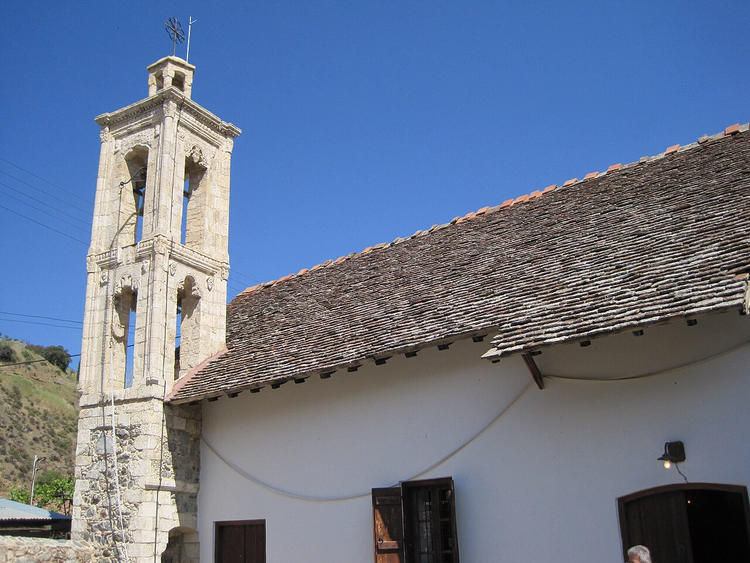
Kakopetria lies on the northern slopes of Troodos, surrounded by greenery. Its historic center, Old Kakopetria, is recognizable by its low houses with wooden balconies. It is a ready-made backdrop for photos, and it is best explored on foot.
- Old Kakopetria: the historic, almost pedestrian-only core along one narrow street. Enter from the north off Makariou II Ave or from the south off Ayiou Nicolaou.
- Restaurant Mylos: a restaurant on the upper floor of the Mill Hotel, with wood paneling and a view of the village.
- Agiou Nikolaou tis Stegis: a church about 10 minutes from the center, covered in chapter 3.
- Who it's for: those who want a quiet base in the northern mountains.
 © Gareth Wyn Jones · CC BY-SAPhoto: Gareth Wyn Jones, CC BY-SA (https://creativecommons.org/licenses/by-sa/4.0), Wikimedia Commons
In the evening the village goes quiet early, so it is better to plan dinner in advance. In the morning, though, you can head out for a walk without tour groups.
Kalopanayiotis
Kalopanayiotis is a village of about 200 residents, yet it is home to one of the region's most impressive churches. The village stretches along a slope, and it looks better from above than from within: it has no distinct center.
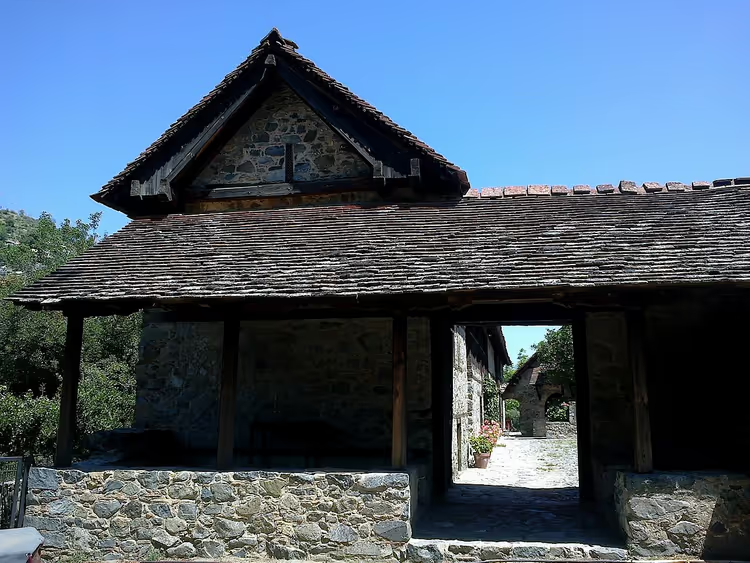
- Agios Ioannis Lampadistis: a UNESCO-listed church. This is the main reason people come here.
- Marathasa Wines: a winery above the village, about 10 minutes by car, covered in chapter 4.
- The catch: getting between points without a car is inconvenient.
 © rene boulay · CC BY-SAPhoto: rene boulay, CC BY-SA (https://creativecommons.org/licenses/by-sa/3.0), Wikimedia Commons
The church of Agios Ioannis Lampadistis stands at the very bottom of the village, by the road. Stop there first, then head up to the winery.
Pano Lefkara
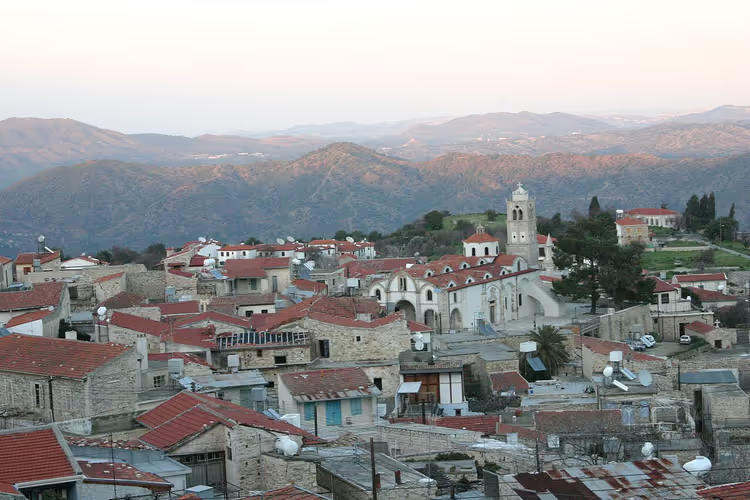
Pano Lefkara sits on the eastern foothills of Troodos, away from the other stops on the route. The village is known for lace and silversmiths, so there are especially many shops here. It is convenient to stop by on the way between Limassol and Larnaca.
- Viewpoint: a small hill south of the old town with a panorama of the village. You can drive up to it.
- Church of the Holy Cross: the largest Greek Orthodox church in Pano Lefkara.
- Getting there: about 35 minutes from Larnaca and 45 minutes from Limassol on the map.
- The catch: there are a lot of tourist shops, and it shows.
 © Leonid Mamchenkov · CC BYPhoto: Leonid Mamchenkov, CC BY (https://creativecommons.org/licenses/by/2.0), Wikimedia Commons
Local lace has been made here for several centuries, and it is still sold handmade. Prices in shops differ by several times, so compare a couple of stores before buying.
When choosing a village, keep the differences between them in mind. Omodos is the most touristy and the most convenient as a base: the center is renovated, several wineries are nearby, and Paphos and Limassol are easy to reach. Kakopetria is quieter and closer to the northern slopes, making it convenient to head out in the morning to the Artemis trail or Kykkos Monastery.
If you are short on time, choose Omodos and Kakopetria: they give you both a polished tourist center and a quiet old village. Add Kalopanayiotis for the church of Agios Ioannis Lampadistis, and Pano Lefkara only if your route passes nearby.
All four villages can be covered in one long day, but then you will only spend a short time in each. If you do not want to drive yourself, there are ready-made tours of Troodos villages on GetYourGuide.
3. Sights and routes
Troodos sights are scattered across different slopes, and each one requires time. Below are six points with distances, times, and prices where applicable.
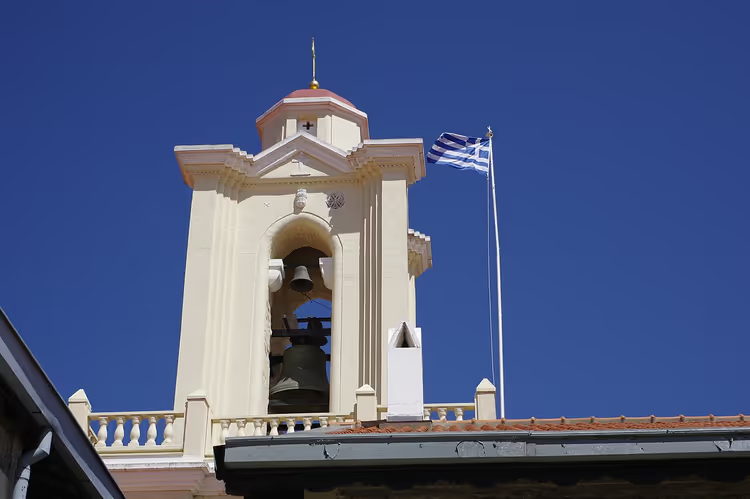 © Berthold Werner · CC BY-SAPhoto: Berthold Werner, CC BY-SA (https://creativecommons.org/licenses/by-sa/4.0), Wikimedia Commons
Olympos and the Artemis Trail
Mount Olympos, also known as Chionistra, is the highest point in Cyprus. You can't go up to the summit itself, as there's a British RAF radar station there. But a circular trail, the Artemis Trail, runs around the mountain, and we recommend it to all visitors to the island.
The route starts at a small parking lot 300 m from the fork in the road to Chionistra and Troodos-Prodromos. The trail loops at an altitude of about 1,850 m (as of 09/2026, Visit Cyprus). Length 7 km, time 2.5-3 hours including photo stops. There are no serious climbs, but you need shoes with good tread.
You walk alongside black pine, with green hills and old fortifications all around. It's best to come at sunset, but then time your start so you get back before dark.
The trail is open year-round. In winter there can be snow and ice at altitude, so check the forecast before heading out: the weather changes very quickly up top. In summer, go early in the morning or closer to evening; during the day it's hot on open sections.
- Cost: trail access is free.
- Getting there: by car only, no buses go to the parking lot.
- The catch: it's often very windy up top, bring a jacket.
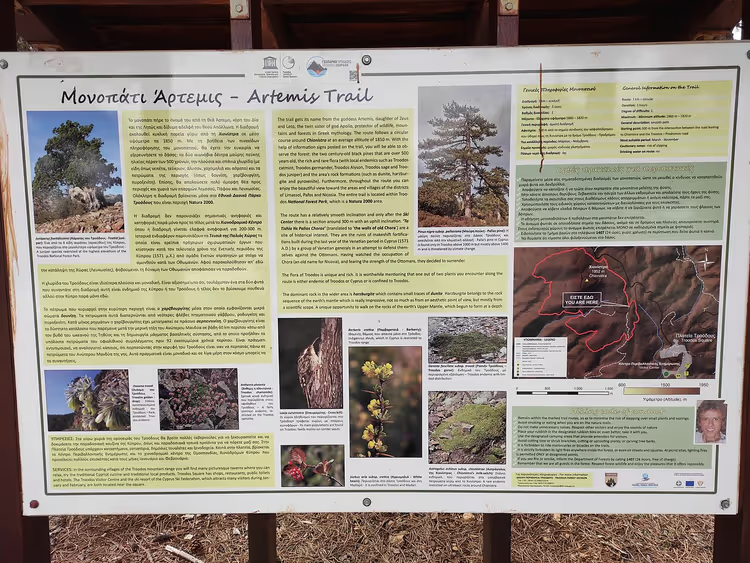 © Fry72, Karel Frydrýšek · CC BY-SAPhoto: Fry72, Karel Frydrýšek, CC BY-SA (https://creativecommons.org/licenses/by-sa/4.0), Wikimedia Commons
The trail is marked, so you won't get lost even without a map. Along the way there are information boards about Troodos geology and rare plants.
Northwest View Point
A few hundred meters from the Artemis Trail parking lot, about a minute by car, is the well-known Northwest View Point lookout.
In photos it looks more impressive than in person. The lookout sits right by the main road, so you won't linger here long. For a quick stop to grab a shot, it's enough.
- Getting there: by the main road, next to the Artemis Trail parking lot.
- Cost: free.
- The catch: the view from the Artemis Trail is better, so if you're short on time you can skip this lookout.
Kykkos Monastery
Kykkos Monastery sits at an altitude of about 1,300 m, and the road to it winds along a very twisty serpentine. If you get carsick, take motion sickness medication beforehand.
This is one of the island's most significant monasteries: it houses an icon of the Virgin Mary attributed to Luke the Evangelist (as of 09/2026, official Cyprus tourism website). There's free parking before the entrance, and that's where you start your visit.
Inside, look at the gold mosaics and inner courtyards. Next to the monastery there's a small cafeteria with coffee, ice cream, and snacks.
- Cost: monastery entry is free, only the museum is paid.
- Time: allow 2-3 hours including the serpentine drive.
- The catch: no buses go here, only by car or on a tour.
- Who it's for: those willing to make a long drive for one of the island's main shrines.
The monastery was founded in the 11th century and is considered one of the island's main spiritual centers. There's a dress code inside: shoulders and knees must be covered, so leave your shorts in the car.
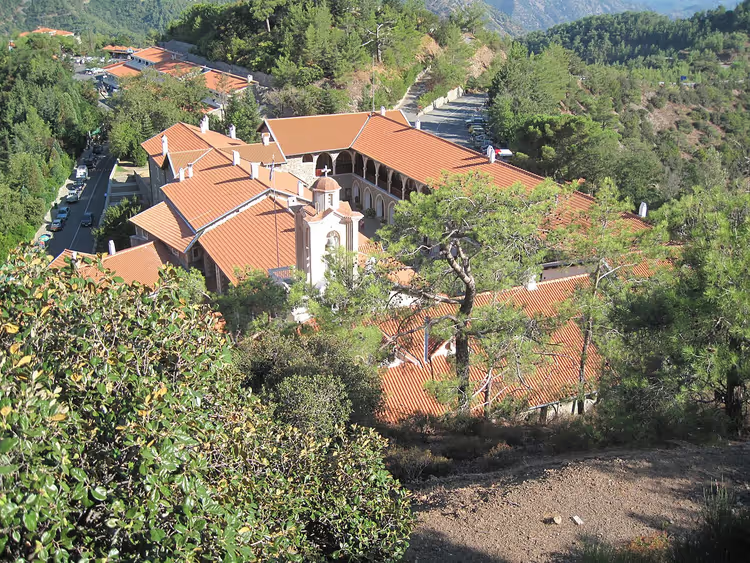 © Dickelbers · CC BY-SAPhoto: Dickelbers, CC BY-SA (https://creativecommons.org/licenses/by-sa/3.0), Wikimedia Commons
Besides the museum, the monastery's gallery with gold mosaics is worth a closer look. Photography inside the church is usually not allowed, so check on site.
Caledonia Waterfall
The most famous waterfall in Troodos is near the village of Pano Platres. Its height is about 13 m (as of 09/2026, official Troodos Geopark website).
You can only get there on foot, about 30 minutes through the forest. The trail starts at a small parking lot, quickly enters the forest, and then climbs gently over roots and wooden bridges.
Along the way you're always walking alongside water, which is a pleasant coolness in the heat. In spring the flow is fuller, and by late summer there's noticeably less water. The route is manageable for families with children, but you need shoes with good tread.
- Cost: free entry.
- Best season: April and May, when the water is at full flow.
- The catch: in summer and the off-season the flow can be very weak.
Painted churches of Troodos
Troodos is known for churches with steep pitched roofs that look like barns from the outside. Behind the unassuming walls are richly painted Byzantine churches. Ten of these churches are listed as UNESCO World Heritage sites (as of 09/2026, Visit Cyprus portal).
Agios Ioannis Lampadistis in Kalopanayiotis
The most impressive church in the region. It's not a single church but a complex of several buildings, and the inner courtyard creates an almost meditative atmosphere. Inside it's dark and very expressive.
Agiou Nikolaou tis Stegis near Kakopetria
The second of the most famous churches is about a 10-minute drive from Kakopetria. The church was built in the 11th century and later expanded several times (as of 09/2026, Cyprus tourism office data). The interior painting is the richest of all the churches in the region.
Important: in many Troodos churches, photographing the frescoes is prohibited. Follow this rule and keep your phone in your pocket.
The other painted churches are scattered across Troodos villages, so it's easier to see them on the way between other points on your route. Allow at least half an hour for each so you don't have to rush. Many of them are active churches, not museums, so be quiet inside.
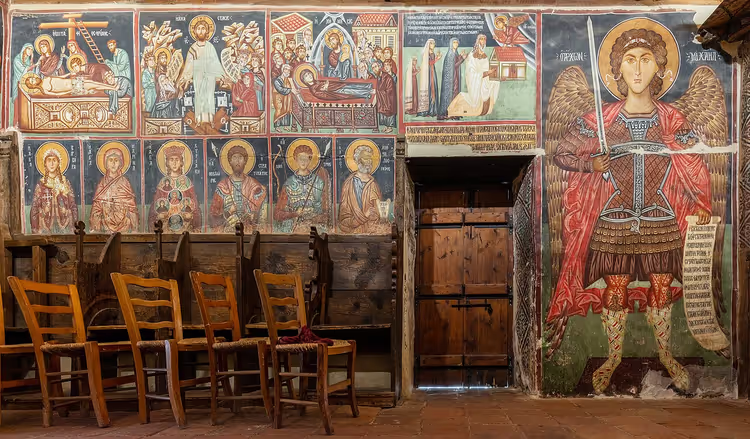 © Diego Delso · CC BY-SAPhoto: Diego Delso, CC BY-SA (https://creativecommons.org/licenses/by-sa/4.0), Wikimedia Commons
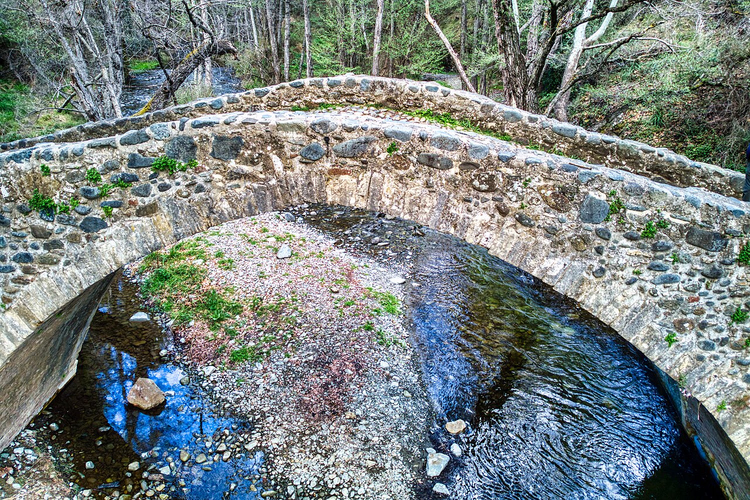
Tzelefos Bridge
Venetian bridges from the 15th and 16th centuries, used for transporting goods, survive throughout Troodos. The most famous of them is Tzelefos Bridge, also the largest Venetian bridge on the island (as of 09/2026, Cyprus tourism office website).
The bridge stands on its own, near Paphos Forest, at an altitude of about 440 m. A good but very winding road leads to it, and you can park very close. From the parking lot to the bridge it's a three-minute walk. You're allowed to walk on the bridge.
- Getting there: by car only, along a winding road.
- Cost: free.
- The catch: it's a short stop, one bridge won't fill half a day.
 © Hagai Agmon-Snir حچاي اچمون-سنير חגי אגמון-שניר · CC BY-SAPhoto: Hagai Agmon-Snir حچاي اچمون-سنير חגי אגמון-שניר, CC BY-SA (https://creativecommons.org/licenses/by-sa/4.0), Wikimedia Commons
Tours of Troodos usually include Kykkos and a couple of villages, and they almost never add the Artemis trail to the itinerary. You hike it on your own.
Tours and tickets
Guided tours, skip-the-line tickets and activities — most offers can be cancelled free of charge.
See offers on GetYourGuideThe widget loads once you give your consent.
4. Troodos wineries
The southern slopes of Troodos are Cyprus's main wine region. This is where Commandaria is made, the oldest named wine in the world still in production (as of 09/2026, Troodos Geopark data). The island has seven marked wine routes, and four of them partially pass through the geopark.
Tsiakkas Winery
The winery sits in a very fortunate spot: a small terrace opens onto a panorama of the Troodos peaks. The atmosphere is family-run and the staff are friendly.
- Who it's for: anyone who wants a relaxed tasting with mountain views.
- The catch: the terrace is small.
Marathasa Wines
Probably the most architecturally striking winery on the island. It sits above Kalopanayiotis at an elevation of 1,100 m. The combination of concrete, glass and wood impresses from the outside, and the tasting room inside is styled in a contemporary way.
We won't attempt to judge the wines themselves, but the view from this height alone makes the drive up worthwhile. Tastings take place in a spacious hall where it's easy to linger.
- Best time: sunset, but the sun drops behind the ridge early, so check opening hours in advance.
- The catch: car only, no public transport.
Because of the elevation it's always cooler here than in the valley, so a light jacket won't hurt. Also allow extra time for the drive: the switchbacks take longer than they seem.
Oenou Yi Winery
The best-known winery near Omodos, just above the village. A large terrace offers a good view toward Omodos.
- Who it's for: anyone combining a tasting with a stroll around Omodos.
- The catch: the space feels cool and impersonal.
A simple way to choose: pick Tsiakkas for the view and family atmosphere, Marathasa for the architecture and sunset, Oenou Yi for the convenient location near Omodos. All three wineries operate as standalone stops, and an hour is enough for each.
The Troodos vineyards lie on the southern slopes, so they get noticeably more sun than the northern side. That's why almost all the island's major estates are concentrated in this part of the mountains. If you're traveling without a car, the wineries will be the hardest part of the route: public transport barely reaches them.
It's easy to keep track of tastings and wine tours in the region through Troodos wine and food tours.
5. Where to eat in Troodos
In small villages the restaurant choices are limited, so it's best to plan dinner in advance. On the plus side, lunch in the mountains is usually cheaper than on the coast.
- Stou Kir Yianni (Omodos): a tavern in the historic center with lunch in the courtyard.
- Katoi Restaurant (Omodos): traditional Cypriot cuisine with a modern presentation.
- Cafe Kyriakides Moutoullas (near Kalopanayiotis): a good stop for coffee with a view.
All three places are in villages you'll pass through on the route anyway, so no extra detour is needed.
6. Where to stay in Troodos
A good base in the north of the mountains is Thymises Boutique Hotel in Kakopetria. Most Troodos sights are 30-40 minutes away by car from here, so you don't waste time on long drives (per the map).
The hotel opened in 2023 and is decorated in boho style, with wood and warm tones. On Tripadvisor it has 5 out of 5 across 23 reviews (as of 09/2026, Tripadvisor). Guests particularly praise the breakfast: on quiet days it's served a la carte, and on busy days a buffet is set up.
- Location: Kakopetria, northern Troodos.
- Price: see current rates on Trip.com via the link below.
- The catch: the hotel is new, but signs of wear are already visible in places.
Thymises Boutique Hotel rates on Trip.com
The historic center of Kakopetria is right next to the hotel, so after dinner you can easily walk to the wooden balconies.
7. Practical tips: driving and season
How to get to Troodos
Cyprus has two international airports, Larnaca and Paphos, and both work for a trip to the mountains. From Paphos to Omodos it's about 45 minutes by car (per the map).
A car is almost essential here: buses to the trails, viewpoints and wineries barely run. It's convenient to pick up a rental car right at the airport and drop it off there at the end of the trip.
The roads in Troodos are good, but in places very winding. Driving on the left takes some attention at first, but it's calm driving here.
A good option is car rental through DiscoverCars: compare prices in advance and pick up the car right at the airport.
When to go to Troodos
The mountains are open year-round. Because of the elevation it's always cooler here than on the coast: in summer you get a break from the heat, while spring and autumn are ideal for hiking. In winter the upper part can get snow, and there's even skiing at a small resort. In November it's usually still warm and sunny during the day, while higher in the mountains it's noticeably cooler.
How many days you need for Troodos
Many people visit Troodos for just one day: Omodos is popular as a day trip from Paphos and Limassol, and Pano Lefkara from Ayia Napa and Larnaca. If you want to take your time exploring the villages, the monastery, and a couple of trails, plan for at least two or three nights.
8. Map of attractions
All the points fit neatly into one route: villages in the north, south, and east, Kykkos Monastery and the Artemis trail in the center of the mountains. Open the Troodos map.
If you're driving, save the map in advance: mobile coverage in the mountains is patchy in places.
⁉️🤔 Frequently asked questions
How many days do you need for Troodos?
In one day you'll only manage Omodos and one or two nearby spots. The villages, Kykkos Monastery, and at least one trail each need their own time, otherwise the trip turns into a race along winding mountain roads.
Do you need a car in Troodos?
Yes, it's inconvenient without one. Buses rarely run to viewpoints, trails, and wineries, and the distances between villages are significant. It's easy to rent a car at Larnaca or Paphos airport. The roads are good but winding, and traffic drives on the left.
When is the best time to visit Troodos?
In spring and autumn: these are the best months for hiking, and Caledonia Falls is at its fullest in spring. In summer the mountains are a few degrees cooler than the coast, which makes for a pleasant break. In winter the upper areas can have snow.
How much does it cost to enter Kykkos Monastery?
Entry to the monastery is free; a separate ticket is only needed for the museum. There is free parking before the entrance. Public transport doesn't go here, so plan on a car or an organized tour. Allow time for the winding road.
What should you see in Troodos in one day?
Go for Omodos and the Artemis trail: that gives you both a village and nature. If you have time left, add Caledonia Falls or the Tzelefos bridge. Kykkos Monastery and the painted churches are better left for a separate day because of the long drive.
In short: what's worth booking
If you're staying overnight in Troodos, choose a base in the north or center of the mountains so you don't waste a day on transfers.
- You want a quiet base with a view: Thymises Boutique Hotel in Kakopetria.
- You want to cover as many spots as possible: rent a car in advance.
- You don't want to drive: book an organized tour of the villages and the monastery.
Quiet mountain accommodation gets booked up quickly, so check out Troodos hotels on Trip.com.

A small editorial team writing guides for independent travel. We travel ourselves, but we haven’t been everywhere, so we check prices, opening hours and how to get there against official sources.