
















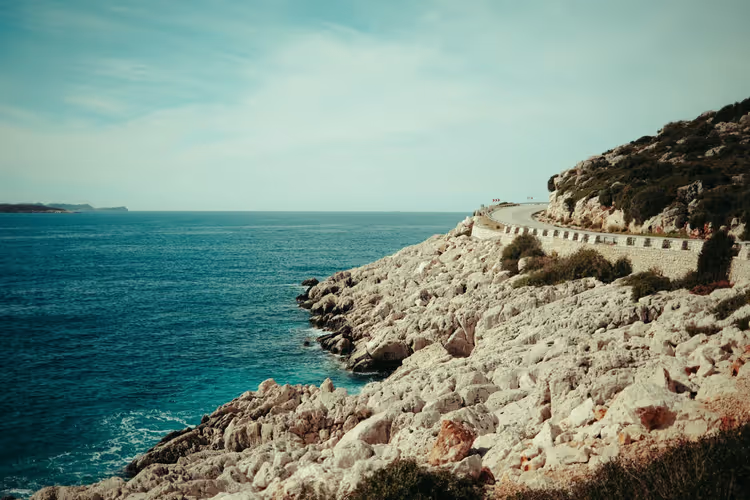
What to see in Cyprus by car: 17 places and a route around the island
Cyprus is easy to explore by car. The island is compact, and the main points are connected by highways. From Larnaca to Paphos via the A1 highway you'll get there in about 1.5 hours (according to the map).
Below are 17 places worth including in your route. For each site we've gathered opening hours, prices, and an honest catch. The sections are grouped by region: southeast, south, center of the island, then north. At the end you'll find a route map and a frequently asked questions section.
Ad: this article contains affiliate links, we earn a commission if you book through them, at no extra cost to you.
Renting a car in Cyprus: what you need to know
💡 In short:
- Get a car with an automatic transmission: Cyprus has left-hand traffic, and shifting gears with your left hand feels unnatural.
- Book your car in advance; in high season the selection is worse and prices are higher.
- For Northern Cyprus set aside a separate day and check insurance coverage with the rental company.
- Prices and opening hours: 09/2026, verified on the Cyprus tourism office website.
Cyprus has left-hand traffic. The steering wheel in a rental car is on the right, and the familiar space between you and the edge of the road is now on your left. For the first half hour, drive slower and avoid narrow streets in towns.
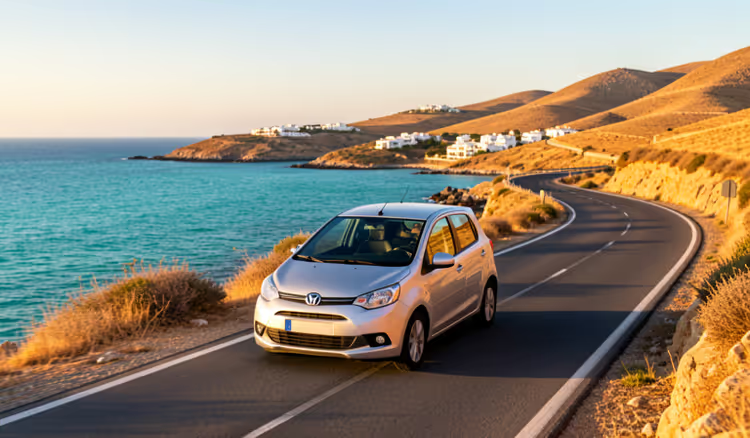 AIIllustrative image: AI-generated
Get a car with an automatic transmission. Shifting gears with your left hand is awkward, especially in Troodos, where the roads are winding with steep climbs. You'll get used to the car's dimensions within a day, but at seaside parking lots it's better to park using the camera right away.
Book your rental in advance. In high season there are few available cars, and prices rise closer to the date. Choosing a specific model instead of a class saves you from surprises at the counter.
A separate topic: Northern Cyprus. When crossing the "green line" in a rented car, you need additional insurance. Some rental companies prohibit such trips, so read the contract before booking and ask directly.
Download offline maps of the island in advance. In mountain villages the signal drops, and road signs are duplicated in Greek and English. There are enough gas stations on the highways, but in Troodos it's better to fill up beforehand.
1. Ayia Napa
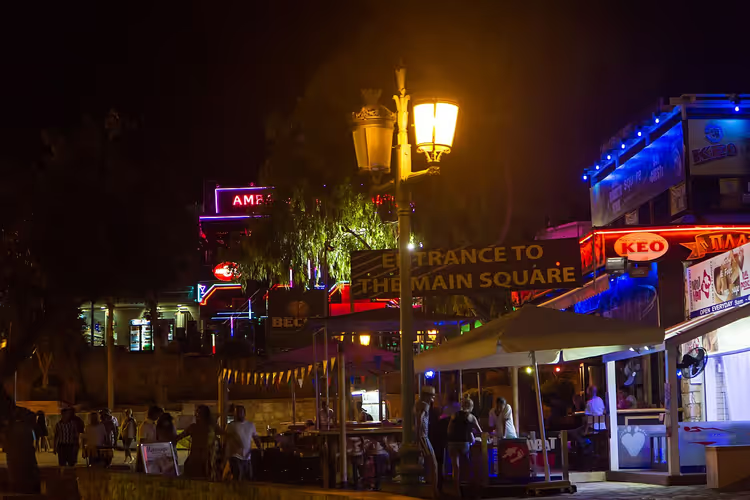 © Максим Улитин · CC BYPhoto: Максим Улитин, CC BY (https://creativecommons.org/licenses/by/3.0), Wikimedia Commons
Ayia Napa grew from a fishing village into the island's main clubbing resort. It has the wide sandy beaches of the southeast, and in the evening dozens of bars open along Nissi Avenue. During the day the town is calmer than its nightlife reputation suggests.
In the center stands the medieval Ayia Napa monastery with a paved courtyard and a fountain. Nearby, in the new church, a revered icon of the Virgin Mary is kept. Outside the town are the Makronissos rock tombs and the Thalassa marine life museum.
For a beach day, Nissi Beach and Makronissos Beach are good options: shallow water, sunbeds, and cafes nearby. Families with children should set aside a day for the WaterWorld water park.
- How to get there: 40 minutes from Larnaca via the A3 highway (according to the map).
- Cost: monastery entrance is free, beaches are open 24/7.
- Who it's for: beach lovers and nightlife enthusiasts.
- The catch: in July and August the shore is overcrowded, and free sunbeds are claimed early in the morning.
See hotels in Ayia Napa on Trip.com
2. Cape Greco
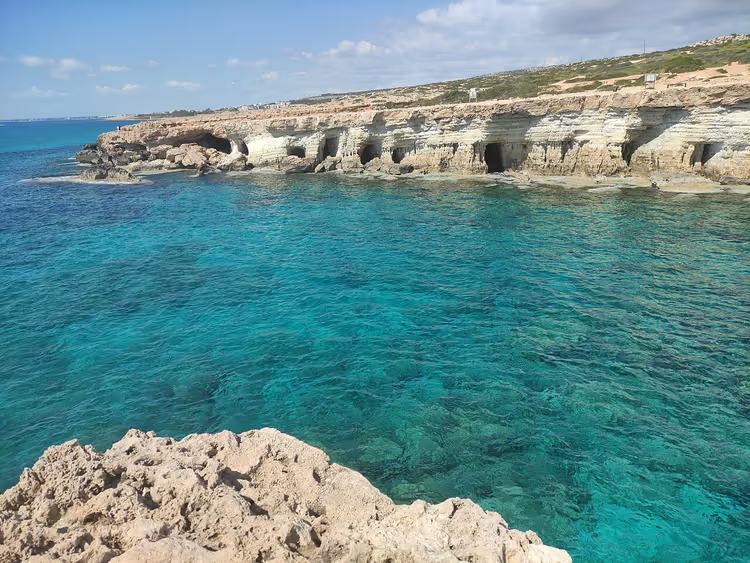 © Fry72, Karel Frydrýšek · CC BY-SAPhoto: Fry72, Karel Frydrýšek, CC BY-SA (https://creativecommons.org/licenses/by-sa/4.0), Wikimedia Commons
Cape Greco lies 15 minutes by car from Ayia Napa (according to the map). It's a rocky coastal strip about 10 meters high, cut through with grottoes and karst caves. The road runs along the sea, and there are several viewpoints along the way.
Almost the entire area here is exposed to the wind. It blows constantly from the sea, so there are few shaded spots and trees are rare. But the landscape is pristine: cliffs, natural arches, and turquoise water.
Walk along the trails to the sea caves and arch bridges. On the edge of the cliff stands a snow-white chapel with a blue roof, a great spot for photographing the sunrise.
- How to get there: 15 minutes from Ayia Napa via route 305 (according to the map).
- Cost: free to visit.
- Who it's for: photographers and nature lovers.
- The catch: there's almost no shade, it's hot at midday, bring water and a cap.
3. Lefkara
 © דוד שי · CC BY-SAPhoto: דוד שי, CC BY-SA (https://creativecommons.org/licenses/by-sa/4.0), Wikimedia Commons
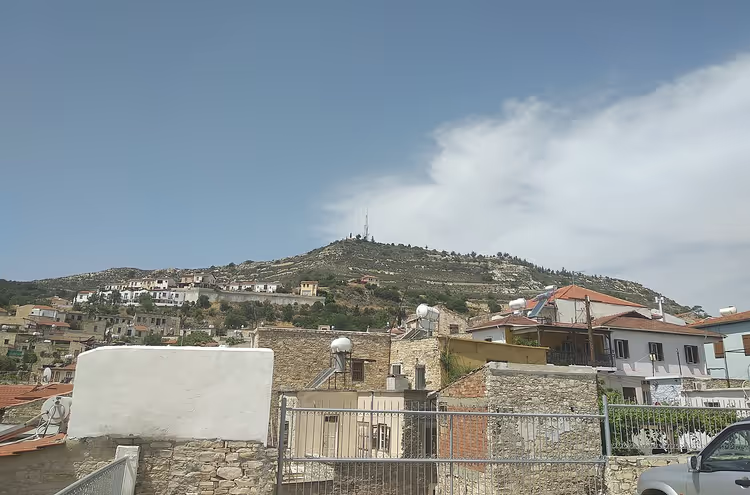
Lefkara sits on the slopes of Troodos, 40 minutes from Larnaca (according to the map). The village preserves the look of several centuries: cobblestone streets, two-story limestone houses with carved balconies and shutters. There are two different worlds here: tourist shops on the main street and quiet residential lanes higher up.
Lefkara gained worldwide fame for its lefkaritiko lace. It was added to UNESCO's intangible cultural heritage list. In the workshops you'll be shown how the openwork patterns are woven and told the difference between handmade and machine-made work.
Also visit the Church of the Holy Cross. According to tradition, it houses a fragment of the True Cross. Entry is free, but dress modestly.
- How to get there: 15 minutes from the A1 highway, exit at Skarinou (according to the map).
- Cost: walking around the village is free, parking near the center is paid.
- Who it's for: buying lace and taking a leisurely stroll.
- The catch: the shops on the main street cater to tourists, and prices there are inflated.
4. Aphrodite's Rock
 © Diego Delso · CC BY-SAPhoto: Diego Delso, CC BY-SA (https://creativecommons.org/licenses/by-sa/4.0), Wikimedia Commons
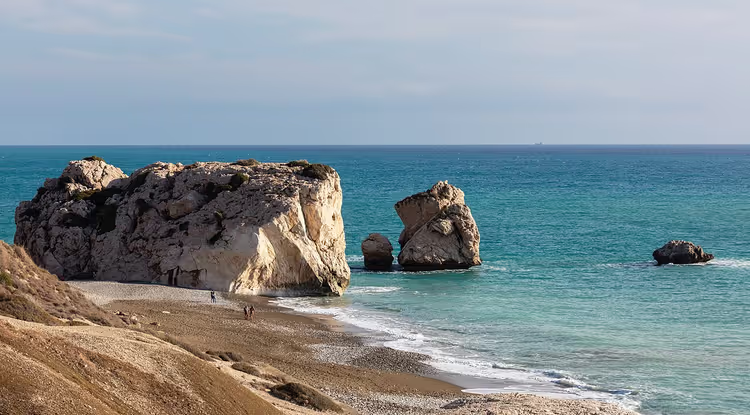
The Rock of Aphrodite (Petra tou Romiou) stands right in the water on the road between Limassol and Paphos. According to legend, the goddess of love emerged from the sea foam here. Around it is a pebble beach and several large rocks.
You can leave your car in the free parking lot by the roadside restaurant. An underpass beneath the highway leads to the beach. Swimming here requires caution: the shore has strong waves and cold underwater currents.
The best view is from the upper observation deck, especially at sunset. If you want a beach day, it's better to drive on to the organized beaches of Paphos.
- How to get there: 25 minutes from Paphos via the B6 highway (see map).
- Cost: entry and parking are free.
- Who it's for: a short stop along the way and great photos.
- The catch: swimming is inconvenient due to waves and currents.
5. Paphos
 © Jules Verne Times Two · CC BY-SAPhoto: Jules Verne Times Two, CC BY-SA (https://creativecommons.org/licenses/by-sa/4.0), Wikimedia Commons
Paphos occupies the southwest of the island and is entirely listed as a UNESCO site. The city's historical heritage spans more than 5,000 years. Paphos combines ancient mosaics, Byzantine churches, and a medieval fort by the harbor.
The main site is the Kato Paphos archaeological park. It preserves the mosaic floors of Roman villas, including the House of Dionysus. Park entry costs €4.50, and a separate ticket to the Tombs of the Kings costs €2.50 (as of 09/2026, official Cyprus tourism office website). The park is open daily: from April 16 to September 15 from 8:30 to 19:30, and in winter from 8:30 to 17:00.
The city's landmark is the medieval fort by the harbor. Nearby stand the Byzantine church of Agia Kyriaki and a fragment of a column to which, according to tradition, the Apostle Paul was tied. In summer the park has little shade, so book a tour for the morning.
Parking near the archaeological park is paid, and in summer spots run out by 10 a.m. There is parking by the harbor, a 10-minute walk from the entrance.
- How to get there: 1.5 hours from Larnaca and 1 hour from Limassol via the A1/A6 highway (see map).
- Cost: park entry €4.50, Tombs of the Kings €2.50 (as of 09/2026, official tourism office website).
- Who it's for: lovers of antiquity and mosaics.
- The catch: in summer the park grounds are exposed to the sun, and walking at midday is tough.
6. Zygi village
Zygi lies on the south coast between Larnaca and Limassol. It's a fishing village with a waterfront and seafood tavernas. Fresh fish is prepared here in several family-run restaurants along the pier.
Boats, schooners, and yachts line the pier, and local fishermen head out to sea every day. You'll have a chance to go on a boat trip and try fishing. The coastal waters are home to octopus, squid, and crab.
The village is small, and a couple of hours is enough to see it. The best time to visit is lunch at a taverna, when the catch has just come off the boat.
- How to get there: 25 minutes from Larnaca and 30 minutes from Limassol (see map).
- Cost: entry to the village is free, lunch at a taverna at average island prices.
- Who it's for: lovers of fish and a relaxed pace.
- The catch: in the evening during high season, finding a table without a reservation is difficult.
7. Larnaca
Larnaca spreads across the flat southern coast and greets most tourists right at the airport. The city's calling card is the Finikoudes promenade with its rows of date palms. It offers views of the sea and yachts in the bay.
 © Mike McBey · CC BYPhoto: Mike McBey, CC BY (https://creativecommons.org/licenses/by/2.0), Wikimedia Commons
Hotels, cafes, shops, and souvenir stores line the boulevard. If you walk along the main street in the shade of the trees, you'll come to a 14th-century fortress. In summer, concerts are held there on an open-air stage.
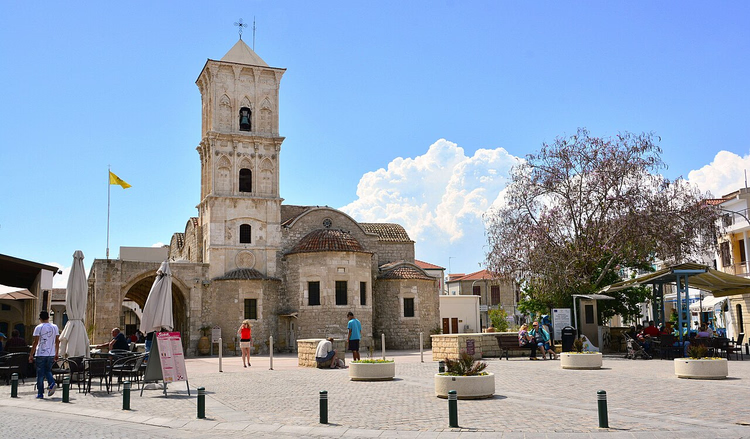
The city's main church, the Church of Saint Lazarus, is a monument of 9th-century Byzantine architecture. Frescoes, bas-reliefs, and a carved iconostasis have been preserved inside. The archaeological museum with finds from ancient civilizations is also worth a visit.
- Getting there: 20 minutes from Larnaca Airport (by car).
- Cost: entry to the Church of Saint Lazarus is free, the fortress requires a ticket.
- Who it's for: for the first and last night on the island.
- The catch: the beaches right in the center are rocky; you need to head to the suburbs for sand.
See hotels in Larnaca on Trip.com
8. Nicosia
 © Максим Улитин · CC BYPhoto: Максим Улитин, CC BY (https://creativecommons.org/licenses/by/3.0), Wikimedia Commons
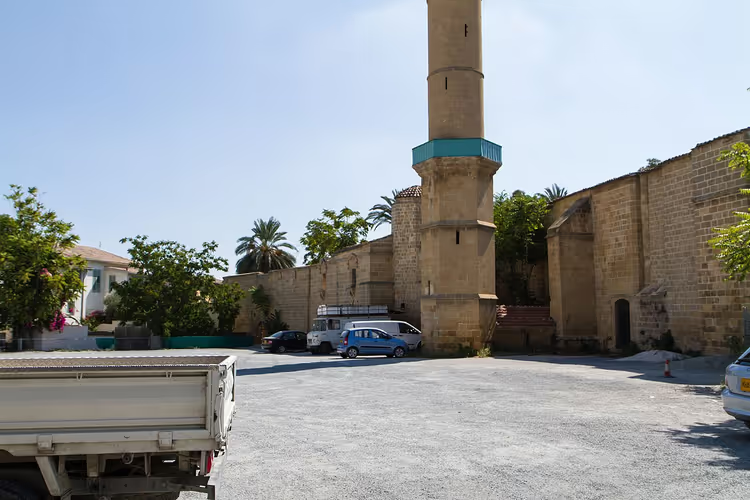
Nicosia, the capital of Cyprus and the only divided capital in Europe. Since 1974, the Greek and Turkish parts of the city have been separated by the UN "green line." The historic center lies within 15th-century Venetian fortress walls.
A car in the Old Town isn't necessary, and is more of a hindrance: the streets are narrow and parking is hard to find. Leave your car in a lot by the walls and continue on foot. That way you can calmly explore the quarters with monasteries, churches, and mosques.
Inside the walls, make time for the Cathedral of St. John the Theologian. From the outside it looks modest, but inside it is decorated with vivid paintings. Nearby stands the Archbishop's palace complex with its tall arches.
You can cross into the northern part on foot through the checkpoint on Ledra Street. Bring your passport and allow 20-30 minutes for the border.
- Getting there: 40 minutes from Larnaca via the A2 highway (by car).
- Cost: walking around the Old Town is free, individual museums require a ticket.
- Who it's for: for those who want to add variety to a beach vacation.
- The catch: in summer, the walled center is hot and stuffy.
9. Troodos
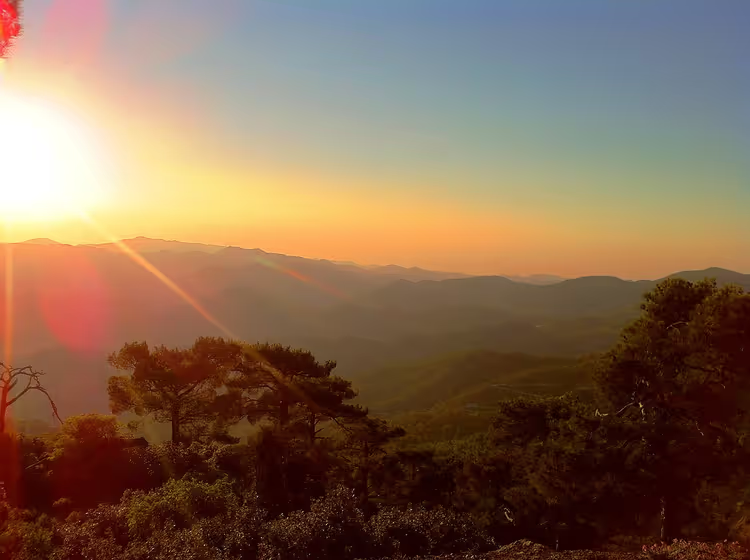 © Tech bro · CC BY-SAPhoto: Tech bro, CC BY-SA (https://creativecommons.org/licenses/by-sa/3.0), Wikimedia Commons
Troodos is a mountain range in the center of the island with a unique ecosystem. It's cooler here than on the coast, and more than a hundred plant species grow here: pines, cedars, junipers, and oaks. There are streams and waterfalls in the valleys.
The roads in the mountains are narrow and winding, with steep climbs. It's a distinct driving experience, especially behind the wheel of a right-hand-drive car. Drive calmly and don't overtake on the switchbacks.
Old villages with stone houses and Byzantine churches are scattered throughout the mountains. Some of the churches are on the UNESCO list. They contain frescoes from the 11th to 15th centuries.
- Getting there: 1 hour from Limassol via the B8 highway (by car).
- Cost: driving through the mountains is free, entry to the painted churches is paid.
- Who it's for: for cool air and mountain scenery.
- The catch: the switchbacks can cause motion sickness; stop more often at viewpoints.
10. Platres
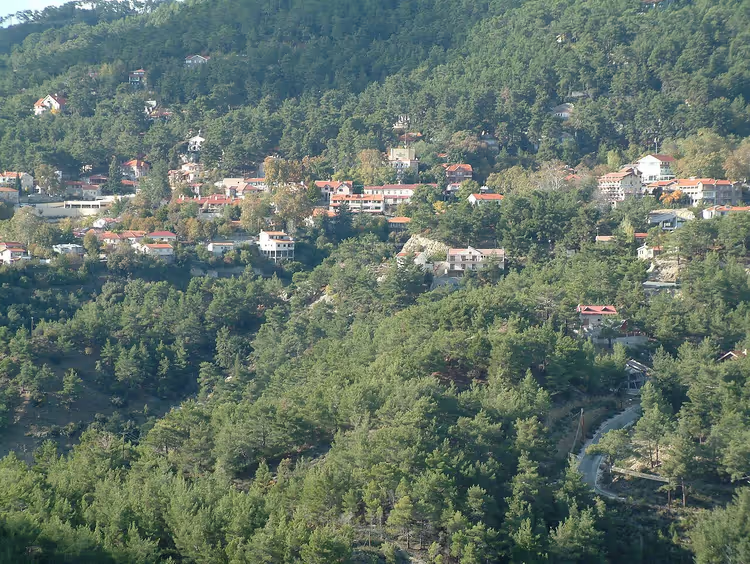 © AlekosCY · CC BY-SAPhoto: AlekosCY, CC BY-SA (https://creativecommons.org/licenses/by-sa/3.0), Wikimedia Commons
Platres sits at an altitude of 1,200 meters on the southern slopes of Troodos. The village is nestled in a pine forest, and people come here to escape the coastal heat. In summer it's noticeably cooler here than in Limassol.
Leave your car in the free parking lot and explore on foot. Along the streets stand red-brick houses, souvenir shops, and confectioneries. Some houses are built on rocky cliffs below road level, so from the street they look single-story.
The village's main attraction is the chocolate factory. They show the production process and sell handmade chocolate, with some candies covered in gold leaf. From Platres, a forest trail leads to a waterfall and stream, as well as to a trout farm.
- Getting there: 40 minutes from Limassol via the B8 highway (by car).
- Cost: walking around is free, the factory tour requires a ticket.
- Who it's for: for families and those who love cool weather.
- The catch: mornings are often foggy and damp; bring a warm jacket.
11. Mount Olympos
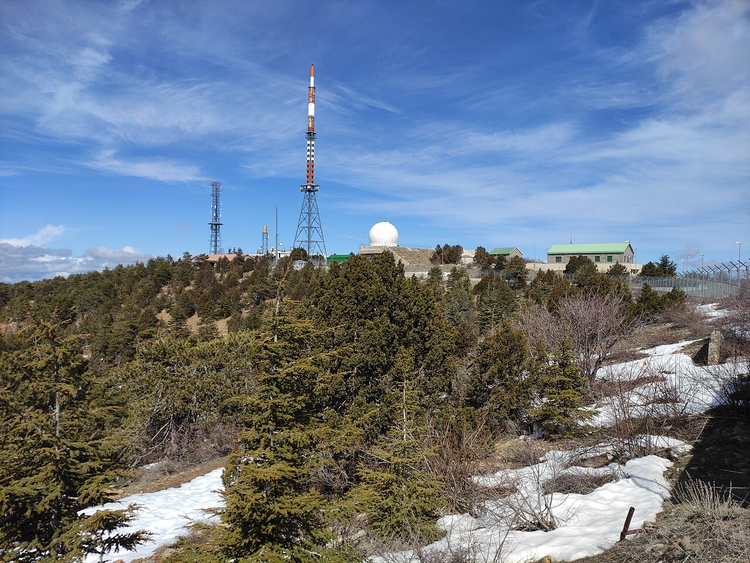 © Fry72, Karel Frydrýšek · CC BY-SAPhoto: Fry72, Karel Frydrýšek, CC BY-SA (https://creativecommons.org/licenses/by-sa/4.0), Wikimedia Commons
Olympos is the highest point on the island, 1,952 meters above sea level. It's a popular spot for hiking. People leave their cars in the parking lot and continue on foot along marked trails.
A network of tourist paths with a total length of up to 14 kilometers runs along the slopes. The routes pass through pine and cedar groves, and the air smells of pine needles. The climb opens up views of the sea, forests, and surrounding villages.
You can't go up to the very summit: there's a military base and a British forces radar there. Access is open to the lower viewpoints.
- Getting there: 20 minutes from Platres along a mountain road (by car).
- Cost: visiting is free.
- Who it's for: for hiking in the forest.
- The catch: the summit itself is off-limits due to the military base.
12. Kykkos Monastery
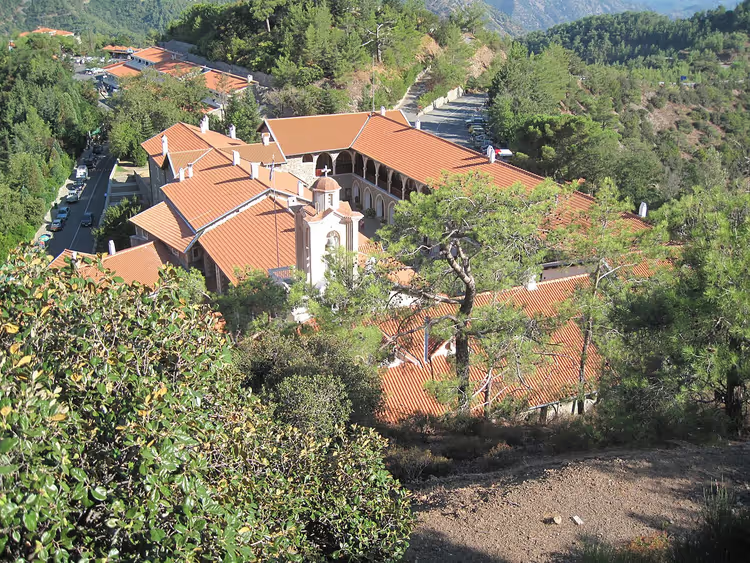 © Dickelbers · CC BY-SAPhoto: Dickelbers, CC BY-SA (https://creativecommons.org/licenses/by-sa/3.0), Wikimedia Commons
Kykkos Monastery is the most famous monastery in Cyprus, at an altitude of 1,318 meters. It houses a miraculous icon of the Mother of God attributed to the Apostle Luke. The monastery was founded in the 11th century and remains active.
Entry to the monastery is free, but dress modestly: covered shoulders and knees, and women should bring a headscarf. Tourists are usually allowed in from 10:00 to 16:00 from November to May and until 18:00 from June to October (as of 09/2026, Visit Cyprus).
Inside there's a paved courtyard with a well, and the buildings are connected by arched galleries. The walls and ceilings of the church are decorated with mosaics and frescoes. The museum houses relics, manuscripts, and ancient icons.
- Getting there: 1 hour from Platres along switchbacks (by car).
- Cost: entry is free, the museum requires a separate ticket (as of 09/2026, official tourism office website).
- Who it's for: for pilgrims and lovers of Byzantine art.
- The catch: the mountain road is narrow, and it's slippery here in the rain.
13. Famagusta
 © Mike McBey · CC BYPhoto: Mike McBey, CC BY (https://creativecommons.org/licenses/by/2.0), Wikimedia Commons
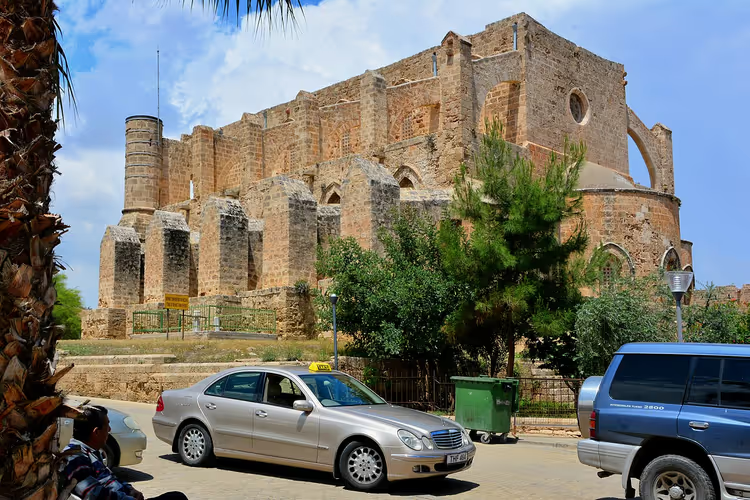
Famagusta is a major port city in Northern Cyprus with a history spanning more than 2,000 years. Before 1974, it was a fashionable resort with first-class hotels. After the Turkish invasion, the city was divided by buffer zones controlled by UN troops and the Turkish army.
The once-prestigious Varosha district has turned into a ghost neighborhood. Empty high-rise buildings have stood without owners for decades. Part of Varosha has been reopened to visitors, and entry is by passport.
The Old Town is surrounded by a Venetian fortress wall. Inside, Gothic cathedrals with stone carvings have been preserved. The main one, the former Cathedral of St. Nicholas, now operates as the Lala Mustafa Pasha Mosque.
- Getting there: 1 hour 15 minutes from Larnaca via the Dhekelia checkpoint (by car).
- Cost: entry to the Old Town is free, individual museums require a ticket.
- Who it's for: for history lovers and those who enjoy unusual places.
- The catch: there may be a queue at the border, and part of Varosha is closed to tourists.
See hotels in Famagusta on Trip.com
14. Kantara Castle
 © Dickelbers · CC BY-SAPhoto: Dickelbers, CC BY-SA (https://creativecommons.org/licenses/by-sa/3.0), Wikimedia Commons
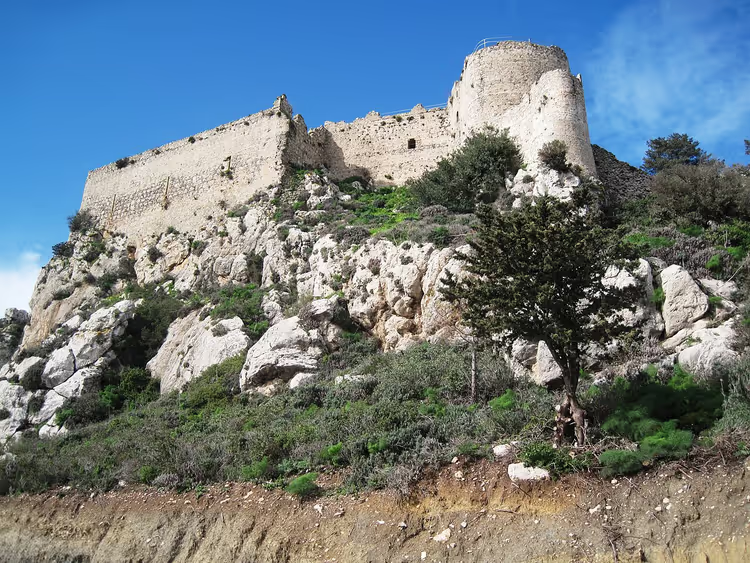
Kantara Castle stands at 630 meters in the mountains of Northern Cyprus. The first mention dates back to 1191, when the island was conquered by Richard the Lionheart. The fortress controlled the sea area and mountain passes.
There is a small parking lot at the foot. A climb up steps cut into the rock leads to the castle. It is a multi-level fortification with massive round towers at the corners.
Inside, spacious halls have been preserved: barracks with vaulted ceilings, storerooms, and stables. From the upper platform, a panorama opens onto the bay and the Karpas Peninsula. This is the best viewpoint on the northern coast.
- How to get there: 40 minutes from Kyrenia along the highway (per the map).
- Cost: paid entry, rates change once a year, check on site.
- Who it's for: for those willing to climb the steps for the view.
- The catch: the climb on foot up steep steps, little shade on the platform.
15. Kyrenia
 © Josef Moser · CC BY-SAPhoto: Josef Moser, CC BY-SA (https://creativecommons.org/licenses/by-sa/4.0), Wikimedia Commons
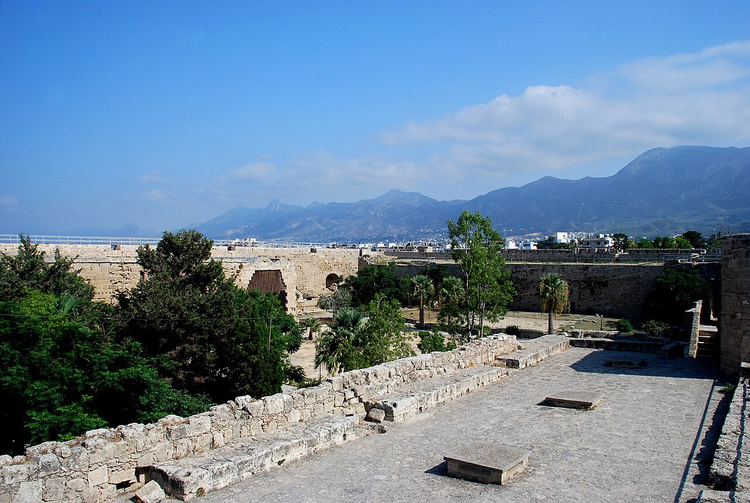
Kyrenia is a popular resort in Northern Cyprus at the foot of the mountain range of the same name. The city bans buildings taller than five stories, so it feels low-rise and cozy. Hotels, cafes, and restaurants are available for every budget.
The city's dominant landmark is the fortress at the harbor entrance. Inside, a shipwreck museum displays the remains of an ancient vessel from the 4th century BC. From the fortress, a horseshoe-shaped bay opens up with a promenade lined with yachts and fishing boats.
The old quarter retains Venetian-style houses. The bell tower of the Church of Archangel Michael rises above the city. Leave your car in the parking lot and you can walk to all the main sights.
- Getting there: 30 minutes from Nicosia through the checkpoint (see map).
- Cost: fortress entry is ticketed, check the price on site.
- Who it's for: for a relaxed stay in the north of the island.
- The catch: the harbor area is crowded with tourists, and finding parking takes longer than in other towns.
See hotels in Kyrenia on Trip.com
16. Bellapais Abbey
 © Chris06 · CC BY-SAPhoto: Chris06, CC BY-SA (https://creativecommons.org/licenses/by-sa/4.0), Wikimedia Commons
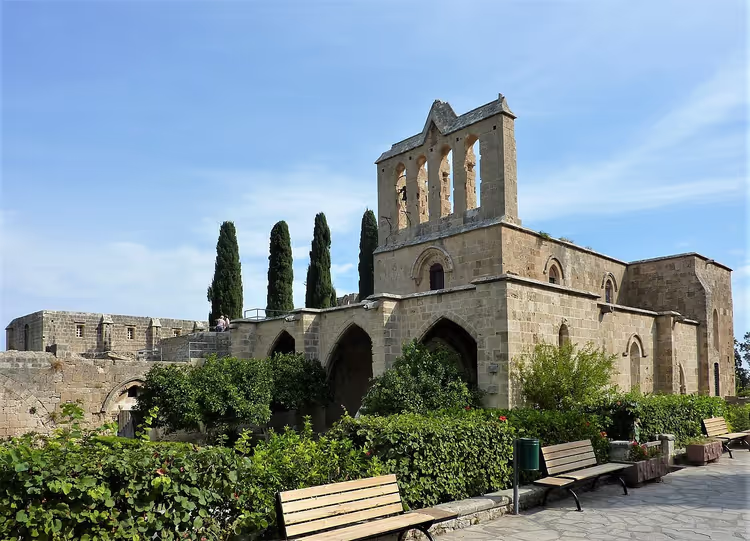
Bellapais is a prime example of 13th-century Gothic architecture in Northern Cyprus. The monastery complex crowns a steep cliff above the village, a few minutes' drive from Kyrenia. The abbey is known far beyond the island and inspired Lawrence Durrell to write the book "Bitter Lemons."
The abbey gained fame as a pilgrimage site after the crusader Roger Norman gifted it a fragment of the True Cross from Jerusalem. Of the majestic buildings made of light shell limestone, only a few structures have survived.
The church retains remnants of wall paintings, high vaulted ceilings, and a carved pulpit. The refectory hall is known for its perfect acoustics, and concerts are held here in summer. The inner courtyard is framed by an arched gallery with columns.
- Getting there: 10 minutes from Kyrenia up the road (see map).
- Cost: entry is paid, the rate changes once a year, check on site.
- Open: daily during daylight hours, check exact times at the entrance.
- Who it's for: for lovers of Gothic architecture and panoramic views.
- The catch: the complex is partially ruined, and some halls are closed to visitors.
17. Karpas
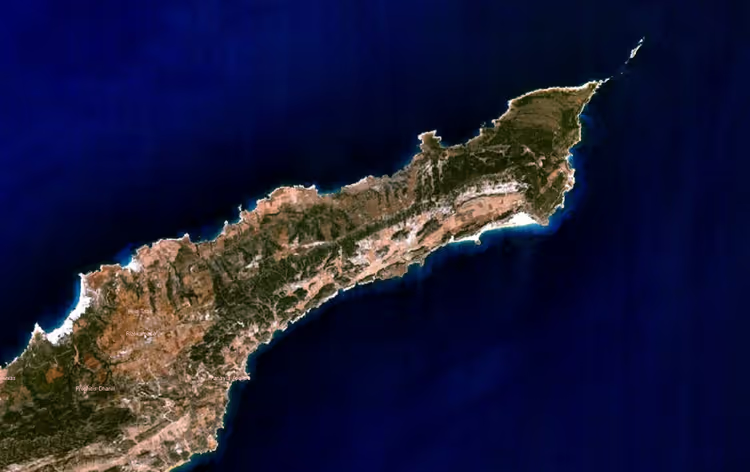
Karpas is a long peninsula in the northeast of the island and a national nature reserve. It features miles of golden beaches and low hills covered with olive trees and pines. There are few tourists and almost no infrastructure.
The drive from Kyrenia takes about two hours along a narrow road. Along the way you pass old villages, archaeological sites, and ancient churches. Gas stations and cafes are scarce, so bring water and fill up in advance.
On the rocky shore stands the Monastery of Apostle Andrew the First-Called. It is a modest stone monastery with a holy spring. The church preserves a three-tiered iconostasis with wooden carvings and gilding.
- Getting there: about 2 hours from Kyrenia along the highway (see map).
- Cost: visiting the beaches and the monastery is free.
- Who it's for: for wild nature and solitude.
- The catch: there is almost no infrastructure, so you need your own water and food for the whole day.
Cyprus road trip route on the map
The most convenient approach is to build a clockwise loop: start in Larnaca, then Ayia Napa and Cape Greco, then Lefkara, Zygi and Aphrodite's Rock, Paphos in the west, up to Troodos, Nicosia in the center, and finish in the north. Below is an interactive map with marked points.
Road trip route around Cyprus
Places on the map
- 1Ayia Napa The main club resort with the sandy beaches Nissi and Makronissos, 40 minutes from Larnaca
- 2Cape Greco Cliffs with grottoes and sea arches, a white chapel on the edge, free to visit
- 3Lefkara A village on the slopes of Troodos, home to the UNESCO-listed lefkaritiko lace
- 4Aphrodite's Rock Rocks in the sea on the Limassol-Paphos road, swimming is hindered by waves and currents
- 5Paphos The whole city is UNESCO-listed, Kato Paphos park costs 4.50 euros, the Tombs of the Kings 2.50
- 6Zygi A fishing village with seafood taverns between Larnaca and Limassol
- 7Larnaca The Finikoudes promenade, a 14th-century fortress and the Church of Saint Lazarus, 20 minutes from the airport
- 8Nicosia The only divided capital in Europe, the Old Town lies within Venetian walls
- 9Troodos A mountain range in the center of the island, Byzantine churches with 11th-15th century frescoes
- 10Platres A village at an altitude of 1,200 meters in a pine forest, a chocolate factory and a trail to a waterfall
- 11Mount Olympus The island's highest point at 1,952 meters, up to 14 kilometers of trails, the summit itself is off-limits
- 12Kykkos Monastery The island's most famous monastery at 1,318 meters, free entry, the museum requires a ticket
- 13Famagusta A port city in Northern Cyprus, the ghost district of Varosha and Gothic cathedrals within the walls
- 14Kantara Castle A fortress at 630 meters with a panoramic view of the bay and the Karpas peninsula
- 15Kyrenia A resort with a harbor fortress and a shipwreck museum, buildings no taller than five floors
- 16Bellapais Abbey A 13th-century Gothic monastery on a cliff, a refectory with perfect acoustics
- 17Karpas A protected peninsula with golden beaches and the Apostolos Andreas Monastery, two hours from Kyrenia
Plan no more than two or three stops per day. The roads in Troodos and Karpas are winding and take more time than the navigator suggests. If you haven't booked a car yet, you can compare car rental prices on Discovercars in just a couple of minutes.
Tours and tickets
Guided tours, skip-the-line tickets and activities — most offers can be cancelled free of charge.
See offers on GetYourGuideThe widget loads once you give your consent.
⁉️🤔 Frequently asked questions
Can you cross into Northern Cyprus with a rental car?
Yes, through the "green line" checkpoint with a passport, but you need additional insurance at the border. Not all rental companies allow such trips, so check the policy before booking. Allow 20-30 minutes for paperwork at the border.
How many days do you need for the island route?
For all 17 stops, 7-10 days is comfortable, with 2-3 sights per day. In 3-4 days you can only cover the south with Ayia Napa, Paphos, and Larnaca. The north with Kyrenia and Famagusta is better saved for a separate trip.
Do you need a car in Nicosia?
No, in the Old Town a car is more of a hindrance: the streets are narrow, and parking is paid and packed. Leave your car by the city walls and walk. The northern part of the city is also easier to explore on foot through the checkpoint on Ledra Street.
When is the best time to visit Cyprus by car?
The most comfortable time is from April to June and in September-October: warm but without the exhausting heat of July and August. In winter the coast is cool and rainy, but you can catch snow in Troodos. In high season, book your car and hotels in advance.
How much does entry to the main attractions cost?
The Paphos Archaeological Park costs €4.50, the Tombs of the Kings €2.50 (as of 09/2026, Cyprus tourism office data). Monasteries, beaches, and Cape Greco are free. In Northern Cyprus, fortress entry is paid, with rates in Turkish lira that change every year.
Do you need to buy tickets in advance?
In high season, the line at the Paphos Archaeological Park ticket office forms by 10 a.m. An online ticket is more convenient, but tickets are also sold at the entrance without restrictions. In Northern Cyprus, fortress tickets are only sold on site.
In short: what to book
The decision matrix is simple. If it's your first time on the island and you have a week, rent a car for the entire period and base yourself in Larnaca or Paphos. If you only want beaches, stay in the Ayia Napa area and don't waste time on mountain drives. If history interests you, build your route around Paphos, Nicosia, and the northern fortresses. And if you're coming for cooler weather, set aside 2-3 days for Troodos and Platres.
It's better to book your car in advance, before high-season prices rise: compare car rental prices on Discovercars.

A small editorial team writing guides for independent travel. We travel ourselves, but we haven’t been everywhere, so we check prices, opening hours and how to get there against official sources.