
















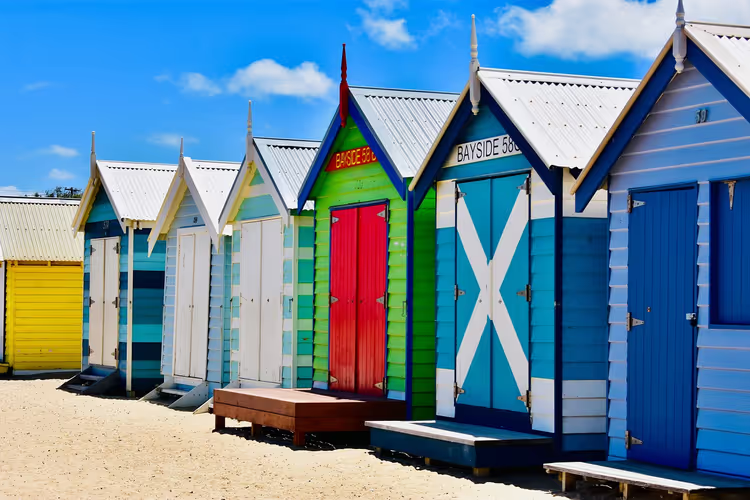
12 Beaches of the world with pink, green and black sand
Sand can be pink, green, black, and even glass. On one shore, hot water bubbles under your feet; on another, a passenger airliner lands almost directly overhead. Beaches like these are not fiction, and nearly all of them can be visited. We have gathered twelve places where nature or people have made the shoreline extraordinary.
Pink sand in the Bahamas stretches for several kilometers along the Atlantic (as of 09/2026, Bahamas.com). The color comes from the shells of microorganisms, not from dye. Below you will find how to get there for each place and what to consider before the trip.
How we chose these unusual beaches
💡 In short: The list includes shores where the sand itself or the water behaves strangely. Sand changes color, water heats up, and the sea retreats for kilometers. Some places reveal themselves only in a narrow window between tides.
- Check tide schedules in advance. Without that, three beaches on the list will not look their best.
- Consider the season and weather. In a storm, access to Maho Beach is restricted, and thermal pools get flooded.
- Beach access and infrastructure: as of 09/2026.
1. Pink Beach in the Bahamas
 © Rüdiger Stehn from Kiel, Deutschland · CC BY-SAPhoto: Rüdiger Stehn from Kiel, Deutschland, CC BY-SA (https://creativecommons.org/licenses/by-sa/2.0), Wikimedia Commons
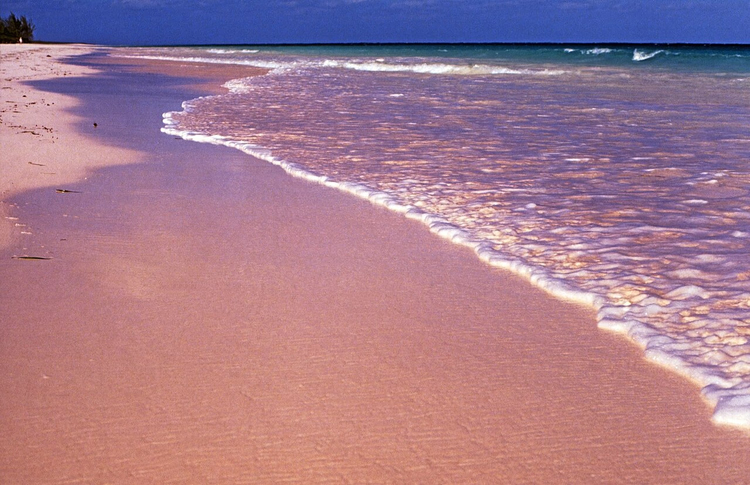
The beach lies on Harbour Island off the coast of Eleuthera, on the eastern side. The sand here is a soft pink shade, and the color does not fade even right at the water's edge. The shade comes from foraminifera shells: waves grind them up and mix them into the white coral sand.
The pink shore is sheltered by reefs. Because of that, the water near the beach is calm, and crowds and vendors are rare even in season. People come here to walk along the water and watch the sunset, not to throw loud parties.
- Who it's for: quiet walks along the water and romantic evenings.
- How to get there: from the neighboring island of Eleuthera, you get here by water.
2. Barking Sands on Kauai
 © Nfrastructure · CC BYPhoto: Nfrastructure, CC BY (https://creativecommons.org/licenses/by/2.0), Wikimedia Commons
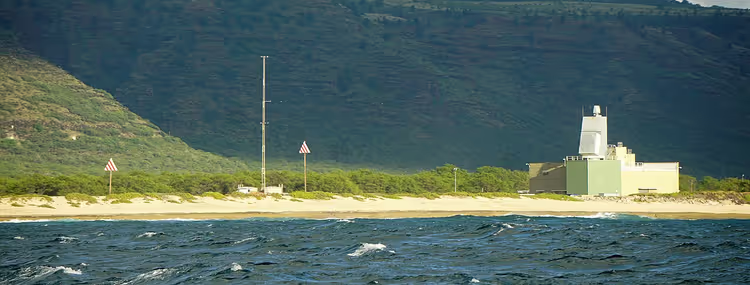
The beach lies on the Hawaiian island of Kauai, on the grounds of the PMRF military facility. Access to the shore is restricted. If you scoop up a handful of sand and clap your hands, it makes a sound similar to a dog barking. This effect comes from quartz, which is abundant in the local sand: the grains rub against each other and resonate.
The beach sits on the western side of the island, away from the main resorts. You will hear a rare sound and see the sunset over the Pacific, but swimming here is not advisable. Many people do not even know about this effect, so the shore remains uncrowded.
- Who it's for: those hunting for unusual natural effects.
3. Maho beach on Sint Maarten
 © Todd Neville from Scottsdale, USA · CC BYPhoto: Todd Neville from Scottsdale, USA, CC BY (https://creativecommons.org/licenses/by/2.0), Wikimedia Commons
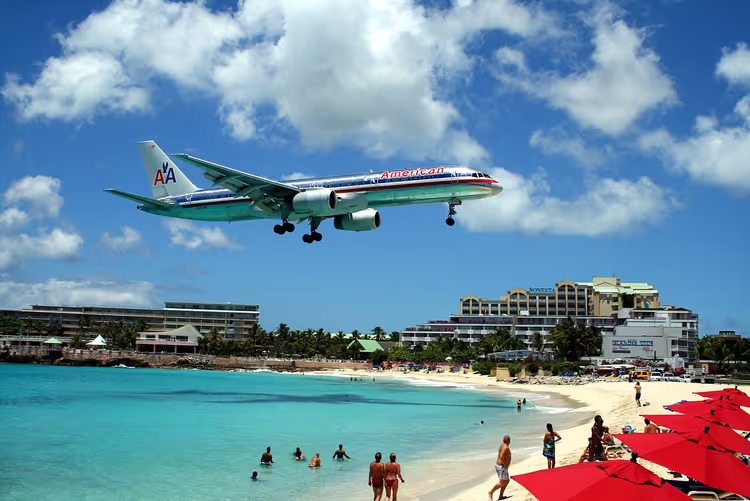
The beach lies right at the end of the runway at Princess Juliana Airport. Landing planes approach over the water and pass just a few meters overhead. This has turned an ordinary shore into the main spot for plane spotting.
The beach is on the Dutch side of the island of Saint Martin. When a large aircraft lands, a blast from the engines sweeps over the sand, and sand flies in your face. People come here specifically for that spectacle.
- How to get there: from the Princess Juliana Airport terminal, you can walk to the beach.
- Not for: relaxing with small children; the noise and blowing sand get in the way.
4. Papakolea green sand beach in Hawaii
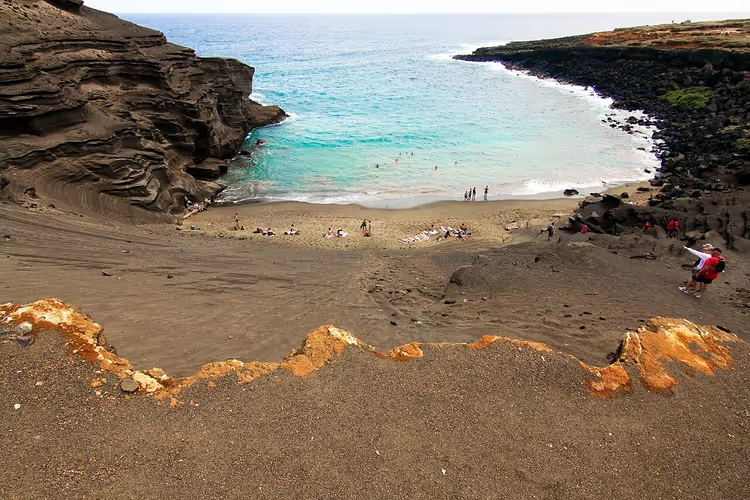 © Pushkr from , United States · CC BYPhoto: Pushkr from , United States, CC BY (https://creativecommons.org/licenses/by/2.0), Wikimedia Commons
The sand here is olive green. The color comes from the mineral olivine, which enters the sand from a collapsed volcanic cone nearby. Green beaches are rare, and Papakolea is on the short list of such places.
The beach lies at the southern tip of the island of Hawaii, next to an extinct crater. From the slope above, you can see the whole bay, so people climb up for the view.
- How to get there: the descent to the water follows a dirt road, and part of the way is walked.
- Who it's for: those willing to walk for a rare sand color.
5. San Alfonso del Mar Beach in Chile
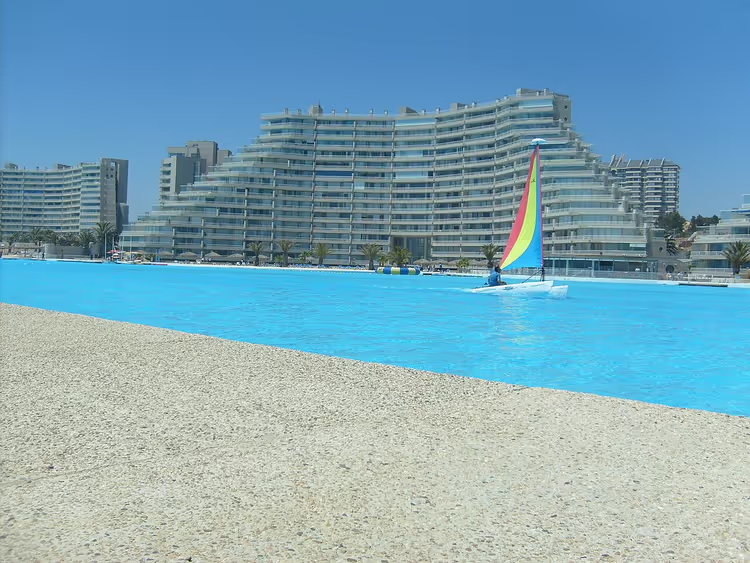 © Andrew Latham · CC BY-SAPhoto: Andrew Latham, CC BY-SA (https://creativecommons.org/licenses/by-sa/3.0), Wikimedia Commons
The beach sits next to the San Alfonso del Mar resort and its giant artificial pool. Here you can swim without waves and cold currents: the water in the pool warms up better than the ocean.
The sand on the shore is white, with gray tones in places. Exotic plants grow around it, and the shore looks well kept. Families with children choose this option when the ocean is too cold for swimming.
- Who it's for: calm swimming when the ocean is cold and rough.
6. Ocean Dome in Miyazaki
 © Jason7825 · CC BY-SAPhoto: Jason7825, CC BY-SA (https://creativecommons.org/licenses/by-sa/3.0), Wikimedia Commons
Ocean Dome stood in the Japanese city of Miyazaki and was considered one of the largest indoor water parks in the world. Under the dome, an artificial beach operated year-round: air temperature was controlled, palm trees were planted, and an artificial volcano "erupted" every hour.
The artificial waves were used for surfing lessons, and the retractable roof opened up the sky overhead. The complex closed on October 1, 2007, and the building was later dismantled (as of 09/2026, Wikipedia). You can't go there today, but the project remains an example of bold resort ideas.
- Status: the beach is closed, the site no longer exists, so it can't be added to an itinerary.
7. Playa de Gulpiyuri in Spain
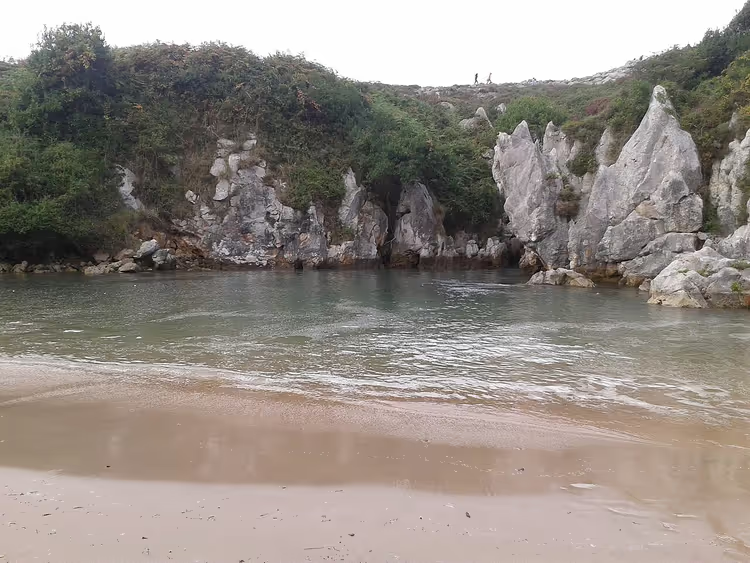 © Fernando Vázquez · CC BYPhoto: Fernando Vázquez, CC BY (https://creativecommons.org/licenses/by/3.0), Wikimedia Commons
The beach lies in Spain near the town of Llanes and looks like a small oasis among the rocks. There's no sea nearby: water reaches it through underground channels from the neighboring shore. Because of the shape of the rocks, the site resembles a shell.
The sandy strip is short, and swimming is only possible in calm weather. Dense vegetation rises all around, so the place feels like a secluded corner rather than a city beach.
- How to get there: you walk along a trail from the nearest parking lot.
- Who it's for: for a short stop along the Asturian coast.
8. Chandipur Beach in India
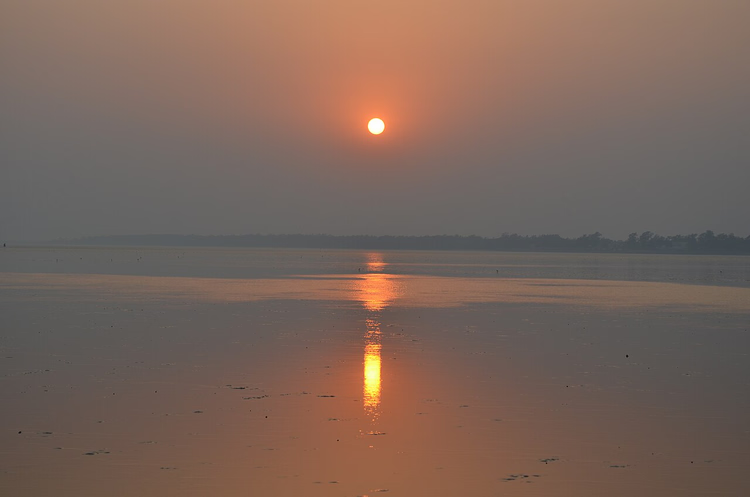 © Nihar.race · CC BY-SAPhoto: Nihar.race, CC BY-SA (https://creativecommons.org/licenses/by-sa/4.0), Wikimedia Commons
The beach is located in eastern India, in the state of Odisha. At low tide, the sea recedes for several kilometers, and you literally walk after the retreating water across the exposed seabed. You'll find shells and small crabs there.
The tide brings the sea back twice a day, and that's when swimming is possible. Sand dunes and thickets stretch between the shore and the water, so the view changes throughout the day.
- Who it's for: for watching the tide go out and for walks across the exposed seabed.
9. Bowling ball beach in California
 © Brocken Inaglory (edited by Noodle snacks ) · CC BY-SAPhoto: Brocken Inaglory (edited by Noodle snacks ), CC BY-SA (https://creativecommons.org/licenses/by-sa/3.0), Wikimedia Commons
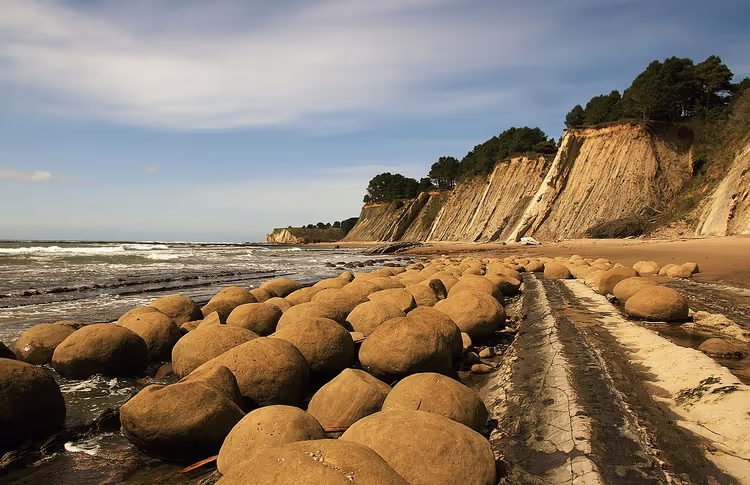
The beach lies in California near Mendocino, on the Pacific coast. The shore is strewn with round boulders that lie in rows along the water. The waves polished the stones for many years until they became as smooth as bowling balls.
From a distance, the rows of stones look like someone arranged them, although it's the ocean's work. Photograph them at low tide, when the boulders are fully visible.
- Who it's for: for a walk and photos, not for lying on the sand.
10. Glass Beach in California
 © Ryanx7 · CC BY-SAPhoto: Ryanx7, CC BY-SA (https://creativecommons.org/licenses/by-sa/4.0), Wikimedia Commons
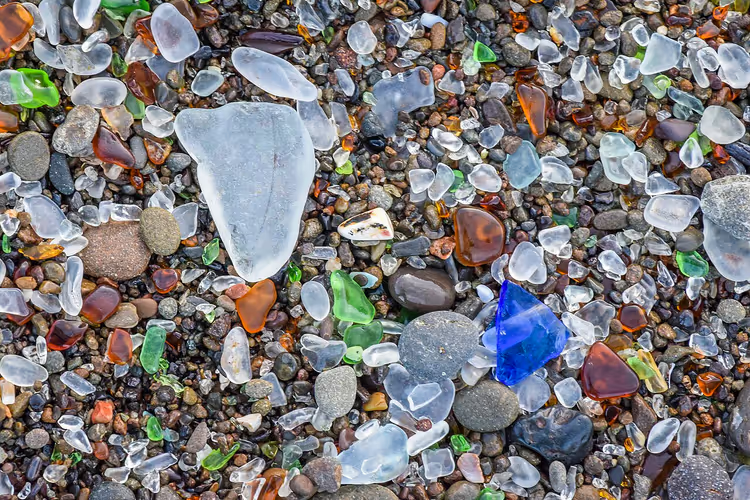
Glass Beach is part of a coastal park near the city of Fort Bragg. Instead of sand, it's covered with colorful pebbles made of water-polished glass. Trash was once dumped here, and over decades the ocean turned bottle shards into smooth little stones.
Today there's noticeably less colored glass here than in old photos. You can't collect it: this is park territory, not a souvenir shop. Come for a coastal walk and photos against the backdrop of the pebbles.
- Who it's for: for a walk in the park and photos, not for a bag of souvenirs.
11. Punaluʻu black sand beach in Hawaii
 © Diego Delso · CC BY-SAPhoto: Diego Delso, CC BY-SA (https://creativecommons.org/licenses/by-sa/3.0), Wikimedia Commons
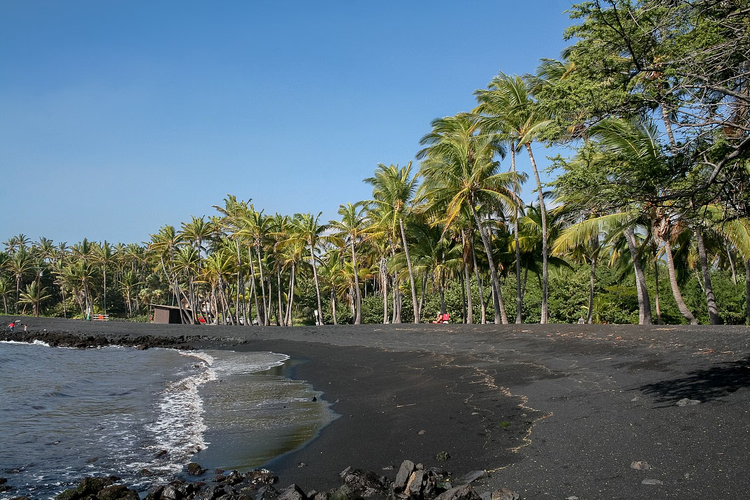
Punaluʻu Beach lies on the southern coast of the island of Hawaii and is known for its black sand. The color comes from volcanic basalt: lava once flowed into the ocean, cooled, and crumbled into fine grains.
Green sea turtles often rest near the water. This species is protected, so touching or disturbing the animals is prohibited. Watch them from a respectful distance and don't get too close.
- Who it's for: for watching turtles from a safe distance.
12. Hot water beach in New Zealand
 © W. Bulach · CC BY-SAPhoto: W. Bulach, CC BY-SA (https://creativecommons.org/licenses/by-sa/4.0), Wikimedia Commons
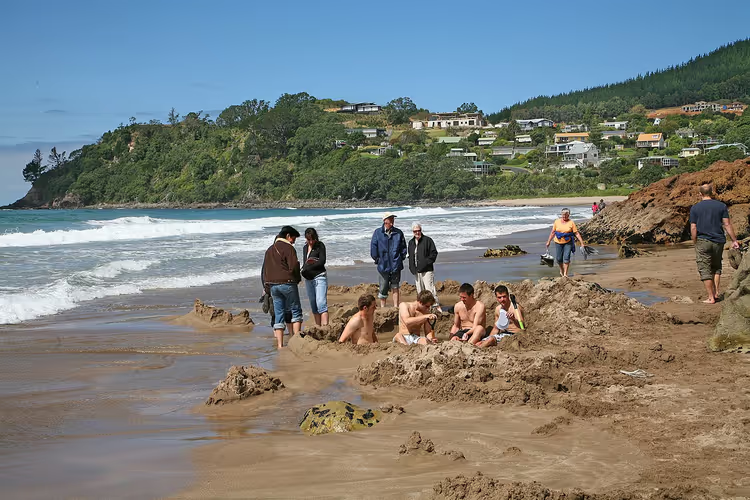
The beach lies on the Coromandel Peninsula in New Zealand. Geothermal springs rise beneath the sand, and at low tide the water breaks through right on the beach. People come with shovels, dig a hole near the water's edge, and get their own personal bath.
The window is short: you should dig about two hours before low tide and a couple of hours after. The deeper the hole, the hotter the water, so people mix it with cool seawater. The spring water can be very hot, up to 64 °C, so step in carefully.
At high tide the holes get washed away. Check the tide schedule and keep children away from the water. You can rent a shovel near the beach (as of 09/2026, The Coromandel).
- Who it's for: couples and families who want to soak in hot water on the ocean shore.
- The catch: without a shovel and tide calculations, nothing will work.
⁉️🤔 Frequently asked questions
Which of these beaches can you swim at?
Almost all of them, except the Ocean Dome, which no longer exists, and Barking Sands, where swimming is not recommended. At Gulpiyuri people swim only in calm weather. Calm water awaits you at the pink beach in the Bahamas and at the San Alfonso del Mar pool. At Maho and the "rolling stones" beach swimming is inconvenient, and at Chandipur the sea returns only at high tide.
When does Hot Water Beach in New Zealand work?
The springs open at low tide: you can dig about two hours before low water and a couple of hours after. At high tide the holes get washed away and there is nowhere to soak. Before heading out, check the low tide time on the schedule and rent a shovel.
Can you take glass from Glass Beach in California?
No. The beach is part of a coastal park near Fort Bragg, and removing glass, rocks, and shells from there is prohibited. Look and take photos, but leave the pebbles in place.
What happened to the Ocean Dome in Japan?
The complex in Miyazaki closed on October 1, 2007, and the building was later demolished (as of 09/2026, Wikipedia). The indoor artificial beach no longer exists, so don't plan a trip there.
What should you bring to an unusual beach?
Closed-toe shoes, water, and a hat. At the rolling stones beach you need non-slip soles, and at the hot springs a shovel comes in handy. For Maho Beach, bring a camera cover: sand flies into your face and gear.
In short: what's worth booking
For colored sand, start with the Bahamas and Hawaii: the pink shore at Harbour Island and the green Papakōlea give you the most vivid photos. For a spectacular sight, head to Maho, where planes land right by the shore.
For calm swimming, the pink beach and the San Alfonso del Mar pool are good choices. For a hands-on experience, pick Hot Water Beach: a couple of hours around low tide will be memorable for a long time. Before you go, check the tide schedule on the official Coromandel tourism office website.

A small editorial team writing guides for independent travel. We travel ourselves, but we haven’t been everywhere, so we check prices, opening hours and how to get there against official sources.