

















New Year in Rio de Janeiro: white dress code and fireworks over Copacabana
On December thirty-first, many Rio residents spend the night not at home, but on the sand. Copacabana Beach draws several million people, and almost everyone wears white. This is what the biggest New Year's Eve in Brazil looks like.
If you are heading to Rio for the holidays, it is worth understanding the night's schedule, local customs, and the route into the city in advance. Fireworks here are launched from 19 barges and last 12 minutes (as of 12/2025, Rio city hall on the holiday program). Below: transport, documents, the white dress code, and what happens after midnight.
Ad: this article contains affiliate links. We earn a commission if you book through them, at no extra cost to you.
How Rio celebrates New Year's Eve
💡 In short:
- Copacabana on December thirty-first: beach access is free, fireworks at exactly midnight.
- White clothing all night: locals in Rio consider this custom a good omen.
New Year's Eve in Rio falls in the middle of the southern summer. December and January here are warm and humid, so the celebration happens not at the dinner table, but by the ocean. The city starts preparing early: garlands and large artificial Christmas trees appear on the streets as early as November.
 © over_kind_man · CC BYPhoto: over_kind_man, CC BY (https://creativecommons.org/licenses/by/2.0), Wikimedia Commons
Local customs have blended with European ones. Brazilians honor their Afro-Brazilian heritage while also loving family gatherings. That is how a night comes together where rituals, music, and a crowd of millions on the sand stand side by side. You do not need a guide to understand its logic, but a few rules will save you time.
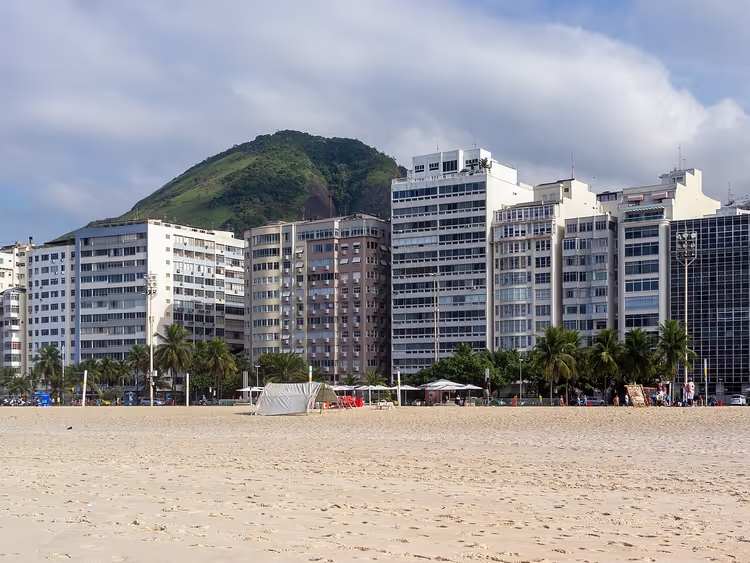
The main focal point of the celebration is predictable: Copacabana Beach with its long shoreline. White outfits, a glass of sparkling wine, and fireworks over the water have become the city's calling card. Below, we will look at how to get there and what to bring.
How to get to Rio de Janeiro
There are no direct flights from most European cities to Rio. You fly with one connection, and convenient layovers are offered by Lisbon, Madrid, and São Paulo. December tickets sell out early, so book your flight and accommodation several months in advance.

All international flights arrive at Galeão Airport, also known as Tom Jobim. It lies about twenty kilometers north of the center. You reach Copacabana and Ipanema by taxi or ride-hailing app, and the drive through evening traffic easily takes over an hour.
Leave the airport early in the morning or late in the evening, when the highways are clearer. Official taxis run on the meter, and it is better to exchange currency in the city rather than in the arrivals hall. Remember: during rush hour, any trip across the city takes twice as long.
What documents you need
Citizens of Germany and other EU countries do not need a visa for Brazil for stays of up to 90 days (as of 09/2026, Auswärtiges Amt). At the border, you will be asked for a valid passport and a return ticket, and if questioned, proof of accommodation and funds for the trip.
 © Rafael Rabello de Barros · CC BY-SAPhoto: Rafael Rabello de Barros, CC BY-SA (https://creativecommons.org/licenses/by-sa/3.0), Wikimedia Commons
Check your passport's expiration date before departure. It must be valid for the entire period of your stay, otherwise you will be turned away at the check-in counter. Always verify the latest entry rules on the official website before traveling.
You should also arrange insurance for the entire duration of your vacation. Heat, ocean, and long-distance travel increase the risks, and medical care for tourists in Brazil is expensive. Take out a policy in advance, it gives you peace of mind.
Preparing for New Year's Eve
You should start planning the trip in the fall. New Year's Eve is considered peak season in Rio, and hotels in the South Zone fill up months ahead. Prices near Copacabana in late December are noticeably higher than usual, so look at Rio de Janeiro hotels on Trip.com early and compare neighborhoods.
The city decorates gradually. Garlands, illuminations, and artificial Christmas trees appear in squares and streets as early as November. Brazilians decorate private homes just as well as public spaces. All the beauty stays up until mid-January, so the festive mood will follow you throughout your vacation.
 © Ermell · CC BY-SAPhoto: Ermell, CC BY-SA (https://creativecommons.org/licenses/by-sa/4.0), Wikimedia Commons
What to bring. Light, light-colored clothing, a swimsuit, a hat, and sunscreen. For the beach night, a thin wrap is useful, as it can be windy by the ocean. Choose comfortable shoes, because you will be walking a lot to get to Copacabana.
Decide in advance where to spend midnight. Some people join the crowd on Copacabana, others book a table at a restaurant with a beach view. Both options work, but the second requires booking a couple of months ahead.
New Year's Eve on Copacabana
New Year's Eve in Rio combines Afro-Brazilian rituals and European holiday habits. For locals, it means more than a party and serves as an occasion to appease the spirits of the sea. The main figure of the night is Iemanjá, the goddess of the ocean.
People bring her offerings. Candles are lit on wooden stands and set afloat on the water while making a wish. If the flame does not go out for a long time, the wish is believed to come true. White flowers are also given: they are thrown into the waves, and if the surf does not return the bouquet to shore, the wish will be fulfilled.
 © Leandro Neumann Ciuffo · CC BYPhoto: Leandro Neumann Ciuffo, CC BY (https://creativecommons.org/licenses/by/2.0), Wikimedia Commons
The celebration itself starts in the evening and lasts until morning. Closer to midnight, the popping of champagne corks is heard on the beach, and at exactly midnight they merge into a single chorus. Thousands of people count down the final seconds out loud, looking at the ocean.
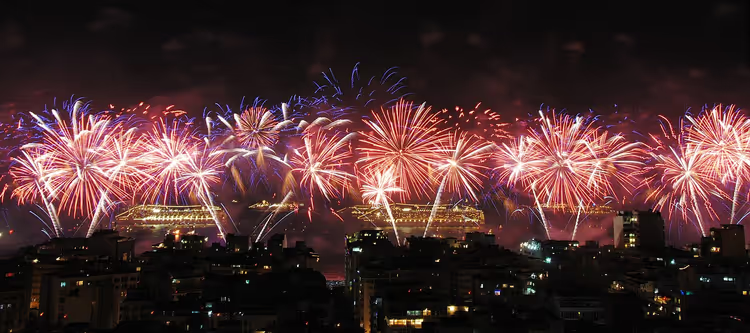
Then the pyrotechnic show begins. Fireworks are launched from the water, from floating platforms, and last season the city nearly doubled their number (as of 12/2025, city New Year's program). Sparks fall straight into the waves, while volleys of light burst over the beach.
Almost everyone wears white. White clothing in Brazil is associated with peace, renewal, and wishing good to one's neighbors. That is why on New Year's Eve Copacabana turns into a sea of white, and the celebration itself breaks attendance records. According to The Rio Times, about 2.5 to 3 million people come here, and Guinness has recognized the celebration as the largest in the world.
The best place to watch the fireworks is not from the center of the crowd, but from its edge. Near Forte do Leme and along the beach toward Ipanema it is calmer, with more space and less crowding. Keep your valuables on you, and put your phone and money in an inner pocket.
In the first minutes of the new year, people hug and shout "Feliz Ano Novo!", which means "Happy New Year!" They drink sparkling wine, dance on the sand, and take photos under the fireworks. The mood only grows by morning, and no one rushes home.
Another bright spot of the night is at Rodrigo de Freitas Lagoon. A floating Christmas tree stands there: it is about 60 meters tall, and its illumination includes around 900,000 lights (as of 12/2025, city hall page on the floating tree).
The holidays do not end there. Already in February, the carnival at the Sambadrome kicks off in Rio, and the city once again lives with music and dancing. New Year's Eve is just the first big rehearsal.
⁉️🤔 Frequently asked questions
When exactly are the New Year's fireworks launched?
Fireworks are launched at exactly midnight on Copacabana Beach. It is worth getting a spot on the sand a couple of hours before the start.
Do I need a visa to travel to Brazil?
Citizens of the EU and Germany do not need a visa for stays of up to 90 days (as of 09/2026, German Foreign Office guidance). Check the exact requirements on the official website before departure.
Why does everyone wear white on New Year's Eve?
The custom comes from Afro-Brazilian traditions and has become common across the whole city. If you do not have a white outfit, take a light-colored T-shirt: what matters more is that you feel comfortable.
What do people give to the sea goddess Iemanjá?
Candles on wooden stands and white flowers, which are thrown into the waves.
Where can I see the floating Christmas tree in Rio?
At Rodrigo de Freitas Lagoon. The tree is lit in December and stays up until mid-January.
In short: what to book
New Year's Eve is open to everyone and does not sell tickets, but the trip itself should be put together in advance. If you are short on time, book a hotel in the South Zone and head to Copacabana by evening. If you want to see more of the city, add a trip to the Christ the Redeemer statue and a walk around Rodrigo de Freitas Lagoon. Tours and excursions on GetYourGuide help sort out logistics and a guide. Book accommodation and excursions months ahead, because late December in Rio is considered peak season.

A small editorial team writing guides for independent travel. We travel ourselves, but we haven’t been everywhere, so we check prices, opening hours and how to get there against official sources.