
















Where to go from Baku for one day: 15 places, tickets and route
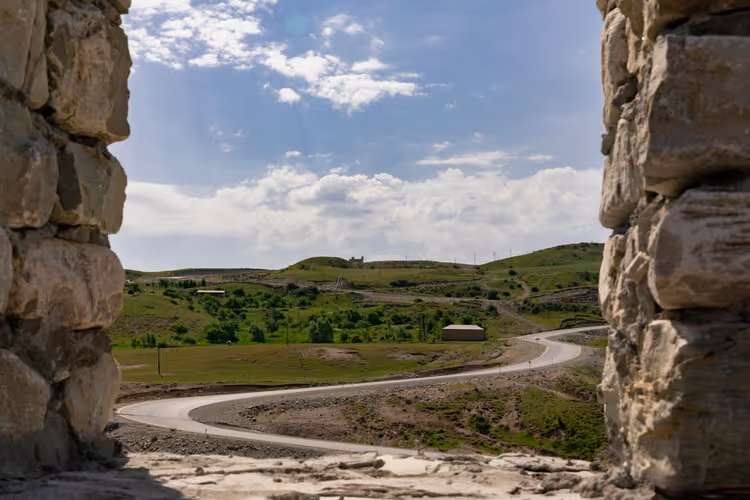
Colorful Baku sits on the Absheron Peninsula, from where you can reach rock carvings, a working fire temple, and the mountain villages of the Caucasus in a single day. Distances here are deceptive: a short route on the map can easily stretch into two hours if you travel by bus with a transfer.
The short answer for a first trip is this. If you have only one free day, take the Absheron route: Gobustan, the mud volcanoes, Ateshgah, and Yanar Dag are close together and fit into daylight hours. For history, people go to Shamakhi, Lahij, and Ganja, but that is a full-day trip with an early start.
Below we have collected 15 destinations with travel times, tickets, and honest catches. We checked prices and opening hours in September 2026, and links to sources are right in the text.
Ad: this article contains affiliate links, we earn a commission if you book through them, at no extra cost to you.
One day from Baku: how to choose a destination
💡 In short:
- Absheron: Gobustan, Ateshgah, Yanar Dag, and Gala are close to the center and can be done in one day.
- West of the country: Shamakhi, Lahij, and Ganja require an early departure or an overnight stay.
- Resorts: Mardakan, Bilgah, and Zagulba work for the beach, sanatoriums, and a relaxed day.
- Prices and tickets: 09/2026, checked on the Ateshgah reserve website
The destinations on the list differ in format. Some take a couple of hours, others eat up the whole day. Look at the table below: figure out how much time you have and pick the matching row.
Destination | Format | Travel from Baku | How much time |
|---|---|---|---|
Gobustan | Petroglyphs and museum | ~60 km | 3-5 hours |
Mud volcanoes | Unusual nature | near Gobustan | 1-2 hours |
Ateshgah | Fire temple | ~30 km | about 1.5 hours |
Yanar Dag | Burning mountain | ~30 km | about 1 hour |
Khizi | Colored mountains | ~100 km | 2 hours |
Gala | Ethnographic museum | ~30 km | 2-3 hours |
Mardakan | Beaches and arboretum | ~40 km | half a day |
Bilgah | Resort and sanatorium | ~45 km | a day |
Zagulba | Beaches | ~50 km | a day |
Shamakhi | Ancient city | ~130 km | a day |
Lahij | Mountain craftsmen's village | ~200 km | a day |
Beshbarmag | Rock massif | ~100 km | a day |
Boyuk Zira | Island in the Caspian | by sea | weather-dependent |
Ganja | The country's second city | ~360 km | a day or overnight |
Istisu | Thermal springs | ~250 km | a day or overnight |
Distances and travel times are shown by map without accounting for traffic leaving Baku. We checked ticket prices in 09/2026 on the Ateshgah price list.
1. Gobustan National Park
 © Diego Delso · CC BY-SAPhoto: Diego Delso, CC BY-SA (https://creativecommons.org/licenses/by-sa/4.0), Wikimedia Commons
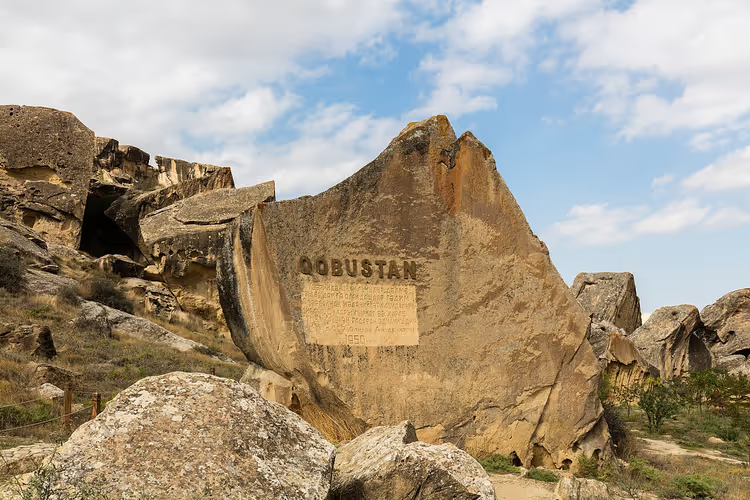
The Gobustan reserve lies south of Baku, about an hour's drive from the center. It is an open-air archaeological museum: across a plateau of several thousand hectares are scattered boulders with petroglyphs, stone fortresses, ancient community settlements, and caves.
The drawings show hunting scenes, ritual dances, wild animals, and the daily life of Stone Age people. Some of the finds were moved into indoor pavilions with interactive screens, which also display petroglyphs from around the world. Come in the morning: by midday there is almost no shade on the plateau, and the heat quickly wears you out.
- How to get there: about sixty kilometers south of Baku (by map); without a car it is inconvenient, since buses drop passengers off on the highway.
- Cost: entry by museum ticket; check the price and opening hours on the reserve's website before your trip.
- Who it's for / Not for: for those willing to walk on rocks and who love ancient history; with a stroller and in midday heat it will be tough.
- The catch: open terrain with no shade, so visiting in summer is exhausting.
If you don't want to deal with transport, there are ready-made Gobustan tours on GetYourGuide.
2. Mud volcanoes
 © Tumanskaya Sabina · CC BY-SAPhoto: Tumanskaya Sabina, CC BY-SA (https://creativecommons.org/licenses/by-sa/4.0), Wikimedia Commons
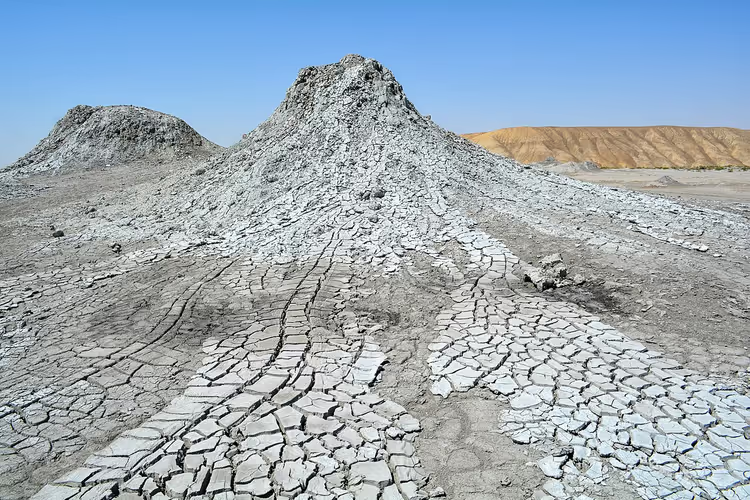
The mud volcanoes of Azerbaijan are linked to oil and gas deposits. Cold mud mass rises from the depths under pressure: it bubbles in craters, hisses, and spreads in winding trails across the desert plain.
The mud stays cold, and you can touch it with your hands without harm to your health. NASA geologists compared the local cones to the terrain of Mars, and that comparison has stuck in guidebooks.
- How to get there: the volcanoes are usually visited together with Gobustan; it is one route through the southern Absheron.
- Who it's for / Not for: for lovers of unusual nature; it is not worth coming here for scenic views and infrastructure.
- The catch: there are no maintained paths, and shoes and clothes get dirty.
3. Ateshgah Temple in Surakhany
 © Jesper Ahlin Marceta · CC BY-SAPhoto: Jesper Ahlin Marceta, CC BY-SA (https://creativecommons.org/licenses/by-sa/4.0), Wikimedia Commons
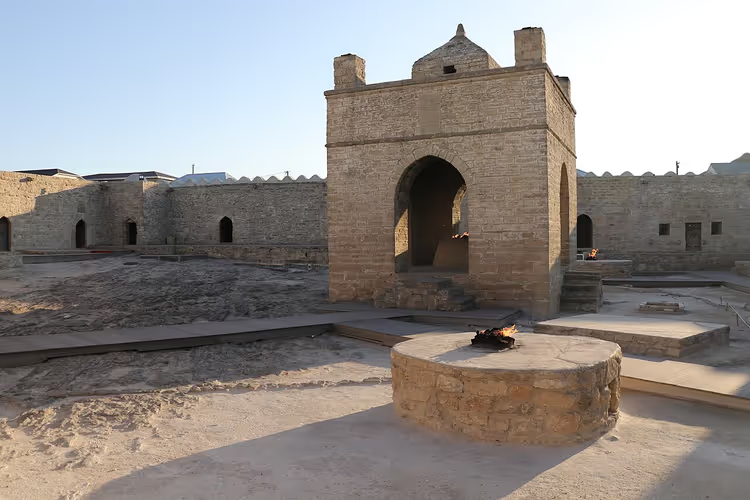
Ateshgah, the fire temple in the settlement of Surakhany, stands in the eastern Absheron, half an hour from the center of Baku. The sanctuary was revered by Zoroastrians, Hindus, and Sikhs: they believed in the special power of the unquenchable flame and came here with prayers for centuries.
The temple looks like a stone building with an arched portal and an altar, surrounded by cells, prayer rooms, and caravanserais behind a crenellated wall. Nearby there is a museum with ancient pottery, ritual clothing, and jewelry.
- Cost: entry for foreign tourists is 15 manat, combined ticket with Yanar Dag is 25 manat, valid for 72 hours (as of 09/2026, Ateshgah pricing page).
- Who it's for / Not for: for those interested in the history of religions; anyone looking for entertainment will be bored.
- The catch: the site is small, a visit takes about an hour.
You can get there by bus or taxi, and the trip from the center takes no more than half an hour. Get the combined ticket if Yanar Dag is in your plans: you pay less than for two separate entries.
4. Yanar Dag, the burning mountain
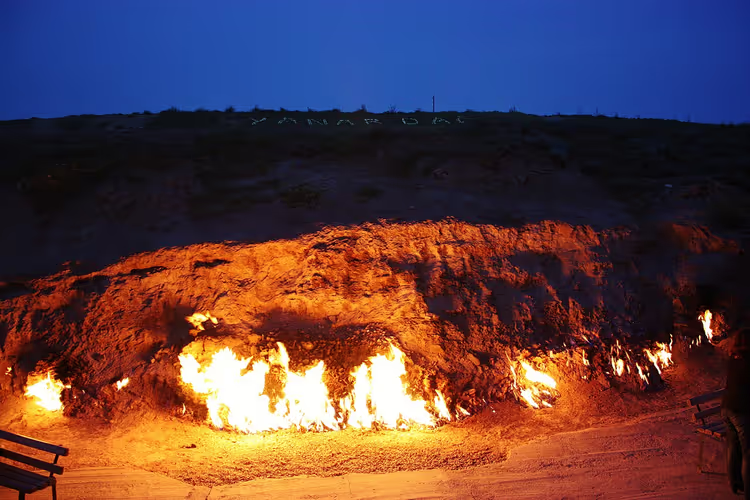 © Frokor · CC BY-SAPhoto: Frokor, CC BY-SA (https://creativecommons.org/licenses/by-sa/3.0), Wikimedia Commons
Yanar Dag, or the Burning Mountain, lies on the Absheron Peninsula about half an hour's drive from Baku. Natural gas seeps through the hillside, and on contact with oxygen it ignites: a strip of flame has been burning along the slope for thousands of years and does not go out in rain or wind.
It's best to see the fire in the evening. At dusk the flames are more distinct, and the light itself becomes more striking against the darkening sky.
- How to get there: by car or taxi from the center; public transport runs here infrequently.
- Cost: combined ticket with Ateshgah is 25 manat (as of 09/2026, Ateshgah and Yanar Dag fares).
- The catch: the visit takes little time, so a separate trip just to the mountain isn't worth it.
5. The colored mountains of Khizi
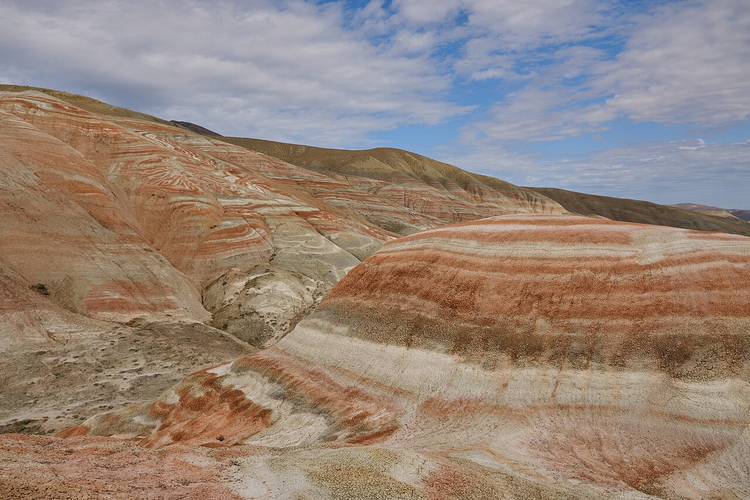 © AlexFirstov · CC BY-SAPhoto: AlexFirstov, CC BY-SA (https://creativecommons.org/licenses/by-sa/4.0), Wikimedia Commons
In the Khizi district, along the main highway, stand the colored mountains. Low hills are covered with wavy bands of yellow, red, brown, and green: the layered rock looks like scattered agate stones.
The bands are made of sedimentary rock, and the pattern changes as you move. The landscape is easy to mistake for a Martian one, which is why people often pull over here on the way to Beshbarmag.
- How to get there: about a hundred kilometers from Baku along the highway north (check the map), easier by car.
- The catch: there are no viewing platforms, so you'll have to enjoy the scenery right from the roadside.
6. Gala ethnographic open-air museum
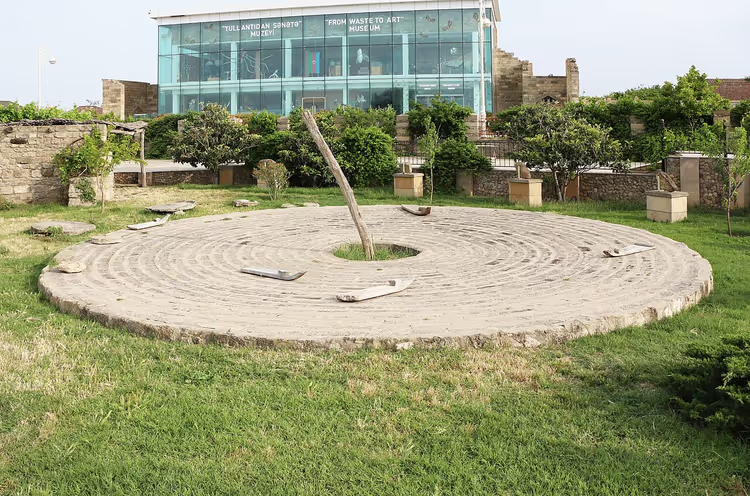 © Bernard Gagnon · CC BYPhoto: Bernard Gagnon, CC BY (https://creativecommons.org/licenses/by/4.0), Wikimedia Commons
The Gala museum-reserve sits half an hour from Baku and showcases everyday life in Azerbaijani villages from the 16th to 19th centuries. Here, under the open sky, you'll find nomad yurts, craft workshops, peasant houses, and religious buildings.
The pavilions display pottery, weapons, jewelry, and traditional clothing. Visitors can shape a clay pot, forge a horseshoe, or try their hand at carpet weaving. In the glass building nearby, art objects made from wires, disks, and old light bulbs are on display.
- Who it's for / Not for: a good option for families with children, because almost everything can be touched.
- The catch: the grounds are open with little shade, so bring water and a hat in summer.
7. Mardakan
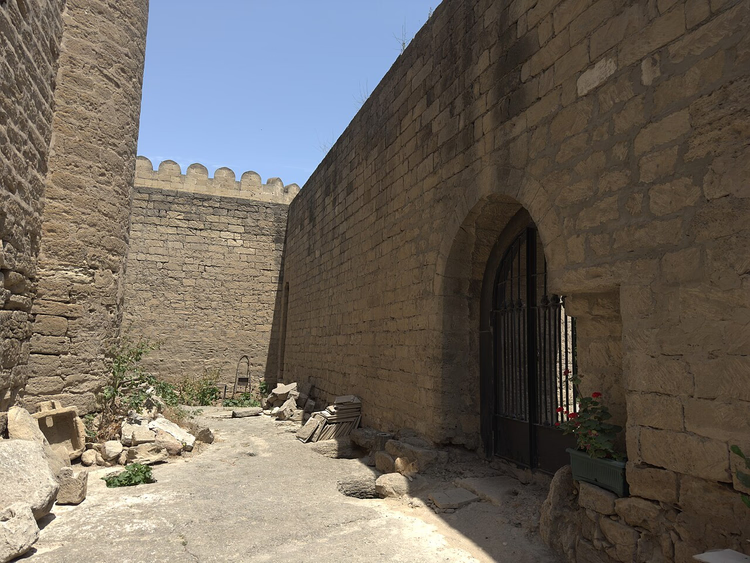
Mardakan, a settlement on the Absheron Peninsula, attracted Baku's oil magnates in the late 19th century. They built villas here with parks and pools, and fertile black soil was brought in by barges across the sea. The arid region quickly turned into a blooming garden.
Today it's a resort area with sandy beaches, an arboretum, and two old fortresses with towers of different shapes. The botanical garden holds more than two thousand plants from around the world, and nearby there's a museum dedicated to Sergei Yesenin, who wrote his "Persian Motifs" here.
8. Bilgah
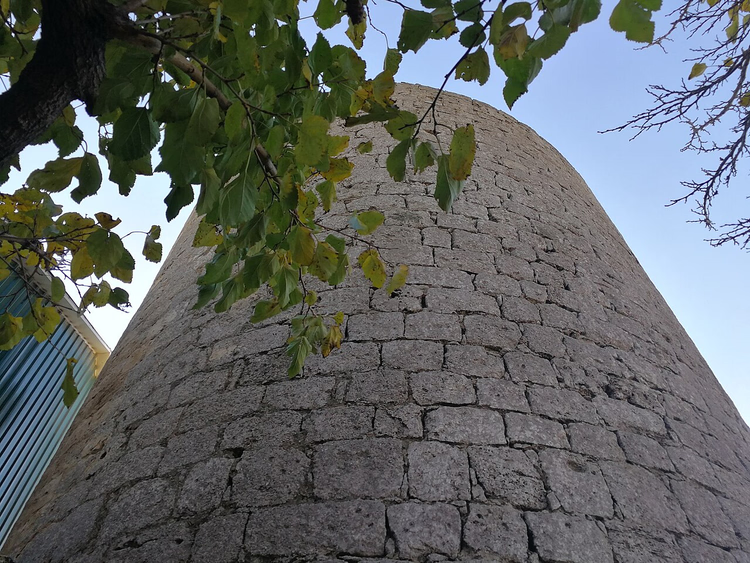 © Onegin vdv · CC BY-SAPhoto: Onegin vdv, CC BY-SA (https://creativecommons.org/licenses/by-sa/4.0), Wikimedia Commons
Bilgah attracts visitors with its well-developed tourist infrastructure. People come here for the favorable climate, sea air, and well-maintained sandy beaches: relaxing on the Caspian coast here is comfortable.
The village has a sanatorium with cardiovascular treatment programs, surrounded by a park with fountains, sculptures, and sports facilities. Amburan Beach has pools, bars, a water park, and a movie theater. The resort's main landmark, the Jumeirah Bilgah Beach Hotel, stands right on the shoreline.
- Where to stay: Jumeirah Bilgah Beach prices on Trip.com.
- Who it's for / Not for: for those who want to combine beach time and treatment; it gets crowded in high season.
- The catch: at the height of the season the beaches are packed, so it's best to grab a lounger in the morning.
9. Zagulba
 © Andrzej Wolinski · CC BY-SAPhoto: Andrzej Wolinski, CC BY-SA (https://creativecommons.org/licenses/by-sa/3.0), Wikimedia Commons
Zagulba is an hour's drive from Baku and is known for its beaches with rocky seabeds. Because of the stony shore, the water near the surface is clear, and the sandy areas are equipped with loungers, changing rooms, and showers.
In the evening, beach pavilions host live music, bars and restaurants stay open, and jet skis run along the water. Some beaches are closed off for private events and discos, so access to them is restricted in the evening.
- Who it's for / Not for: for those who want a beach with entertainment; if you're after peace and quiet, head to Mardakan instead.
- The catch: in the evening many areas are loud because of music and events.
10. Shamakhi
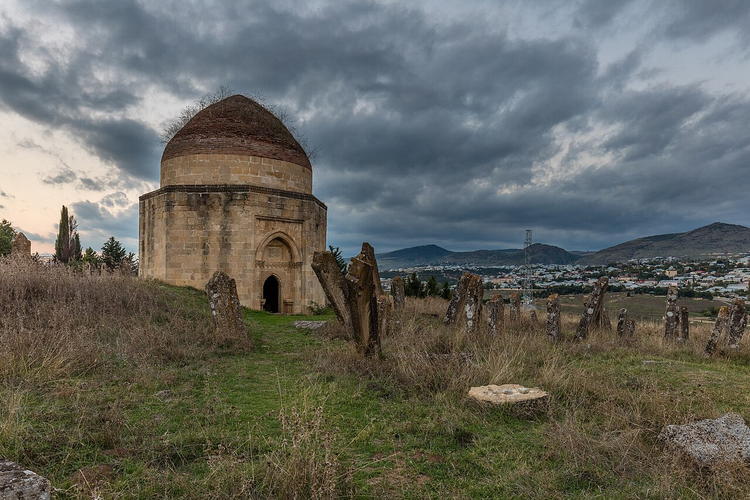 © Diego Delso · CC BY-SAPhoto: Diego Delso, CC BY-SA (https://creativecommons.org/licenses/by-sa/4.0), Wikimedia Commons
Shamakhi, an ancient city in the foothills of the Greater Caucasus, was the capital of the Shirvan Khanate and an important trading center on the Great Silk Road. Carpets have been woven and wine made here for centuries.
Among the monuments worth seeing are the ruins of the Gulistan Fortress on a rocky plateau and the tombs of the Shirvanshahs with their half-ruined stone domes. The Shamakhi Juma Mosque is considered one of the earliest shrines in the South Caucasus: the first structures date back to the 8th century, and the most recent restoration was completed in the 2010s.
11. Lahij
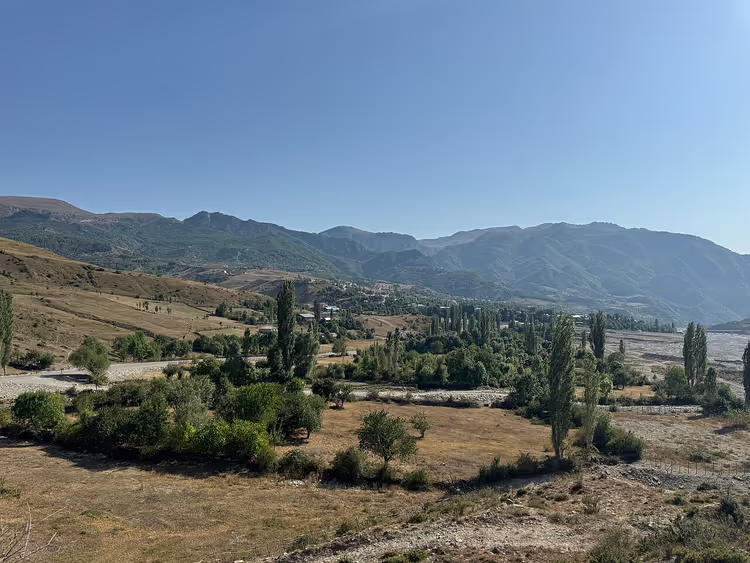 © Zohrab Javad · CC BY-SAPhoto: Zohrab Javad, CC BY-SA (https://creativecommons.org/licenses/by-sa/4.0), Wikimedia Commons
Lahij, a high-mountain village on the southern slope of the Greater Caucasus, is considered a cultural reserve of crafts. Each neighborhood preserves the tradition of one trade: pottery, blacksmithing, jewelry, or wood carving.
The streets are paved with stone, lined with two-story stone houses and craft workshops. Artisans work in front of visitors and show how jewelry, tableware, and carpets are made.
12. Beshbarmag Rock
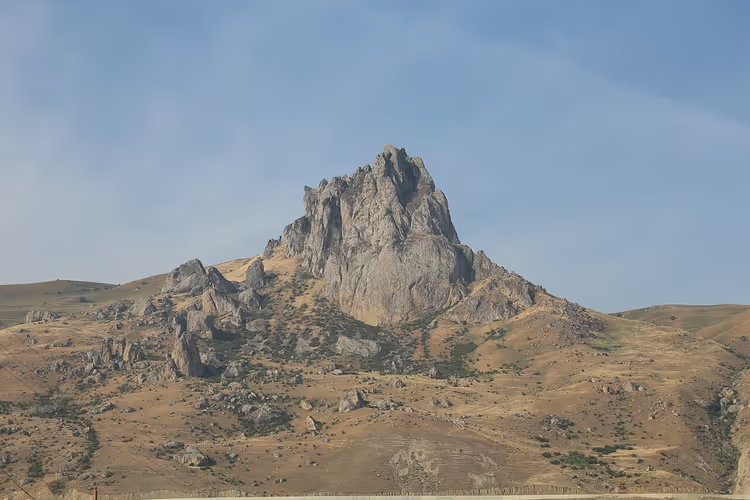 © Interfase · CC BY-SAPhoto: Interfase, CC BY-SA (https://creativecommons.org/licenses/by-sa/3.0), Wikimedia Commons
Beshbarmag in the Siyazan District resembles an open palm with five fingers. Legends surround the massif: the rock is said to grant wishes, so people still come here with requests and hopes.
The rock stands among the mountains, and the trip is usually combined with the colorful Khizi mountains. The massif is about a hundred kilometers from Baku, so set out in the morning.
13. Boyuk Zira Island
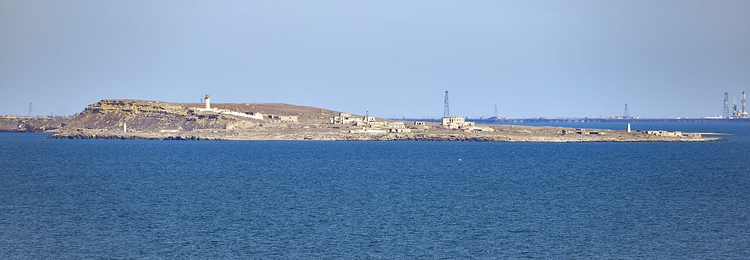 © Photographer: Mosbatho · CC BYPhoto: Photographer: Mosbatho, CC BY (https://creativecommons.org/licenses/by/4.0), Wikimedia Commons
Boyuk Zira, also known as Nargin, lies in the Caspian Sea not far from Baku. The island is clearly visible from the Seaside Boulevard. During both world wars, a prisoner-of-war camp was located here, and people were exiled to and executed on the island.
Today the island is abandoned: old ships rust near the shore, and half-ruined buildings stand on land. Azerbaijan's Ministry of Culture and Tourism planned to turn the island into a complex with hotels, restaurants, and parks.
14. Ganja
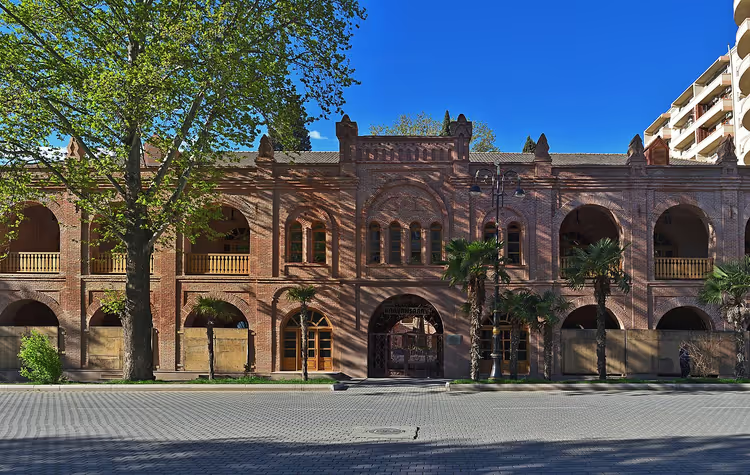 © Ludvig14 · CC BY-SAPhoto: Ludvig14, CC BY-SA (https://creativecommons.org/licenses/by-sa/4.0), Wikimedia Commons
Ganja, Azerbaijan's second-largest city, stands on the banks of the Ganjachay River. Since the 12th century it has held an important position at the crossroads of caravan routes, and today it receives international flights.
The city is easy to explore on foot: wide blocks are immersed in parks, with fountains and mighty plane trees all around. See the Sheikh Bahaddin complex with its red-brick mosque, the two-story caravanserai and hammam bathhouse, as well as the Byzantine-style Orthodox cathedral and a house built from tens of thousands of glass bottles.
- How to get there: the train from Baku to Ganja takes several hours, Baku-Ganja train tickets on Trip.com. Buses are cheaper but take longer.
- The catch: on a day trip, travel eats up most of your time; it's more comfortable to stay overnight.
15. Istisu Hot Springs
 © Hisao Tamura · CC BY-SAPhoto: Hisao Tamura, CC BY-SA (https://creativecommons.org/licenses/by-sa/1.0), Wikimedia Commons
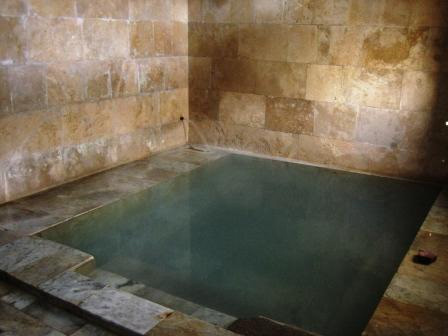
Istisu, a resort village in the mountains, is known for its thermal mineral springs. Healing springs rich in hydrogen sulfide, calcium, sodium, and magnesium flow from the ground year-round, with water temperatures just above sixty degrees Celsius.
Baths are taken in indoor pools or outdoors, surrounded by forest and rocks. The drive into the mountains takes hours, so it's best to set aside a full day for the springs or plan an overnight stay.
One-day route from Baku on the map
If you only have one free day, pick one route and don't spread yourself thin.
Where to Go from Baku for a Day Trip
Places on the map
- 1Gobustan Rock carvings and an open-air archaeological museum
- 2Mud Volcanoes Cold mud bubbles in craters near Gobustan
- 3Ateshgah Fire Temple Zoroastrian fire temple in the village of Surakhani
- 4Yanar Dag Burning mountain, natural gas has been burning for thousands of years
- 5Khizi Coloured Mountains Hills with stripes of sedimentary rock in different colours
- 6Gala Ethnographic Museum-Reserve Life of Azerbaijani villages of the 16th-19th centuries, open-air
- 7Mardakan Resort village with villas, an arboretum and the Yesenin museum
- 8Bilgah Resort with a sanatorium and Amburan beach
- 9Zagulba Beaches with a rocky bottom and evening bars
- 10Shamakhi Former capital of the Shirvan Khanate, Gulistan fortress
- 11Lahij Highland craft village on the southern slope of the Caucasus
- 12Beshbarmag Rock massif shaped like an open palm
- 13Nargin (Boyuk Zira) Abandoned island in the Caspian Sea
- 14Ganja The country's second-largest city, the Sheikh Bahaeddin complex
- 15Istisu Resort village with mineral hot springs
The map above shows the main places from the list. Build the route to suit you: start with the farthest points, and save the fire sites for the evening, when the flames are most visible.
⁉️🤔 Frequently asked questions
Can you visit these places without a car?
Partly. Buses and taxis run from Baku to Ateshgah, but public transport to Yanar Dag is infrequent. Mardakan and Bilgah are easy to reach by marshrutka. Gobustan and the mud volcanoes are inconvenient without a car, because the bus drops you off on the highway. Rent a car or book a guided tour.
Which route should I choose for one day?
For a first visit, go with Absheron: the points are less than an hour apart, and you can cover everything during daylight hours. If you want mountains and history, choose Shamakhi and Lahij, but you'll need to leave early in the morning.
How much does admission to the main sites cost?
Prices for Ateshgah and the combo ticket with Yanar Dag are listed in the section about the temple and in the reserve's price list. Tickets for Gobustan and the Gala Museum are cheaper; check the exact price on site or on the reserve's website.
When is the best time to visit Absheron?
The most comfortable time is April-May and September-October. In summer, the open-air sites get hot, and there's almost no shade around Gobustan. The flames at Yanar Dag are best viewed in the evening, when it gets dark and the fire is more distinct.
The Gala Museum-Reserve is the best option for children: everything there is hands-on, you can make a pot or forge a horseshoe. A second option is a walk around Mardakan with its arboretum and fortresses. The mud volcanoes and the long trip to Ganja are tiring for kids.
In short: what's worth booking
If you have one free day, start with Absheron: it involves the least driving. Save the farther destinations for a second visit and plan them with an overnight stay.
- If you want ancient history and petroglyphs: choose Gobustan and the Gala Museum.
- If you're going for the fire: Ateshgah and Yanar Dag, ideally in the evening.
- If you need a beach: Mardakan, Bilgah, or Zagulba.
- If you're up for a long drive: Shamakhi, Lahij, or Ganja.
It's convenient to arrange transport and tours in advance: browse tours from Baku on GetYourGuide, rent a car on DiscoverCars, train tickets on Trip.com.

A small editorial team writing guides for independent travel. We travel ourselves, but we haven’t been everywhere, so we check prices, opening hours and how to get there against official sources.