
















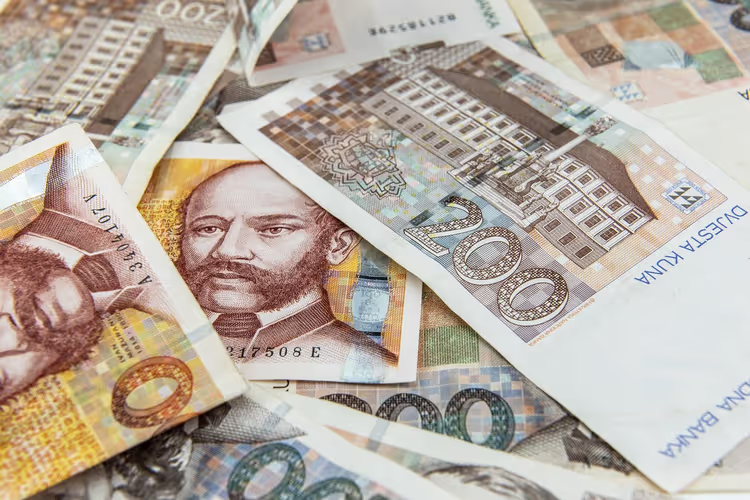
Gifts from Croatia: 20 ideas from Pag cheese to lace
Before leaving Croatia, almost everyone wonders what to bring back as a gift. A magnet that says "Pag" won't surprise anyone anymore. But food, wine, and crafts here are built on traditions that go back several centuries.
We've put together the 20 best souvenirs from Croatia and sorted them by price, taste, and how easy they are to transport. For each one, we've noted where to find it and what to look for in the store.
The top hits: Pag cheese, Istrian truffles, and pršut. Among non-edible items, people most often bring back Pag lace, ceramics, and licitar hearts. Truffles will cost you the most, lavender and gingerbread the least.
Our pick: an overview of all 20 souvenirs
# | Souvenir | Category | Where to find it |
|---|---|---|---|
1 | Pag cheese | Food | Cheese dairies and markets on Pag |
2 | Olive oil | Food | Istrian farmers' markets |
3 | Pršut | Food | Butcher shops, supermarkets |
4 | Truffles | Food | Motovun, specialty shops |
5 | Chocolate | Sweets | Nadalina factory stores |
6 | Honey | Sweets | Apiaries, markets, Plitvice |
7 | Paprenjak cookies | Sweets | Confectioneries, souvenir shops |
8 | Wine | Drinks | Wineries, wine bars |
9 | Maraschino liqueur | Drinks | Zadar, wine shops |
10 | Rakija | Drinks | Farmers, markets, bars |
11 | Silk tie | Accessories | Croata atelier, boutiques |
12 | Morčić | Jewelry | Jewelry shops, Rijeka |
13 | Nalivpero pens | Accessories | Stationery and souvenir shops |
14 | Dolls | Souvenirs | Souvenir shops, fairs |
15 | Ceramics | Decor | Old town of Zagreb, Dubrovnik, Split |
16 | Brač stone items | Decor | Brač island, galleries |
17 | Vučedol dove | Souvenirs | Museum shops, stores |
18 | Lavender | Home and beauty | Hvar, souvenir shops |
19 | Pag lace | Decor and clothing | Pag, specialty shops |
20 | Licitar heart | Sweets | Zagreb, fairs, confectioneries |
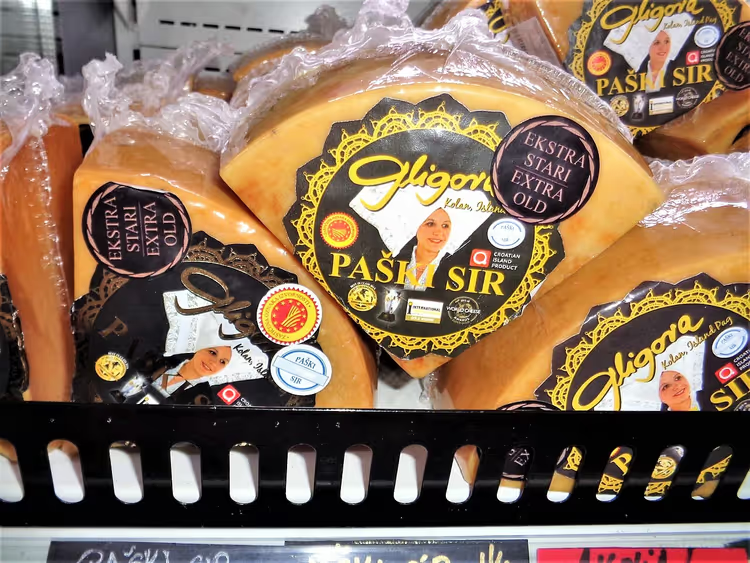
1. Pag cheese
💡 In short:
- Pag cheese is made from sheep's milk on the island of Pag, and its flavor is dense and salty.
- Buy a wheel in vacuum packaging, otherwise the cheese will dry out in transit.
- Market selection and prices: 09/2026, according to the Croatian National Tourist Board
 © Silverije · CC BY-SAPhoto: Silverije, CC BY-SA (https://creativecommons.org/licenses/by-sa/4.0), Wikimedia Commons
The island of Pag looks almost like the surface of another planet. Salt, rocks, and tough herbs: sage and rosemary. The local breed of sheep grazes on these herbs and produces slightly salted milk.
That milk is what Pag cheese is made from. Its flavor is dense and salty, with an herbal note. The cheese is not coated in wax; the rind dries on its own. In 2019, Pag cheese received protected designation of origin status in the EU (as of: 09/2026, source).
- Cost: depends on aging; young cheese is noticeably cheaper than year-old.
- The catch: without vacuum sealing, a wheel dries out and loses flavor within just a few days.
2. Olive oil
 © my friend · CC BYPhoto: my friend, CC BY (https://creativecommons.org/licenses/by/2.5), Wikimedia Commons
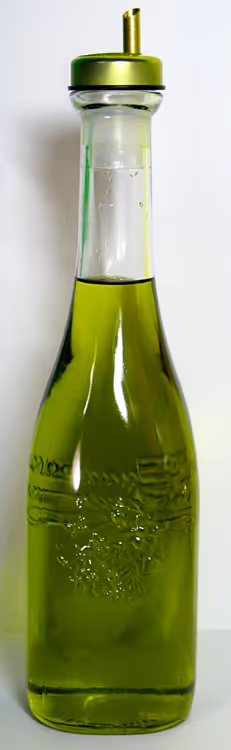
Istria produces olive oil that holds its own against Greek and Italian. The groves here are old, and individual trees have survived for many centuries. At markets, oil is sold straight from barrels, and you can taste it before buying.
Go for cold-pressed extra virgin oil. Look for acidity and variety on the label; those numbers say more about quality than the words "extra virgin." Aromatic oil with pepper, garlic, and herbs has a stronger scent than the mass-produced kind.
- Cost: a bottle of good oil will cost more than mass-market oil from the supermarket.
- The catch: oil in glass adds weight to your luggage and needs protection from impacts.
3. Dalmatian pršut
 © Wikiarius · CC BY-SAPhoto: Wikiarius, CC BY-SA (https://creativecommons.org/licenses/by-sa/3.0), Wikimedia Commons
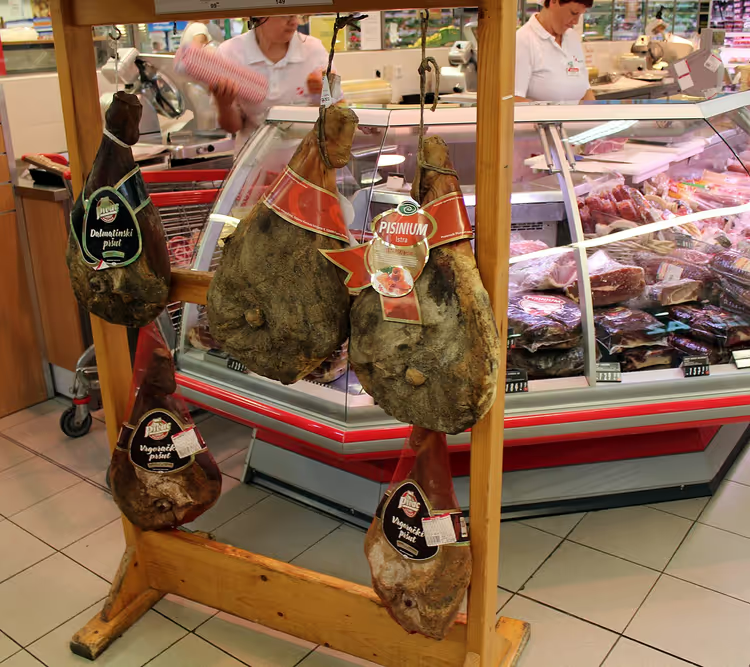
Pršut, a dry-cured pork leg, resembles Spanish jamón, but the process is different. Istrian pršut is dried in the sea wind, while Dalmatian pršut is smoked over oak coals. The leg is rubbed with salt and spices and left for months.
The longer the aging, the more expensive and richer the meat. Buy sliced vacuum-packed pršut: a whole leg is hard to transport and slice at home. In a cool, dark place, the meat keeps for over a year.
Pršut is considered a lean meat: it digests well and doesn't feel heavy. The meat is sold in all grocery stores and supermarkets, so you can find this gift in any city. Serve pršut in thin slices with cheese, olives, and fresh bread.
- Cost: the price rises along with the drying time.
- The catch: a whole leg takes up half a suitcase and requires a knife for slicing.
4. Istrian truffles
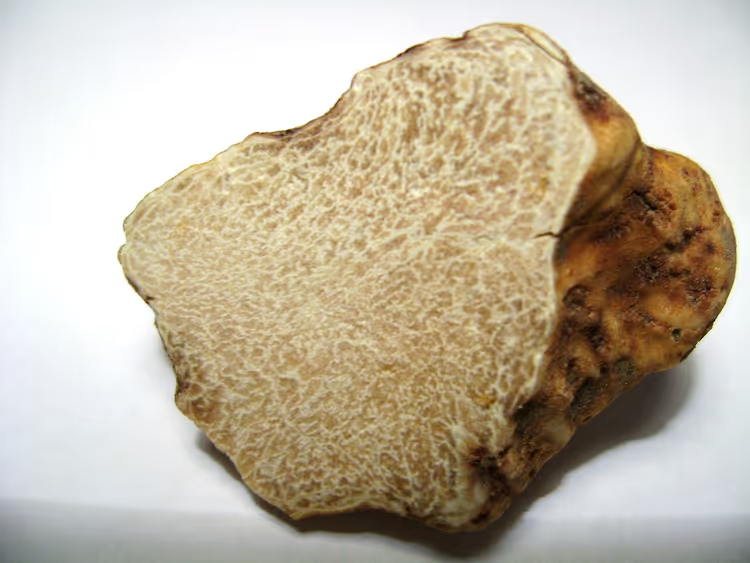 © Marco Plassio · CC BY-SAPhoto: Marco Plassio, CC BY-SA (https://creativecommons.org/licenses/by-sa/3.0), Wikimedia Commons
Istria is one of the few regions in Europe that yields white and black truffles. White truffles are rare and prized more highly, while black truffles appear more often in restaurant dishes. The forest near Motovun is considered the main truffle-hunting ground.
First-grade white truffle costs over 2,000 euros per kilogram (as of 09/2026, source). If that price doesn't work for you, go with truffle paste or oil in a glass jar: they cost several times less and still hold their aroma reasonably well.
- Cost: fresh truffle is very expensive, paste and oil are more affordable.
- The catch: fresh truffle loses its aroma quickly, so transport it in a sealed jar.
5. Nadalina chocolate
Croatian confectioners love to experiment. The Nadalina factory was the first to add rice to a chocolate bar and released chocolate "music" records and a giant bar. They also came up with chocolate with Pag cheese, truffle, and lavender.
Dark chocolate with chili stands out on its own, and its recipe is linked to Arab cuisine. Chocolate made with donkey milk and Porcelana cocoa is considered a premium option, wrapped in olive wood paper. A portion-sized bar is easy to bring as a gift and handles travel well.
At local chocolate shops, they'll put together a bar to your taste, and Croatian chocolate with truffle and lavender is sold everywhere and exported.
- Cost: a regular bar is inexpensive, collector flavors cost more.
- The catch: delicate chocolate melts in hot luggage.
6. Honey from mountain apiaries
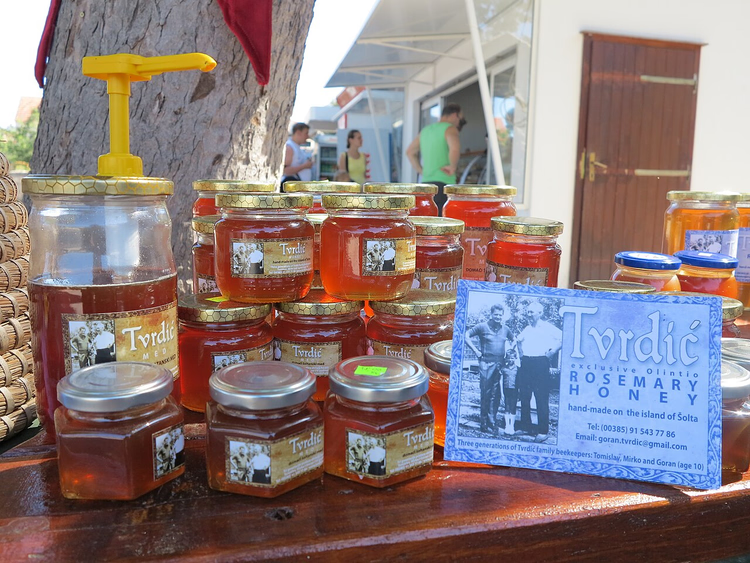 © Joadl · CC BY-SAPhoto: Joadl, CC BY-SA (https://creativecommons.org/licenses/by-sa/3.0/at/deed.en), Wikimedia Commons
The mountain climate and abundance of flowers give Croatian honey a bright aroma. Most farmers in the mountains have their own apiary, and the honey here is often fresher than store-bought. At markets, they'll pour honey from a large jar and let you taste it.
Pine "honey" is cooked from young pine cones and buds. Essentially, it's a preserve, not a bee product. Green honey is made with mint, nettle, and herbs. Buy at markets: the selection is wider and the price is lower than in souvenir shops.
- Cost: regular flower honey is inexpensive, mountain varieties cost more.
- The catch: honey in glass is heavy, and in hot weather a jar can leak in your suitcase.
7. Paprenjak cookies
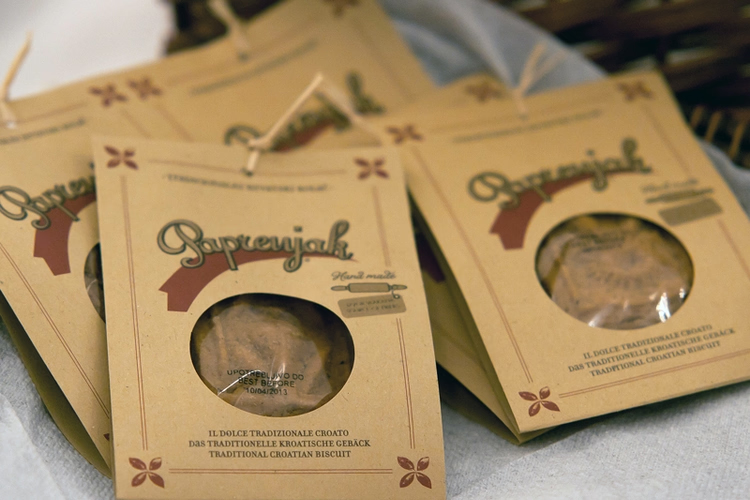 © Roberta F. · CC BY-SAPhoto: Roberta F., CC BY-SA (https://creativecommons.org/licenses/by-sa/3.0), Wikimedia Commons
Paprenjak, a honey spice cookie with black pepper and nuts, has been baked in Croatia since the Renaissance. In the past, the whole family worked on the dough: adults kneaded, children cut out shapes. Today these cookies are sold in confectioneries and souvenir shops.
A genuine Paprenjak has transparent packaging and a label with the name. In confectioneries, each batch is marked with a signature stamp. The cookies keep for a long time and will survive any journey in your luggage.
- Cost: an inexpensive souvenir, a box of cookies costs about as much as a cup of coffee.
- The catch: the fragile cookies get crushed if you put them under heavy items.
8. Wine from Dalmatia
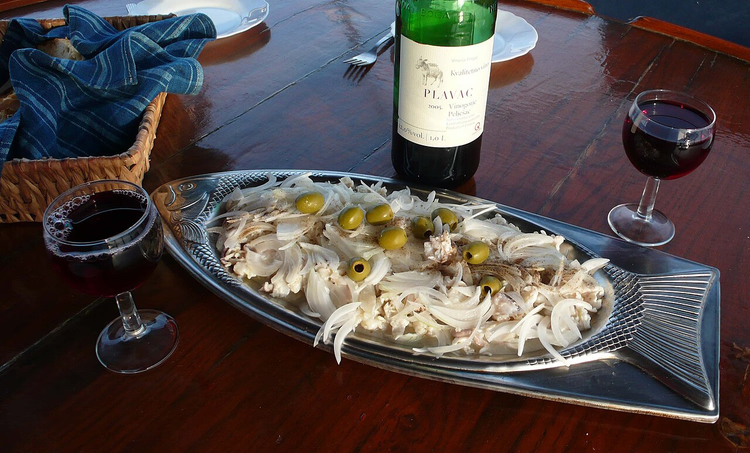
Croatia is called a wine country: there are hundreds of varieties here. White Malvazija and Grasevina smell of flowers, red Plavac Mali from the Pelješac peninsula is rich and dense. Look for the label kvalitetno vino, which means quality wine.
At bars that pour only local winemakers, wine is fresher and cheaper than at restaurants. Homemade wine is sold at markets and in villages. You can bring one bottle in your luggage, but check the alcohol import limits for your country.
- Cost: from inexpensive table wine to collectible bottles.
- The catch: a glass bottle is fragile and adds to your luggage weight.
9. Maraschino liqueur
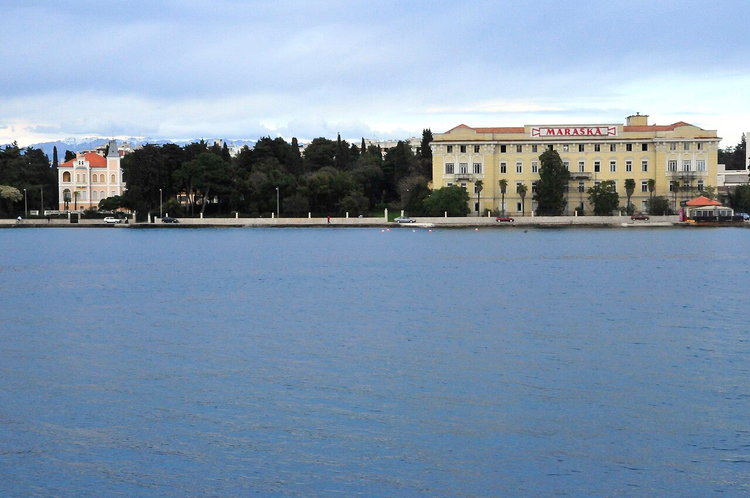 © LBM1948 · CC BY-SAPhoto: LBM1948, CC BY-SA (https://creativecommons.org/licenses/by-sa/4.0), Wikimedia Commons
Maraschino is made in Zadar from Marasca cherries, which are crushed together with the pit. The recipe has been known for several centuries, and in that time the drink has been tasted by both nobles and passengers of the Titanic. The liqueur is colorless and strong, with a characteristic almond note from the pits.
It is drunk diluted, or a few drops are added to coffee. The genuine drink is aged in barrels for about three years. A bottle of Maraschino will survive the journey and makes a beautiful gift for those who appreciate a rare taste.
- Cost: the liqueur is more expensive than local rakija, but it lasts a long time.
- The catch: a strong liqueur cannot be drunk like wine; it is poured in small amounts.
10. Rakija
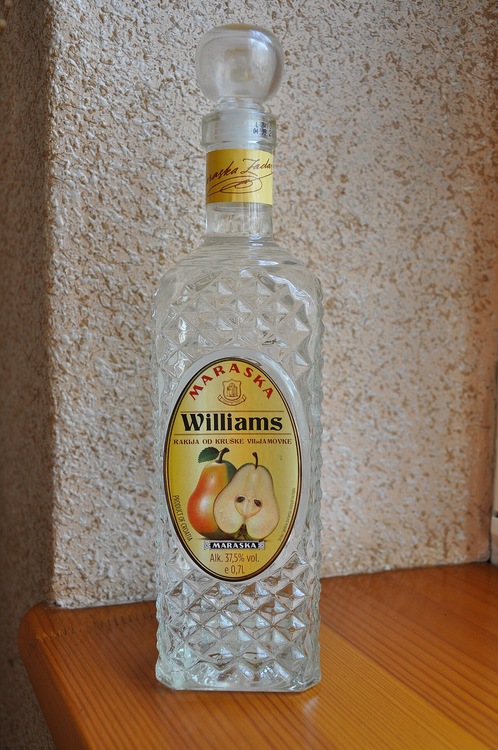 © Beemwej · CC BY-SAPhoto: Beemwej, CC BY-SA (https://creativecommons.org/licenses/by-sa/3.0), Wikimedia Commons
Rakija, a Balkan strong spirit, comes in plum, grape, apricot, pear, or quince varieties. Store-bought rakija is stronger than wine, and homemade is stronger still. In taste it resembles brandy, only it is made purely from fruit and aged in oak.
Rakija is drunk in small sips before a meal. Plum pairs well with fatty meat dishes, apricot with cheeses and vegetables, pear again with cheeses. Buy homemade rakija from farmers at markets: there they pour it into your own container and let you taste it before buying.
- Cost: homemade rakija is cheaper than store-bought.
- The catch: nobody measures the strength of the homemade drink, so it is easy to overestimate your limits.
11. Silk tie

The tie was actually invented by Croats: local soldiers wore neck scarves. When they arrived in France, the French took a liking to the detail, and the word "cravat" came into fashion. That is how a business accessory now worn in offices on every continent spread from Croatia around the world.
The country even celebrates International Tie Day in October. The best gifts are considered to be men's silk ties from the Croata factory. The brand's stores are easy to recognize by the huge colorful tie above the entrance, so you will not walk past them.
Ties here are made both in factories and by hand, so the price varies widely. If you are unsure about the pattern, go with a classic solid-color option: it will match any suit and will not look dated in a year.
- Cost: a silk tie is more expensive than an ordinary one, but it is a status gift.
- The catch: without knowing the recipient's taste, it is easy to get the pattern wrong.
12. Morčić from Rijeka
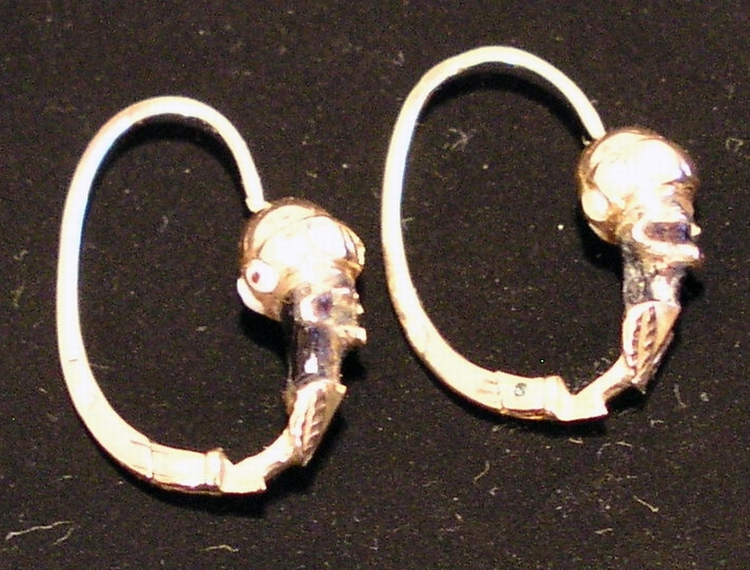 © Roberta F. · CC BY-SAPhoto: Roberta F., CC BY-SA (https://creativecommons.org/licenses/by-sa/3.0), Wikimedia Commons
The morčić, a piece of jewelry in the shape of a Moor's head in a white turban, served as a talisman for Croatian sailors. Today it is the official symbol of Rijeka. Legend has it that after the victory over the Turks besieging the port, men gave their wives such earrings, and they turned into Moor's heads.
It is not only earrings: the morčić comes as a ring, brooch, keychain, and figurine. Souvenir shops sell cheap copies, while jewelry stores offer pieces made of precious metals. The most expensive ones are adorned with rubies, corals, and pearls.
- Cost: from souvenir copies to jewelry with stones.
- The catch: cheap copies darken quickly, and jewelry with stones is expensive.
13. Nalivpero fountain pens
 © Power_of_Words_by_Antonio_Litterio.jpg : Antonio Litterio derivative work: Inverse Hypercube · CC BY-SAPhoto: Power_of_Words_by_Antonio_Litterio.jpg : Antonio Litterio derivative work: Inverse Hypercube, CC BY-SA (https://creativecommons.org/licenses/by-sa/3.0), Wikimedia Commons
The fountain pen was invented by Croatian engineer Slavoljub Penkala at the beginning of the last century. He replaced the quill with a steel nib and launched mass production. In Croatian, a fountain pen is called nalivpero. Croatia considers this stationery item a source of national pride.
This is not a cheap souvenir but an image writing instrument. The bodies of collectible series are made of celluloid, ordinary ones of plastic. In Western European schools, ink pens are still in use, so the gift will be seen as practical.
- Cost: a genuine fountain pen costs as much as a good perfume.
- The catch: the pen can easily leak ink in transit, so pack the bottle separately.
14. Dolls in national costumes
Every region of Croatia has its own national costume, and the dolls showcase this diversity. The outfit replicates the dresses, aprons, vests, and hats of different areas. Such a gift will remind you of the trip and suits a child or a collector. The clothing here reflects the country's history and its cultural diversity.
Dolls come in wood, porcelain, plastic, and soft fabric. Rag dolls are sewn by hand and decorated with embroidery and lace.
- Cost: prices vary, from simple souvenir dolls to handmade ones.
- The catch: fabric dolls get dirty, and they are hard to wash without losing their appearance.
15. Old Town ceramics
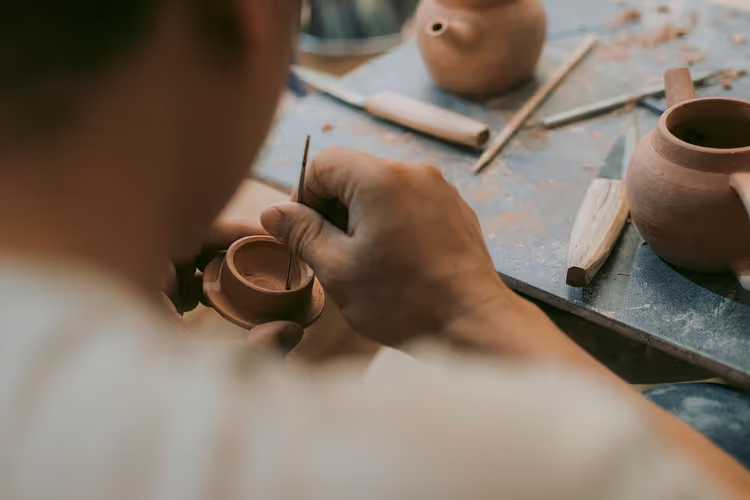
For ceramics, head to the old quarters of Zagreb, Dubrovnik, and Split. In pottery workshops right on the streets, they sell plates, goblets, and vases made of colored clay. A special find is miniature replicas of ancient amphorae raised from the seabed. The secrets of the ancient masters are lost, but a copy will still be made for you.
Prices in different shops are almost the same, so there is no room for bargaining. Handmade pieces look distinctive and last for years. Choose a small item: ceramics are heavy and fragile, and they need padding of paper or clothing.
- Cost: small plates and cups are inexpensive, large vases cost more.
- The catch: ceramics break, and in luggage they are often wrapped in clothing.
16. Brač stone items
 © Silverije · CC BY-SAPhoto: Silverije, CC BY-SA (https://creativecommons.org/licenses/by-sa/4.0), Wikimedia Commons
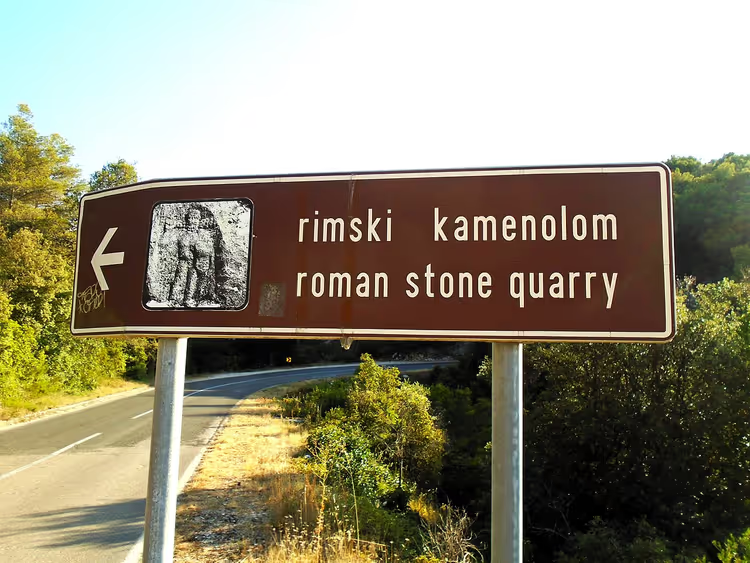
Brač stone, a white limestone from the island of Brač, has been known in Europe for centuries. Old palaces and waterfronts are built from it, and Diocletian's Palace in Split is faced with Brač marble. For locals it is not just a building material but also a talisman: according to belief, a home should have at least one item made of this stone.
The stone is used to make jewelry, figurines, clocks, and kitchenware. Souvenirs made of Brač limestone are inexpensive, and the selection is large. If you do not need jugs and trays, take a small piece of stone or a carved magnet with a view of the island.
- Cost: small items are inexpensive, large kitchenware costs more and is heavier.
- The catch: stone adds weight to luggage, and figurines can chip.
17. Vučedol dove
The Vučedol dove, a ceramic vessel in the shape of a bird, is a recognizable archaeological symbol of the country. An exact copy of the jug was found during excavations of an ancient settlement. The vessel was made as far back as the Copper Age, and at the time it was a masterpiece of pottery craft.
The dove on three thick legs symbolizes peace and the struggle for freedom. For Croats this object is highly significant, which is why almost every traveler brings a copy home. The vessels are sold on every little street in different sizes, and you will easily find the right one.
- Cost: ceramic copies are inexpensive.
- The catch: the vessel is fragile, and it needs to be packed securely for travel.
18. Lavender from the island of Hvar
 © Falk2 · CC BY-SAPhoto: Falk2, CC BY-SA (https://creativecommons.org/licenses/by-sa/4.0), Wikimedia Commons
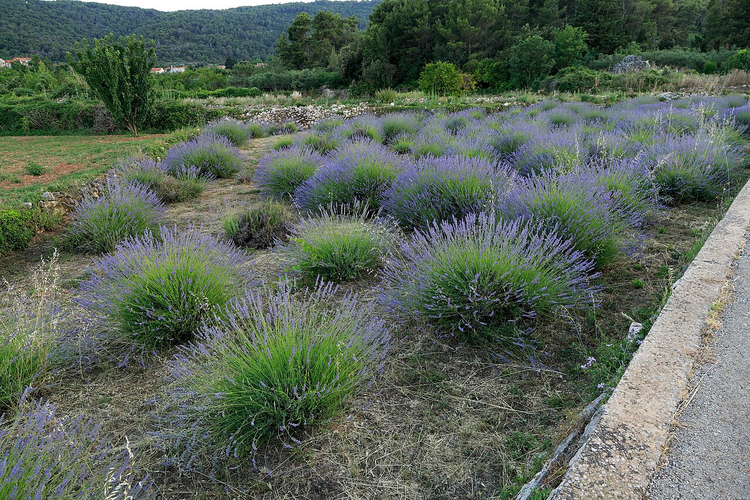
Lavender is grown on the sunniest island in Croatia, Hvar. The fields bloom in summer, and many people come here for a "lavender tour." Dried bouquets, oil, and lavender sachets can be found in any souvenir shop, and their scent fills the whole block.
Lavender is calming and smells pleasant; it is added to cosmetics, tea, and honey. Take dried lavender for the wardrobe or a small bottle of oil. This gift is light and takes up no space in luggage. The aroma lasts for months if the bouquet is kept away from dampness.
Croatian lavender is harvested by hand and valued for its purity, which is why its oil is exported.
- Cost: an inexpensive souvenir; a bouquet and a sachet cost a symbolic amount.
- The catch: the aroma fades, and an old bouquet smells weak.
19. Pag lace
 © Silverije · CC BY-SAPhoto: Silverije, CC BY-SA (https://creativecommons.org/licenses/by-sa/4.0), Wikimedia Commons
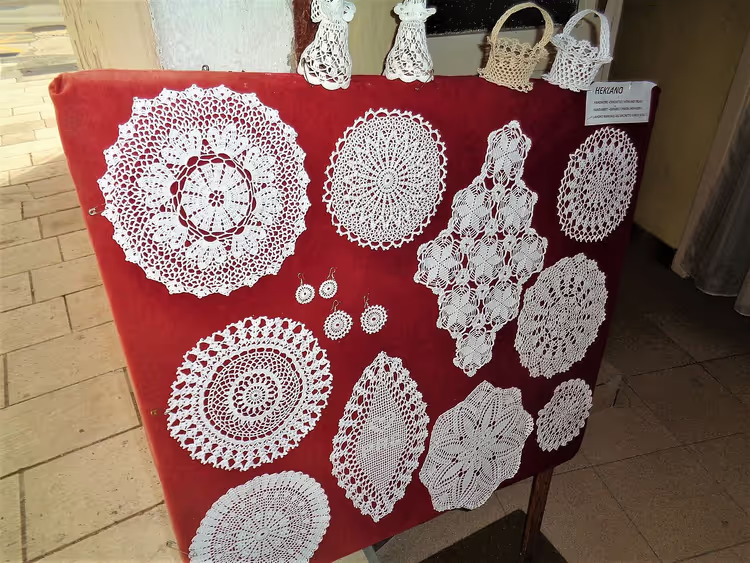
Pag lace is made with a needle on the island of Pag, and it is so fine that it is called "white gold." Lace was made for the clothing of Habsburg nobility, and today it decorates tablecloths, shawls, and bed linen. In 2009, Croatian lace was added to the UNESCO intangible heritage list (as of 09/2026, source).
The secrets of lacemaking were passed down through the female line. In summer, you can see women sitting outside their homes with a needle and thread. The work is painstaking, so the lace is expensive, and there are many fakes in other regions. Buy directly on Pag, where you can see the handmade work, and ask for a receipt.
Lace is made with a needle on a round or square pillow, building the pattern over a stretched web of threads. In the past, this craft was an essential part of a girl's dowry. A tablecloth or shawl with Pag lace will decorate your home and remind you of the sea.
- Price: handmade items are expensive, shawls and doilies are cheaper than tablecloths.
- The catch: there are many fakes, and cheap lace is often machine-made.
20. Licitar heart
 © Silverije · CC BY-SAPhoto: Silverije, CC BY-SA (https://creativecommons.org/licenses/by-sa/4.0), Wikimedia Commons
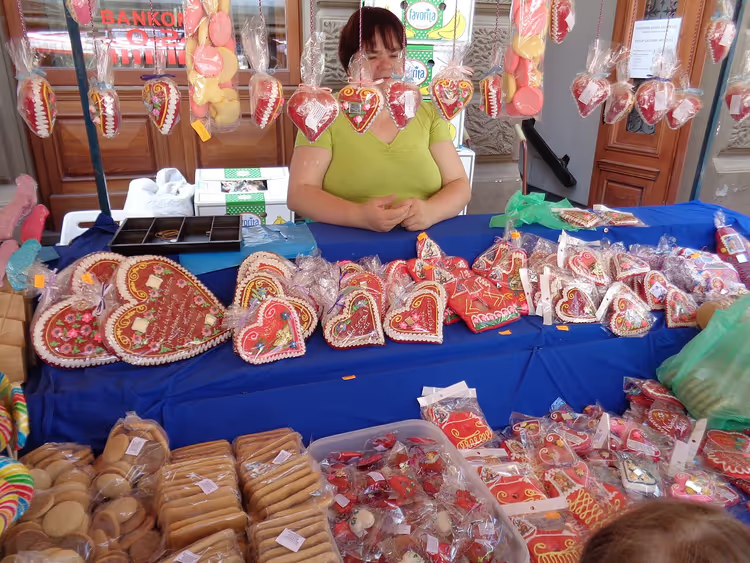
The licitar heart, a glazed honey cookie, is a sweet symbol of the country and of Zagreb. The shape and recipe have barely changed since the Renaissance. Once, young men gave hearts to their sweethearts; today people buy them for any celebration. In 2010, the craft of northern Croatia was added to the UNESCO list (as of 09/2026, source).
Hearts are given on Valentine's Day and at Christmas, and they are used to decorate Christmas trees. At Christmas markets, you can buy edible and decorative hearts with bright patterns. It is an inexpensive and beautiful souvenir that the whole family will enjoy and that will survive the trip home.
Sizes vary: from a small keychain to a large heart for the wall. You can buy them year-round in Zagreb, and in winter the selection is wider at the city's Christmas markets.
- Price: an inexpensive souvenir, the price depends on the size and decoration.
- The catch: the glaze cracks easily, so carry the heart in a rigid box.
⁉️🤔 Frequently asked questions
What should I bring from Croatia as an inexpensive gift?
Lavender from Hvar, Paprenjak cookies, licitar hearts, and mountain honey cost little, are lightweight, and suit almost everyone. This is a safe set if your budget is limited. If you want to add something more substantial, take a small piece of pršut or a jar of truffle paste.
Can I bring cheese and pršut home from Croatia?
Yes, vacuum-packed Pag cheese and sliced pršut will survive the trip without any problem. Fresh meat and dairy products are restricted at the borders of many countries, so check the import rules for your country before you fly. Buy these products on your last day so they don't spoil in the heat.
Where should I buy souvenirs: at a market or in a shop?
Buy food and honey at markets, where it is fresher and cheaper. Buy lace, ceramics, and jewelry in specialized shops and from artisans, where there are fewer fakes. Shops near tourist spots are convenient, but their prices are higher.
What alcohol is worth bringing from Croatia?
Homemade rakija, Plavac Mali red wine, and Maraschino liqueur. Rakija is stronger, wine is lighter and easier to carry in a bottle. Be sure to check the alcohol import limits for your country and pack the bottles with protection against impact.
What should I bring from Croatia for a food lover?
Truffle paste, Istrian extra virgin olive oil, and Nadalina dark chocolate. Add Pag cheese and pršut so you can put together a Croatian platter at home. All these products are sold vacuum-packed and travel well by plane.
In short: what to book
The choice of souvenir depends on your budget and the recipient's taste. If you want an inexpensive gift: go for lavender, Paprenjak, or a licitar heart. If you want to impress a foodie: Pag cheese, pršut, and truffle oil. For home decor, ceramics, Pag lace, and items made of Brač stone are a good fit.
You should also get something for yourself, like a bottle of Maraschino or a box of Nadalina chocolate. Before your trip, check current shops, markets, and fair dates on the official website of the Croatian National Tourist Board.

A small editorial team writing guides for independent travel. We travel ourselves, but we haven’t been everywhere, so we check prices, opening hours and how to get there against official sources.