
















Tunisia: when to go, where to stay and what to try from the food
Tunisia combines three things that rarely come together in one country. Mediterranean beaches, ruins of three ancient civilizations, and the desert landscapes of Star Wars. Flights from Germany take about two and a half hours, and you don't need a visa.
The country is compact, but it has plenty of variety. The blue-and-white Sidi Bou Said, the El Jem amphitheater, and the Chott el Djerid salt flat where Tatooine was filmed. Below are answers to practical questions: when to go, which resort to stay at, and what to try from the local cuisine.
The most convenient option is to fly into Tunis-Carthage Airport (TUN) or directly to Djerba.
Ad: this article contains affiliate links, we earn a commission if you book through them, at no extra cost to you.
Travel tips before your trip
💡 In short:
- Best time for the beach: May-June and September-October, when the sea is warm and the heat eases off.
- Resorts by purpose: Hammamet and Mahdia for families with kids, Djerba for the warmest sea, Sousse for history and nightlife.
- Money and connectivity: exchange currency at banks or at your hotel, and get mobile internet through a local Orange or Ooredoo SIM card.
Drink only bottled water and wash fruit with clean water. Tap water in hotels is non-potable and not suitable for drinking.
Tipping in Tunisia is not mandatory. Sometimes a service charge is already included in the bill, in which case you simply round up the amount. In other cases, leaving a small amount for good service is enough.
Bargain at markets and in private shops. The starting price for tourists is inflated several times over, so name your price and calmly walk away if it doesn't match.
Leave valuables in the hotel safe. Pickpocketing happens in large cities, especially in crowds at markets and in the medina. Take only what you need for the day.
If you rent a car, add several drivers to the contract right away. A police officer may stop you on the road and ask for your license along with the rental agreement.
Thalassotherapy is available at almost every resort. Seawater and mud treatments are offered either standalone or at hotels. Check in advance whether the course is included in your package or billed as a separate service.
Best time to visit Tunisia
Tunisia has a Mediterranean climate on the coast and a desert climate inland. You can swim here from early spring to late autumn. The difference between months is mostly about heat and wind.
May and June have the most balanced weather. The sea has already warmed up, the air is warm during the day, and evenings feel easy. You'll be comfortable both on the beach and on excursions.
July and August bring the strongest heat. The sun is out all day, so plan walks for the morning or evening. Bring high-SPF sunscreen, a hat, and water.
Many consider September and October the best time to visit. The sea stays warm after summer, the heat eases off, and the beaches empty out. Hotel prices also go down, so the shoulder season works well for both weather and budget.
In winter, the coast is cool and windy, and swimming is uncomfortable. But you can explore cities, museums, and ruins without crowds, and hotels keep prices low.
Popular resorts in Tunisia
Resorts in Tunisia differ in beach character, prices, and atmosphere. Below are five destinations tourists most often choose between, and who each one suits.
Resort | Beach character | Who it suits |
|---|---|---|
Djerba | white sand, the warmest sea | those who swim from spring to fall |
Monastir | seaweed and waves, inexpensive hotels | history and budget travel |
Hammamet | long sandy stretch, gentle entry | families with children |
Sousse | city beaches and a promenade | history and nightlife |
Mahdia | fine white sand, calm sea | quiet relaxation without noise |
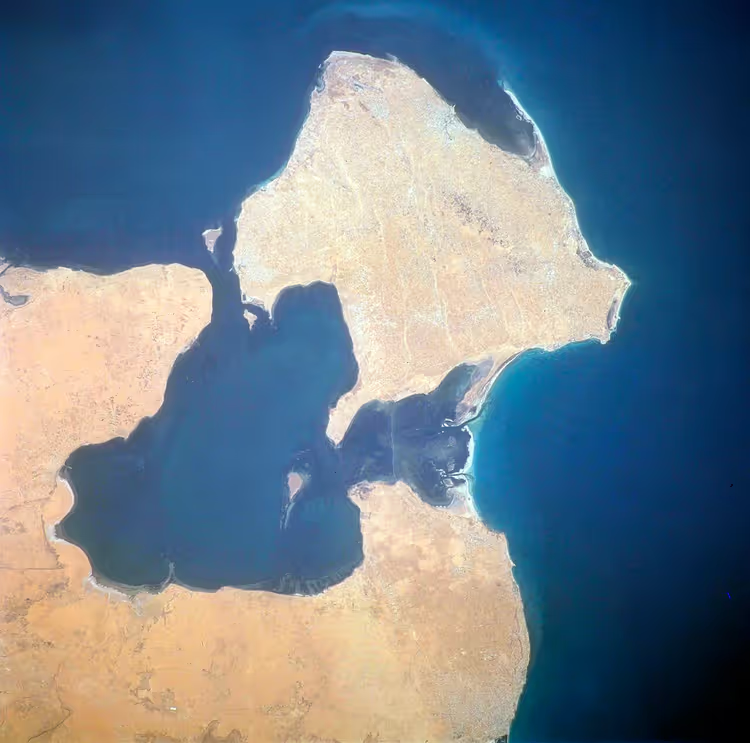
Djerba Island
Djerba lies in the south of the country and is considered the warmest resort in Tunisia. A bridge and a ferry connect the island to the mainland, and the crossing takes only a few minutes.
The beaches here have white sand and clear water without seaweed. The most beautiful stretches are in the northeast of the island, so when choosing a hotel, look at the map, not just the price.
A signature feature of the island is thalassotherapy. Clinics and centers at hotels offer courses of treatments using seawater and mud, often with accommodation and meals included.
- Who it's for: those who want the warmest sea and calm swimming.
- Location: southern Tunisia, reached from the mainland by bridge or ferry.
- The catch: the best beaches are concentrated in the northeast; along other shores the water is calmer in terms of waves, but the sand is coarser.
You won't get bored on Djerba. There is a crocodile farm, a lagoon with pink flamingos, and Star Wars locations that were filmed right on the island. Rent a car or take a tour to circle the island in a day.
Monastir and Skanes
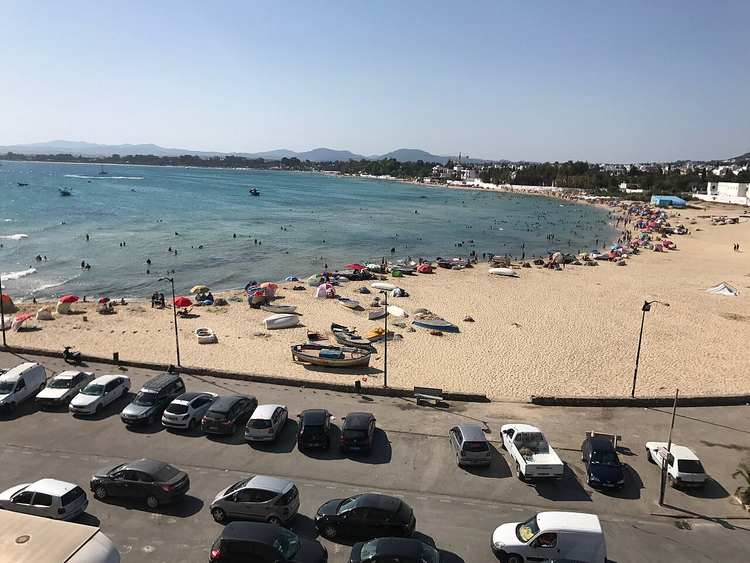
Monastir suits budget travel away from the noise of a big city. Its history is long: Caesar set out from here on his campaign against Pompey, and the ruins in the center are a reminder of that.
The Skanes tourist zone is set apart from the city. Here you'll find inexpensive hotels near the sea, and Monastir itself is surrounded by lush greenery.
- Who it's for: budget trips and history lovers.
- Not for: those who come for a high-quality beach.
- The catch: the water often has seaweed, the waves are strong, and the sea entry is steep in places.
But there are plenty of activities: yachting, horseback riding, diving, and golf. History lovers will see the ninth-century Great Mosque, the mausoleum of Tunisia's first president, and the fortress walls of the old city.
 © Jihed M'hamed · CC BY-SAPhoto: Jihed M'hamed, CC BY-SA (https://creativecommons.org/licenses/by-sa/4.0), Wikimedia Commons
Hammamet and its beaches
Hammamet is considered one of the country's most prestigious resorts. It has everything at once: a long beach strip, thalassotherapy, restaurants, and nightlife.
The beaches stretch along the bay, the water entry is gentle, and the sea is calm. Many families choose Hammamet precisely because there are no waves. You can rent umbrellas and loungers right on the beach.
- Who it's for: families with children and those who want everything in one place.
- Location: a bay in the east of the country, with hotels along the shore.
- The catch: prices are higher than in Monastir and Sousse.
The Medina Mediterranea complex was built recently and is not part of the historic part of the city. It was built open-air as an Arab-style medina, with a market, craft shops, and entertainment.
Be sure to visit Dar Sebastian (the house of George Sebastian) and its gardens. Churchill and Sagan spent time here, and in summer the International Festival of Arts takes place. Nearby you can see Roman baths and cypress groves.
view Tunisia hotels on Trip.com
 © Mohatatou · CC BY-SAPhoto: Mohatatou, CC BY-SA (https://creativecommons.org/licenses/by-sa/4.0), Wikimedia Commons
Sousse: medina and museum
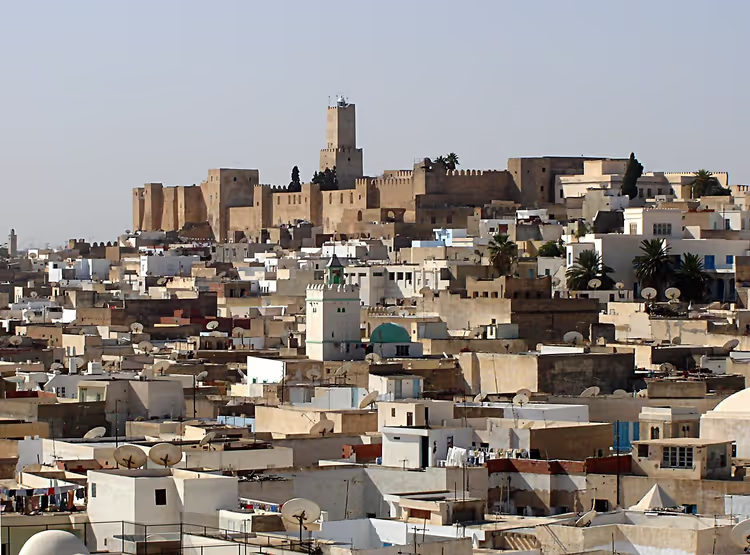
Sousse preserves traces of several eras. Walk through the medina's streets to see mosques and towers, as well as the catacombs of the early Christian era with burials.
Don't miss the Ribat with its small monastery cells and the Khalaf Tower. The Sousse city museum holds a collection of mosaics, masks, and statues that is worth seeing on its own.
- Who it's for: history, nightlife, and year-round travel.
- Not for: those looking for the country's best beach.
- The catch: the beaches are tidy, but they fall short of Mahdia and Hammamet.
There are many hotels here, from budget to luxury, so you can easily find an option for your budget. In the evening, clubs, bars, and restaurants are open, and cafes often line the city beaches.
 © BishkekRocks 15:01, 29 December 2005 (UTC) · CC BY-SAPhoto: BishkekRocks 15:01, 29 December 2005 (UTC), CC BY-SA (http://creativecommons.org/licenses/by-sa/3.0/), Wikimedia Commons
Mahdia and its beaches
Mahdia suits those looking for a quiet vacation without noisy nightlife. The city was once the capital of the Fatimids.
Mahdia's beaches are considered the best in the country. Fine white sand, a gentle entry into the water, and almost no waves. Here you can rent an umbrella, a lounger, and even diving equipment.
- Who it's for: quiet family vacations and sea lovers.
- Not for: those who need nightlife.
- The catch: there are few entertainment options and clubs here.
In the city, it's worth seeing Borj El Kebir, a Fatimid-era fortress with a sea view, and the Black Gate between the old and new city. The Mahdia Museum displays collections of traditional jewelry and clothing.
Mahdia is famous for silk and seafood. Try fish and shrimp dishes at local cafes, and bring silk items home as souvenirs. Night fishing is available in the evening.
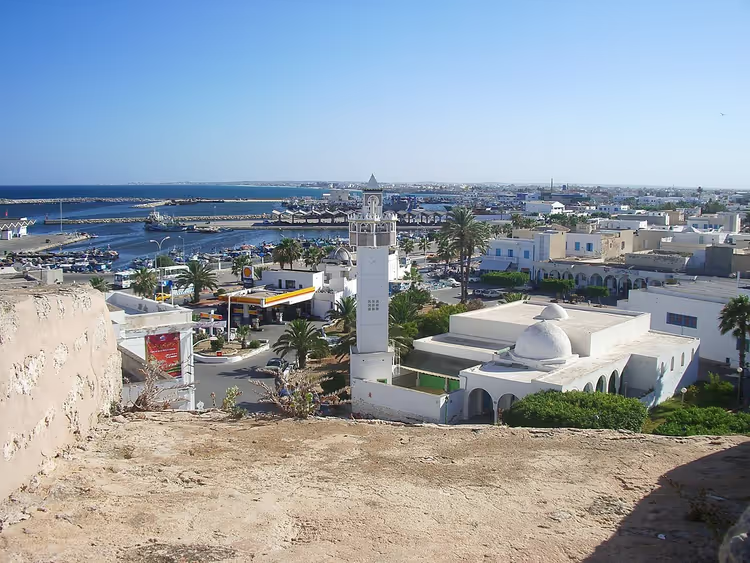 © Jaume Ollé · CC BYPhoto: Jaume Ollé, CC BY (https://creativecommons.org/licenses/by/3.0), Wikimedia Commons
Where to go in Tunisia
Five places worth seeing regardless of which resort you're staying at. Some of them can realistically be seen in a day, while others require a separate trip. It's convenient to check up-to-date reference information on the official Tunisia tourism portal.
Carthage near the capital
Carthage lies right next to the capital, so a trip here is easy to combine with your flight or your first day of vacation. It was once Rome's main rival for dominance in the Mediterranean.
Today, a large archaeological park stands in its place. The Baths of Antoninus, the ancient port, and Byrsa Hill give you a sense of the city's scale. It's best to explore the ruins in the morning, before the heat and the crowds arrive.
If your plane lands at Tunis-Carthage Airport, you can get to the excavations almost immediately after landing. From the city center, the suburban train is a convenient option.
Group tours to Carthage can be booked from hotels in Hammamet and Sousse. Check the price in advance, as it depends on the route and departure point.
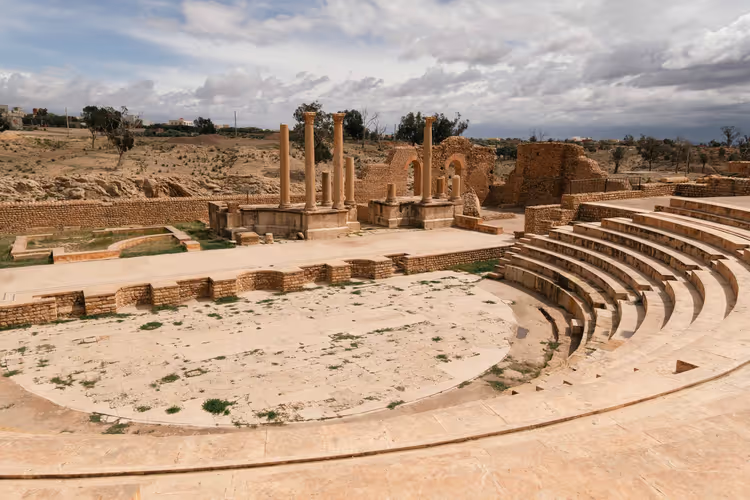
Blue-and-white Sidi Bou Said
Sidi Bou Said is one of the most photogenic towns in Tunisia. Every building here is painted blue and white, including doors, trash cans, and street lamps.
In the last century, a French baron made this standard law. Since then, the town's style has remained unchanged, and residents don't argue about paint colors when renovating.
The narrow arched streets look like a film set. Kandinsky, Maupassant, and Chateaubriand all came here for inspiration. Arrive in the morning to see the town without the crowds, and walk up to the viewpoint over the bay.
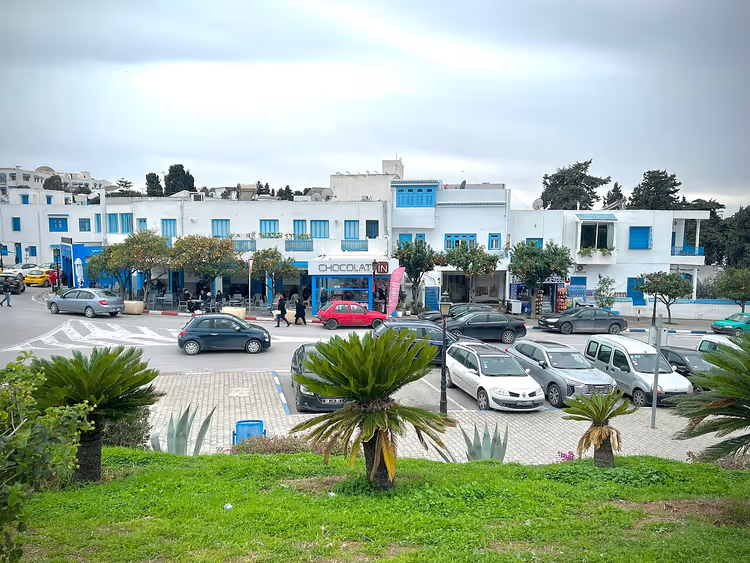 © Sharon Hahn Darlin · CC BYPhoto: Sharon Hahn Darlin, CC BY (https://creativecommons.org/licenses/by/2.0), Wikimedia Commons
Cathedral of St. Vincent de Paul
The Cathedral of St. Vincent de Paul in Tunis is named after a priest who was freed from slavery. The cathedral's size and decoration impress immediately: it's about eighty meters long and about thirty meters high.
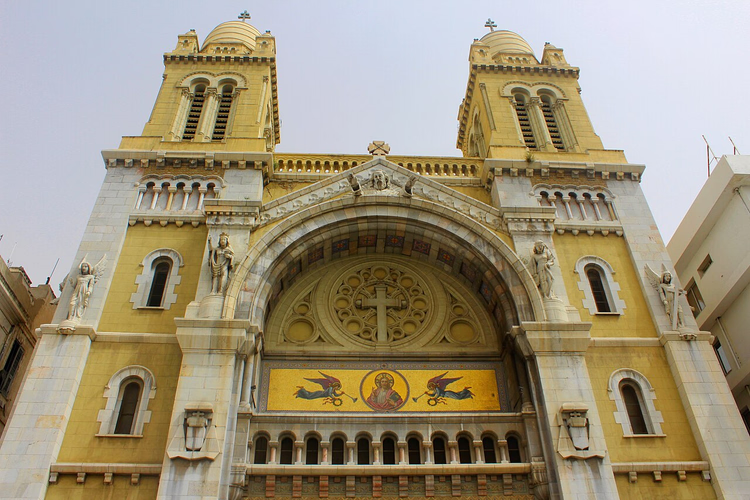 © Sami Mlouhi · CC BY-SAPhoto: Sami Mlouhi, CC BY-SA (https://creativecommons.org/licenses/by-sa/4.0), Wikimedia Commons
Inside, there's an organ hall, and two instruments are still played today. The cathedral belongs to the Catholic Church.
Opening hours depend on services, so check them before your visit. The cathedral stands in the center of the capital and is easy to combine with a walk through the old medina of Tunis.
Chott el Djerid
Chott el Djerid is a salt flat in the Sahara, not an ordinary lake. In summer, the heat dries it out and turns it into a white plain, while in winter it fills with water dotted with salt islands.
Tourists come here for the salt mountains and the sulfate water that changes color in the sun. This is where the twin sunset of Tatooine was filmed.
Visit as part of a tour or in a 4x4. Driving here on your own is difficult, and getting there without a car is nearly impossible. Bring water, sunscreen, and closed-toe shoes.
 © Josep M. Gracia · CC BY-SAPhoto: Josep M. Gracia, CC BY-SA (https://creativecommons.org/licenses/by-sa/4.0), Wikimedia Commons
The amphitheater in El Jem
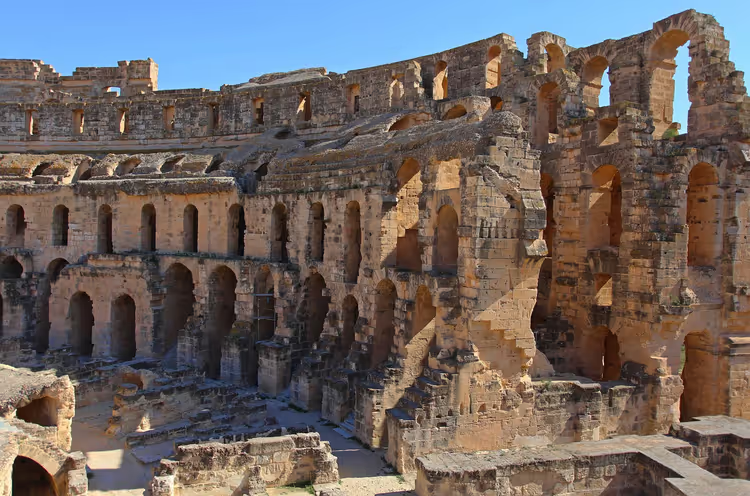
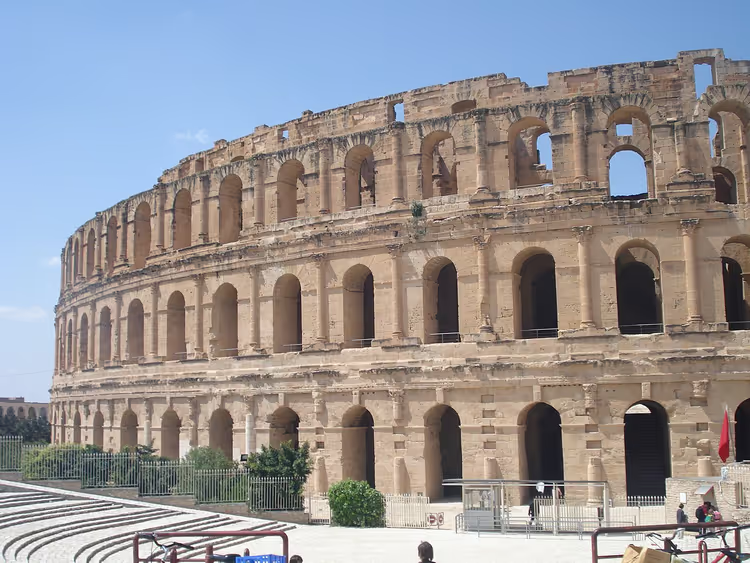
El Jem is often called the African Colosseum for its resemblance to the Roman one. The amphitheater was built in the third century, held tens of thousands of spectators, and is a UNESCO World Heritage Site.
Today, you can go down to the arena and walk through the underground galleries where animals were kept. The ticket also covers the nearby museum, which displays mosaics and sculptures from the excavations of Thysdrus.
An adult ticket for foreign tourists costs 20 TND, about six euros, and includes the museum; in summer the complex is open from morning to evening, and in winter it closes earlier (as of 09/2026, official Tunisia tourism portal). Arrive at opening time to explore the arena without the heat.
Tours to El Jem run from Tunis, Hammamet, Sousse, and Mahdia. view El Jem tours on GetYourGuide
 © Cimoi · CC BY-SAPhoto: Cimoi, CC BY-SA (https://creativecommons.org/licenses/by-sa/3.0), Wikimedia Commons
Food in Tunisia: what to try
Tunisian cuisine combines Mediterranean and Maghreb traditions. The main ingredients here are seafood, vegetables, bread, beef, and olive oil. Here are five dishes worth trying during your trip.
Steamed couscous
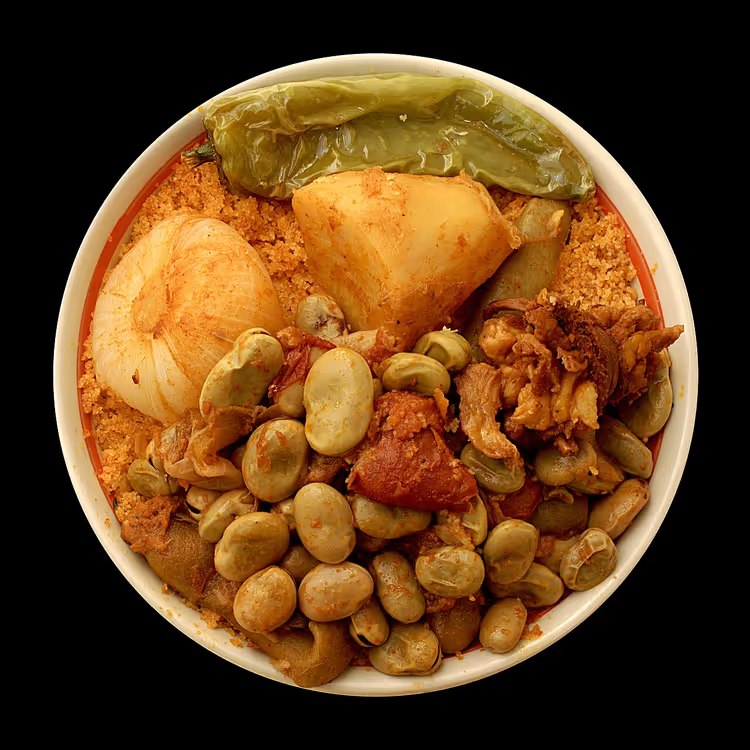
Couscous is steamed in a special pot: vegetables and meat simmer at the bottom, while the grain steams on top. Before serving, the meat is placed on the grain and the vegetables are topped with sauce.
 © Habib M'henni · CC BY-SAPhoto: Habib M'henni, CC BY-SA (https://creativecommons.org/licenses/by-sa/3.0), Wikimedia Commons
On Djerba, couscous is made with tuna and seafood. Fish broth, lemon, mint, and fennel are added to the pot, giving the dish its aromatic flavor. Try it at local restaurants on the island.
Harissa with bread
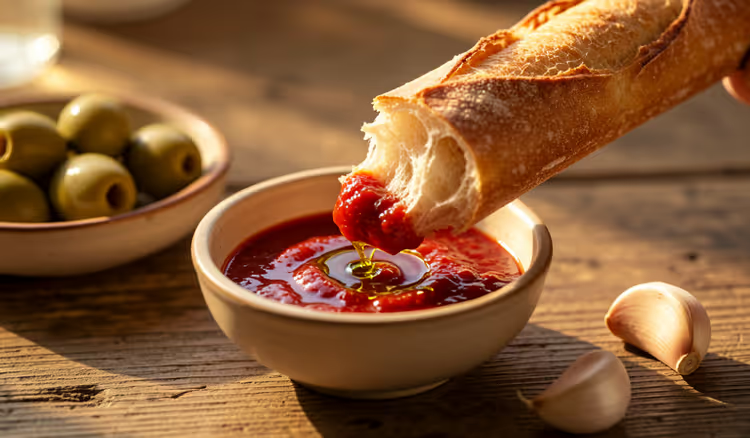
Harissa is made from olive oil, chili peppers, spices, and garlic. Sometimes cooks add tomato paste to soften the flavor.
Traditionally, you dip a baguette in olive oil first, then in harissa. Try a little at a time if you're not used to chili. The dish is served in almost every restaurant, because it's a local invention.
 AIIllustrative image: AI-generated
Oven-baked tagine
Tunisian tagine is different from Moroccan tagine. Here it is made with eggs, potatoes, chicken, cheese, and herbs, then baked in the oven, resulting in a hearty omelet.
The dish looks like a tall homemade pie. Tunisians consider tagine an appetizer, but it will be enough for you as a main lunch dish.
Shorba for lunch
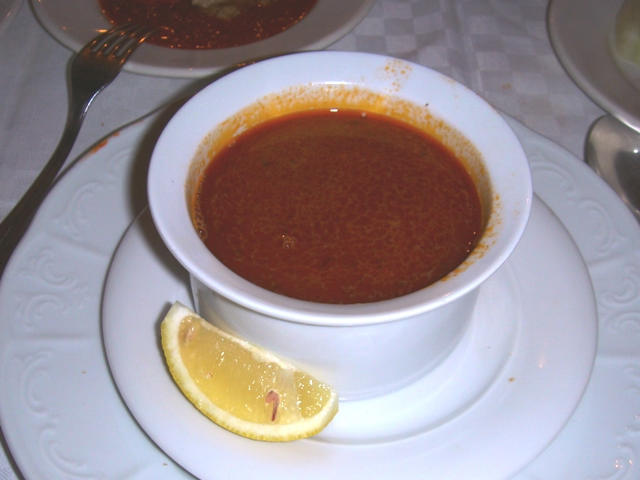
Shorba is made from veal and vegetables, with wheat groats added for thickness. First, the ingredients are sauteed in olive oil, then water and tomato paste are added.
Shorba is considered one of the most popular lunches in the country. Order it at an ordinary city cafe to try the homemade version rather than the hotel one.
 © Shoestring · CC BY-SAPhoto: Shoestring, CC BY-SA (https://creativecommons.org/licenses/by-sa/4.0), Wikimedia Commons
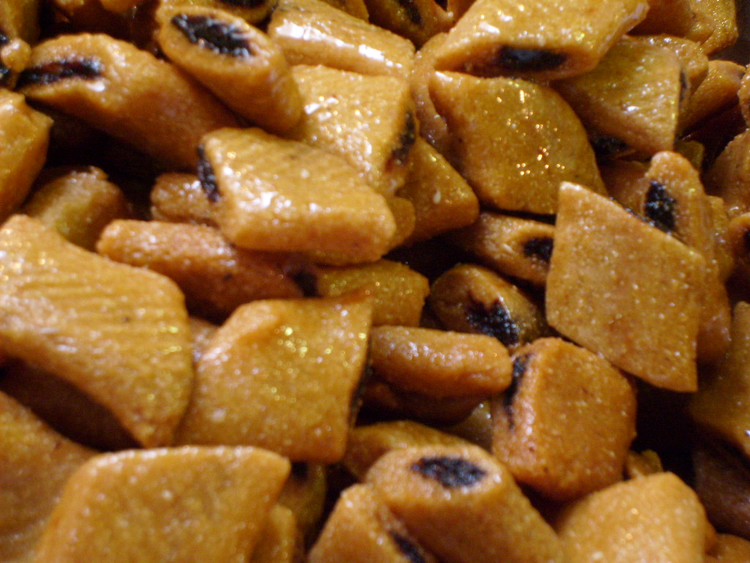
Makroudh with tea
Makroudh is made from semolina and generously seasoned with cinnamon. The filling varies: candied orange peel, dates, or nuts.
The cookies are moist inside and fragrant. They are convenient to bring home as a sweet souvenir, if you pack the soft sweets separately.
Vacation prices and how to book
Tunisia remains one of the most affordable Mediterranean destinations. The final cost depends on the season, resort, and hotel level, so it is better to compare options in advance.
What affects the price | What it looks like |
|---|---|
Season | July and August are more expensive, September and October are cheaper with a warm sea |
Resort | Monastir and Sousse are cheaper than Hammamet and Djerba |
Hotel type | hotels with thalassotherapy are more expensive than regular ones |
Excursions | depend on the route and departure city |
Car rental | more cost-effective for several days than for one |
Low season falls in winter and early spring, high season in midsummer. If your dates are flexible, shift your trip to June or September: the weather will stay warm and prices will be lower.
Book your hotel and flight in advance, especially if you are traveling with children. There are always options on the spot too, but popular dates fill up quickly.
see available hotels on Trip.com
Find hotels in Tunisia
Compare prices across booking sites and filter for rooms with free cancellation.
Compare prices on Trip.comThe widget loads once you give your consent.
Currency and connectivity
The national currency of Tunisia is called the Tunisian dinar (TND). One euro is worth about 3.38 dinars (as of 09/2026, dinartunisien.com), meaning one dinar is roughly 0.30 EUR.
It is more convenient to pay in cash; cards are not accepted everywhere, especially at markets. You can exchange money at banks, at the hotel, or at official exchange offices. Do not exchange large amounts at once.
Tunisian dinars are restricted for export, so keep your exchange receipts until departure. Declare large amounts of foreign currency upon entry so you can take them back out without issues.
Wi-Fi in public places is unreliable. If you need maps and contact with family, buy a local Orange or Ooredoo SIM card at the airport or in the city. A plan with data costs a few euros, and coverage works across the country.
If you want to stay connected right after landing, compare eSIM plans before your trip.
⁉️🤔 Frequently asked questions
Which Tunisia resort is best for a family vacation?
Hammamet, Mahdia, and Djerba are the best options for families. These places have almost no waves and a gentle entry into the water, so kids can swim comfortably. Hammamet has more entertainment and restaurants, Djerba has the warmest sea, and Mahdia suits those who want peace and quiet. Check with the hotel in advance whether they have a kids' club and a shallow pool.
When is the best time to go to Tunisia?
May, June, September, and October have the most comfortable weather in Tunisia: the sea is warm and the heat isn't exhausting. July and August suit those who love intense heat and are ready to spend the day by the water. In winter, swimming is too cold, but you can explore cities and ruins without crowds. Book your trip for the shoulder season if you want both beach time and sightseeing.
Do I need a visa to travel to Tunisia?
Citizens of Germany and most EU countries do not need a visa for tourist trips of up to 120 days (as of 09/2026, German Federal Foreign Office). Your passport must be valid for the entire duration of your trip. Check the rules on the official website before you fly, because they sometimes change.
What souvenirs should I bring from Tunisia?
People bring olive oil, spices, cactus and fig jam, as well as silk goods, leather items, and jewelry from Tunisia. Olive oil and spices are inexpensive and travel well. At markets, haggle so you don't overpay by several times. Buy food products in factory packaging, which makes them easier to take across the border.
How do I communicate in Tunisia without Arabic?
English is not widely spoken in Tunisia, even in tourist areas, but many people understand French. If you don't speak French, install an offline translator and memorize a few words: "aslema" means hello, "bislema" means goodbye, "shnahwelek" means how are you. That's enough for communicating at the hotel, in cafes, and at the market.
In short: what to book
If this is your first trip to Tunisia, go with Hammamet or Mahdia: they're easier when it comes to beaches and family-friendly infrastructure. If warm sea and a relaxed vacation matter more to you, choose Djerba. For history and nightlife, head to Sousse or the capital.
You'll see the country's main sights in Carthage, Sidi Bou Said, and El Jem, and from the cuisine, try couscous, harissa, and tajine.
It's more convenient to book your hotel in advance, while good dates are still available. Compare prices for Tunisia hotels on Trip.com, check out tours around the country on GetYourGuide, and sort out connectivity with an eSIM ahead of time.

A small editorial team writing guides for independent travel. We travel ourselves, but we haven’t been everywhere, so we check prices, opening hours and how to get there against official sources.