
















Budapest in 5 days: a route through Buda and Pest with transport and prices
Five days in Budapest cover almost the entire must-see program of the city. Budapest is divided into two halves: hilly Buda and flat Pest. Both are worth exploring on foot, but without a plan you will waste half a day on transfers.
We put together a day-by-day itinerary: transport, lines, prices, and honest catches. To start, you need a convenient transit pass.
Buy tickets for thermal complexes and the Danube online: at the ticket office you lose time, and morning slots sell out first, so book your visit in advance.
Ad: this article contains affiliate links, we earn a commission if you book through them, at no extra cost to you.
Day 1: Buda hills and Fisherman's Bastion
💡 In short:
- Day route: Erzsébet tér square, Libegő chairlift, Elizabeth Lookout Tower, Buda Castle, Royal Palace, funicular, Széchenyi Chain Bridge.
- You need 5-6 hours. Cover part of the route by tram 59 or 61 and bus 16, so you can rest between climbs.
- Get a 24- or 72-hour pass: it covers trams, metro, and buses within the city (as of 09/2026, BKK).
- Prices and opening hours: 09/2026, verified on the official Széchenyi Baths website and in the BKK network.
The whole week in one table, so you can see the overall load:
Day | Main thing | Tickets in advance | On foot |
|---|---|---|---|
1 | Buda Castle, Royal Palace, Chain Bridge | not needed | about 6 km |
2 | Basilica, Andrássy Avenue, Parliament, Gellért Hill | Danube boat cruise | about 8 km |
3 | Pest: synagogue, Central Market Hall, Váci Street | Hungarian National Museum | about 5 km |
4 | Pál-völgyi cave, zoo, baths | Széchenyi or Rudas Baths | about 4 km |
5 | day trip out of town | full-day tour | optional |
Distances are shown on the map, this is a planning reference.
The first day is the longest and the most vertical. You climb the hills, descend to the Danube, and finish at Széchenyi tér square. Weather decides a lot: in rain the Libegő and the lookout tower are closed, so start with the palace instead.
Erzsébet tér square
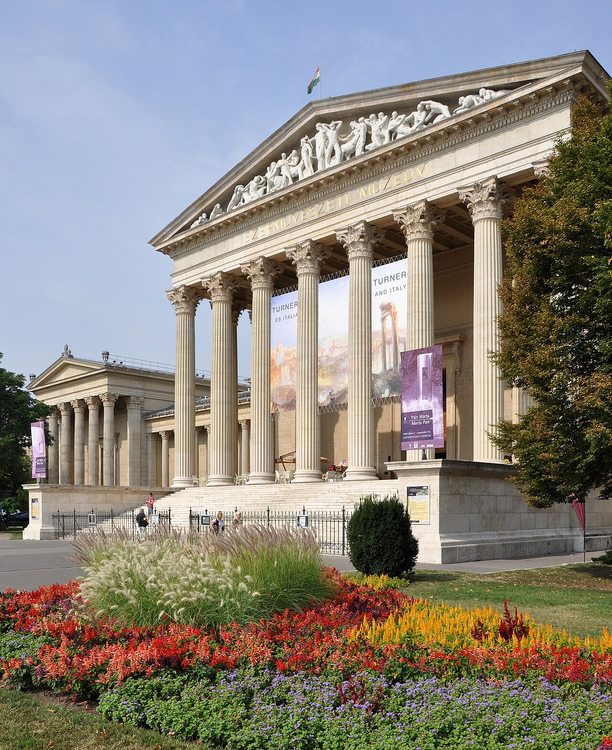
The day starts at Erzsébet tér square. It was built up in the 18th-19th centuries, and the facades here compete with palaces. The park has a Ferris wheel, and nearby the "Danube" fountain plays, with female figures of the river's tributaries and a statue of Neptune.
 © Marc Ryckaert ( MJJR ) · CC BYPhoto: Marc Ryckaert ( MJJR ), CC BY (https://creativecommons.org/licenses/by/3.0), Wikimedia Commons
From here, take bus 16 to the Széll Kálmán tér terminus. There you transfer to tram 59 or 61 and get off at Városmajor. The landmark for the transfer is the round Budapest hotel building by the tram tracks. The cogwheel railway to the hills starts from this stop.
Elizabeth Lookout Tower
 © Tanár · CC BY-SAPhoto: Tanár, CC BY-SA (https://creativecommons.org/licenses/by-sa/3.0), Wikimedia Commons
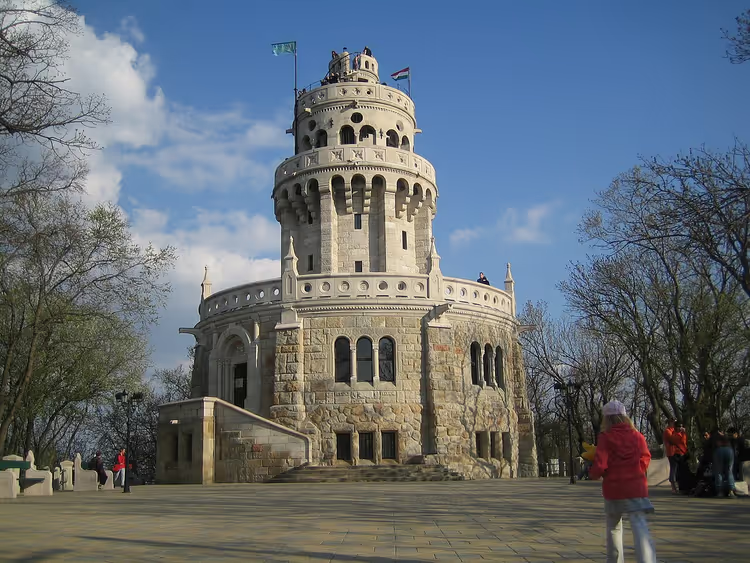
The train takes you up to the children's railway and the Jánoshegy stop. Following the Erzsébet kilátó sign, you walk uphill to a multi-tiered tower that looks like a cake. Each tier has its own viewing platform, and a spiral staircase leads higher.
From the top you get a panorama of the Buda hills, the green valley, and the Parliament. Entry to the tower is free, it is open during the day and closes toward evening. Bring a windbreaker: it is always cooler at altitude than in the center. After descending, you walk to the chairlift.
Libegő chairlift
 © Random photos 1989 · CC BY-SAPhoto: Random photos 1989, CC BY-SA (https://creativecommons.org/licenses/by-sa/4.0), Wikimedia Commons
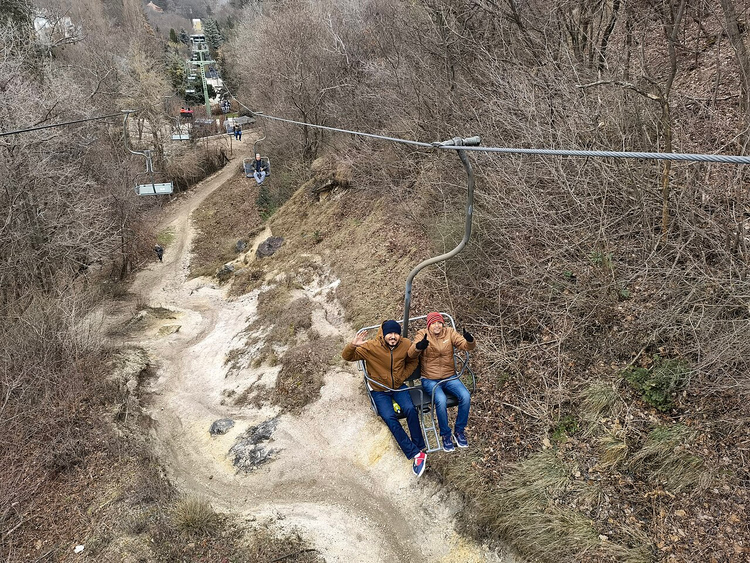
The Libegő consists of open suspended chairs, and the descent takes about 15 minutes. Staff help you get on and off, so do not rush. Buy the ticket on site, check the price and schedule at the ticket office: in winter the lift closes earlier than in summer.
At the bottom, transfer to bus 291 to Budagyöngye, then to tram 61. Get off at Széll Kálmán tér, the second stop after the round hotel. The catch: on weekends there can be a line for the chairs, so come at opening time.
Buda Castle and Matthias Church
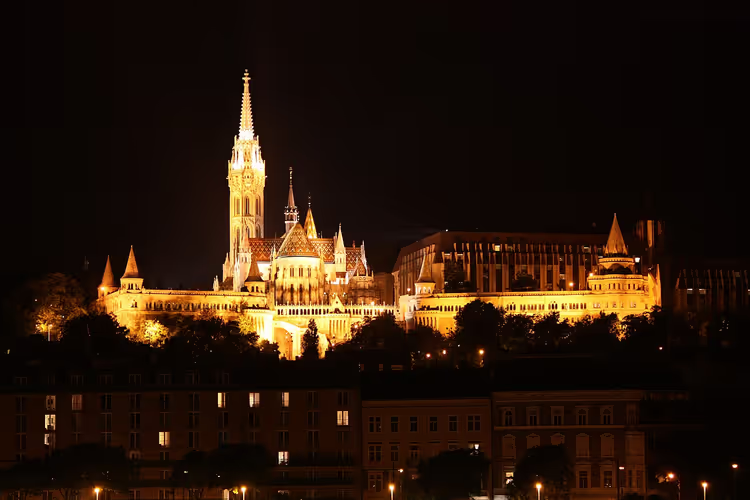 © Arian Zwegers · CC BYPhoto: Arian Zwegers, CC BY (https://creativecommons.org/licenses/by/2.0), Wikimedia Commons
A narrow medieval street leads you to the 14th-century Church of St. Matthias. It is a large three-nave late Gothic church with lacy side chapels and a tall bell tower. The main entrance faces Holy Trinity Square, and to the north the church is bounded by the tower of King Béla.
Entry to the castle grounds, which have become an open-air museum, is free. The chambers charge a fee, check it on site. Nearby stands Fisherman's Bastion, from where you get the best view of the Parliament. Come at opening time: by noon the viewing platforms are crowded, and photos against the sun turn out worse.
Royal Palace
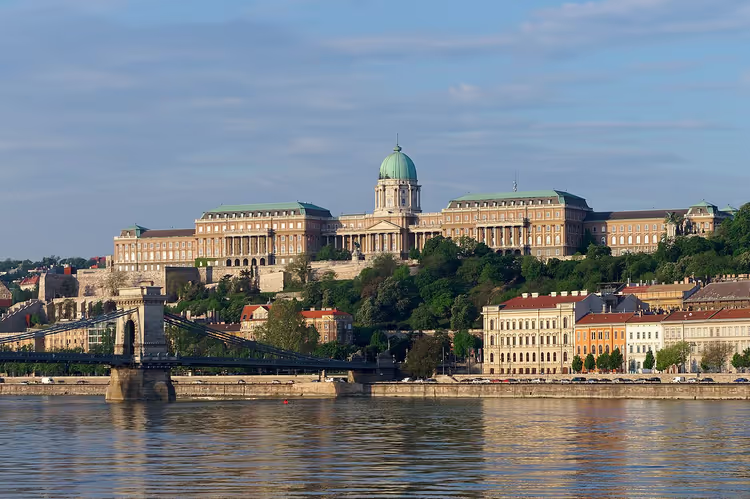 © Jakub Hałun · CC BY-SAPhoto: Jakub Hałun, CC BY-SA (https://creativecommons.org/licenses/by-sa/4.0), Wikimedia Commons
The Royal Palace occupies the southern part of Castle Hill. The early 20th-century building is done in the Baroque style: a Baroque dome, ornamental gates with the Turul bird clutching a sword, sculptural groups, and fountains.
Today it houses an art gallery, the national library, and a history museum. A visit takes at least two hours if you go inside the halls. The catch: the climb from the embankment is long, so it is better to take the funicular or a bus. Check the exact hours on the palace museums' websites before your visit.
Budavári Sikló funicular
From the palace you come out to the platform with the Budavári Sikló funicular. The line was built on the initiative of Count Széchenyi's son and restored at the end of the last century. The cars are styled after the 19th century and have three cabins at different levels.
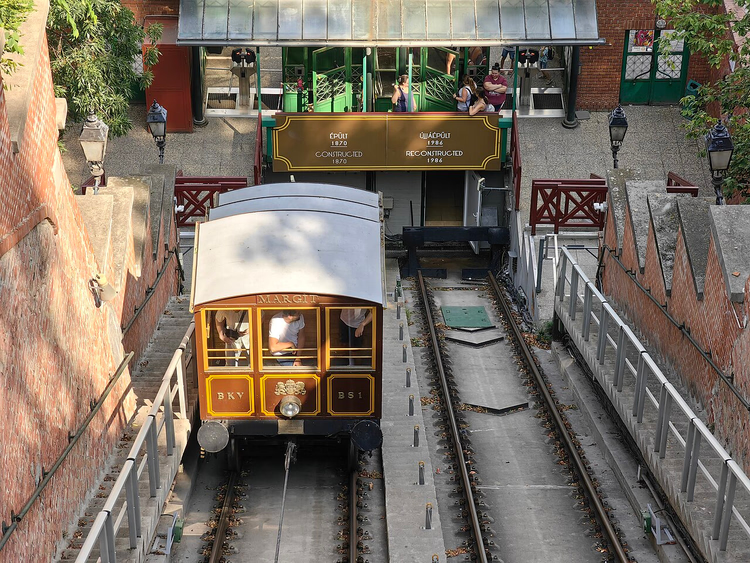
The two cars are named Gellért and Margit. The descent is short, and in a minute and a half you arrive at the lower station by Ádám Clark tér. A staircase runs alongside for those who want to walk this stretch. Tickets are sold at the ticket office; check the price on site.
Széchenyi Chain Bridge
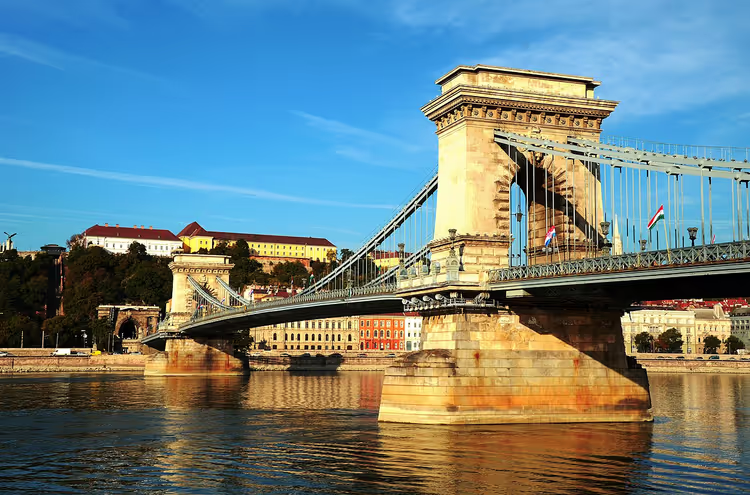 © Alireza Javaheri · CC BYPhoto: Alireza Javaheri, CC BY (https://creativecommons.org/licenses/by/3.0), Wikimedia Commons
Below, the Széchenyi Chain Bridge awaits you, the bridge that connected Buda with Pest. The bridge was built under Count Széchenyi, who invested a great deal of effort and money in the project. The deck is held by thick chains, and the towers are decorated with the coats of arms of Hungary and figures of lions.
Come here at dusk: the chains are lit with small bulbs, and the piers are illuminated by floodlights. According to legend, a wish comes true if you cross the bridge or sail under it on a boat. The catch: in the evening the bridge is crowded, so bring a tripod and patience for photos.
Széchenyi tér square
After crossing the bridge, you come out onto Széchenyi tér square. The Gresham Palace immediately draws your attention with its Art Nouveau style: towers with spires, bay windows, columns, and arches. The facade is covered with floral patterns and sculptures, and wrought-iron gates with peacocks stand at the entrance.
 © Nikolai Karaneschev · CC BYPhoto: Nikolai Karaneschev, CC BY (https://creativecommons.org/licenses/by/3.0), Wikimedia Commons
Today the building houses rooms of the Four Seasons Hotel Budapest. Two monuments stand on the square: one to the thinker Ferenc Deák on the south side and one to the politician István Széchenyi on the north side.
Day 2: Basilica, Parliament, and the Danube banks
Day two starts in Pest and ends at Nyugati station. You will walk the main avenue, climb Gellért Hill, and return along the embankments.
St. Stephen's Basilica
 © Jules Verne Times Two · CC BY-SAPhoto: Jules Verne Times Two, CC BY-SA (https://creativecommons.org/licenses/by-sa/4.0), Wikimedia Commons
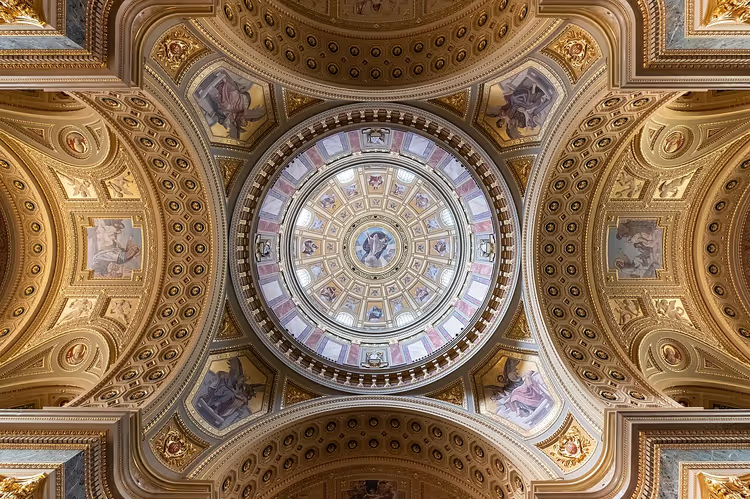
The route opens with St. Stephen's Basilica on Szent István tér. It is the largest cathedral in the capital, built in the shape of a Latin cross in the neoclassical style. It ties with the Parliament for the title of tallest building in the city center, where nothing higher is allowed.
Inside you will see mosaics, marble columns, and the main altar. A climb to the dome leads to an observation deck with a view over all of Pest. Get your ticket for the climb in advance: during the day a line forms at the elevator.
In the evening the basilica hosts an organ concert, and tickets are easy to buy online: organ concert at St. Stephen's Basilica.
Andrássy Avenue
 © Elekes Andor · CC BYPhoto: Elekes Andor, CC BY (https://creativecommons.org/licenses/by/4.0), Wikimedia Commons
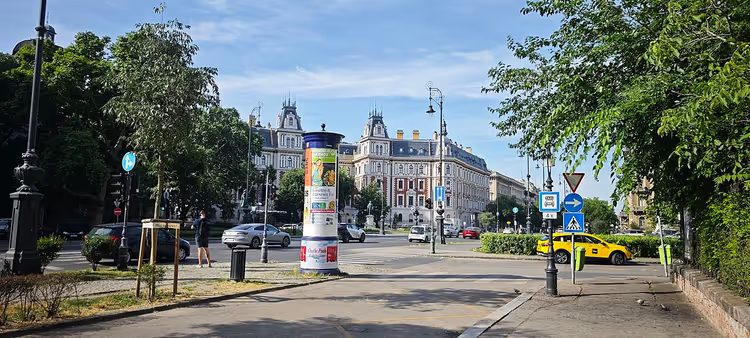
Andrássy Avenue starts at the square, and locals call it Budapest's Champs-Élysées. The facades and mansions were built by the best architects of the era, which is why the whole ensemble feels so cohesive.
Along the way you pass the Opera House in the neo-Renaissance style, with statues of composers on the facade. Further on stands the Drechsler Palace in the French Renaissance style, now home to a ballet institute. Turn onto Nagymező Street: it is called the local Broadway, with a sculpture gallery and imprints of famous artists in the pavement. Cafes and theaters line the street one after another, and from the Kodály körönd metro station you can reach Heroes' Square in two stops.
Heroes' square and city park
 © Dennis G. Jarvis · CC BY-SAPhoto: Dennis G. Jarvis, CC BY-SA (https://creativecommons.org/licenses/by-sa/2.0), Wikimedia Commons
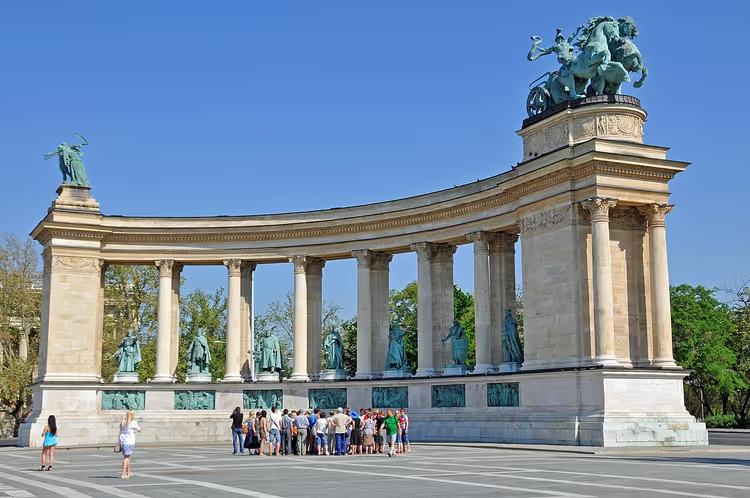
Heroes' Square is framed by two semicircular colonnades with statues of rulers from the Árpád dynasty. Above them stands a bronze figure of the Archangel Gabriel on a tall column. The square is open around the clock and admission is free.
Behind the colonnade begins City Park with its paths, pond, and lawns. The Széchenyi Baths and the zoo are also here, so you could spend day four in this very area. The catch: in summer at midday the open paths offer no shade, so bring water.
Parliament and the Lipótváros district
 © Source: User:Godot13 Derivative: User:MathKnight · CC BY-SAPhoto: Source: User:Godot13 Derivative: User:MathKnight, CC BY-SA (https://creativecommons.org/licenses/by-sa/4.0), Wikimedia Commons
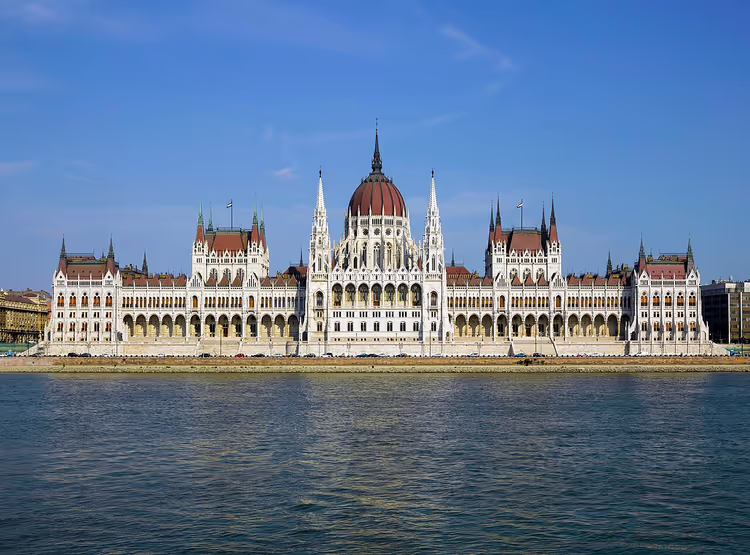
From the park, trolleybus 70 takes you to the Parliament. The neo-Gothic building is considered one of the largest in Europe. Millions of bricks and dozens of kilograms of gold went into its finish, and the facade is decorated with statues of kings and political figures.
Tours inside run in timed sessions and are sold online in advance, so check the schedule and price on the official website before your trip. The Ethnographic Museum has moved to City Park, while on Szabadság Square in the Lipótváros district you will find historic mansions. From here you return to Erzsébet Square and head toward the embankment.
Pest embankment
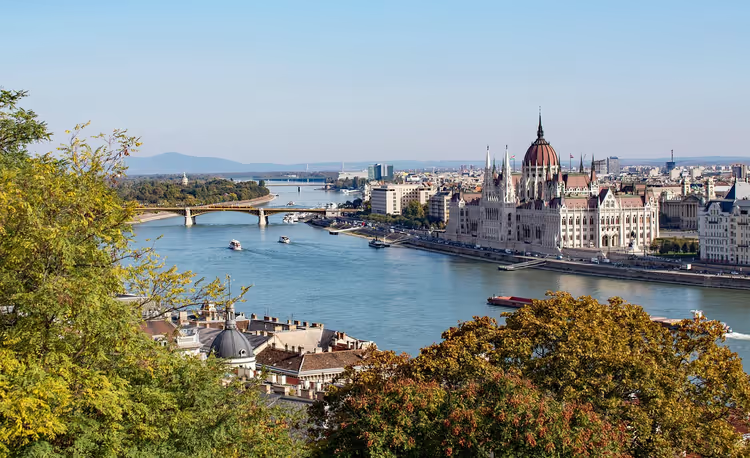
The Danube Promenade stretches between the Chain Bridge and the Elisabeth Bridge. It is a wide paved street for strolling: cast-iron benches, trees, and flower beds in bloom. From here you get views of Buda Castle and the Royal Palace.
At the water's edge stands a memorial of stone pairs of shoes, dedicated to the victims of World War II. It leaves no one unmoved and takes only a few minutes. Next, hop on tram 2 and ride to the Fővám tér stop under the Liberty Bridge. From there you cross the bridge on foot into Buda.
Gellért Hill and the Citadel
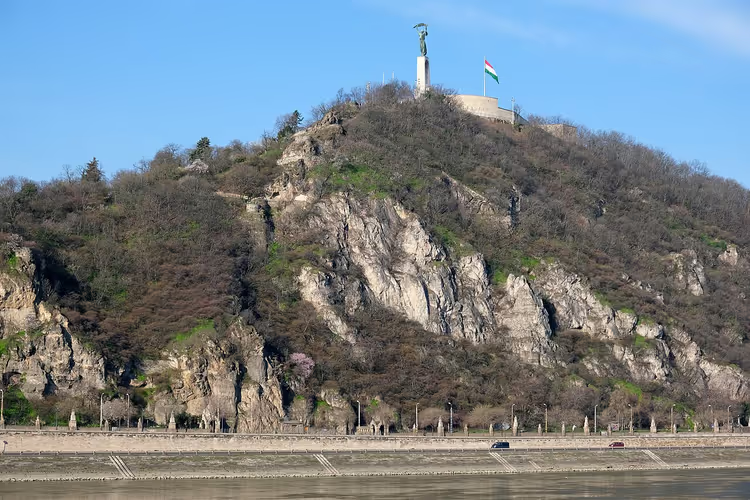 © kallerna · CC BY-SAPhoto: kallerna, CC BY-SA (https://creativecommons.org/licenses/by-sa/4.0), Wikimedia Commons
Gellért Hill rises above the Danube on the right bank. It is home to the baths, the Saint Gerard memorial, the Citadel, and the Liberty Monument. The name is linked to Bishop Gerard, who met his death here.
From the top you can photograph Pest and the bridges over the Danube. Inside the Citadel there is a military museum; admission is paid, so check the price on site. Nearby stands the Liberty Monument with a female figure holding a palm branch. Walk down the path to the Elisabeth Bridge and come out at the stop for trams 19 and 41.
Buda embankment
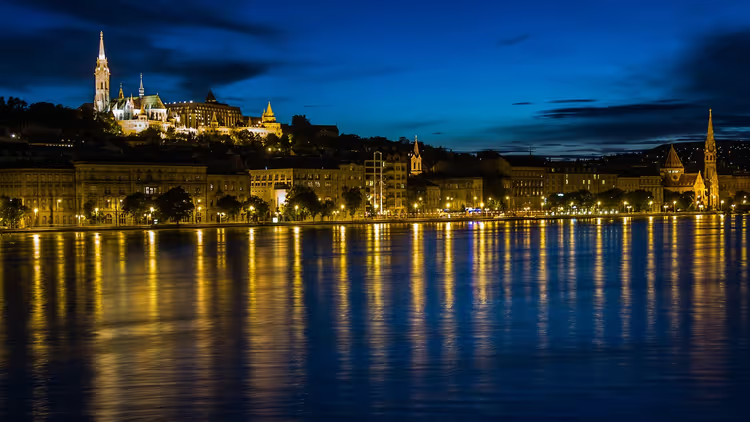
On the tram you ride along the Buda embankment past historic buildings. The line runs on the upper level of a two-level embankment and is fenced with railings. Below stretches a pedestrian section of granite chips, with no barrier at the water's edge.
There are no cafes or shops here, only benches for resting. This is a quiet stretch of the route, good for a breather. Get off at the stop by Margaret Bridge.
Margaret Bridge
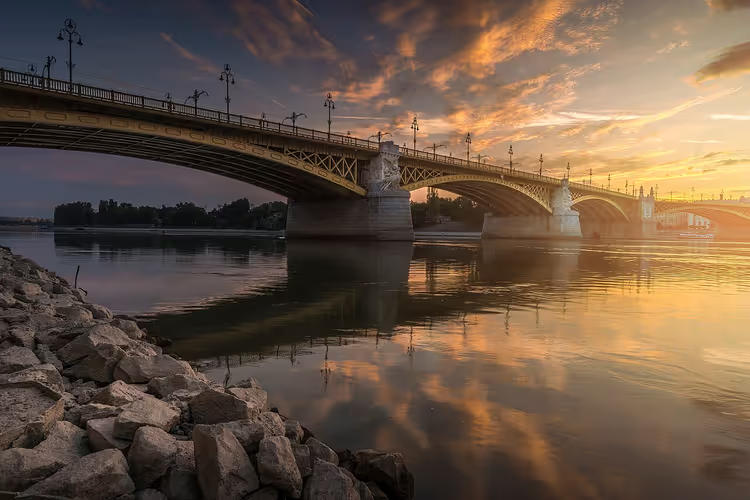
Margaret Bridge connects the two banks with an island in the middle. A walk across the bridge with a detour onto the island takes a pleasant hour. Walk the first half on the left side, then cross the road at the crosswalk: from the opposite side you get a better view of the Parliament and Buda Castle.
From there the route leads to St. Stephen's Boulevard with its Austro-Hungarian Art Nouveau buildings. Past the Comedy Theatre you come out at the square by the Western Railway Station.
Nyugati Railway Station
The Nyugati station building was designed by the Eiffel company and is considered one of the most beautiful in Europe. Walk all the way around it: the facade with turrets, the huge windows, and the glass train shed above the platforms. From Eiffel Square in front of the entrance, a cascade of lawns and fountains unfolds.
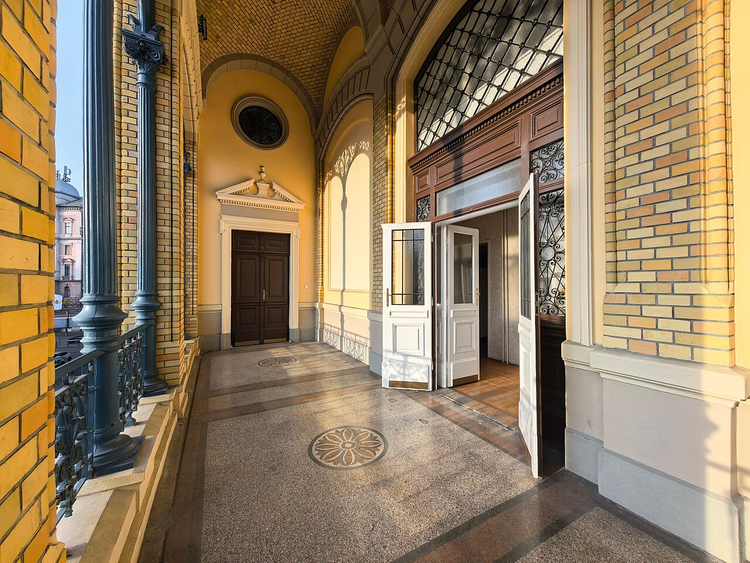
Inside you will see the old hall with ticket offices, frescoes, and stained glass windows. The south wing houses one of the most ornate McDonald's locations in the world. Today suburban trains depart from here, while international trains leave from Keleti station. Head back to the center by metro: it is faster than waiting for the tram.
Day 3: Pest, the synagogue, and the Central Market
You spend the third day in Pest, from Vörösmarty tér to Váci Street. This is a packed route through churches, galleries, and a market, and you walk almost the entire time.
Vörösmarty tér
Vörösmarty tér is surrounded by elegant 18th and 19th century buildings. In the center stands a marble monument to the poet Mihály Vörösmarty, shown reading his work "Szózat". A fountain with jets streaming from lions' mouths and tall lampposts are also here.
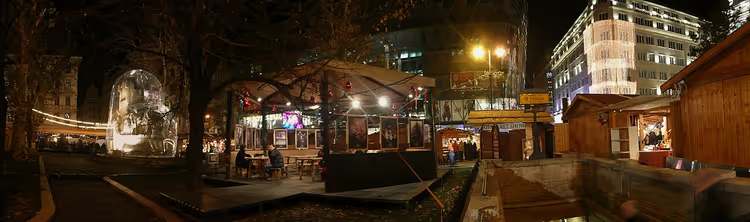 © ucsendre · CC BY-SAPhoto: ucsendre, CC BY-SA (https://creativecommons.org/licenses/by-sa/3.0), Wikimedia Commons
Step into the historic confectionery on the square: the damask wallpaper, paintings, and wicker chairs have survived from earlier times. Order a traditional Hungarian dessert and coffee, it is the best pause before a long walk. From here you head to Deák Ferenc tér.
Deák Ferenc tér
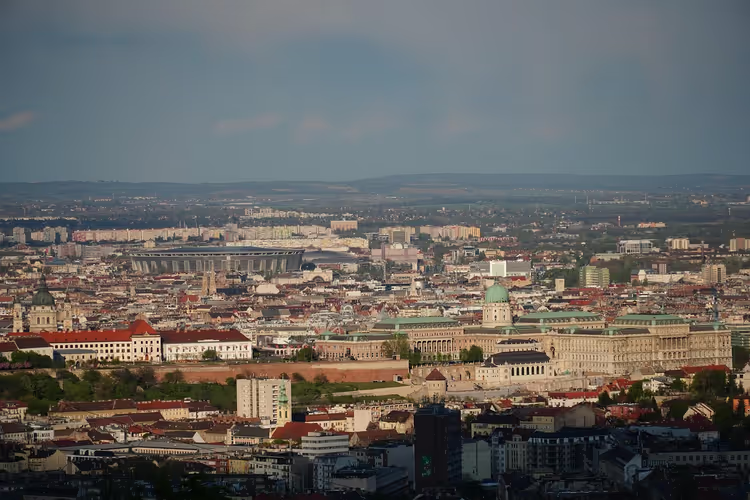
Deák Ferenc tér is a major transit hub where three metro lines meet. It is named after the 19th century politician Ferenc Deák. The Lutheran Church stands here on a 17th century foundation: a neoclassical facade with columns, bronze reliefs in the courtyard, a bell tower, and a chapel.
Nearby you will see the tall Anker Palace and the baroque city hall building. An exhibition of medieval sculptures is on display in the city hall courtyard. From here it is an easy walk to Servita Square.
St. Anne's Church
 © I would appreciate being notified if you use my work outside Wikimedia. More of my work can be found in my personal gall · CC BYPhoto: I would appreciate being notified if you use my work outside Wikimedia. More of my work can be found in my personal gall, CC BY (https://creativecommons.org/licenses/by/3.0), Wikimedia Commons
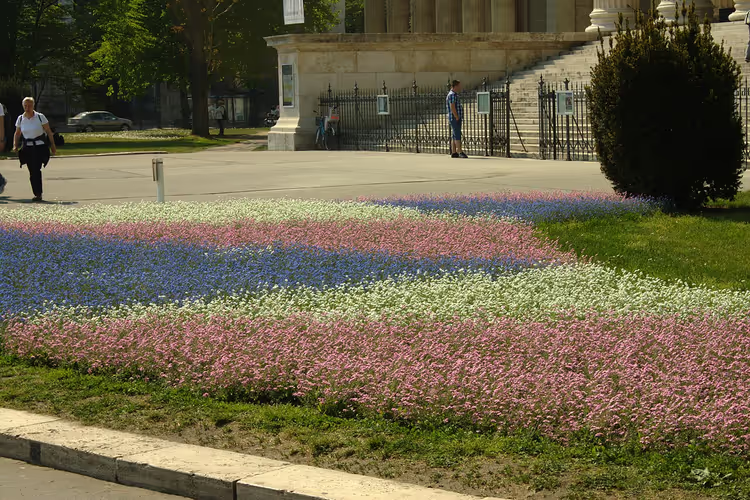
Servita Square is graced by the snow-white St. Anne's Church, built in the baroque style. Its facade was redone in 1878, but the church did not lose its value because of that. The construction was carried out by the Servite Order, the servants of Mary.
On the facade, note the Marian columns, the statues in niches, and the rose windows. Inside stand finely crafted altars with icons and a statue of Pope John XXIII. The church is active, so speak quietly and do not disturb parishioners.
Former Turkish Bank
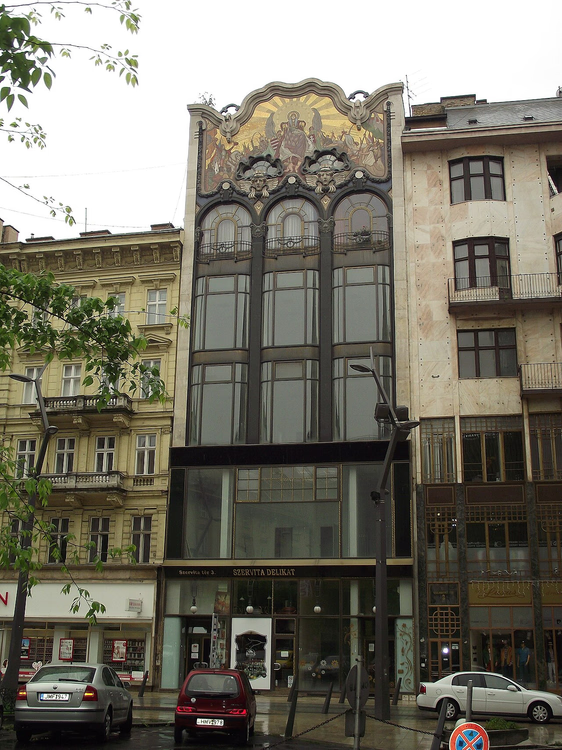 © Brunner Attila · CC BY-SAPhoto: Brunner Attila, CC BY-SA (https://creativecommons.org/licenses/by-sa/3.0), Wikimedia Commons
Another landmark on the square is the former Turkish Bank building from the early 20th century. It is a striking example of Hungarian Art Nouveau. The facade is decorated with the mosaic fresco "Glory of Hungary" featuring the figure of the Virgin Mary and two angels, with reliefs of jellyfish below.
Large arched windows with balconies and the mosaics on the portico make the building visible from afar. From the square you will walk past the yellow and red baroque City Council building to the Great Synagogue.
Great Synagogue
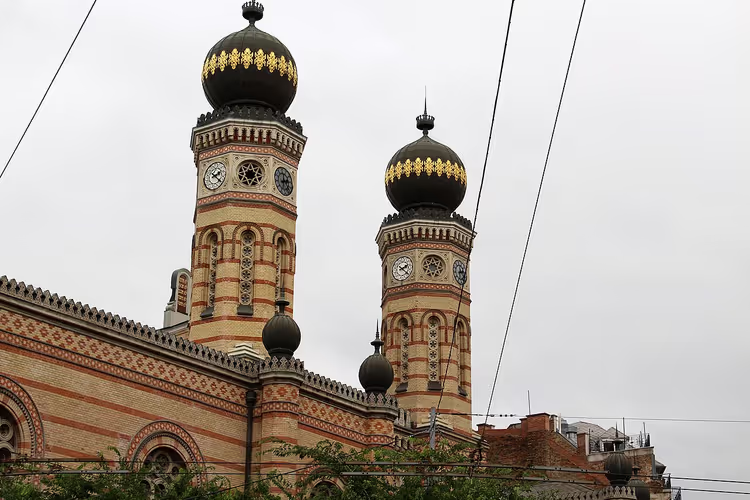 © Fred Romero from Paris, France · CC BYPhoto: Fred Romero from Paris, France, CC BY (https://creativecommons.org/licenses/by/2.0), Wikimedia Commons
The Great Synagogue on Dohány Street opened in the mid-19th century and is now a popular tourist site. The building is designed in a Moorish style with oriental motifs in its decoration.
The interior resembles a Catholic church: rows of pews, side galleries, and a pulpit for sermons. In the courtyard there is a memorial park to the victims of the Holocaust, where a metal weeping willow stands, with a name engraved on each leaf. Admission is paid; check the price and hours on the official website before your visit. Allow time before lunch: tour groups join the visits.
Párizsi udvar galleries
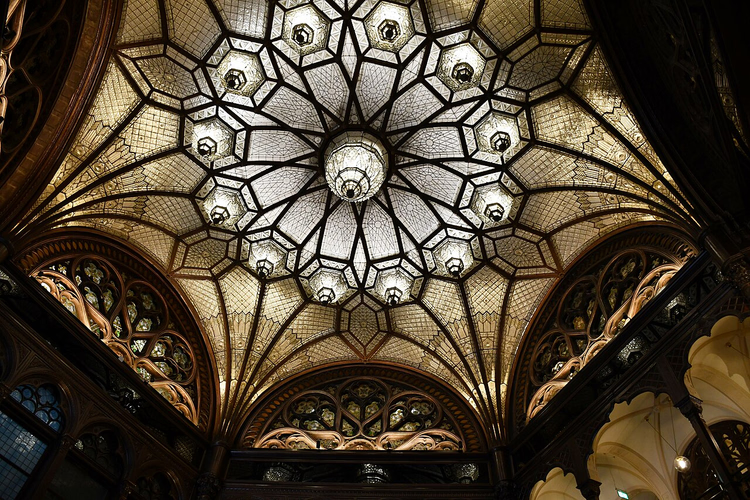 © Ato 01 · CC BY-SAPhoto: Ato 01, CC BY-SA (https://creativecommons.org/licenses/by-sa/4.0), Wikimedia Commons
From the synagogue you head to Ferenciek tere. The square is adorned by the Franciscan Church and the former shopping arcade Párizsi udvar. The covered galleries combine Venetian Gothic, Renaissance, and Art Nouveau.
Look closely at the walls: there are reliefs of bees, which in Hungary are considered a symbol of thrift. Today the building houses a hotel; the shopping rows are no longer there. From here, use the two Art Nouveau buildings with towers facing each other as your landmark and walk to the Inner City Parish Church, the oldest in Budapest.
University Church
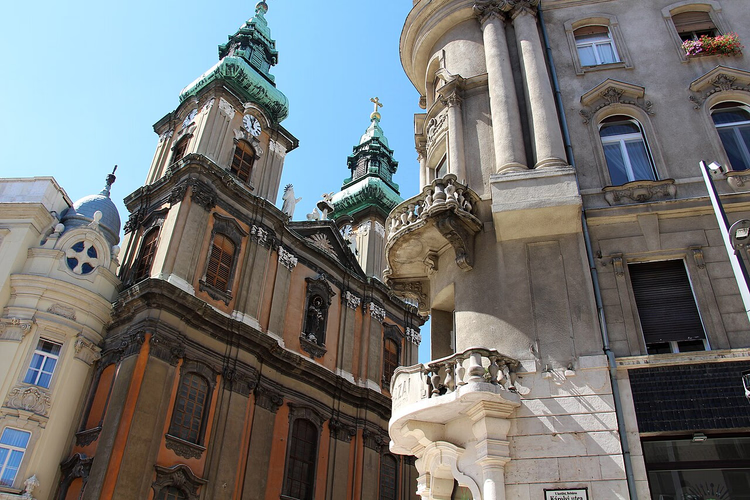 © Fred Romero from Paris, France · CC BYPhoto: Fred Romero from Paris, France, CC BY (https://creativecommons.org/licenses/by/2.0), Wikimedia Commons
Returning to Károly Boulevard, you reach Egyetem tér with the University Church. This is an example of classical baroque. The single-nave church was built by monks of the Pauline Order and crowned with a tower thirty years later.
The columned facade is topped by a tympanum niche with statues of Saints Anthony and Paul. Inside, the ceiling is painted with frescoes by Johann Bergl depicting scenes from the life of the Virgin Mary. The interior is open in the first half of the day from Monday to Saturday; check the exact schedule on site.
Hungarian National Museum
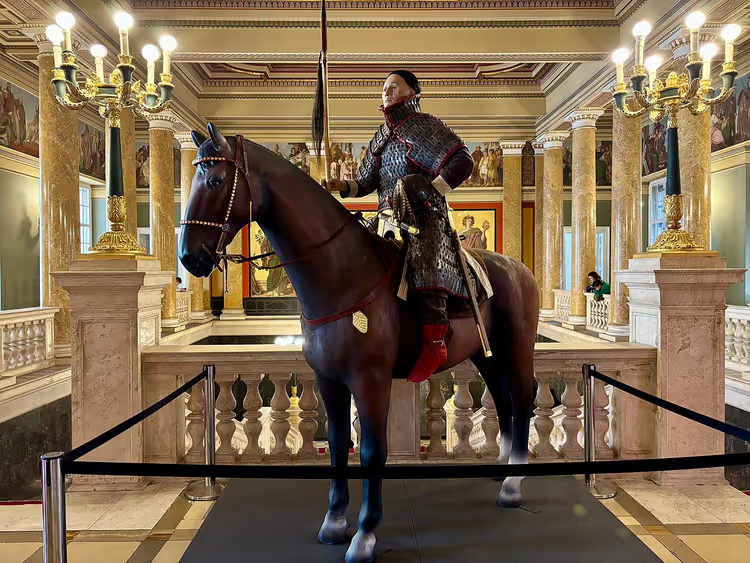
Do not walk past the Hungarian National Museum on Muzeum Boulevard. The exhibition covers the country's history and art from the founding of the state to the end of the last century. The museum occupies a historic building from the early 19th century.
The core of the collection came from Count Ferenc Széchényi: coins, books, and manuscripts. Over two centuries the holdings grew to thousands of exhibits. In the halls you will see Mozart's clavichord, Marie Antoinette's harp, and pianos that belonged to Beethoven and Liszt. Ticket offices are open during the day; the museum is closed one day a week, so check the schedule on the website. The catch: there are many halls, so allow at least two hours.
Central Market
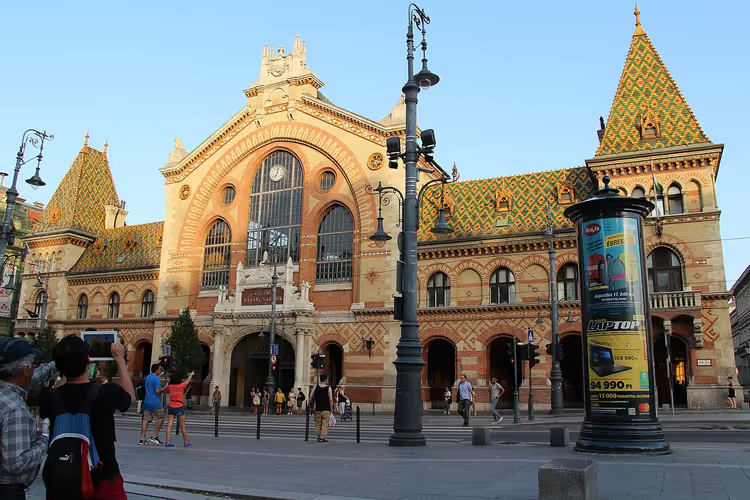 © Fred Romero from Paris, France · CC BYPhoto: Fred Romero from Paris, France, CC BY (https://creativecommons.org/licenses/by/2.0), Wikimedia Commons
From the museum you walk to the Central Market on Fővám tér. The late 19th century steel building with its multicolored roof and lacy windows is an architectural landmark in itself. Inside, vendors sell fruit, vegetables, sausages, smoked bacon, and paprika.
The market opens early in the morning, closes earlier on Saturdays, and is closed on Sundays. Before buying, stop by the supermarket on the lower level: there you can compare prices and selection. For souvenirs, go for paprika and wine in glass bottles, they are easy to bring home.
Váci Street
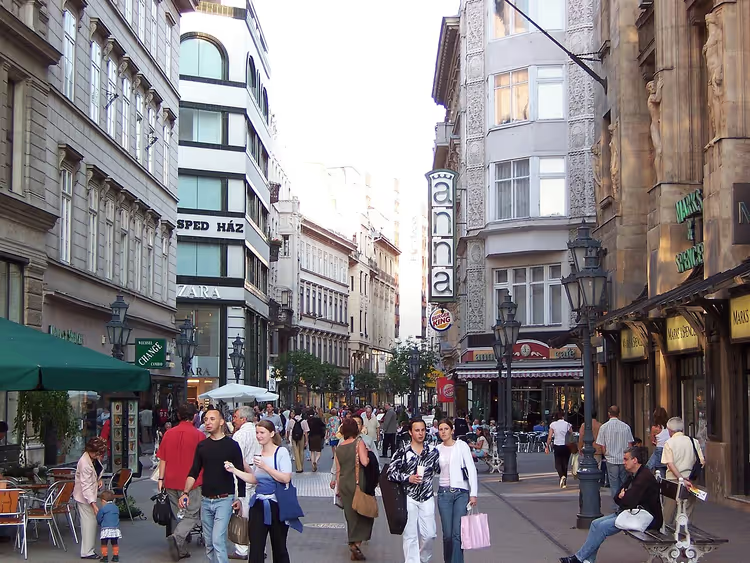 © Unknown author · CC BY-SAPhoto: Unknown author, CC BY-SA (http://creativecommons.org/licenses/by-sa/3.0/), Wikimedia Commons
From the market you step directly onto the pedestrian Váci Street. Restaurants, cafes, antique shops, and souvenir stores line both sides. The street is expensive, so check the menu at the entrance before sitting down for lunch.
Don't miss house number 11: it's the Thonet House in Art Nouveau style with a bright mosaic facade. The walk along Váci Street wraps up day three. If you want a guide, Budapest tours can help tie the neighborhoods together into one story.
Day 4: caves, zoo and thermal baths
On day four, you take a break from museums. First nature and caves, then animals, and in the evening thermal baths and ruin bars. A day like this is a great way to recharge before the final walk.
Pál-völgyi Cave
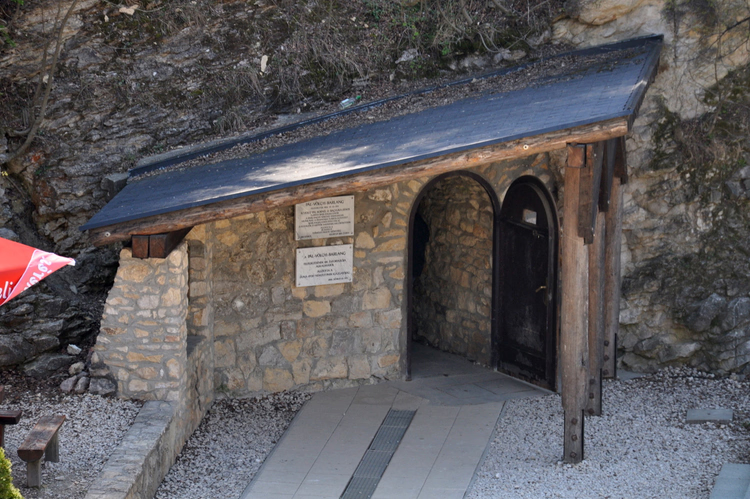 © VinceB · CC BY-SAPhoto: VinceB, CC BY-SA (https://creativecommons.org/licenses/by-sa/3.0), Wikimedia Commons
The Buda Hills contain almost thirty kilometers of tunnels in the Pál-völgyi stalactite cave. It was discovered at the beginning of the last century, and the labyrinths are open to visitors from Tuesday to Sunday. The tour is guided and lasts about an hour.
The underground halls were formed by thermal springs, so the air here is considered healing. You will see dripstones and the "Theater Hall" with a hanging stalactite shaped like a sword. There is also an underground zoo with figures of elephants and crocodiles, and a fairy-tale hall.
Keep two things in mind. The tour is suitable for people in good physical shape, and the narrow corridors will be uncomfortable for people with a large build. Getting there is easy: bus 65 from Kolosy Square, get off at the fifth stop. Tickets are bought on site; check the price at the ticket office.
Margaret Island
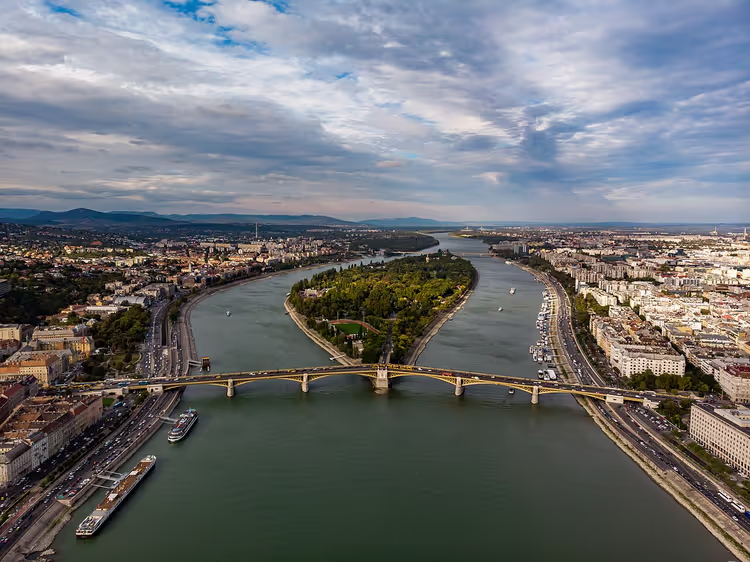 © Ralf Roletschek · CC BY-SAPhoto: Ralf Roletschek, CC BY-SA (https://creativecommons.org/licenses/by-sa/1.0/fi/deed.en), Wikimedia Commons
Margaret Island lies on the Danube between the Árpád and Margaret bridges. It is a protected area with an arboretum where mineral springs flow. The park's landscapes include a Japanese garden, alpine rock gardens, rose gardens and the Palatinus beach.
Hotels, tennis courts, pools and children's wading pools operate here. History lovers also have something to see: the ruins of a 13th-century monastery, the Chapel of Saint Michael and Bodor's singing well. The catch: on weekends the paths are packed with families, and vehicle access to the island is paid. A pleasant way to return to the center from the island is by boat.
Zoo
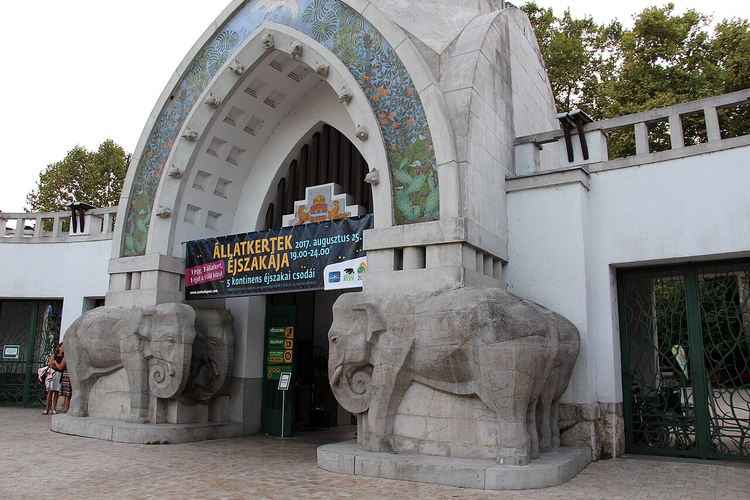 © Fred Romero from Paris, France · CC BYPhoto: Fred Romero from Paris, France, CC BY (https://creativecommons.org/licenses/by/2.0), Wikimedia Commons
The zoo spreads across Városliget Park and is one of the most visited places in the capital. At the entrance you are given a map with the layout of the enclosures and the animal feeding schedule. The collection includes thousands of animals and plants, and the grounds are decorated with buildings and sculptures by Hungarian designers.
In the contact zones you can touch and feed the animals. It is worth visiting the Butterfly House, the palm pavilion and the aquarium separately. The schedule changes by season: in summer the zoo stays open longer, in winter it closes early. Buy tickets online so you can skip the ticket office. For children this is the best option for the morning; adults will find two to three hours enough.
Széchenyi Baths
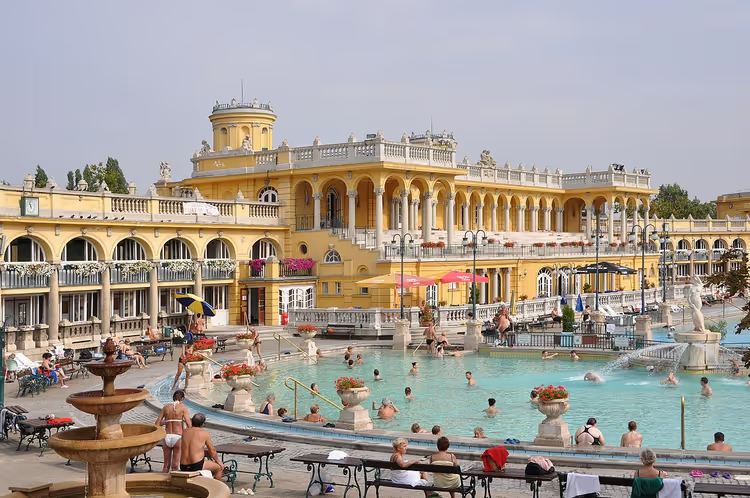 © Marc Ryckaert ( MJJR ) · CC BYPhoto: Marc Ryckaert ( MJJR ), CC BY (https://creativecommons.org/licenses/by/3.0), Wikimedia Commons
The Széchenyi Baths opened in 1913 and remains the largest bath complex in Budapest and Europe. The building looks like a palace, and the interior is no less impressive. Inside, 11 baths with mineral water from +18 to +40 degrees are in operation, plus indoor and outdoor pools.
In one pool you will feel a whirlpool current, bubbles and jet massage. In the outdoor water you can play a game of chess, and in the light, aroma and Finnish saunas you can warm up. Accessories are available for rent, and with your ticket you get a wristband instead of a key.
The 2026 prices are as follows: entry with a locker costs 13,200 Ft on weekdays, 14,800 Ft on Friday and weekends, 15,800 Ft in peak season (as of 09/2026, the baths' 2026 price list). A "Good morning" morning ticket with entry before 9 am will cost 10,500 Ft. The baths are open every day, open early in the morning and close the outdoor pools later than the thermal ones.
Getting there is easy on the yellow metro line or trolleybus 72 to the Széchenyi fürdő stop. The catch: on weekends the ticket office lines are long, so buy online tickets with a fixed entry time in advance. In the morning there are fewer people, the water is cleaner and photos in the pool turn out better.
Gellért Baths
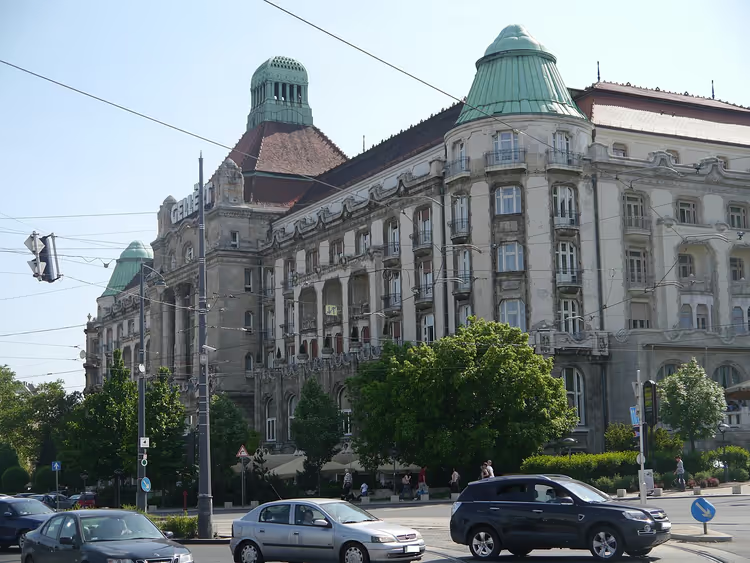 © Zairon · CC BY-SAPhoto: Zairon, CC BY-SA (https://creativecommons.org/licenses/by-sa/3.0), Wikimedia Commons
The Gellért Baths in the hotel of the same name on the right bank look like a hydrotherapy clinic in a palace. The building was constructed in the early 20th century in the Art Nouveau style. At the entrance you are greeted by stained glass windows with epic scenes, marble columns, bronze sculptures and fountains with healing water.
The complex has 13 pools with water of different temperatures, ten of them indoor. Men and women bathe separately in the thermal pools, so you can do without a swimsuit there. For the outdoor wave pool you do need a swimsuit, and slippers and towels are available for rent.
The complex is currently closed for renovation, so check the status and schedule on the hotel's official website before visiting. Tickets to the city's thermal baths are convenient to buy online: Gellért Baths tickets without queuing. You can get there by trams 18, 19, 47 and 49 or buses 7 and 86.
Lukács Baths
The Lukács Baths near Margaret Island are known for waters with calcium, fluoride, sodium and magnesium. Several pools with different temperatures operate here, and one is equipped with devices for spinal traction. Two outdoor pools maintain a comfortable temperature in summer as well.
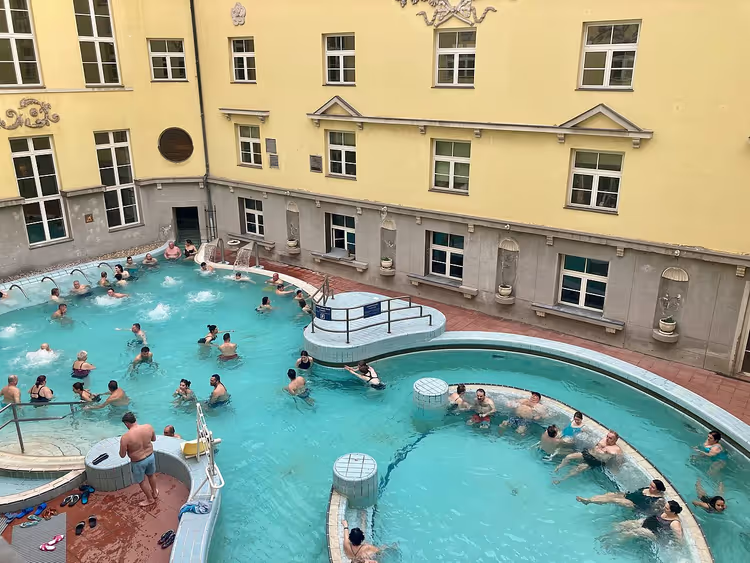 © kallerna · CC BY-SAPhoto: kallerna, CC BY-SA (https://creativecommons.org/licenses/by-sa/4.0), Wikimedia Commons
In the wellness section you will find a hammam, saunas, an ice plunge pool and a salt room. In the evening the outdoor pools are lit up, and on Saturdays they host disco parties. Budapest Card holders get free entry during the daytime; everyone else can buy tickets for 3 hours and separately for massage. You can get there by trams 4, 6, 17 and 19 or buses 91 and 191. Check the opening hours at the ticket office: the drinking pavilion closes earlier than the pools.
Rudas Baths
The Rudas Baths attract visitors with architecture featuring Turkish motifs. The main hall is covered by a dome supported by eight multicolored columns, and the water comes from the Juventus, Hungária and Attila springs. In the drinking pavilion you can taste it.
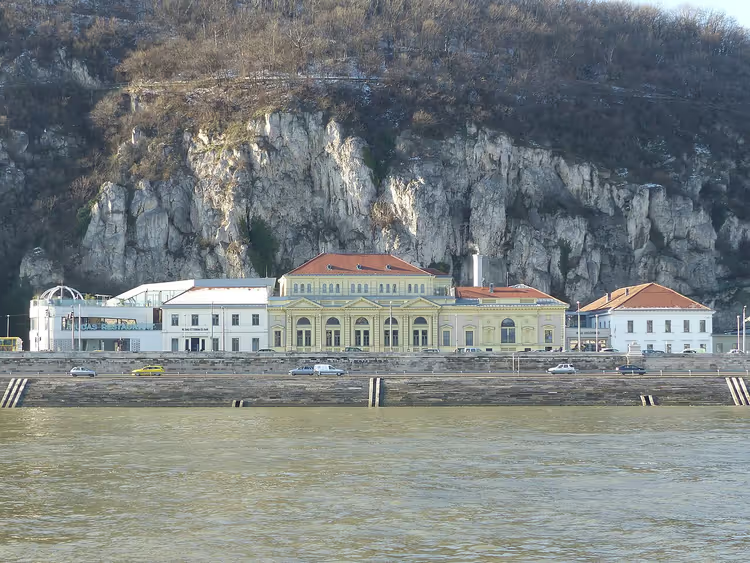 © Elekes Andor · CC BY-SAPhoto: Elekes Andor, CC BY-SA (https://creativecommons.org/licenses/by-sa/4.0), Wikimedia Commons
The schedule here is unusual. On Mondays, Wednesdays and Fridays only men bathe, on Tuesdays the complex is reserved for women, and on weekends everyone goes together. Morning visits are cheaper, a daytime ticket with a thermal pool and cabin costs more, and a night ticket is even more expensive. Check the exact prices on the official website before visiting. You can get there by buses 7, 8E and trams 17, 19 and 41.
Király Baths
The Király Baths are a 16th-century Turkish bath, easily recognized by the roofs shaped like mushroom caps. Inside, a fairy-tale atmosphere reigns, the light is soft, and the ceilings hang low. In the large hall there is a round pool under the dome.
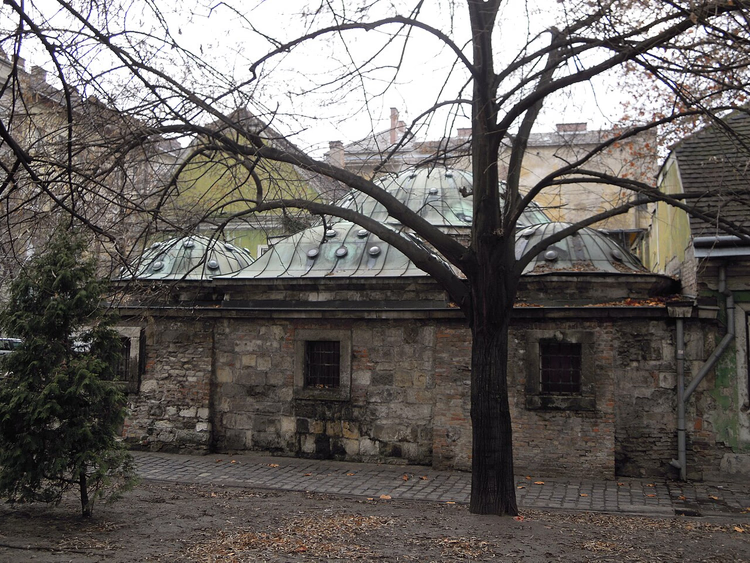 © Báthory Gábor · CC BY-SAPhoto: Báthory Gábor, CC BY-SA (https://creativecommons.org/licenses/by-sa/3.0), Wikimedia Commons
The water comes from the same springs as at Lukács, so the mineral composition is identical. Since 2020 the baths have been closed and do not accept visitors. You can view the building from the outside: from Batthyány tér metro station walk toward Margaret Island or get off at tram 4 or 6.
Dandár Baths
The Dandár Baths appeared in 1930 on a quiet street near the Petőfi Bridge. They were built as a public bath, and prices here are noticeably lower than in the center. A separate ticket is sold for each pool, so you calculate the final total yourself.
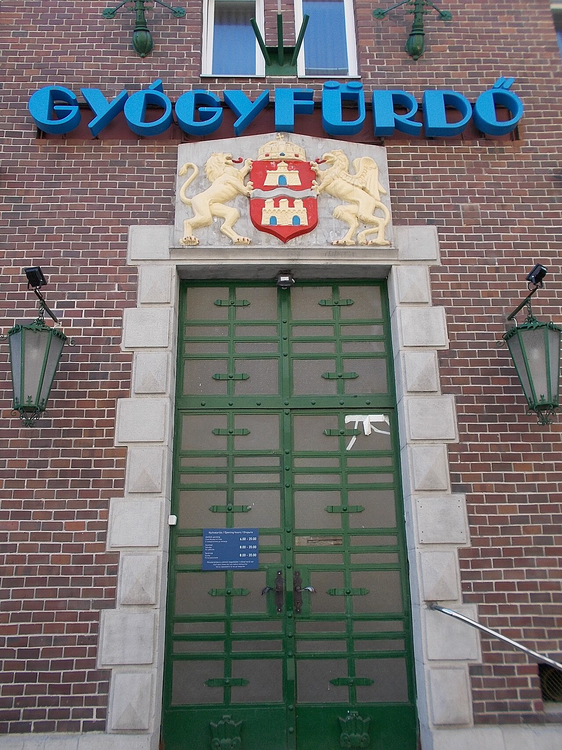 © Globetrotter19 · CC BY-SAPhoto: Globetrotter19, CC BY-SA (https://creativecommons.org/licenses/by-sa/3.0), Wikimedia Commons
Inside there are spacious baths, showers, a comfortable sauna, a steam room, and a cold plunge pool. Two indoor and two outdoor warm-water pools are open. The site's own well produces carbonated calcium-bicarbonate water with a high fluoride content.
It is easy to get there by tram 2 to the Haller utca stop, then walk toward the Zwack factory, where the Hungarian liqueur Unicum is made. The catch: on Saturdays and Sundays the bath closes just after lunch, while on weekdays it stays open until evening. This is a good option for a budget-friendly, quiet evening.
Evening walk through the ruin bars
 © Nan Palmero from San Antonio, TX, USA · CC BYPhoto: Nan Palmero from San Antonio, TX, USA, CC BY (https://creativecommons.org/licenses/by/2.0), Wikimedia Commons
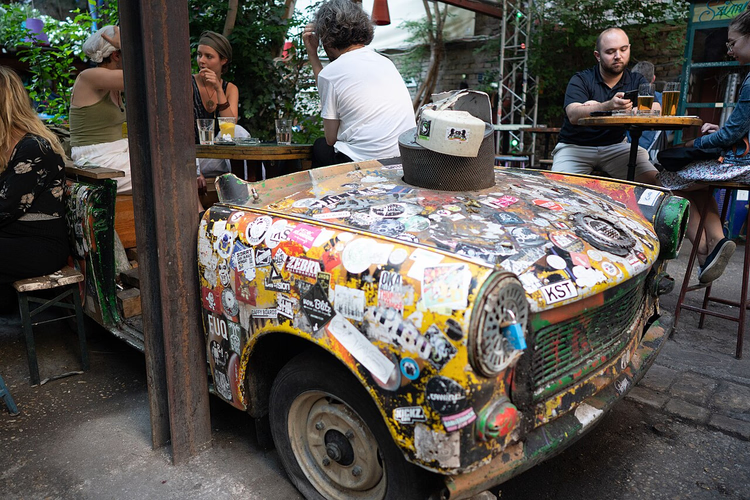
At dusk the museums close, and the city opens up from a different side. The night streets are lit, and bars hide in the courtyards of former apartment buildings. This is how the ruin bar culture was born, and without it an evening in Budapest is incomplete.
On the walk you will see St. Stephen's Basilica in the evening light and the Chain Bridge illuminated. The guide talks about the historic districts of Buda and Pest and the Danube panorama. The route ends in ruin bars with unusual interiors: a disco ball shaped like a pig, a bar counter shaped like a shell, and other details. The walk is on foot and designed for small groups, so book your spot in advance.
Day 4 practical tips: how to fit in more
The fourth day is easy to overload, so set your priorities. In the morning, go to the Pál-völgyi cave: tours run on a schedule, and without a reservation you will wait for the next group. In the afternoon, choose one thing, the zoo or Margaret Island, otherwise you will be exhausted by evening.
The zoo takes half a day if you go with children. Buy tickets online and arrive at opening time: by lunchtime it gets noisy around the enclosures. On a hot day, part of your time is spent in the shade of the trees in Városliget, next to the Széchenyi bath.
Plan the baths for the second half of the day.
At Rudas, check the schedule in advance. On a day reserved for the opposite gender, you will not be allowed in.
Bring a swimsuit, flip-flops, and a towel. Some items are available for rent, but the line for them can be long. In the changing room you are given a wristband instead of a key; do not lose it, otherwise you will have to explain yourself at the exit.
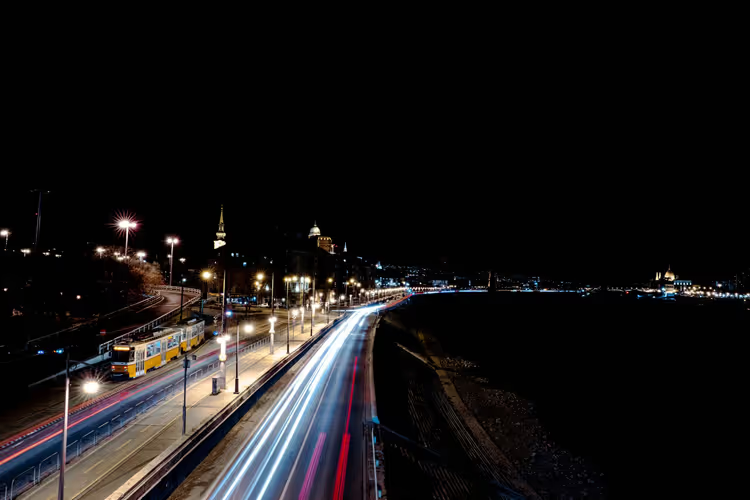
In the evening, return to the center and walk across the illuminated bridges. The Chain Bridge and the Parliament look different than they do during the day, and this is the best spot for photos. End the day in the ruin bars of District VII: it is inexpensive, lively, and beautiful in its own way.
A separate note about money. Baths often charge different prices on weekdays and weekends, and there are sometimes discounts in the evening. Compare rates on official websites and buy a 3-hour ticket if you do not plan to stay longer. At Széchenyi, entry with a cabin costs more than a ticket with a locker, so check the difference at the ticket office.
With children, the fourth day is best built around the zoo and Margaret Island. The island has children's wading pools and a beach, and a boat ride from the island to the center becomes an adventure in itself. For adults, the cave and the Turkish baths at Rudas are a better fit, where it is quiet and there are few people.
Do not forget about food. Cafes near the park and the baths are expensive, so bring water and a snack in advance. In the evening, the food at ruin bars is simple but filling, and the portions are large. If you are low on energy, leave only the bath and a walk for the fourth day. That plan also counts: you are resting, not racing through a checklist. Over the day you walk about 4 kilometers on the map, but with transport you get less tired.
Day 5: day trips from Budapest
You spend the fifth day outside the city. Hungary is compact, so from the capital it is realistic to get to a lake, a wine town, or neighboring Vienna. Below are one-day options, choose based on the weather and your energy level.
Eger and the Miskolctapolca cave bath
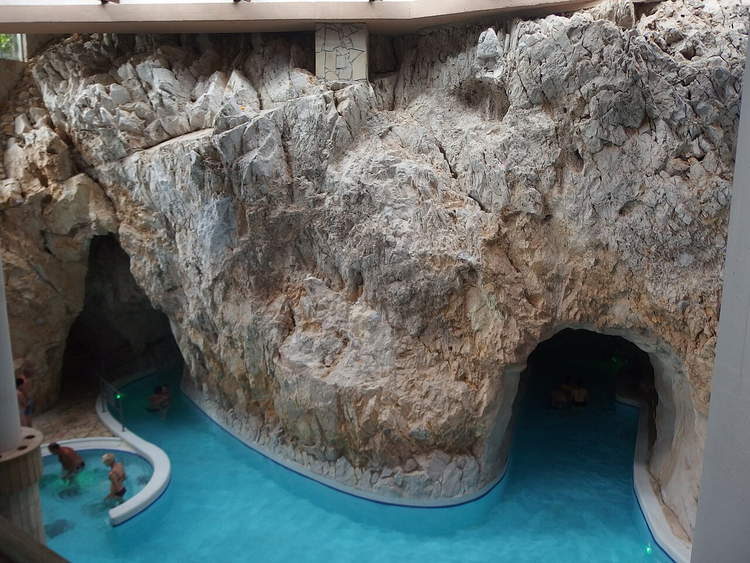
One of the most unusual routes leads to the Miskolctapolca cave bath. It is tucked away in a beech forest, and the thermal pool with illuminated water and hydromassage admits guests in timed sessions.
 © Palickap · CC BY-SAPhoto: Palickap, CC BY-SA (https://creativecommons.org/licenses/by-sa/4.0), Wikimedia Commons
After bathing, you relax in the stalactite hall, then head to Eger for a sightseeing tour. The town is steeped in a medieval atmosphere: baroque buildings sit next to a minaret from the Ottoman era. The day ends in the Valley of the Beautiful Women, where a tavern serves national dishes and you taste Eger wines, including Bull's Blood, in one of the cellars. This trip takes a full day and suits those who want to swap the city for nature.
Lake Balaton and the thermal Lake Heviz
 © Derbrauni · CC BYPhoto: Derbrauni, CC BY (https://creativecommons.org/licenses/by/4.0), Wikimedia Commons
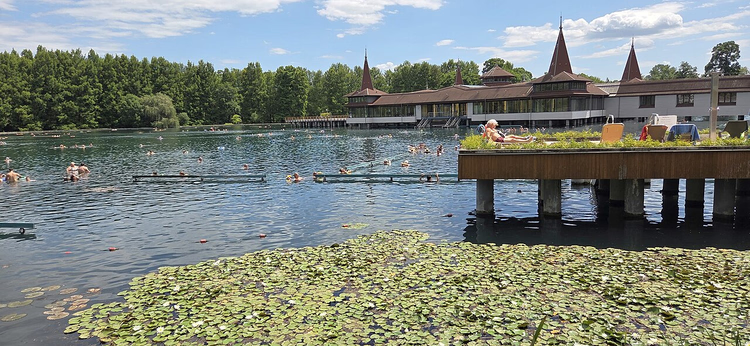
Another option is a full-day group trip to Lake Balaton and the thermal Lake Heviz. Along the way you stop at Tihany Abbey, where King Andrew I is buried. The route then continues through Balatonfured, the largest resort on the northern shore. Its springs treat internal organs, and their reputation goes back to the Roman Empire.
In Keszthely you tour Festetics Palace, one of the country's largest estates. The day ends with a swim in Lake Heviz: the warm water helps with joint problems and circulatory disorders. Bring your swimwear in advance, otherwise you will have to buy it on site. The drive takes about two hours each way, so departure is early.
Day trip to Vienna
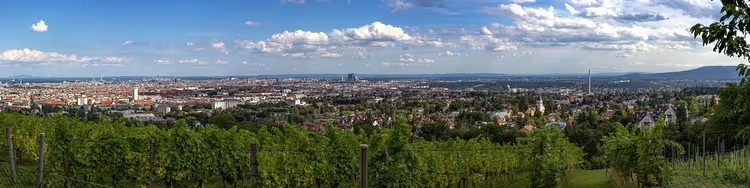
Vienna can be seen in one day, although the city deserves more. The route starts on the Ringstrasse, the main boulevard of the Austrian capital. It is home to the Parliament building in antique style, the city hall, and the Vienna State Opera.
From the boulevard you walk to St. Stephen's Cathedral, the symbol of the city and a masterpiece of Gothic architecture. The group then heads to the Belvedere complex, which consists of the Upper and Lower palaces. The halls of the Upper Belvedere house Austrian paintings, while the Lower Belvedere impresses with its picturesque garden. You can add a visit to the gallery after the main tour.
At the end you see the Hofburg, the imperial residence with palaces, a church, and a library. The Hofburg treasury holds the crowns and regalia of the Habsburgs, and it is worth setting aside time for it. After the tour you have a free hour to stop by Cafe Sacher and try the chocolate cake made according to the old recipe. The catch: the day is packed, and the drive eats up several hours.
Szentendre, Visegrad, and Esztergom
Along the Danube Bend stand ancient towns. They preserve traces of Roman and Ottoman rule, medieval castles, and churches on hilltops. In one day it is realistic to cover Szentendre, Visegrad, and Esztergom.
Szentendre is known for its museums and craft shops, Visegrad holds a medieval citadel above the river, and Esztergom greets you with a basilica on the bank. This is a private route for a small group, so you set the pace yourself. Wear comfortable shoes: in each town you will have to walk uphill.
Pannonhalma Abbey
 © Dguendel · CC BYPhoto: Dguendel, CC BY (https://creativecommons.org/licenses/by/4.0), Wikimedia Commons
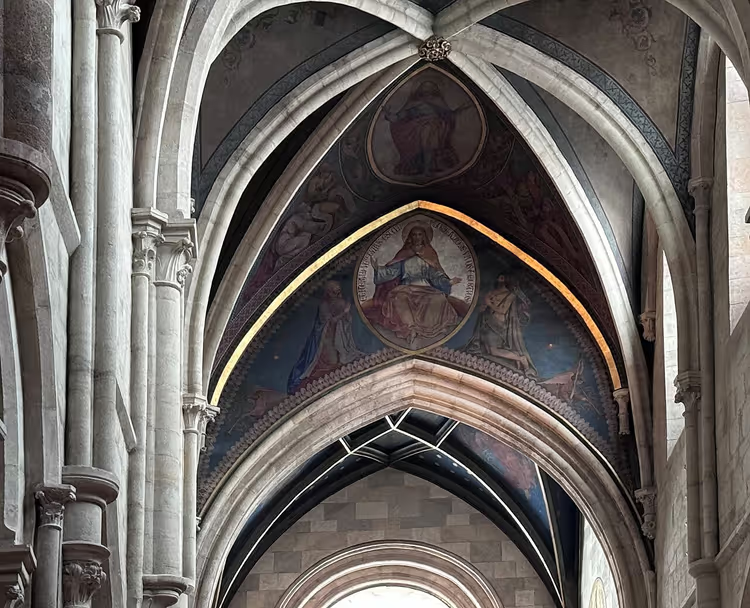
The second-largest abbey in the world, Pannonhalma, is a UNESCO World Heritage site. The monastery occupies the top of St. Martin's Hill, and its history begins in the late 10th century. According to legend, St. Martin of Tours was born here.
On the car tour you visit the basilica and crypt, see the historic library, and taste wines from the monastery winery. The shop sells chocolate, wine, lavender oil, and handmade soap. Admission to the abbey and the tasting are paid separately, so check the prices on site. The tour lasts about eight hours and includes hotel pickup, a driver, and parking. Lunch takes place at a panoramic restaurant with views of the surrounding hills. If you want something simpler, tours from Budapest are collected in one catalog.
How and where you can save money
On a trip it is nice to spend less and keep money for other things. Start with transport: a 72-hour pass is almost always cheaper than single tickets if you ride every day.
The second source of savings is the morning. In the morning you get into museums without a queue, and the baths offer morning rates. The third option is a guest card. The Budapest Card includes city transport and discounts on admissions, but it pays off only with a packed itinerary. Get the Budapest Card for 24 or 72 hours if you plan to visit many museums and take many rides.
Count the baths separately. At Dandar, tickets are cheap and there are no extra charges for the sauna. Lunch is cheaper in neighborhoods away from Vaci Street, where the same dishes cost noticeably less.
Before the trip, compare options instead of taking the first offer. That way you save on transport, admission tickets, and accommodation.
If you need a hotel in the center, look at options with free cancellation:
Find hotels in Budapest
Compare prices across booking sites and filter for rooms with free cancellation.
Compare prices on Trip.comThe widget loads once you give your consent.
⁉️🤔 Frequently asked questions
How much money do you need for 5 days in Budapest?
The total depends on your accommodation and the baths. Use a 72-hour travel pass, entry to Széchenyi Baths, and lunch away from Váci Street as your baseline. Museums and tours add a noticeable amount, so budget separately for each item on your itinerary.
When is the best time to visit Budapest?
Mild weather comes in May, June, and September. Summer is hot, but all outdoor pools are open. Winter is cold, but the outdoor thermal baths and Christmas markets are running. Allow extra time and check opening schedules for each site.
Do I need the Budapest Card?
The card pays off if you use public transport every day and visit several museums. For a short 2-3 day trip, a 72-hour travel pass is simpler. The card only partially covers baths and tours, so work out your list in advance.
Can you walk the whole route?
Central Pest is compact, and you can cover it on foot in a day. For the Buda hills and Gellért Hill you need transport: trams, buses, and the funicular save time and energy. On average you walk 4 to 8 kilometers a day on the map.
Which baths should you choose?
Széchenyi suits families and fans of large pools. Rudas is chosen for its Turkish dome and quiet atmosphere. Lukács is chosen for its relaxed vibe. Gellért impresses with its interior and stained glass. Check schedules and prices before you visit.
In short: what to book
You can cover Budapest in 5 days without rushing if you split the sights between the two banks of the Danube. Buy tickets online where time slots exist: baths, the dome climb, and Parliament. A travel pass pays for itself on transport, and look for lunch away from the tourist streets.
If you have a short 2-3 day trip, focus on Buda Castle, the basilica, and Széchenyi Baths. For a family with kids, add the zoo and Margaret Island. For a relaxed stay, choose Lukács and Dandár. For a day trip out of town, set aside a separate day and leave early.
Book in advance what sells out quickly: baths and thermal tickets, guided tours.
Sort out your transport separately: airport transfer is convenient to book before your trip, and check opening hours on official websites and arrive at opening time.

A small editorial team writing guides for independent travel. We travel ourselves, but we haven’t been everywhere, so we check prices, opening hours and how to get there against official sources.