
















What to see in Valencia: 30 places, tickets and opening hours 2026
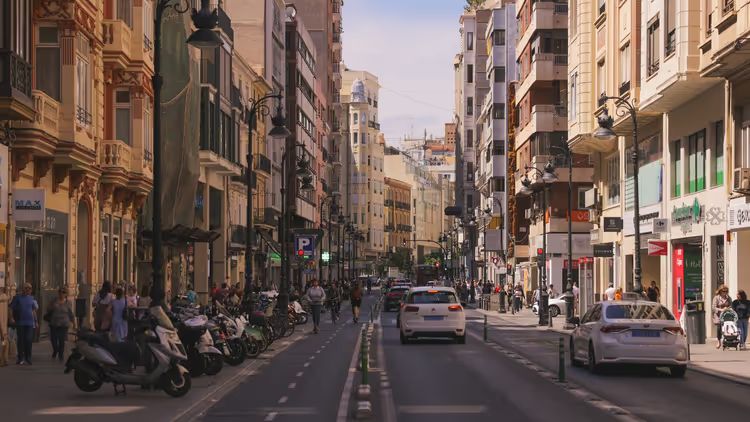
Valencia starts right at the train station, and that's a big advantage. You can walk to almost all thirty places on the list below in two or three days. The cathedral, the 14th-century gates, and the market with its stained glass are within a kilometer of each other. Separately, you get the futuristic City of Arts and Sciences. It looks like a movie set and operates year-round.
We've put together 30 places with photos, opening hours, and honest catches. For each site, we've listed the entrance fee and how to get there. Prices and opening hours were checked on 15.09.2026 on official websites.
Ad: this article contains affiliate links, we earn a commission if you book through them, at no extra cost to you.
1. Valencia Cathedral
💡 In short:
- The cathedral and the Miguelete bell tower are easy to see in one hour in the morning.
- Entry to the church and museum is paid, and the climb up Miguelete is paid separately.
- Prices and opening hours: 09/2026, checked on the cathedral's official website.
 © Diego Delso · CC BY-SAPhoto: Diego Delso, CC BY-SA (https://creativecommons.org/licenses/by-sa/3.0), Wikimedia Commons
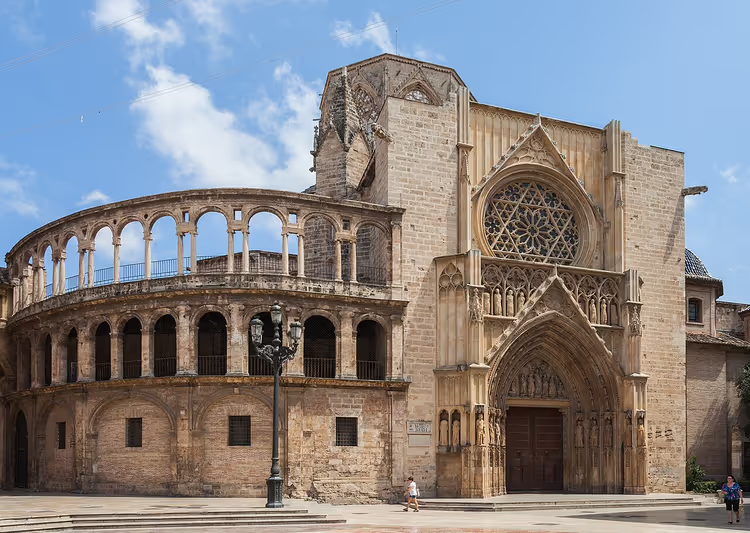
Valencia Cathedral (Catedral de Valencia) is dedicated to the Assumption of Our Lady. The first stone was laid in 1262 on the site of a mosque. Construction took more than ninety years. Later the cathedral was rebuilt over several more centuries, so Gothic, Renaissance, and Baroque styles are mixed here.
The octagonal Miguelete bell tower rises 65 meters above the city. A spiral staircase of 207 steps leads to the top. From the platform you'll see the historic center and the old Turia riverbed. The climb is paid separately from entry to the church.
The western facade faces Plaza de la Virgen with its fountain. The Apostles' Gate is named after the sculptures of the twelve apostles. The iron gate facing Plaza de la Reina was built in the early 18th century in the Italian Baroque style. The oldest one, the Palace Gate, looks onto Plaza de la Almoina.
The cathedral museum houses works by Goya and Juan de Juanes. The main relic here is something else. It's the Holy Grail, a chalice dated to the 1st century AD. The Vatican has recognized it as a witness to Christ's earthly life.
- Cost: entry to the church and museum is paid, children under 8 enter free (as of: 09/2026, official website).
- Miguelete climb: separate ticket, rates are listed on the cathedral's official website.
- Opening hours: depend on services, check the schedule on the official website.
2. Silk exchange, La Lonja de la Seda
 © Juan Mayordomo · CC BY-SAPhoto: Juan Mayordomo, CC BY-SA (https://creativecommons.org/licenses/by-sa/4.0), Wikimedia Commons
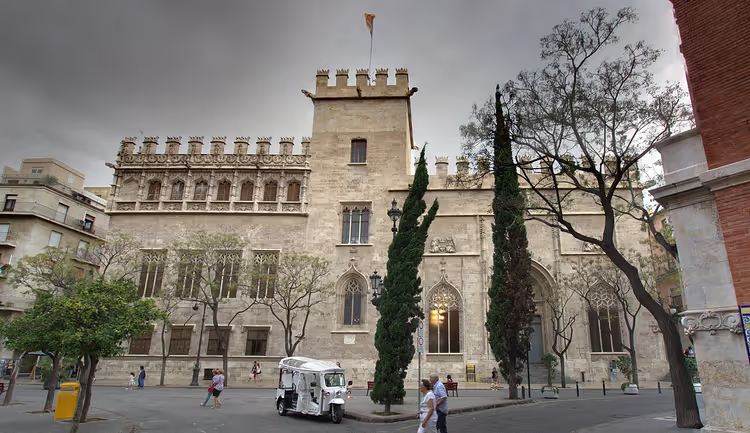
The Silk Exchange (Lonja de la Seda) was built in the 15th century. At that time Valencia was a center of the silk trade and hundreds of craftsmen worked here. Today the building is on the UNESCO World Heritage list. It's one of the best-preserved examples of Mediterranean Gothic with Renaissance decoration.
The stone facades resemble a medieval castle: gargoyles, coats of arms, strict window proportions. Look for the building on Market Square (Plaza del Mercado). Entry is free, and on Sundays and holidays it's open only in the morning. Check the exact schedule on the tourist office's official website. If you need a guide for the Old Town, GetYourGuide tours start nearby.
- Cost: entry is free (as of: 09/2026, Valencia tourist office).
- Opening hours: Mon-Sat from morning to evening, Sun and holidays short day, exact times on the official website.
3. Museum of Fine Arts
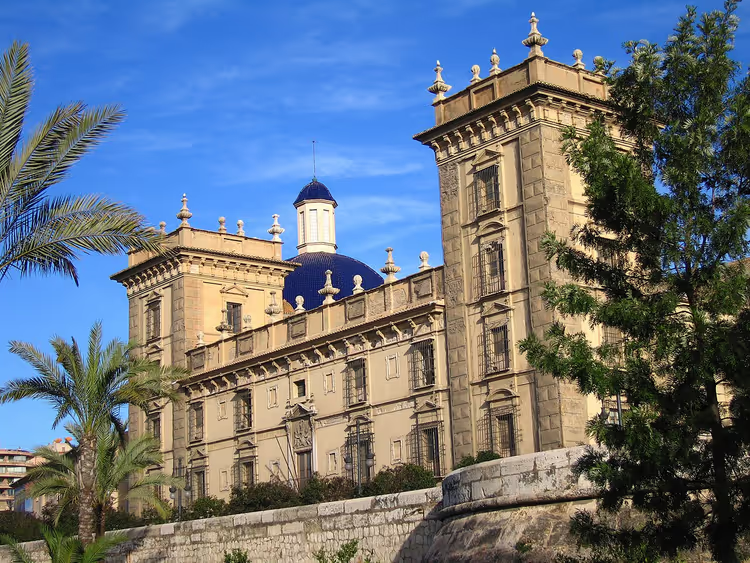
The Museum of Fine Arts of Valencia occupies the building of the former Seminary of Saint Pius V. The collection includes about two thousand paintings. El Greco, Velázquez, Goya, and Bosch hang here. A separate holding is roughly eight hundred engravings by Giovanni Piranesi, which can't be exposed to sunlight.
There is no permanent exhibition: the rooms change. For you, that's a chance to see works from the storage collection that are rarely shown. Entry is free, which is rare for a museum of this caliber. Address: Calle de San Pío V, 9, next to the Turia Gardens and the Palace of Music.
- Cost: entry is free (as of: 09/2026, Visit Valencia: museums).
- Opening hours: Tue-Sun roughly from 10:00 to 19:00, Monday is a short day.
- The catch: there is no permanent exhibition, some rooms are closed for exhibition changes.
4. City of Arts and Sciences
 © Jcca76 · CC BY-SAPhoto: Jcca76, CC BY-SA (https://creativecommons.org/licenses/by-sa/4.0), Wikimedia Commons
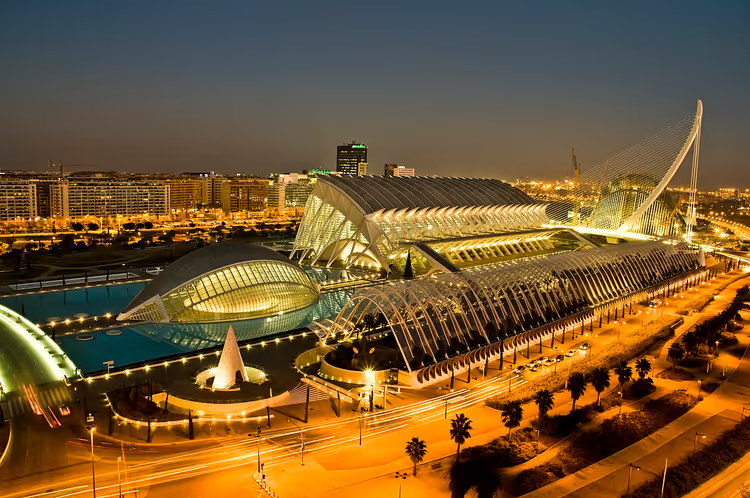
The City of Arts and Sciences (Ciudad de las Artes y las Ciencias) spreads across 350,000 m² in the drained bed of the Turia River. The complex was designed by architect Santiago Calatrava. It brings together a science museum, planetarium, oceanarium, and opera house. All the buildings stand in a park, and it's easy to walk between them.
Tickets are sold separately for each attraction. If you plan to visit two or three pavilions, get a combined ticket: it's cheaper. Ticket offices open at 10:00. In summer the pavilions stay open until 20:00, and until 18:00 in other months. Check current rates on the official website. The 24, 48, or 72-hour tourist card pays for itself if you're going to both the museum and the oceanarium.
- Cost: combined tickets are cheaper than individual ones, rates on the tourist office website (as of 09/2026).
- Hours: ticket offices from 10:00, pavilions until 20:00 in summer and until 18:00 in other months.
5. Prince Felipe science museum
 © Américo Toledano · CC BY-SAPhoto: Américo Toledano, CC BY-SA (https://creativecommons.org/licenses/by-sa/4.0), Wikimedia Commons
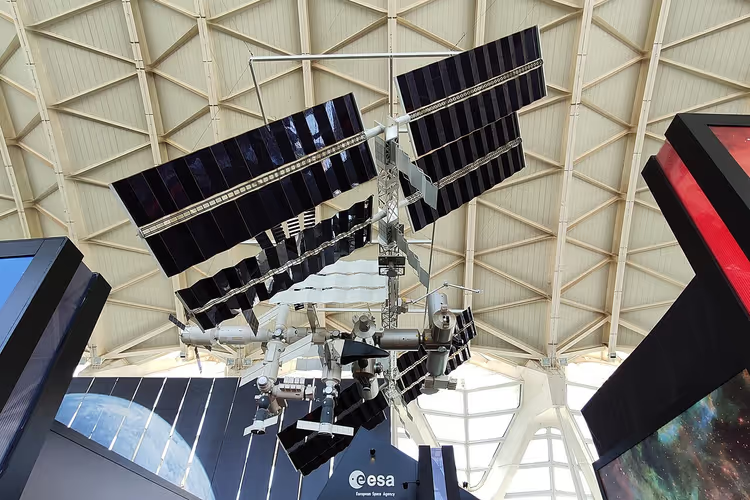
The Prince Felipe Science Museum is the largest building in the complex. The structure is 250 meters long and 33 meters high, with the frame supported by five columns. The glass facade makes the interior very bright. The project was designed by Santiago Calatrava, and the building opened in 2000. It hosts temporary exhibitions, including one about the Titanic.
There are many interactive exhibits for children. You can kick a ball and compare your shot power with famous footballers. There's a room where chicks hatch in an incubator. You can get around the grounds on foot, by bike, or on a small train.
Address: Avenida del Professor López Piñero, 7. Arrive an hour before opening: there are fewer people in the morning and better light for photos. Tickets for Valencia museums and attractions on Tiqets can be bought in advance so you don't have to wait at the ticket office.
- Hours: Mon-Thu 10:00 to 18:00, Fri-Sun until 19:00, check the schedule on the official website.
- Who it's for: families with children and anyone who loves technology and physics.
6. Oceanographic Center
 © Diliff · CC BY-SAPhoto: Diliff, CC BY-SA (https://creativecommons.org/licenses/by-sa/3.0), Wikimedia Commons
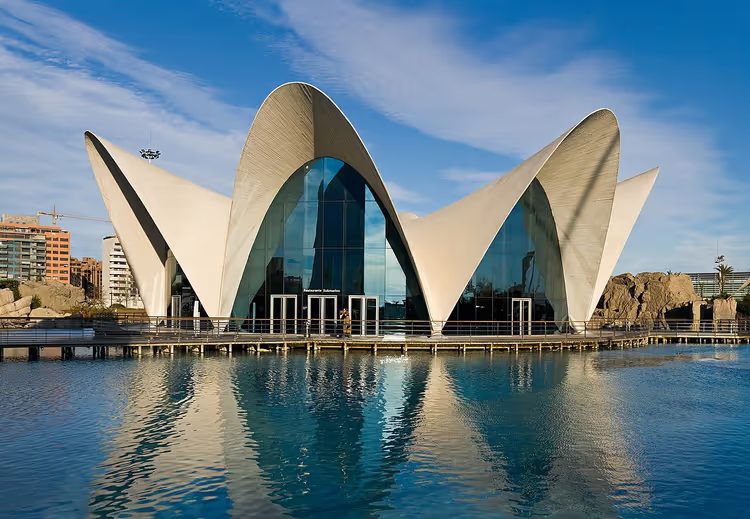
The Oceanogràfic is part of the City of Arts and Sciences complex and is considered the largest oceanarium in Europe. It's home to around 500 animal species and tens of thousands of fish. The halls are divided by geographic zones, from the Arctic to the tropics. There's also a separate dolphinarium with shows.
A 70-meter underwater tunnel runs beneath the water, with sharks and rays swimming above you. Plan for at least three hours, otherwise you'll rush past half the aquariums. The center is open daily and stays open longer in summer. Check hours and rates on the official website. It's convenient to buy an Oceanogràfic ticket in advance: ticket office lines are longest in the morning.
- Cost: an adult ticket is in the mid-range for the city, rates on the official website (as of 09/2026).
- Hours: daily, longer in summer, exact schedule on the official website.
7. Albufera Natural Park
 © Enrique Íñiguez Rodríguez ( Qoan ) · CC BY-SAPhoto: Enrique Íñiguez Rodríguez ( Qoan ), CC BY-SA (https://creativecommons.org/licenses/by-sa/3.0), Wikimedia Commons
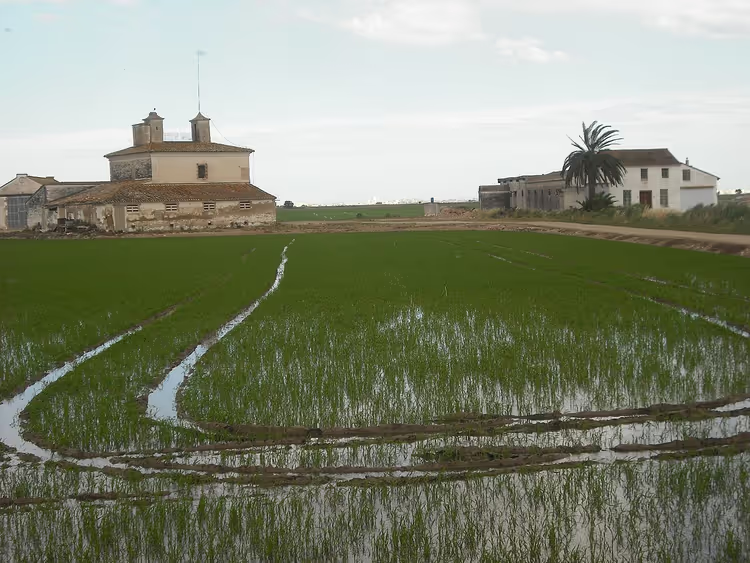
Albufera Natural Park lies 20 km from the city and is known as a "bird paradise." More than 350 bird species live here: storks, cranes, herons. In 1986 the lake and its surroundings were granted natural park status, and since 1990 it has been a wetland of international importance. The reserve is home to rare species from the Red List, including the Iberian killifish (Fartet).
Admission is free. You can rent a boat and tour the lake with a guide; routes are designed for different bird groups. One of the programs includes the village of El Grau. Pine trees grow along the shore, and dunes protect the beaches from the wind. Campsites and small hotels nearby offer overnight stays.
You can get there by EMT Valencia and MetroBus buses, routes 25 and 190b. Hours vary by season: from October to March the park is open roughly from 9:00 to 17:00, and from April to September until 18:00. The best time for birdwatching is early morning.
- Cost: park admission is free, boat and tour are paid separately (as of 09/2026, Valencia tourist office on the park).
- Getting there: EMT bus 25 and MetroBus 190b from the center, about 30 minutes.
- The catch: the lake is not suitable for swimming.
8. Mestalla Stadium
 © Valencia CF · CC BY-SAPhoto: Valencia CF, CC BY-SA (https://creativecommons.org/licenses/by-sa/4.0), Wikimedia Commons
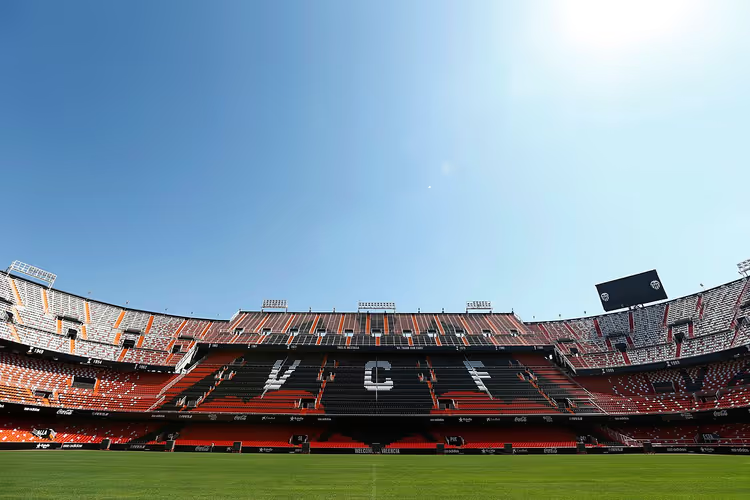
Mestalla is the home stadium of Valencia CF. It opened in 1923, and in 1941 the team won the Copa del Rey here. During the civil war, vegetables were grown on the pitch and detainees were held here before being sent away. Later the stadium hosted matches of the 1982 World Cup and the 1992 Olympic tournament. The last major renovation was completed by 2001.
Today the arena seats about 55,000 spectators. Tours are available: you go into the locker rooms, the tunnel, and the stands. Address: Avenida de Suecia. During the season, matches are played roughly every two weeks, and on match days the roads around the arena are closed.
- Getting there: on foot from the Turia Gardens, with metro and tram stops nearby.
- Tour cost: check tour prices on the club's official website.
- Who it's for: soccer fans and anyone who wants to see the arena without attending a match.
9. Royal Gardens
 © 19Tarrestnom65 · CC BY-SAPhoto: 19Tarrestnom65, CC BY-SA (https://creativecommons.org/licenses/by-sa/4.0), Wikimedia Commons
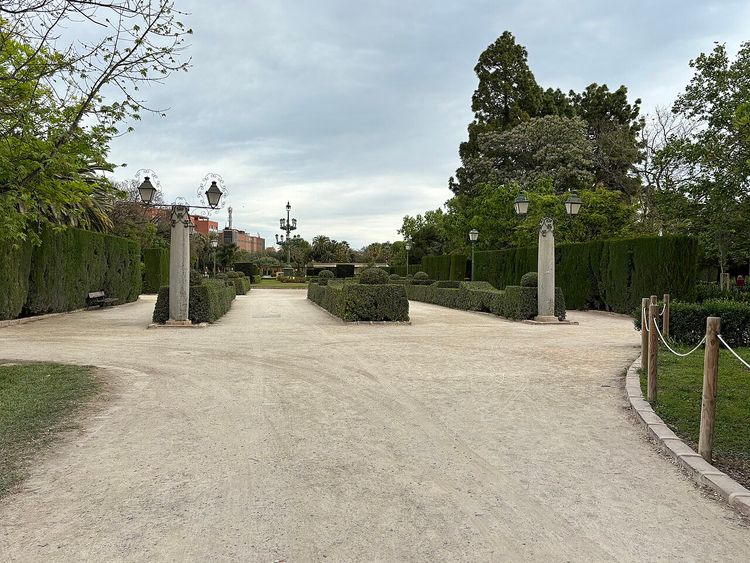
The Royal Gardens were laid out in 1560 by order of King Philip II. The park was meant to beautify the area around the royal palace. The palace itself has not survived, but the entrance gate with the royal crown still stands in its place. The gardens occupy the bank of the Turia next to the Museum of Fine Arts.
Subtropical plants grow here: magnolias, hibiscus, palms, orange and mandarin trees. The war of 1810 destroyed most of the ensemble. Gardener Francisco Javier de Elío restored the park and planted about four thousand rare trees and shrubs. Today you will find plant collections from around the world.
The grounds include a small zoo and the Natural Science Museum with collections of insects and mollusks. Park entry is free, and you can walk from morning to evening. It is a good place for a break between museums, especially in the heat.
- Cost: park entry is free (as of 09/2026, official city guide).
- Who it's for: families with children and anyone tired of city noise.
- Getting there: a 10-minute walk from Plaza de la Virgen toward the Turia.
10. Bioparc
 © Googledance · CC BY-SAPhoto: Googledance, CC BY-SA (https://creativecommons.org/licenses/by-sa/1.0), Wikimedia Commons
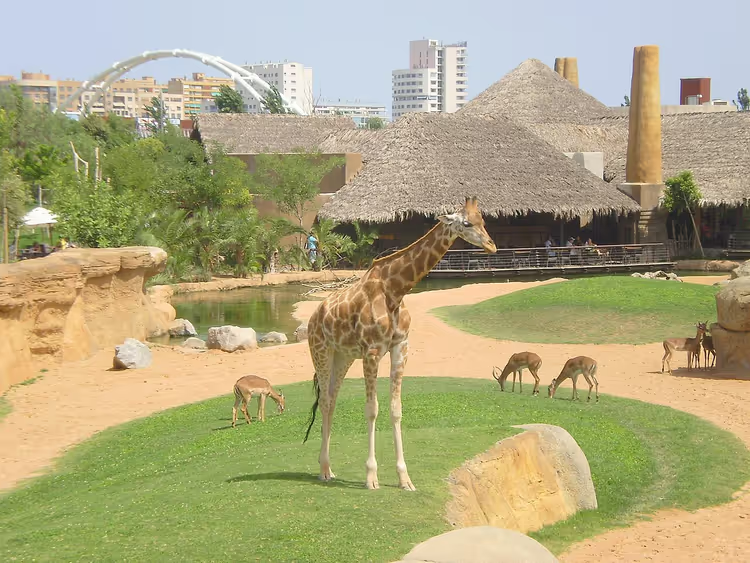
Bioparc is the largest new-generation zoo in Europe. It occupies the northern part of the Turia Gardens on an area of 100,000 m². There are no cages here: animals are separated by moats, water barriers, rocks, and glass. The grounds are divided into the African Savannah, Madagascar, and Equatorial Africa zones.
About 250 species of animals and birds live in these ecosystems, more than four thousand individuals in total. In the center there is a 1,000-seat amphitheater where shows with birds and mammals are performed. You will spend two to three hours walking through the park. It is worth buying a Bioparc ticket in advance; on weekends there is a line at the entrance.
- Cost: the price depends on the season; check the exact rate before purchasing (as of 09/2026, Valencia tourist office).
- Hours: daily from 10:00, closing time depends on the season.
11. Museum of Prehistory
 © Joanbanjo · CC BY-SAPhoto: Joanbanjo, CC BY-SA (https://creativecommons.org/licenses/by-sa/3.0), Wikimedia Commons
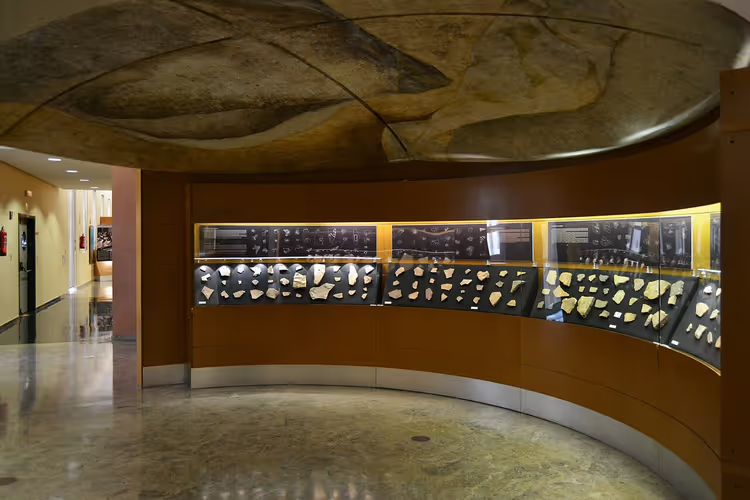
The Museum of Prehistory and Ethnology of Valencia occupies the building of the La Beneficencia cultural center. The exhibition is dedicated to human development. In the halls you will see Neolithic tools and household items of artisans and farmers found during excavations in Valencia and its surroundings.
Some halls are devoted to ancient sculptures and coins, from antiquity to the present day. The permanent exhibitions are complemented by temporary ones. The museum is open daily except Monday. On weekends and holidays admission is free.
- Cost: on weekends and holidays admission is free; on weekdays the ticket is nominal (as of 09/2026, Visit Valencia: La Beneficencia).
- Hours: daily from 10:00 to 20:00, closed on Monday.
- Who it's for: anyone who wants to understand the city's history before the Romans.
12. Serranos Towers
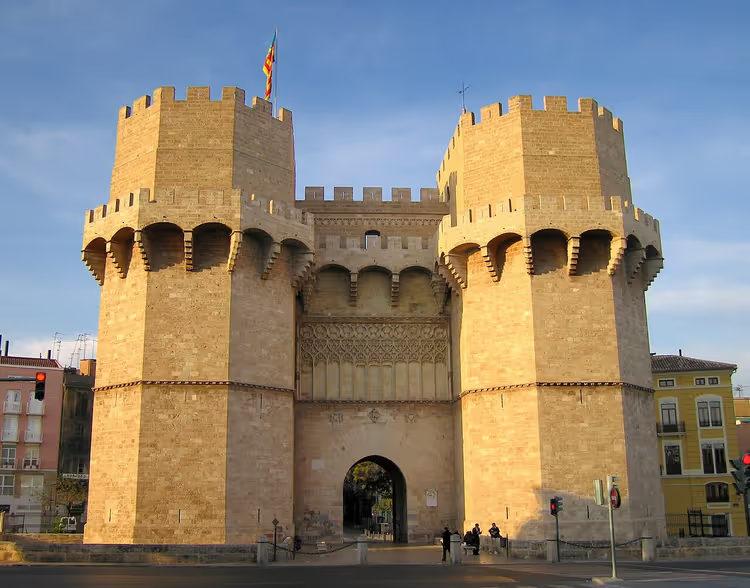
The Serranos Towers are two Gothic towers built in 1392-1398 by architect Pere Balaguer. They were part of the city wall and defended the city during sieges. In 1936, treasures from Madrid's Prado Museum were hidden inside the thick walls of the towers, and they survived. In the past, kings made ceremonial entries into the city through these gates.
Today the towers house the Maritime History Museum. A viewing platform is set up at the top, from which you can see the historic center and the Turia riverbed. This is where the start of the Las Fallas fire festival is announced every year. Admission is nominal, and on Sundays the towers are usually open for free.
- Cost: the ticket is nominal, and on Sundays it's usually free (as of 09/2026, Visit Valencia).
- Hours: Tue-Sat roughly 10:00 to 14:00 and 18:00 to 20:00, Sundays and holidays have a short day.
- Getting there: from the Serranos side, a 10-minute walk from Plaza de la Virgen.
13. Quart Towers
 © Diego Delso · CC BY-SAPhoto: Diego Delso, CC BY-SA (https://creativecommons.org/licenses/by-sa/3.0), Wikimedia Commons
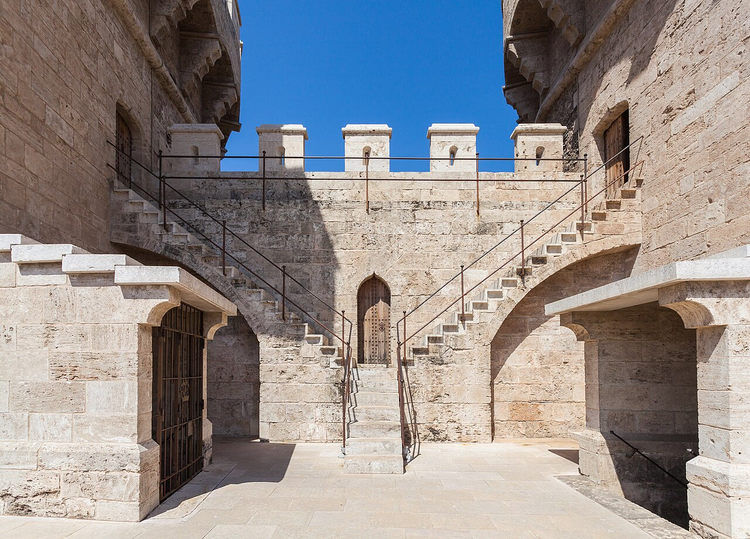
The Quart Towers were built in the mid-15th century as part of the city wall. For centuries they served as the main defense against enemy attacks. This is a national historic monument. The Gothic structure consists of two cylindrical towers with an arch between them, and the coat of arms of Valencia is visible above the arch. The walls still bear marks from Napoleon's army artillery.
Today the upper part of the towers works as a viewing platform. You climb the internal staircases and see a panorama of the city. The opening hours match the Serranos Towers: weekdays with a lunch break, and a short day on Sunday.
- Cost: the ticket is nominal, and on Sundays it's usually free (as of 09/2026, city tourist office).
- Hours: Tue-Sat roughly 10:00 to 14:00 and 18:00 to 20:00, Sundays and holidays until 14:00.
14. Botanical garden
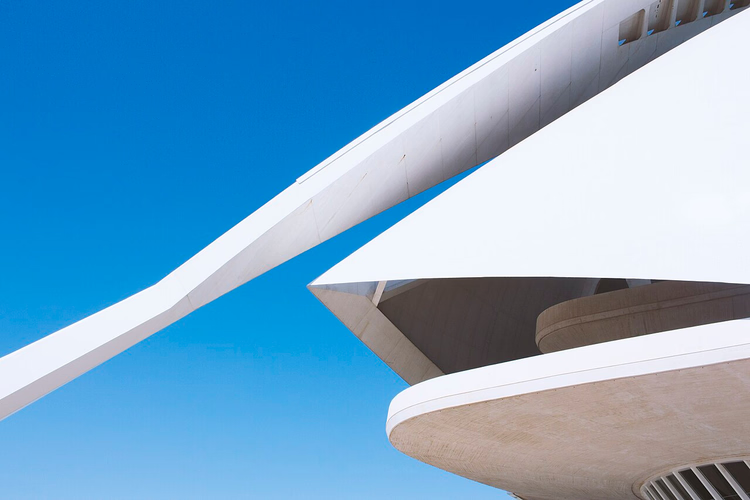
The botanical garden was established in the 16th century, making it the city's oldest natural attraction. The first plantings were made in 1567, when mostly medicinal plants grew here. Gradually the collection expanded with flora from around the world. The garden covers almost 1.5 hectares next to the Quart Towers.
Over five centuries, the garden has gathered around 4,500 plant species. Some grow outdoors, others in greenhouses and conservatories. The main section is dedicated to the Botanical School: here you can trace the development of plants from mosses to complex forms. Exotic trees, rare shrubs, vines, tropical and aquatic species all grow here.
The garden has relaxation areas with fountains, gazebos and paths. International horticulture meetings are regularly held here. For Mother's Day, on the first Sunday of May, an orchid exhibition and sale is organized.
Opening hours depend on the month. From May through August the garden is open until 21:00, in April and September until 20:00, in March and October until 19:00, and from November through February until 18:00. Mornings are always quieter.
- Getting there: on foot from the Quart Towers, about 5 minutes.
- Who it's for: for those tired of museums and looking for some quiet.
- The catch: in winter, part of the collection in the greenhouses is closed to visitors.
15. Palau de la Generalitat
 © Anual · CC BYPhoto: Anual, CC BY (https://creativecommons.org/licenses/by/3.0), Wikimedia Commons
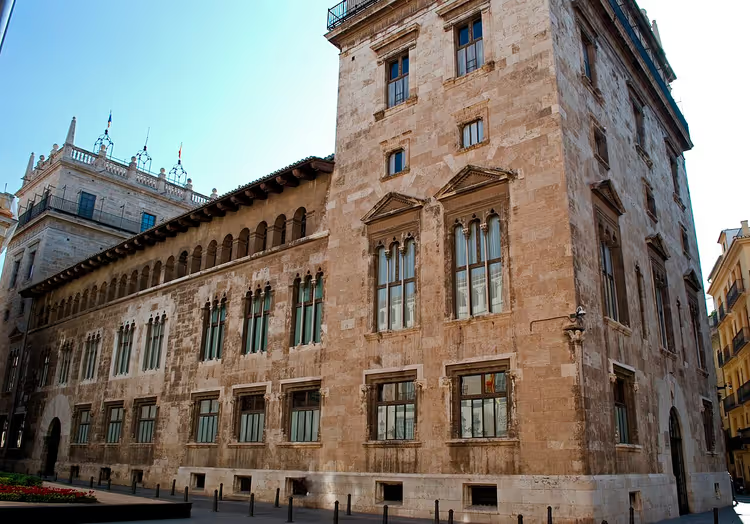
The Palau de la Generalitat has stood on Plaza de la Virgen since 1421. It is a government building where the government of Valencia works. The architecture combines late Gothic, Renaissance and Neoclassical styles. Entry is free, and you'll see state rooms with paintings by Valencian artists.
- Cost: free entry (as of 09/2026, Visit Valencia: palace).
- Hours: Mon-Fri roughly 9:00 to 14:00, closed on weekends.
16. City hall square
 © I would appreciate being notified if you use my work outside Wikimedia. More of my work can be found in my personal gall · CC BY-SAPhoto: I would appreciate being notified if you use my work outside Wikimedia. More of my work can be found in my personal gall, CC BY-SA (https://creativecommons.org/licenses/by-sa/4.0), Wikimedia Commons
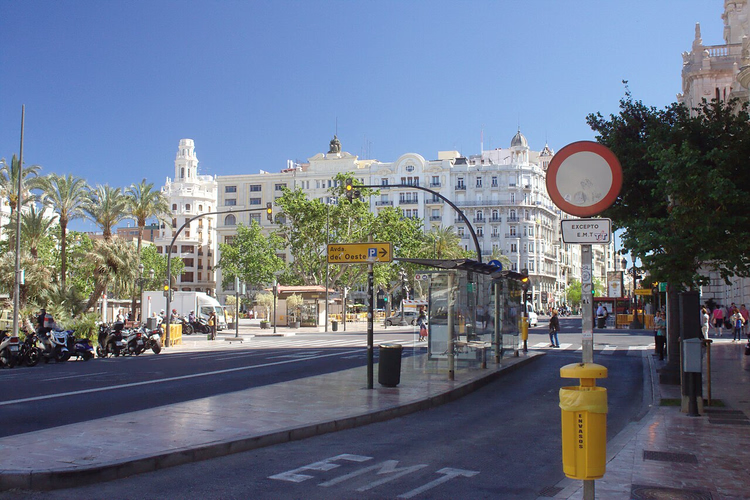
Plaza del Ayuntamiento is triangular in shape and is considered the city's main square. The centerpiece is the white city hall building with statues, stucco work and columns. Above the coat of arms you can see a bat, and on the sides stand marble figures representing literature and art.
Inside, you'll be shown the Crystal Hall with stained glass and Bohemian chandeliers. Part of the halls is occupied by the Historical Museum with an art collection. You can visit the city hall for free on weekday mornings. Around the perimeter of the square are banks, shops and cafes with flowers by the fountain.
- Cost: free entry to the city hall (as of 09/2026, tourist office guide).
- Hours: Mon-Fri roughly 10:00 to 13:00, closed on weekends.
17. Plaza de la Reina
 © LiteraryTech · CC BY-SAPhoto: LiteraryTech, CC BY-SA (https://creativecommons.org/licenses/by-sa/4.0), Wikimedia Commons
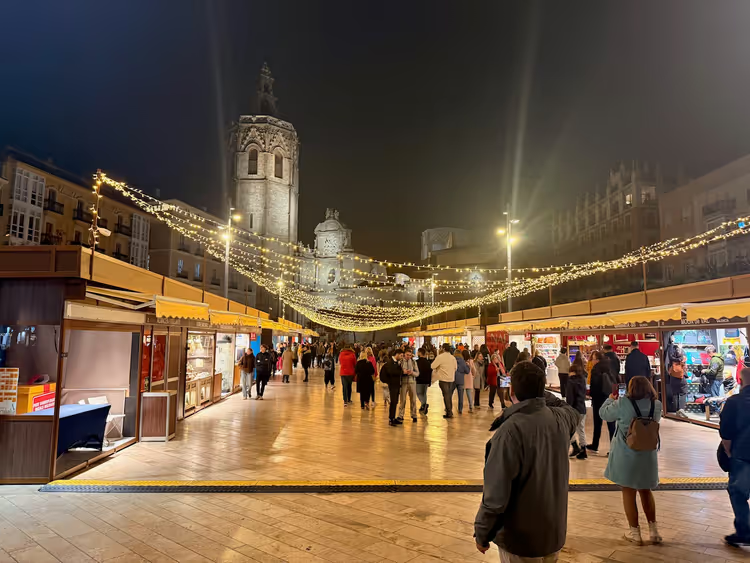
Plaza de la Reina appeared in the Old Town to mark the wedding of King Alfonso XII in January 1878. The north facade of the cathedral opens onto the square, with its main entrance, the Iron Gate, in the Italian Baroque style. The facade is decorated with columns, statues of saints, and stucco work.
The octagonal Miguelete bell tower from the 15th century rises above the square. Opposite stands the bell tower of the Church of Saint Catherine from the early 18th century, visible from the same spot. You can climb the Miguelete during the same hours as the cathedral.
- Climbing the Miguelete: separate ticket (as of 09/2026, cathedral official website).
- Cathedral hours: Mon-Sat roughly 10:00 to 18:30, Sun 14:00 to 18:30.
18. Crypt of Saint Vincent the Martyr
 © Rafa Esteve · CC BY-SAPhoto: Rafa Esteve, CC BY-SA (https://creativecommons.org/licenses/by-sa/4.0), Wikimedia Commons
The Crypt of Saint Vincent is the oldest Valencia attraction. It is located in a Visigothic chapel and dates back to the 6th century. It houses the relics of the martyr Vincent, who was burned in 304 for spreading Christianity on the orders of a Roman emperor. The crypt was discovered by accident during a house renovation.
For a long time, Vincent of Saragossa was held prisoner here. In the museum attached to the crypt, you will see artifacts from ancient eras found during excavations. The walls retain remnants of Roman painting with the god Mercury, along with Roman and Visigothic ornamentation.
A small cinema shows a film about the saint's life. The museum is open Tuesday through Saturday from 10:00 to 19:00.
- Hours: Tue-Sat 10:00 to 19:00, closed Sunday and Monday.
- Who it's for: anyone interested in early Christianity and archaeology.
19. Central Market
 © Diego Delso · CC BY-SAPhoto: Diego Delso, CC BY-SA (https://creativecommons.org/licenses/by-sa/3.0), Wikimedia Commons
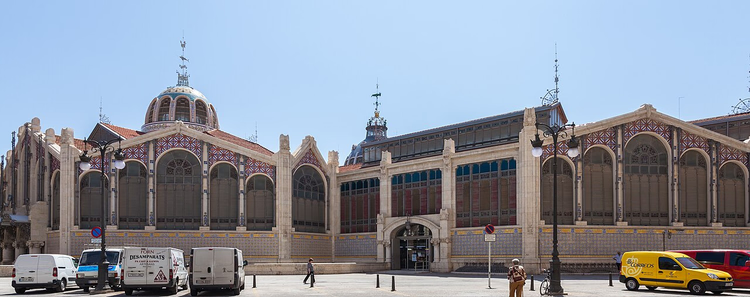
The Central Market stands in the heart of the Old Town on Market Square. The two-story building covers more than 8,000 m². The facade is decorated with colorful stained glass depicting the gifts of Valencia's nature, wrought-iron grilles, and arched windows. Above the fish stalls rises a large dome with a weather vane shaped like a swordfish, guarded by gargoyles. Above the fruit stalls, a parrot sits on the weather vane.
You enter through three tall arches on columns. Inside are hundreds of stalls with stained glass, mosaics, and ceramic frescoes on the vaults. Here people buy jamón, olives, fresh fish, and local rice for paella. The market is open from 7:30 to 15:00 daily, except Sunday.
- Hours: Mon-Sat 7:30 to 15:00, closed Sunday.
- Who it's for: anyone who wants to try local products and soak up the city's atmosphere.
20. Mercado de Colón
 © Rafa Esteve · CC BY-SAPhoto: Rafa Esteve, CC BY-SA (https://creativecommons.org/licenses/by-sa/4.0), Wikimedia Commons
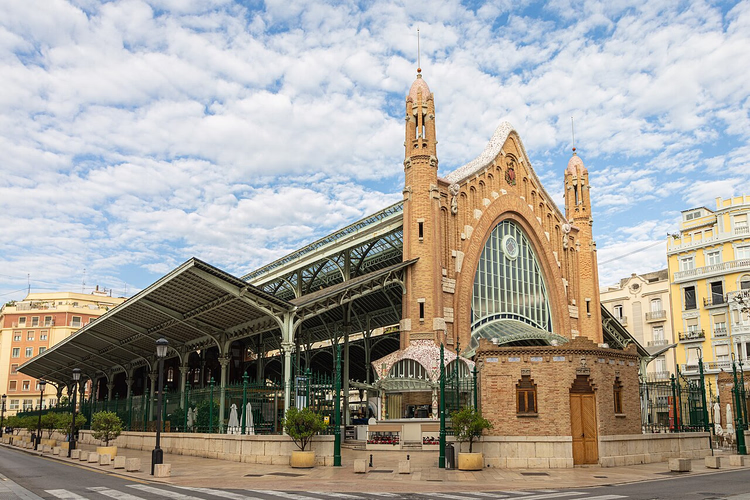
Mercado de Colón opened in 1917 and graces the Eixample district with its bright Art Nouveau facade. The structure was assembled from metal beams and supports, which makes the building feel weightless. A 2003 renovation turned the market into a 3,500 m² shopping and entertainment center. The red-brick facades are finished with mosaic panels on rural themes.
Inside, it is a vast gallery with three central walkways. Escalators carry you from floor to floor between artificial bamboo and a transparent fountain wall. It is open daily from 8:30 to 21:00. On Sundays, cultural programs take place here.
- Hours: daily 8:30 to 21:00, Sunday with a cultural program.
- Who it's for: anyone looking for food, coffee, and souvenirs in one place.
21. Church of Saint Catherine
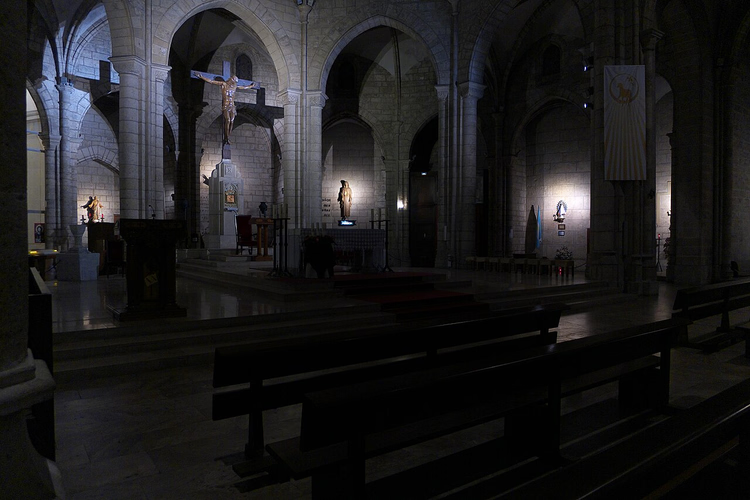 © José Luis Filpo Cabana · CC BYPhoto: José Luis Filpo Cabana, CC BY (https://creativecommons.org/licenses/by/3.0), Wikimedia Commons
The Church of Saint Catherine was founded by King James I after he conquered the city from the Muslims in 1239. The church was named after Infanta Catherine, the king's daughter. It was built on the foundations of a mosque, and rebuilds and fires changed the building's appearance over time. The church only took on its current look by 1371.
The building combines every style of church architecture, from Gothic to Baroque. Inside there are seven naves, with a corridor running around them where pilgrims once approached the relics of saints. The square bell tower was built by architect Juan Bautista Viñes in 1688-1705 and stands over 56 meters tall. On the dome sits a sphere with the symbols of the church's patron saint.
Six bells were brought from London on October 2, 1729, from the same foundry that cast bells for the cathedral. You can climb the bell chamber via a spiral staircase every day except Sunday, from 10:30 to 13:00. The facade features two roses, and in one of the walled-up arches the head of an archbishop in a tiara is hidden.
- Cost: free entry (as of 09/2026, Visit Valencia: Old Town churches).
- Hours: daily 10:00 to 13:00 and 19:00 to 20:00.
- Getting there: next to Plaza de la Reina, a 3-minute walk from the cathedral.
22. Basilica of Our Lady of the Forsaken
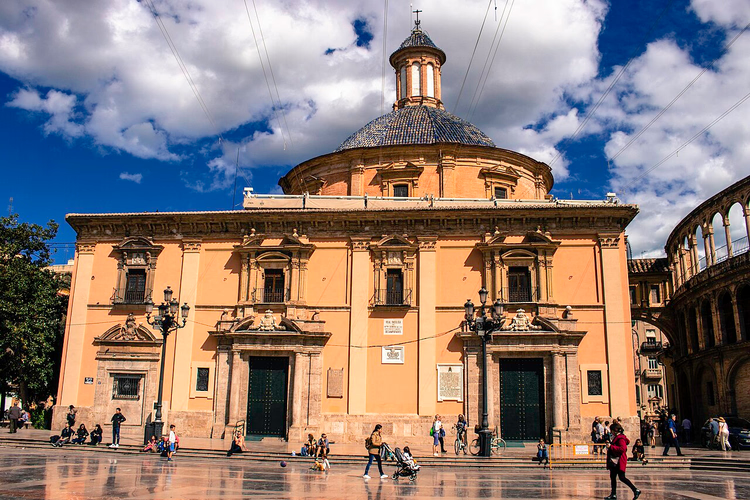 © Bene Riobó · CC BY-SAPhoto: Bene Riobó, CC BY-SA (https://creativecommons.org/licenses/by-sa/4.0), Wikimedia Commons
The Basilica of Our Lady of the Forsaken was built in the 17th century in the Baroque style. The facade, with two identical portals, is decorated with Tuscan columns and pilasters. The relief decoration on the windows and doors and the ceramic panel with the image of the Virgin on the western facade give the building its elegance. A distinctive architectural feature is the large oval dome, offset from the center.
Inside, you will see the painting on the dome and vaults. The artist Antonio Palomino depicted the Virgin Mary on the heavenly vault along with scenes from biblical events. The church's main relic is a wooden sculpture of Saint Mary of the Forsaken, the city's patron saint. It has survived remarkably well since the 15th century and stands in the altar.
- Cost: free entry (as of 09/2026, Valencia tourist office catalog).
- Hours: daily from 7:00 to 21:00, break from 14:00 to 16:30.
23. Church of Saints John
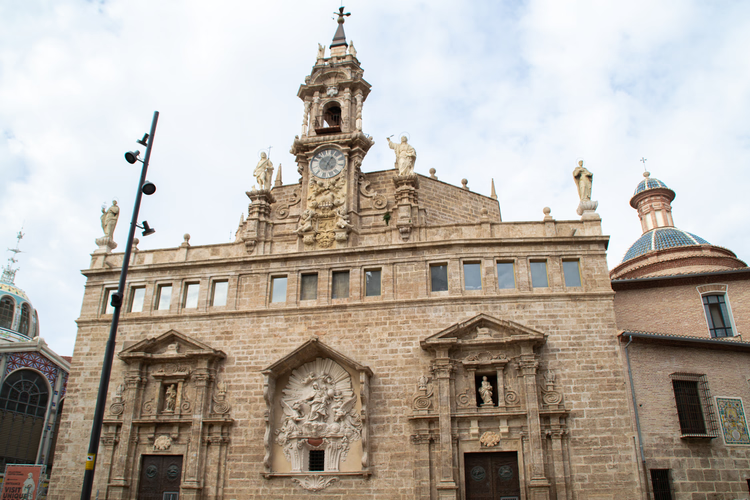 © Sea Olive · CC BY-SAPhoto: Sea Olive, CC BY-SA (https://creativecommons.org/licenses/by-sa/4.0), Wikimedia Commons
The Church of Saints John was built in the 13th century in honor of John the Baptist and John the Evangelist. It stands on the Market Square and is notable for its western Baroque facade. The main entrance is decorated with a sculpture of the Virgin Mary and a rose window known as the "eye of Saint John." A tower with a clock and statues of saints rises from the center of the church.
Above the tower stands a bell tower topped with a pyramid and a weather vane in the shape of an eagle with an inkwell in its beak. The interior is famous for its vault paintings depicting biblical scenes of the struggle between good and evil. At the center of the gilded wooden altarpiece is an image of the Immaculate Conception and the crucified Christ. Statues of the apostles Peter and Paul stand on the sides. Entry is free.
- Cost: free entry (as of 09/2026, Visit Valencia: churches).
- Hours: daily from 7:30 to 10:00 and from 19:00 to 20:00, Sundays and holidays from 8:00 to 13:00 and from 18:00 to 20:00.
24. Palace of the marquises of dos aguas
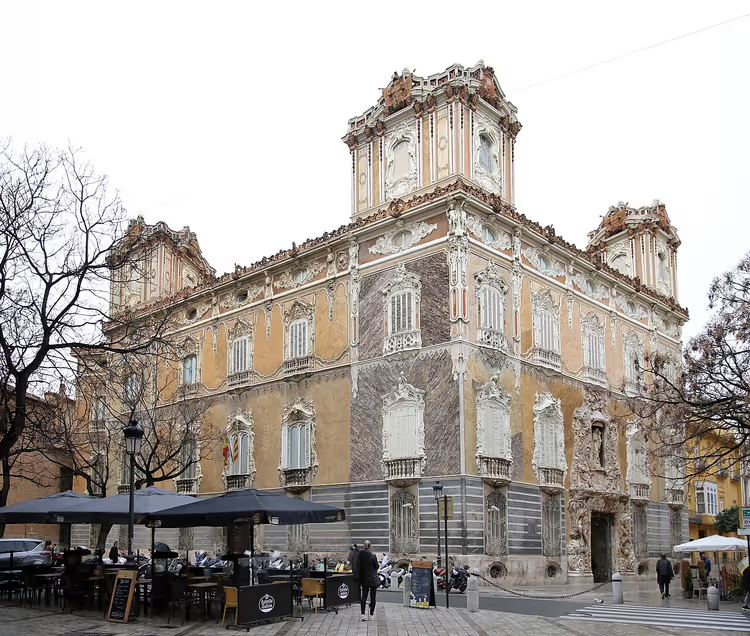 © Francesco Bini · CC BY-SAPhoto: Francesco Bini, CC BY-SA (https://creativecommons.org/licenses/by-sa/4.0), Wikimedia Commons
The Palace of the Marquises of Dos Aguas stands out for its Baroque facade. The mansion dates back to the 15th century. It was built by the noble Valencian Rabasa family, who received the title of marquises in the 17th century. The facade combines Rococo and Empire styles, with decoration designed by Ignacio Vergara.
The entrance door is surrounded by figures of titans, with jugs at their feet from which water flows. They symbolize the Turia and Jucar rivers, and the owners' family name translates as "two waters." The top of the portal is decorated with the Virgin Mary with the Child and angels by sculptor Francisco Molinelli. The walls were once painted with frescoes, but they have not survived, so they were plastered to look like marble. The three-story building has towers and an inner courtyard.
Today the palace houses the Gonzalez Marti National Museum of Ceramics. It opened in 1954. The collection tells the story of ceramics in Spain over many centuries. Here you will see pieces from the Moorish era, the Middle Ages, folk pottery, and items made for the royal court.
In total, more than 12,000 objects of decorative art have been collected, including antique ceremonial carriages. The museum recreates the interior of a traditional Spanish kitchen with authentic ceramics. The state rooms are decorated with ceramics, furniture, paintings, and textiles. Address: Calle del Poeta Querol, 2. In summer, a night visit is possible on Saturdays from 20:00 to 24:00.
Tickets to Valencia museums and attractions on Tiqets are convenient to buy in advance, as the museum ticket office only works during visiting hours.
- Hours: Tue-Sat from 10:00 to 14:00 and from 16:00 to 20:00, Sundays and holidays from 10:00 to 14:00.
- Who it's for: for those who love Baroque architecture and ceramics.
25. Palace of Music
 © Bene Riobó · CC BY-SAPhoto: Bene Riobó, CC BY-SA (https://creativecommons.org/licenses/by-sa/4.0), Wikimedia Commons
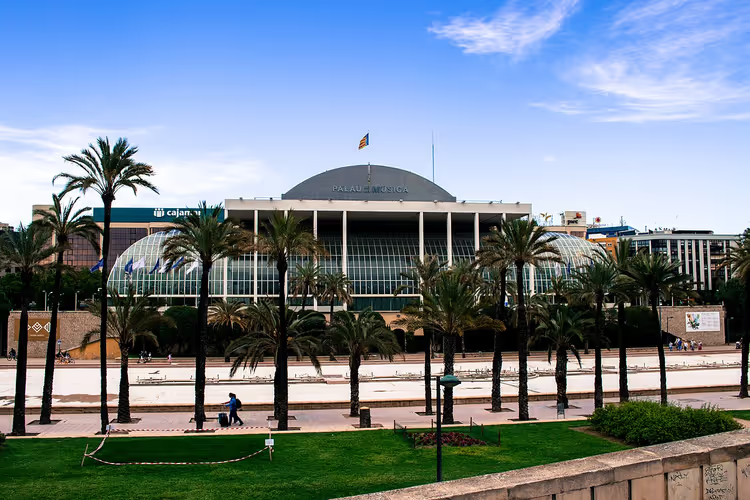
The Palace of Music is a modern cultural center in Turia Park. The building is covered by a huge glass dome and surrounded by a palm grove. The interior features winter gardens with exotic plants. Four concert halls with good acoustics host concerts, musicals, ballet, and theater performances. In the lobbies you'll see art exhibitions.
In front of the palace there's a musical fountain framed by a colonnade. Check the concert schedule on the palace's official website. Tickets are sold at the box office from 10:00 and by phone.
- Cost: depends on the concert, schedule and prices are on the palace's official website.
- Who it's for: for those who want to combine a walk in the park with an evening concert.
26. North Station
 © Diego Delso · CC BY-SAPhoto: Diego Delso, CC BY-SA (https://creativecommons.org/licenses/by-sa/4.0), Wikimedia Commons
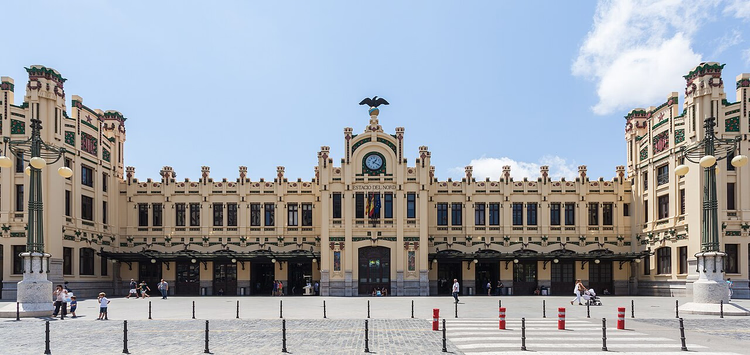
North Station (Estación del Norte) was built in 1917 in the Art Nouveau style. Tourists stop in front of the stepped facade to admire the mosaic pictures and bright ceramics on the light yellow walls. Pilasters, stucco work, and relief cornices give the building an elegant look. The facade is crowned with the company emblem: an eagle above a gilded globe.
Inside, the columns are clad in glazed ceramics, and the walls and vaults are covered with mosaics. Some walls look like an artistic canvas with landscapes and city views. The building is listed as a national cultural heritage site. Trains to Barcelona and Alicante depart from here. AVE high-speed trains to Madrid leave from Joaquín Sorolla Station. Train tickets across Spain are best booked in advance, as seats sell out quickly in high season.
- Getting there: city center, a 10-minute walk from the City Hall square.
- Who it's for: for those arriving by train who want to see an Art Nouveau building.
27. Plaza de Toros Arena
 © Diego Delso · CC BY-SAPhoto: Diego Delso, CC BY-SA (https://creativecommons.org/licenses/by-sa/3.0), Wikimedia Commons
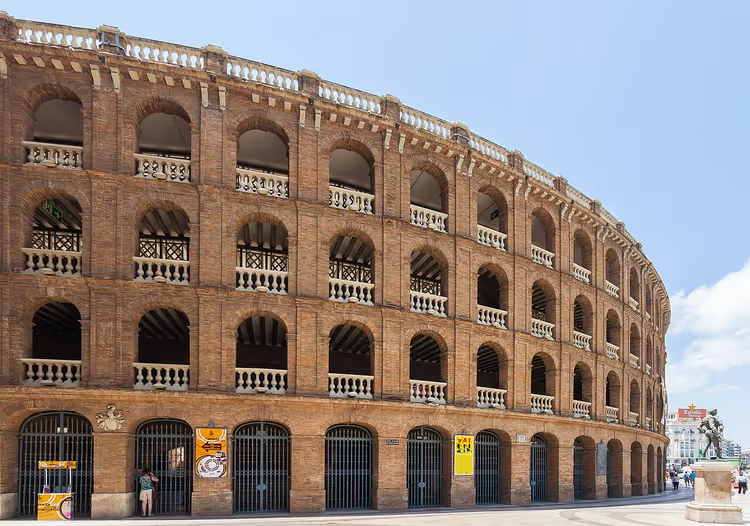
Plaza de Toros was built in the 1850s to a design by architect Sebastián Monleón. It stands next to North Station and stands out with its arched openings. The arena's shape resembles the ancient Roman Colosseum. The stands seat up to 16,000 spectators.
Bullfights are held here twice a year, for the Las Fallas fire festival in March and for Valencian Community Day in October. Fights start at 7:30 PM. The dangerous show includes 10 to 12 performances per week. The rest of the time the arena hosts concerts, festivals, and fairs.
Inside there's a bullfighting museum and a school for bullfighters. It houses a collection of posters spanning two centuries and personal belongings of famous bullfighters. Tours and shows in Valencia on GetYourGuide help fill an evening when the arena has no fights scheduled.
- Hours: the museum is open on days without performances, check times on site.
- The catch: the city is debating a bullfighting ban, and residents' opinions are divided.
28. Turia River Gardens
 © Areyes108 · CC BY-SAPhoto: Areyes108, CC BY-SA (https://creativecommons.org/licenses/by-sa/4.0), Wikimedia Commons
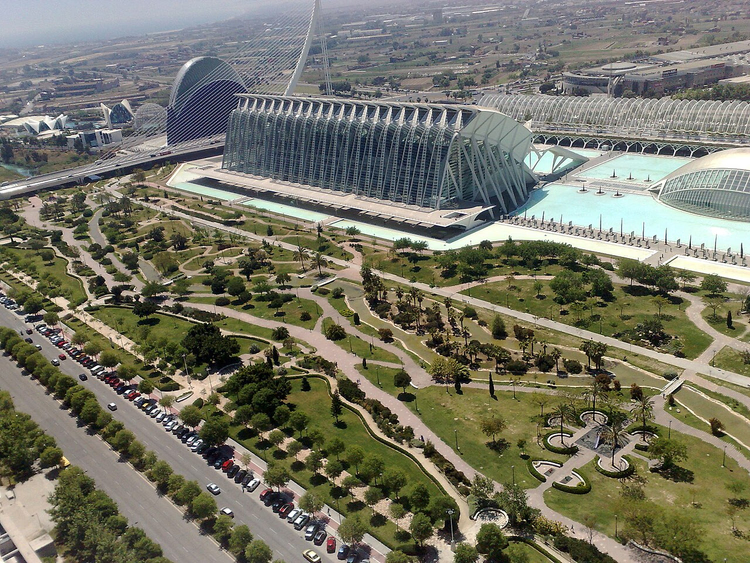
Turia River Gardens cover 100 hectares and were laid out in 1986 on the site of the former riverbed. Groves of orange trees and palms, and an urban forest of a thousand pines reflect the palette of Mediterranean nature. The park stretches across the entire city, and you can walk or bike through it.
The park incorporates sports facilities, the futuristic structures of the City of Arts and Sciences, the Palace of Music, Cabecera Park with ponds and waterfalls, the Gulliver children's playground, and Bioparc. Eighteen bridges are reminders of the river. Among them are the medieval stone Trinidad, Royal, and Sea bridges with statues of saints. The modern Exhibition Bridge shaped like a white comb and the Flower Bridge with flowers also deserve attention.
- Cost: park entry is free, open from early morning until late evening.
- Who it's for: for walks, runs, and relaxing between museums.
29. Patriarch Museum
 © Joanbanjo · CC BY-SAPhoto: Joanbanjo, CC BY-SA (https://creativecommons.org/licenses/by-sa/3.0), Wikimedia Commons
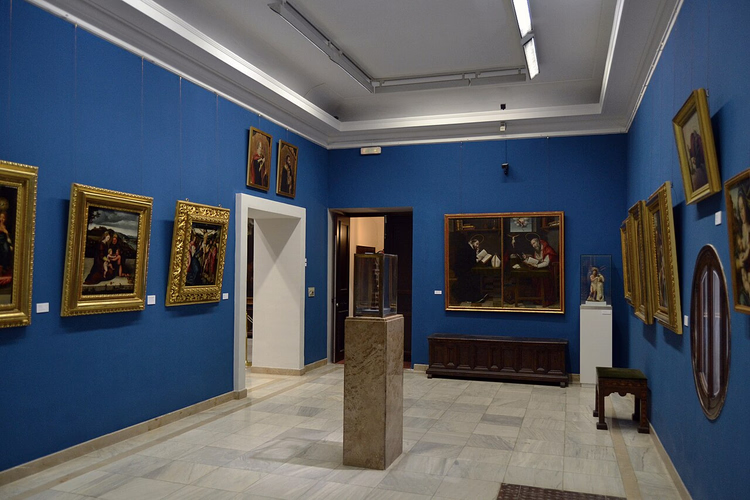
The Patriarch Museum occupies a complex of 16th-century buildings. It was built by order of Juan de Ribera, a religious and secular figure who held the title of Patriarch of Antioch. Ribera founded a seminary here to train priests. At the time, many clergy were needed. He built a separate pavilion for his art collection.
The museum courtyard is adorned with a statue of the founder by sculptor Mariano Benlliure, installed in 1929. In the collection you'll find paintings by Spanish and Dutch artists, including El Greco, Francisco Ribalta, and Luis de Morales. The main exhibit is the original of Thomas More's last manuscript, written by him in the Tower of London. The museum also houses medieval decorative art objects, sculpture, and religious items.
- Cost: tickets are sold on site, check the schedule before visiting.
- Hours: weekdays and Saturday according to the museum schedule, closed on Sunday.
30. Monforte Garden
 © Rafesmar · CC BY-SAPhoto: Rafesmar, CC BY-SA (https://creativecommons.org/licenses/by-sa/4.0), Wikimedia Commons
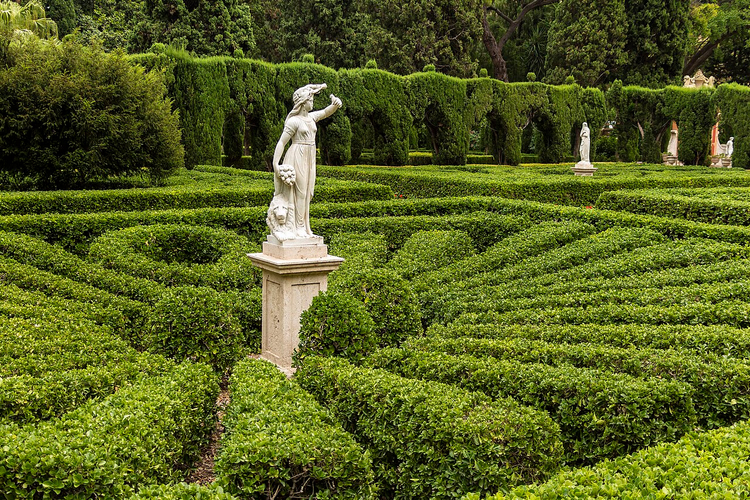
Monforte Garden, covering 12,000 m², is hidden behind a wall 4 meters high. It's not easy to find, even though it sits in the very center of the city. The garden was laid out in the 19th century in the neoclassical style. Here natural landscapes combine with architectural structures, and you can escape the city noise.
A parking garage is built underneath the garden, extending under the neighboring streets. Locals aren't particularly fond of tourists in this corner and prefer to enjoy the quiet themselves.
- Cost: garden entry is free (as of 09/2026, Valencia tourism office on the gardens).
- Who it's for: for a quiet pause in the city center.
Tours and tickets in Valencia
Guided tours, skip-the-line tickets and activities — most offers can be cancelled free of charge.
See offers on TiqetsThe widget loads once you give your consent.
Valencia attractions on the map
The map shows all the places from the list. The Old Town is compact, but you travel to the City of Arts and Sciences separately. Plan your route in advance so you don't spend the whole day getting around.
Sights of Valencia
Places on the map
- 1Valencia Cathedral Gothic, Renaissance and Baroque, the Miguelete bell tower and the Holy Grail in the museum
- 2La Lonja de la Seda 15th-century Gothic silk exchange, a UNESCO site, free entry
- 3Museum of Fine Arts El Greco, Velázquez, Goya and Bosch, free entry
- 4City of Arts and Sciences Calatrava's futuristic complex covering 350,000 m² in the old Turia riverbed
- 5Prince Felipe Science Museum Calatrava's interactive science museum in the City of Arts and Sciences
- 6Oceanogràfic Europe's largest aquarium with a 70 m underwater tunnel
- 7Albufera Natural Park Wetland reserve 20 km from the city, a bird paradise
- 8Mestalla Home stadium of Valencia CF, locker room tours
- 9Royal Gardens Royal gardens from 1560 with subtropical plants
- 10Bioparc Cageless zoo, animals separated by moats and water
- 11Museum of Prehistory Neolithic tools and excavation finds in the La Beneficencia centre
- 12Serranos Towers 14th-century Gothic towers with a viewing platform
- 13Quart Towers 15th-century Gothic gate with marks from Napoleon's cannonballs
- 14Botanical Garden The city's oldest botanical garden, about 4,500 plant species
- 15Palace of the Generalitat Government building blending Gothic and Renaissance, free entry
- 16City Hall Square Triangular square with the white city hall building and the Crystal Hall
- 17Plaza de la Reina Square facing the cathedral's north façade and the Miguelete tower
- 18Central Market Art Nouveau market with stained glass and a swordfish weathervane dome
- 19Colón Market 1917 Art Nouveau market, today a shopping and entertainment centre
- 20Church of St Catherine Church on the site of a mosque, with an 18th-century bell tower
- 21Basilica of the Virgin of the Forsaken Baroque basilica with an oval dome and a statue of the city's patroness
- 22Church of the Saints John Baroque façade with a rose window, clock tower
- 23Museum of Ceramics National Ceramics Museum in the Palace of the Marquises of Dos Aguas
- 24Palau de la Música Concert hall under a glass dome in Turia park
- 25North Station 1917 Art Nouveau railway station with mosaics and ceramics
- 26Plaza de Toros Bullring 19th-century bullring for 16,000 spectators, shaped like a colosseum
- 27Turia Gardens 100-hectare park in the former riverbed, 18 bridges
- 28Museum of the Patriarch Painting collection and a Thomas More manuscript in a 16th-century seminary
- 29Monforte Gardens 19th-century garden behind a high wall in the city centre
⁉️🤔 Frequently asked questions
How many days do all 30 places on the list take?
A relaxed visit takes two to three days. On the first day you cover the Old Town: the cathedral, La Lonja, the markets, churches, and the gates. On the second day, head to the City of Arts and Sciences and the Turia Gardens. Leave the third day for Albufera and Bioparc.
What can you see in Valencia for free?
La Lonja de la Seda and the Museum of Fine Arts are free, as are the Palace of the Generalitat and the city hall. Entry to the La Beneficencia museums is free on weekends and holidays. The Old Town churches are open without a ticket, except for the cathedral, as are the parks, the Turia Gardens, and the Monforte Garden. On Sundays, entry to the Serranos and Quart gates is usually free.
Do you need to buy Oceanogràfic tickets in advance?
Yes, in high season it's better to book ahead. Oceanogràfic is the most visited attraction in Valencia, and the ticket lines are longest in the morning. An online ticket saves time. Plan for at least three hours: there are plenty of aquariums and bird enclosures here.
When is the best time to visit Valencia?
The best months are April, May, and October. In summer, temperatures are high, and visiting the cathedral and El Micalet means being out in the open. Winter is mild, but part of the Botanical Garden's collections are closed. In March you hit Las Fallas, and the city is packed.
What to do in Valencia with kids?
Kids love the City of Arts and Sciences, the science museum with its interactive exhibits, and the cage-free Bioparc. The Gulliver playground is in the Turia Gardens. The Royal Gardens with their small zoo are a good fit for toddlers. Half a day easily goes to Oceanogràfic with its dolphinarium.
In short: what's worth booking
If you have just one day: get an Oceanogràfic ticket and walk around the Old Town on foot. If you have two days: add the City of Arts and Sciences and the Turia Gardens. If you're traveling with kids: put Bioparc and the science museum on your list. If you're in the city for three days: a 72-hour tourist card pays off.
Attraction and museum tickets on Tiqets are worth buying in advance, and excursions and tours on GetYourGuide fill your evenings, when museums are already closed.

A small editorial team writing guides for independent travel. We travel ourselves, but we haven’t been everywhere, so we check prices, opening hours and how to get there against official sources.