








When to go to Budapest in 2026: weather, crowds and prices by month
Budapest is realistic to see in three days, but the trip budget depends on the month. In July hotels get more expensive, bathhouses have lines, and daytime temperatures reach almost 28 °C. In February or November you pay less and walk around a half-empty city center, but bring a warm jacket.
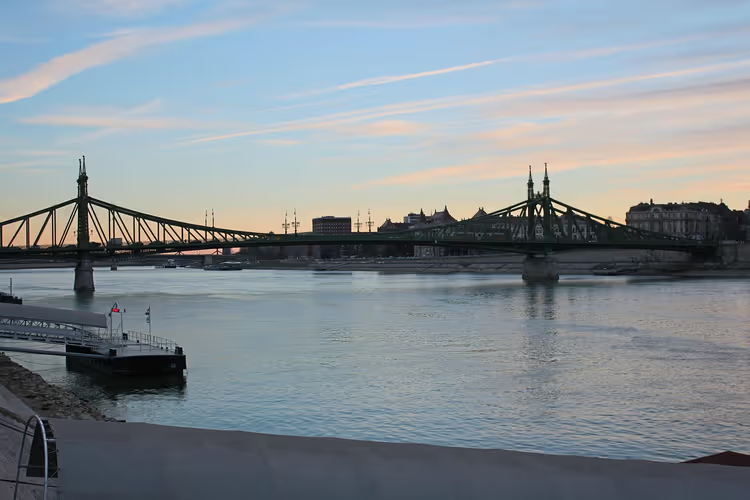
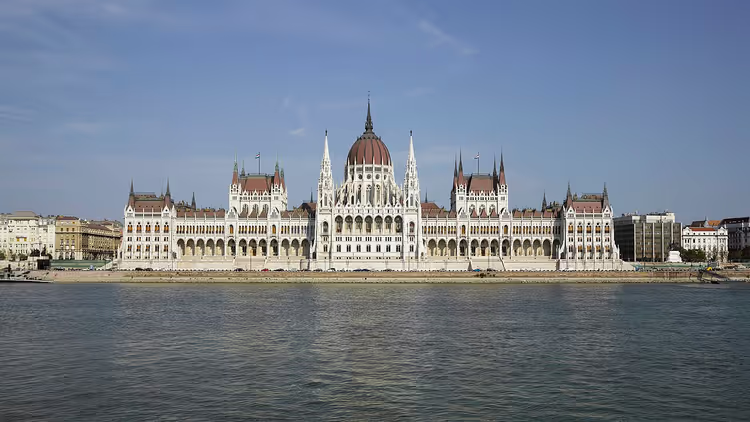 © Godot13 · CC BY-SAPhoto: Godot13, CC BY-SA (https://creativecommons.org/licenses/by-sa/4.0), Wikimedia Commons
The best time to visit Budapest is late April, May, September, and October. During these weeks the weather is comfortable, crowds are noticeably smaller, and a hotel night costs less than at the height of summer. Need maximum savings? Plan for February, early March, or November: it is chilly, but the city is calm and prices are lower. We checked baseline figures against the Hungarian Meteorological Service weather archive and Budapest tourism office statistics.
Ad: this article contains affiliate links. We earn a commission if you book through them, at no extra cost to you.
When to visit Budapest
💡 In short:
- Plan your trip for late April, May, September, or October.
- Choose February, early March, or November if price matters more.
- Expect heat and crowds in July and August.
- Account for festivals in August and Christmas markets in December.
- Seasonality: 09/2026, verified on the Budapest tourism office website; hotel prices for 2025: Horwath HTL report.
A forecast for a specific date will not tell you much in advance, so rely on multi-year averages. Below is a summary by trip purpose, and then we will look at weather, prices, and events in more detail.
Trip purpose | Months |
|---|---|
Maximum warmth | July, August |
Minimum tourists | January, February |
Best price | February, November |
Golden autumn | September, October |
Festivals | August |
Christmas markets | December |
On average, visitors spend 2.7 days in the city (tourism office data). That is enough for the main sights, one bathhouse, a walk along the Danube, and a relaxed evening. If you plan day trips outside the city, allow four to five days.
Weather by season in Budapest
For planning, use multi-year averages for 1991-2020: they smooth out anomalies and give an honest picture. The values below are compiled from Budapest climate series.
Month | Average | Daytime | Nighttime |
|---|---|---|---|
January | -0.6 °C | +2.8 °C | -4 °C |
February | +1.2 °C | +5.5 °C | -3.2 °C |
March | +5.6 °C | +10.8 °C | +0.4 °C |
April | +11.1 °C | +17.2 °C | +4.9 °C |
May | +15.7 °C | +21.9 °C | +9.6 °C |
June | +19.5 °C | +25.6 °C | +13.5 °C |
July | +21.4 °C | +27.6 °C | +15.2 °C |
August | +21.3 °C | +27.7 °C | +14.9 °C |
September | +16.2 °C | +22 °C | +10.5 °C |
October | +10.7 °C | +16 °C | +5.5 °C |
November | +5.4 °C | +9.1 °C | +1.7 °C |
December | +0.3 °C | +3.3 °C | -2.7 °C |
Annual precipitation totals about 525 mm. It is distributed fairly evenly, with no pronounced dry season.
Spring: March to May
Spring warms up quickly but is unstable. Warm days already occur in March, and with them come returning frosts and snow, because cold and warm air collide over the city and stir up strong winds. In the second half of April the thermometer passes 20 °C, and in May the first hot days arrive with peaks around 30 °C. Also, afternoon thunderstorms start in May, so bring a light rain jacket.
Summer: June to August
Summer in Budapest is warm and sunny, but it comes with two surprises. The first is heat waves: in July and August the high climbs above 35 °C, and the all-time record of 40 °C was set in July 2007 (long-term observations). The second surprise is thunderstorms and downpours that roll in after lunch. If you struggle with intense heat, walk before 11 a.m. and after 6 p.m., and leave the middle of the day for the baths and museums.
Fall: September-November
September brings the mildest fall weather: around 22 °C during the day, still generous sunshine, and cooler nights. In October temperatures drop quickly, cloud cover and rainy days increase, but the parks hold on to their golden foliage. November is gray and cold, with the first snow possible by the end of the month. For sightseeing on foot, pick September and the first half of October, and save late fall for museums.
Winter: December-February
Winter here is cold but not extreme: average temperatures hover around freezing. The city is often wrapped in fog and low clouds, snow falls regularly, but deep snowdrifts are rare. Occasionally cold air arrives from the east and brings a sharp freeze: the historic low of -27 °C dates back to January 1987. There is little sun from November through February, so build your itinerary around the baths, museums, and markets.
Peak season vs. shoulder season
Tourist traffic in Budapest is growing fast: in 2024 the city welcomed 6.03 million visitors, 24% more than in 2023, and overnight stays reached 14.7 million (data from the tourism office). New hotels are opening to meet this demand, but in peak months available rooms are still scarcer.
The gap is especially visible in summer. In 2024, June brought 597 thousand visitors, July 623 thousand, and August 709 thousand (tourism season overview). Accommodation prices at this time are noticeably higher than spring levels. In the shoulder season the picture is the opposite: a night costs noticeably less.
Season | Months | Visitors | Nightly rates |
|---|---|---|---|
Peak | June-August | maximum | noticeably above average |
Shoulder season | April-May, September-October | moderate | noticeably below peak |
Low season | November-February, except December | minimum | the lowest |
Hotel occupancy confirms the picture: in 2025 it rose to 71.4% (report on Budapest hotel demand).
If you want a calm city, choose the shoulder season and do not tie your dates to school holidays in neighboring countries.
School holidays and public holidays in Hungary
Domestic tourism adds to the load: school holidays last almost the entire summer, so July and August are busy not only with foreign visitors but also with local guests. If you are traveling in these months, book baths and popular tours in advance.
The main summer event, the Sziget festival, runs on Óbuda Island from August 11 to 15, 2026 (dates and program). For those dates, hotels in the center raise their prices, so it is better to book a room several months ahead.
In winter the city revolves around the Christmas markets. They open in mid-November and run through the first days of January, with the main locations at Vörösmarty Square and St. Stephen's Basilica. Go on a weekday evening: on weekends you can barely squeeze between the stalls.
Budapest by month: crowds, prices and events
Below is a short month-by-month cheat sheet: weather, tourist numbers, price level and the main thing to do. Use it to pick the right window for your travel style.
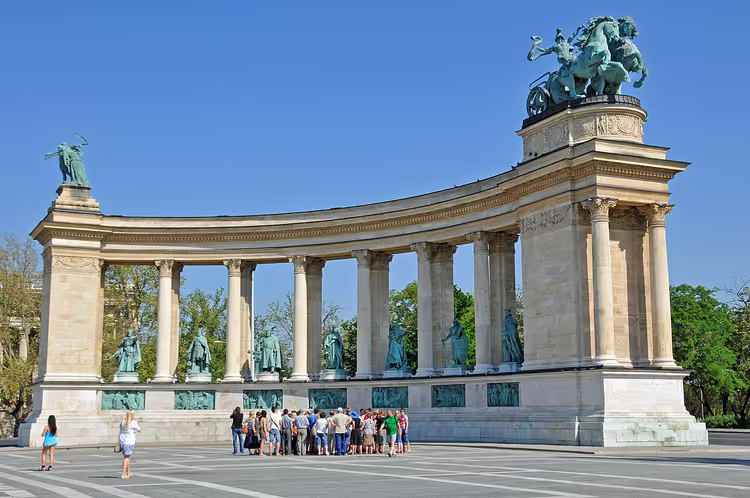 © Dennis G. Jarvis · CC BY-SAPhoto: Dennis G. Jarvis, CC BY-SA (https://creativecommons.org/licenses/by-sa/2.0), Wikimedia Commons
Month | Weather | Crowds | Prices | Main thing to do |
|---|---|---|---|---|
January | around freezing | minimal | low | baths and museums |
February | chilly | low | low | relaxed walks, spas |
March | warming up | low | low | city sightseeing |
April | warm | moderate | average | walks around Buda |
May | warm | growing | average | first thunderstorms, terraces |
June | hot | high | above average | early starts, the Danube |
July | hottest | maximum | peak | baths, evening walks |
August | hot | peak | peak | Sziget and the embankment |
September | warm | high | average | golden autumn, wine |
October | mild | moderate | average | parks and panoramas |
November | chilly | low | low | fairs, baths |
December | around freezing | busy | above average | Christmas markets |
Many people underestimate the winter months. In January and February you get empty museums, short lines and the lowest accommodation prices. The catch is the short daylight: it gets dark early, so build your itinerary around indoor places.
In spring the city wakes up. By April it is already comfortable to walk the hills of Buda, and in May terraces open and the Danube cruise season begins. The catch with spring is the changeable weather: a warm day can easily turn into a cold wind.
In summer, early morning wins. Before 11 am you can hit the viewpoints without a line, and in the evening you come back to the embankment. In July and August add a bath to your plan: the water in the outdoor pools is heated year-round, and in summer it is also a way to sit out the heat.
In autumn Budapest has the best light for photos and fewer tourists. September is still warm, October is mild, and in November the city gets ready for the fairs. If you want balance, aim for late September and early October.
Hotel prices by season
The difference between high season and shoulder season shows up in the bill, not just in the weather. In peak season the nightly rate rises noticeably, and in shoulder season it drops significantly; the exact gap depends on the hotel and the dates. Industry data shows the general level: in 2025 the average nightly rate in Budapest hotels was around 110 € (as of 2025, Horwath HTL report).
The annual pattern for a single hotel looks like this:
Month | Nightly price level |
|---|---|
January | low |
February | lowest |
March | low |
April | average |
May | average |
June | high |
July | highest |
August | high |
September | average |
October | average |
November | average |
December | high |
A useful benchmark comes from Prestige Hotel Budapest: if you compare the first week of each month for two nights, July comes out the most expensive and February the cheapest. The gap between them is significant, so shifting your trip by a couple of weeks often saves more than switching hotels.
Check specific dates yourself, because prices change every week: see Budapest hotel prices on Trip.com. Compare several date options at once, so you can see whether it is worth moving your trip.
Where to stay: hotels by district
The district matters more than the stars. Belváros puts you steps from the Danube, the Central Market Hall and the main baths, but the center can be noisy. Terézváros is quieter and cheaper, but you walk about half an hour to the river.
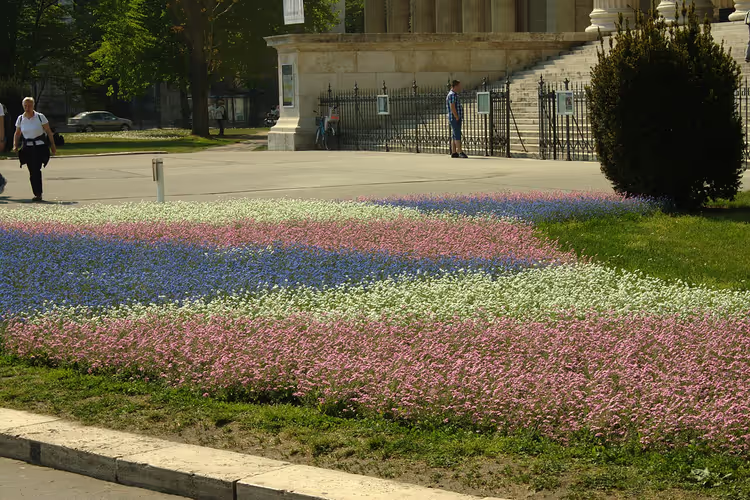 © I would appreciate being notified if you use my work outside Wikimedia. More of my work can be found in my personal gall · CC BYPhoto: I would appreciate being notified if you use my work outside Wikimedia. More of my work can be found in my personal gall, CC BY (https://creativecommons.org/licenses/by/3.0), Wikimedia Commons
Hotel | Stars | District | Budget | Best for |
|---|---|---|---|---|
Hotel Topaz | five | Belváros | high | couples and solo travelers with comfort |
Aparthotel Adagio | four | Belváros | average | families with a kitchen |
The Social Hub | four | Terézváros | average | young people and remote workers |
Best Western Plus Celebrity Suites | four | Terézváros | average | a quiet central stay |
Imperial Riding School | four | third district | high | those who want peace and quiet |
Airport hotels | four | near the airport | average | early flights and connections |
For early departures, take a hotel near Ferenc Liszt Airport: you will not have to get up at four in the morning. If you want to check the seasonal difference on a specific example, open Prestige Hotel Budapest prices on Trip.com and compare your dates.
Flight prices by month
Flights fluctuate more than hotels. The most expensive month is usually July, and the cheapest are November and September. The reason is simple: in July vacations and festival season overlap, while in late autumn demand drops.
Month | Flight price level |
|---|---|
January | low |
February | low |
March | low |
April | average |
May | average |
June | average |
July | high |
August | high |
September | low |
October | low |
November | lowest |
December | low |
It is convenient to compare dates in advance: compare tickets on Kiwi.com. Look at midweek departures: browsing options takes a couple of minutes, and the choice is wider.
If you fly via Vienna or Prague, add a day to your plan for the city itself.
How to get to Budapest
The advantage of Budapest is that the city is easy to reach without flying. Direct trains run from Vienna and Prague, and bus routes connect the capital with most major cities in Central Europe.
For the train, buy your ticket in advance: on popular dates seats sell out quickly. See schedules and prices here: buy a train ticket to Budapest.
The train is also convenient for a short side trip: the route to Bratislava runs along the Danube bank, and you get a panorama without a separate tour. If you are driving, leave your car on the outskirts and use the metro: parking in the center is expensive, and the historic streets are closed to traffic.
 © Smiley.toerist · CC BY-SAPhoto: Smiley.toerist, CC BY-SA (https://creativecommons.org/licenses/by-sa/4.0), Wikimedia Commons
Baths and tours in the off-season
Cool weather does not ruin the trip. Thermal baths operate year-round, and in winter open-air bathing becomes the main highlight: steam over the water, snow on the edge, and short lines on a weekday.
The city has the Széchenyi Baths, Gellért, Rudas, and several smaller complexes. In the off-season you get another advantage: museums and covered markets empty out, and tour spots are easier to get. Book Budapest tours on GetYourGuide in advance: popular guides fill up their groups quickly.
When not to go
There is one window worth avoiding if you dislike crowds and heat. From late July to late August, Budapest is overloaded: lines at the baths, packed terraces, and the highest nightly rates.
If your vacation falls in this period anyway, work with a plan: early starts, a midday break at a bath or museum, evening walks by the water. And book your hotel in advance, as rooms in the center are almost all taken.
Also check the events calendar separately: festival and market dates change every year, and hotel prices and occupancy change along with them.
⁉️🤔 Frequently asked questions
Which month is the cheapest for a trip to Budapest?
February, early March, and November offer the best hotel prices and the fewest tourists. The weather is cool at this time, but thermal baths operate year-round, and museums and covered markets fill your free time. For a balance of price and comfort, aim for late February and the first week of March.
Is Budapest better in May or September?
Both months fall within the best window. May gives you long days and the first terraces, but thunderstorms start from mid-month. September is warmer at night, less crowded, and warm weather lasts until early October. If you enjoy evening walks, bet on September.
How many days do you need for Budapest?
Three days are enough for the main sights, one bath, a walk along the Danube, and an evening in the center. For day trips outside the city, add two more days and stay near a metro station.
Is Budapest more expensive than Vienna?
In terms of prices, Budapest is still cheaper than Vienna, but the gap is narrowing. The quality of services is improving at the same time. The difference is more noticeable in restaurants than in hotels.
Is it safe to travel to Budapest?
The center is safe if you behave as you would in any large city: keep an eye on your belongings on the tram and don't leave your bag on a terrace. Before your trip, check the news about mass events and demonstrations, as they sometimes disrupt public transport. At night, stick to well-lit streets and official taxis.
Which months have the cheapest flights?
November and September are usually the cheapest, while July is the most expensive. The difference from the peak is significant, so shifting your trip by a couple of weeks often saves more than choosing a different hotel. Compare midweek departures.
In short: what to book
The choice depends on what matters most to you.
If you want warm weather: May or September.
If you want low prices: February or November.
If you're going for events: August, during Sziget.
If you want atmosphere: December with its Christmas markets.
Whatever you choose, book your hotel in advance: two to three months is enough in the off-season, but allow four to six months for July and August. Book a hotel in Budapest on Trip.com.

A small editorial team writing guides for independent travel. We travel ourselves, but we haven’t been everywhere, so we check prices, opening hours and how to get there against official sources.