
















When to go to Italy: weather, sea and skiing by month
Italy has no single season, because the country stretches from the Alps to Sicily. In April there is still snow in the north, while everything is already blooming in the south. In Rome at that time people walk around in jackets, and in Palermo they take them off by midday.
So the question of "when to go" is decided by the type of trip. Cities, the sea, lakes, and mountains enter their best season at different times. According to data from the official Italian tourism portal, cities are most comfortable in spring and autumn.
We have put together a seasonal picture by region and month. Below you will find when to walk around Rome and Venice, when the water is warm on the Adriatic and in the south, when ski slopes open, and which month is best avoided.
When is the best time to go to Italy
💡 In short:
- For cities and culture, the best window is April, May, September, and October.
- For the sea, choose June or September: the water is warm, and there is less heat and fewer crowds.
- For skiing, people go from December to March. Reliable snow holds in January and February.
- August is best avoided.
- Seasons and climate: 09/2026, checked on the official Italian tourism portal.
For most trips, spring and autumn work best. In April, May, September, and October the air is mild. Prices are moderate, and there are noticeably fewer tourists than at the height of summer. If you are visiting Italy for the first time, choose these months.
But there is no single ideal date for the whole country. Italy stretches from the Alps to Sicily for more than a thousand kilometers. So each type of trip has its own window: cities need cool weather, beaches need a warm sea, mountains need snow. Below we will go through everything in order and by region.
When is the best time to go to the sea in Italy
For a beach holiday, the best period is from June to September, and in the south and on the islands often from May to October. In this window the sea is warm enough for swimming, beach clubs are open, and the weather is reliably sunny. In June the water is already warm, and in September it still holds the summer heat.
Regions differ in timing. On the Adriatic and in Liguria the sea usually becomes comfortable from June, and the season ends during October. In Calabria, Puglia, Sardinia, and Sicily people swim longer, because the south warms up earlier and cools down later.
If you do not like heat and crowds, come in June or September. The water is warm, the summer heat is already easing or not yet at its peak, and the beaches are noticeably less crowded. July and August on the coast are the busiest and most expensive months of the year. The water becomes warm earliest in the south, and it also cools down latest there.
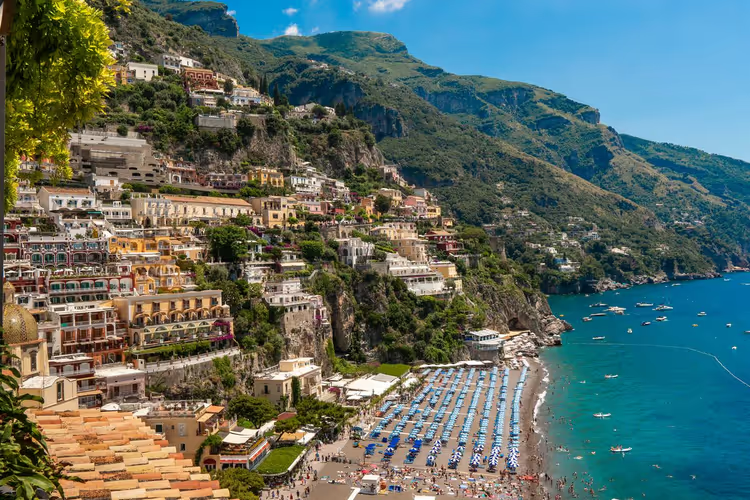
Many people choose the south precisely for its long season. In Positano and on the Amalfi Coast people still swim in October, although you already need a sweater in the evening. The catch: in July it is hard to be in direct sun even near the water, so bring an umbrella and water with you.
When is the best time to visit Italy's cities
For a city trip, spring and autumn work best, meaning April, May, September, and October. The temperature is then pleasant for long walks, the streets are not yet scorching, and the sights are less crowded than at the height of summer.
High summer is rather uncomfortable for Rome, Florence, and Venice. The air above the asphalt is over thirty degrees, and there is a line at every entrance.
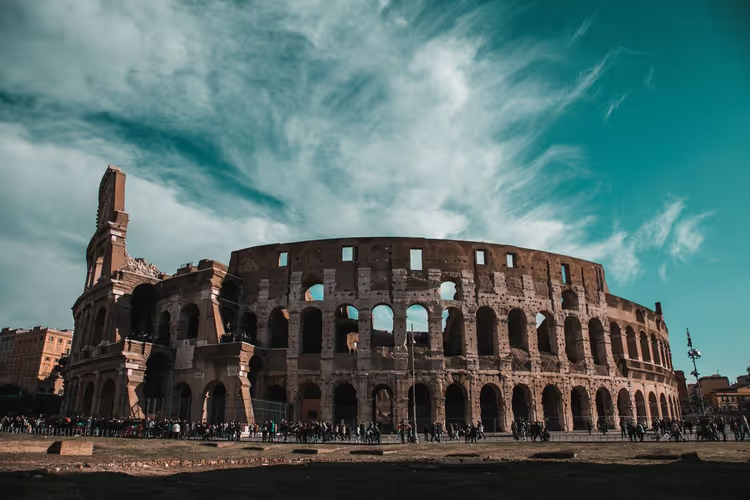
In winter, cities are cheapest and calmest. There is one exception: the days around Christmas and New Year, when prices rise again. The catch of a winter trip is the short daylight and early dusk, and in the north there is also fog.
When is the best time to go to Northern Italy and the lakes
For Northern Italy and the large lakes, May to September works best. Late spring brings blooming and mild temperatures. Summer is warm and busy, and early autumn is still pleasant and calmer.
On Lake Garda, Lake Como, and Lake Maggiore many places open in April and close after the autumn holidays. May and June are ideal for hiking, cycling, and flowering shores. July and August are good for swimming, but they are the busiest months.
Northern cities like Milan and Venice have a continental climate: hot summers and cool, sometimes foggy winters. The same rule applies to them as to all cities: late spring and early autumn.
When is the best time to go to Southern Italy and the islands
For Southern Italy and the islands, May to October works best. The south warms up early, the swimming season often lasts until October, and winters remain mild. Only the hottest summer in July and August can be a challenge.
In Puglia, Calabria, Sicily, and Sardinia everything blooms already in April. The swimming season starts in May, and in September and October the sea is still warm, but the heat is easing. If you go south at the height of summer, plan your daily schedule in advance. Wait out the hottest hours in the shade or near the water.
The mild winter also makes the south a destination for relaxed city trips. Palermo and Naples are pleasant to explore in the cold season, when the north of the country is already freezing. The catch: in winter part of the beach infrastructure on the coast is closed.
When can you ski in Italy
You can usually ski in Italy from December to March. At high altitude in the Dolomites and the Alps, the season often opens as early as late November and lasts until April. The most reliable snow holds in winter, in January and February.
Major ski areas are located in the Dolomites, the Aosta Valley, South Tyrol, and Piedmont. In the Dolomites, a single Dolomiti Superski ski pass opens about 1,200 km of slopes (checked 03.09.2026 on the official Dolomiti Superski website). In high zones the first snow falls already in October.
Besides skiing, South Tyrol attracts visitors in December with Christmas markets. The Alps have two seasons. In summer, from July to September, the snow-free slopes are excellent for hiking.
Which months in Italy are best avoided
First of all, you should avoid August and especially the days around Ferragosto, which is celebrated on August 15. At that time the influx of tourists is at its maximum, the heat is strongest, and many shops and restaurants are closed: Italians themselves go on vacation.
Beaches are overcrowded, accommodation is booked in advance at inflated prices, and in cities the stuffiness makes walking tiring. All of July also belongs to the most expensive and busiest time on the coast and lakes.
If you have flexibility, shift your trip to June or September. The weather and water temperature are often still excellent, while prices and crowds are noticeably lower. The catch of August is not only the heat: during this period it is harder to find a free table and a parking spot.
Best time in Italy: months in order
The table shows what to expect from the weather and crowds in each month and what it is suitable for. The data reflects general trends. Actual weather varies from year to year and from region to region.
Month | Weather and temperature (typical) | Crowds | What it is suitable for |
|---|---|---|---|
January | Deep winter period, cold and snowy in the north, mild in the south | low | Skiing in the Alps, calm and inexpensive trips to southern cities |
February | Winter continues, lots of snow in the mountains, first warm days in the south | low | Skiing, the Venice Carnival, the start of almond blossom in Sicily |
March | Transitional month, still snow in the north, spring-like warmth in the south | low to medium | Cities before the crowds, first spring weather in the south |
April | Spring across the country, blooming at the lakes, changeable weather | medium, higher at Easter | City trips, first hikes, lakes in the north |
May | Pleasantly warm, green everywhere, summer-like in the south | medium | Cities, lakes, the start of the swimming season in the south |
June | Early summer, warm and usually stable | growing | Swimming in the south and increasingly in the north, lakes, hiking at medium altitude |
July | High summer, hot, very hot in the south | high | Swimming at its peak, hiking in snow-free mountains |
August | Very hot, often stuffy, little rain | highest, peak at Ferragosto | Mountains for hiking, everything else is best avoided due to heat and crowds |
September | Warm, the sea still warm, intense heat easing | declining | Swimming, cities, and hiking, often an ideal all-round month |
October | Mild autumn, still warm in the south, cooler in the north | low to medium | Swimming in the south, cities, autumn in South Tyrol |
November | Cool and more often rain, first snow in the mountains | low | Inexpensive city trips, depending on the weather the start of the ski season |
December | Winter, snow in the north, mild and changeable in the south | low, higher at Christmas | Ski season, Christmas markets in South Tyrol, winter city trips |
For precise planning, a breakdown by region and a calendar of holidays with long weekends will help. That way you will not end up on the busiest days.
Bottom line: the time of travel depends on the type of trip
There is no single best time for Italy; there is a suitable time for your goal. For cities and culture, choose spring or autumn; for the sea, the period from June to September; for the lakes, the window from May to September; for skiing, winter. If you want to escape the heat and crowds, the shoulder season in May, June, and September is almost always a win: good weather, reasonable prices, and more space.
Check your dates in advance and keep the seasonal peaks in mind. Then you will get the Italy you are traveling for.
⁉️🤔 Frequently asked questions
Which months are the hottest in Italy?
It is hottest in July and August. In the south and on the islands, summer air easily rises above thirty degrees, in places closer to forty. In these months it is easier by the sea than in scorching cities, but even on the beaches there is little free space.
What is Ferragosto and why should it be avoided?
Ferragosto is celebrated on August 15, and this day is considered the peak of Italian summer vacations. During these days the influx is at its maximum, beaches and accommodation are overcrowded, and many shops and restaurants are closed because Italians themselves go on vacation. Prices during this period are the highest of the year.
When are there the fewest tourists and the lowest prices in Italy?
The low season lasts roughly from November to March, except for ski areas and the holidays around Christmas and New Year. In resort towns much is closed then, but in cities you get low prices and few people. The most pleasant shoulder season falls in May, June, and September.
Is it worth going to Italy in winter?
Yes. Winter is suitable for skiing in the Dolomites and the Alps, for Christmas markets in South Tyrol, and for calm, inexpensive city trips. In the mild south, Palermo and Naples are comfortable to explore even in the cold months.
When is the sea in Italy warm enough for swimming?
On the Adriatic and in Liguria the water usually becomes comfortable from June and holds until October. In the south and on the islands the season often lasts from May to October, because the water warms up earlier and cools down later there.
What should you do if you handle heat poorly?
Skip high summer in July and August, especially in the south and in cities. Choose spring or autumn, and for a beach holiday June and September. During the hottest hours stay in the shade, near water, or inside museum halls.
In short: what is worth booking
If you have a short vacation in spring or autumn, plan for cities: Rome, Florence, Venice. If you are going for the sea, choose June or September and look to the south and the islands. If your goal is snow, book winter in the Dolomites, South Tyrol, or the Aosta Valley. If you want both cities and a lake, choose May on Garda or Como.
- Want warmth and few people: May.
- Want the sea and stable weather: June or September.
- Want cities without heat: April, May, September, and October.
- Want skiing: January or February.
- Want the cheapest option: November to March, except holidays and mountains.
Before your trip, check dates and seasonal peaks on the Italia.it portal.

A small editorial team writing guides for independent travel. We travel ourselves, but we haven’t been everywhere, so we check prices, opening hours and how to get there against official sources.