
















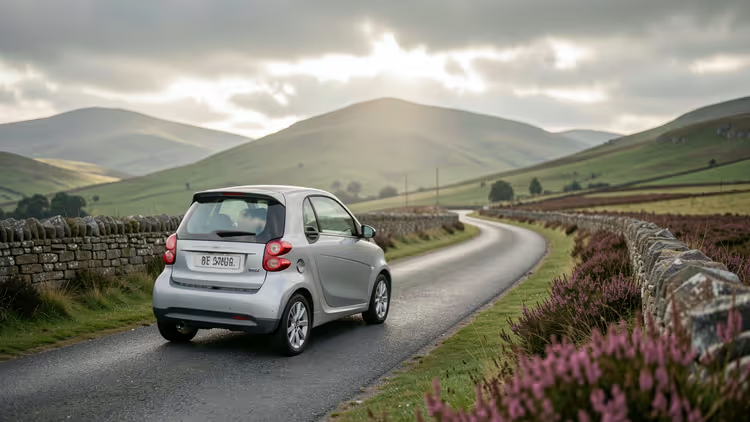
 AIIllustrative image: AI-generated
Car rental in Scotland: how to book and not overpay
In Scotland, cars are right-hand drive and traffic keeps left. No bus will take you all the way to the Highlands and the islands, so without a rental car your route ends up short.
Expect extra charges, an unfamiliar gearbox, and a body inspection for scratches. Below is the whole process from booking to drop-off, including ferries and returning the car at the airport.
Three things decide everything: booking early, choosing the right class for your route, and carefully inspecting the body at pickup.
Ad: this article contains affiliate links, we earn a commission if you book through them, the price stays the same.
How to book a car in advance
💡 In short:
- Book from home and compare rental companies without rushing.
- Online prepayment is usually cheaper than paying at the counter.
- Bring your driver's license and a credit card in the driver's name.
- Pick up the car at the airport, not in the city.
- Age, license, and payment: 09/2026, verified on the Europcar website.
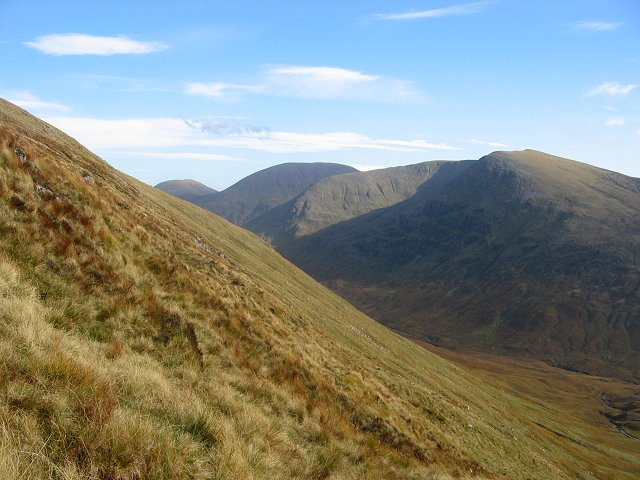 © Richard Webb · CC BY-SAPhoto: Richard Webb, CC BY-SA (https://creativecommons.org/licenses/by-sa/2.0), Wikimedia Commons
It's better to book the car from home, already at the trip planning stage. You'll have time to calmly compare rental companies, and at most companies online prepayment works out cheaper than paying at the counter. The exact difference can't be stated: it depends on the season, the class, and the pickup airport.
Important: car rental in Britain has become noticeably more expensive after Brexit, and in summer this is felt most strongly.
You need two documents to book. A driver's license valid in the EU, and a credit card in the driver's name. Old paper licenses without Latin characters raise questions at the counter, so get a new-style card in advance. The card you use to pay when booking must match the one you show at pickup. Paying with a different card at the counter ends in refusal.
A few rental companies accept other payment methods, such as direct debit from a bank account. Sunnycars is one of these exceptions. But you shouldn't count on this, so keep a card on hand.
Pick up the car right at the airport. A local rental company in the city is sometimes cheaper, but after landing you still need to get there. The trip into the city eats up time and money on a bus or taxi, and at the start and end of a vacation that's extra hassle.
Separately check the minimum age and the young driver surcharge. The threshold in Britain is usually between 21 and 25 years depending on the rental company and class, and drivers under 25 pay a surcharge (according to Europcar, 09/2026). The surcharge is calculated per driver and per rental day, so on a long trip it adds up.
Add a second driver to the contract right when booking. A driver not listed in the contract loses insurance coverage entirely, and after an accident you'll be the one paying.
Car class: what suits Scotland's roads
Choose the class based on the number of people and the length of the route. For short trips from a single cottage without suitcases, a compact is more convenient. It's easier on single-track roads, cheaper to rent, and uses less fuel.
A long route from one overnight stop to the next requires a bigger car. Then the car becomes a base for outings and photography, and a large tank gives peace of mind in the Highlands. The catch is obvious: on narrow roads a large car takes up almost the entire width.
Class | Who it suits | Plus | The catch |
|---|---|---|---|
Compact | a couple on short trips | maneuverability and low fuel consumption | little room for luggage |
Station wagon | a family with children | luggage space and extra room | harder to park in cities |
SUV | a long route with suitcases | fuel range and high seating position | tight on single-track roads |
Single-track roads in the Highlands demand attention even from experienced drivers. Outside towns the limit on such roads is 60 mph (96 km/h), and in built-up areas 30 mph (48 km/h), but on narrow sections you drive slower (according to Road Safety Scotland, 09/2026).
Look not only at size but also at visibility. A low car with small windows and thick pillars is poorly suited to winding roads, because you have a worse view of oncoming passing places. For example, an Opel Astra is good on a wide autobahn, but on single-track roads its visibility gets in the way.
The gearbox also affects the trip. The shifter is on the left here, and first gear is engaged away from you, and you don't get used to that right away. Some people find it easier to take an automatic and not think about shifting. Decide this before booking, because an automatic is almost always more expensive than a manual.
Choose equipment based on habit: air conditioning, petrol or diesel, number of doors. There's no universal advice here, it all depends on the trip. Air conditioning comes in handy even in a cool climate, and four doors are more convenient for luggage and camera gear.
Four letters of the Acriss code help you quickly understand the car type. They show the body class, gearbox, and drive type even before you inspect the car.
Price calculation: what extra charges appear on the bill
Extra charges are almost always added to the base class price. Their size depends on the rental company, so the figures below are rough guides, not exact amounts.
Extra charge | Order of magnitude |
|---|---|
Paying on site instead of prepaying | a small amount per day |
Automatic gearbox | the most noticeable surcharge |
Reducing the excess to zero | a medium amount per day |
Second driver | a medium amount per day |
Child seat | a small amount per day |
Also check days outside the weekly cycle in advance. At some rental companies, renting for five days works out more expensive than a full week, and this is only visible in the calculation.
Base rates at different companies differ several times over for the same date. You can compare offers across Scottish airports in advance, even before buying tickets: compare rental prices through DiscoverCars. This gives a clearer picture of the real price range for your class.
Important: insurance in Britain is tied to the driver, not the car.
The excess is usually calculated per incident of damage, not per the whole car. One scratch on the left wheel and a parking dent on the right already mean two deductions. On unfamiliar roads it's better to take a package with a minimal or zero excess.
Tires and glass on Scottish roads are worth covering fully. Stones on gravel sections often crack the windshield, and repairs without insurance are expensive.
The refueling rule is almost always the same: a full tank at pickup and a full tank at drop-off. The rental company will offer its own refueling at a convenient price, but it's better to return the car with a full tank and keep the receipt from the pump.
Renting a sat nav is almost never worth it. Over two weeks of rental the cost adds up to the price of a new device, so your own sat nav with maps or a smartphone will be cheaper.
If you have an ADAC card, some extra charges can be covered in advance. Through ADAC Autovermietung, a second driver and insurance are often already included in the rate (according to ADAC, 09/2026).
It's easier to calculate extra charges in advance than to find out at the counter under pressure. Save your choices in your phone: second driver, child seat, insurance. Then the agent won't be able to sell you extras, and the final amount will be visible before you even fly.
Check whether unlimited mileage is included in the rate. On a long route through the Highlands and islands, a kilometer limit becomes a separate expense item.
Ferries: is the car insured on board
The ferry question comes up for almost everyone. On domestic Scottish crossings, insurance for a rental car usually applies. If you're planning a crossing, for example to Ireland, most rental companies have different terms, so clarify this point in the contract before booking.
You can book a rental car on a CalMac ferry in advance. When booking, indicate that the car is rented, and then add the registration number before the trip, this matters for deck space allocation (according to CalMac, 09/2026).
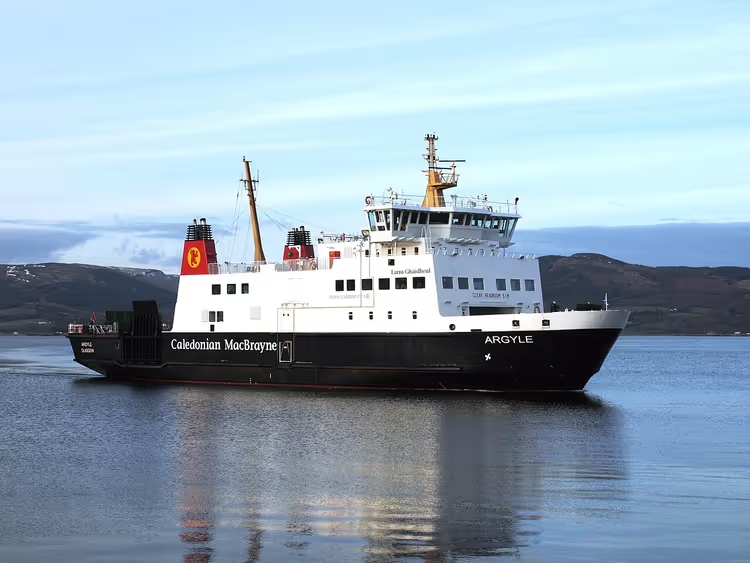 © Steve Houldsworth · CC BY-SAPhoto: Steve Houldsworth, CC BY-SA (https://creativecommons.org/licenses/by-sa/2.0), Wikimedia Commons
Picking up the car: what to check at handover
The most convenient place to pick up the car is right at the airport. Counters are in the terminal, and at major rental companies in a separate hall nearby. Allow about an hour for the queue and paperwork, especially in summer in Edinburgh and Glasgow.
Important: at the counter you'll be offered insurance and extras again. The agent works on commission, so decide calmly and according to your pre-chosen plan.
At handover you receive a sheet with damage already marked. Walk around and verify every item with your own eyes, don't rely on the agent's word.
Check the wheels and tires for cuts and dents. Inspect the edges of the wheel arches and bumpers, check the mirrors for scratches and cracks in the plastic.
Open all doors and the trunk lid. Dents from a seatbelt buckle often hide on the inner pillars, and chips on the trunk loading edge. These defects are missed most often, and then they get charged to you.
Photograph the whole car from four corners and separately the tires close up. Dated photos will protect you in a dispute over old damage.
If a damage is already marked on the sheet and there's another one on the body, ask the agent to add it on the spot. A mark on the sheet protects better than any words or photos.
Inspect the interior for stains and smell, and the trunk for signs of moisture. After return, such defects are sometimes charged to the new driver.
Check the air conditioning, lights, and windshield wipers. Separately look at the spare wheel and jack, if they're included.
If you arrived late and it's already dark, ask the rental company about the deadline for reporting new damage.
Returning the car: allow time
Return almost always coincides with a flight, and rushing only makes things worse. Allow at least an hour of buffer, because there can be queues at the drop-off counter, and refueling takes longer than it seems.
Gas stations near Edinburgh and Glasgow airports are inconveniently located. After refueling under the rental agreement you can only drive a few kilometers, so don't fill up early near the city.
In Glasgow you drive past the return zone and look for a gas station at the next roundabout. Then you have to loop around and come back to drop-off. In Edinburgh the gas station is often on the opposite side of the road, so you face a U-turn, refueling, and another U-turn.
At drop-off the agent inspects the car again. If they find new damage, payment happens right on the spot. Keep your set of photos and the refueling receipt until the end of the trip, they'll help in a dispute.
If everything is fine, you get the paperwork and can calmly head to check-in.
Compare car rental prices
Rates for the same class and date differ several times over between rental companies. Check your date in advance, especially for July and August: in high season there are fewer available cars.
Find hotels
Compare prices across booking sites and filter for rooms with free cancellation.
Compare prices on Discover CarsThe widget loads once you give your consent.
⁉️🤔 Frequently asked questions
Do I need an international driver's license to rent in Scotland?
A license valid in the EU is usually enough, and an international permit is not required. But old paper licenses without Latin characters are not always accepted at the counter. Bring a new-style license together with a credit card in your name, and you'll pass the pickup check without trouble.
Can I take a rental car on a ferry?
On domestic Scottish crossings this is allowed, and insurance most often applies. When booking, indicate that the car is rented, and add the registration number before the trip. For a crossing to Ireland, most rental companies have different terms, so clarify this point in the contract in advance.
What should I choose, automatic or manual?
Decide this before booking. The shifter on the left and first gear away from you throw you off for the first week, and on single-track roads shifting is distracting. An automatic costs more, but removes extra stress behind the wheel. Some people, on the other hand, find a manual with engine braking more convenient.
How does the refueling rule work?
The "full-to-full" scheme almost always applies: a full tank at pickup and a full tank at drop-off. The rental company may offer its own refueling, but it costs more. Fill up yourself near the airport and keep the receipt from the pump. Without a receipt, a fuel dispute is resolved against the driver.
What should I do if a new scratch is found after return?
Keep your dated photos of the car. If the damage was on the body before the trip and you photographed it at pickup, the dispute is easily resolved. Ask the rental company about the deadline for reporting new defects after an evening handover.
In short: what's worth booking
Car rental in Scotland rests on three things: early booking, the right class, and a careful body inspection at pickup. The price difference between rental companies for the same date remains large, so comparing pays off.
- If you're traveling as a couple on short trips: take a compact.
- If you have a long route with suitcases: take a station wagon or SUV.
- If you're nervous about left-hand traffic: take an automatic and a zero-excess package.
Book in advance and leave a time buffer for return. Compare offers through DiscoverCars rental search. Insurance terms are convenient to compare separately.

A small editorial team writing guides for independent travel. We travel ourselves, but we haven’t been everywhere, so we check prices, opening hours and how to get there against official sources.