
















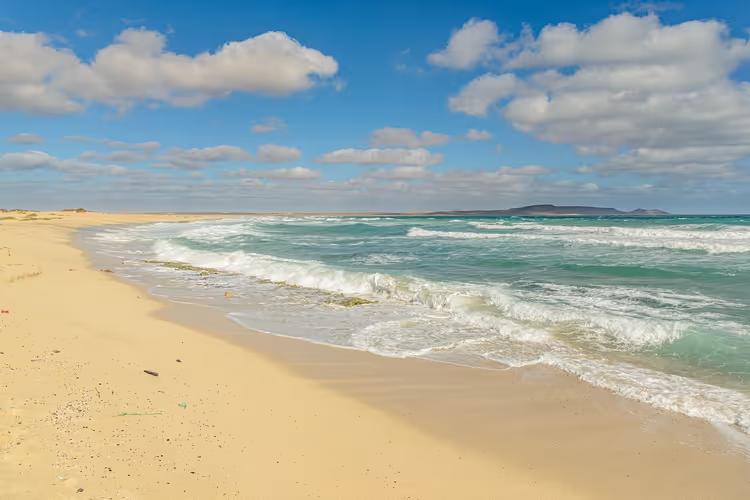
Where to stay in Cape Verde in 2026: islands, beaches and hikes
Choosing the right island in Cape Verde matters more than choosing the right hotel. A beach on Sal and a hike into the crater on Fogo are two completely different vacations, and they call for different places to stay.
It's easy to get it wrong. Pick the wrong island, and you'll spend every day crossing the archipelago by plane or ferry.
Below we break down the islands of Cape Verde: where exactly to book your stay, in which area, and on what budget. We've also added practical notes on flights, visas, and climate. We checked entry rules and weather against official sources in September 2026.
Ad: this article contains affiliate links, we earn a commission if you book through them, at no extra cost to you.
How to choose an island and hotel in Cape Verde
💡 In short:
- First, decide on the type of trip: beach, hiking, surfing, or city life.
- Then pick an area within the island: a resort town, the capital, or a mountain valley.
- Visa, safety, and health: 09/2026, verified on the German Foreign Office website.
Cape Verde stretches across ten islands in the Atlantic, roughly six hundred kilometers off the coast of West Africa. Locals divide the archipelago into windward and leeward groups. That division explains a lot about the logistics of a trip.
Before booking, figure out how many days you have and whether you're willing to take domestic flights. That determines whether to stick to one island or combine two.
One island usually takes about a week. In that time you can both relax on the beach and go on an excursion. Two islands in the same period give you more variety, but half the vacation will go to transit.
The island also depends on the season. In winter, the south and the beach islands are calmer. For hiking, the months from November through June work well, while August through October brings rain.
Book coastal hotels in advance. In high season, beachfront rooms sell out months ahead, especially on Sal and Boa Vista.
The islands differ from each other far more than the map suggests. Sal and Boa Vista are flat: sand, dunes, and wind all year round. Santo Antão, Brava, São Nicolau, and Fogo are mountainous, with green valleys and volcanoes. Maio is almost empty. Mindelo on São Vicente and Praia on Santiago offer city life with music and markets.
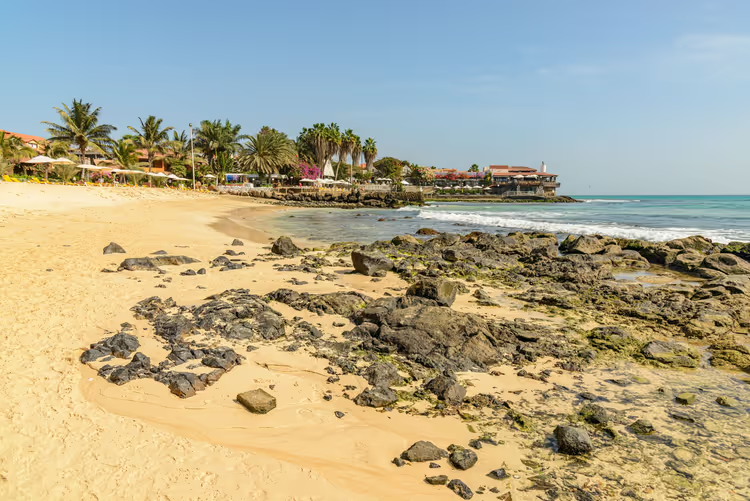
The fastest way to choose is the table below. It shows who each island is for.
Island | Who it's for |
|---|---|
Sal | those who want beach, surfing, and all-inclusive hotels |
Boa Vista | families and those coming for dunes and turtles |
São Vicente | music lovers, city lovers, and windsurfers |
Santo Antão | those heading to the mountains and staying overnight in valleys |
São Nicolau | those looking for quiet and easy trails |
Fogo | those who want a volcano, coffee, and local wine |
Brava | those who love green valleys and small villages |
Maio | those who want empty beaches and diving |
Santiago | those who need city life and history |
Santa Luzia | no one: the island is uninhabited |
Four islands receive international flights: Sal, Boa Vista, São Vicente, and Santiago. The country's largest airport is on Sal. Its runway is 3,000 m long, and the apron can hold up to 10 aircraft at once (as of 09/2026, airport operator). Santo Antão and Brava have no airport at all. Santo Antão is reached by ferry from Mindelo, Brava from São Filipe on Fogo.
If you're flying to one island and don't want connections, choose Sal or Boa Vista. For a combination of two or three islands, plan domestic flights in advance. Local flights fill up quickly in high season.
The map shows how close the islands are to each other. A flight between neighboring islands takes under an hour. Ferries don't run every day, so build your route around one or two flights.
How to get there, when to go, and what to prepare
The easiest way to reach Cape Verde is via Sal or Boa Vista. Direct flights from Europe serve both airports, with connections usually through Lisbon. Schedules and prices are easy to compare on Kiwi.com.
From the airport you can get to your hotel by taxi or with a pre-booked transfer. On Sal, the drive from the airport to Santa Maria is short, about twenty minutes.
EU and Swiss citizens don't need a visa for stays of up to 30 days. But complete the EASE online registration in advance and pay the TSA airport fee. Before buying tickets, check entry rules and health recommendations: 09/2026, verified on the official German Foreign Office website.
The best time for the beach here is November through March. Air temperatures in those months reach 23-28 °C, and the water stays above 20 °C (as of 09/2026, reise-klima.de). For hiking, the season is wider, from November through June (per TUI, 09/2026). August through October brings rain, and the mountainous islands get humid.
Pack light: T-shirts, shorts, a hat, and swimwear. For the mountains, bring trekking boots and a windbreaker; it gets cool at altitude at night.
The sun here is strong even on a cloudy day. Bring high-SPF sunscreen from Europe; the selection on the islands is smaller and more expensive. A light rain jacket is also worth putting in your backpack.
Sort out connectivity separately. Internet is easier to get through a pre-arranged eSIM than through roaming.
Think through logistics within the archipelago in advance. Small planes fly between the islands, and ferries connect São Vicente with Santo Antão and São Nicolau, and Fogo with Brava. Ferries run on a schedule, and sailings get canceled in bad weather.
For a short trip, one or two flights will be enough. A route through five islands in a week turns into a scramble, and you'll have no time left for the beach.
On the islands, you pay in Cape Verdean escudos. Euros are accepted in hotels and tourist areas, but it's easier to get change in the local currency. Carry cash in small bills: villages have no ATMs, and cards aren't accepted everywhere.
The official language here is Portuguese, and islanders speak Kriolu among themselves. In small villages, English may not be enough, so a few Portuguese phrases will help.
It's better not to drink tap water; buy bottled. Arrange medical insurance in advance: the islands have clinics, but complex cases are taken to larger cities.
Traffic drives on the right here. Roads are narrow, mountain sections wind, and there's almost no lighting outside towns. It's best not to drive around the islands at night.
Taxis exist on all inhabited islands, but meters are rare. Agree on the price before the trip.
Renting a car is useful on Santo Antão, Fogo, and Santiago: points of interest are scattered across the island, and buses run infrequently.
Food on the trip revolves around fish, corn, and beans. Lunch at a local eatery costs less than dinner at a hotel, and markets are where you buy fruit. On Sal and Boa Vista almost nothing grows locally; everything is brought in from other islands.
Seasonality also affects prices. From November through March, hotels on the beach islands get more expensive; in summer, discounts appear and more rooms are available.
If you're traveling in winter, build in a one-day buffer for flights. Atlantic weather changes fast, and connections sometimes fall through.
If you don't want to drive, book transfers between the airport and the hotel, and parking won't be an issue.
Where to stay on Sal and Boa Vista for a beach vacation
Sal and Boa Vista carry the entire beach vacation scene of the archipelago. Temperatures here stay steady year-round, and in winter people fly in from gray Europe chasing the sun. Both islands receive international flights, so you can get to your hotel without any transfers.
The beaches here are long and open to the ocean. Waves can be strong, especially on the eastern coast of Boa Vista, where tourists rarely go.
Sal
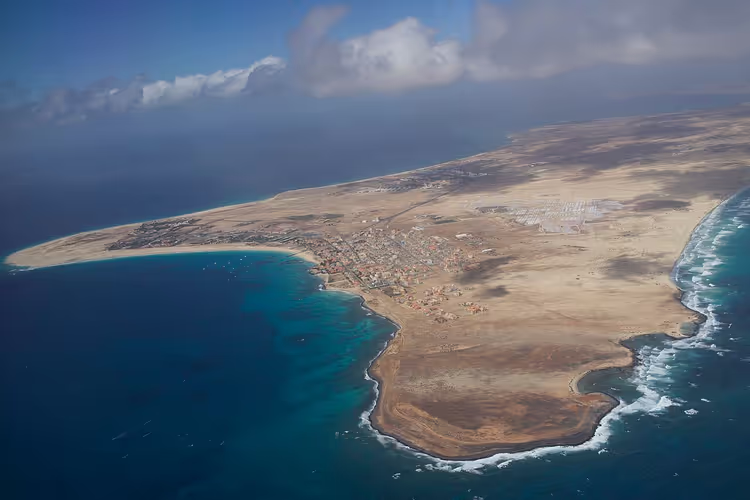
Sal is known for its clear water and golden sand. The island's tourist life is centered in Santa Maria in the south: hotels, restaurants, bars, shops. The capital, Espargos, sits inland, in the middle of a scorched plateau, and doesn't feel much like a resort.
Santa Maria is dominated by large resorts, African shows, and Italian gelato. You'll barely see the daily life of locals here. But the island has preserved the Pedro Luma salt flats, a reminder of the industry that once fed Sal. The island is small, and you can drive across it in half an hour.
In the evening, life moves to the bars of Santa Maria. During the day, the island revolves around the beach and the wind.
 © Martikkk · CC BY-SAPhoto: Martikkk, CC BY-SA (https://creativecommons.org/licenses/by-sa/3.0), Wikimedia Commons
Accommodation on Sal is easy to choose by segment. Below are the island's hotels by category.
Segment | Hotels |
|---|---|
Budget | Ouril Pontao Hotel, Hotel MiraBela (Les Alizés), Sakaroule B&B, Aparthotel Santa Maria Beach |
Mid-range | Hotel LIVVO Budha Beach, Odjo d'Agua Hotel, Agua Hotels Sal Vila Verde, Hotel Morabeza |
For families | Branco Suites, Sobrado Boutique Hotel, Angulo House |
Unique | Ocean Suites |
Luxury | Hilton Cabo Verde Sal Resort, Oasis Salinas Sea, Melia Dunas Beach Resort & Spa, Melia Llana Beach Resort & Spa, Melia Tortuga Beach Resort & Spa |
If you want the beach right outside your window, look at the south of the island. Santa Maria sits directly on the shore, and most hotels are a few minutes' walk from the water. Compare hotels on Sal on Trip.com.
Boa Vista
Boa Vista is larger and drier than Sal. The island is flat, covered in dunes, and beaches stretch along almost the entire coastline. Parts of the shore are empty, with no paved roads leading to them.
Loggerhead turtles nest here. The nesting season falls in summer and autumn, and the Turtle Foundation operates on the island. The wind on Boa Vista is consistent, so people also come here for windsurfing.
The island is known for its pottery. Like on Sal, most food is brought in from other islands, so dinner at your hotel is usually a better deal than going out to restaurants.
 © Reino Baptista · CC BY-SAPhoto: Reino Baptista, CC BY-SA (https://creativecommons.org/licenses/by-sa/4.0), Wikimedia Commons
There are fewer hotels on Boa Vista than on Sal, but you still have options across budgets.
Segment | Hotels |
|---|---|
Budget | Casa Sara Boavista, Ca Madeira Deluxe, B&B Salinas Boa Vista |
Mid-range | Hotel Dunas Ilha da Boavista, B&B Sereia Azul Boa Vista, Cala Da Lua Apartments, Nos Kasa, Terra Kriola |
For families | Hotel Riu Karamboa, Ouril Hotel Agueda |
Luxury | VOI Praia de Chaves Resort, Hotel Riu Palace Boavista, Hotel Riu Touareg |
Resorts are mostly lined up along Praia de Chaves beach and near Sal Rei. If you're traveling with kids, pick a hotel with its own grounds: the nearest village can be far away, and taxis on the island are scarce.
The difference between Sal and Boa Vista shows in the details. On Sal, everything is pulled toward Santa Maria: shops, bars, gear rental, and most hotels sit in one village. The island is compact, and you can circle it in a day.
On Boa Vista, hotels are more spread out. Some are in Sal Rei, others stretch along Praia de Chaves, and without a car you're tied to your own beach. But there's more empty shoreline here.
There's almost no fresh water on these islands. It's produced by desalination, and food is brought in from other islands, so prices in shops are higher than on the mountainous islands.
If you want to see local life, leave the resort zone. On Sal, people go to Espargos and the salt flats for that; on Boa Vista, to the villages inland. An island tour usually takes half a day.
For a short trip of three or four days, choose Sal. There are more accommodation options there, and distances are shorter.
Sal is noisy in the evening: the bars of Santa Maria stay open late. On Boa Vista, things get quiet by evening, which appeals to those seeking peace.
Swim only where lifeguards are on duty. The ocean here is open, and waves can be strong even on a calm day.
The sun is harsh year-round, and there's little shade on the beaches. Bring a hat and water every time you leave the hotel.
With kids, the south of Sal is more convenient: the water entry is gentle, and infrastructure is nearby. On Boa Vista, choose a hotel with a pool and meals, because you'll have to drive to reach any cafe.
Plan dinner in advance. At night, life only happens in Santa Maria and Sal Rei; everywhere else is dark and empty.
For cheap accommodation on both islands, look away from the resort zone. In the villages, locals rent out rooms, and prices are lower there.
Where to stay for hiking: Santo Antão, Brava and São Nicolau
 © Franzfoto · CC BY-SAPhoto: Franzfoto, CC BY-SA (https://creativecommons.org/licenses/by-sa/3.0), Wikimedia Commons
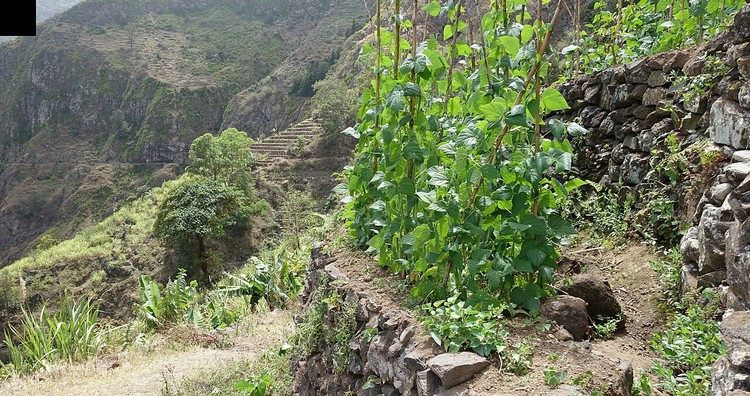
Cape Verde is rarely seen as a hiking country. Yet the name Verde means "green". The western islands have trails through craters, ridges and valleys, and their beauty is on par with the Alps.
Don't pick Sal or Boa Vista for hiking: they're flat. The routes are concentrated on three islands. Santo Antão, Brava and São Nicolau are covered in greenery and look straight out at the Atlantic.
Santo Antão
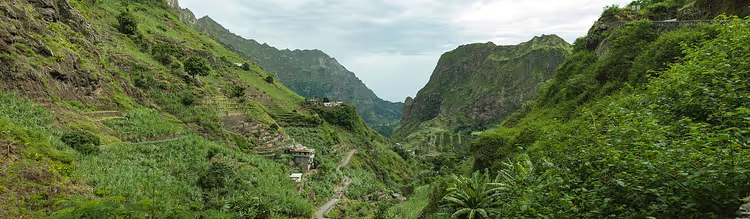
Santo Antão tops the list of hiking islands. It has high ridges, deep valleys and fertile land, which is why it's called the garden of the archipelago. Mangoes, bananas, papayas and potatoes are shipped from here to the other islands.
The island has no airport of its own. You can only get here by ferry from Mindelo on São Vicente. The eastern part of the island is rocky and rugged, while the west is gentler and has beaches.
Swimming on the eastern coast is dangerous. The tides and currents there are strong. Plan for at least two days, otherwise you won't even manage two trails.
 © As3.1415rin · CC BY-SAPhoto: As3.1415rin, CC BY-SA (https://creativecommons.org/licenses/by-sa/3.0), Wikimedia Commons
Accommodation here is usually a guesthouse in a valley. The hotel category matters less than being located at the start of a trail.
Segment | Hotels |
|---|---|
Budget | Black Mamba, Chez Sandro, Oasis Paul Residencial |
Mid-range | Casa Cavoquinho, B&B Coração Ponta do Sol, Aldeia Jerome |
For families | Pousada Green, Ribeira Grande Country House, Palmeira Da Cruz EcoLodge |
Unique | Biosfera Amor do Dia, Casa xoxo, Questel BronQ |
Luxury | Tiduca Hotel, Casa Santa Barbara Deluxe, Tienne del Mar |
The roads on the island are narrow and winding. Having your own car gives you the freedom to reach the start of a route, and you can book one in advance through DiscoverCars. Leave the car at the guesthouse, as there's almost no parking near the trails.
Brava
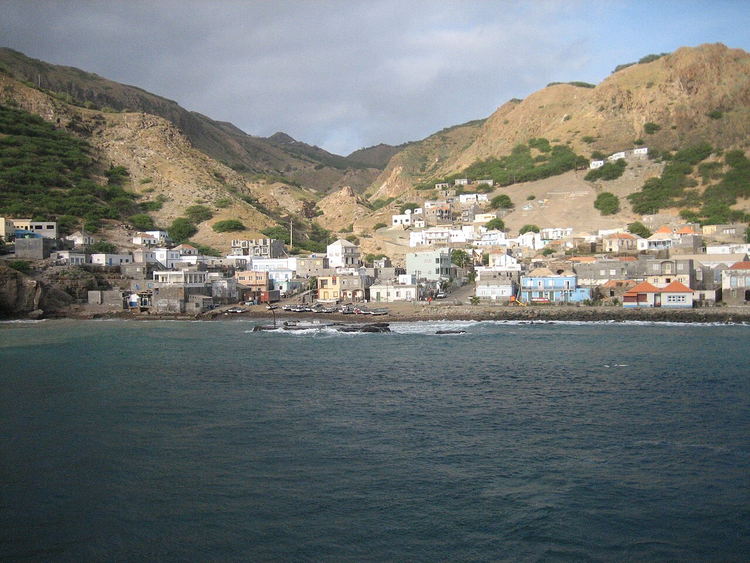
Brava, the smallest inhabited island in the archipelago, lies next to Fogo. It's considered the greenest in the leeward group, and it also has no airport.
There are few tourists, and that's a chance to live alongside locals. The main towns, Vila Nova Sintra and Furnas, sit high up. Furnas lies right inside a crater.
The climate on Brava is wetter and milder than on the neighboring islands. That's why it's called the island of flowers. Fruit trees grow in the bay of Fajã d'Água, and trails start right at the towns.
The choice of accommodation is small, but prices are lower than on the resort islands.
Segment | Hotels |
|---|---|
Budget | Hotel Pousada Nova Sintra-Brava, Djabraba's Eco-Lodge, Hotel 3M Tours |
Luxury | Hotel Cruz Grande Brava, Residensia Ka Denxu |
Book in advance. In high season, there are almost no available rooms left on Brava.
São Nicolau
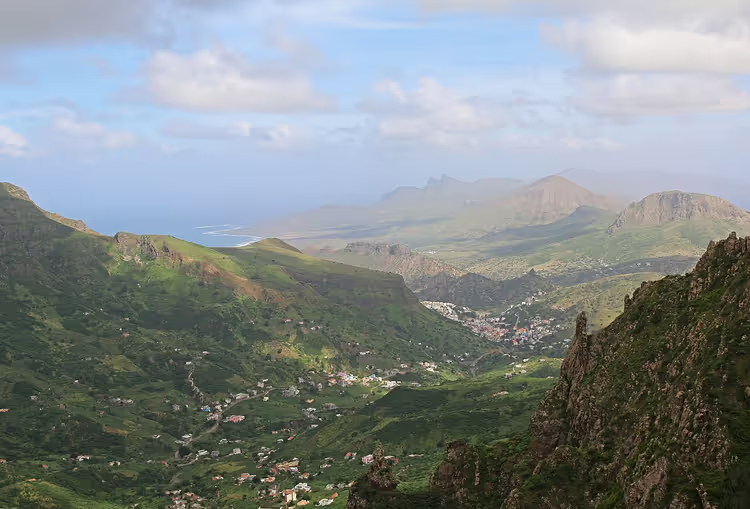
São Nicolau is called the second green island of the windward group. It's less populated than Santo Antão and receives fewer tourists. But it has long, empty beaches.
 © Christof46 · CC BY-SAPhoto: Christof46, CC BY-SA (https://creativecommons.org/licenses/by-sa/4.0), Wikimedia Commons
You can get there by ferry or plane. The land is fertile, with coffee and sugar plantations, bananas and papayas all around.
Most of the trails run through Monte Gordo Natural Park. Don't miss Carbeirinho, a rock formation with caves carved by the wind. The cliffs here come in different colors, and nearby lie beaches with black sand.
Segment | Hotels |
|---|---|
Budget | bed & breakfast Regina, Los Cuartos Man Pretinha |
Mid-range | Pensao Natur, Bela Sombra |
For families | Zena Star |
Luxury | Casa Patio |
Book accommodation in advance. The island is small, and in season available rooms are a rarity here.
Hiking in Cape Verde doesn't require mountaineering gear. The trails run between villages, ascents alternate with descents, and you'll spend the night in guesthouses along the route.
Plan your route through valleys rather than as a loop. On Santo Antão, villages sit deep inland, and the climb takes longer than it looks on the map.
On Brava, trails start right at the towns, so long treks aren't necessary there.
Hire a guide for routes longer than one day. The trails intersect with each other, and without a map it's easy to turn into the neighboring valley.
Footwear makes a big difference. Bring trekking boots with good tread, a rain jacket and extra water. At high elevations the wind is strong, and clouds only look like they block the sun.
Light sneakers won't work in the mountains. Rocky descents are slippery, especially after rain.
Do the trails in the morning. By midday the heat builds, and the peaks get covered by clouds.
On Santo Antão the trails pass through plantations, on Fogo over volcanic ground. The weather on the route differs from the coast: valleys are warm, ridges are windy.
In the shoulder season the trails are quieter. In summer the valleys are stuffy and humid, while in winter it's cooler at higher elevations but visibility is at its best.
If you're staying at a guesthouse, ask what time dinner is served. In the villages, kitchens close early, and after sunset there may be nowhere to eat.
Allow more time for a trek than you planned. Trails here are measured not in kilometers but in hours of walking.
Northern Santo Antão: seclusion in the valleys
The northeast of Santo Antão is considered one of the most beautiful places in the entire archipelago. There are almost no large hotels here, so you'll get silence without any effort. All around are fruit trees, coffee bushes and ocean views.
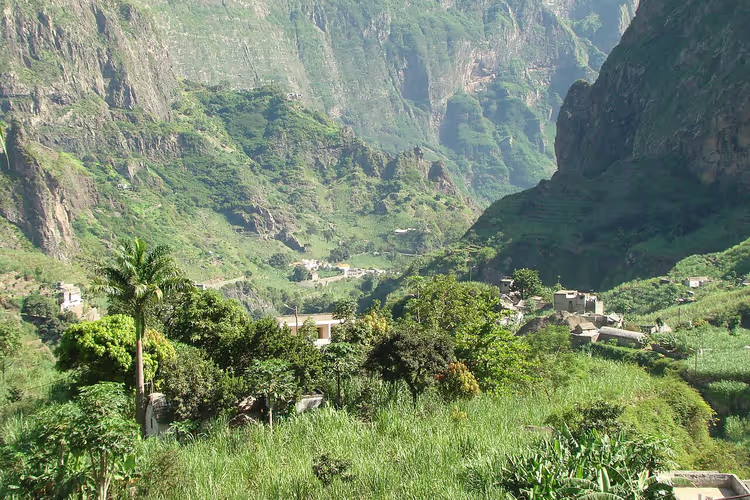 © Quiebrajano · CC BY-SAPhoto: Quiebrajano, CC BY-SA (https://creativecommons.org/licenses/by-sa/3.0), Wikimedia Commons
The road into the valleys takes time. Some villages sit so high that there's no asphalt leading to them at all, and you'll rarely meet tourists here. But that's exactly why people come: local cuisine, a slow pace and almost no crowds.
Ribeira Grande, Ponta do Sol and Cidade das Pombas have proper road access. These villages work well as a base, with trails starting there and transport to the ferry.
Accommodation | Who it's for |
|---|---|
Sissi's B&B, Misurino | budget stays and nights before trails |
Casa das Ilhas, Casa D'Mar | those heading into the mountains for several days |
For a comfortable base, look in Ponta do Sol: prices at Tiduca Hotel on Trip.com.
Fogo: staying overnight by the volcano
Fogo sits on a volcanic hotspot. The volcano here has erupted after the first settlers arrived, which can't be said of the other islands in the group. The last eruption happened more than ten years ago, but the volcano is still active.
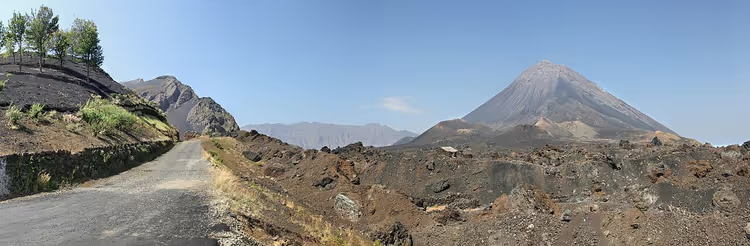 © Ximonic , Simo Räsänen · CC BY-SAPhoto: Ximonic , Simo Räsänen, CC BY-SA (https://creativecommons.org/licenses/by-sa/3.0), Wikimedia Commons
The Fogo volcano rises above the island, the highest point in the archipelago. You can only climb it with a guide. São Filipe and Mosteiros serve as bases for hiking and cycling routes across the island.
The slopes here are terraced, with Arabica coffee bushes growing on them. The local wine is considered one of the best in the country, and a bottle goes home with tourists as a souvenir.
No trip to Fogo is complete without the village of Chã das Caldeiras. It lies right inside the crater, and about a thousand people live there. The grape harvest here is especially good.
Above Mosteiros it can get cold at night. Swimming in the north of the island is only possible at La Salina; the other bays are dangerous.
The island's hotels are spread out by elevation. Some sit in the crater, others closer to the sea.
Segment | Hotels |
|---|---|
Budget | Som do Mar, Hotel Residencial Savana, Chez Albino |
In the crater | Casa Alcindo, Ciza e Rose, EcoFundo, Casa Marisa 2.0 |
Mid-range | Cruzheiro Guest House, La Fora Ecolodge, Hotel Ocean View |
For families | Tortuga B&B |
Luxury | The Colonial Guest House, Casa Colonial Koenig, Fogo Boutique Hotel |
The historic house in São Filipe is chosen by those who care about the view of the town rather than proximity to the volcano: prices at The Colonial Guest House on Trip.com.
Where to stay for water sports
Hiking on Santo Antão and Fogo pairs well with surfing and kiting on the eastern islands. The best wind blows from November through March, and these are also the months when Europeans come here to winter.
Sal: Kite Beach and Santa Maria
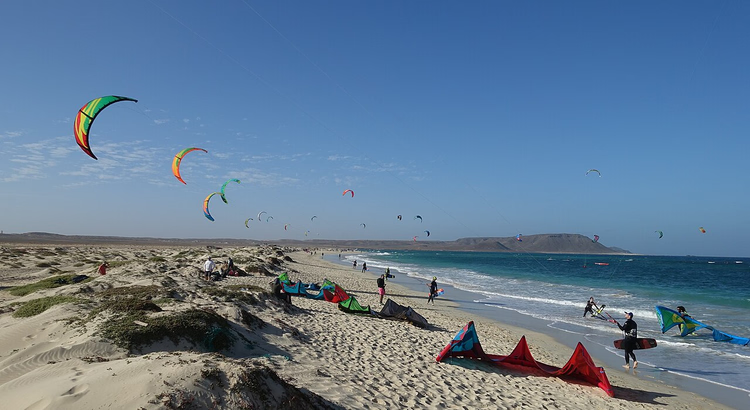 © Franzfoto · CC BY-SAPhoto: Franzfoto, CC BY-SA (https://creativecommons.org/licenses/by-sa/3.0), Wikimedia Commons
Sal holds its reputation as the kiting island. Kite Beach is a five-minute drive from Santa Maria, and athletes train here before competitions. Schools and gear rental operate out of surf hostels, and even beginners take lessons.
From November through March the wind picks up. Even if you don't ride, stop by Kite Beach to watch the tricks, the atmosphere there is relaxed. Sailing lessons are also offered in Santa Maria.
We already covered Sal accommodations above. Choose Santa Maria if you want to hit the water in the morning and walk back to your hotel in the evening.
Maio: diving without the crowds
Few people make it to Maio, and that's its advantage. The beaches here are empty, the water is clear, and the underwater fauna is untouched. For divers and windsurfers, the island offers calm water and a steady breeze.
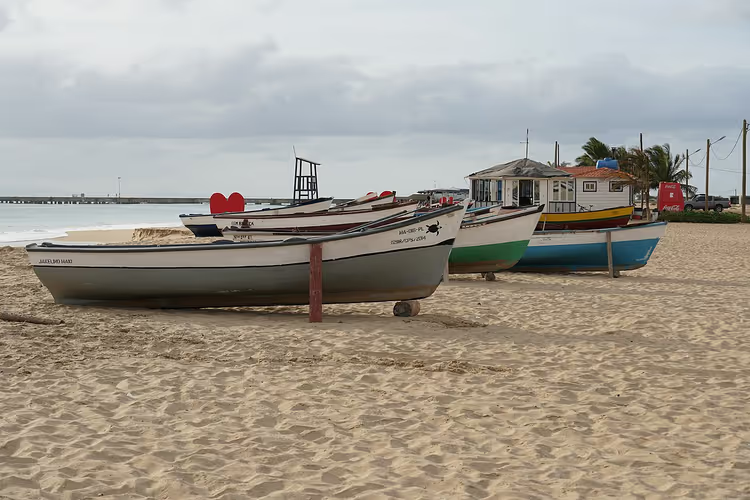 © Bmveiga · CC BY-SAPhoto: Bmveiga, CC BY-SA (https://creativecommons.org/licenses/by-sa/4.0), Wikimedia Commons
There are few hotels, so book well in advance.
Segment | Hotels |
|---|---|
Budget | BarracudaMaio, Pensaò Big Game Maio, Maio Relax |
Mid-range | Villa Maris Ecolodge, Wave Maze, Hotel AH Maio |
For families | Kaza Tropikal, Casa Djarmai |
Luxury | Torre Sabina, Maio Vacanze, Casa Evora |
São Vicente: wind in São Pedro Bay
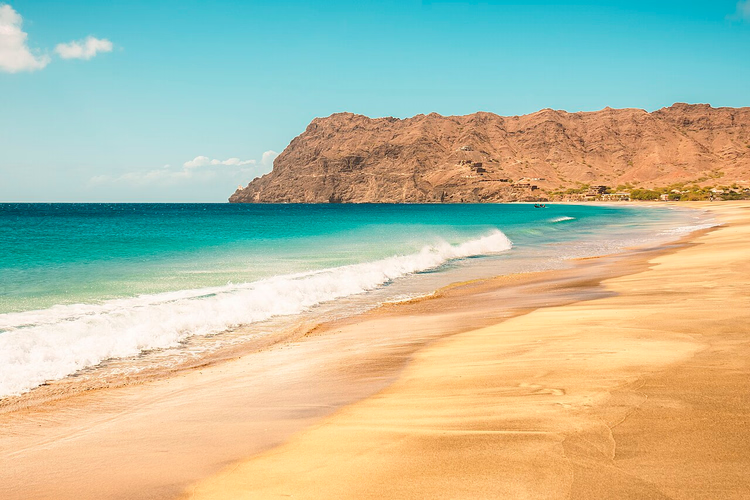
On São Vicente, the main spot is at São Pedro Beach, near Mindelo's airport. The beach is wide and almost empty, but only experienced surfers should enter the water here: the currents and tides are very strong.
Record wind gusts have been measured in São Pedro Bay. The island's other spots, Praia Grande, Salamansa, and Praia Branca, are also geared toward confident riders.
 © VanSky Studio · CC BY-SAPhoto: VanSky Studio, CC BY-SA (https://creativecommons.org/licenses/by-sa/4.0), Wikimedia Commons
Segment | Hotels |
|---|---|
Budget | Solar Windelo, Arla Residential, Residencial Monte Cara |
Mid-range | Pousada B&B Le Gourmet, Kira's Boutique Hotel, Casa Café Mindelo |
For families | Georgette, Morabeza Deluxe Sea View |
Unique | Aquiles Eco Hotel, Pont'Agua Hotel |
Luxury | Flag Hotel Foya Branca, Oasis Porto Grande, Blue Marlin Hotel, Casa Branca, Terra Lodge |
For staying near the water, Mindelo is the most convenient option: prices at Oasis Porto Grande on Trip.com.
Gear is brought to the islands from Europe, so rental costs are noticeable. If you ride regularly, bring some of your own equipment.
Beginners will find it easier to start on Sal. The water is calm, the wind is consistent, and schools operate near the hotels of Santa Maria.
Experienced riders will find São Vicente more interesting: the wind is stronger there and the shore is emptier. On Maio there are no crowds, but rental options are almost nonexistent, so look for an instructor in advance.
The wind season coincides with the high season. Book accommodations near the spots several months ahead, otherwise your hotel options will narrow.
Outside the season the water is warmer, but there may not be enough waves for kiting. Plan your trip around your skill level, not the calendar.
If you came for kiting, a hotel in Santa Maria will save you from daily driving. On São Vicente, it makes sense to stay in Mindelo and head to the bay in the morning.
Diving on Maio suits those with a certification. The fauna there is untouched, and there are few dive centers, so arrange your dives in advance.
Instructors speak English, and schools have separate groups for beginners. A group lesson costs less than a private one, but progress is slower.
The water is cooler in the morning than during the day. Bring a light wetsuit if you plan long swims.
After riding, rinse your gear with fresh water. Salt corrodes fittings and fabric, and service options on the islands are limited.
Mindelo and Praia: where to stay for the city
City life in Cape Verde happens in two places: Mindelo on São Vicente and Praia on Santiago. Music, markets, and cafés are everywhere here, while wild nature is a half-hour drive away.
 © Balou46 · CC BY-SAPhoto: Balou46, CC BY-SA (https://creativecommons.org/licenses/by-sa/4.0), Wikimedia Commons
In both cities you're never cut off from the ocean. A beach or a viewpoint overlooking the mountains is close to the center.
Mindelo, São Vicente
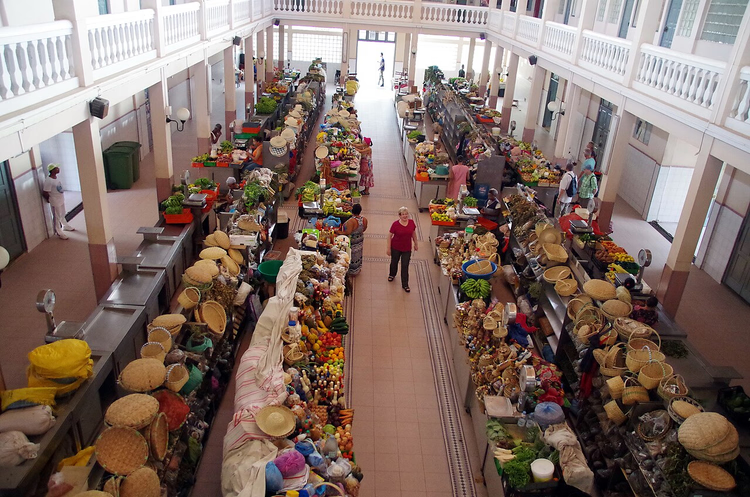
Mindelo is called the cultural capital of the archipelago. This is where Cesária Évora, the country's most famous singer, was born, and where Tito Paris, Bau, and Fantcha got their start.
Music fills the streets day and night. Bars along Avenida 5 de Julho and Rua de Lisboa host dinners with live concerts featuring morna and coladeira.
Those looking for a spot away from the tourist streets head to Livraria Nho Djunga. Local musicians sometimes drop in unannounced.
During the day, visitors check out the Praça d'Estrela market and the old fish market. Praia Laginha beach, with its bright blue water, is perfect for a lazy day by the sea.
 © Balou46 · CC BY-SAPhoto: Balou46, CC BY-SA (https://creativecommons.org/licenses/by-sa/4.0), Wikimedia Commons
Segment | Hotels |
|---|---|
Budget | Laginha Beach Guest House, Residencial Monte Cara, Simabo's Backpacker's Hostel |
Mid-range | The Don Paco Hotel, Casa Café Mindelo |
For families | Apart Hotel Avenida |
Eco | Terra Lodge, Solar Windelo, Kira's Boutique Hotel |
Luxury | Ouril Mindelo, Pombas Brancas Resort, Mansa Marina Hotel, Oasis Porto Grande |
Laginha Beach Guest House sits right by the beach, and Oasis Porto Grande overlooks the port. If you came for the music, look for a place between the center and Laginha.
Praia, Santiago
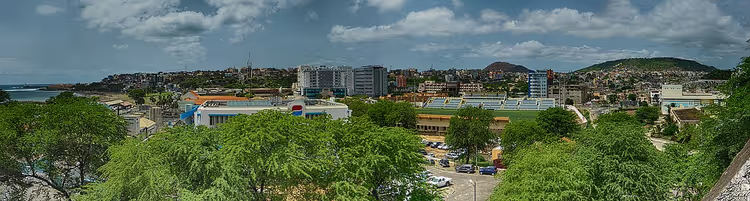
Praia hosts the country's government and moves faster than the rest of the archipelago's cities. Houses in the center have numbers, while on the outskirts there are almost no addresses. The historic Plateau district serves as a landmark: people drink coffee in bars, stroll, and visit markets here.
Among the sights worth seeing are the city hall, the Supreme Court, the cathedral, Praça Alexandre Albuquerque, and the Palácio da Assembleia.
There are three beaches within the city limits: Gamboa, Praia Negra, and Quebra Canela. Swimming isn't possible everywhere; Gamboa is not suitable for it.
Praia is larger than the other cities, and the crime rate is higher here. In the evening, don't stray far from the center and don't flash expensive items. The staircase from Achada Santo António to Plateau is considered unsafe even during the day.
 © Reino Baptista · CC BY-SAPhoto: Reino Baptista, CC BY-SA (https://creativecommons.org/licenses/by-sa/4.0), Wikimedia Commons
Segment | Hotels |
|---|---|
Budget | LT Aparthotel, Aparthotel Praiano, Casa Sodadi |
Mid-range | Hotel Cesaria, Casa Privada Plateau, Sol Hotel, Kazarao di Mavete |
For families | Pestana Tropico, OASIS Praiamar |
By the sea | King Fisher Village (Tarrafal), Kama Ku Kafé (Cidade Velha) |
Luxury | Hotel Peróla, Hotel Vip Praia |
Beach options are found outside the capital: King Fisher Village is in Tarrafal, and Kama Ku Kafé is in the old capital of Cidade Velha. For the city, choose Plateau, where everything is within walking distance: prices at Oasis Praiamar on Trip.com.
Sal and Boa Vista: all-inclusive vacations
Many people come to Cape Verde for a worry-free vacation. The easiest option is to book an all-inclusive hotel, where meals, drinks, and entertainment are all taken care of for you.
 © Reino Baptista · CC BY-SAPhoto: Reino Baptista, CC BY-SA (https://creativecommons.org/licenses/by-sa/4.0), Wikimedia Commons
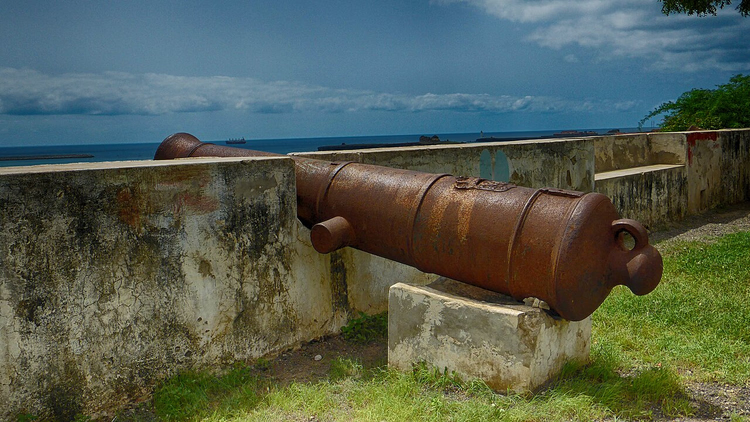
Hotels like this exist only on two islands, Sal and Boa Vista. Both sit on beaches and work well for a lazy week by the water.
The catch is simple: you barely cross paths with local life. If you want to see the country, step outside the hotel grounds and walk through the villages.
Support locals while you're on the island. Shop at small stores, book tours with local companies, and don't disturb the turtle associations on Sal and Boa Vista.
All-inclusive hotels on Sal:
- Meliá Tortuga Beach Resort & Spa
- Oasis Belorizonte
- Hotel Riu Funana
- Hotel Riu Cabo Verde
- Meliá Llana Beach Resort & Spa
- Sol Dunas
All-inclusive hotels on Boa Vista:
- VOI Praia de Chaves Resort
- Royal Horizons Boa Vista
- Hotel Riu Touareg
Resorts on Boa Vista are larger and farther apart than on Sal. If you're traveling with a group, pick one big hotel: Hotel Riu Touareg prices on Trip.com.
Find hotels in Sal
Compare prices across booking sites and filter for rooms with free cancellation.
Compare prices on Trip.comThe widget loads once you give your consent.
⁉️🤔 Frequently asked questions
When is the best time to go to Cape Verde for the beach?
Beach season here runs from November through March: the air warms up to 23-28 °C, and the water stays above 20 °C (As of 09/2026, reise-klima.de). Rain falls most often from August through October. For hiking, the season is wider, from November through June, but in winter the high islands can be windy.
How many islands are in Cape Verde and where do direct flights go?
The archipelago consists of 10 islands (As of 09/2026, German Foreign Office information). International flights arrive at Sal, Boa Vista, São Vicente, and Santiago. Santo Antão and Brava have no airport, so you get there by ferry. For a first trip, people usually choose Sal or Boa Vista.
Which island to choose for the beach, and which for hiking?
For the beach, go to Sal, Boa Vista, or Maio. For hiking, Santo Antão, São Nicolau, and Brava work well, and on Fogo you climb to the crater with a guide. Surfing and kiting await you on Sal and São Vicente, and city life is concentrated in Mindelo and Praia.
How do you get around between the islands?
Small planes fly between the islands, and ferries connect São Vicente with Santo Antão and São Nicolau, and Fogo with Brava. Buy plane and ferry tickets in advance, especially in winter, when wind disrupts schedules. A route with two islands takes less time than one with five.
What currency is used on the islands and do you need cash?
On the islands, people pay in Cape Verdean escudos. Euros are accepted in hotels and tourist areas, but the exchange rate can be poor, so larger purchases are easier to pay for by card. In villages and at markets you need cash, and ATMs are only found in cities.
Can you drink tap water?
Tap water is not safe to drink, so buy bottled water. On Sal and Boa Vista, fresh water comes from desalination, so bring a supply of water with you for the whole day. In restaurants, ask for water in a sealed bottle, and it's better to skip ice in drinks.
Do you need a visa and is it safe to travel to Cape Verde?
EU and Swiss citizens do not need a visa for stays of up to 30 days. Check entry rules and health recommendations before your trip on the German Foreign Office page. In cities, take the usual precautions: in Praia in the evening, stay in the center and don't show expensive items.
Where to stay with children?
Families have it easiest on Sal and Boa Vista: a short flight, stable weather, and hotels with their own grounds. On Sal, choose Santa Maria; on Boa Vista, look at complexes along Praia de Chaves beach. For teenagers, add a day of kiting at Kite Beach.
In short: what's worth booking
If you have a week and only want the beach, choose Sal or Boa Vista. If hiking is in your plans, Santo Antão will be your base, with a ferry from Mindelo. For a city, Mindelo works well; for a volcano and wine, Fogo. With children, Sal is more convenient; for diving and quiet, people head to Maio.
If you have | Choose |
|---|---|
a week and the beach | Sal or Boa Vista |
hiking | Santo Antão, Brava, or São Nicolau |
surfing and kiting | Sal or São Vicente |
city and music | Mindelo or Praia |
volcano and wine | Fogo |
diving and quiet | Maio |
Compare hotels on Trip.com and compare insurance terms before buying tickets.

A small editorial team writing guides for independent travel. We travel ourselves, but we haven’t been everywhere, so we check prices, opening hours and how to get there against official sources.