















 AIIllustrative image: AI-generated
When to go to Lisbon: weather by month and seasons
Planning a trip to Lisbon and not sure when to book? The city on the Atlantic welcomes visitors year-round, but the difference between July and December is noticeable. In August the daytime average is 28 °C, while in January the temperature drops to 8 °C at night (as of 1992-2021, timeanddate).
The short answer to your question: the best time to visit Lisbon is May, June, and September. It's warm then, but without the August heat and lines, and prices stay in the mid range. For the beach, go from June through September; for savings, from November through February.
Below we break down the weather by month and season. You'll see when Lisbon is dry and sunny, when it rains, and which months are the cheapest for a trip.
Ad: this article contains affiliate links, we earn a commission if you book through them, at no extra cost to you.

When to go to Lisbon: the essentials
💡 In short:
- Best time for the city and walking around: May, June, and September.
- Beach season: June through September, with the warmest water in August.
- Lowest prices: November through February, but it often rains.
Lisbon doesn't split the year into "season" and "off-season" as sharply as southern Spain does. In winter you can walk around without a hat, and in summer you won't swelter: the ocean moderates the temperature. Below we'll go through each season separately so you can pick dates that fit your plans.
Lisbon weather by month
Averages for 1992-2021 show a mild climate without sharp swings. The data comes from the weather station at Lisbon Airport, located 5 km from the center (timeanddate summary).
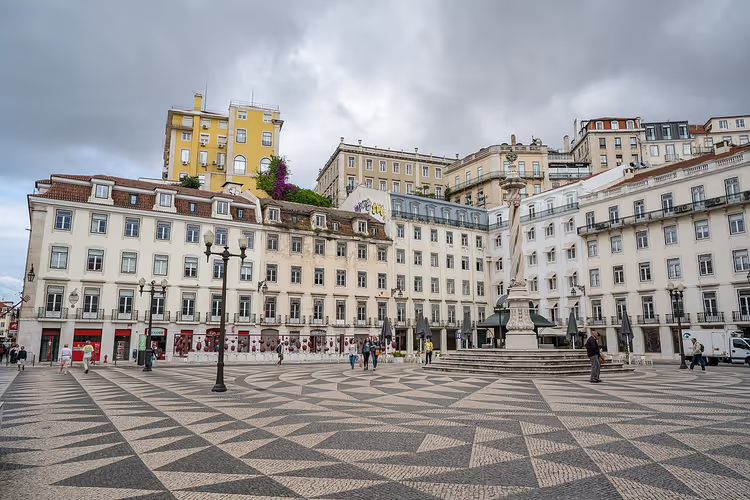 © Nan Palmero from San Antonio, TX, USA · CC BYPhoto: Nan Palmero from San Antonio, TX, USA, CC BY (https://creativecommons.org/licenses/by/2.0), Wikimedia Commons
Month | Daytime, °C | Nighttime, °C | Precipitation, mm |
|---|---|---|---|
January | 15 | 8 | 70 |
February | 16 | 9 | 50 |
March | 18 | 11 | 46 |
April | 20 | 12 | 50 |
May | 22 | 14 | 40 |
June | 26 | 16 | 9 |
July | 28 | 18 | 2 |
August | 28 | 18 | 9 |
September | 26 | 17 | 27 |
October | 23 | 15 | 70 |
November | 18 | 11 | 78 |
December | 15 | 9 | 86 |
July and August are the warmest: daytime averages 28 °C, nighttime around 18 °C. January is the coldest, with an average temperature of 11 °C (as of 1992-2021, weather archive).
Humidity in Lisbon is high year-round, so winter cold feels stronger than the thermometer shows, while summer heat is easier to handle. July is the windiest month, but it's exactly that ocean wind that keeps the city from feeling stuffy.
Summer: June, July, August
In summer Lisbon fills with tourists, and you can feel it at the main sights. From June through August the daytime average is 26-28 °C, nighttime around 16-18 °C (Lisbon climate).
The heat is easier to take than in Madrid: the evening Atlantic breeze brings the temperature down, and the summer thunderstorms common in Germany are almost nonexistent here. During occasional hot spells the air warms well above normal, so at midday it's better to take cover in the shade or in a museum.
The catch of the season is high demand. In July and August prices for accommodation and tickets peak, so book early. One more detail: in August some locals go on vacation, and the city outside the tourist districts gets quieter.
Beaches near Lisbon are in full swing in summer. If you want to combine sightseeing with the sea, June and July work best: the air isn't as scorching as in August.
Fall: September, October, November
Many people consider September the best time to visit. In September and October the daytime temperature is 23-26 °C, and lines at sights are shorter than at the height of summer (weather station data). September has little rain, but October already brings around 70 mm.
In the Baixa, Bairro Alto, and Alfama neighborhoods the evenings are lively: bars, restaurants, and street musicians are out. It's a good time for long walks, because it's still warm during the day and the sun is no longer as harsh.
From late October the weather gets worse. In November there is about 78 mm of precipitation, and daytime highs are only 18 °C (as of 1992-2021, timeanddate). This is one of the two rainiest months of the year, so bring a raincoat and waterproof shoes.
Fall suits those who want to see the city without the heat and crowds. For a first visit, the best fall month is September. There is little rain at that time, and the days are usually sunny.
Winter: December, January, February
Winter in Lisbon is damp and cool. Average daytime temperatures stay around 15 °C, dropping to 8-9 °C at night (timeanddate).
The main feature of winter is the damp cold. Portuguese homes often lack proper heating, so a warm sweater and thermal underwear are not a bad idea. If you handle dampness poorly, bring extra warm clothes.
The shortest day of the year is December 21, with 9 hours and 27 minutes of daylight and sunset around 5:15 PM (as of 12/2026, sunrise and sunset times).
Who it's for: those who have already seen the city in summer or are hunting for cheap tickets. Accommodation and flights cost the least in winter. Not for: a first trip in pursuit of sun. The weather is changeable: one week can be sunny, the next rainy. That said, Lisbon's food and atmosphere make the trip worthwhile in any month.
Spring: March, April, May
 © Dudva · CC BY-SAPhoto: Dudva, CC BY-SA (https://creativecommons.org/licenses/by-sa/4.0), Wikimedia Commons
In spring, rain showers become shorter and less frequent, usually ending within an hour. Temperatures rise quickly: in March the daytime average is 18 °C, in April 20 °C, in May 22 °C (as of 1992-2021, timeanddate).
May offers a good compromise: warm, but no lines yet, and cafes and terraces are already open outdoors. For a trip with kids or a relaxed vacation, this is one of the most convenient months.
The catch of spring: changeability. One day can feel like summer, the next can be cool and windy. Bring layers and a light jacket, and the weather won't ruin your plans.
If you're going for the beach, late May already works: daytime highs are 22 °C, but the ocean water is still brisk.
How many days you need in Lisbon
Two days are enough to get to know the historic center. You'll have time to walk through the Baixa, Alfama, and Bairro Alto neighborhoods, go up to the viewpoints, and have a relaxed lunch without rushing.
With three days, you can add a walk along the river and a day trip outside the city. This pace works if you don't want to race through the city.
Lisbon sits on hills, so pace yourself. Comfortable shoes matter more than a packed list of sights: climbs and stairs are everywhere.
Plan it like this: day one for the center, day two for the riverside neighborhoods, day three for a day trip. If you have only one day, choose the center and an evening walk along the waterfront. That way you'll see the main sights without exhausting yourself.
Tours and walks in Lisbon
The city looks great from the water. A boat trip on the Tagus shows Lisbon from an unexpected angle, and evening cruises line up with the sunset.
Day trips are also popular: it's easy to get out of the city to the ocean or to nearby towns. Choose the format and length based on the weather and your own pace.
Tours and guided walks are easy to browse in advance: find tours on GetYourGuide. That way you'll see the price and available slots before your trip.
In rainy months, book tours with last-day cancellation. The weather in Lisbon changes quickly, and that flexibility can save your day.
⁉️🤔 Frequently asked questions
When is the warmest month in Lisbon?
August, with an average temperature of 23 °C and daytime highs around 28 °C (as of 1992-2021, summer month data). The heat is strongest in July and August. If you don't handle heat well, choose June or September: daytime highs around 26 °C and fewer crowds.
Which month is the rainiest in Lisbon?
December, with about 86 mm of precipitation, followed by November at 78 mm (precipitation data). In summer there's almost no rain: July gets just 2 mm. If you're traveling in November, plan for a couple of wet days.
Can you swim in Lisbon?
Yes, beach season runs from June through September, and the ocean warms up by late July. The Atlantic is cooler than the Mediterranean, so many people only go in briefly. In the off-season, only the hardy swim, as the water stays cold.
When should you go if you want it cheaper?
The cheapest time is November through February: demand for accommodation and flights is at its lowest, and prices are noticeably lower than in summer. The weather, however, is unpredictable, often damp and chilly. A compromise: early November or late March, when prices have already dropped but days can still be sunny.
Does it ever snow in Lisbon?
Snow is practically unheard of in the city: nighttime winter temperatures drop to 8-9 °C (timeanddate). The main challenge isn't frost, it's the damp cold and weak heating in old buildings. So warm clothing is a must in winter.
In short: what to book
Three scenarios to help you pick dates faster:
- If it's your first trip and you want sun: go for May, June, or September.
- If budget matters more than weather: look at November and February.
- If you're going for the beach: July and August, but book accommodation early.
It's best to book Lisbon accommodation in advance: see Lisbon hotels on Trip.com.

A small editorial team writing guides for independent travel. We travel ourselves, but we haven’t been everywhere, so we check prices, opening hours and how to get there against official sources.