












When to go to Sri Lanka: seasons, monsoons and weather by region
Sri Lanka lies near the equator, and there is no single season for the whole island here. While the west coast is getting drenched, the east enjoys dry, sunny weather. So the travel dates are chosen based on the route, not the country as a whole.
Two monsoons divide the island into two climate zones. The southwest Yala monsoon brings rain from May to September to the west and south coasts, as well as the central highlands. The reverse northeast Maha monsoon drenches the east and north from October to January. Between these seasons, the island lives in a transitional mode.
We have broken down by region when to go and when it is better to wait out the bad weather on the other side of the island. The rule of thumb is simple: the south and west stay dry from December to April, the east and north from May to September, and the highlands and the Cultural Triangle get rain year-round (as of 09/2026, Sri Lanka Department of Meteorology).
Ad: this article contains affiliate links, we earn a commission if you book through them, at no extra cost to you.
When is the best time to go to Sri Lanka
💡 In short:
- South and west: December to April, central highlands: January to March.
- East and north: May to September.
- The transitional months, February and March, work for a route around the whole island.
- Seasons and regions: 09/2026, verified against data from the Sri Lanka Department of Meteorology.
The short answer is this: for the south and west, take the period from mid-December to late April. For the east and north, the window shifts to mid-May and lasts until late September. In the other months, you will either get caught in the monsoon or live through short downpours between rain and sun.
May opens the big monsoon in the southwest, while for the east coast it simultaneously closes the rainy season. That is how the island's geography works: rain on one side almost always means dryness on the other. That is why on the same day the beaches of Mirissa get hit by storms while people swim in Trincomalee.
An important practical point for planning. In late December and over New Year, the south is packed to the brim and accommodation prices are at their highest. If you want it cheaper and quieter, shift your trip to February or March.
Region | Best months | Rainy season | What to keep in mind |
|---|---|---|---|
West and south coasts | December-April | May-September | peak prices and bookings around New Year |
East coast | May-September | October-January | the driest season on the island in summer |
North | May-September | October-January | quiet vacation without crowds |
Central highlands | January-March | May-December | cool nights, you need a jacket |
Cultural Triangle | March-September | short downpours year-round | rain does not follow a schedule |
The transitional months, February and March, offer a compromise for those who want to see both halves of the island. Rain comes in short bursts, not as a wall from morning to evening. We recommend keeping one buffer day in your itinerary: getting stuck on a washed-out road here is entirely possible.
Climate and weather in Sri Lanka
Sri Lanka is located close to the equator, so it has a tropical monsoon climate year-round. The difference between months is small: in the east, in Trincomalee, the average annual temperature stays around 27.6 °C, and about 1,300 mm of rain falls per year (as of 09/2026, climate-data.org). March and April are considered the hottest months, November, December and January the coolest.
On the coast and in the lowlands it is almost always hot, and daytime temperatures often climb above thirty degrees. The central highlands are cooler, and the difference is especially noticeable at night. A jacket in the highlands is not a useless item even in the dry season.
We do not recommend planning a trip based on a single forecast. The monsoon affects the island unevenly, so first decide which part of the country you want to see. Both the dates and what you pack depend on that.
The highlands and the Cultural Triangle are a separate story. Rain falls here year-round because the region receives precipitation from both monsoons. In December and January, the highlands get hit by long downpours: some national parks close due to flooding, and certain villages can only be reached by four-wheel drive. Plan extra time and do not schedule back-to-back transfers in a single day.
South and west coasts
Because of the monsoons, there is no single season for all of Sri Lanka. The southwest and northeast monsoons arrive in opposite seasons, so the conversation is always about a specific coast.
The best time for the tourist south and west falls between December and April. This is the period with maximum sun: mostly dry, almost no rain, sometimes none for several days in a row. The beaches from Mirissa to Bentota run at full capacity, and the sea is calm.
The catch of this window is predictable: late December and the New Year days are the absolute peak. Hotels in the south are packed and noticeably more expensive. The wave of tourists subsides already in January, and the high season ends by late March.
In summer, the strong southwest Yala monsoon hits the west and south coasts. The rain pours hard. But that does not mean the sky is closed all day: a downpour lasts a couple of hours, then the sun comes out again.
The practical takeaway for you: the south and west are easy to combine with the highlands in one window from January to March. If your trip falls in May-September, turn your route toward the east.
East and north coasts
The north and east of Sri Lanka offer more even temperatures and less rainfall than the rest of the country. In summer, this is the most reliable part of the island.
From October to January, the east and north coasts are best avoided. During this time, the northeast Maha monsoon rules here and it rains a lot: heaviest in November and December. You will also feel its echoes in the Cultural Triangle. Roads get flooded during this period, and national parks close.
The best time for the east and north falls between mid-May and late September. That is the dry season here: Trincomalee, Nilaveli and Pasikuda run at full capacity, and the sea is warm and calm.
In the transitional months between monsoons, the air is very humid. It is often cloudy, and short rains are possible, but they do not ruin the vacation. Take a raincoat or umbrella for the whole trip, not just for the rainy season.
May-September is also the high season in the east, so accommodation in Trincomalee is best booked in advance. The price difference compared to the south evens out for you, but the weather is more stable, and in the evening you will not have to keep checking the forecast.
Rainy season in Sri Lanka
The big monsoon arrives from May to September. In these months, the rainy season is most pronounced on the west coast, the south and the mountainous center of the island.
What this means in practice. Heavy, sometimes prolonged downpours occur, leading to flooding and road disruptions. A vacation on the southern beaches at this time is risky: rain and storms hit them. But the highlands have a milder climate, and the north and east are right in their dry season.
We recommend not canceling a trip because of the rainy season, but flipping the route. In June, July and August, move to the east: Arugam Bay, Trincomalee and the northern beaches offer sun while the south gets drenched. In December and January, the logic is reversed, and then it is better to stick to the south and west.
The second big monsoon, Maha, runs from October to January and hits the east and north. The rainiest time here is November and December. Loops around the island in these months are planned so as not to end up in the east at the very peak of rainfall.
Best time by activity
Different activities need their own windows. Below we have grouped them by activity so you can pick dates for a specific trip goal.
Whale and dolphin watching
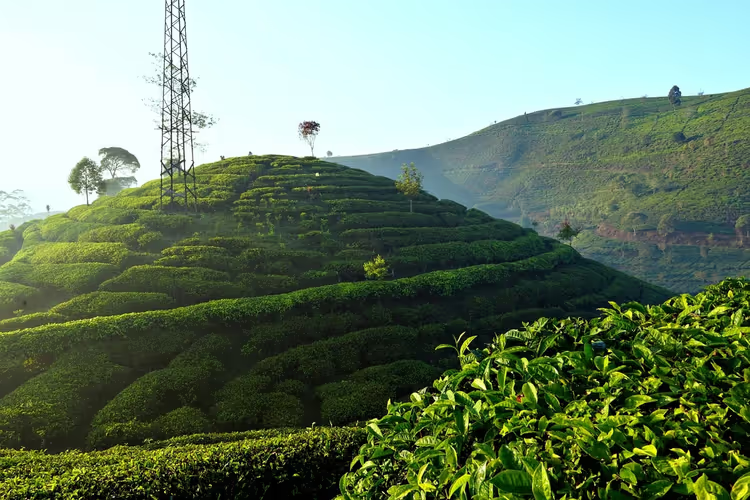
Whales and dolphins off the south coast, in Mirissa, are best seen from January to April. In the east, in Trincomalee, the whale watching season runs from June to September. In the west, in Kalpitiya, whale tours run roughly from December to mid-April (as of 09/2026, srilanka-spirit.com).
If you want to plan dates around wildlife, check available options in advance: find a whale tour on GetYourGuide. Boat departures depend on wave conditions, and some trips get rescheduled.
 © Dan Lundberg · CC BY-SAPhoto: Dan Lundberg, CC BY-SA (https://creativecommons.org/licenses/by-sa/2.0), Wikimedia Commons
Turtles and egg laying
Turtles can be seen near the shore in Rekawa, close to Tangalle, and in Kosgoda, not far from Bentota. The best time to watch egg laying is from September to March. These sites operate at night, and animals are not equally protected everywhere.
Surfing in Sri Lanka
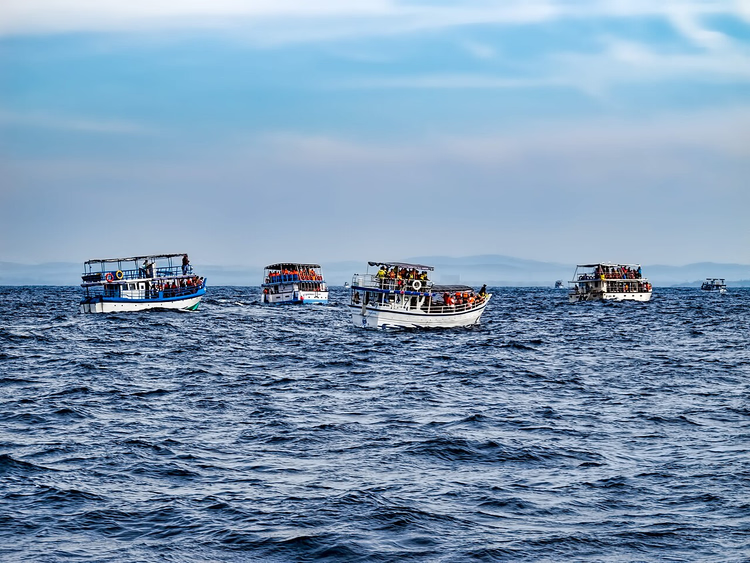
The island's main surf spot is Arugam Bay on the east coast. In the south, suitable waves are found in Weligama, Mirissa, and Ahangama. In the east, the best conditions hold from April to September; in the west and south, from October to March.
 © Kondephy · CC BY-SAPhoto: Kondephy, CC BY-SA (https://creativecommons.org/licenses/by-sa/4.0), Wikimedia Commons
Safaris and national parks
The best time for wildlife viewing is early morning or evening before dark. That is when predators are active and out hunting. For Yala, Udawalawe, and Sinharaja Forest, the months from December to May work well.
In high season, from December to February, Yala National Park is overcrowded. Lines of safari jeeps stretch out, and a dozen vehicles sit by the water. A loop through the park turns into a caravan as a result.
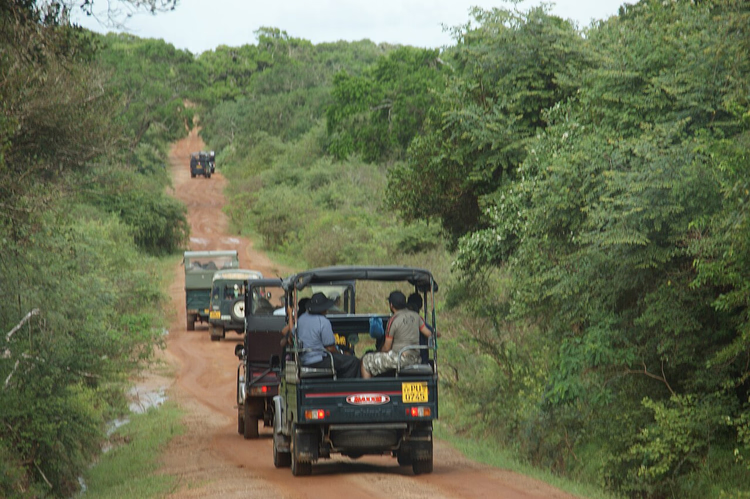 © Dan arndt · CC BY-SAPhoto: Dan arndt, CC BY-SA (https://creativecommons.org/licenses/by-sa/4.0), Wikimedia Commons
From September 14 to October 15, 2026, blocks 1 and 2 of Yala National Park are closed for the dry season, while the remaining blocks stay open (as of 09/2026, yalasrilanka.lk). Check the status before booking a safari.
If Yala's blocks are closed or overcrowded, look at nearby options. At that time, animals are easier to watch in Udawalawe and in Sinharaja Forest Reserve, where there are fewer jeeps.
Hill country and the Cultural Triangle
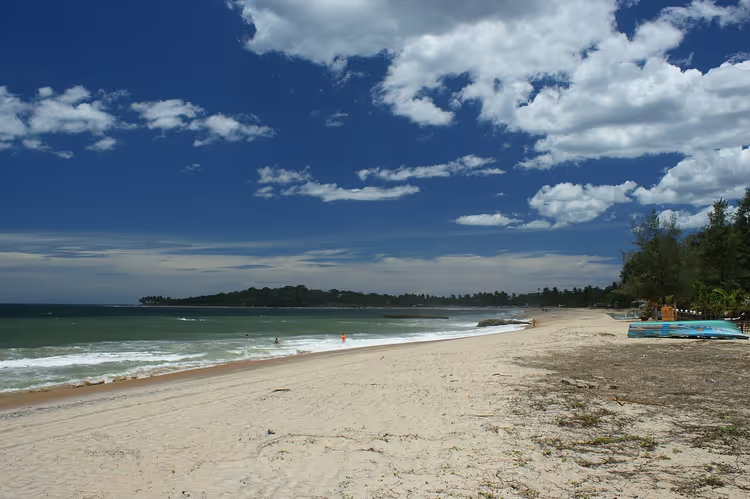
The central hill country sits right between climate zones. Until late December, sometimes early January, frequent and heavy rain falls here. The best time for the hill country is from January to March, when roads dry out and the tea plantations open up.
In the Cultural Triangle and hill country, short powerful downpours happen year-round: the region receives rain from both monsoons. In Polonnaruwa, for example, a tropical downpour can catch you within ten minutes. Keep a rain jacket handy, you will definitely need it, and do not leave your gear without a cover.
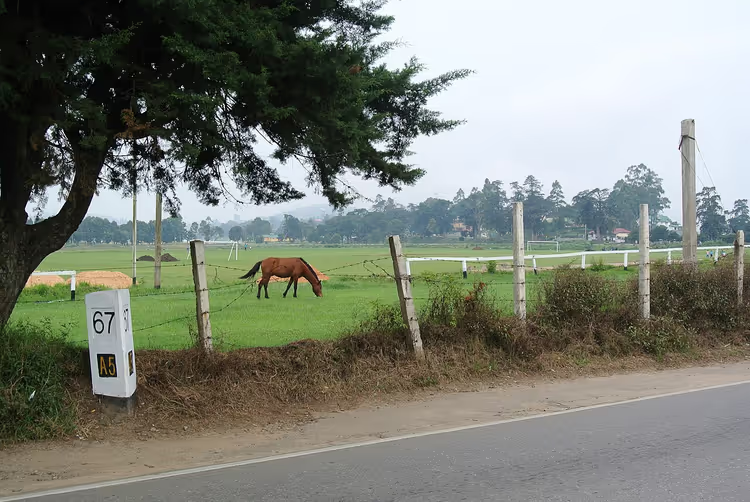 © Adbar · CC BY-SAPhoto: Adbar, CC BY-SA (https://creativecommons.org/licenses/by-sa/3.0), Wikimedia Commons
Best time for a Sri Lanka itinerary
For a full loop around the island, the transition months between the rainy season and the dry season work best. February and March are the best: the south is already dry, and the east has not yet returned to full rain.
The logic is this. If you want to see the south coast, the Cultural Triangle, and the hill country, you need a month when no side is at peak rainfall. February covers the south and west, and March adds a dry hill country to that. In April the situation still holds, but rain in the east is already approaching.
Period | West and south | East and north | Hill country |
|---|---|---|---|
December-January | dry, peak season | rain | rain until early January |
February | dry | transitional | dry |
March-April | warm, fewer tourists | dry | best months |
May-June | monsoon begins | dry | rain |
July-September | rain | dry, high season | rain |
October-November | transitional | Maha monsoon begins | rain |
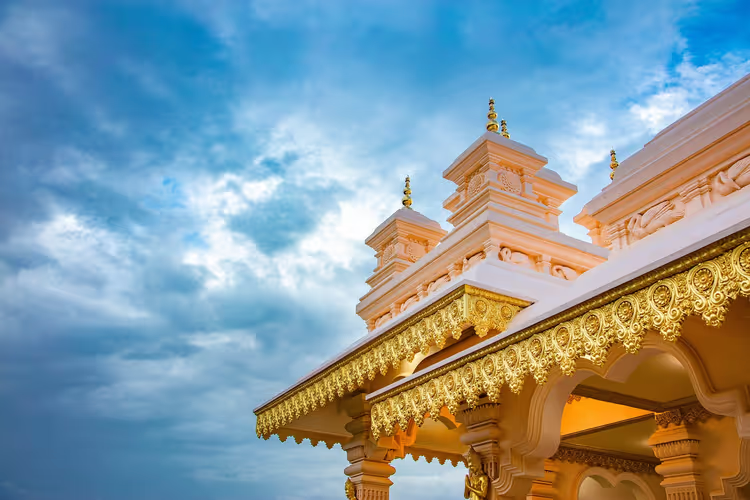
For a road trip route, sort out transportation in advance. Comparing car rental prices is easier before you fly, because in high season there are fewer available cars. Roads in the hill country are narrow, and the stretch from Kandy to Ella is a winding mountain road.
⁉️🤔 Frequently asked questions
When is the dry season in Sri Lanka?
There is no single dry season, it all depends on the coast. In the south and west it is dry from December to April, in the hill country from January to March. In the east and north the dry season shifts to May through September. Choose the region first, then the month of travel.
What is the big monsoon and how long does it last?
It is the southwest Yala monsoon, which brings rain from May through September. The west and south coasts and the central hill country are hit hardest. This does not mean it rains for days on end: more often it comes as heavy downpours for a few hours with sunny breaks in between.
When should you go to the east coast?
The best window is from mid-May to late September, when the east has its dry season. Trincomalee and Arugam Bay are warm and sunny at that time. From October to January the Maha monsoon arrives here, and beach time becomes unpredictable.
When is the best time for whale watching?
On the south coast in Mirissa the season runs from January to April. In the east, in Trincomalee, whales are watched from June to September, and in Kalpitiya from December to mid-April. Boat trips depend on the swell, so some departures get moved to another day.
When is Yala National Park closed?
Blocks 1 and 2 of Yala National Park are closed from September 14 to October 15, 2026 for the dry season. The closure also helps wildlife recover and gives time for road repairs. The remaining blocks stay open for safaris during this period.
In short: what to book
The logic is simple. If you are traveling in December through April, book hotels on the south and west coasts in advance, because this is peak season. If your dates fall in May through September, plan your base in Trincomalee or Arugam Bay and make the east the main part of your route. For a full loop around the island, aim for February or March and do not tie your transfers to a single day.
For overnight stays on the dry coast, check out hotels on the south coast on Trip.com. If you want to add wildlife and boat trips to your journey, open excursions and tours on GetYourGuide.
Everything in this article is cross-checked against official climate and park sources. Reserve closure dates, whale seasons, and weather windows change, so check the current status on the ground before buying tickets.
A separate note on transition months. October also gives you a chance to circle the island, but the weather at that time is less predictable than in February and March. If your trip falls in this period, leave more flexible days in your plan.

A small editorial team writing guides for independent travel. We travel ourselves, but we haven’t been everywhere, so we check prices, opening hours and how to get there against official sources.