
















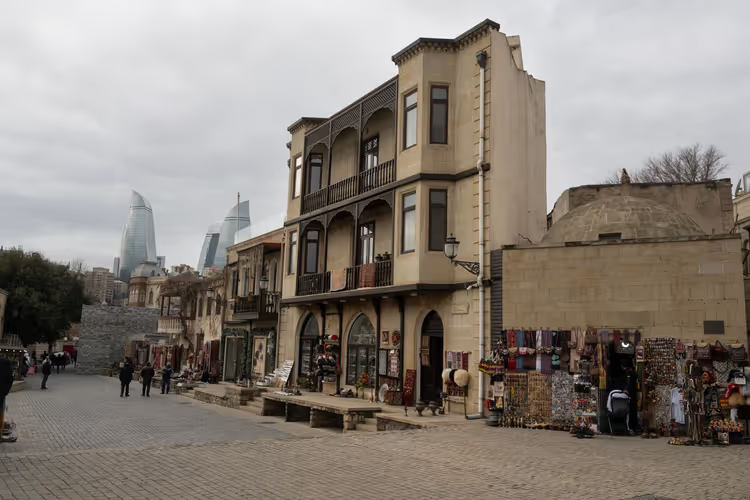
Museums in Baku: 15 venues from the old city to the Gala reserve
Museums in Baku are scattered across three areas: the Old City, the seaside boulevard, and the far outskirts. Without a plan, you'll spend half a day just getting between them.
We've gathered fifteen museum venues in the city and organized them by area, price, and days off.
Ad: this article contains affiliate links, we earn a commission if you book through them, at no extra cost to you.
Tickets and opening hours: what you need to know
💡 In short:
- Most museums on this list are closed on Mondays, and some venues are closed on Sundays.
- The Samad Vurgun House Museum and the Museum of Stone Chronicles are free to enter.
- Two sites are outside the city: the Gala reserve and Farhouse in the village of Novkhana.
- The National Museum of History closes at five in the evening and is closed on Mondays.
- Prices and opening hours: as of 09/2026, verified on the official website of the Museum of History.
Museum Baku is divided into two parts. You can cover the central group on foot: the Carpet Museum, the National Museum of History, and the Museum of Literature are all near the Old City. Set aside a second day for the outlying venues, from the Heydar Aliyev Center to the Gala reserve.
Smaller museums change their schedules, so check the hours on the museum's website or by phone before heading out. Tickets are sold at the door almost everywhere; advance time slots are only needed for major exhibitions.
Our picks: a quick overview of each museum
Museum | What makes it interesting | Who it's for |
|---|---|---|
National Museum of History | Taghiyev mansion, archaeology, coins | first-time visitors to Baku |
Carpet Museum | building shaped like a carpet, seventeenth-century carpets | lovers of crafts and ornament |
Museum of Modern Art | avant-garde, Dali and Picasso, children's exhibition | fans of twentieth-century art |
Museum of Literature | Nizami manuscript, sculptures on the facade | lovers of books and poetry |
Museum Center | music, theater, and revolution under one roof | those short on time |
Heydar Aliyev Center | Zaha Hadid architecture, models of the country | photographers and fans of contemporary design |
Museum of Independence | documents, repressions, recent history | those interested in history |
Museum of Archaeology and Ethnography | nineteenth-century daily life, gold jewelry | fans of archaeology and everyday history |
Museum of Medicine | medieval instruments, history of physicians | specialists and curious visitors |
Museum of Stone Chronicles | free entry, stone carving, inscriptions | those looking for a museum without a ticket |
Samad Vurgun House Museum | the poet's study, letters, death mask | fans of memorial apartments |
Uzeyir Hajibeyov House Museum | sheet music and the composer's daily life | music lovers |
Jafar Jabbarly House Museum | posters, models, the fate of the house itself | theater fans |
Farhouse | 3D neon, evening events, tea in the lounge | those looking for an unusual evening |
Gala reserve | open-air archaeology, half a day of walking | families with children |
Below, each museum gets its own section with photos and practical details. If you're short on time, start with three venues: the Carpet Museum, the National Museum of History, and the Heydar Aliyev Center.
Book tickets and time slots for major museums in advance: Baku museum tickets on Tiqets.
Tours and tickets in Baku
Guided tours, skip-the-line tickets and activities — most offers can be cancelled free of charge.
See offers on GetYourGuideThe widget loads once you give your consent.
1. Museum of Modern Art
 © M. PINARCI · CC BY-SAPhoto: M. PINARCI, CC BY-SA (https://creativecommons.org/licenses/by-sa/3.0), Wikimedia Commons
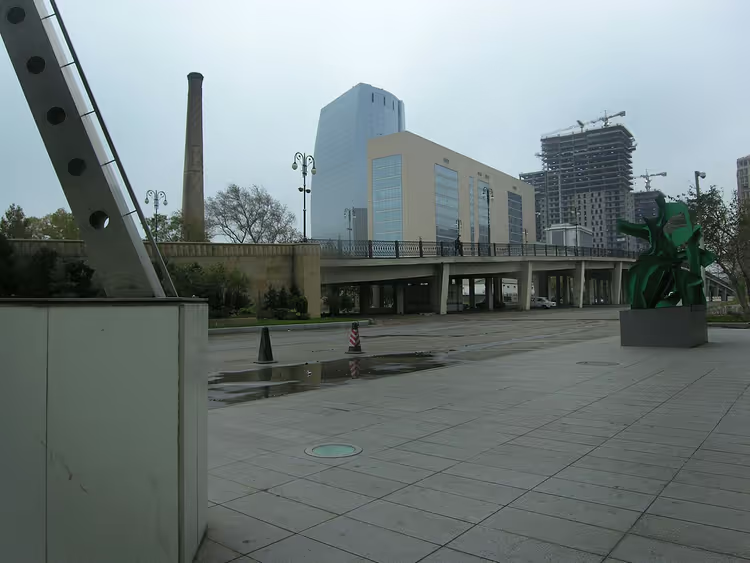
The museum opened in the late 2000s on the initiative of Mehriban Aliyeva. The project was designed by Azerbaijani architect Altay Sadykh-zade, and he turned the building itself into an avant-garde object. The venue's guiding principle is stated simply: freedom and the absence of limits.
The halls display works by Dali and Picasso, but the core of the collection is Azerbaijani artists and sculptors from the second half of the last century. There is also a children's exhibition, an art library, and a video room with lectures. The shop sells paintings, and on the ground floor you'll find a restaurant and a cafe with unusual decor.
- Tickets and hours: paid entry; the museum is open every day except Monday, from morning until eight in the evening.
- Who it's for: those who want to see Azerbaijani avant-garde and relax in the cafe at the same time.
- The catch: there are fewer big names than you'd expect: Dali and Picasso are neighbors in the hall here, not the core of the collection.
2. National museum of history of Azerbaijan
 © Urek Meniashvili · CC BY-SAPhoto: Urek Meniashvili, CC BY-SA (https://creativecommons.org/licenses/by-sa/3.0), Wikimedia Commons
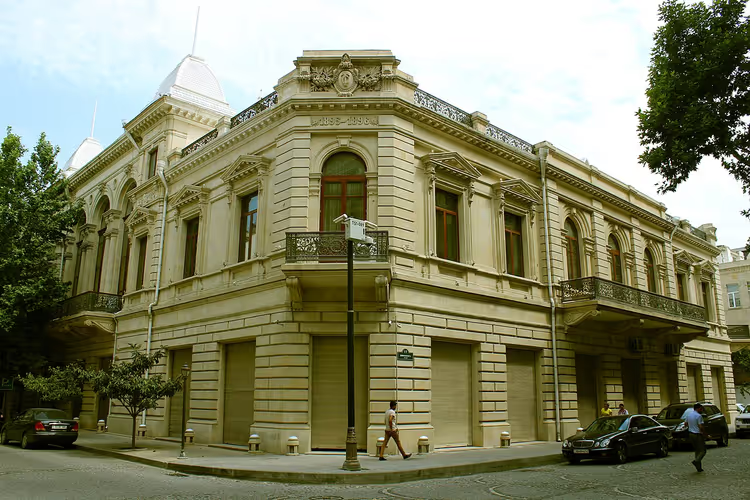
The museum grew out of a department under the commissariat of education, opened in the early 1920s. It received official status a year later. Since the late 1960s, the museum has occupied the mansion of oil magnate Taghiyev, and the building alone is worth a visit.
The exhibition tells the story of Azerbaijani land: archaeological finds, coins, weapons, medieval objects. Part of the collection is in storage, but you'll still spend a couple of hours in the halls. There is also a separate Taghiyev apartment museum with furnished rooms and the owner's personal belongings.
- Tickets and hours: 15 AZN for foreign visitors, free for preschoolers and ICOM members; the museum is open from 10:00 to 17:00, closed on Mondays, and the last Tuesday of the month is a maintenance day (as of 09/2026, museum visit page).
- Getting there: 4 H. Z. Taghiyev street, in the city center (address from the official website).
- The catch: most of the collection is kept in storage, so you'll only see part of it.
3. Carpet Museum
 © Presidential Press and Information Office · CC BYPhoto: Presidential Press and Information Office, CC BY (https://creativecommons.org/licenses/by/4.0), Wikimedia Commons
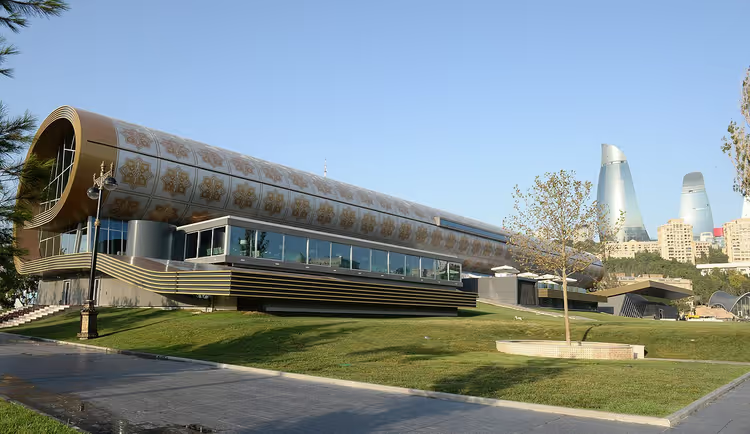
The building is visible from afar: the architect gave it the shape of a rolled-up carpet. The museum was founded in the late 1960s and has changed locations several times since. Construction of the current building began in the late 2000s, and the exhibition opened at the new site a few years later.
For Azerbaijanis, a carpet has long been more than home decor; it's a form of self-expression. The halls display carpets from the seventeenth and eighteenth centuries, alongside tableware, jewelry, national costumes, weapons, and household items. Part of the exhibition shows how craftspeople worked and how a carpet was made.
- Tickets and hours: the museum is open every day except Monday, until eight in the evening; check current prices on the museum's official website.
- Who it's for: those who want to understand the techniques and patterns, not just walk through the halls.
- The catch: without a guided tour, half the meaning is lost; only a guide can reveal the patterns and techniques.
4. Museum of Azerbaijani Literature
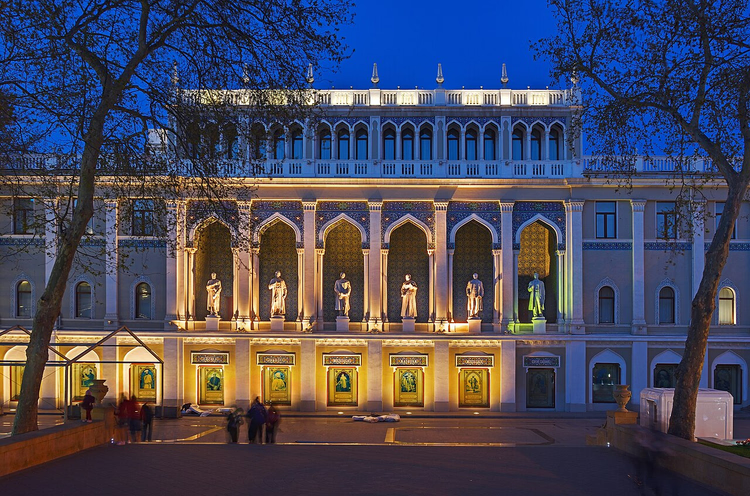 © Ludvig14 · CC BY-SAPhoto: Ludvig14, CC BY-SA (https://creativecommons.org/licenses/by-sa/4.0), Wikimedia Commons
The museum opened in the late 1930s for the anniversary of the poet Nizami Ganjavi. It stands in the city center, in a nineteenth-century caravanserai building. The facade is decorated with eight sculptures of poets and writers, including a single female figure: the poetess Natavan Khurshidbanu.
The most recent renovation was completed in the early 2000s, after which the halls could display up to twenty-five thousand items. The collection's main exhibit is a manuscript of Nizami's poem from the early fifteenth century. You'll see autographs, letters, book illustrations, and ancient miniatures, and the bookshop sells editions in various languages.
- Tickets and hours: paid entry; the museum is open every day except Sunday, until five in the evening.
- Not for: those looking for paintings and artifacts; this is more about manuscripts and documents.
5. Museum Center
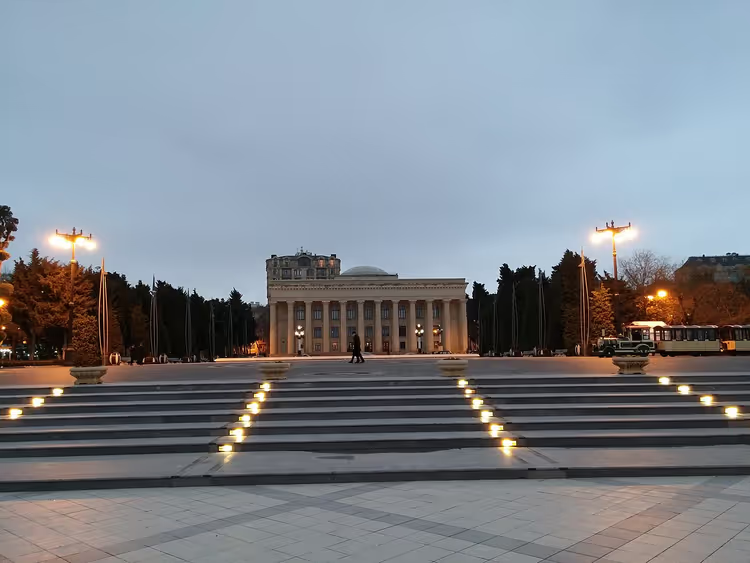 © Marco Monelli · CC BY-SAPhoto: Marco Monelli, CC BY-SA (https://creativecommons.org/licenses/by-sa/3.0), Wikimedia Commons
The center stands next to Primorsky Boulevard and has been operating since the mid-fifties. It used to be a branch of the Lenin Museum, and in the early sixties it moved into its current building. The venue got its current name after the collapse of the Soviet Union.
Today it houses several museums under one roof: musical culture, independence, and theater, plus an art gallery. The Round Hall under the dome hosts receptions, presentations, and collection showings. Painting and photography exhibitions rotate all year round, and souvenirs are sold on the ground floor.
- Who it's for: those who want to cover three topics in a single visit.
- The catch: the halls are spread across different themes, so in one trip you'll only see part of it.
6. Heydar Aliyev Center
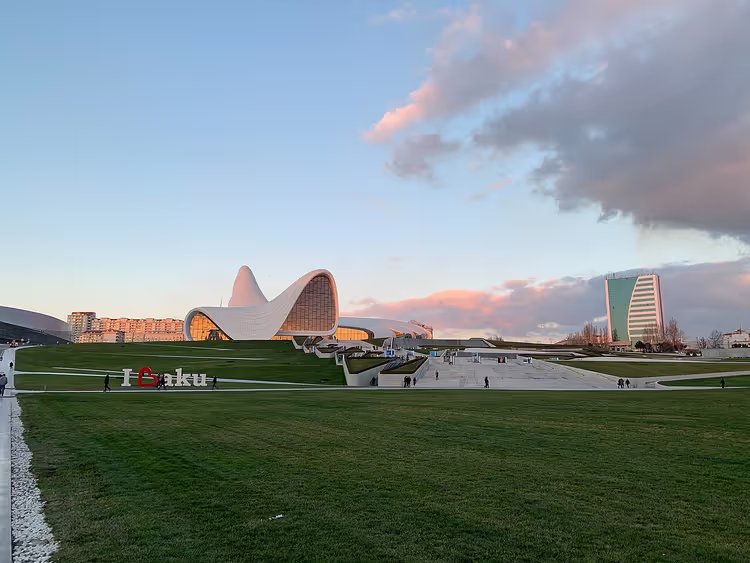 © Robot8A · CC BY-SAPhoto: Robot8A, CC BY-SA (https://creativecommons.org/licenses/by-sa/4.0), Wikimedia Commons
Zaha Hadid's project was named the most beautiful building in the world in the mid-2010s. The architect explained the wave form rising into the sky as a link between past and future. The same postmodernism continues inside: flowing lines and almost no right angles.
Take your time walking through the floors. The halls feature exhibitions on the country's cultural heritage, and visitors especially love the scale models of landmarks, from the Maiden Tower to the Government House. Part of the exhibition is dedicated to the Heydar Aliyev Museum, which also displays his cars. Nearby there are cafes, temporary exhibition halls, and photo projects about the nature of Azerbaijan.
- Who it's for: those coming to Baku for modern architecture and major exhibitions.
- The catch: the center takes half a day, and some halls change, so check the schedule in advance.
7. Independence Museum
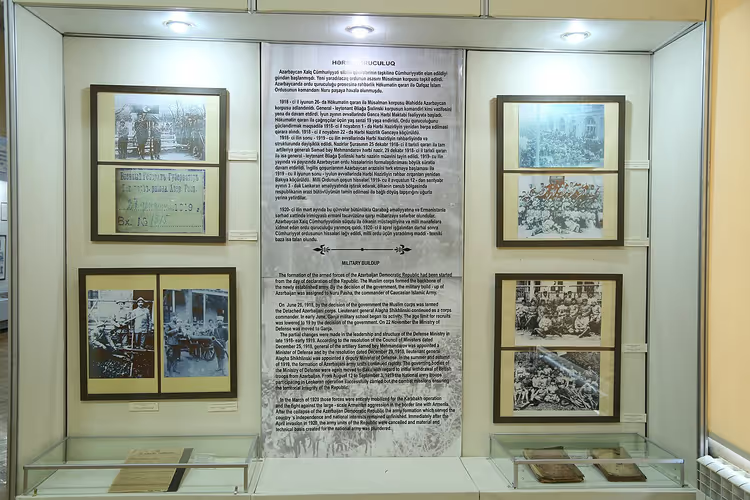 © Toghrul R · CC BYPhoto: Toghrul R, CC BY (https://creativecommons.org/licenses/by/4.0), Wikimedia Commons
The museum opened in the early nineties, but its collection already numbers more than twenty-two thousand items. It tells the story of Azerbaijanis' struggle for independence: the liberation movement of the early last century, arrests, camps, and exile.
The halls display documents and photographs, along with sculptures, maps, coins, and personal belongings. There is a children's club called "We Are the Heirs of Independence," plus open house days and themed exhibitions. Visitors are often shown materials about the life and work of Heydar Aliyev.
- Tickets and hours: admission is paid, the museum is open every day except Monday until six in the evening.
- The catch: the subject matter is heavy, part of the exhibition is devoted to repression.
8. Museum of Archaeology and Ethnography
 © Sefer azeri · CC BY-SAPhoto: Sefer azeri, CC BY-SA (https://creativecommons.org/licenses/by-sa/4.0), Wikimedia Commons
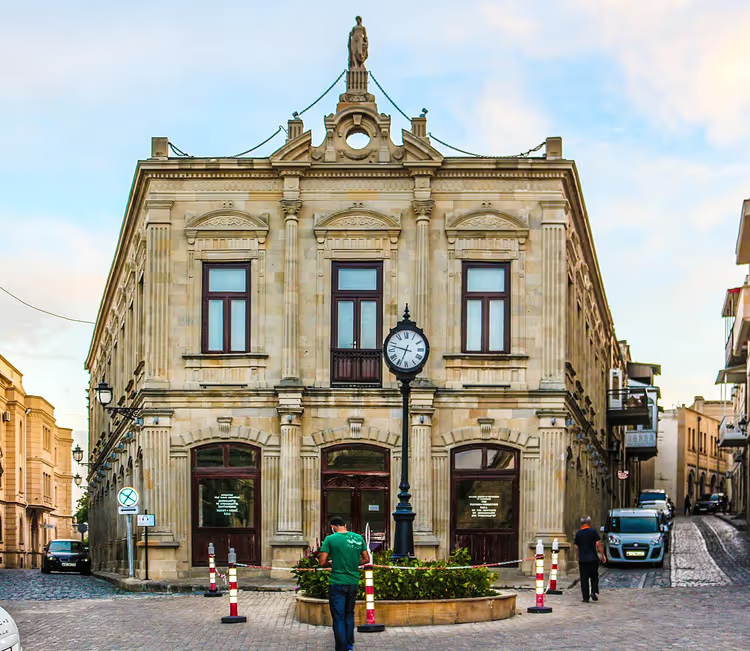
The museum is named after M. Huseynov and has operated since the mid-seventies. In the ethnographic halls you will see how Azerbaijanis lived in the nineteenth and early twentieth centuries: clothing, gold and silver jewelry, and household items.
The archaeological section shows early human settlements, farming tools, traces of animal husbandry, and burial monuments. After restoration in the late 2000s, more than two thousand exhibits were opened for viewing, and a separate display case is devoted to gold artifacts.
- Who it's for: those interested in archaeology and daily life, not just painting.
- The catch: only part of the collection is on display, the rest remains in storage.
9. Museum of Medicine
 © Interfase · CC BY-SAPhoto: Interfase, CC BY-SA (https://creativecommons.org/licenses/by-sa/4.0), Wikimedia Commons
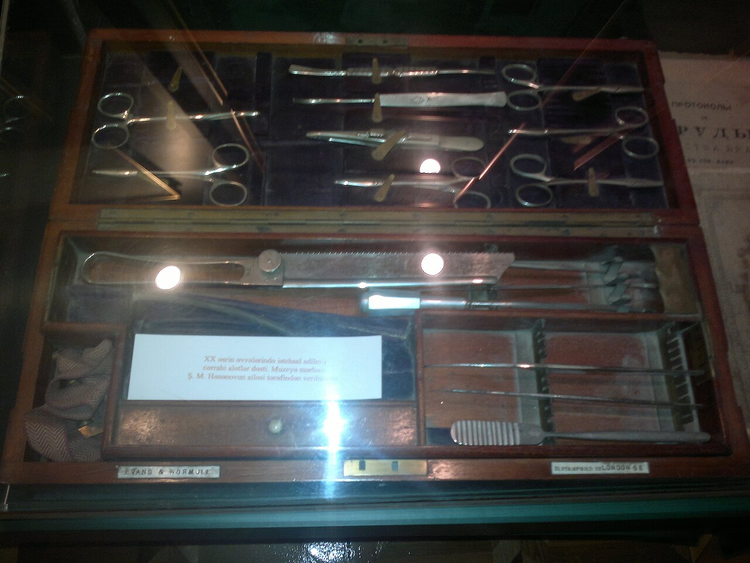
The museum officially opened in the mid-eighties and presents the history of medicine in the country from antiquity to the present day. Visitors are greeted by a bust of Abu Ali ibn Sina.
The display cases hold medieval surgical instruments, pharmacy equipment, medicines, and personal belongings of famous doctors. A separate part of the exhibition is devoted to the development of medical education in Baku: photographs of students, documents, and copies of ancient treatises.
- Tickets and hours: admission is paid, check the exact schedule on the museum's website before visiting.
- The catch: the halls are small, an hour is enough for a visit.
10. Museum of the Stone Chronicle
 © Ludvig14 · CC BY-SAPhoto: Ludvig14, CC BY-SA (https://creativecommons.org/licenses/by-sa/4.0), Wikimedia Commons
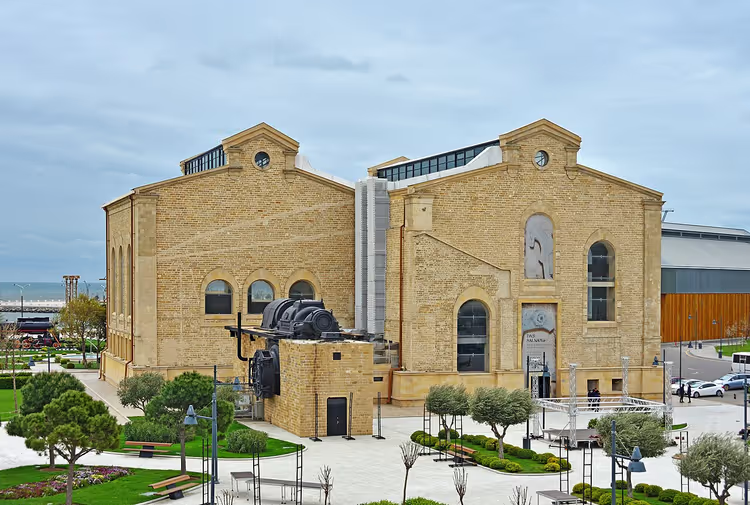
The museum stands on State Flag Square and opened in the mid-2010s. The building previously belonged to a station that supplied electricity to oil fields, and the museum was created with the participation of the Heydar Aliyev Foundation.
Stone carvings and works by sculptor Huseyn Hagverdi were brought here. Many exhibits come from Azerbaijani nature reserves: gravestones with inscriptions and household items used by families for centuries. The inscriptions offer insight into the class divisions of society.
- Tickets and hours: admission is free, the museum is open every day except Monday until eight in the evening.
- Not for: those looking for painting, here there is only stone and inscriptions.
11. Samad Vurgun house museum
 © Pinkfloyd1990 · CC BY-SAPhoto: Pinkfloyd1990, CC BY-SA (https://creativecommons.org/licenses/by-sa/4.0), Wikimedia Commons
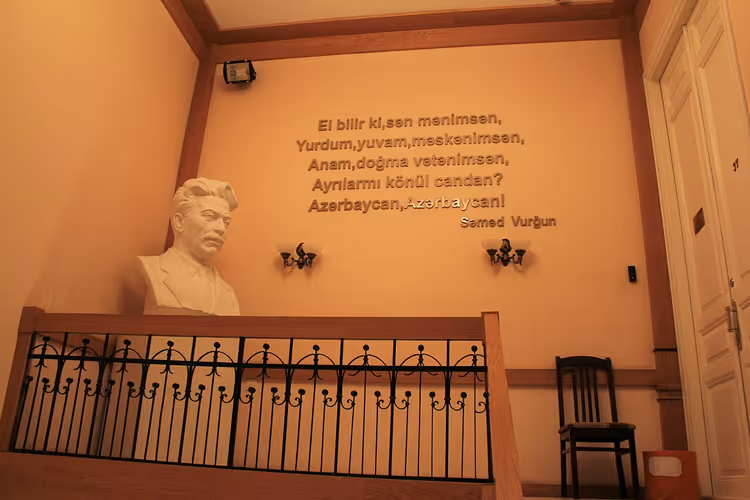
The poet and playwright lived in this house in his final years and worked here until the very end. He was only fifty, but Samad Vurgun had become one of the country's leading poets.
You will see the study with a writing desk, the library, and hunting gear: a rifle and a cartridge belt. A separate display case is devoted to letters to his wife Khaver, from the first, written to the young beauty, to the last. Also here are her wedding ring, a clock with stopped hands, and the poet's death mask.
- Tickets and hours: admission is free, check the exact schedule before visiting.
- Who it's for: those who love memorial apartments and literature.
12. Uzeyir Hajibeyov house museum
 © ChanisCaucasi · CC BY-SAPhoto: ChanisCaucasi, CC BY-SA (https://creativecommons.org/licenses/by-sa/4.0), Wikimedia Commons
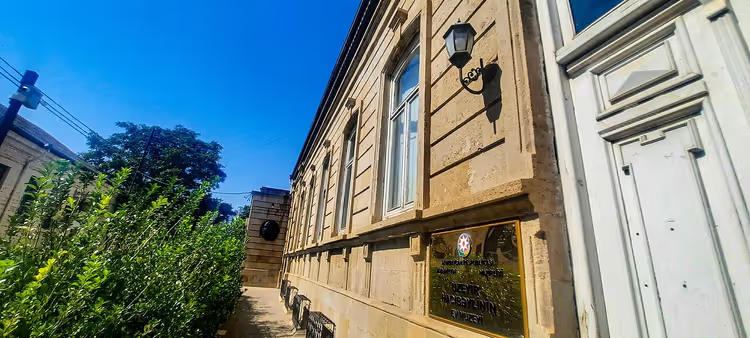
The museum opened in the mid-seventies in the house where the composer lived for nearly three decades. The rooms have preserved their original setting: personal belongings of Hajibeyov and his family, photographs, letters, and archives.
The exhibition includes sheet music of works Uzeyir worked on, and it is regularly expanded. For the composer's anniversary in the mid-2000s, the house underwent major renovation, so the halls look well maintained.
- Who it's for: those interested in Azerbaijani music and daily life of the early last century.
- The catch: the house is small, half an hour is enough for a visit.
13. Jafar Jabbarly house museum
The museum opened in the early eighties for the playwright's anniversary, and a prize in his name was later established. The house held photographs, documents, personal belongings, posters, and stage models.
The building's fate has been difficult. The house fell into disrepair, nearby construction caused cracks, and some exhibits moved to the Theater Museum back in the 2010s. The writer's relatives privatized the property and sold it to a developer, so plans call for a residential complex on the site of the old house, with the museum occupying the ground floor. Before your trip, check where visitors are currently being received.
- Tickets and hours: check the schedule in advance, part of the exhibition may be closed.
- The catch: the permanent exhibition on site has been dismantled, some items are in the Theater Museum.
14. Farhouse neon art museum
Farhouse is located in the village of Novkhana, about twenty kilometers from Baku. It's best to arrive in the evening: the house glows with neon both outside and inside, and the ornaments are assembled using 3D technology. The building is visible from afar, so you won't need to ask locals for directions.
In the evenings it hosts lectures, exhibitions, workshops, and yoga classes, and designers, artists, and writers drop by. On the ground floor there is a lounge area with herbal tea and music, where it's easy to spend an hour or two.
- Tickets and hours: Farhouse is open daily from five to ten in the evening, admission is paid.
- The catch: getting there without a car is harder, it's a separate trip out of town.
15. Gala Reserve
 © Malahat Farajova · CC BY-SAPhoto: Malahat Farajova, CC BY-SA (https://creativecommons.org/licenses/by-sa/4.0), Wikimedia Commons
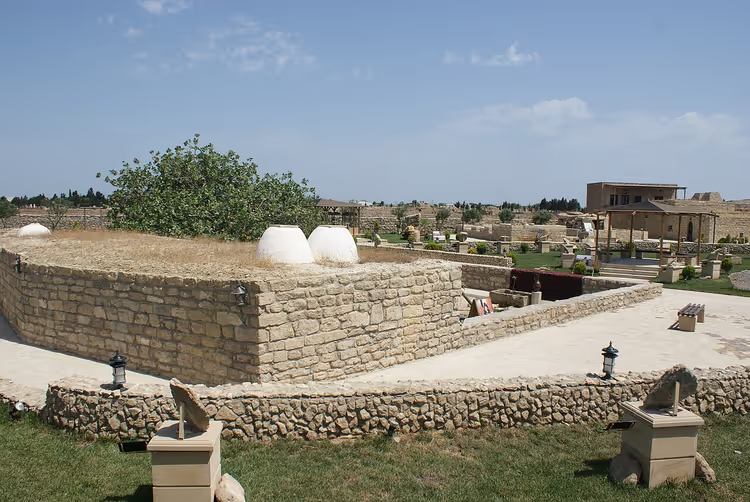
This is a complex of several museums: archaeology and ethnography, a castle, and antiques. The grounds cover about one and a half hectares, so bring the kids and set aside half a day.
You'll see drawings by prehistoric people, ceramics, jewelry, and objects belonging to the first inhabitants of these lands. The remains of settlements are also interesting: people lived here before our era. Buildings, tents, a forge, workshops, and underground passages recreate daily life from different eras.
- Tickets and hours: admission is paid; check the tour schedule before you head out.
- Who it's for: families with children and anyone interested in open-air archaeology.
How to get there and a map of the museums
You can cover the central group on foot. Start from the İçərişəhər metro station: from there it's easy to reach the Carpet Museum, the National History Museum, and the Literature Museum. To get to the Museum Center on the Seaside Boulevard, walk along the waterfront from Sahil station.
The outlying sites require transport. The Heydar Aliyev Center and the Museum of Modern Art are easiest to reach by taxi. Plan separate trips for the Gala reserve and Farhouse; each will take half a day.
From Heydar Aliyev Airport to the city center, you can take a taxi or a pre-booked Baku airport transfer.
Below is a map with all fifteen points. Open it and plan your route for the day so you don't end up crisscrossing the city for nothing.
Museums of Baku
Places on the map
- 1Museum of Modern Art Azerbaijani avant-garde, works by Dalí and Picasso next door
- 2National Museum of History of Azerbaijan Mansion of oil magnate Tagiyev, archaeology and coins
- 3Carpet Museum Building shaped like a rolled-up carpet, carpets from the 17th-18th centuries
- 4Museum of Azerbaijani Literature Manuscript of Nizami's poem and sculptures of poets on the facade
- 5Museum Center Music, theatre and independence under one roof by the boulevard
- 6Heydar Aliyev Center Building by Zaha Hadid, models of the country's landmarks
- 7Museum of Independence Documents on the struggle for independence, arrests and exile
- 8Museum of Archaeology and Ethnography 19th-century everyday life and gold jewellery, sites of early humans
- 9Museum of Medicine Medieval surgical instruments and the history of physicians
- 10Stone Chronicle Museum Stone carvings and tombstones, free admission
- 11Samad Vurgun House Museum The poet's study, letters to his wife and a death mask
- 12Uzeyir Hajibeyov House Museum Sheet music and the composer's belongings, house on the site for almost three decades
- 13Jafar Jabbarli House Museum Playwright's posters and models, some exhibits moved to the Theatre Museum
- 14Farhouse Neon Art Museum 3D neon and evening workshops in the village of Novkhani
- 15Gala Reserve Open-air archaeology, remains of settlements and workshops
⁉️🤔 Frequently asked questions
How much does it cost to enter Baku's museums?
The most expensive ticket on the list is at the National Museum of History: 15 AZN for foreign visitors, with free admission for preschoolers and ICOM members (as of 09/2026, official museum website). The Samad Vurgun House Museum and the Museum of the Stone Chronicle don't charge a fee. At the other museums, you buy tickets at the entrance, so check prices on site.
What day are Baku's museums closed?
Monday is the day off at the National Museum of History, the Carpet Museum, the Museum of Modern Art, the Museum of Independence, and the Museum of the Stone Chronicle. The Museum of Literature is closed on Sundays. The Museum Center and the house museums have their own schedules, so check the hours before your trip.
Can you visit Baku's museums on foot?
You can cover the central cluster on foot in one day if you start from the İçərişəhər metro station. For the Heydar Aliyev Center, Gala, and Farhouse, take a taxi.
Where should you go in Baku with kids?
With kids, it's convenient to start at the Museum Center: it houses the music museum, the theater museum, and the Art Gallery under one roof. The Museum of the Stone Chronicle has free admission, and at the Gala Reserve you can walk through settlement remains and workshops. In the evening with kids, stop by Farhouse, which has neon lighting and workshops.
How many days do you need for museum Baku?
Two days is enough for the main sights. On the first day, cover the center: the Carpet Museum, the National Museum of History, and the Museum of Literature, all close together. Dedicate the second day to the Heydar Aliyev Center and the Museum of Modern Art, and in the evening make it to Farhouse, which only opens at five.
In short: what's worth booking
Museum Baku is best explored in parts: the center on day one, the outlying venues on day two.
If you're traveling with kids: the Museum Center, the Museum of the Stone Chronicle, and the Gala Reserve. If you want quiet and memorial apartments: the Samad Vurgun House Museum and the Uzeyir Hajibeyov House Museum.
Book time slots and tours at the major museums in advance: Baku museum tickets on Tiqets and city tours on GetYourGuide.
It's most convenient to stay in the center, near the old city: Baku hotels on Trip.com.

A small editorial team writing guides for independent travel. We travel ourselves, but we haven’t been everywhere, so we check prices, opening hours and how to get there against official sources.