

















September in Vietnam: drying north, rainy center and warm south
In September, Vietnam lives in three different seasons at once. In the north the rains are already retreating, in the center they are just beginning, and the south is soaking in short warm downpours. On a single trip you can easily catch both dry and rainy weather.
Here, everything comes down to the region. The difference is so large that the same day in Hanoi and in Da Nang looks like two different months, and this is the main thing to consider when planning. We gathered monthly climate data and broke down where it is actually dry in September, how much rain falls in Hanoi and Ho Chi Minh City, and where you should not book a package tour.
Weather by region: a quick overview
💡 In short:
- North: rains ease by the end of the month, daytime air warms up to 33 °C (as of 09/2026, source).
- Center: the rainy and typhoon season starts in September, beach vacations are not guaranteed.
- South: warm almost every day, but downpours are short.
- Weather data: 09/2026, checked on 15.09.2026 on Weather and Climate for 1991-2020.
Across the country, daytime temperatures range from 26 to 33 °C, while September rainfall varies more than twofold: from 150 to 321 mm per month across the cities in the table (according to climate statistics, 09/2026).
Region | September rainfall | Verdict |
|---|---|---|
Hanoi (north) | 247 mm, 14 rainy days | rains leave by the end of the month |
Ho Chi Minh City (south) | 321 mm, 20 rainy days | warm, downpours are short |
Mui Ne (south) | 150 mm | little rain, calmer sea |
Da Nang, Hoi An, Hue (center) | rainy season, peak in October | not for a beach vacation |
Source of the figures in the table: climate averages for 1991-2020 (as of 09/2026).
Northern Vietnam: rains leave by late September
Hanoi in September is still hot and humid. Daytime air warms up to 33 °C, and at night it rarely drops below 25 °C (according to Hanoi weather data, 09/2026). The first half of the month remains wet.
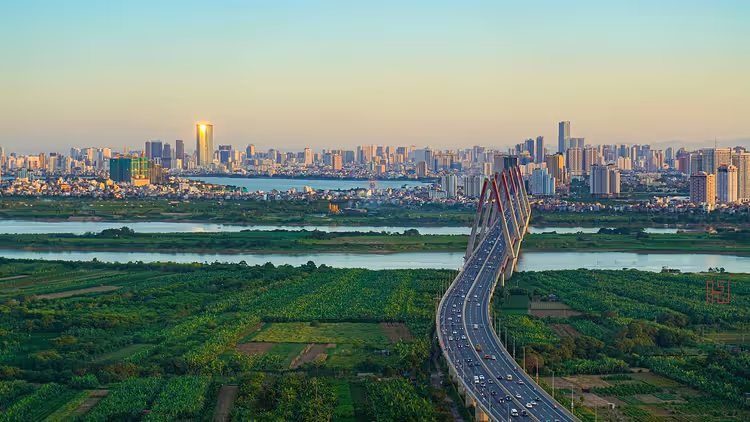 © NKSTTSSHNVN · CC BY-SAPhoto: NKSTTSSHNVN, CC BY-SA (https://creativecommons.org/licenses/by-sa/4.0), Wikimedia Commons
In September, Hanoi receives about 247 mm of rainfall, and that means 14 rainy days out of 30 (according to climate normals, 09/2026). Downpours can last two to three days, and streets often flood.
From the second half of the month the picture changes. Already in October, the rainfall norm in Hanoi drops to 128 mm (according to rainfall statistics, 09/2026), and the air becomes drier. Aim for the north in late September if you want to catch the very start of the dry season.
Ha Long Bay
Halong Bay follows the same schedule as Hanoi. Storms are still possible here at the beginning of the month, and in late September 2025 typhoons and floods hit northern Vietnam (according to Wikipedia). So before a multi-day cruise, be sure to check the forecast.
 © Thomas Hirsch / User:Ravn · CC BY-SAPhoto: Thomas Hirsch / User:Ravn, CC BY-SA (http://creativecommons.org/licenses/by-sa/3.0/), Wikimedia Commons
On the plus side, there are fewer tourists here than in summer. Typhoons are still possible at the end of the month, so plan an overnight stay on a boat based on the latest forecast. Bring a raincoat even on dry days: the weather changes quickly on the water.
Central Vietnam: the rainy season begins
The central coast has its own calendar. September opens the rainiest period of the year here, which lasts until November. In Da Nang, Hoi An, and Hue, downpours go on for a long time, and typhoons come ashore.
 © Ryan Milani · CC BY-SAPhoto: Ryan Milani, CC BY-SA (https://creativecommons.org/licenses/by-sa/2.0), Wikimedia Commons
How serious the weather can get is shown by 2025. In October, central Vietnam experienced record flooding, and in Hue and Da Nang some stations recorded historic flood peaks (according to Wikipedia).
For a beach vacation, September is a poor month here, and in October the rains only intensify. Waves erode the shore, low-lying areas flood, and temperatures gradually drop. If your trip is tied to specific dates, do not book Da Nang and Hoi An in advance.
Southern Vietnam: warm with short downpours
In the south, September stays warm. In Ho Chi Minh City, daytime temperatures are around 32 °C, nighttime 25 °C, and it rains on about 20 days out of 30 (according to the Ho Chi Minh City summary, 09/2026).
 © Alexkom000 · CC BYPhoto: Alexkom000, CC BY (https://creativecommons.org/licenses/by/4.0), Wikimedia Commons
Downpours in the south are short and usually come in the afternoon, so you can spend the morning exploring the city at your leisure. By evening it is usually dry.
Mui Ne and Phan Thiet
For the beach, it is better to head to Mui Ne and Phan Thiet. Mui Ne gets about 150 mm of precipitation in September, less than Ho Chi Minh City and Hanoi (according to Mui Ne rainfall norms, 09/2026). The sea here is calmer than on the central coast, and swimming is more comfortable.
 © Isderion · CC BY-SAPhoto: Isderion, CC BY-SA (https://creativecommons.org/licenses/by-sa/3.0/de/deed.en), Wikimedia Commons
Nha Trang and Ho Chi Minh City
Nha Trang and Ho Chi Minh City get frequent rain in September. Choose them if the beach is not your main priority. Ho Chi Minh City has more rainy days than Hanoi, but the city is convenient to explore in the mornings. Nha Trang has high humidity, and the sea is often rough.
 © Leonid · CC BY-SAPhoto: Leonid, CC BY-SA (https://creativecommons.org/licenses/by-sa/2.0), Wikimedia Commons
What to pack in September
The weather varies from region to region, so bring clothes for both heat and rain. A light raincoat is more convenient than an umbrella, especially on a motorbike. Quick-drying clothes and sandals help in a downpour, and a waterproof pouch will protect your phone from water.
For mountain areas, add one warm item. Dalat and Sapa are cool in September, and you will need a jacket in the evening. Do not forget mosquito repellent and a supply of dry socks.
⁉️🤔 Frequently asked questions
Does it rain all day in Vietnam in September?
No. In the south, downpours are short and usually come in the afternoon; by evening it is typically dry. In central Vietnam, rain can last for several days in a row. In the north, it gets drier toward the end of the month (based on Hanoi averages, 09/2026).
Where is the best beach vacation in September?
In the south, especially in Mui Ne and Phan Thiet. Mui Ne gets less rain than Ho Chi Minh City and Hanoi (based on Mui Ne climate statistics, 09/2026). The central coast, including Da Nang and Hoi An, is best avoided in September: the rainy and typhoon season begins there.
Is it possible to travel to central Vietnam in September?
Yes, if you are prepared for rain and a flexible schedule. Da Nang, Hoi An, and Hue enter their rainiest period of the year in September, and typhoons make landfall on the coast. In 2025, October floods in the central region became record-breaking (based on the article about the 2025 floods). Book hotels with free cancellation.
What is the temperature in Vietnam in September?
It is warm almost everywhere in the country. In Hanoi, daytime temperatures are around 33 °C, in Ho Chi Minh City around 32 °C, and at night it usually does not drop below 25 °C (based on city climate averages, 09/2026). Mountain areas are cooler, so bring a jacket there. Light clothing will be useful in any region.
What to pack for the trip?
The main thing is to bring a raincoat instead of an umbrella, because downpours in the south are short but heavy. The full list of items by region is in the "What to pack in September" section.
In short: where to go in Vietnam in September
If you are going for the beach, choose Mui Ne or Phan Thiet: it is dry there and the sea is calm. If you want a dry north, plan Hanoi and Halong Bay for the second half of the month. If your trip is tied to specific dates, avoid Da Nang and Hoi An, where there is rain and typhoons.
Before you fly, check the forecast and book hotels with free cancellation.

A small editorial team writing guides for independent travel. We travel ourselves, but we haven’t been everywhere, so we check prices, opening hours and how to get there against official sources.