










Winter Greece: the Acropolis without queues and skiing on Parnassus
Greece in winter looks nothing like the summer postcards. Most of the country is mountains, not beaches, and from December through March thousands of Athenians head to the snow for the weekend, not to the sea.
For your trip, this means one simple thing. You can see the historic cities without lines, and the mountain villages start about two and a half hours from the capital. What you pay for this is rain, short days, and ferry service to the islands that is nearly shut down, so the rest of this article focuses on the mainland.
The main argument for winter goes like this. From November 1 through March 31, admission to state archaeological sites and museums is free on the first and third Sunday of every month (according to the Greek Ministry of Culture, 09/2026). One such day saves you more on tickets in Athens than a taverna dinner costs.
Ad: this article contains affiliate links, we earn a commission if you book through them, at no extra cost to you.
What winter in Greece is really like
💡 In short:
- Athens in January: cool and damp, but the Acropolis and museums are nearly empty.
- Thessaloniki is colder, but this is where people go for the markets and the food.
- Snow lies in the mountains above 1,000 meters from late December to early March.
Athenian winter is mild, but not warm. January is the wettest month of the year here, with rain coming in short, heavy downpours rather than days of drizzle. Snow in the city is rare, once every few years, and when it happens the capital shuts down for a day or two.
Thessaloniki is noticeably colder. It is not the temperature that matters, but the damp north wind from the Vardar valley that blows in from the Balkans. On the waterfront in January you will feel it more than the thermometer suggests, so make sure to bring a warm layer.
In the mountains, winter is real. Above 1,000 meters, snow lies for weeks, from late December to early March. This is the elevation of Arachova, the Zagori villages, and upper Pelion. Winter divides Greece into two different destinations, and you just need to decide which one you want more.
Winter Athens: the Acropolis without lines
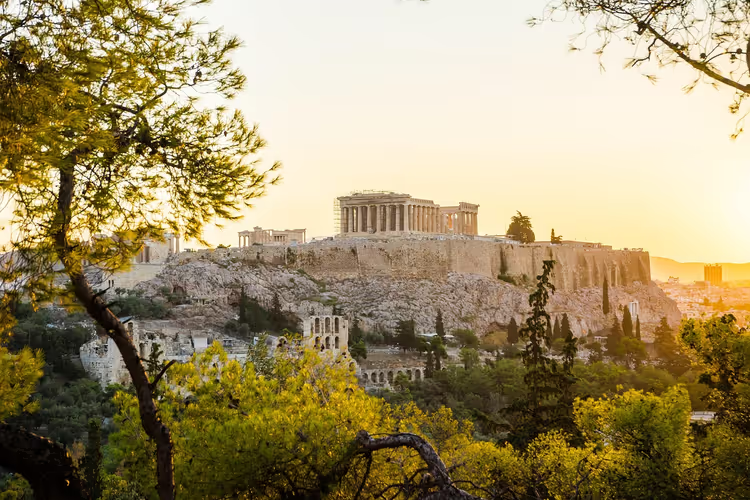
In summer, you line up at the Acropolis entrance from seven in the morning because the site closes during the midday heat. In winter, the line disappears on its own, and the rock with the Parthenon feels calmer. The Acropolis operates on a reduced winter schedule because it gets dark early.
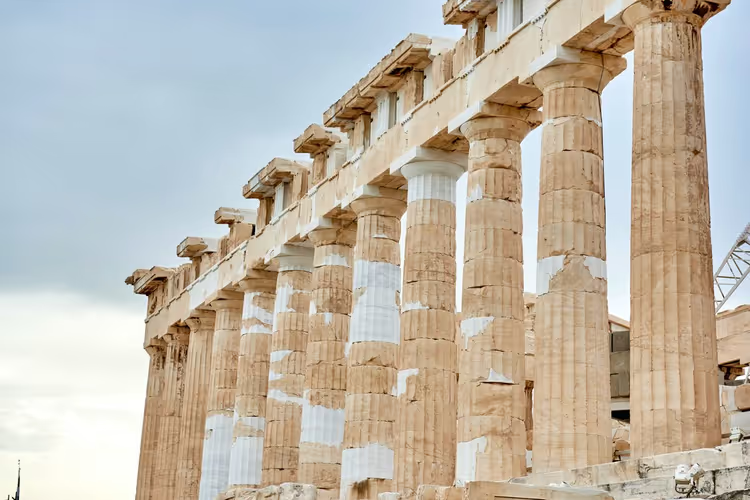
Tickets are easier in winter. Admission to state sites and museums is cheaper in the cold season, but the Acropolis discount has been reduced in recent seasons, so check the price on the official ticketing portal before your trip (09/2026).
Acropolis and Athens museum tickets
The main value of winter is that Athens works as a city, not as a backdrop. The tavernas in Psyrri and Exarchia are full of locals, the rebetiko clubs play until late, and the coffee shops stand outside under heaters all year round. On rainy days, the museums will save you: the Benaki Museum, the Museum of Cycladic Art, and the National Archaeological Museum together give you a two-day program.
Hotels are easier in winter. In January and February, prices in the center are noticeably lower than in summer, and a decent three-star hotel near the Acropolis costs less than it does in summer. If you are going for a weekend, book ahead: the good options for the first Sunday of the month go first.
Thessaloniki: a city you visit for the food
In Thessaloniki, food is not an add-on to sightseeing, it is the main reason to come. The Modiano Market and Kapani operate on their regular schedule in winter, the meze tavernas around Athonos Square are full, and prices are lower than in Athens.
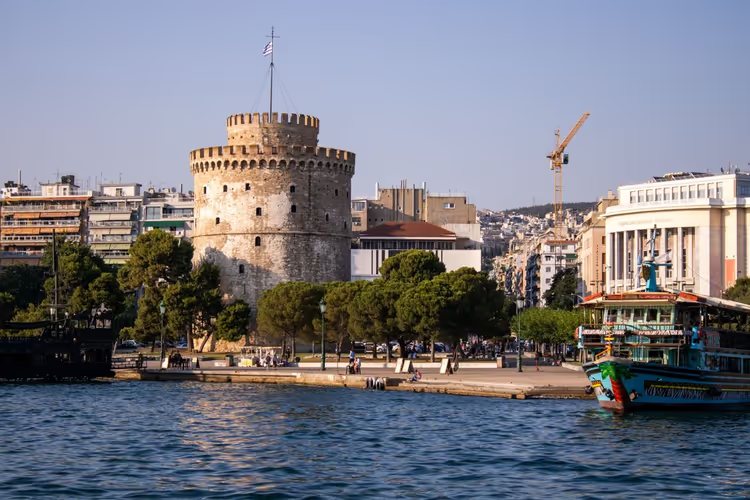
The cultural program does not suffer from the cold. The Byzantine churches on the UNESCO list, the Museum of Byzantine Culture, the Archaeological Museum with finds from Vergina, and the White Tower are all within the center, which you can cover on foot. The waterfront works even in the cold.
Thessaloniki is the best base for day trips. Vergina with the Macedonian royal tombs is about 80 km on the map, Olympus and Litochoro about 90 km, and the Meteora monasteries a bit farther at 230 km. In winter, Meteora with fog and snow looks more striking than in the summer crowds.
Arachova and the Parnassos ski resort
Arachova is the oldest ski village in Greece. It sits on a slope at about 950 meters, nine kilometers before Delphi, on the road from Athens. On weekends, the Athenian crowd comes here and prices go up immediately; on weekdays it is an ordinary mountain village with stone houses and tavernas.
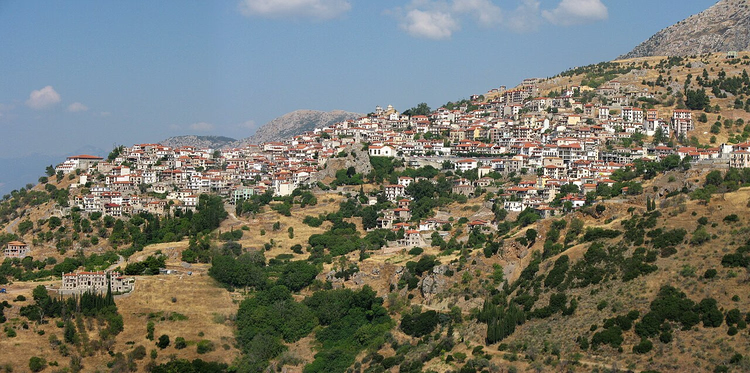 © Юкатан · CC BY-SAPhoto: Юкатан, CC BY-SA (https://creativecommons.org/licenses/by-sa/3.0), Wikimedia Commons
The Parnassos ski center itself lies about 155 km west of Athens, on a mountain 2,457 meters high. It is the country's largest resort: around 36 kilometers of runs on more than twenty slopes, two sectors, Kelaria and Fterolakka, connected by lifts, plus gondolas and surface lifts. Skiing runs from about 1,600 to 2,260 meters (according to the center's website, 09/2026).
Day category | Ski pass price |
|---|---|
Saturday, Sunday, holidays and the period 22.12-7.01 | 35 € |
Monday and Friday | 30 € |
Tuesday, Wednesday, Thursday | 20 € |
Chip card, purchased once | 5 € |
Prices are valid for the 2025/26 season (as of 09/2026, official website of the Parnassos ski center). Renting a set with skis, boots and poles costs roughly 15 to 25 € per day depending on the season and the rental shop. Treat both figures as a guide and check before you travel.
A comparison with the Alps is fairer when based on numbers. There are about as many runs here as at an average Austrian resort, but the snow guarantee is noticeably weaker. The season is officially December to April, but depends entirely on the weather. If you fly to Greece specifically for skiing, you will be disappointed. If you are already in Athens and want to fit in two days of snow, this gives you something an Alpine vacation cannot: a descent with a view of the Gulf of Corinth and Delphi in the snow after lunch.
The drive from Athens takes about two and a half hours on the highway via Livadia. On the section from Arachova up to the center in winter, winter tires or chains are required.
hotels in Arachova on Trip.com
Zagori and the Pindus mountains
Northwestern Greece barely appears in guidebooks, and that is a shame. Zagori in Epirus is 46 stone villages scattered across gorges and beech forests and connected by old arched bridges and trails. The Vikos Gorge is considered one of the deepest in the world relative to its width.
In winter, Zagori is a different trip than in summer. Hiking into the gorge through snow and ice makes no sense, but the villages themselves work as refuges: Papingo, Monodendri, Vitsa, Tsepelovo with restored stone houses, fireplaces and a cuisine of pita, lamb and mountain herbs. Ioannina, with its airport and domestic flights from Athens, serves as the base for the trip.
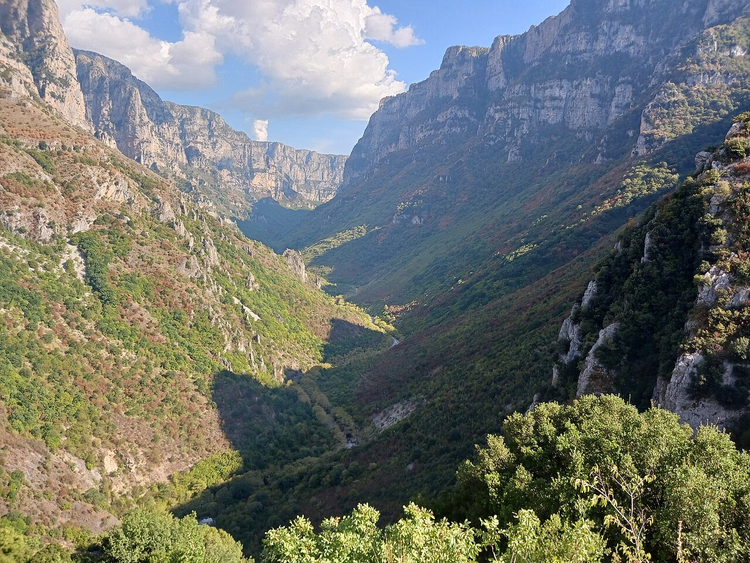 © Juggertrout · CC BYPhoto: Juggertrout, CC BY (https://creativecommons.org/licenses/by/4.0), Wikimedia Commons
You should allow at least two nights for Zagori. The roads here are plowed, but more slowly than in the Alps, and the winter day is short, so one transfer per day is already a lot. You will need a time buffer in case of snowfall.
Pelion: skiing with a sea view
The Pelion peninsula east of Volos is the country's strangest winter offering. The Agriolefkes ski center near the village of Chania is among the smallest in Greece, with very few slopes, but from the slope you can see the Pagasetic Gulf. In the morning you ski, and after lunch you sit by the water in Afissos or Kala Nera.
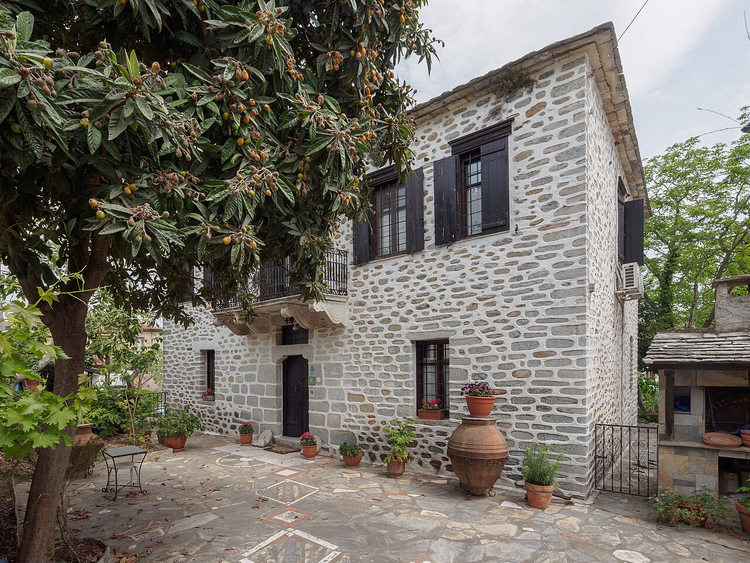 © C messier · CC BY-SAPhoto: C messier, CC BY-SA (https://creativecommons.org/licenses/by-sa/4.0), Wikimedia Commons
The villages of Pelion, Makrinitsa, Portaria, Tsagarada and Milies, are worth the trip even without snow: stone architecture, cobbled streets, plane trees and a dense network of small guesthouses. Volos is reached from Athens in about three and a half hours by car or train. A car is more convenient for Pelion, because buses between the villages run rarely and mostly during the day.
How to get there and how much it costs
All major airports in Germany, Austria, and Switzerland fly to Athens in winter, with a flight time of about three hours. In winter there are fewer flights than in summer, and tickets are cheaper, so a round trip in January and February costs noticeably less than the summer price (09/2026). Fewer flights go to Thessaloniki in winter, but direct connections from Germany and Austria remain.
For mountain destinations, a car is practically essential. There is no general winter tire requirement in Greece, and many rental companies hand out cars that are not season-ready. Ask about winter tires when booking and add chains if needed. Mountain roads to Parnassus and in the Pindus range are cleared, but not with Alpine thoroughness, so leave yourself extra time.
Good to know in advance: the train between Athens and Thessaloniki takes several hours, and in winter it is a relaxed alternative to driving. Intercity buses also run a couple of times a day. If you want to combine the mainland with an island, check the ferry schedule first, and only then book your flight.
Practical tips
- Athens in January: cool and damp, the Acropolis without a queue, winter rates at state-run sites apply from November through March.
- A ski pass at Parnassus is cheapest from Tuesday through Thursday and most expensive on weekends and holidays, so weekdays save you a noticeable amount.
- Arachova is expensive and crowded on weekends and noticeably cheaper on weekdays.
- Thessaloniki in January is colder than Athens, but it is a convenient base for trips to Vergina, Mount Olympus, and Meteora.
- Zagori and Pelion in winter are villages and fireplaces, not hikes through gorges.
⁉️🤔 Frequently asked questions
Is Greece worth visiting in winter?
Yes, if you are prepared for rain and short days. You get the Acropolis and museums without queues, cheap hotels, and mountains with snow about two and a half hours from the capital. Plan your route around the mainland.
Is the Acropolis open in winter?
Yes, on a reduced schedule, and it is usually open until dark. The line at the entrance is shorter than in summer. Check opening hours and prices on the official ticket portal before your trip; that is also where you buy timed-entry tickets.
Where is the closest snow to Athens?
Arachova and the Parnassus ski resort, about 155 km from the capital. The drive takes about two and a half hours on the highway via Livadia. In winter you need winter tires or chains on the climb to the resort, and it is better to rent a car with all-wheel drive.
Is Thessaloniki enough as a base for a few days?
Absolutely. The center is walkable, and the city is a convenient starting point for day trips to Vergina, Mount Olympus, and Meteora. In the evening, come back to the markets and meze tavernas that people come here for. Two to three days for the city and surroundings is more than enough.
Do I need a car in winter?
For Athens and Thessaloniki, no: metro, trains, and taxis are enough. For Arachova, Zagori, and Pelion, a car is practically essential. Winter tires are not required by law in Greece, so confirm the equipment and chains when booking.
In short: what to book
If you have three days and are going for the city: book a hotel in central Athens and spend one day on the Acropolis and museums. If you have a week and a car: add two days in Arachova with Parnassus and the same in Zagori. If you are going for the food, base yourself in Thessaloniki and take day trips from there to Vergina and Meteora.
What to book in advance: hotels in Athens for the first Sunday of the month, a car for mountain dates, and Acropolis tickets with a time slot. Everything else in winter can be arranged on the spot.

A small editorial team writing guides for independent travel. We travel ourselves, but we haven’t been everywhere, so we check prices, opening hours and how to get there against official sources.