
















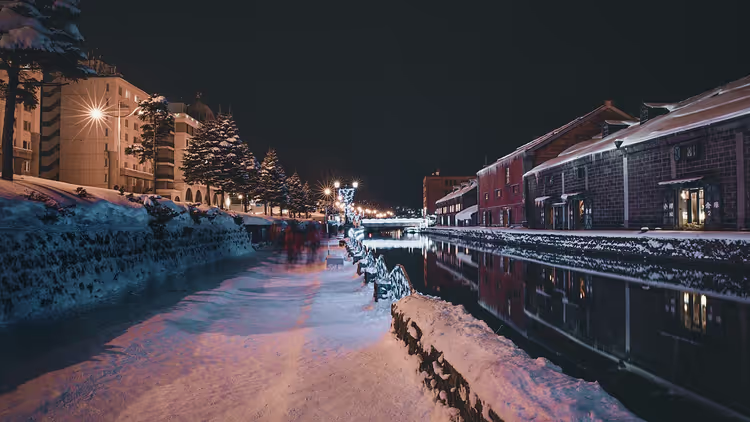
Winter in Japan by region: where the snowdrifts are and where the plum blossoms bloom
In winter, Japan looks completely different from the postcards with cherry blossoms. In Zao Onsen, snow piles up above the rooftops over the season, while on Kyushu plum blossoms are already blooming at the same time. The whole country fits between these two pictures.
Planning a trip like this is harder than it seems. Winter in Japan is not one single thing: on Hokkaido it means meter-deep snowdrifts and freezing nights, in Tokyo the weather is dry and sunny with almost no snow, and in Kyoto snow is a real rarity.
We have put together everything you need for a winter trip in one article: when the season starts in each region, where the snow is deepest, where to go to escape the cold, and how to avoid overpaying during the New Year holidays. The logic is simple: from the snowy north to the warm south, because latitude is what determines what you will see.
Ad: this article contains affiliate links, we earn a commission if you book through them, at no extra cost to you.
Why winter is a good time to visit Japan
💡 In short:
- Winter in Japan lasts from early December to late February, with January being the coldest month.
- Look for snow on Hokkaido, in Tohoku, and in the Japanese Alps, and expect warmth and plum blossoms on Kyushu and Shikoku.
- Season, regions, and climate: 09/2026, verified on the official Japan tourism portal.
Winter tourism in Japan is underrated, and that is a mistake. Apart from the New Year holidays, there are noticeably fewer tourists here than in April during cherry blossom season. Hotels and flights in January and February are often cheaper, and you can get to popular spots without waiting in line.
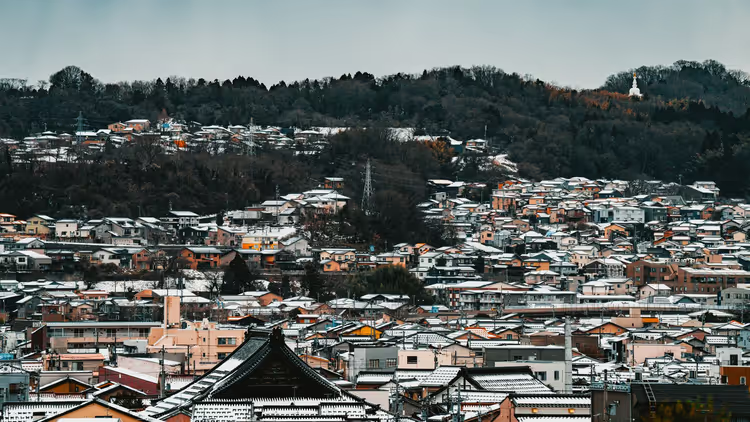
The second reason is the range of weather. In a single trip, you can ride dry powder and stroll through a warm city. Distances in Japan are long, but the shinkansen with transfers connects the north and south of the country.
Just do not expect snow everywhere. In the lowland cities of the Pacific coast, including Tokyo, snowfall is rare. The main snow comes from cyclones off the Sea of Japan, so that is exactly where you need to go for a winter wonderland.
If your dates are flexible, choose the second half of February. During these quiet days, available accommodation remains even at the last minute.
A winter trip requires one thing: a time buffer. Weather changes train and lift schedules, and one free day in your plan can save the whole itinerary. Do not put a transfer and a flight on the same day.
What awaits you in winter in Japan
- Dry powder and ski resorts: Niseko on Hokkaido and Hakuba in the Japanese Alps.
- Snow-covered villages: Shirakawa-go with its thatched-roof houses.
- Winter festivals: the Sapporo Snow Festival with giant snow and ice sculptures.
- Illuminations: Tokyo and Osaka turn into corridors of light in winter.
- Onsens: open-air hot springs where you warm up after a day in the snow.
- Mild winter: plum blossoms on Kyushu and Shikoku begin as early as January.
That is what winter looks like in broad strokes. Next, we will break it down by region and month so you can figure out exactly where to go.
When winter comes to Japan
The winter season in Japan runs from early December to late February. January and February are the coldest months, and the first snow in northern and mountainous areas falls as early as November. Unlike Central Europe, winter here is often dry and sunny, and gray skies are far from an everyday occurrence.
The defining feature of Japanese winter is the huge variation between regions. While a blizzard is raging in the north, you can walk around without a jacket in the south. That is exactly why the question "what is winter like in Japan" has no single answer: it all depends on where you are flying.
Use the table below as a guide for planning your route. Average values do not show how much snow you will see during your trip, but they make it immediately clear where you will need winter boots and where a light jacket will be enough.
Average daytime winter temperatures by region (as of 09/2026, JNTO portal):
Region | Daytime | Nighttime | Snow |
|---|---|---|---|
Hokkaido | -5 to -10 °C | down to -15 °C and below | permanent snow cover |
Tohoku | -2 to -8 °C | well below freezing | frequent snowfall |
Tokyo and Kanto | 0 to 8 °C | around freezing | rare |
Japanese Alps | -3 to -10 °C | below freezing | heavy snow |
Kansai | 5 to 10 °C | around freezing | rare, in the mountains |
Northern Kyushu | 6 to 10 °C | occasionally below freezing | rare |
Kagoshima | 10 to 14 °C | above freezing | none |
Shikoku | 8 to 15 °C | above freezing | only in the mountains |
Winter in the north: Hokkaido and Tohoku
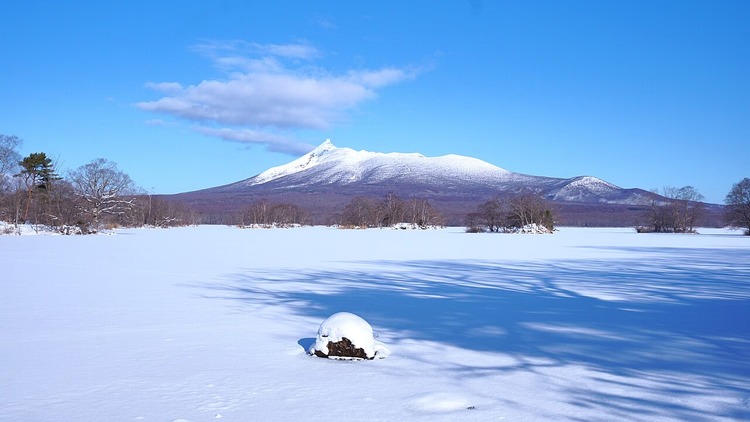
Winter arrives in Hokkaido earlier than in the rest of the country. The first snow falls here as early as November, and cold Siberian winds make the season truly harsh. During the day the thermometer shows a moderate freeze, and at night it drops far below zero, so you will need warm boots with non-slip soles and a windproof jacket.
 © 掬茶 · CC BY-SAPhoto: 掬茶, CC BY-SA (https://creativecommons.org/licenses/by-sa/4.0), Wikimedia Commons
Snowfall in Hokkaido is almost continuous, and even in Sapporo tall snow walls line the roads. Municipal services work around the clock, but without a hat and gloves you will not last long outside. On the plus side, the air here is dry and the sky is often clear.
Tohoku in northern Honshu is slightly milder than Hokkaido. It is warmer here both day and night, but there is still plenty of snow. In the mountains around Zao Onsen in Yamagata Prefecture, you step into a deep snowy fairy tale, and in the evening you warm up in hot springs.
Getting around the north requires extra time. Trains between Tohoku and Hokkaido run on adjusted schedules in winter, and a connection shorter than an hour becomes a lottery. Plan your transfers with a buffer and keep one day in reserve in case of heavy snowfall.
Winter in Tokyo and the Japanese Alps
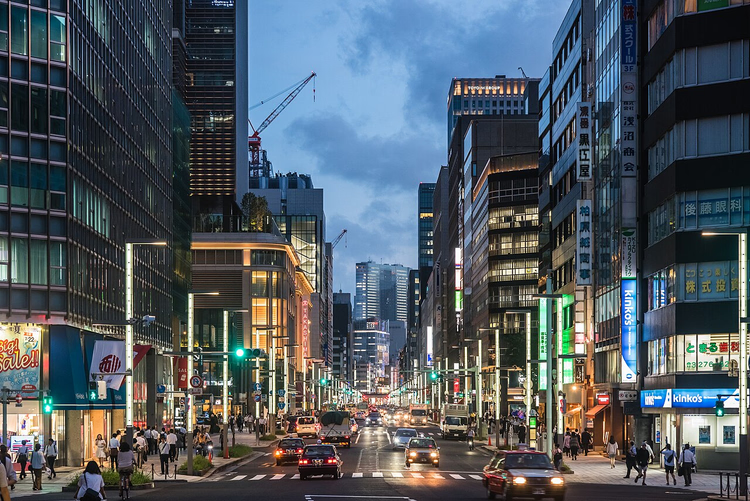
In Tokyo and the rest of Kanto, winter is mild. Daytime temperatures stay above freezing, snow in the city is rare, but the air is dry and sunny, and the sky is almost always clear. The main winter spectacle in the capital begins after dark: entire neighborhoods light up from November to February, and a walk through them is worth your time.
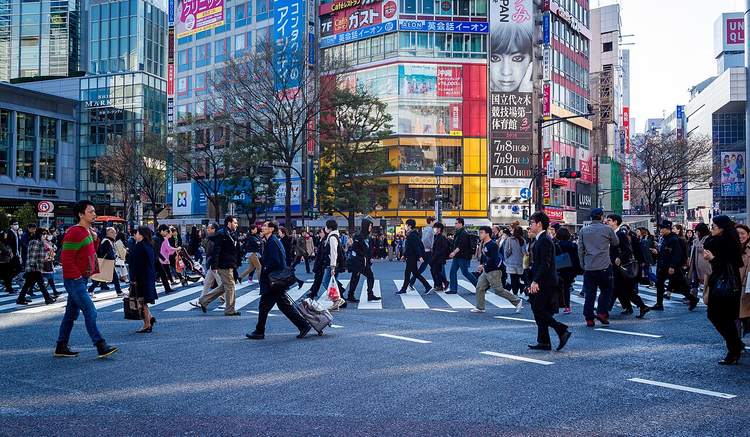
The Japanese Alps are a completely different story. In Nagano and Takayama, temperatures stay firmly below freezing, and the towns turn into snowy oases. People come here for skiing, but there is plenty to see even without skis: traditional villages under snow look like movie sets, and great photos happen on their own.
Factor in the travel time. The shinkansen runs between Tokyo and the Alps, so you can reach Nagano in a day and return to the city in the evening. If you plan to ski for several days, pick one base and do not change hotels every night: moving around eats up time that is better spent on the slopes.
Winter in Kansai
In Kansai, which includes Kyoto and Osaka, winter is the mildest of the major Honshu regions. It is noticeably warmer here during the day than in Tokyo, and at night the temperature sometimes approaches freezing. Snow rarely falls in the cities, but the picture changes once you head higher.
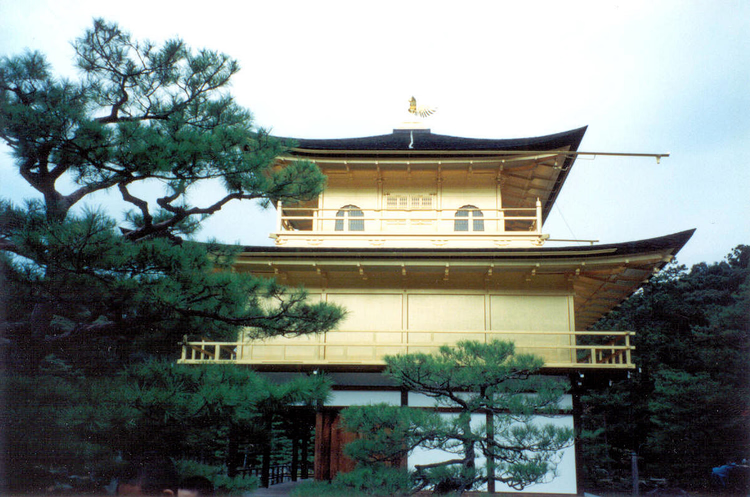 © Jim Gateley · CC BYPhoto: Jim Gateley, CC BY (https://creativecommons.org/licenses/by/3.0), Wikimedia Commons
Around Arashiyama and on Mount Hiei, a thin layer of snow sometimes settles, and familiar views look different. In the northern part of Kyoto Prefecture, along the Sea of Japan, winter is noticeably colder and there is more snow than in the city. The famous Amanohashidate sandbar occasionally gets covered in snow, offering rare photo opportunities.
In the mountains of Wakayama Prefecture, around the sacred Mount Koya, the climate is harsher. Nights are freezing, snow settles on the historic temple complexes, and there are almost no tourists there in winter. If you want a quiet day away from the crowds, this is a good option.
In Kyoto it gets dark early in winter, so visit the main temples before lunch. In the evening the city switches to illuminations and restaurants, and you can enjoy a relaxed dinner without the lines that form at every entrance in summer.
Winter in the south: Kyushu and Shikoku
On Kyushu and Shikoku, winter is mild and highly varied. In Fukuoka in the north of the island, it is warm during the day and occasionally drops below freezing at night. In the mountains around Mount Aso, snow sometimes makes the weather truly wintry, so it is worth bringing a warm jacket even to the south.
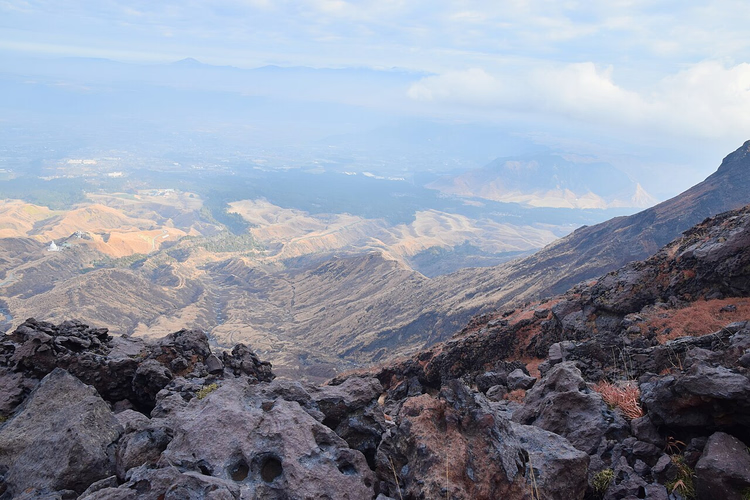 © Raita Futo · CC BYPhoto: Raita Futo, CC BY (https://creativecommons.org/licenses/by/2.0), Wikimedia Commons
Further south, in Kagoshima, winter is warm and dry. Frost is rare here, the air is clear, and the weather feels like early spring. If you do not handle cold well, this region will suit you better than any other.
On Shikoku the picture is similar. In Takamatsu, on the Seto Inland Sea, winter is mild, snow is almost unheard of, and the city works well as a base for exploring the island. You can walk the flat sections of the Shikoku temple pilgrimage route without winter gear.
In southern Shikoku, in Kochi, the winter weather is almost springlike, with temperatures higher than in Fukuoka. In the mountains, however, it is freezing and snow lies on the ground. That way you get two different seasons in one trip, and you decide which one suits you better.
In winter the southern beaches are empty, but the weather is perfect for walking and driving trips. Rent a car for a couple of days and explore the coast without the summer heat and without traffic jams.
Where it snows in Japan
Japan is one of the snowiest countries in the world. Every winter, Hokkaido and the mountainous areas of Honshu along the Sea of Japan coast end up under snow. Let's look at where all this snow comes from and where you should go to find it.
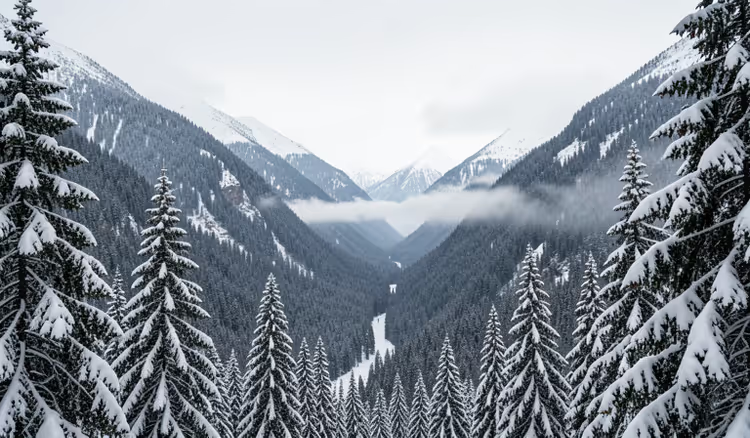 AIIllustrative image: AI-generated
Japan's snow belt
Cold winds from Siberia sweep across the Sea of Japan and pick up moisture over the water. Over the mountains and along the coast, that moisture falls as snow. This is how Japan's snow belt works, and it's why the country gets more snow than most of Europe.
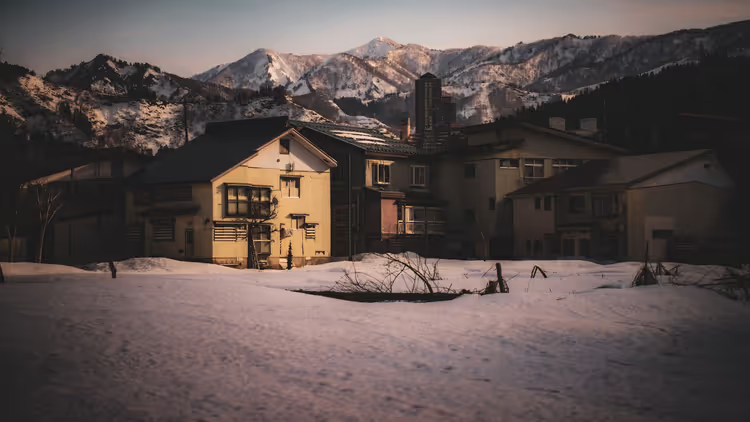
The snow stays on the ground until spring, and in the mountains sometimes into April. It doesn't fall evenly: two neighboring towns can differ by several times. So don't look at the country as a whole, look at the specific region and its elevation above sea level.
Yamagata and Niigata: the most snow
Yamagata and Niigata compete for the title of Japan's snowiest prefecture. Both sit on the Sea of Japan, both take the brunt of moisture-laden cyclones, and both have reliable snow cover all winter. If you want a real snowy winter rather than a couple of days with snowdrifts, start with these two.
Snow monsters in Zao Onsen
In the mountains of Yamagata, around the Zao Onsen resort, snow and wind create "snow monsters": trees become completely encased in ice and turn into bizarre shapes. They're called juhyo, and the ones in Zao are considered among the largest in the world (as of 09/2026, description on the ropeway website).
The ropeway runs all winter: the season lasts from December 11 to March 31, the lower line is open from 8:15 to 16:45, the upper line from 8:30 to 16:30. A round-trip ticket to the upper station at 1,661 m costs 4,400 yen for adults and 2,200 yen for children (as of 09/2026, official ropeway website). Verified on the official website on 09/12/2026.
In the evening the trees are lit up, and you can go up to the observation deck in the dark. After coming back down, the resort's onsens are waiting for you: hot water after the cold works better than any bar. The catch: on clear weekends a line forms at the ticket office, so get there for opening time.
Niigata ski resorts
Niigata is no less snowy than Yamagata. In the Tsunan and Myoko areas, so much snow falls each season that villages almost completely disappear under it. In the mountains the snowpack lasts until late spring, so the ski season here is longer than in Europe.
Niigata has another advantage: accessibility. The shinkansen runs from Tokyo to Echigo-Yuzawa, and the trip takes under two hours, so skiing is genuinely compatible with living in the capital. In winter the schedule is dense, but weekend tickets sell out, and booking shinkansen seats in advance is cheaper and less stressful.
Around Yuzawa there are resorts for all levels, so you'll easily find a slope that matches your skills. Equipment rental is available on site, so you don't have to haul skis from home. Check trail conditions in the morning: after overnight snowfall, some lifts open later.
Snow in the Japanese Alps
The Japanese Alps are considered one of the country's most spectacular snow regions. Nagano Prefecture welcomes skiers from around the world, but even without skiing there's plenty to do: snow-covered villages and hot springs operate all winter.
Nagano ski resorts
Hakuba is known far beyond Japan: the 1998 Winter Olympics events were held here (as of 09/2026, official Happo-One resort website). Dry powder and panoramic views of the alpine ridges make Hakuba one of the country's most popular destinations.
The second major destination in Nagano is called Shiga Kogen. It's Japan's largest interconnected ski area: one ski pass opens up dozens of trails, and buses shuttle you between them. The infrastructure is modern, so a day in the snow goes smoothly without unnecessary running around.
Shirakawa-go and the Okuhida onsens
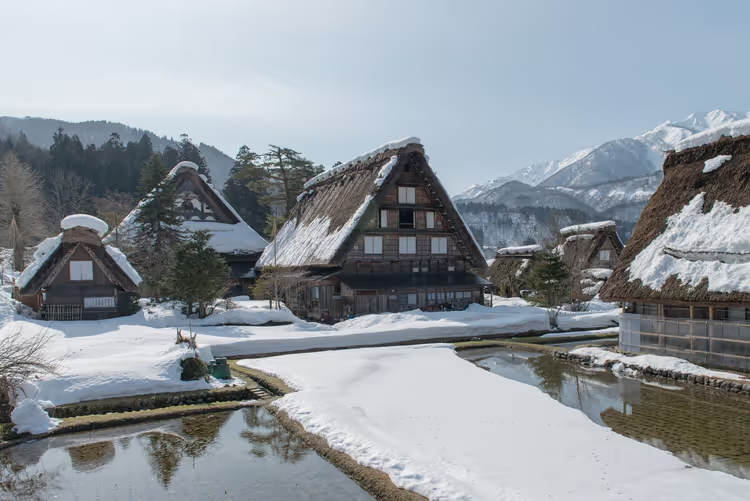
In Gifu Prefecture stands Shirakawa-go, a UNESCO-protected village with traditional thatched-roof houses. In winter, snow covers the roofs and the village looks like a fairy-tale illustration. Winter illumination events are held here: in 2027 they're scheduled for four evenings, January 11, 17, 24, and 31, from 17:30 to 19:30 (as of 09/2026, announcement from the Shirakawa-go Tourist Association).
The illumination events are open only with advance reservations, so plan your trip ahead. It's most convenient to stay overnight in the village itself or in Takayama, where buses depart from. If you're driving, use winter tires and don't count on a fast drive during snowfall.
Nearby lies Okuhida, a land of hot springs among snowy ridges. After a day in the cold, you sit in an open-air bath while snow falls around you. Accommodation in the Okuhida onsens is limited, so book ahead for weekends.
Hokkaido ski resorts
Hokkaido remains the top destination for those seeking the best snow in Japan. The local dry powder is called japow, and skiers come from all over the world for it. The Niseko and Rusutsu resorts are known for reliable snowfall and a long season.
 © Sitao Xiang · CC BY-SAPhoto: Sitao Xiang, CC BY-SA (https://creativecommons.org/licenses/by-sa/4.0), Wikimedia Commons
From Niseko you can see Mount Yotei, a volcano that's called the "Fuji of Hokkaido" because of its perfect shape. Niseko has long been on lists of the world's best ski resorts: the infrastructure is well developed and the nightlife is lively. Neighboring Rusutsu offers the same snow conditions but in a calmer atmosphere, which is convenient if you came to ski rather than party.
Sapporo Snow Festival
Once a winter, Sapporo lives and breathes snow and ice. The 77th Snow Festival will take place from February 4 to 11, 2027, with venues in Odori Park, the Susukino district, and the Tsudome site (as of 09/2026, official festival website).
You'll see giant snow sculptures, ice figures, and evening illumination. During the festival, hotels in Sapporo get more expensive, so you should book that week at least several months in advance. You can walk around the venues all day, but bring a thermos: the cold here is real.
Snow in cities and on the coast
Snow in Japan doesn't only fall in the mountains. Cities and fishing villages along the Sea of Japan also get buried in snow, and there you see a different winter: quiet, without ski resorts and crowds.
 © shikabane taro · CC BYPhoto: shikabane taro, CC BY (https://creativecommons.org/licenses/by/3.0), Wikimedia Commons
The snowiest cities: Aomori and Akita
Aomori and Akita are considered among the snowiest cities in the country. Snowfall here is not an event but a part of winter: entire neighborhoods sit under a thick layer, and the city's rhythm slows down. For you, this is a chance to see everyday Japanese life against the backdrop of a snowy winter.
Snow-covered fishing villages
Less well known are the small villages along the Sea of Japan coast in Kyoto, Hyogo, Tottori, and Shimane prefectures. Snowy days happen here too, but there are almost no tourists. You walk between snow-covered temples and wooden houses, surrounded by silence and the smell of the sea.
In places like this, don't expect tourist infrastructure. Winter bus schedules are limited, some cafes close early, and it can be difficult without knowing Japanese. But the experience you get is one you won't find on the standard route through the country.
Where to go instead of snow
In winter, Japan has plenty to do even without skis. While snow lies in the north, flowers bloom in the south, and you can comfortably walk around in a light jacket. Let's look at where to go if you're not a fan of the cold.
 © Aimaimyi · CC BY-SAPhoto: Aimaimyi, CC BY-SA (https://creativecommons.org/licenses/by-sa/3.0), Wikimedia Commons
Camellias and plum blossoms in winter
Winter Japan is not as gray and white as it seems. From November to February, camellias, known here as sasanqua and tsubaki, bloom in temple gardens, adding red and pink touches to the landscape. And from late January, ume plum blossoms open in the warmer regions.
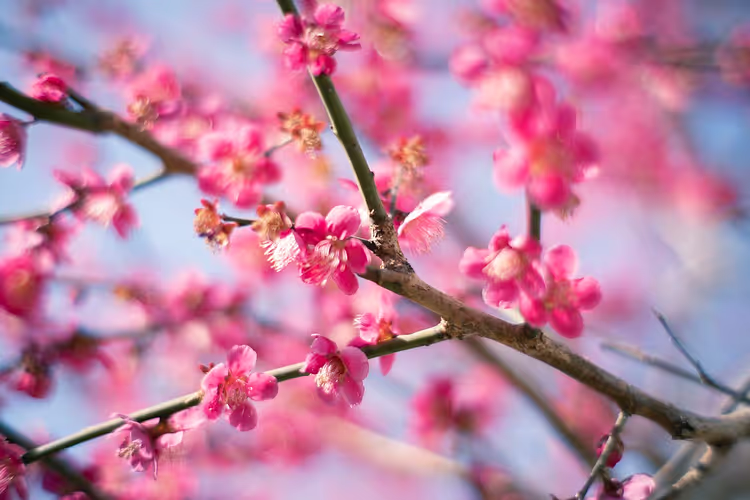
Plum blossoms are just as beautiful as sakura, but they bloom earlier and longer. For the Japanese, this is the first sign of spring, so locals come to see the blossoms, not just tourists. This is a good option if you want to see blossoms without standing in April queues under the cherry trees.
Three warm destinations
If you want to completely escape the snow, you have three proven options in the south. Kagoshima and Fukuoka are on Kyushu, and Cape Ashizuri is on the southern tip of Shikoku. The journey between them takes hours, not days, so you can see more in the same trip.
Cape Ashizuri
Ashizuri lies at the southernmost point of Shikoku. It's warm here even in winter, and the air is humid and mild, so you don't need a winter coat. The coast is cut with cliffs, subtropical plants grow all around, and the sea water stays turquoise.
On the cape stands Kongofuku-ji, one of the temples on the Shikoku pilgrimage route. The observation decks offer views of the cliffs and the open ocean, and you can easily spend half a day walking around. A few kilometers away lies Tatsukushi with its unusual rock formations and clear water, where you can feel a tropical atmosphere even in winter.
Sakurajima near Kagoshima
In Kagoshima Prefecture, winter is mild and dry, making it a convenient time for outdoor walks. The area's main landmark is named Sakurajima: an active volcano visible from almost anywhere in the city.
Well-maintained trails lead through the volcanic landscape: you pass lava fields and hot springs, with the smoking crater ahead and Kagoshima Bay beyond. In half a day here, it's easy to forget it's winter on the calendar. Wear comfortable shoes: the surface is uneven in places.
Plum blossoms in Dazaifu
Fukuoka suits those who want to start spring earlier than everyone else. Winter days here are mild, and the city is convenient for leisurely walks and trips around the area. The main reason to come in late winter is the plum blossoms.
At Dazaifu Tenmangu Shrine, more than 6,000 plum trees grow, donated to the shrine's deity (as of 09/2026, official shrine website). The first buds open in late January, and peak bloom comes in mid-February. Come in the morning: by midday, the paths are crowded.
You can stay overnight in Fukuoka without overpaying if your dates don't fall on the New Year holidays. Compare hotels in Fukuoka on Trip.com in advance, because in February the city fills with blossom visitors.
Winter Japan: high season or quiet weeks
Winter in Japan holds two different scenarios. Ski regions like Niseko and Hakuba draw thousands of guests, while quiet areas of Tohoku live in silence. What awaits you depends on the destination and the week you choose.
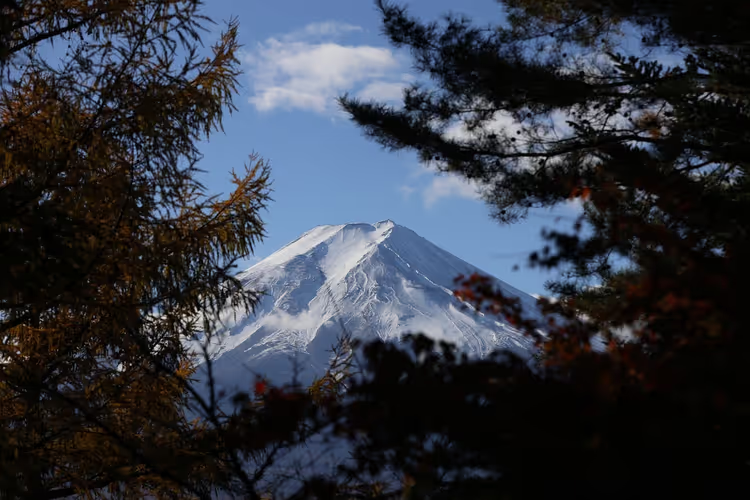
In popular ski areas, accommodation and tickets for January and February sell out quickly. Book in advance, otherwise the only options left will be in the expensive segment. But away from the resorts, you'll find empty temples, snow-covered villages, and onsens with no queues.
Think about transport separately. On holiday dates, trains and domestic flights fill up completely, so shinkansen and intercity bus tickets should be booked together with your hotel. A backup for your second route option is also useful.
New Year and winter holidays
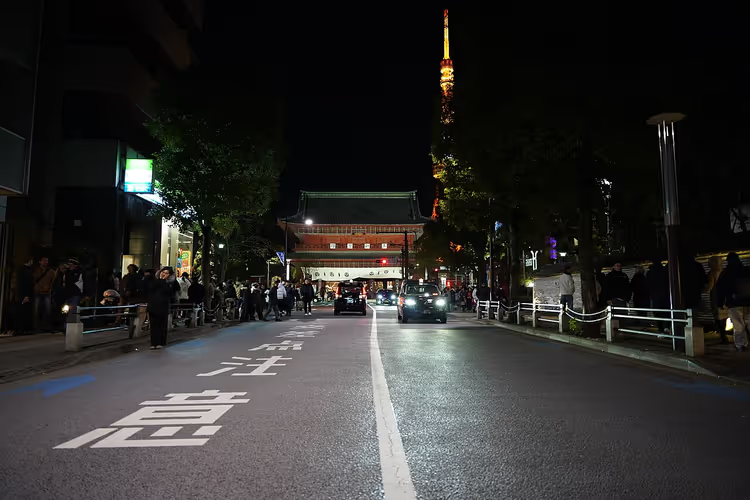
There's one exception here: the New Year holidays. This is one of the busiest travel periods of the year, because Japanese people travel to see their families and visit popular temples for blessings. Accommodation and ticket prices are higher on these days, and crowds gather at famous sights.
 © Benlisquare · CC BY-SAPhoto: Benlisquare, CC BY-SA (https://creativecommons.org/licenses/by-sa/4.0), Wikimedia Commons
If you want to see New Year temple rituals, book a hotel with free cancellation. Keep in mind that some shops and restaurants are closed in the first days of January. Check in advance what's open near your hotel, otherwise you'll be left with a half-empty fridge.
Quiet weeks after the holidays
After New Year, the country returns to its normal rhythm, and the best time to travel begins. There are noticeably fewer tourists, hotel and flight prices are lower, and you can approach popular spots without queuing. The second half of February is just as quiet.
This matters for your budget too. Money saved on accommodation is better spent on an onsen, a train ride, or a tour than overpaying for the same nights on peak dates. Compare prices across two weeks and you'll see the difference yourself.
Short days and closures in winter
In winter, daylight hours are short, and many temples, museums, and observation decks close earlier than in summer. Schedules change, so check the opening hours on the official website of each place before you set out, not from memory.
One more detail: some attractions close for scheduled maintenance, especially in February. Before your trip, check whether a site is open, and keep one backup option in your plan. That way you won't lose a day to closed gates.
Who a winter trip to Japan suits
Winter Japan gives different travelers different experiences. If you want to ski, choose Hokkaido or Hakuba and book accommodation in advance. If you want snow and onsens without the crowds, head to Tohoku or the Japanese Alps.
For those who don't like the cold, Kyushu and Shikoku are a good fit: it's warm there, and plum blossoms start as early as late January. City lovers also find winter convenient, because Tokyo and Kyoto are less crowded than during sakura season. Families with children have it easiest in the south, where there's no frost or ice.
The main thing to remember: snow and warmth in Japan live side by side, and the distance between them can be covered in a day. Put together a two-part itinerary, and you'll get both a winter fairy tale and spring in one trip.
⁉️🤔 Frequently asked questions
When does winter start and end in Japan?
The winter season runs from early December to late February. It's coldest in January and February. In northern and mountainous areas, the first snow falls as early as November, and in the mountains the snow cover lasts until April. On Kyushu and Shikoku, winter is mild and almost snow-free.
Where in Japan gets the most snow?
The most snow falls on Hokkaido and in the mountains of Honshu along the Sea of Japan. Yamagata and Niigata prefectures hold the records: in Zao Onsen, trees are encased in ice, and in the Tsunan and Myoko areas, villages are almost entirely buried under snow in winter.
Is it worth going to Japan in winter?
Yes, if peace and price matter to you. After the New Year holidays, there are fewer tourists, hotels and flights are cheaper, and the mountains have dry powder. The catch is also there: days are short, and some temples and museums close earlier than usual.
Where in Japan is it warm in winter and plum blossoms bloom?
On Kyushu and Shikoku. In Kagoshima, winter days are warm and dry, at Cape Ashizuri the air is mild, and at Dazaifu Tenmangu Shrine near Fukuoka, plum trees are in bloom. The first buds open in late January, with peak bloom in mid-February.
Do I need tickets for the Shirakawa-go illumination and the Sapporo Snow Festival?
The Shirakawa-go illumination is accessible only by advance reservation, so book tickets and the bus in advance. The Sapporo Snow Festival sites operate all week, but book your hotel for those February dates several months ahead, otherwise only expensive options will remain.
In short: what to book
Few days and you want snow: choose Hakuba or Yuzawa, both easy to reach from Tokyo to the slopes. A week and you want a winter fairy tale: choose Niseko or Shirakawa-go. You don't like the cold: head to Fukuoka or Kagoshima, walk around temples, and see the plum blossoms.
One thing worth doing right now: choose accommodation for your dates while popular regions still have available options. Tours and excursions in Japan on GetYourGuide will help round out your itinerary once hotels are booked.

A small editorial team writing guides for independent travel. We travel ourselves, but we haven’t been everywhere, so we check prices, opening hours and how to get there against official sources.