
















10 Things to do in Sweden worth trying
Sweden is not just IKEA and the Nobel Prize. Behind the Nordic calm lies a country where a tower's lighting is controlled from a smartphone and fermented herring smells up the whole neighborhood. Many tourists only see postcard Stockholm and leave without trying the main things.
Admission to Stockholm museums starts at 185 kronor for an adult (as of 09/2026, Skansen website), and a ticket to Liseberg park with unlimited rides costs roughly from 400 kronor (as of 09/2026, official Liseberg website). Below you will find free options too, as well as full-day plans.
💡 In short:
- 10 things to do across Sweden: Stockholm, Gothenburg, Malmö and Kiruna.
- Buy museum and park tickets online: the price depends on the day and season.
- Prices and opening hours are current as of 09/2026.
Ad: this article contains affiliate links, we earn a commission if you book through them, at no extra cost to you.
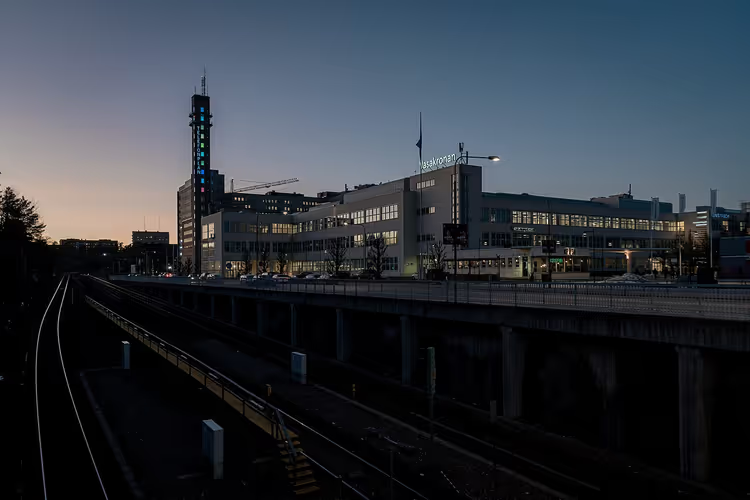
1. Change the color of the Telefonplan tower
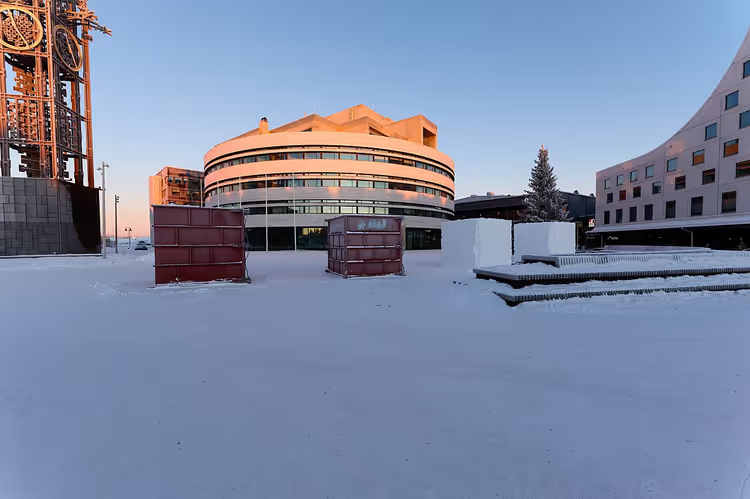
Stockholm has a tower on Telefonplan square whose lighting anyone can control. Just install the app and pick a color: it changes in real time. The building is tall, so the result is visible to residents of several neighboring blocks. Come after dark if you want to catch the effect. This is one of the few things to do in the city that costs nothing.
 © Michal Kopec · CC BYPhoto: Michal Kopec, CC BY (https://creativecommons.org/licenses/by/4.0), Wikimedia Commons
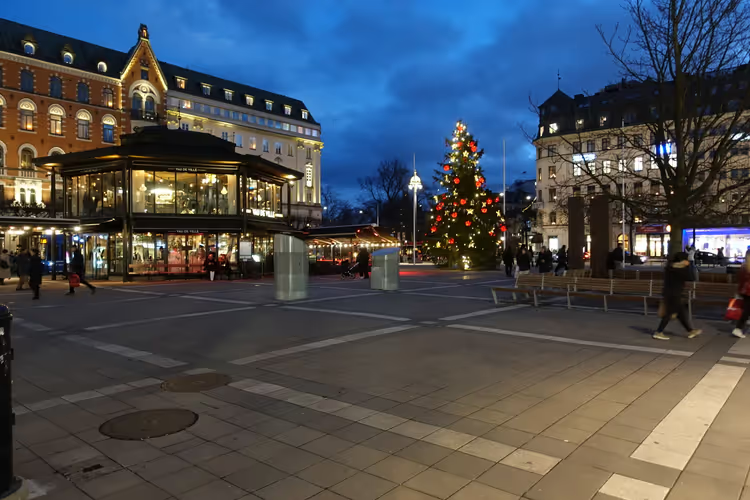
2. Visit Norrmalmstorg square
Norrmalmstorg square in central Stockholm looks ordinary, but its name is known around the world. In 1973, Jan-Erik Olsson tried to rob a bank on this square and took hostages. During the siege, the hostages began to sympathize with the captor and criticize the police. The criminologist and psychiatrist who advised the police called it "Norrmalmstorg syndrome," and the phenomenon was later renamed Stockholm syndrome.
The former bank building is now occupied by Nobis Hotel Stockholm. If you want to spend the night where the term was born, check prices at Nobis Hotel Stockholm on Trip.com.
 © Alexey M. · CC BY-SAPhoto: Alexey M., CC BY-SA (https://creativecommons.org/licenses/by-sa/4.0), Wikimedia Commons
3. Go to interactive museums in Stockholm
Stockholm's museums are set up so that touching the exhibits is not just allowed, it is encouraged. You record a track with ABBA, climb around on Karlsson's roof, and run experiments on yourself. Here are four places worth getting a timed-entry ticket for.
Museum | Adult admission | Opening hours |
|---|---|---|
249-329 kronor, price depends on the day (as of 09/2026, ABBA The Museum) | daily from 10:00 | |
185-305 kronor by season, free for children under 15 (as of 09/2026, Skansen) | depends on the season | |
timed ticket, rates on the website | Mon-Fri 10:00-17:00 | |
Tom Tits Experiment | rates on the website, low season from September to May | check closing days |
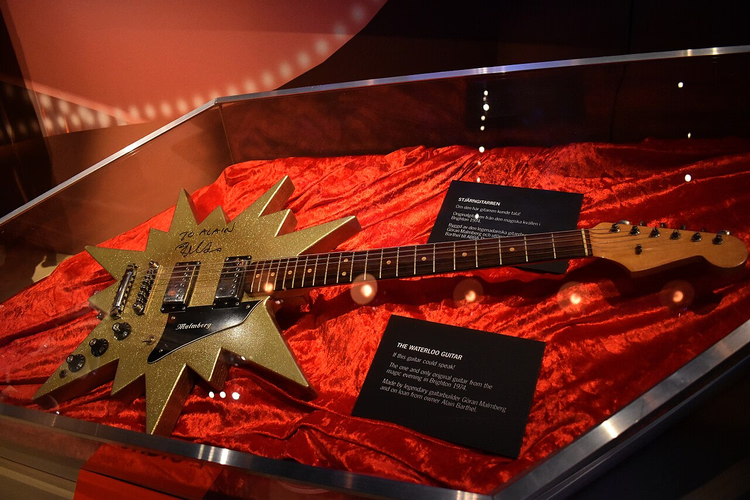
At ABBA The Museum you can dance with holograms of the band members and record a track with studio musicians. The luckiest visitors get a call from the artists themselves: one of the rooms has a phone that the singers occasionally dial.
If you are traveling with kids, go to the Astrid Lindgren museum Junibacken. You can climb onto Karlsson's roof, cook in Pippi's kitchen, and jump on the sofa.
Fans of hands-on experiments will enjoy Tom Tits Experiment in a Stockholm suburb. It has more than 400 exhibits: everything can be turned, twisted, and pressed. Both adults and kids will love it.
You can get to know old Sweden at the open-air museum Skansen on the island of Djurgarden. Craft shops, houses, and estates from old Sweden await you here. The admission price depends on the month, and in summer the museum often hosts celebrations and festivals.
 © BugWarp · CC BY-SAPhoto: BugWarp, CC BY-SA (https://creativecommons.org/licenses/by-sa/4.0), Wikimedia Commons
Many exhibits here are designed for you to touch and try, not just look at. Allow at least two hours for each museum.
It is convenient to buy tickets to Stockholm museums in advance: without a timed slot in summer, you risk standing in line for over an hour.
Tours and tickets in Stockholm
Guided tours, skip-the-line tickets and activities — most offers can be cancelled free of charge.
See offers on TiqetsThe widget loads once you give your consent.
4. Ride an electric surfboard
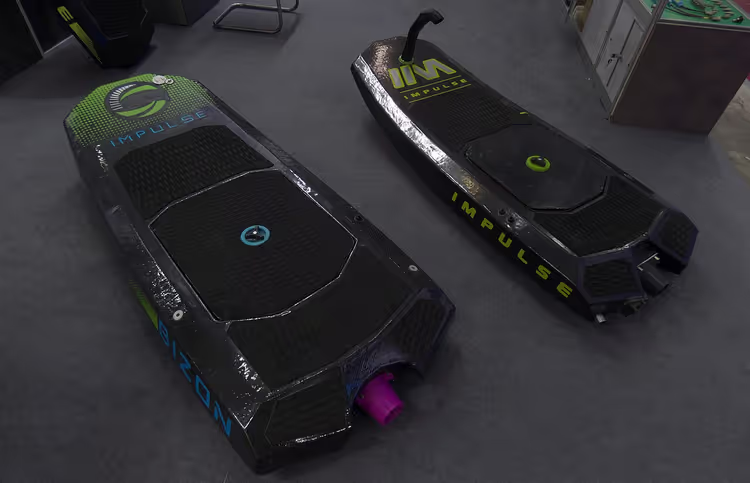
Surfing without waves sounds strange, but in Sweden it works. This is where electric-powered boards are made, and they do not need waves: they work on any water, whether it is a river, a lake, or a calm sea. You control the speed with a waterproof remote.
If you dreamed of catching a wave but were afraid of the open ocean, Swedish lakes are ideal. Calm water and a smooth surface make riding easier than on an ocean wave. You can ride between fjords or along quiet rivers.
 © Kirill Borisenko · CC BY-SAPhoto: Kirill Borisenko, CC BY-SA (https://creativecommons.org/licenses/by-sa/4.0), Wikimedia Commons
5. Hit the free sauna in Gothenburg
The English meet at pubs, while Swedes head to the sauna, which they call a bastu. The custom here is to warm up and then plunge into cold water several times in a row. For Swedes, it is a weekly ritual. People go to the sauna with colleagues, relatives, and friends.
The country's most unusual bastu is in Gothenburg, Sweden's second-largest city. It is about 400 km from Stockholm. The Bastun i Frihamnen sauna operates in the old port and is free for everyone, with room for up to 25 people inside (as of 09/2026, Gothenburg tourist office).
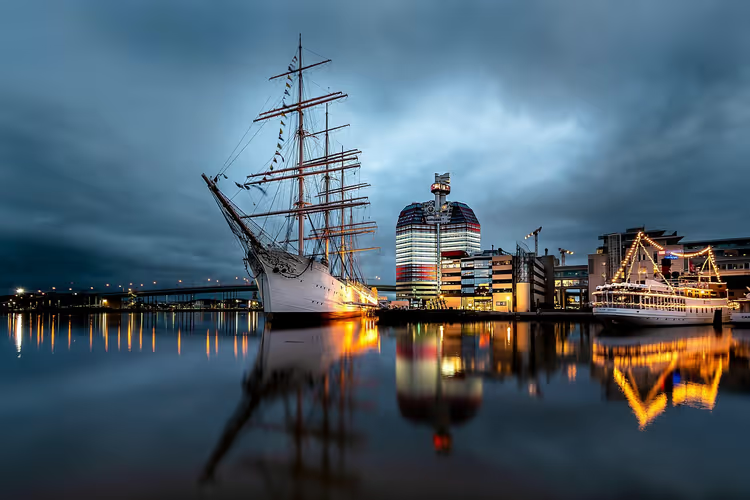
From the outside, it is a large rusty box that may scare off a tourist at first. Inside, everything is honest: the building is clad in used metal sheets from old port equipment, and the changing rooms are built from thousands of glass bottles.
After the heat, you will want to take a dip. Next to the bastu there is a floating harbor bath on the Göta River, where you can cool off in cold water.
- The catch: slots on the city website are booked out weeks in advance, so reserve early.
6. Spend a day at Liseberg
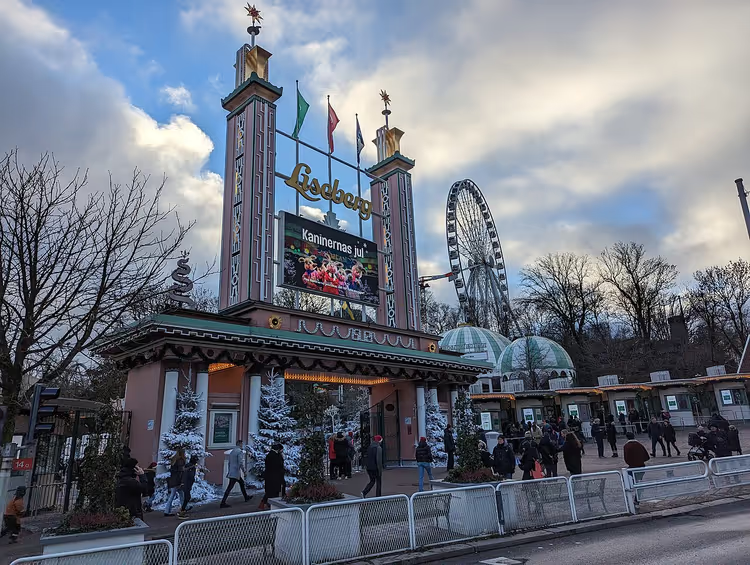
Liseberg in Gothenburg is considered one of Europe's largest amusement parks and the biggest in Scandinavia. The park is open in the summer season, with about 40 rides, a woodland park for picnics, and an open-air concert stage.
Buy tickets online: admission and an unlimited ride pass are sold together, and the price depends on the date (as of 09/2026, Liseberg rates). In summer, Swedish artists often perform here, so a concert can become part of your day.
 © AleWi · CC BY-SAPhoto: AleWi, CC BY-SA (https://creativecommons.org/licenses/by-sa/4.0), Wikimedia Commons
It is hard to cover the whole park in one day. If you plan to stay longer, there is a hotel, guesthouse, cottages, a campsite, and a youth hostel on the grounds.
- The catch: the park is open only in the summer season.
7. Try surströmming
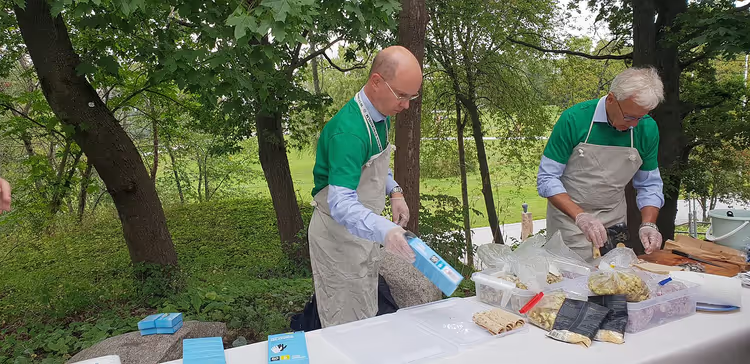
Surströmming, fermented herring with a pungent smell, is a national delicacy of Sweden. Several centuries ago, the kingdom had a salt shortage, so they used as little as possible when preserving fish. That is how the smell of fermented fish came about, which is why few people dare to try it.
Locals are not bothered by the aroma. Sweden has a surströmming lovers' society and a grassroots movement. YouTube is full of reaction videos from people who actually bought a can. If you still have a spark of curiosity, give it a try: you will definitely remember the experience.
 © Eric Luth (WMSE) · CC BY-SAPhoto: Eric Luth (WMSE), CC BY-SA (https://creativecommons.org/licenses/by-sa/4.0), Wikimedia Commons
8. Drive across the Øresund Bridge
The Øresund Bridge connects Malmö in Sweden with Copenhagen in Denmark. Both cars and trains cross it. Part of the route goes underwater: 3.7 km of traffic moves through a tunnel under the seabed of the strait and emerges near Kastrup Airport (as of 09/2026, Öresundsbron).
The tunnel was built so the bridge would not interfere with planes from Copenhagen Airport, would let ships pass in any weather, and would not block the strait with ice. Construction was expensive: by some estimates, the bridge will not pay for itself until 2035.
 © Nick-D · CC BY-SAPhoto: Nick-D, CC BY-SA (https://creativecommons.org/licenses/by-sa/4.0), Wikimedia Commons
If you want to cross the bridge, book Malmö-Copenhagen train tickets in advance: it is a popular route.
9. Have a Swedish fika
Fika is Sweden's main food tradition, a short coffee break. At work, people take fika to rest and return to their tasks with renewed energy. The main rule: drink coffee together with someone.
Even on a trip, it is worth making time for such a pause. With your coffee, get a semla, a bun with marzipan and whipped cream. It is served on Shrove Tuesday, the day before Lent begins.
 © my girlfriend · CC BY-SAPhoto: my girlfriend, CC BY-SA (http://creativecommons.org/licenses/by-sa/3.0/), Wikimedia Commons
10. See the northern lights in Kiruna
The northern lights are best viewed in the far north of Sweden. Kiruna is considered the country's northernmost city: it lies about 145 km beyond the Arctic Circle, and around 22,000 people live here (as of 09/2026, Visit Sweden).
The city runs on iron ore mining and space tourism, which grows every year. The northern lights season starts in September and lasts until the end of March. You'll need warm clothing: temperatures drop sharply at night, and you'll be watching from outside.
⁉️🤔 Frequently asked questions
When can you see the northern lights in Sweden?
The season starts in September and lasts until the end of March. Your best chances are in Kiruna and Swedish Lapland, away from city lights. Plan for at least three nights: the lights depend on weather and solar activity, and you might not see them in a single evening.
Do I need a visa to travel to Sweden?
Sweden is part of the Schengen Area, so EU citizens do not need a visa. Many citizens of non-EU countries also do not need a visa. Everyone else will need a Schengen visa. Check the requirements for your citizenship before traveling.
How much does admission to Stockholm museums cost?
An adult ticket starts at around 185 kronor, and children under 15 get into Skansen free (as of 09/2026, Skansen). The price depends on the day and season, and online tickets are usually cheaper. Check current rates on the museums' official websites: summer prices are higher than in the off-season.
Is Liseberg open in winter?
The amusement park is open during the summer season; the rides are closed in winter. Exact opening and closing dates vary by year and are published on Liseberg's official website. Plan your visit for June through August, and buy tickets online: weekend lines are longer.
How do I get into the free sauna in Gothenburg?
The Bastun i Frihamnen sauna is free and open year-round. Book ahead on the city's website: slots fill up weeks in advance. It holds up to 25 people, and the upper level is accessible by elevator (as of 09/2026, City of Gothenburg website).
In short: what to book
If you only have two days in Stockholm: get Stockholm museum tickets and hotels in central Stockholm on Trip.com.
If you're going to Gothenburg: plan a day at Liseberg and book the free sauna in advance.
If you are traveling to see the northern lights: book train tickets to Kiruna several weeks in advance. September and December are the busiest months, so reserve accommodation and tickets ahead of time.

A small editorial team writing guides for independent travel. We travel ourselves, but we haven’t been everywhere, so we check prices, opening hours and how to get there against official sources.