
















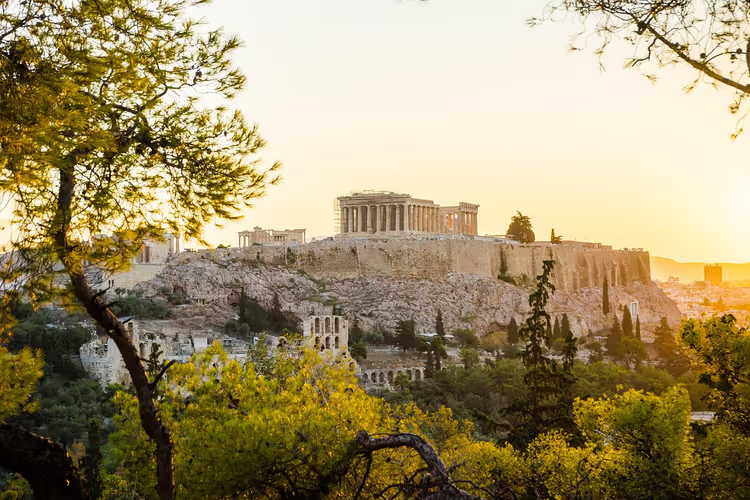
Athens in one day: a route through ancient sites with prices
One day in Athens is genuinely enough to fit a route from the Acropolis to Lycabettus Hill. The real question is how to spend those hours and what they cost.
A full Acropolis ticket costs 30 €, a reduced ticket 15 € (as of 09/2026, Greek Ministry of Culture website). The Athenian Agora, Roman Agora, Temple of Olympian Zeus, and Hadrian's Library are not included. They require separate tickets.
From there you walk through the old center: the rock, the Temple of Zeus, Syntagma, Plaka, the Roman Agora, Areopagus Hill, the Athenian Agora, Monastiraki. Below is the order for the day, airport transport, prices, and what is honestly worth skipping.
Ad: this article contains affiliate links, we earn a commission if you book through them, at no extra cost to you.
One-day route plan
💡 In short:
- Start with the Acropolis in the first time slot: by midday there is no air to breathe on the rock.
- Walk the loop Acropolis, Temple of Zeus, Syntagma, Plaka, the Agoras, Lycabettus, so you don't have to backtrack.
- Leave a buffer of time and water: there are plenty of climbs on the route.
- Prices and opening hours: 09/2026, verified on the official Acropolis Museum website
The whole route fits into a walking tour of the old center. Between the Acropolis and the Agora you walk a couple of blocks, and Monastiraki to Plaka is a stone's throw. Wear comfortable shoes: the marble is polished by foot traffic and slippery, and there are plenty of steps on the slopes. On a hot day, move the open hills to early morning or evening, and leave museums for midday.
How to get from the airport to the center
From Eleftherios Venizelos Airport to the center there are four options: metro, express buses, suburban rail, and taxi or transfer. The metro arrives right at Syntagma Square, buses stop at Syntagma and Monastiraki, and the suburban rail goes to the central station.
The metro, suburban rail, and express buses run from early morning until midnight, and some night services continue through the night. Tickets are sold at machines and kiosks in the arrivals hall, and you can tap a bank card at the turnstile. An airport ticket costs more than a city ticket: you pay for a separate zone.
Express buses have almost no luggage space, and the metro goes to Syntagma without transfers. Taxis are found at the stand outside the terminal exit, but in the morning hours the line is long. With luggage and children it is easier to book a transfer from the airport to central Athens with a fixed price: the car is brought to the exit, and you don't drag your things through transfers. A car ride is shorter than public transport.
Acropolis
The Acropolis rock rises above the center of Athens with the Parthenon on top. Starting the day here is the most convenient: the entrance opens in the morning, there are still few people, and the sun is not yet scorching.
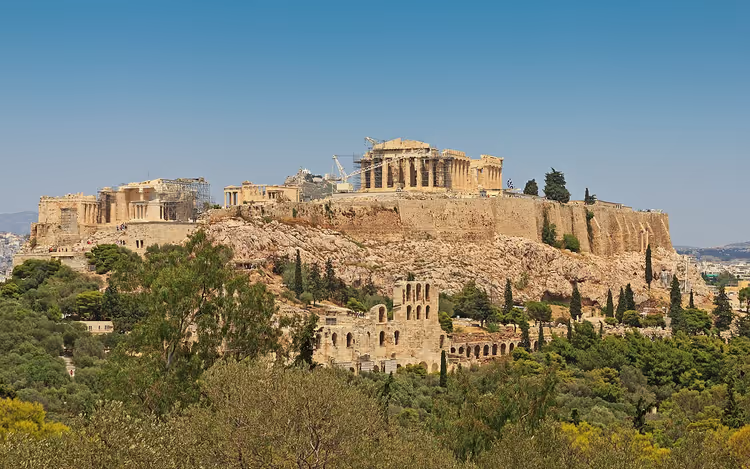 © A.Savin · CC BY-SAPhoto: A.Savin, CC BY-SA (https://creativecommons.org/licenses/by-sa/3.0), Wikimedia Commons
In summer, entry is by hourly time slots, and tickets are sold online and at ticket offices (as of 09/2026, Greek Ministry of Culture). Buy in advance: open morning windows sell out quickly. At the entrance you pass through the Propylaea, climb the marble steps, and see the Parthenon on your left.
The main sight at the top is the Parthenon, the temple of Athena, standing here since the classical era. It has survived a church, a mosque, and a gunpowder magazine explosion, and some of its sculptures were taken to the British Museum. Today the temple is partly covered in scaffolding, but the scale of the columns is still impressive.
A full loop around the rock takes longer than it seems: with stops and photos, it takes several hours. Don't miss the Temple of Athena Nike and the Erechtheion on the north side; people often leave them for the end and then never find them. If you don't want to deal with time slots, buying Acropolis tickets on GetYourGuide in advance is easier.
- The catch: in summer there is no shade on the rock, and by midday the climb gets tough.
Below, at the foot of the rock, Plaka begins, and across the road lies the Ancient Agora. The route will return to them later, but first it descends to the museums and theaters of the south slope.
Tours and tickets in Athens
Guided tours, skip-the-line tickets and activities — most offers can be cancelled free of charge.
See offers on GetYourGuideThe widget loads once you give your consent.
Old Acropolis Museum
The Old Acropolis Museum building stands on the edge of the rock, on the site of excavations. Today it is closed, and the collection has moved to the New Acropolis Museum below. From here you get a good side view of the rock, while the building itself remains a monument to Athens' museum history.
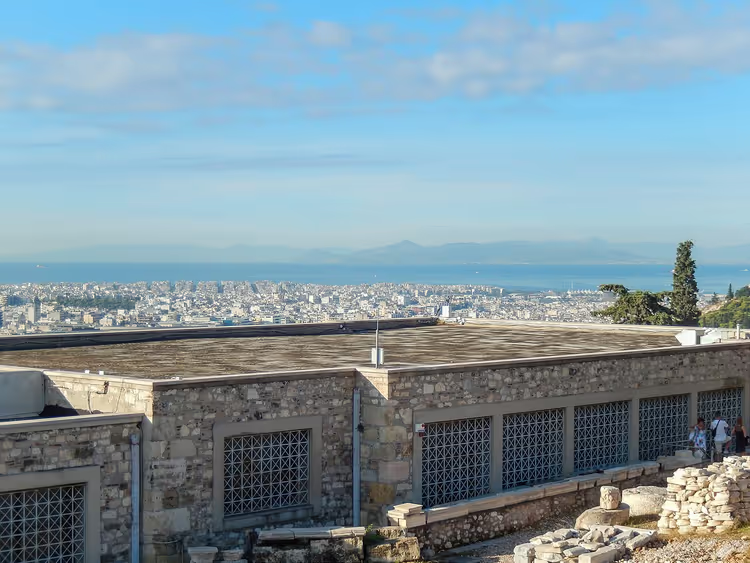 © HerrAdams · CC BY-SAPhoto: HerrAdams, CC BY-SA (https://creativecommons.org/licenses/by-sa/4.0), Wikimedia Commons
Its halls once held finds from the slopes of the Acropolis: archaic korai, statues of young women with subtle smiles, and the Erechtheion caryatids. The original caryatids are now displayed in the New Acropolis Museum, while copies stand on the temple.
Among the exhibits was also the Moschophoros, a youth with a calf on his shoulders, one of the most famous archaic statues. The collection is now viewed down below, not on the rock, so you should set aside separate time for the museum.
Erechtheion
The Erechtheion stands on the north side of the rock and is second in importance only to the Parthenon. The sanctuary was dedicated to Athena, Poseidon, and King Erechtheus, and rituals and sacrifices were performed inside.
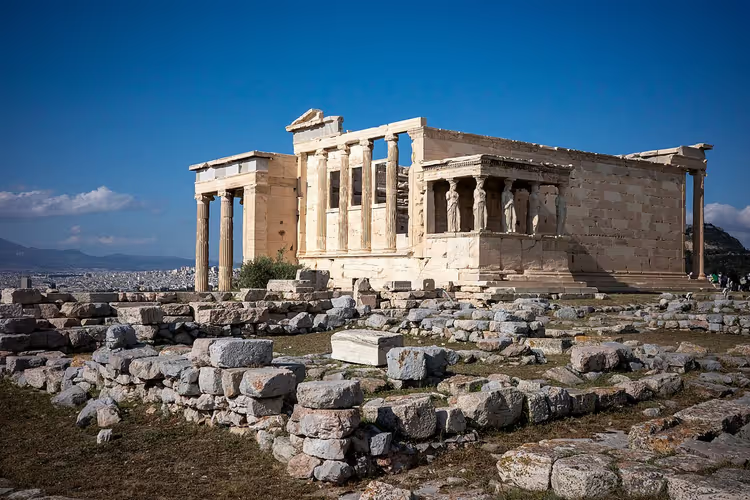 © Chepry 💬 ( Andrzej Barabasz ) 📷 🇵🇱 · CC BY-SAPhoto: Chepry 💬 ( Andrzej Barabasz ) 📷 🇵🇱, CC BY-SA (https://creativecommons.org/licenses/by-sa/4.0), Wikimedia Commons
Three myths are tied to the temple: here Poseidon struck a spring from the rock with his trident, Athena grew an olive tree, and the legendary King Erechtheus was buried beneath the floor. Inside there once stood a wooden statue of Athena, a golden lamp by Callimachus, and an altar to Hephaestus. Nothing of the rich decoration survives, but you can see the original Ionic columns and carved rosettes on the portals. Caryatids support the entablature instead of columns, and the slight forward lean of the figures is deliberate, so the silhouettes read well from below.
View the famous caryatid porch from the east: that's where the play of light on the marble is best. These are copies; the originals are kept in the Acropolis Museum and the British Museum. The Erechtheion was built in the Classical era and is considered a model of the Ionic order, so compare it with the Doric Parthenon nearby.
Odeon of Herodes Atticus
The Odeon of Herodes Atticus hugs the south slope of the rock. The wealthy Athenian Herodes Atticus built it in the Roman style in memory of his wife, and the theater seated several thousand spectators.
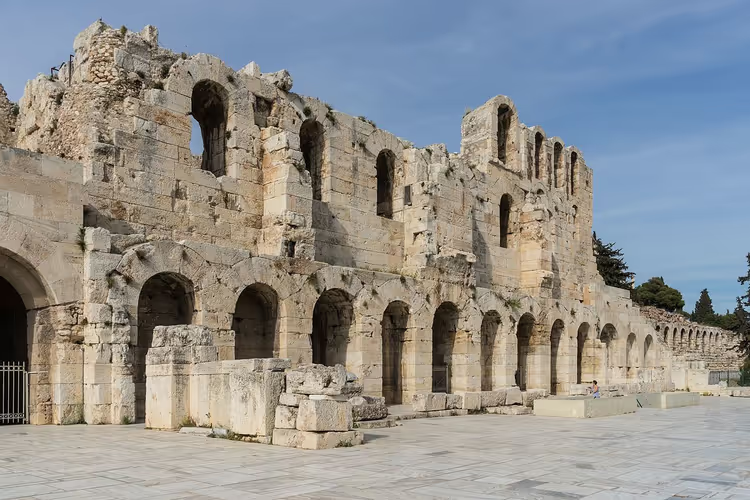
The roof collapsed in antiquity and was never restored, but the stone seats and stage were cleared. Today it hosts concerts and performances of the Athens Festival, and in summer world-famous musicians perform here. You can't get inside without a concert ticket, but the view from the path above the theater is good.
- The catch: you can only enter with a concert ticket.
The marble rows are used for their original purpose again, so the Odeon feels livelier than the neighboring ruins. The stone rows wrap around the slope, and niches where statues once stood are visible in the walls.
In summer, Athenians come here for concerts and opera, so a crowd gathers at the entrance in the evening. If there's no performance, view the theater from the path above: from there you can see both the stage and the full sweep of marble rows.
Theater of Dionysus
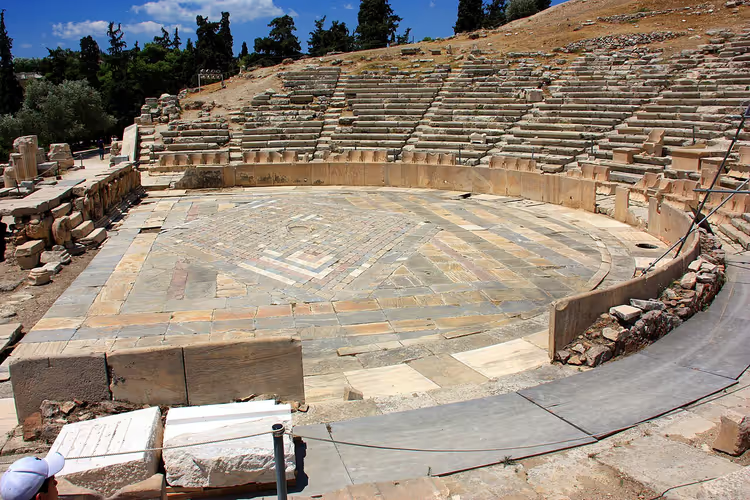
Lower down the slope lies the Theater of Dionysus, the oldest theater in the world. It was built in honor of the god of wine, first from wood and later from marble. The tragedies of Aeschylus, Sophocles, and Euripides were performed here, and the comedies of Aristophanes played on the same orchestra.
 © Rrburke · CC BY-SAPhoto: Rrburke, CC BY-SA (https://creativecommons.org/licenses/by-sa/3.0), Wikimedia Commons
In front of the stage stood marble seats for honored citizens with carved names, and the second row was occupied by the emperor's box. In Roman times, gladiator fights took place in the arena. Now it is ruins, but the layout is still legible, and the best light for photos here is in the morning and before sunset.
From here you get a view of the Odeon and the city below, so don't rush to leave.
The theater seated thousands of spectators and became a model for other Greek stages. Originally the rows were wooden, and marble appeared later, when the space was expanded and decorated with statues of satyrs. Today schoolchildren and students are brought here, and you can sit on the ancient steps and imagine how the crowd once roared.
Ilias Lalaounis Jewelry Museum
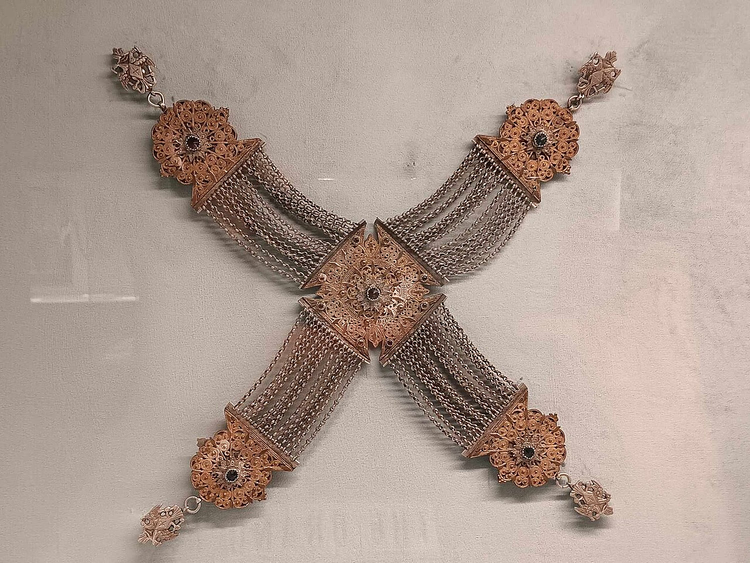
An old house in central Athens is home to the Ilias Lalaounis jewelry museum. The master began making jewelry back in the middle of the last century, and his workshop grew into an international training center for jewelers.
 © Catlemur · CC BY-SAPhoto: Catlemur, CC BY-SA (https://creativecommons.org/licenses/by-sa/4.0), Wikimedia Commons
The collection spans jewelry from different eras and countries, from the Neolithic period to contemporary designs. One display case recreates the "Treasure of Priam" found by Schliemann at Troy, while another traces the history of Greek jewelry from the Bronze Age to Byzantium. The ticket costs a few euros, and a visit takes under an hour.
The second floor features work by contemporary jewelers and hosts temporary exhibitions. The displays explain how gold-working techniques evolved and which motifs carried over from antiquity into the Byzantine era. If you are looking for a quiet museum without crowds, this one fits the bill: tourists rarely make it here. The permanent collection occupies several rooms and shows jewelry from different continents, while temporary exhibitions change every couple of months.
Today students from many countries come here to study. For the city, this is a rare example of a private museum that holds its own against world-class collections.
Acropolis Museum
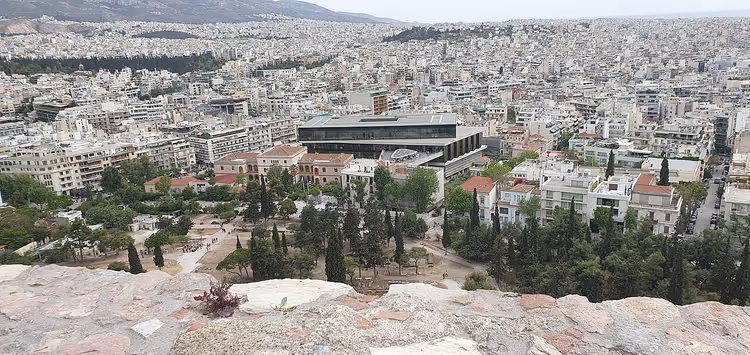
The Acropolis Museum stands at the southern foot of the rock, and it is not included in the Acropolis ticket. A full ticket costs €20, a reduced ticket €10 (as of 09/2026, official museum website).
 © Yair-haklai · CC BY-SAPhoto: Yair-haklai, CC BY-SA (https://creativecommons.org/licenses/by-sa/4.0), Wikimedia Commons
The ground floor is covered by a glass floor, beneath which you can see excavations of an ancient neighborhood. Upstairs, the gallery is designed so that you look at the Parthenon through glass, and the roof offers a panorama of the rock. In winter the museum closes earlier; in summer and on Fridays it stays open longer (as of 09/2026, opening hours).
You buy a museum ticket separately, and allow a couple of hours for the collection. Free admission is available on certain days, for example May 18, International Museum Day (as of 09/2026, museum).
Temple of Olympian Zeus
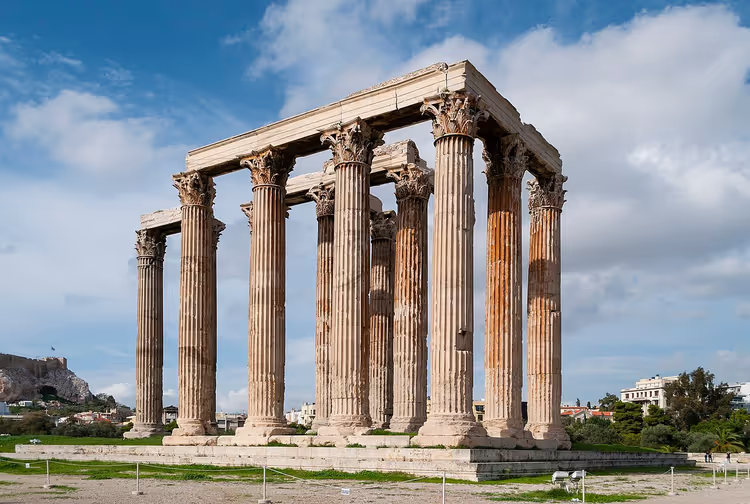
The Temple of Olympian Zeus begins right behind Hadrian's Arch. All that remains of the enormous sanctuary are tall Corinthian columns on a wide open site. Construction dragged on for centuries: work began under the Athenian tyrants, and the temple reached its finished form under Emperor Hadrian.
 © Ava Βabili · CC BY-SAPhoto: Ava Βabili, CC BY-SA (https://creativecommons.org/licenses/by-sa/4.0), Wikimedia Commons
Inside there once stood a statue of Zeus made of gold and ivory, and the facade was decorated with figures of emperors and gods. Today visitors come for the sheer scale of the columns and the view of the Acropolis. One column lies on the ground, the rest stand in a tight group, and nearby you can see traces of the ancient enclosure. You need a separate ticket here; the Acropolis ticket does not cover it. The sanctuary's materials were later dismantled for other buildings, and only these columns have survived to our time.
The temple ruins stand in an open area with no shade at midday, so bring water. On the plus side, you get a full view of the Acropolis from here, and it is a convenient spot for panoramic photos on the way to Hadrian's Arch.
Hadrian's Arch
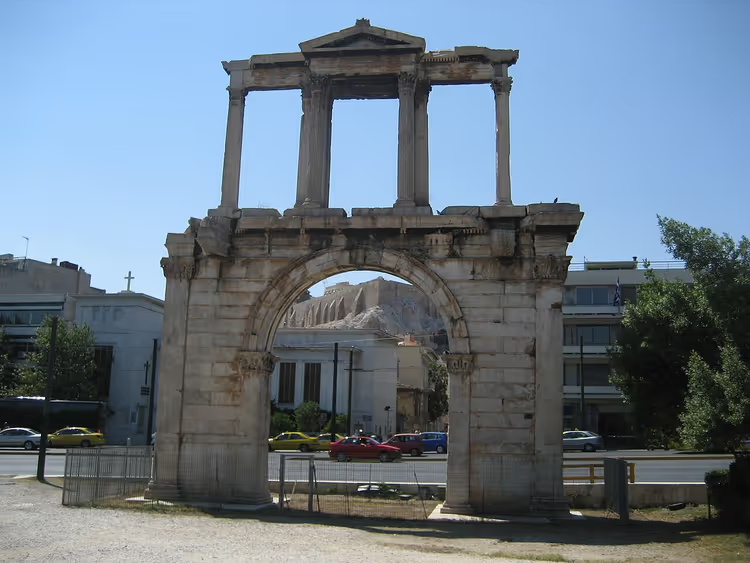
Hadrian's Arch stands a stone's throw from the Temple of Zeus and serves as a gateway between the old and new city. It was built from Pentelic marble, and until the last century the structure was never rebuilt.
 © vbif333 · CC BYPhoto: vbif333, CC BY (https://creativecommons.org/licenses/by/3.0), Wikimedia Commons
At the top, Corinthian columns, pilasters, and a triangular pediment survive, while the lower tier rests on well-preserved masonry. On the lintel, both sides are carved with the words: "This is the city of Hadrian, not of Theseus." The inscription marked the boundary between the old part of Athens and the new quarter built by the emperor. Visiting the arch is free and takes only a few minutes.
The arch is visible from the street, and many people walk past without understanding why it stands there. Stop for a couple of minutes and compare it with Roman triumphal arches.
National Garden and Zappeion
Behind the parliament building begins the National Garden, the former royal park. It was laid out by order of Queen Amalia, and today it is a large green expanse with paths, ponds, and shade.
 © George E. Koronaios · CC BY-SAPhoto: George E. Koronaios, CC BY-SA (https://creativecommons.org/licenses/by-sa/4.0), Wikimedia Commons
Turtles and peacocks live here, aviaries are in operation, and busts and remnants of ancient structures are tucked among the trees. In the heat, the garden becomes the best place to catch your breath in the city center.
The garden's main building, the Zappeion Palace, is built in the classical style. It was named after the benefactor Zappas, who revived the Olympic tradition, and later hosted participants of the first modern Olympics. Today the Zappeion hosts exhibitions and conferences.
The park was laid out on the site of royal grounds, and the layout has been preserved since the last century. Admission is free, and many Athenians come here simply to sit with a book.
Syntagma Square
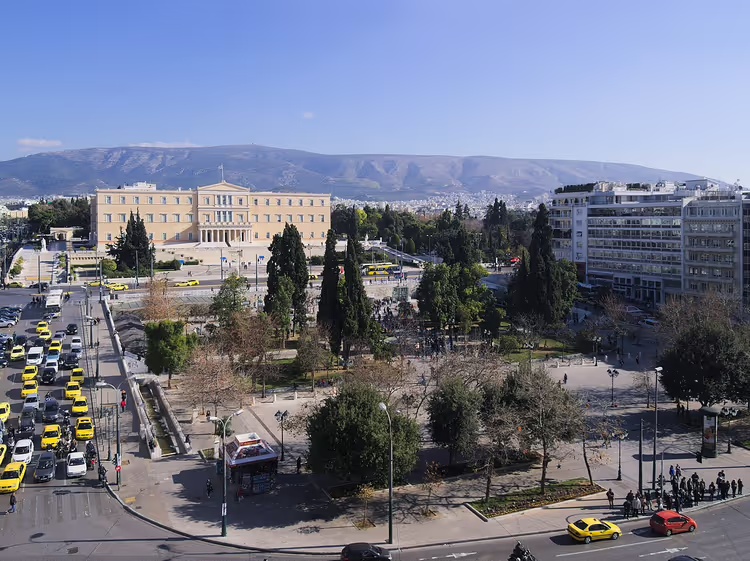
Syntagma lies in the very heart of Athens, by the parliament building. The building was constructed as a royal palace, but after the coup and the new constitution it was handed over to parliament, and the square was named after the constitution.
 © C messier · CC BY-SAPhoto: C messier, CC BY-SA (https://creativecommons.org/licenses/by-sa/4.0), Wikimedia Commons
The main spectacle here awaits you at the Tomb of the Unknown Soldier: the Evzone honor guard, in fustanella and pom-pom shoes, marches in step to the clatter of hobnailed boots. It is worth timing your visit for the changing of the guard, which takes place throughout the day on a schedule. The square is easy to recognize by the crowds at the metro exit; it is the main transit hub of the center.
Boulevards fan out from the square, and nearby begin Plaka and the shopping streets. If you are tired, sit on the steps by the parliament and watch the guard.
Plaka District and Anafiotika
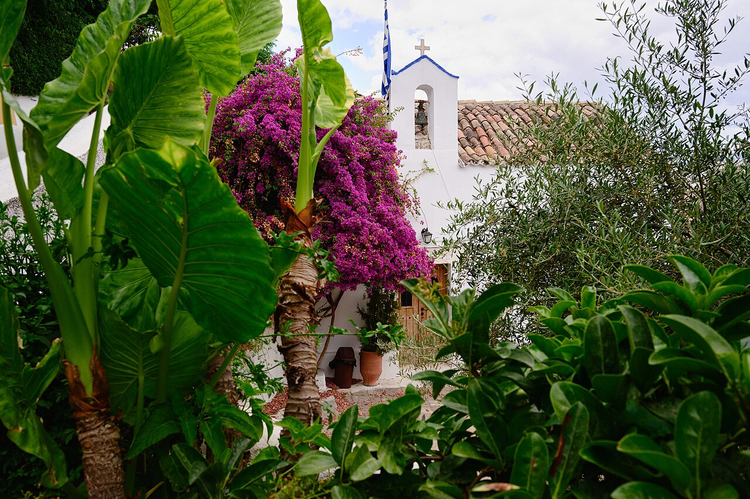
Plaka lies on the northeastern slope of the Acropolis and is considered the oldest quarter of the city. Narrow streets, flower-covered houses, and Byzantine churches make for a pleasant stroll.
 © Zde · CC BY-SAPhoto: Zde, CC BY-SA (https://creativecommons.org/licenses/by-sa/4.0), Wikimedia Commons
Step into one of the local museums, such as the Museum of Greek Folk Art, and have lunch at a taverna. Coffee is served in small kafenia, where locals go too, not just tourists.
Hidden inside Plaka is Anafiotika, a settlement of the stonemasons and carpenters who built modern Athens. They put up their houses haphazardly, as on their home island, and several dozen of these buildings survive. Today it is the most photogenic corner of the district.
Roman Agora
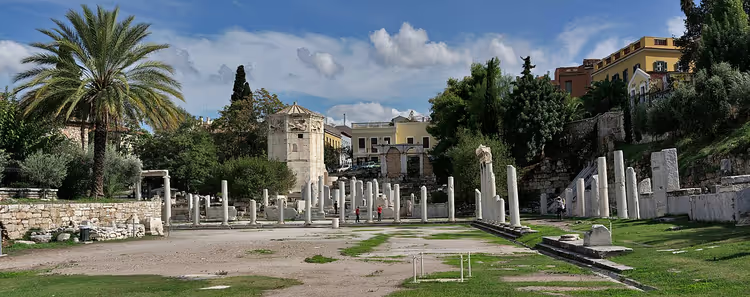
The Roman Agora was laid out under Octavian Augustus as a marketplace, and it was only excavated in the last century. Excavations here uncovered traces of the city's market and political center.
 © Andreas Trepte · CC BY-SAPhoto: Andreas Trepte, CC BY-SA (https://creativecommons.org/licenses/by-sa/2.5), Wikimedia Commons
The site was surrounded by Ionic columns, with shops and warehouses behind them. The main entrance on the west side was called the Gate of Athena Archegetis, and the eastern entrance was known as the East Propylon.
The best-preserved structure is the Tower of the Winds, an ancient tower with a sundial and a weather vane. Nearby you can see the Fethiye Mosque and the remains of a fountain. You need a separate ticket here; the Acropolis ticket does not cover it.
Areopagus
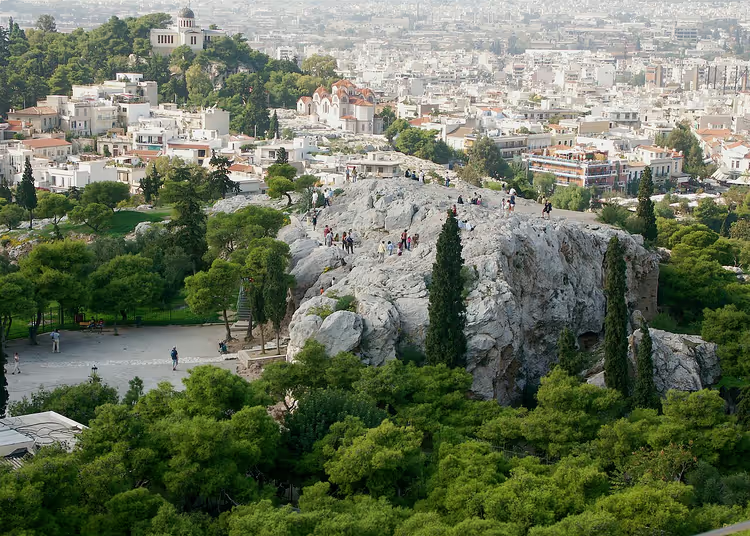
The Areopagus, a marble hill across the road from the Agora, was where the supreme court of ancient Athens convened. The god of war Ares was tried here, and later the Apostle Paul preached from the hill.
 © ajbear AKA KiltBear https://www.flickr.com/photos/ajbear/ · CC BY-SAPhoto: ajbear AKA KiltBear https://www.flickr.com/photos/ajbear/, CC BY-SA (https://creativecommons.org/licenses/by-sa/2.0), Wikimedia Commons
In earlier times the Areopagus remained the city's main judicial authority, and Aristotle called it a sacred open-air site.
Today the hill is fenced off, and steps cut into the rock lead to the top. From the summit you get a panorama of Athens and the Acropolis. Come here in the evening: the stone is still warm, there are fewer people, and the light is soft.
Ancient Agora
The Ancient Agora lies on the adjacent slope and now operates as an open-air museum. It was the city's main commercial and public square.
 © Ad Meskens You are free to use this picture for any purpose as long as you credit its author, Ad Meskens . Example: © Ad · CC BY-SAPhoto: Ad Meskens You are free to use this picture for any purpose as long as you credit its author, Ad Meskens . Example: © Ad, CC BY-SA (https://creativecommons.org/licenses/by-sa/4.0), Wikimedia Commons
Among the ruins, the Doric-style Temple of Hephaestus, the Stoa of Attalos, and the Church of the Holy Apostles stand out. Only the foundations remain of other temples, but they show how dense the development was.
The Stoa of Attalos houses an archaeological museum with finds that tell the story of everyday Athenian life. Excavations on the site are ongoing, so the collection keeps growing. Allow extra time for the Agora: the site is large and there is almost no shade.
Temple of Hephaestus
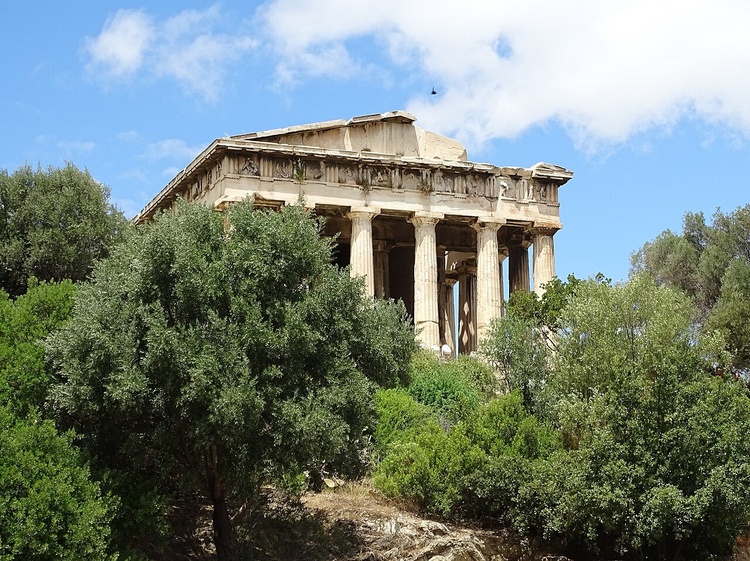
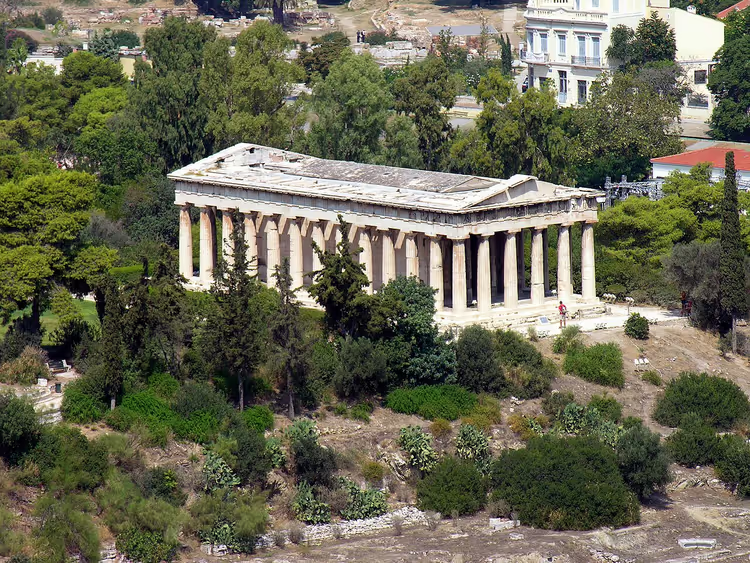
The Temple of Hephaestus remains the best-preserved ancient building in Athens. It stands in the western part of the Agora and is dedicated to the patron of blacksmiths and the goddess of crafts.
 © Dennis G. Jarvis · CC BY-SAPhoto: Dennis G. Jarvis, CC BY-SA (https://creativecommons.org/licenses/by-sa/2.0), Wikimedia Commons
The secret of its preservation is simple: with the arrival of Christianity, the temple was converted into the Church of St. George, and its caretakers protected the building from looting for many years. After the War of Independence, it housed a museum, and today it is an open-air exhibit.
The columns, the friezes of the main entrance, and even part of the roof remain in place. The temple was built in honor of Hephaestus, the patron of blacksmiths, and Athena Ergane, the goddess of crafts. Walk around it from all sides: from the east you can see how it rises above the Agora.
You cannot go inside, but walking the perimeter takes only a few minutes, and it is the best way to appreciate how well the Agora's structures have survived.
Monastiraki Square
Monastiraki remains one of the most atmospheric squares in Athens, and it is always crowded. The name comes from the Church of Monastiraki, the only surviving building of the old monastery.
 © George E. Koronaios · CC BY-SAPhoto: George E. Koronaios, CC BY-SA (https://creativecommons.org/licenses/by-sa/4.0), Wikimedia Commons
Inside the church, frescoes have been preserved, and nearby stands the Tzistarakis Mosque with its distinctive dome. It was built under an Ottoman governor, the minaret was demolished in the century before last, and the building now houses a ceramics museum.
If you happen to be there on flea market day, walk through the stalls: they sell records, furniture, and all sorts of small items. The square is also convenient for a bite to eat, with many tavernas and souvenir shops around.
Mount Lycabettus
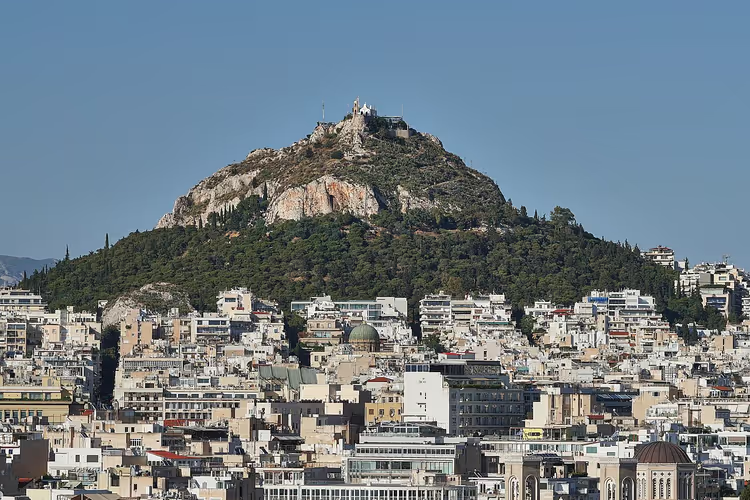
Mount Lycabettus closes out the day: it is the highest point in central Athens, and it makes sense to end your walk here.
 © George E. Koronaios · CC BY-SAPhoto: George E. Koronaios, CC BY-SA (https://creativecommons.org/licenses/by-sa/4.0), Wikimedia Commons
You can go up on foot along the path, by taxi, or by funicular that runs through the rock. The funicular ticket is paid, while the walk up is free but requires some effort.
- The catch: the funicular is paid, and the walk up the path is not for everyone.
At the top stands the Chapel of St. George, and from the viewing platform you can see the entire city down to the sea. For a long time, wealthy Athenians settled on the slopes of the mountain, and this area is still considered expensive. Couples come here to get married in the chapel at the summit, and tourists climb up for the panorama.
Come at sunset: the panorama of Athens with the illuminated Acropolis remains the defining photo of the trip. From above you can see Piraeus and the bay, so bring a jacket, it is windy at the top even on a warm evening.
One-day Athens itinerary on the map
All the route points are marked below; you can easily open them in maps and navigate by them. The order matches the text, so you simply follow the markers. Save the starting point at the Acropolis entrance: a line forms here in the morning, and you will head straight to the right gate.
What to see in Athens in 1 day
Places on the map
- 1Acropolis of Athens Rock with the Parthenon, start of the route
- 2Old Acropolis Museum Building closed, but a monument to the museum history of Athens
- 3Erechtheion Porch of the Caryatids, sanctuary of Athena and Poseidon
- 4Odeon of Herodes Atticus Ancient theatre, today the venue of the Athens Festival
- 5Theatre of Dionysus The world's oldest theatre at the southern slope of the rock
- 6Ilias Lalaounis Jewelry Museum Jewellery from the Neolithic to modern designs
- 7Acropolis Museum Glass floor over the excavations, original Caryatids
- 8Temple of Olympian Zeus Corinthian columns of the sanctuary, entry with the Acropolis ticket
- 9Hadrian's Arch Gate between the old and new city
- 10Zappeion Palace in classical style, exhibitions and conferences
- 11National Garden Former royal park with turtles and peacocks
- 12Syntagma Square Changing of the guard at the Tomb of the Unknown Soldier
- 13Plaka The city's oldest quarter, the village of Anafiotika inside
- 14Roman Agora Marketplace under Augustus, Tower of the Winds
- 15Areopagus Hill of the court of ancient Athens, panorama from the top
- 16Ancient Agora of Athens The city's main square, an open-air museum
- 17Temple of Hephaestus The best-preserved ancient building in Athens
- 18Monastiraki Square Flea market and the Tzistarakis Mosque
- 19Lycabettus Hill The highest point in the centre, sunset panorama
⁉️🤔 Frequently asked questions
Can you see the Acropolis and the Agora in one day?
Yes, if you start in the morning and do not stretch out your stops. The Acropolis takes a few hours, the Ancient and Roman Agoras are nearby, and you walk between them. In one day you cover the rock, both Agoras, and Plaka, and you leave Lycabettus for sunset.
How much does a day in Athens cost?
The main expense is the Acropolis ticket: €30 full price and €15 reduced (as of 09/2026, Ministry of Culture). The Acropolis Museum costs €20 separately (as of 09/2026, official museum website). The rest depends on you: lunches at tavernas, coffee, and airport transport add to the budget, while walks and viewing the arches are free.
Do I need an airport transfer?
Public transport in Athens is cheap, but with a lot of luggage, transfers are tiring. A transfer picks you up at the exit, the price is fixed when you book, and you do not stand in the taxi line. If you are traveling with carry-on only, the metro or express bus will be cheaper.
What to do in the heat?
Move open hills to early morning and evening, and give the middle of the day to air-conditioned museums. There is almost no shade on the Acropolis rock, so bring water and a hat. The National Garden provides coolness, and the Acropolis museums give you a couple of hours in the shade and out of the sun.
Where to eat in Plaka?
Plaka has many tavernas with Greek cuisine: moussaka, Greek salad, charcoal grill. Prices in the center are higher than in residential areas, so check the menu at the entrance. Near Monastiraki there are gyros spots and coffee shops where locals also eat.
In short: what to book
If you have only one day, get an Acropolis ticket for the morning and stick to the order in this itinerary. If you are traveling with luggage, it is worth booking an airport transfer in advance: that way you will not lose an extra hour on transfers.
If you are staying for a couple of days, you will have time for both Agoras, Kerameikos, and the Acropolis Museum without rushing. In that case, it is better to look for accommodation in the center, near Syntagma or Monastiraki, so you can walk the route.

A small editorial team writing guides for independent travel. We travel ourselves, but we haven’t been everywhere, so we check prices, opening hours and how to get there against official sources.