
















US national parks: 17 places worth seeing
US national parks all share one catch: distances. In two weeks you will see five or six of them at most. So choosing the right park matters more than planning the route.
Below are 17 national parks that most often end up in the itineraries of travelers from Europe. For each one we listed the state, main sights, and practical details: entry, season, and road access. The parks are scattered across the country, so on one trip you can realistically cover two or three neighboring ones.
The America the Beautiful annual pass costs $80 for US citizens and residents and $250 for non-residents (as of 09/2026, official NPS website). For a single trip it often does not pay off: it is cheaper to buy a one-time ticket for a specific park.
Ad: this article contains affiliate links. We earn a commission if you book through them, at no extra cost to you.
History of the national parks
💡 In short:
- The world's first national park, Yellowstone, was established in 1872.
- Today the NPS system has 63 national parks, and entry is not paid everywhere.
- Prices and tickets: 09/2026, verified against NPS fee schedules
The idea of protected natural areas was first articulated by the artist George Catlin. In the 1830s he traveled across North America and saw how settlers were displacing Indigenous peoples and cutting down forests. Catlin proposed preserving the continent's nature in its pristine state and setting aside special lands for that purpose.
The government did not respond immediately. In 1864 President Lincoln signed a law protecting Yosemite Valley and the Mariposa Grove in California (the 1864 act, as of 09/2026). A true national park appeared eight years later. After that the count grew into the dozens: today the National Park Service manages more than 400 areas, and 63 of them hold national park status (national park system).
Entry is not paid everywhere. Some parks are open free of charge year-round. Where entry is paid, a common standard applies: one ticket per vehicle for 7 days. Check the specific park's website for exact prices.
Tickets and passes: what changed in 2026
In 2026 the entry rules were rewritten, and this matters for travelers from Europe. The main change affects those who do not have US citizenship or a residence permit.
Starting in 2026, non-residents over 16 pay an additional $100 fee in 11 parks on top of the regular ticket (as of 09/2026, rules for non-residents). The fee is not charged if you have an America the Beautiful annual pass. Nine parks from this article are on the list: Acadia, Everglades, Grand Canyon, Grand Teton, Rocky Mountain, Sequoia and Kings Canyon, Yellowstone, Zion, and Yosemite.
Pass | Who it's for | Price |
|---|---|---|
Standard single-park pass | all visitors | per vehicle, valid 7 days |
America the Beautiful, annual | US citizens and residents | $80 (as of 09/2026, NPS fees) |
America the Beautiful, annual | non-residents | $250 (as of 09/2026, NPS fees) |
Senior Annual | residents 62+ | $20 (as of 09/2026, NPS fees) |
Senior Lifetime | residents 62+ | $80 (as of 09/2026, NPS fees) |
Free admission in 2026 is available on ten days: February 16, May 25, June 14, July 3-5, August 25, September 17, October 27, and November 11. Starting in 2026, free admission on these days applies only to US citizens and residents; non-residents pay as usual (as of 09/2026, free days calendar). The last two dates of the year are October 27 and November 11.
Our picks: 17 parks by state
The table below will help you choose a destination based on your travel scenario. Each park is then covered separately, with photos, season, and admission.
Park | State | Why it's interesting |
|---|---|---|
1. Yellowstone | Wyoming, Montana, Idaho | geysers and hot springs |
2. Great Smoky Mountains | Tennessee, North Carolina | misty forests and biodiversity |
3. Sequoia | California | giant sequoias |
4. Denali | Alaska | the highest peak in North America |
5. Grand Canyon | Arizona | Colorado River gorge |
6. Zion | Utah | red canyons and the Virgin River |
7. Monument Valley | Arizona and Utah | Navajo sandstone towers |
8. Arches | Utah | more than 2,000 natural arches |
9. Acadia | Maine | Atlantic coast and mountains |
10. Death Valley | California and Nevada | the lowest point in North America |
11. Joshua Tree | California | the Mojave Desert and Joshua trees |
12. Rocky Mountain | Colorado | alpine lakes and fall colors |
13. Olympic | Washington | rainforests and ocean coastline |
14. Hot Springs | Arkansas | hot springs and bathhouses |
15. Grand Teton | Wyoming | the Teton Range and lakes |
16. Everglades | Florida | subtropical wetlands and alligators |
17. Yosemite | California | granite cliffs and waterfalls |
If you're visiting for the first time, start with the Grand Canyon or Yellowstone: they have the best-developed infrastructure and are the easiest to reach. If you prefer quiet, Denali, Olympic, and the North Rim of the Grand Canyon are good options.
1. Yellowstone
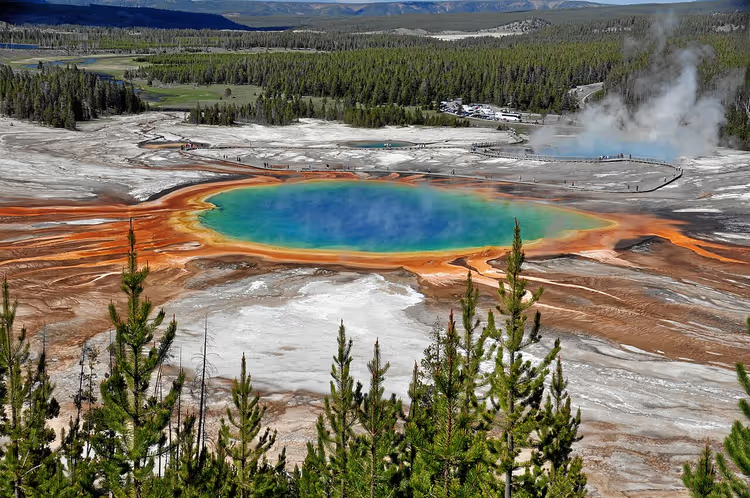 © James St. John from Newark, Ohio · CC BYPhoto: James St. John from Newark, Ohio, CC BY (https://creativecommons.org/licenses/by/2.0), Wikimedia Commons
Yellowstone became the first true national park not only in the US but in the world: it was established in 1872. Other countries later followed the American example. The park spans three states, Wyoming, Montana, and Idaho, and covers about 9,000 square kilometers (Yellowstone official website).
The main reason to come here is the geysers and hot springs. Dissolved mineral salts have created unusual surface formations over millions of years: pyramids, terraces, and even stalactites. They are joined by coniferous forests, waterfalls, and lakes. Yellowstone Lake lies at the center of a dormant volcano, and its shores are made of solidified lava.
- Admission: paid; starting in 2026, non-residents 16+ pay an additional $100 (as of 09/2026, Yellowstone fees)
- When to go: June through September; some roads are closed in winter
- What to see: Old Faithful geyser, Grand Prismatic Spring, Grand Canyon of the Yellowstone
- The catch: the main geysers get crowded in summer
2. Great Smoky Mountains
 © Scott Basford · CC BY-SAPhoto: Scott Basford, CC BY-SA (http://creativecommons.org/licenses/by-sa/3.0/), Wikimedia Commons
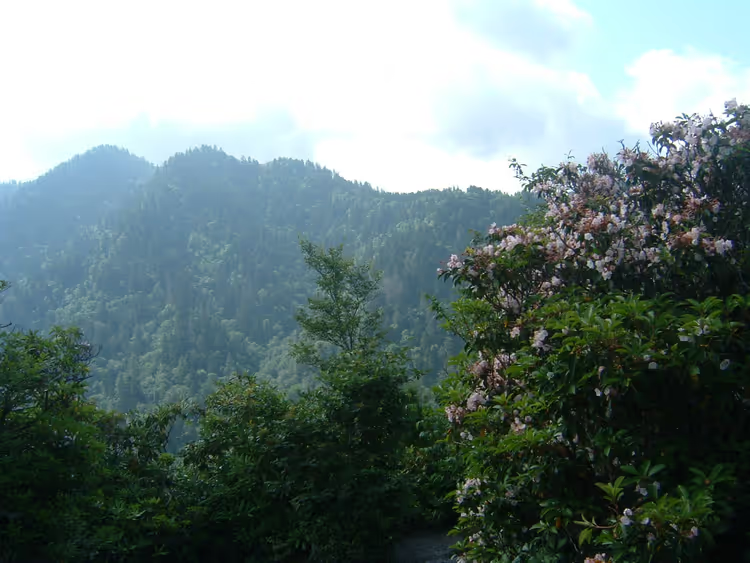
This is the most visited US national park: about 11.5 million people visited it in 2025 (Great Smoky Mountains official site, as of 09/2026). Visitor flow is managed here to avoid damaging the fragile ecosystem. The park was officially opened by President Roosevelt in 1940.
The park spans the eastern states of Tennessee and North Carolina, covering more than 2,000 square kilometers. More than 4,000 plant species grow here, some of which are found nowhere else. The rich vegetation supports around 65 mammal species.
- Entry: free, no paid gates
- When to go: mid-October, at the peak of fall colors
- What to see: misty ridges, waterfalls, and old broadleaf forests
- The catch: on weekends and in summer, popular trails get crowded
3. Sequoia
 © dconvertini · CC BY-SAPhoto: dconvertini, CC BY-SA (https://creativecommons.org/licenses/by-sa/2.0), Wikimedia Commons
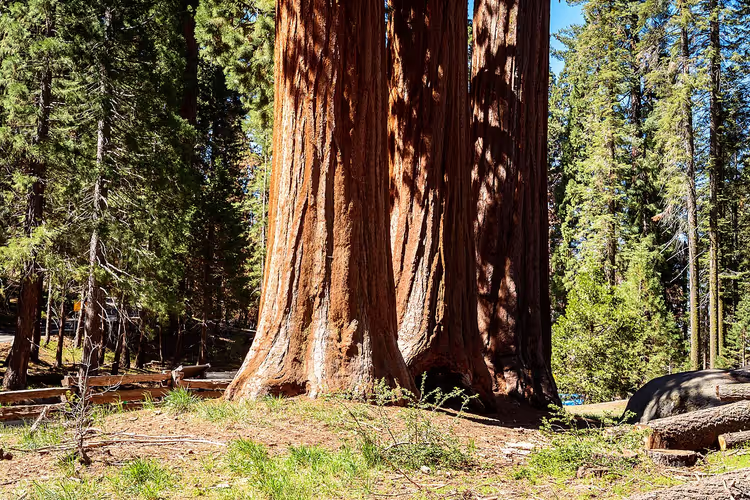
Sequoia National Park was established in 1890, making it the second-oldest US national park (Sequoia National Park official site). It lies in California and is known for its Giant Forest. That forest is home to five of the ten largest trees in the world.
The park's main star is the General Sherman sequoia. It stands over 80 meters tall, and its base circumference exceeds 30 meters. By wood volume, General Sherman is considered the largest tree on the planet.
- Entry: paid; starting in 2026, non-residents 16+ pay an extra $100 (as of 09/2026, Sequoia National Park fees)
- When to go: May through October
- What to see: General Sherman, Giant Forest, the Tunnel Log drive-through tree
- The catch: in summer the Giant Forest gets crowded, look for parking in the morning
4. Denali
 © You may select the license of your choice. · CC BY-SAPhoto: You may select the license of your choice., CC BY-SA (http://creativecommons.org/licenses/by-sa/3.0/), Wikimedia Commons
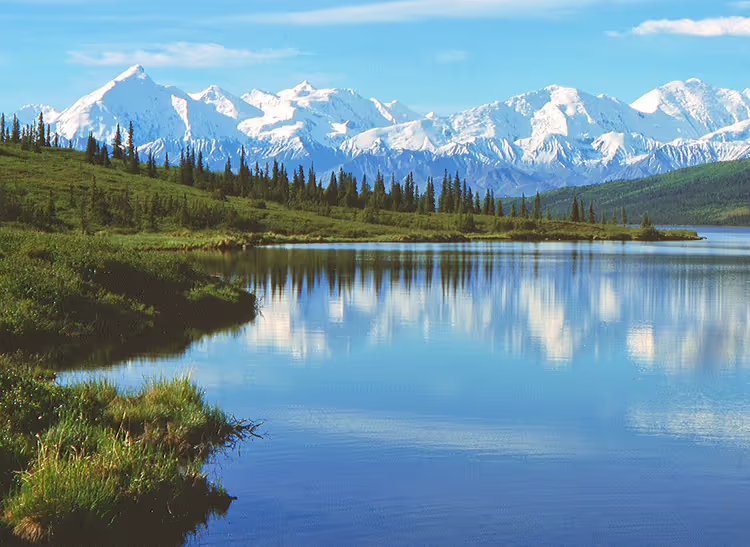
Denali National Park in Alaska is larger than the state of Massachusetts. The word "denali" translates from the Athabaskan language as "the great one": that is what the indigenous people called the highest peak in North America (official Denali website). This is where the continent's highest point is located.
Caribou, moose, brown bears, Dall sheep, and wolves roam freely through the park. The animals are largely unafraid of people, so it's best to keep your distance on your own. Infrastructure is minimal: a single road leads into the park's interior, and beyond that it's foot travel only.
- Entry: paid, one ticket valid for 7 days
- When to go: June through early September
- What to see: the highest peak in North America, tundra, wildlife viewing
- The catch: getting there is long and expensive, with no direct overland route from other states
5. Grand Canyon
 © Marek Ślusarczyk ( Tupungato ) Photo portfolio · CC BYPhoto: Marek Ślusarczyk ( Tupungato ) Photo portfolio, CC BY (https://creativecommons.org/licenses/by/3.0), Wikimedia Commons
The Grand Canyon in Arizona is the largest natural gorge in the United States. It is 433 km long, ranges from 180 meters to 28.8 km wide, and has an average depth of 1.6 km (official Grand Canyon website, as of 09/2026). The Colorado River divides the park into two parts: the South Rim and the North Rim.
The canyon walls read like a history of the planet: marine deposits, fossilized desert sand, layers of limestone, granite, and shale. Geologists have studied these strata for over a century. Hiking trails descend the slopes to the bottom and climb back up 1.6 km in elevation.
The South Rim is more accessible and works well for a first visit. The North Rim is farther, quieter, and open only in the warm season. You can drive between the two sides, a 354 km route across the Navajo Bridge. The town of Grand Canyon Village has hotels, campgrounds, and a free shuttle bus.
- Entry: paid; starting in 2026, non-residents 16 and older pay an additional $100 (as of 09/2026, Grand Canyon fees)
- When to go: March through May and September through November
- What to see: South Rim overlooks, the Bright Angel Trail, sunset at Mather Point
- The catch: the climb out of the canyon is strenuous; doing the bottom and back in one day is not advisable
6. Zion
 © Sergiy Galyonkin from Raleigh, USA · CC BY-SAPhoto: Sergiy Galyonkin from Raleigh, USA, CC BY-SA (https://creativecommons.org/licenses/by-sa/2.0), Wikimedia Commons
Zion National Park covers the wildest corners of Utah. Its most remote area is Kolob Canyon: a minimally developed district with rugged trails. There is no mass tourist flow here (official Zion website).
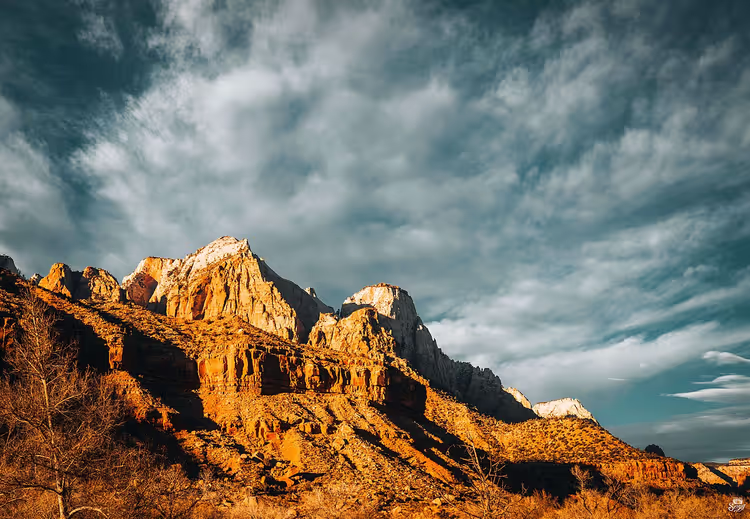
Zion's landscapes are unlike those of neighboring parks. Red-orange cliffs rise above the gorges, the slopes are covered with open woodland, and in places the ground is blanketed with dense yellow heather. Birch trees appear among the unfamiliar vegetation, looking oddly out of place against the red rock spurs.
A scenic red road connects Kolob Canyon with the rest of the park. Visitors walk along the canyon floor beside the fast-flowing Virgin River, which in spots is shallow enough to wade across. The riverbed is full of rapids and small waterfalls. At one of them, nicknamed "Weeping Rock," droplets fall directly onto the trail.
- Entry: paid; starting in 2026, non-residents 16 and older pay an additional $100 (as of 09/2026, Zion fees)
- When to go: April-May and September-October
- What to see: Kolob Canyon, the Virgin River, the trail to "Weeping Rock"
- The catch: trails in Kolob Canyon are rugged, and some of them are closed
7. Monument Valley
 © Original uploader was Averette at en.wikipedia · CC BYPhoto: Original uploader was Averette at en.wikipedia, CC BY (https://creativecommons.org/licenses/by/3.0), Wikimedia Commons
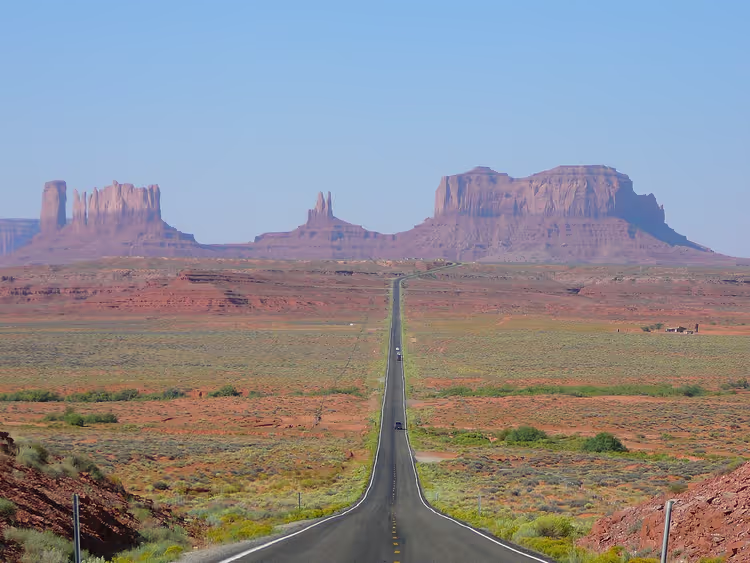
Monument Valley is not part of the NPS system: it is Navajo Nation land. Over centuries, Arizona's wind has carved fantastically shaped towers out of the sandstone. Colored in red-brown hues, they look like the set of a science fiction film. The valley's Martian landscapes appear on lists of the world's natural wonders.
The valley is open year-round. You can drive through it on a dirt road or hike on foot. From the air, the landscape looks even more striking. During the hot air balloon festival, colorful balloons rise right above the stone formations. Tours with a local guide should be booked in advance, and US canyon tours are worth checking out on GetYourGuide.
Until the late 19th century, these lands were effectively closed off, and after the Indian Wars ended, Hollywood filmmakers and tourists arrived.
- Entry: paid, tickets sold by the Navajo administration
- When to go: March through October, hot in summer
- What to see: East Mitten and West Mitten buttes, John Ford's Point
- The catch: almost no shade, hiking the valley in the heat is tough
8. Arches
 © m01229 from USA · CC BY-SAPhoto: m01229 from USA, CC BY-SA (https://creativecommons.org/licenses/by-sa/2.0), Wikimedia Commons
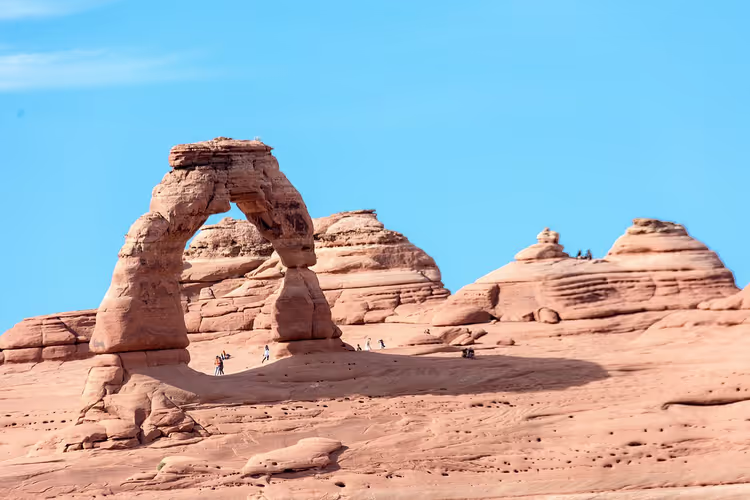
Arches National Park lies in Utah and covers 309 sq km. Its surface formed at the bottom of an ancient sea with a sandy floor (Arches National Park official site). Wind and water transformed the sand and salt into thousands of arches, which is how the park got its name.
There are more than two thousand arches here, ranging from 1 to 85 meters in length (Arches National Park data, 09/2026). Nature also left a storehouse of minerals here: the sand turned into quartz, and gold can be found in places. Because of these riches, Europeans and Native Americans fought over the territory in the 18th century.
President Nixon signed the order creating the park in 1971, protecting the arches from plunder. The most recognizable feature is Delicate Arch, also nicknamed "Cowboy Chaps." Tourists also head to Balanced Rock, the "Three Gossips," and the Fiery Furnace labyrinth, which glows like a furnace at sunset.
- Entry: paid, 7-day pass
- When to go: April-May and September-October
- What to see: Delicate Arch, Balancing Rock, Fiery Furnace, Three Gossips
- The catch: trails have no shade in summer, bring plenty of water
9. Acadia
 © Jana Roubova at Czech Wikipedia · CC BY-SAPhoto: Jana Roubova at Czech Wikipedia, CC BY-SA (https://creativecommons.org/licenses/by-sa/2.5), Wikimedia Commons
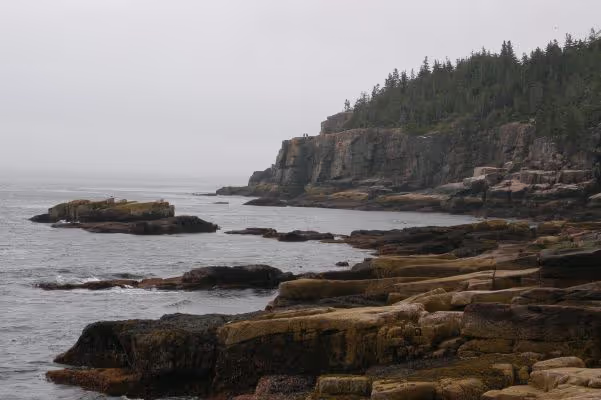
Acadia National Park covers nearly the entire island of Mount Desert off the coast of Maine. A narrow strait separates it from the mainland, crossed by a free causeway with a highway. Near the parking lot stands a large 3D map of the park, handy for planning your route.
The highest point of the preserve rises to 466 meters, with a paved road leading to the summit (Acadia official site). Along the way, you get views of the island and Eagle Lake in the lowlands. The summit itself is called Cadillac Mountain, also known as Bald Mountain: almost nothing grows there except sparse shrubs. From there you can see the Atlantic Ocean and the islands off the Maine coast.
- Entry: paid; starting in 2026, non-residents 16+ pay an extra $100 (as of 09/2026, Acadia fees)
- When to go: June-September, sunrise at Cadillac Mountain has few crowds
- What to see: Cadillac Mountain, Eagle Lake, the rocky coastline
- The catch: lots of cars head to the summit in the morning, parking fills up early
10. Death Valley
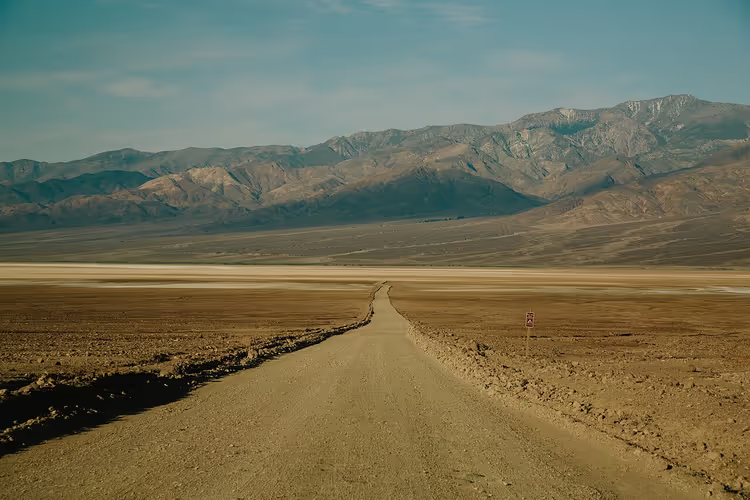
The park's name tells it like it is. It's nearly 13,500 sq km of scorching desert, the driest and lowest in North America (Death Valley official site, as of 09/2026). Despite the barren soil, the landscapes here are vivid: snow-capped peaks, sand dunes, rocky canyons, and nearly the full spectrum of color.
Life does exist here. Cacti and succulents grow at elevations from 120 to 900 meters, and juniper is scattered in gray-green patches. After rare spring rains, the gray ground briefly becomes covered in a carpet of purple, red, and yellow flowers. Among the animals, rodents and bighorn sheep lead a nocturnal lifestyle here.
For photographers, this is a world unto itself. Dante's View opens up from the mountain onto white salt flats and a scattering of hills. The Badlands area is cut through by a network of ravines, and to the north lies Racetrack, where rocks leave trails on the ground. Scientists have already seen these rocks move. There are almost no hotels in the park for overnight stays, so look for places to stay near Death Valley on Trip.com.
- Entry: paid, 7-day pass
- When to go: November-March, the air is scorching in summer
- What to see: Dante's View, Badlands, Racetrack, Badwater salt flats
- The catch: don't go in summer, the heat is dangerous to your health
11. Joshua Tree
 © Sergiy Galyonkin · CC BY-SAPhoto: Sergiy Galyonkin, CC BY-SA (https://creativecommons.org/licenses/by-sa/4.0), Wikimedia Commons
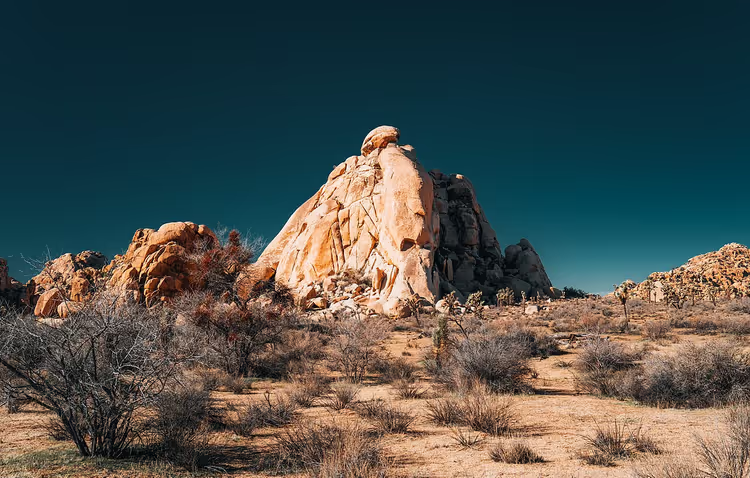
The park got its name from the desert Joshua trees that grow in the Mojave Desert. In Russian, the name translates literally as "Joshua tree."
The park is split between two deserts, the Mojave and the Colorado, with a natural boundary running between them. When Joshua trees give way to cholla cacti, yuccas, and ocotillo shrubs, you've entered the Colorado. In the north lie massive boulders and deep crevices; in the south the rocks get lower and the terrain flattens out.
The Keys View overlook sits at an elevation of 1,581 meters (Joshua Tree official website, as of 09/2026). From here, tall mountains look small, and below opens up a valley with the cities of Palm Desert and Palm Springs. In early spring, Joshua trees are covered with large clusters of yellow-toned blossoms.
- Admission: paid, 7-day pass
- When to go: March-May and October-November
- What to see: blooming Joshua trees, Keys View overlook, boulders
- The catch: in summer the air is scorching, walking during the day is dangerous
12. Rocky Mountain
 © Charles M. Sauer -- Charlessauer · CC BY-SAPhoto: Charles M. Sauer -- Charlessauer, CC BY-SA (http://creativecommons.org/licenses/by-sa/3.0/), Wikimedia Commons
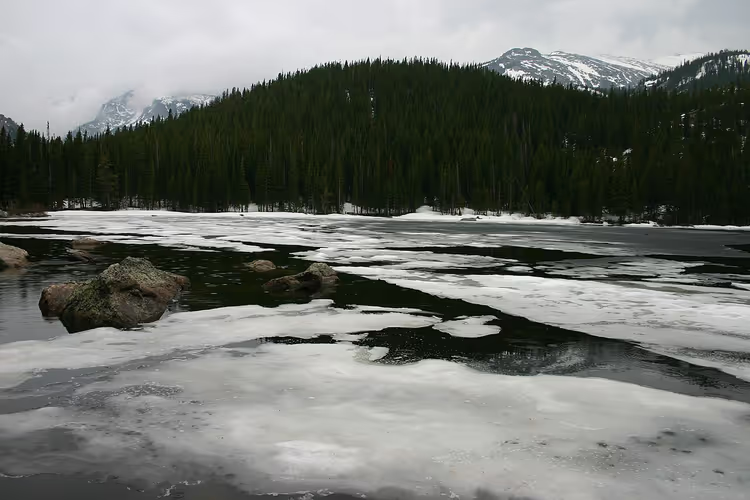
This area of Colorado embodies the history of the Wild West. Snow in the Rockies here can linger until June in places (Rocky Mountain official website).
The park is especially beautiful in autumn, when crimson, purple, and lemon-colored crowns of deciduous trees blaze against the silver-gray mountains. The area has many scenic lakes. Bears like to stop by Cub Lake, so a sign nearby reads "Danger! Bears!" The park is also known as the headwaters of the Colorado River, which here doesn't yet resemble a mighty stream.
- Admission: paid; starting in 2026, non-residents 16+ pay an extra $100 (as of 09/2026, Rocky Mountain fees)
- When to go: September-October for the colors
- What to see: Bear Lake, Cub Lake, Trail Ridge Road switchbacks
- The catch: Trail Ridge Road is closed in winter
13. Olympic
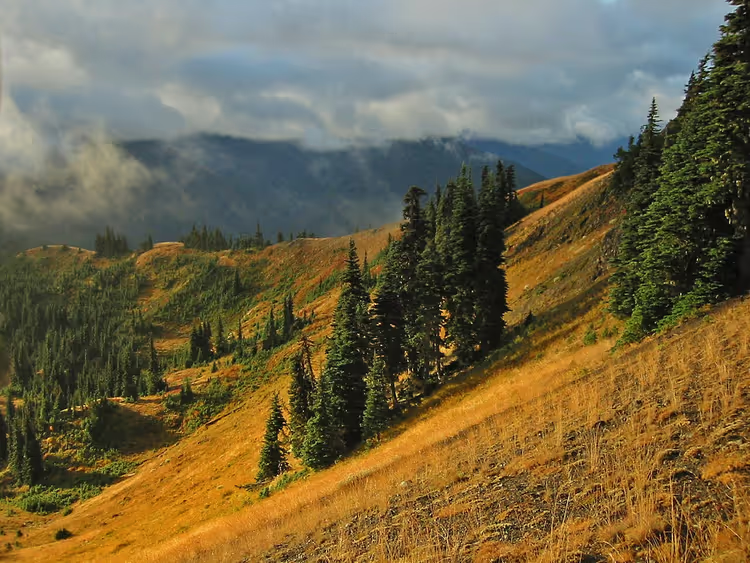 © Wsiegmund · CC BYPhoto: Wsiegmund, CC BY (https://creativecommons.org/licenses/by/2.5), Wikimedia Commons
The park spreads across the Olympic Peninsula in the northwestern part of Washington state. It gained national status in 1938 as an area with rare diversity of flora and fauna (Olympic official website). Nearly all landscapes are gathered here at once: glaciers, lakes, alpine meadows, ocean coastline, and mountains.
Three Native American reservations are located along the ocean shore. Most of the park is accessible only on foot, with few roads. But the nature here is pristine: for the colorful alpine meadows, the blue of its lakes, and the white of its snowy peaks, the park was added to the World Heritage list in 1976.
- Admission: paid, 7-day pass
- When to go: July-September; the rainforest is always damp
- What to see: Hoh Rainforest, Hall of Mosses, Sol Duc Falls
- The catch: few roads, most of the park has to be explored on foot
14. Hot Springs
In Arkansas lies the smallest US national park, Hot Springs (Hot Springs official website). The park grew up around the city of the same name. It's a well-known spa resort: local Native Americans knew about the healing hot springs long before Europeans arrived.
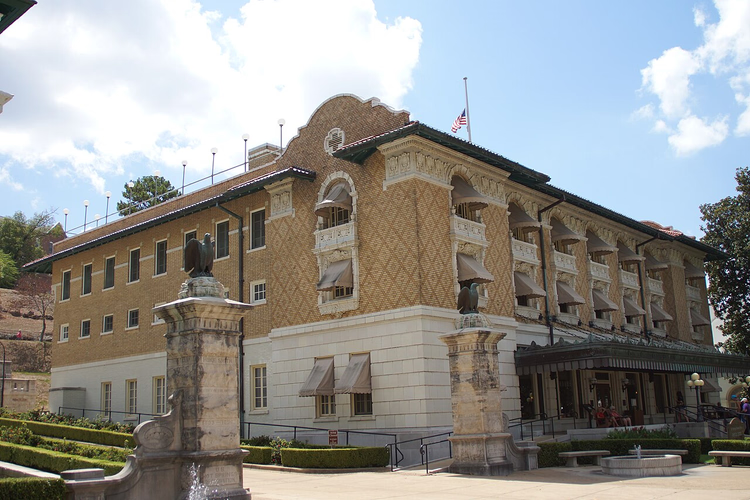 © Svomike · CC BY-SAPhoto: Svomike, CC BY-SA (https://creativecommons.org/licenses/by-sa/3.0), Wikimedia Commons
The city and surrounding area gained reserve status in 1921, when bathhouses and motels already stood here. In the city center stands Bathhouse Row, made up of restored 19th-century buildings. The first building houses baths, the second a spa. Guests are offered mineral baths, body wraps, a vintage shower, and massage.
- Admission: free, you pay only for treatments
- When to go: year-round, spring and autumn are more comfortable
- What to see: Bathhouse Row, overlooks on the hills, the park on Hot Springs Mountain
- The catch: the park is small, one day is enough to see it
15. Grand Teton
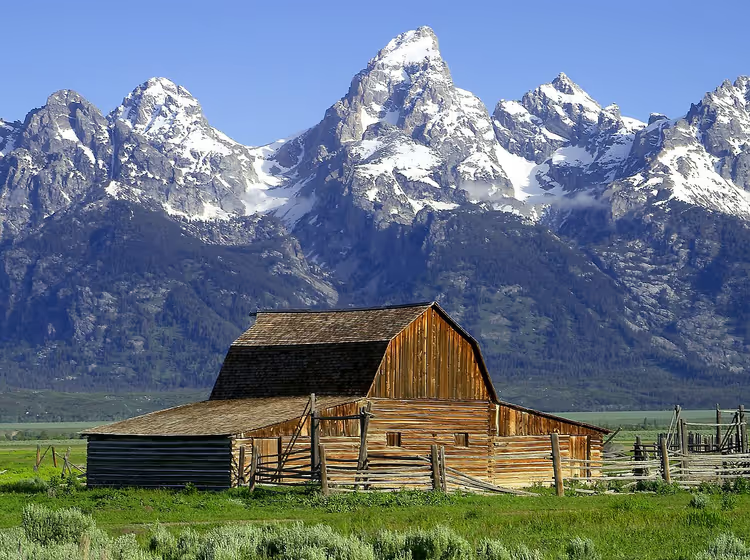
Grand Teton, another preserve in the Rocky Mountains, covers about 130,000 hectares in Wyoming (official Grand Teton website). The park includes the main part of the Teton Range and the northern part of Jackson Hole valley. That's where the name comes from.
The park is known for its alpine lakes, the largest of which, Jackson Lake, stretches for nearly 24 km. The range's glaciers, high peaks, waterfalls, and dense forests create a landscape people love to photograph. The wildlife here is highly diverse: birds, mammals, amphibians, and reptiles.
- Entry: paid; starting in 2026, non-residents 16+ pay an extra $100 (as of 09/2026, Grand Teton fees)
- When to go: June to September; in winter, the valley offers skiing
- What to see: Jackson Lake, the Teton Range, the visitor center at the former Rockefeller ranch
- The catch: in summer, hotels in Jackson Hole are expensive, so book accommodation options in advance
16. Everglades
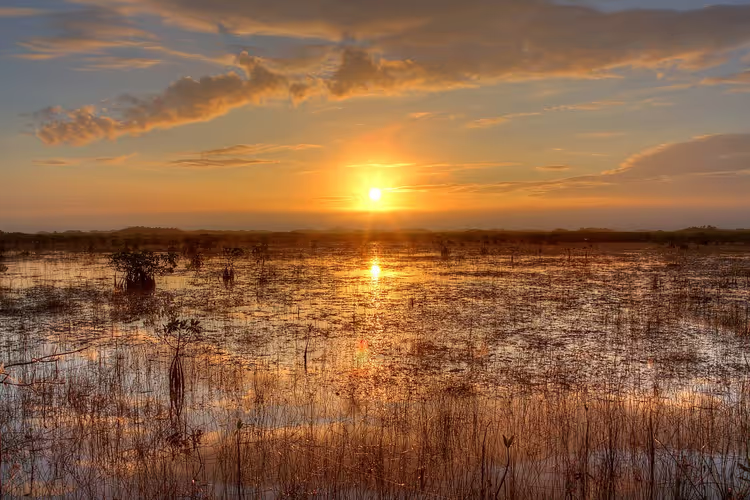
Everglades in Florida covers nearly 1.5 million acres of untouched subtropics (official Everglades website). The park's value lies in the fact that it preserves species that have nearly disappeared elsewhere: great blue herons, ancient alligators, and red mangroves. In total, the area is home to more than 2,000 species of trees and shrubs.
The park is best explored from the water and from the road. Hiking trails and roads run through the preserve, and visitors use them to watch birds and wildlife. Tourists can take canoe and kayak trips, go fishing, and join several ranger programs. Cougars and river otters are also found here.
- Entry: paid; starting in 2026, non-residents 16+ pay an extra $100
- When to go: November to April; summer is the rainy season
- What to see: alligators on the Anhinga Trail, Florida Bay, mangrove forests
- The catch: summer is hot and humid, with lots of mosquitoes
17. Yosemite
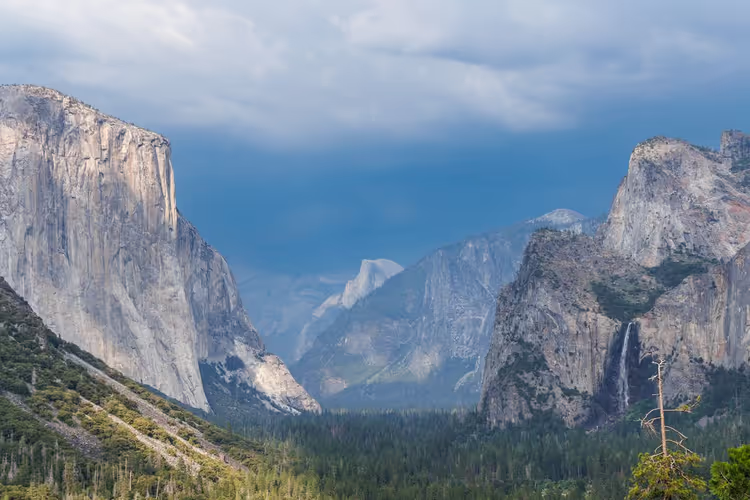
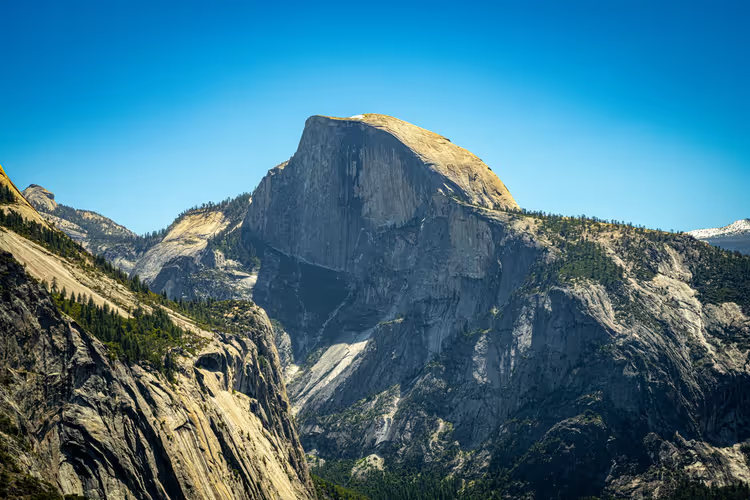
Yosemite in California is known for its granite walls, waterfalls, and groves of giant sequoias (official Yosemite website). The heart of the park is Yosemite Valley, where most visitors go. The valley is about 13 km long, and its walls rise nearly a kilometer.
The park's most famous rock formations are El Capitan and Half Dome. In spring, Yosemite Falls, one of the tallest waterfalls in North America, is flowing. In the Mariposa Grove, sequoias grow that are older than many nations. In summer, the park is extremely popular, so look for a parking spot first thing in the morning.
- Entry: paid; starting in 2026, non-residents 16+ pay an extra $100 (as of 09/2026, Yosemite fees)
- When to go: May to June for the waterfalls, September to October for quieter trails
- What to see: Yosemite Valley, El Capitan, Yosemite Falls, Mariposa Grove
- The catch: in summer, the valley has a lot of traffic, and entry is sometimes restricted
US national parks on the map
The parks are scattered across the country, so it's easier to plan a route by region: the West, Alaska, the East, and Florida. The map shows how far apart they are.
⁉️🤔 Frequently asked questions
How much does entering US national parks cost?
A single vehicle pass is usually valid for 7 days, and the exact price depends on the park. Some parks are free. The America the Beautiful annual pass costs $80 for US citizens and residents and $250 for non-residents (as of 09/2026, NPS ticket data). Starting in 2026, non-residents over 16 pay an additional $100 at 11 parks.
When is the best time to visit US national parks?
The best months are May-June and September-October: mild weather and fewer people. Desert parks, Death Valley and Joshua Tree, are best visited in winter, because summer is too hot there. Alaska parks, such as Denali, are open from June through early September (as of 09/2026, NPS season data).
Which park should I choose for a first trip?
For your first time, go with Grand Canyon or Yellowstone: they have well-developed infrastructure, hotels, free shuttles, and straightforward logistics. If you prefer the ocean, look at Acadia. Denali and Everglades are good for those who like quiet and wildlife.
Do I need to book tickets and accommodation in advance?
Yes, especially for summer. Some parks use a timed entry system, so slots are booked on recreation.gov in advance. Hotels near the entrances of popular parks are expensive and sell out quickly. For long weekends, book accommodation several months ahead, while entrance tickets are usually bought on site.
Can I see several parks in one trip?
Yes, but it's realistic to cover two or three neighboring parks. In the US Southwest, it's convenient to combine Grand Canyon, Zion, Arches, and Monument Valley: they're a few hours' drive apart. You need a car for this kind of trip. Flights between regions eat up time and budget.
In short: what to book
First decide on the region, then the parks. In the Southwest, that's Grand Canyon, Zion, Arches, and Monument Valley. The East is covered by Acadia and Great Smoky Mountains, the South by Everglades, and the North by Denali.
If you're short on time, pick one park and explore it in depth. If you're traveling with family, choose Grand Canyon or Yellowstone: they have convenient infrastructure. If you're looking for quiet, consider Denali, Olympic, and the North Rim. Desert lovers will enjoy Death Valley and Joshua Tree in winter.
For a long-distance trip, you'll need a rental car. Also get an eSIM for the US and make it easier to compare insurance options.

A small editorial team writing guides for independent travel. We travel ourselves, but we haven’t been everywhere, so we check prices, opening hours and how to get there against official sources.