
















Beaches of Australia: 20 places for swimming, surfing and quiet relaxation
Australia is surrounded by ocean on all sides. So you can find a beach almost anywhere along your route, from tropical Queensland to cool Tasmania. Beaches and islands remain one of the main reasons to visit the continent (as of 09/2026, Tourism Australia).
We have put together twenty beaches that travelers and locals recommend most often. Some are great for surfing, others suit swimming with children, and still others attract with quiet far from cities. You will see what makes each one different, when to visit, and what to expect from the water.
The dry season in the north of the continent runs from April to November, while the south is best for swimming in December and February. In the tropical waters of Queensland outside the season, venomous jellyfish and crocodiles are present, so swimming is only allowed in netted enclosures or in areas patrolled by lifeguards (according to Surf Life Saving Australia, 09/2026). Remote beaches have no cafes or lifeguards, so you need your own car to get there.
Best beaches in Australia: how to choose
💡 In short:
- The north is good for swimming in the dry season, the south awaits you in the warm months.
- For surfing, choose the ocean coast; for calm water, pick bays and coves.
- At remote beaches, bring water, an umbrella, fuel, and cash.
- Beach accessibility, seasonality, and infrastructure: 09/2026, according to Tourism Australia
The table below helps you quickly figure out which region suits you best.
Region | Beaches in this list | Best months | What to keep in mind |
|---|---|---|---|
Queensland | Surfers Paradise, Whitehaven, Ellis, Airlie, The Strand, Mission, Palm Cove, Four Mile, Horseshoe Bay, Cape York, Noosa | April-November | jellyfish and crocodiles outside the season, swim inside nets |
New South Wales | Bondi Beach | December-February | crowded, strong currents |
Western Australia | Cable, Cottesloe, Lucky Bay, Eighty Mile, Turquoise Bay, Pinkys, Monkey Mia | April-November in the north | far from cities, car required |
Tasmania | Binalong Bay | January-March | cool water even in summer |
1. Surfers Paradise
 © Misaochan2 · CC BY-SAPhoto: Misaochan2, CC BY-SA (https://creativecommons.org/licenses/by-sa/4.0), Wikimedia Commons
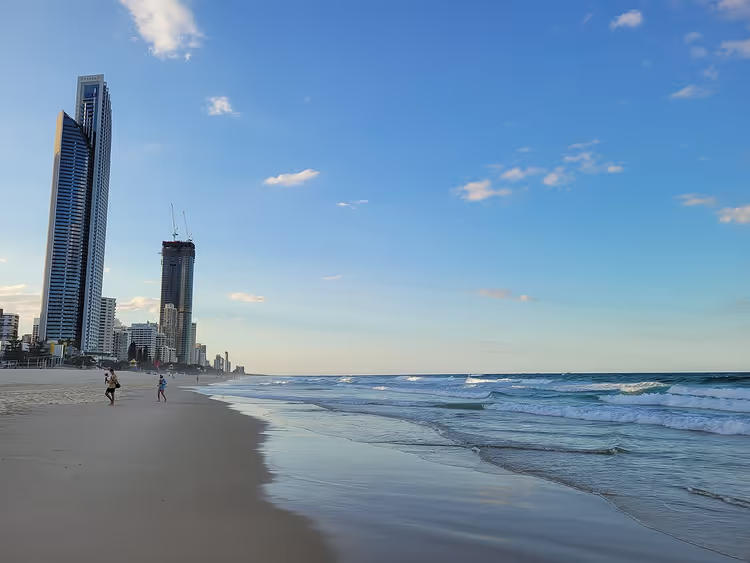
Surfers Paradise lies in a suburb of the Gold Coast, in Queensland. The wave here rolls evenly and long, which is why surfers from around the world choose this beach. By the accounts of tourists and locals, it consistently ranks among the best stretches of coastline.
Behind you, skyscrapers rise up, and cafes and shops sit a hundred meters from the sand. The coast guard warns of strong rip currents: enter the water only between the lifeguard flags. Come in the morning, while lifeguards are on duty and the sand is uncrowded.
- How to get there: on foot or by bus from the center of the Gold Coast.
- The catch: strong currents, swimming in the ocean without lifeguard supervision is dangerous.
2. Cable Beach
 © Korkut Tas · CC BY-SAPhoto: Korkut Tas, CC BY-SA (https://creativecommons.org/licenses/by-sa/3.0), Wikimedia Commons
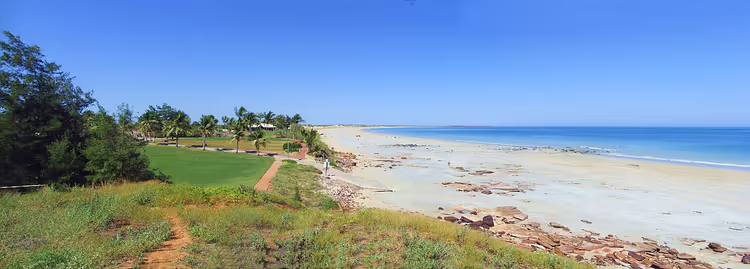
Cable Beach is located near the town of Broome in the northwest of the country. Twenty kilometers of white sand stretch along turquoise water, and you can find a quiet spot even in high season. The water stays at a nearly constant temperature, so swimming is comfortable year-round.
The main attraction at sunset is camel rides along the water's edge. Check schedules and prices with operators right on the beach. Bring water with you: cafes are only near the road, and there are none right by the water.
- The catch: in season, the shore gets crowded at sunset, so you will have to look for a quiet spot.
3. Cottesloe Beach
 © -wuppertaler · CC BYPhoto: -wuppertaler, CC BY (https://creativecommons.org/licenses/by/4.0), Wikimedia Commons
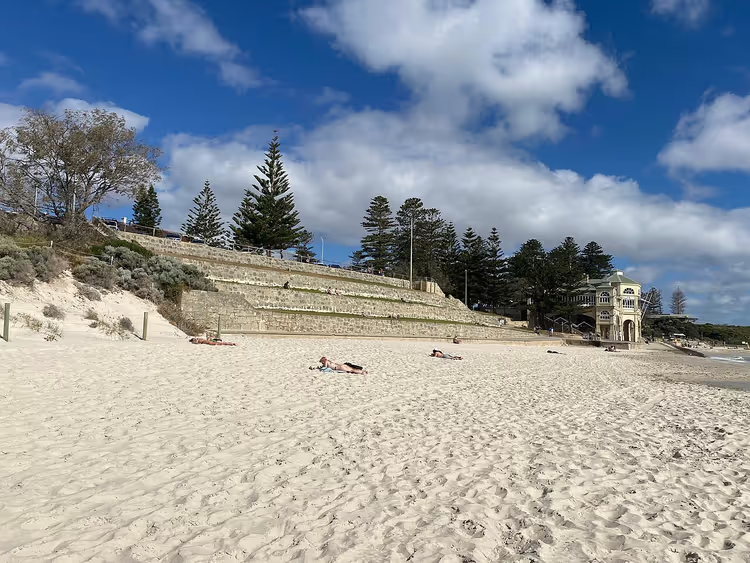
Cottesloe Beach lies near Perth and has long been a favorite spot for both city residents and visitors. The water here is so clear that you can see the underwater world even at depth. That is why people come here with a mask and snorkel to observe the seabed without diving.
The beach is famous for its golden sand and steady breeze that kicks up neat waves for riding. Restaurants, cafes, and pubs with live music line the shore. The evening scenery is just as good as the daytime views, so stay until sunset.
- The catch: the Indian Ocean water is brisk even in summer, so you will not be swimming for long.
4. Bondi Beach
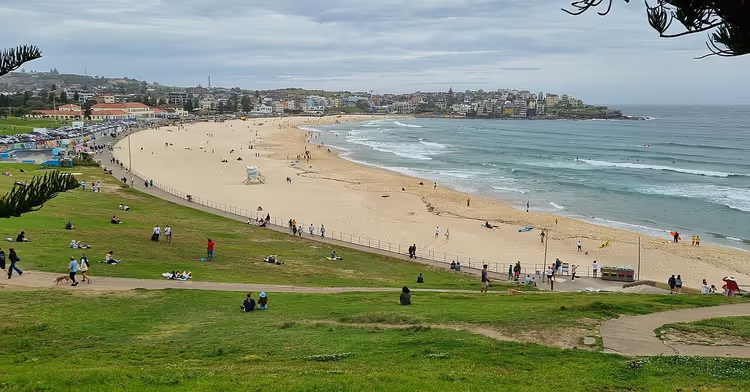 © Maksym Kozlenko · CC BY-SAPhoto: Maksym Kozlenko, CC BY-SA (https://creativecommons.org/licenses/by-sa/4.0), Wikimedia Commons
Bondi Beach lies in the eastern part of Sydney and is easy to reach from the center. The beach is about a kilometer long and fifty to a hundred meters wide, but there is almost never any free space. Festivals, contests, and competitions take place on the sand, so it is busy all year round.
In the crowd you might spot movie stars, musicians, and athletes, so safety is strictly monitored. The swimming area is protected from sharks by a special net, and lifeguards are constantly on duty on the shore. The beach has been granted national heritage status by Australia.
- The catch: in high season the sand gets packed, and you can only find a spot early in the morning.
5. Whitehaven Beach
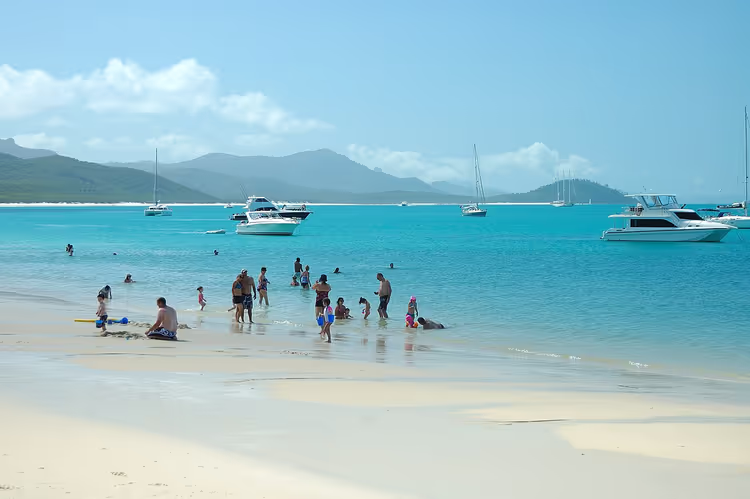 © Slug69 · CC BY-SAPhoto: Slug69, CC BY-SA (https://creativecommons.org/licenses/by-sa/2.0), Wikimedia Commons
Whitehaven Beach lies in the Whitsunday archipelago, next to the Great Barrier Reef. The sand here is almost entirely silicon dioxide, which is why it is snow-white and does not heat up as much as ordinary sand. The beach has received a separate award for its cleanliness and environmental quality.
You can only get there by water, on a boat from the ports of Airlie Beach or Shute Harbour. The sea trip alone is worth the journey. The authorities have banned bringing dogs here and smoking in order to preserve the pristine landscape (according to Tourism Australia, 09/2026).
- The catch: there are no cafes and no shade on the beach, so bring all your gear with you.
6. Lucky Bay
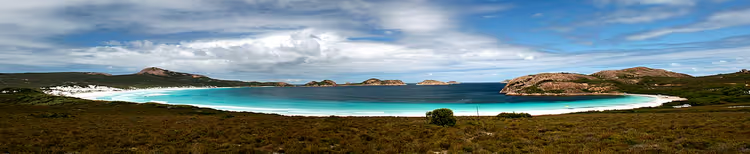 © Bochmann78 · CC BY-SAPhoto: Bochmann78, CC BY-SA (https://creativecommons.org/licenses/by-sa/4.0), Wikimedia Commons
The bay got its name from Matthew Flinders, who waited out bad weather here. Today Lucky Bay is loved for its unusual white sand. The grains of sand are fine and squeak underfoot, and the water near the shore looks turquoise and darkens at depth. Getting into the ocean is pleasant: the bottom is firm, with no rocks or seaweed.
The second reason to come here is the kangaroos. They rest right on the sand and graze in the bush around the coast. There is a campsite near the beach, so you can stay for several days. The high season runs from December to April, but the air remains moderate and the water cool: the resort lies almost at the very south of the country.
The bush campsite and the kangaroos on the shore are described on the Cape Le Grand National Park website (checked 15.09.2026).
- The catch: there is almost no natural shade, so you need to bring an umbrella in advance.
7. Ellis Beach
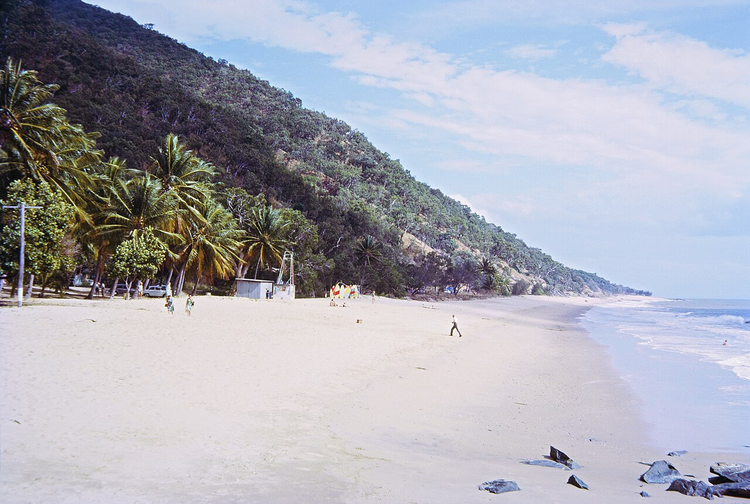 © Jack Bain · CC BYPhoto: Jack Bain, CC BY (https://creativecommons.org/licenses/by/4.0), Wikimedia Commons
Ellis Beach near Cairns is chosen by those looking for seclusion. A palm grove borders the strip of white sand, so you can still find shade if you look for it. The beach is wide enough not to feel crowded even in high season.
Road trippers stop right on the sandy shore, and if you want comfort, book hotels nearby. A holiday here has a rustic feel, with no big resorts or crowds. From December to February the heat peaks here. Swimming is more comfortable in the dry season, from April to November. Experienced travelers come in May or September, when the heat has eased but the ocean has not yet cooled down.
- The catch: in the height of summer the heat is intense, and you cannot do without water and an umbrella.
8. Airlie Beach
 © Nath J Whitsundays · CC BY-SAPhoto: Nath J Whitsundays, CC BY-SA (https://creativecommons.org/licenses/by-sa/4.0), Wikimedia Commons
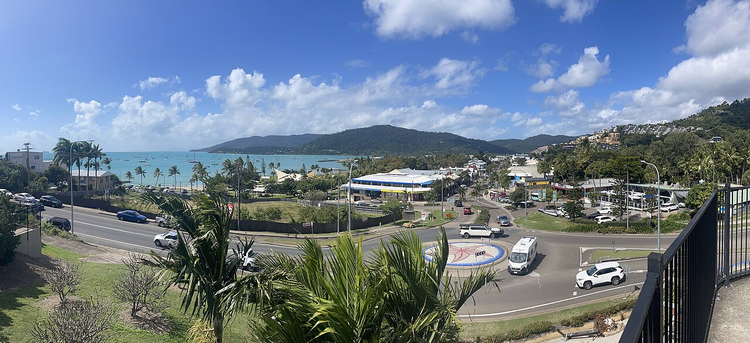
Airlie Beach is known both in Australia and in Europe: boats to the Whitsunday Islands leave from here. Passive relaxation is not the only option. You can take a jet ski, go scuba diving, or catch a wave on a surfboard, and rent equipment right on the spot.
Fishing enthusiasts head out for a trophy from the pier, from a yacht, or underwater. On the shore, fish and seafood are cooked on the grill, and restaurants serve European menus and local exotics. Remember the main rule: you can swim only in enclosed areas, because poisonous jellyfish live in these waters.
- The catch: poisonous jellyfish, swimming is allowed only behind the net.
9. The Strand
 © WikiTownsvillian at English Wikipedia · CC BY-SAPhoto: WikiTownsvillian at English Wikipedia, CC BY-SA (http://creativecommons.org/licenses/by-sa/3.0/), Wikimedia Commons
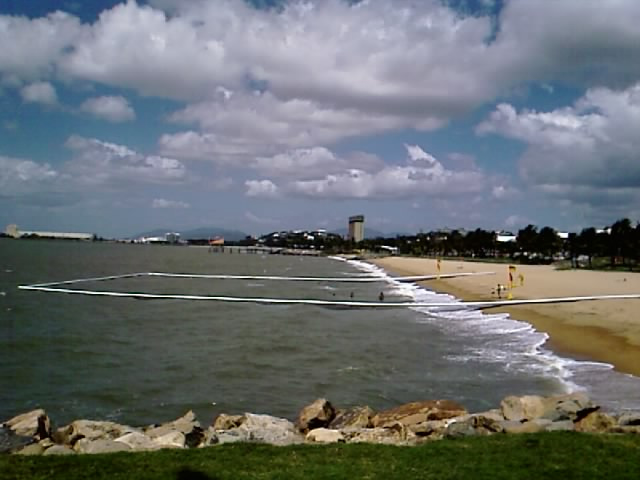
The Strand in Townsville is a developed urban resort with a long waterfront promenade. The water entry is gradual, and the bottom is sandy and smooth, with no seaweed. Swimming areas are enclosed with netting that protects against venomous jellyfish, and for those who find the water cool, there is a pool.
Palm trees grow along the shore, with flower beds and lawns, and bike paths run through the area. Kids spend time at the water park with attractions for every age. You can rent apartments or a hotel room on any budget, and the beachfront restaurants serve excellent fish and seafood (according to Queensland Tourism, 09/2026).
From here it is easy to head out to the Great Barrier Reef and Magnetic Island. Plan your trip between April and November: that is the dry season, the air is cooler, and the water is comfortable.
- The catch: during the wet season, crocodiles and jellyfish appear in the coastal waters.
10. Mission Beach
 © Hagai Agmon-Snir حچاي اچمون-سنير חגי אגמון-שניר · CC BY-SAPhoto: Hagai Agmon-Snir حچاي اچمون-سنير חגי אגמון-שניר, CC BY-SA (https://creativecommons.org/licenses/by-sa/4.0), Wikimedia Commons
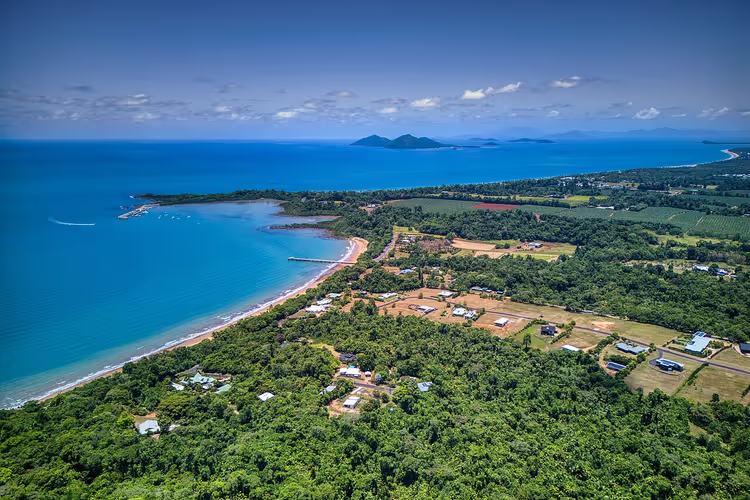
Mission Beach draws visitors with its long stretch of sandy shore. The strip of golden sand is backed by palm trees on the land side, and it looks especially good at sunset. Affordable accommodation can be found in the nearby village, from which you can explore the surrounding area in a rental car.
The water entry is gradual, which kids like. There are almost no waves, so Mission Beach is a choice for those who are not confident in the water. The best time to visit is from May to November: rainfall is low, the air is cooler than in summer, and the ocean is still warm.
- The catch: the tide goes out very far, and during those hours the water retreats well away from the shore.
11. Palm Cove
 © Chris Olszewski · CC BY-SAPhoto: Chris Olszewski, CC BY-SA (https://creativecommons.org/licenses/by-sa/4.0), Wikimedia Commons
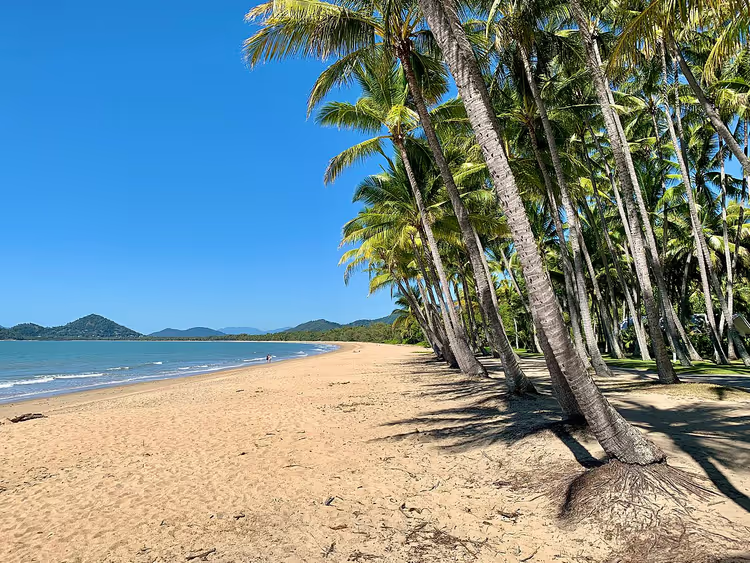
Palm Cove is a well-equipped beach for swimming and relaxing. Palm trees and lawns surround the sandy strip, so you will find shade. Here you can not only sunbathe and swim in the warm waves of the Coral Sea, but also take part in active recreation.
Renting an apartment or hotel room is easy: hotels and guesthouses of various standards are located nearby. A zoo with endemic animals is close by, and families with children find it interesting. Food is not a problem: there is a small supermarket, and cafes and restaurants serving fish and seafood line the street. The market sells local vegetables and fruit.
Choose Palm Cove in the dry season, from May to November. The Coral Sea water has not cooled down yet, while the air has become cooler, with no stifling daytime heat. Being on the shore is comfortable at any time of day.
- The catch: in the summer months the heat is stifling, and the comfortable season runs from May to November.
12. Four Mile Beach
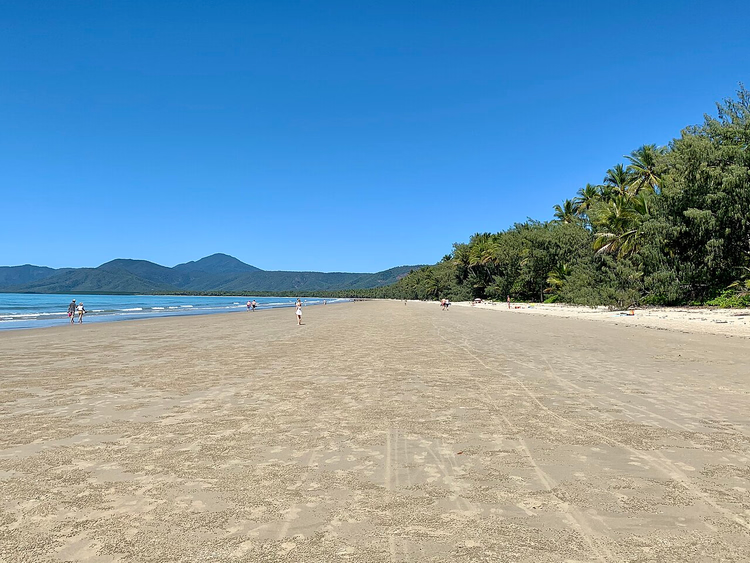 © Kgbo · CC BY-SAPhoto: Kgbo, CC BY-SA (https://creativecommons.org/licenses/by-sa/4.0), Wikimedia Commons
Four Mile Beach stretches for several kilometers along Port Douglas. A wide strip of gray-white sand is surrounded by groves of palms, pines, and eucalyptus trees. Relaxing in the natural shade and breathing in the aroma of essential oils is pleasant here even on a hot day.
The bottom is sandy, with no rocks or seaweed, and the entry is gradual. But there is constant heavy surf and gusty winds. As a result, swimming here is difficult for children and inexperienced swimmers. Designated swimming areas are enclosed with sturdy netting to protect against stinging jellyfish and crocodiles.
Hotels stand about fifty meters from the shoreline, so it is quiet and peaceful by the water. The best months are considered to be April through November: that is the dry season, the water is warm, and the air stays in a comfortable range. The beach ranks high in the Cairns region, so book accommodation in advance.
- The catch: heavy surf and gusty wind, swimming only in netted areas.
13. Eighty Mile Beach
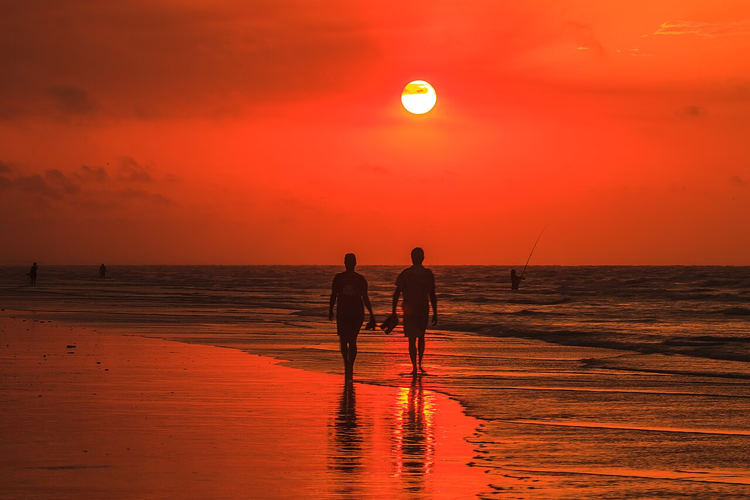 © Murray Foubister · CC BY-SAPhoto: Murray Foubister, CC BY-SA (https://creativecommons.org/licenses/by-sa/2.0), Wikimedia Commons
Eighty Mile Beach is chosen by those seeking solitude and peace. A wide strip of yellow-white sand runs along the ocean shore for dozens of kilometers, and it is always deserted here. You can set up for a rest anywhere, with plenty of open space for everyone.
The bottom is firm, and your feet do not sink when entering the water. The entry is gradual in most places, and the depth increases slowly, so inexperienced swimmers feel comfortable here. There is no natural shade on the shore: the sand is edged by sparse grass and bush, so bring an umbrella with you.
The area is open, and the wind is constant. You can drive in with a rental car and set up comfortably, and if you want to stay longer, book a spot at the campground or a room at the local hotel.
Fishing here is excellent: you can cast right from the shore while standing knee-deep in the water. The best time to visit is the dry season, from April to November, when it is warm and the ocean heats up well.
- The catch: there is no shade, and the open shore is constantly windy.
14. Turquoise Bay
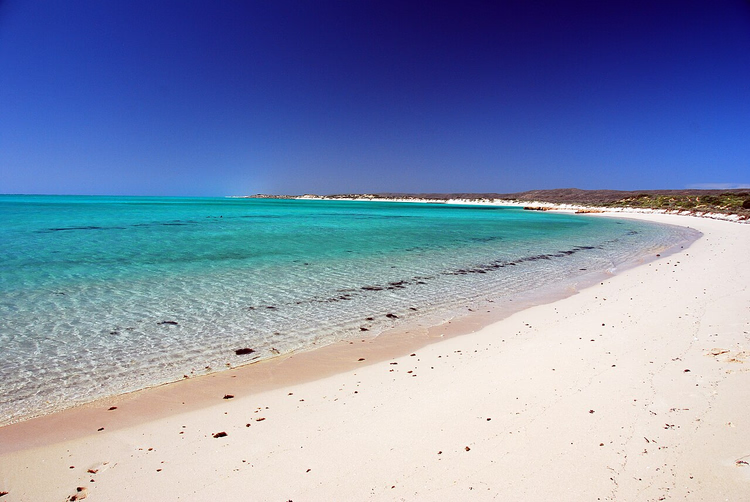 © Robert Young from Belfast, Northern Ireland · CC BYPhoto: Robert Young from Belfast, Northern Ireland, CC BY (https://creativecommons.org/licenses/by/2.0), Wikimedia Commons
Turquoise Bay near Exmouth is not heavily promoted, and mostly Australians vacation here. The sea is remarkably calm, the waves are gentle, and the sand is white, so the place suits a quiet getaway. Some travelers compare this shore to the Maldives.
Vegetation on the dunes is sparse: occasional grass and low bush. You will not find natural shade, so bring an umbrella and sunscreen. On the plus side, scenic dunes rise behind you, and nearby lies Cape Range National Park with its canyons and gorges (according to Cape Range National Park, verified 15.09.2026). If you get tired of looking at the sea, head out for a walk in the reserve.
You can stay at campgrounds, but they are located far from the coast. In the town of Exmouth, visitors can choose from hotels of various star ratings. Many people come here in the first months of the year, which is the peak swimming season. From June to December you can also swim and sunbathe, but the water will feel cool.
- The catch: campgrounds are far from the shore, and there is no shade at all on the beach.
15. Pinkys Beach
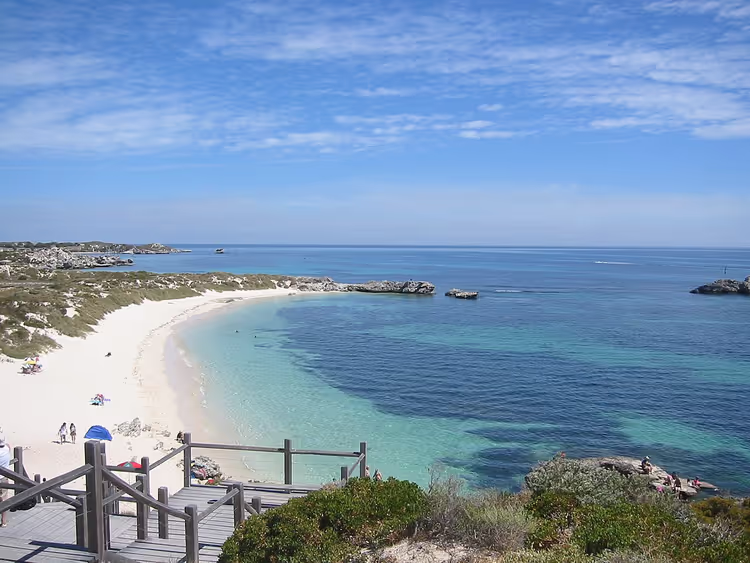 © Cookaa · CC BY-SAPhoto: Cookaa, CC BY-SA (https://creativecommons.org/licenses/by-sa/3.0), Wikimedia Commons
Pinkys Beach lies on Rottnest Island near Perth. The white sand in the light of the setting or rising sun appears soft pink, and it comes out the same way in photos. The shore is covered with fine, soft sand, and the bottom is sandy too, so swimming is pleasant for both children and adults.
The water entry is gradual, and seaweed does not get in the way. There is no natural shade on the shore: a strip of sand is surrounded by prickly bush. For a comfortable stay, bring an umbrella and water.
If you want to spend a few days here, stay at one of the hotels: they are located a few hundred meters from the beach. Near Pinkys Beach there is an architectural landmark, a lighthouse from the early last century. The ideal time to visit runs from December to April: it is warm, and the water is heated to comfortable temperatures.
- The catch: prickly bush instead of shade, an umbrella is a must.
16. Horseshoe Bay
 © Hagai Agmon-Snir حچاي اچمون-سنير חגי אגמון-שניר · CC BY-SAPhoto: Hagai Agmon-Snir حچاي اچمون-سنير חגי אגמון-שניר, CC BY-SA (https://creativecommons.org/licenses/by-sa/4.0), Wikimedia Commons
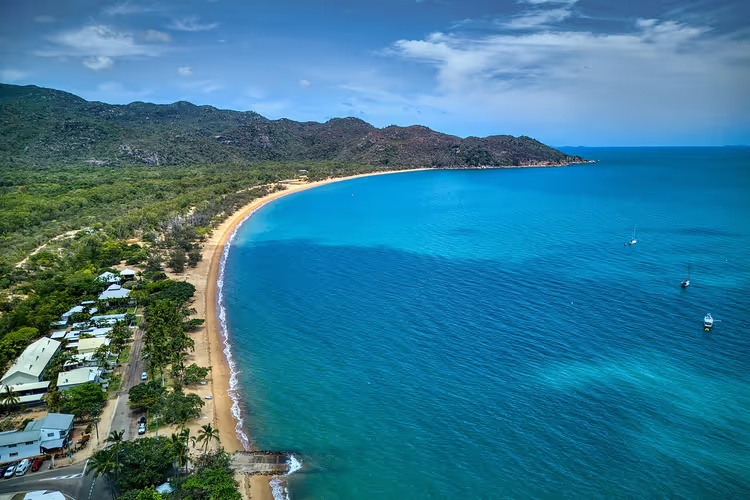
Horseshoe Bay is located on Magnetic Island, near Townsville. A wide strip of sandy shore is surrounded by palms, eucalyptus and coniferous trees, so there is plenty of natural shade and you will not need an umbrella. The sand is fine and soft, the water entry is gradual, and the bottom is free of seaweed.
Waves are rare here, so the bay is popular with inexperienced swimmers. For safe swimming, a section of the water is enclosed with a net that keeps out stinging jellyfish. You can find accommodation for any taste and budget: expensive hotels line the first row, and room prices drop further back.
The ideal time for a vacation is April to November. The water stays warm, and the air heats up to comfortable temperatures.
- The catch: first-row accommodation is expensive, look for cheaper options further from the shore.
17. Cape York
 © Calistemon · CC BY-SAPhoto: Calistemon, CC BY-SA (https://creativecommons.org/licenses/by-sa/4.0), Wikimedia Commons
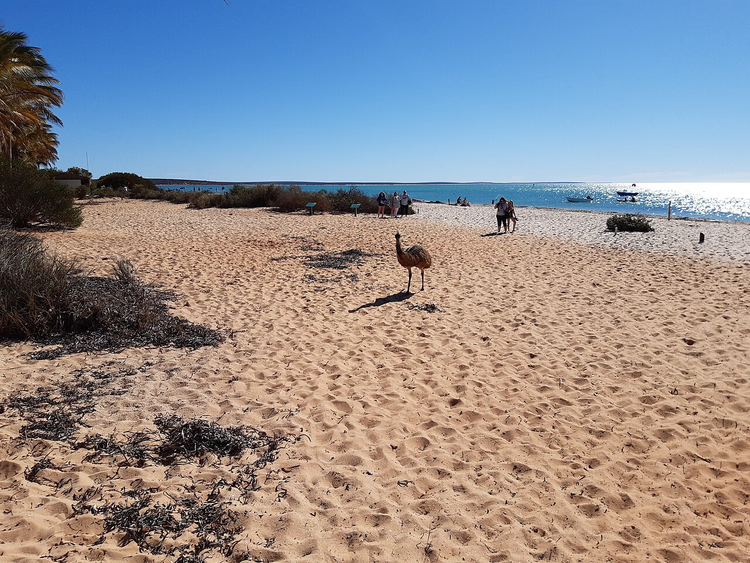
Cape York is the northernmost point of the continent. A wide strip of snow-white sand is surrounded by lush vegetation, and palms provide natural shade. The water entry is gradual, the bottom is sandy, with no seaweed. The area is barely developed by humans, so nature lovers come here.
The peninsula is a candidate for the UNESCO World Heritage List: savannas and tropical forests have been preserved here. But the shore has its own dangers. Tides are extremely strong, poisonous jellyfish live in the local waters, and crocodiles are not uncommon here. Tides wash mountains of ocean debris onto the shore, although local services clean the coast quickly.
There are few hotels and they are expensive, but there are campgrounds with varying levels of comfort. It is pleasant to vacation here year-round: even in the wet season the ocean is warm. For your trip, choose the dry season months, from May to November.
- The catch: poisonous jellyfish, crocodiles and strong tides, swim only in verified spots.
18. Monkey Mia
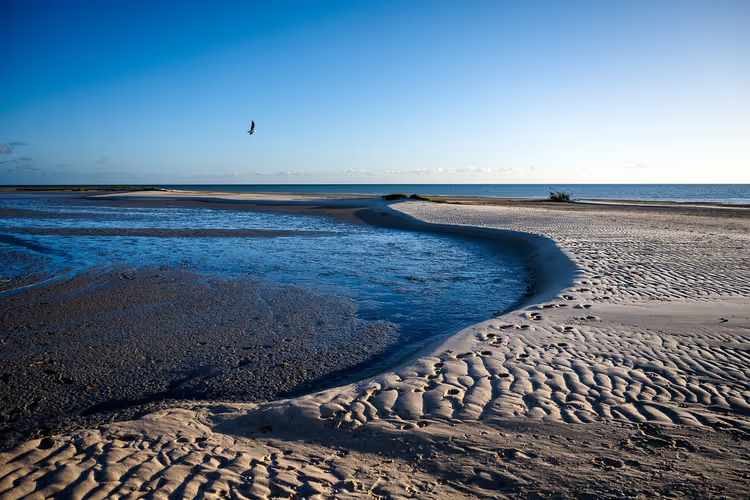
Monkey Mia is located in Shark Bay in the Indian Ocean, and the area is a UNESCO World Heritage Site. Research facilities here study dolphin behavior. The resort's history began in the middle of the last century: a fisherman's wife started feeding a dolphin named Charlie that swam up to shore. The animal soon got used to people and would come into the shallows to take food from her hands, and other dolphins followed.
Today, signs with rules for interacting with dolphins are posted all along the coast. Tourists line up on the shore in advance, waiting for the bottlenose dolphins, while Department of Environment staff monitor the interactions. Besides dolphins, you can also see pelicans and emus here.
The resort has only one hotel, and its prices are high, so many visitors stay in campgrounds along the coast (according to Shark Bay National Park, verified 09/15/2026). You can visit year-round, but the most comfortable time runs from November through May: the water is warm and the air is mild.
- The catch: the resort has one hotel with high prices, so book rooms well in advance.
19. Noosa Main Beach
 © StormcrowMithrandir · CC BY-SAPhoto: StormcrowMithrandir, CC BY-SA (https://creativecommons.org/licenses/by-sa/4.0), Wikimedia Commons
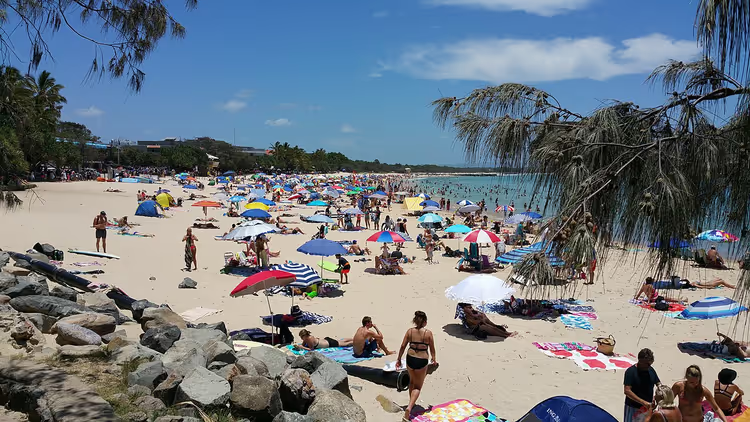
Noosa Main Beach is a scenic stretch of coast, partially sheltered from the east. That means you can not only swim here but also do water sports. The eastern end has almost no waves, so it is a favorite spot for calm-water lovers, while surfers catch waves at the western end.
The area is surrounded by palm trees, so there is plenty of shade on the shore. A wooden boardwalk runs along the white-and-yellow sand, making it easy to walk. Local authorities work to keep the resort authentic and eco-friendly: construction is banned west of the beach.
The mouth of the Noosa River is nearby, and the fishing there is excellent. You can catch both freshwater and ocean fish, and the catch is cooked right on the shore. Hotels at Noosa Main Beach are expensive: they are small, comfortable cottages near the coast. Farther away, you can find cheaper accommodation.
Visit during the dry season, from April through November: the water is warm and the air stays around thirty degrees.
- The catch: accommodation right by the beach is expensive, and cheaper options are farther from the shore.
20. Binalong Bay
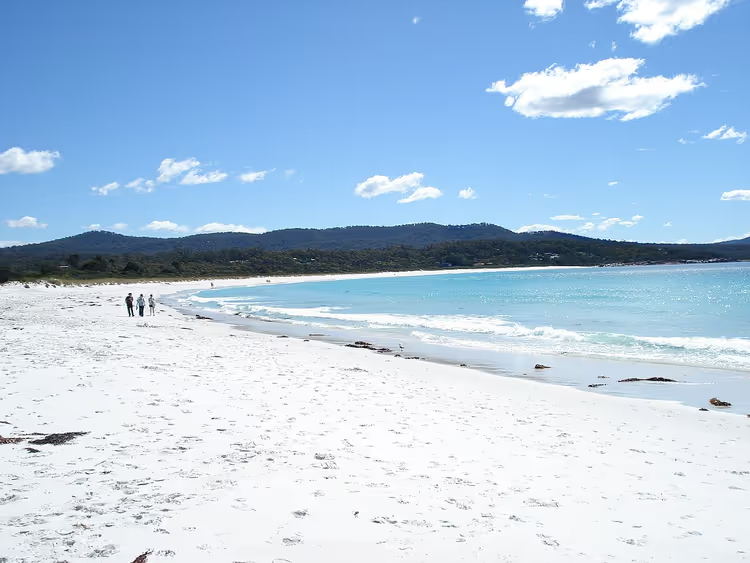 © Aaroncrick · CC BY-SAPhoto: Aaroncrick, CC BY-SA (https://creativecommons.org/licenses/by-sa/3.0), Wikimedia Commons
Binalong Bay is on the island of Tasmania, making it the coolest spot in this list. Red boulders are piled along the sandy shore, covered in multicolored mosses. Lush vegetation provides natural shade, and the water stays clear and clean.
Locals love swimming here. The bottom is sandy and slopes gradually, so children enjoy splashing near the shore. The beach is about thirty meters wide, so there is space even in high season.
Surfers and divers both appreciate this coast: the former catch waves, while the latter explore the scenic underwater rock formations. The resort administration offers boat and kayak rentals. If you get tired of the beach, head out on excursions around Tasmania: kangaroos, wombats, and possums live in the national parks. The most pleasant time is February, when the water is warm and the air heats up to nearly thirty degrees.
- The catch: the water is cool, so comfortable swimming is only possible in the warmest months.
Australia's beaches on the map
Below is an interactive map with the beaches from this list. Open it and get a sense of the distances: between northern Queensland and Tasmania there are several thousand kilometers, so you will not see all twenty beaches in one trip. Pick one region and plan your route around it.
⁉️🤔 Frequently asked questions
When is the best time to visit Australia's beaches?
The north of the continent runs on the dry season from April through November, when it is warm and there is almost no rain. The south and Tasmania are best for swimming in December and February. If you want to combine both regions in one trip, start in the south in December and head north by April.
Can you swim year-round?
In the north, swimming depends on the season: from November through May, venomous jellyfish appear in tropical waters, so swimming is only allowed in netted areas or pools. In winter and spring there are fewer restrictions. In the south the water is colder, but in the warm season people swim even in Tasmania (according to beach lifeguard services, 09/2026).
Where are the best surf waves in Australia?
Consistent, long breaks are found at Surfers Paradise and Bondi Beach, while in the south people surf at Binalong Bay. On the west coast, people ride at Cottesloe Beach. If you are just learning, stick to smaller waves and stay close to lifeguards: strong currents are common here.
Do you need a car?
For remote beaches, a car is essential: Lucky Bay, Eighty Mile Beach, Cape York, and Turquoise Bay are far from towns, and public transport does not go there. Some road trippers camp right on the shore or in campgrounds. Bondi Beach and The Strand, on the other hand, are easy to reach from the city center.
How many days do you need for the trip?
In one trip, it is realistic to cover one region, such as Queensland or the southwest of Western Australia. For Queensland, allow two to three weeks: just driving between beaches takes hours. If you are short on time, pick three or four beaches near one city and do not try to see the whole list.
In short: which beach to choose
If you are traveling with children: choose The Strand or Horseshoe Bay, where the entry is gentle and the water is calm. If you want surfing: Surfers Paradise, Bondi Beach, or Binalong Bay. If you want peace and quiet: Eighty Mile Beach, Cape York, or Mission Beach. If your route is around Perth: Cottesloe Beach or Pinkys Beach. If you are planning the Whitsundays: Whitehaven Beach and Airlie Beach.
Plan your trip for the dry season, check the forecast, and do not enter the water in areas without lifeguards.

A small editorial team writing guides for independent travel. We travel ourselves, but we haven’t been everywhere, so we check prices, opening hours and how to get there against official sources.