
















Peru for beginners: visa, flights and Machu Picchu tickets
Peru deserves advance preparation. On postcards it is a dream country: Machu Picchu, the ocean near Lima, the snow-capped Andes. In practice, four things determine your trip. These are the visa, the long-haul flight, internal logistics, and altitude.
The good news: tourists from the EU and most countries do not need a visa. After that, the planning begins. The most convenient way to travel between Lima and Cusco is by plane, and you need to buy your Machu Picchu ticket in advance.
Below is a breakdown of what you should decide before buying tickets. Season, flights, neighborhoods for overnight stays, what to see in Lima and Cusco, and how not to mess up Machu Picchu. All with opening hours and honest catches.
Ad: this article contains affiliate links, we earn a commission if you book through them, at no extra cost to you.
Where to start planning a trip to Peru
💡 In short:
- Season and tickets first, then accommodation: the dry season in the Andes runs from May to October.
- Buy your Machu Picchu ticket in advance: popular slots sell out weeks ahead.
- Set aside a day for acclimatization in Cusco: the city sits high in the mountains.
- Ticket sales rules: 09/2026, verified on the official Machu Picchu website.
Peru stretches along the Pacific Ocean. A single trip usually covers three points: Lima, Cusco, and Machu Picchu. Planes fly between them, while ground transport eats up days. That is why it is easier to build your route around flights rather than hotels.
 © Diego Delso · CC BY-SAPhoto: Diego Delso, CC BY-SA (https://creativecommons.org/licenses/by-sa/4.0), Wikimedia Commons
Visa and entry rules
Tourists from the EU and most countries do not need a visa for Peru. At passport control you enter as a tourist for up to 90 days, and the period can be extended to 183 days if needed (as of 09/2026, official website of the Peru tourism board).
Bring a return ticket and your accommodation address. These documents are requested more often than you might think. If you are planning a mountain trek, get medical insurance in advance: emergency evacuation at altitude is expensive.
Vaccinations are not required for entry from Europe. The yellow fever vaccine is only recommended for the Amazon region. For the classic southern part of the country, meaning Lima, Cusco, and Machu Picchu, you will not need it.
How to get to Peru from Europe
Direct flights to Lima depart from Madrid and Amsterdam. From other European cities you fly with one or two connections.
Another route is convenient to combine with Brazil. Low-cost airlines fly from São Paulo to Lima, and this route often works out cheaper than a direct connection.
The cost of a round-trip flight depends heavily on the dates. In high season, tickets get noticeably more expensive, so check flight prices to Lima in advance and compare by date.
Domestic flights: Lima and Cusco
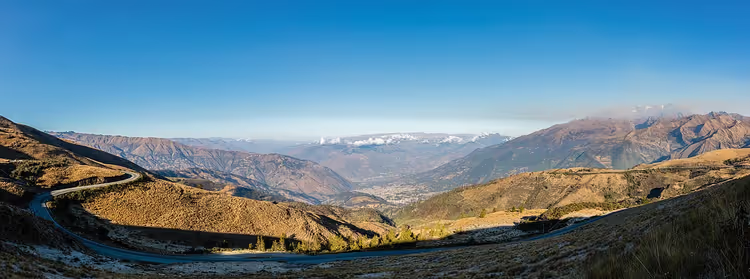
The flight from Lima to Cusco takes just over an hour. The plane flies directly over the Andes and often hits strong turbulence, so it is better to keep your seatbelt fastened.
The overland option takes a full day. The bus travels along mountain switchbacks, and the road elevation constantly changes. Most travelers choose to fly.
 © Diego Delso · CC BY-SAPhoto: Diego Delso, CC BY-SA (https://creativecommons.org/licenses/by-sa/4.0), Wikimedia Commons
Domestic routes are split between low-cost carriers. Sky Airline strictly checks carry-on luggage and weight, so you almost always pay extra for overweight bags. Weigh your bag at home and buy baggage allowance on the carrier's website.
Lake Titicaca requires separate logistics. The nearest airport is in Juliaca, so use that as your reference when buying tickets. Puno sits right on the lake shore, so you won't need a taxi to the water.
Keep offline maps handy: mobile coverage disappears in the mountains, and roaming data is expensive.
Where to stay in Lima
Lima is safe if you follow basic rules. Visit the historic center during the day, don't go to outlying areas in the evening, and spend your evening sampling the local cuisine.
There are four districts in Peru's capital where tourists usually stay: Miraflores, San Isidro, Barranco, and Pueblo Libre.
 © JulioKuLu · CC BY-SAPhoto: JulioKuLu, CC BY-SA (https://creativecommons.org/licenses/by-sa/4.0), Wikimedia Commons
Barranco is chosen for its atmosphere. It's a bohemian district with green parks, flower beds of exotic plants, wide sidewalks, and views of the Pacific Ocean. It also has plenty of restaurants, bars, and cafes.
Hotels in Lima are worth comparing in advance: prices in Miraflores and Barranco rise during high season. Hotels in Lima on Trip.com show available options for your dates.
Where to stay in Cusco
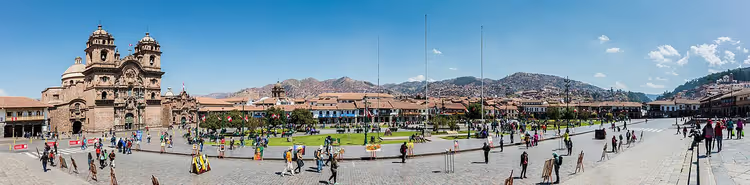
Cusco is small, and tourists come here for the historic center. Book accommodation near Plaza de Armas so you step out right by the cathedral in the morning.
 © Diego Delso · CC BY-SAPhoto: Diego Delso, CC BY-SA (https://creativecommons.org/licenses/by-sa/4.0), Wikimedia Commons
Many buildings in the center are colonial, with interior courtyards. A night in such a building gives you more of the city than a modern hotel on the outskirts.
Hotels in Cusco on Trip.com are easy to filter by the center. Check whether there's heating: nights in the mountains are cold year-round.
What to see in Lima
In Lima, tourists are primarily interested in the Pacific Ocean. But there's a catch: in the well-off districts, the coastal strip is covered with huge rocks, so you can't swim or float on the waves. For beach time, you head out of the city, for example to San Bartolo or Punta Hermosa.
For thrill-seekers, Lima offers good conditions. Surfing and paragliding are popular here, and you can rent equipment on site.
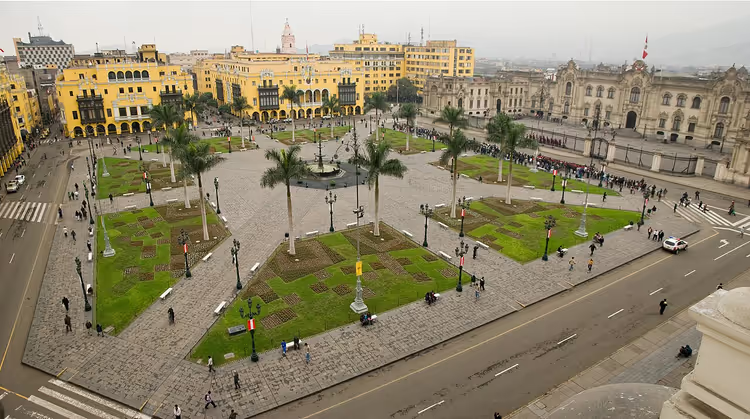
The historic center deserves a full day. Most landmarks are clustered around Plaza Mayor: the Government Palace, the City Hall, the Archbishop's Palace, and the Cathedral of Lima.
Plaza Mayor was founded by conquistador Francisco Pizarro. After a major earthquake, only the bronze fountain survived from the original buildings. The center's atmosphere is also shaped by small details: shoe shiners, women in bright traditional dress, and souvenir stalls.
Set aside a separate evening for Parque de la Reserva. Its fountain complex, Circuito Mágico del Agua, is recognized as the largest in the world, and the water, light, and music show draws crowds. The park is open from midday to 10:00 PM (as of 09/2026, official complex website).
History lovers will enjoy the National Museum of Peru and the National Museum of Anthropology and Archaeology. Tours of Lima save time: in one day you can cover both the center and an ocean viewpoint.
What to see in Cusco
Cusco's historic center is on par with Lima's. The main square here is called Plaza de Armas.
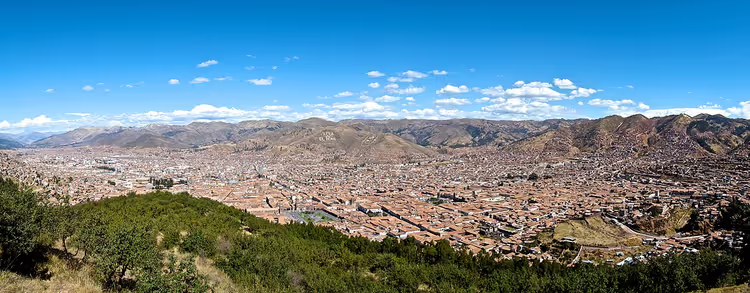 © gertrudis2010 · CC BY-SAPhoto: gertrudis2010, CC BY-SA (https://creativecommons.org/licenses/by-sa/3.0), Wikimedia Commons
The square is made beautiful not only by its buildings but also by nature. From the center, you can see the Andes seemingly wrapping the old part of the city in an embrace.
On Plaza de Armas stand the Basilica of the Cathedral, the Church of the Society of Jesus, and the chapels of Loreto, San Ignacio de Loyola, Del Triunfo, and Sagrada Familia. They're all close together, so you can cover them in an hour.
Be sure to try the local strong drink, pisco. It's a muscat grape brandy, and it's the base for the most famous cocktail, pisco sour.
For sweets and drinks, stop by the ChocoMuseo chocolate museum and the Museo del Pisco. ChocoMuseo shows the production process and offers tastings, while Museo del Pisco serves dozens of cocktails.
For the best views of the city, head up to the Christ statue (Cristo Blanco). On the way to the viewpoint, you'll notice Sacsayhuamán, an ancient Inca fortress made of giant stones.
Tours of Cusco and Sacsayhuamán include transfer and a guide: it's easier to reach the viewpoint by car.
Machu Picchu: tickets and time slots
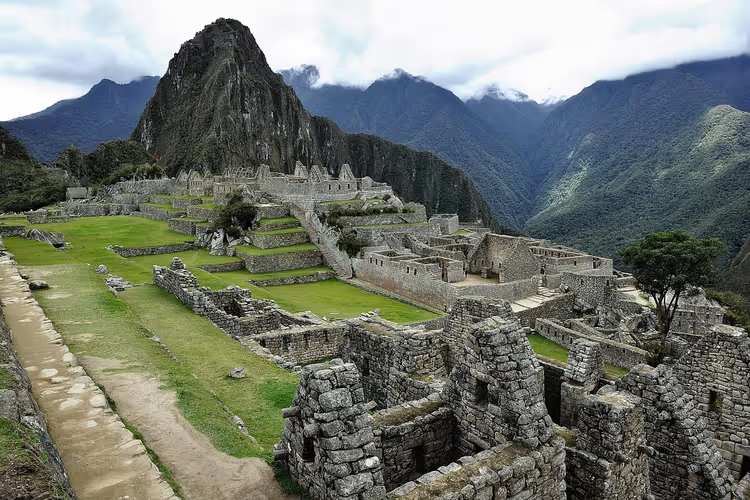
Machu Picchu was built by the Incas and abandoned before the conquistadors arrived. According to one theory, residents left the city when trading coca for food became impossible.
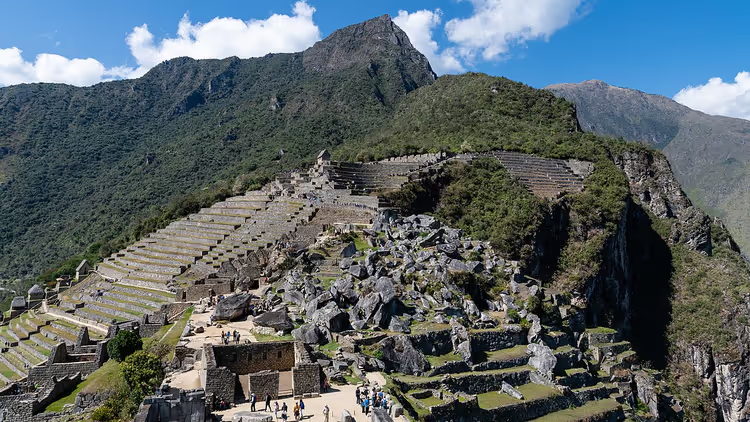 © Christoph Strässler · CC BY-SAPhoto: Christoph Strässler, CC BY-SA (https://creativecommons.org/licenses/by-sa/2.0), Wikimedia Commons
Tickets are sold online only and by time slot, and popular morning slots sell out weeks in advance. Check current slots and prices on the official Ministry of Culture portal: third-party resellers charge a markup and offer no entry guarantees.
Besides the postcard views, you'll see high mountains and grazing llamas and alpacas on the site. Bring water, a hat, and a rain jacket: the weather in the clouds changes within minutes.
Getting to Machu Picchu is easier with an organized group. Machu Picchu tours include the train from Cusco, the bus to the entrance, and a guide.
Tours and tickets in Machu Picchu
Guided tours, skip-the-line tickets and activities — most offers can be cancelled free of charge.
See offers on GetYourGuideThe widget loads once you give your consent.
⁉️🤔 Frequently asked questions
Do I need a visa to travel to Peru?
Citizens of the EU and most countries do not need a visa. As a tourist, you can enter for up to 90 days (as of 09/2026, peru.travel portal). At the border, keep your return ticket and accommodation address handy.
How many days do I need for a first trip to Peru?
The classic route includes Lima and Cusco with Machu Picchu. Two or three days are enough for Lima, and Cusco with acclimatization takes about five. Together with long flights, plan at least two weeks for everything, otherwise the trip turns into a race.
When is the best time to go to Peru?
The dry season in the Andes runs from May to October, and that is the best time for Cusco and Machu Picchu. From December to March, it rains in the mountains. On the coast near Lima, the weather is steady year-round, but the ocean is cool because of the cold current.
How do I buy a ticket to Machu Picchu?
Only online and by time slots on the official website. Lock in your travel date in advance, several weeks ahead.
Is the altitude in Cusco dangerous?
Cusco sits high in the Andes, and altitude sickness is common here. Spend the first day without exertion, drink more water, and do not book a tour right after your flight. If your condition worsens, go down to Lima, where the altitude is comfortable.
The local cuisine is based on fish and seafood: ceviche is prepared right by the ocean. For drinks, go for pisco sour and passion fruit lemonade, and try exotic fruits at the markets. A portion of ceviche in Lima costs noticeably less than European fish prices, but quality depends on the neighborhood.
In short: what to book
Peru forgives improvisation with food and does not forgive it with tickets. Sort out two things in advance: the flight and your Machu Picchu time slot. Everything else comes together on the ground.
- If you are going for the first time and for a while: base yourself in Lima and Cusco, book flights between them and a Machu Picchu tour.
- If you want it cheaper: look at flights via São Paulo and take a low-cost carrier for Lima-Cusco.
- If you are going for the beaches: plan to head out of the city, to San Bartolo or Punta Hermosa.
Before departure, pick an eSIM for Peru and compare insurance options. On the road, that removes the two most common headaches: connectivity and medical care.

A small editorial team writing guides for independent travel. We travel ourselves, but we haven’t been everywhere, so we check prices, opening hours and how to get there against official sources.