
















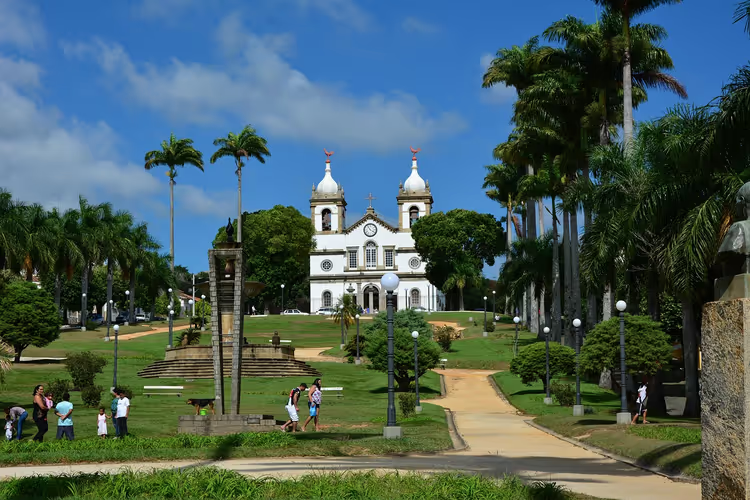
Brazil for a first trip: visa, season and main regions
Brazil is intimidating because of its distances, but traveling around it is easier than it seems. Many people put off the trip because of the long flight and unfamiliar rules. We have gathered what you should decide before buying a ticket: visa, season, flights, and four different regions, from Rio to the mountains.
Citizens of Germany, Austria, and Switzerland do not need a visa (according to the Brazilian consulate in Berlin, 2026). The visa-free period is enough for a relaxed itinerary across two or three states if you plan the logistics in advance.
Ad: this article contains affiliate links, we earn a commission if you book through them, at no extra cost to you.
Visa and entry rules
💡 In short:
- Citizens of Germany, Austria, and Switzerland do not need a visa for stays of up to 90 days within 180.
- You cannot extend your visa-free stay on the spot: for trips longer than 90 days, apply for a visa in advance.
- Visa and entry periods: 09/2026, verified on the website of the Brazilian consulate in Berlin.
Preparation starts with documents. You cannot extend your visa-free stay on the spot, this is stated directly on the official website of the Brazilian consulate. If you plan to stay longer, apply for a visa at the consulate in advance. Your passport must be valid for at least six months at the time of entry.
How to get to Brazil
A direct flight from Europe turns the journey into one long night. From Germany to São Paulo and Rio there are both connecting and direct flights. Routes from Frankfurt, Lisbon, Madrid, Paris, and Rome work well.
To save money, a connection via Istanbul with Turkish Airlines works, as does a flight via Dubai. Find flights to Brazil on Trip.com.
When is the best time to go to Brazil
The seasons here are opposite to European ones, but they are milder. The Brazilian winter falls on our June and July, and even then many states are warm. During the Brazilian summer, the north has exhausting heat, so you choose the region by season, not at random. Because of the country's size, the weather in the south and north differs greatly.
From our summer, that is from June to August, it makes more sense to go north: the states of Pernambuco and Ceará are warmest, and beaches stretch along the entire coast. In our winter, when it is summer in Brazil, the south is more comfortable: the state of Santa Catarina and the island of São Francisco do Sul. Here you will find your own stretch of beach even in high season.
Plan your trip around Brazilian school holidays. They fall in December, January, and the period from June to August, and during this time prices for accommodation and flights rise noticeably.
Rio de Janeiro: beaches, neighborhoods, and views
Rio attracts almost everyone who comes to Brazil. The city sits on Guanabara Bay, and it is home to the country's main postcard sights that people come from all over the world to see.

Copacabana is considered the city's main beach, and it is the most crowded neighborhood in Rio. Where there are many tourists, there are always more petty thefts, so for accommodation it is calmer to look at Ipanema and Leblon. If you are staying for a long time, choose an apartment away from the ocean: salty air and humidity damage electronics and clothing.
Bohemian Santa Teresa attracts with graffiti, workshops, and the old yellow tram that climbs here from the center. Accommodation prices here are above the city average, but the neighborhood is noticeably quieter than the beach area. Find hotels in Rio de Janeiro on Trip.com.
The city's main viewpoints: Sugarloaf Mountain and the Christ the Redeemer statue on Corcovado. Both offer panoramas of the bay and beaches, and you should visit both in clear weather, otherwise clouds will block the view.
Iguazu Falls: which side to see them from
In the south of the country, on the border with Argentina, the Iguazu Falls complex roars. From the Brazilian side you get the overall panorama: from here you can see the water plunging into the Devil's Throat gorge.
 © Mariordo (Mario Roberto Durán Ortiz) · CC BY-SAPhoto: Mariordo (Mario Roberto Durán Ortiz), CC BY-SA (https://creativecommons.org/licenses/by-sa/4.0), Wikimedia Commons
The most convenient way is to fly from São Paulo, the journey takes about two hours. Most tourists come here for one day, but some stay in hotels near the park.
Entry for foreign tourists costs about 134 reais (as of: 2026, official park website). The ticket includes the main trail Trilha das Cataratas and the other park routes. Separately, you can raft to the falls themselves by boat: bring a change of clothes, you will get soaked through.
São Paulo: neighborhoods, food, and sights
São Paulo is called the largest business center in Latin America. It is the Latin American New York: skyscrapers, offices, and the fast pace of a big city.
 © Deni Williams from São Paulo, Brasil · CC BYPhoto: Deni Williams from São Paulo, Brasil, CC BY (https://creativecommons.org/licenses/by/2.0), Wikimedia Commons
The city is considered safer than Rio. You pay for the calm: accommodation, food, and transport here are more expensive than in other states. When choosing accommodation, look at the neighborhoods of Moema, Itaim Bibi, Vila Olímpia, and Campo Belo, which are considered the calmest.
There is no ocean in São Paulo, but the city wins with other things: skyscraper panoramas, nightlife, and a large number of parks and palm trees in the center. The main places for walks: Ibirapuera Park, the Municipal Theater, the Pinacoteca, the zoo, and Avenida Paulista. See tours in São Paulo.
The gastronomy here is strong: from national Brazilian cuisine to Mediterranean and Asian. The Fogo de Chão chain deserves special attention. This is a rodízio, where you pay a fixed price and waiters bring different types of meat until you turn over the card that says "no more, thanks". The price includes the salad bar, and drinks are paid separately.
Campos do Jordão: mountains and European atmosphere
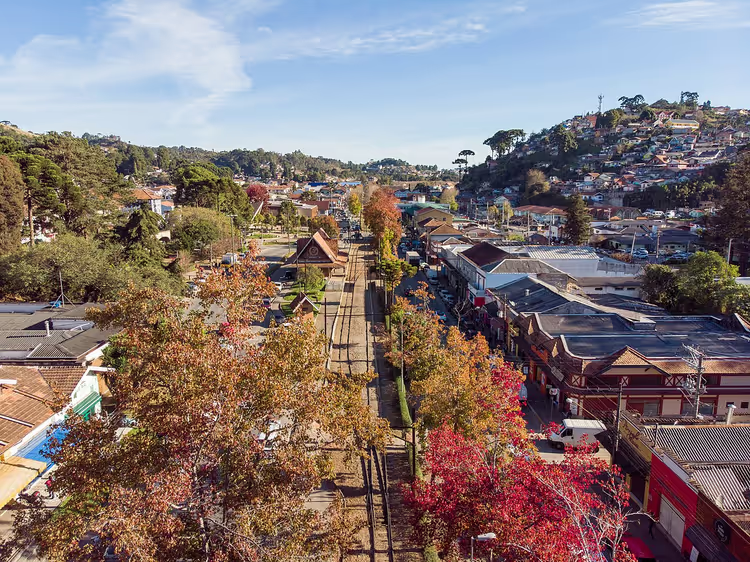
About three hours' drive from São Paulo lies Campos do Jordão, a town with a European atmosphere in the middle of Brazil. It sits high in the Serra da Mantiqueira mountains, so it is cooler here than in sweltering São Paulo. In summer people come here for the weekend to escape the heat.
 © Governo do Estado de São Paulo · CC BYPhoto: Governo do Estado de São Paulo, CC BY (https://creativecommons.org/licenses/by/2.0), Wikimedia Commons
In the center, buildings in Italian, German, and Swiss styles stand side by side. There are few streets, so two days will be enough to feel the town's atmosphere without rushing. A funicular takes you to the top of the mountain: from above there are views and cafés where you can grab a bite.
The town is especially transformed at Christmas. The streets are decorated with lights, ice rinks with artificial snow appear, and there are activities for adults and children. For hot Brazil, the picture is unusual: street stalls serve mulled wine, and squares host festive programs.
Among restaurants, remember Libertango with Argentine cuisine and grilled meat. On the hottest day, Baden Baden in the very center of the city will help you cool down: they brew craft beer here and serve it in the garden.
⁉️🤔 Frequently asked questions
Do German citizens need a visa to Brazil?
Citizens of Germany, Austria, and Switzerland do not need a visa for a tourist trip. Visa-free entry is valid for up to 90 days within 180 (according to the Brazilian consulate in Berlin, 09/2026). You cannot extend your stay on the spot, so for a long trip you need to apply for a visa in advance.
How long is the flight to Brazil from Europe?
Direct flights from Europe take one long night, and with a connection the journey gets longer. Routes from Frankfurt, Lisbon, Madrid, Paris, and Rome are convenient. To save money, a connection via Istanbul with Turkish Airlines or a flight via Dubai works.
When is the best time to go to Brazil?
The seasons here are opposite to European ones. From June to August, when it is summer for us, the north is warmest: in the states of Pernambuco and Ceará. In our winter, the south is more comfortable, in Santa Catarina and on the island of São Francisco do Sul.
How much does entry to Iguazu Falls cost?
Entry for foreign tourists costs about 134 reais (as of: 2026, official park website). The ticket includes the main trail Trilha das Cataratas and the other park routes. The boat trip to the falls is paid separately, and a change of clothes will come in handy.
How many days do you need for Rio de Janeiro?
For a first introduction, three or four days will be enough: Copacabana, Ipanema, Santa Teresa, Sugarloaf Mountain, and the Christ the Redeemer statue. If you want fewer people, come on weekdays and go up to the viewpoints in the morning. Book accommodation in advance in Ipanema or Leblon.
In short: what to book
If you are going to Brazil for the first time for two weeks, start with Rio, and add Iguazu Falls in the south. If you want city rhythm and gastronomy, plan a few days in São Paulo. For cool air and European architecture, head to Campos do Jordão. If you want a quiet coast, choose the northern states of Ceará and Pernambuco.
Flights and accommodation in high season get booked up in advance, so book before your trip: find hotels and flights on Trip.com.

A small editorial team writing guides for independent travel. We travel ourselves, but we haven’t been everywhere, so we check prices, opening hours and how to get there against official sources.