













5 Countries most closed to tourists in the world
There are almost two hundred recognized countries in the world. As a tourist, you can't get into many of them: war, closed borders, invitation-only visas, and restrictions on movement within the country.
Of the five countries on this list, only Saudi Arabia issues a full tourist e-visa, and even then only for citizens of 66 countries (as of 09/2026, official visa portal). Somalia has had an electronic eTAS system since 2025, but an invitation and an escort are still required there. The other four are more tightly closed: you'll need an invitation, a permit to leave the capital, and an escort.
1. Somalia: a country without a government
💡 In short:
- Somalia and Afghanistan are almost completely closed: an invitation, a permit, and an escort are mandatory.
- In Yemen, you need a separate permit even to leave the capital, and Chad admits visitors only with a letter from a sponsor.
- An online visa is currently available only for Saudi Arabia; applications go through the official portal.
- Visas and entry rules: 09/2026, verified on the official visa portal.
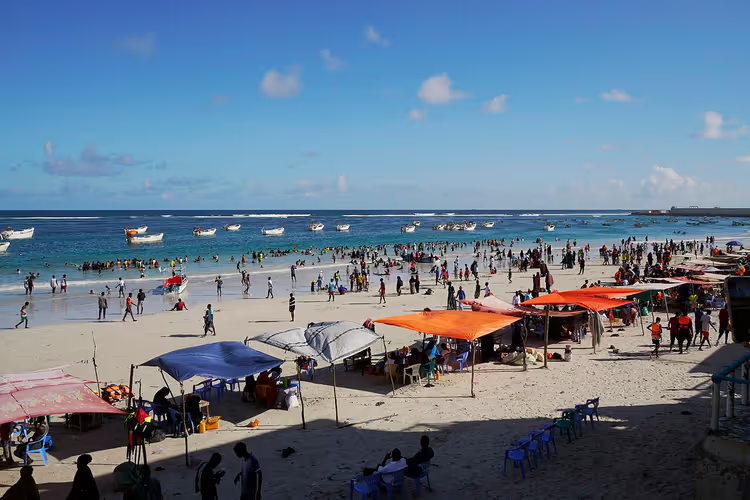
Somalia has lived for decades without a single functioning government. Unrecognized states operate in parts of the territory, and armed groups control individual areas. Formally you enter one country; in practice you cross several zones with different rulers and different rules.
 © Dan Sloan · CC BY-SAPhoto: Dan Sloan, CC BY-SA (https://creativecommons.org/licenses/by-sa/2.0), Wikimedia Commons
Visas here are issued by invitation, and the procedure depends on the region of entry. In Mogadishu, the document is arranged in advance online through the eTAS system, which has been operating since 2025. In Somaliland, the stamp is issued on arrival, and the right to move around is arranged separately at the Ministry of Tourism in Hargeisa. Allow plenty of time: checks and queues take days.
Just a few years ago, foreigners traveled only with armed guards, on average three vehicles and twelve people. Now a guide and a driver are enough. But after sunset the street is off-limits to you, and this rule is strictly enforced.
There is plenty to see: narrow streets with houses in the Afro-Arab style. Before the trip, check the warnings from EU foreign ministries and confirm whether your insurance is valid in Somalia.
- The catch: hostilities and a ban on going outside after dark.
2. Afghanistan: Taliban rules
 © Sven Dirks, Wien · CC BY-SAPhoto: Sven Dirks, Wien, CC BY-SA (https://creativecommons.org/licenses/by-sa/3.0), Wikimedia Commons
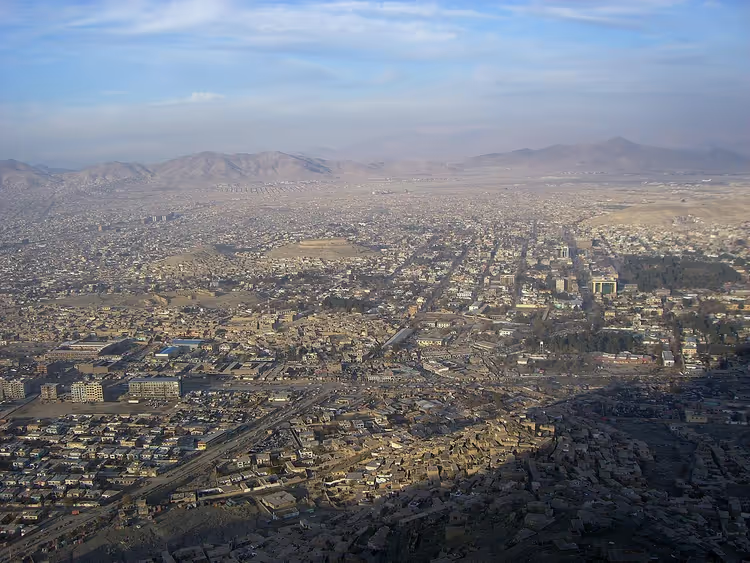
The situation in Afghanistan is similar to Somalia, only there are noticeably more rules. You get an entry permit by invitation from a host, and exceptions apply only to Muslim pilgrims, diplomats from certain countries, journalists, and employees of charitable organizations.
A letter with the exact route must be attached to the documents. The requirement is tied to security concerns: without a route, you won't be allowed to move around the country. The visa is valid for about a month.
Before the trip, study the local rules: you, not the guide, are responsible for breaking them. Also check the warnings from EU foreign ministries and confirm whether your insurance is valid in Afghanistan.
- Alcohol and drugs are prohibited.
- Dress like the locals: long sleeves, and for women a headscarf covering the head and shoulders.
- Bring cash: bank cards don't work in the country.
- Don't photograph people without permission, and you can't photograph military or government buildings.
- Separate restrictions apply to women; clarify them before the trip.
The nature in Afghanistan is beautiful, and there are many mosques, some of them well preserved. Sights are safer to visit with a local guide. Some landmark sites have already been lost: the Buddhas of Bamiyan were destroyed and cannot be restored.
- The catch: cards don't work, and you can photograph people only with their consent.
3. Saudi Arabia: a visa for tourists
Until recently, the kingdom was almost as closed as Somalia. You could only get in for work or by religious invitation. Then the borders began to open: a tourist e-visa has been available since 2019, and applications are accepted on the tourist visa website, open to citizens of 66 countries (as of 09/2026).
 © B.alotaby · CC BY-SAPhoto: B.alotaby, CC BY-SA (https://creativecommons.org/licenses/by-sa/4.0), Wikimedia Commons
Citizens of Israel are barred from entry, and a stamp showing a visit to Israel also becomes grounds for refusal. Women traveling without a male companion were long denied visas; this requirement has now been relaxed.
Mecca and Medina remain closed to non-Muslims. The number of tourists is limited to avoid overcrowding during the pilgrimage.
The infrastructure is still catching up with demand. There are few all-inclusive hotels, almost no nightlife, and you won't be able to sunbathe on the beach in a swimsuit. Alcohol and drugs are prohibited here, and that won't change.
On the other hand, the country has sea and mountains, megacities and villages with a traditional way of life. AlUla is what attracts travelers most of all.
- The catch: alcohol is prohibited, and Mecca and Medina are closed to non-Muslims.
4. Yemen: war by the Red Sea
Yemen lies next to wealthy Saudi Arabia and looks poor by contrast. It is one of the oldest states in the world, most of its territory is covered by sand, and income comes mainly from oil. No one is developing tourist infrastructure here at all.
 © Rod Waddington from Kergunyah, Australia · CC BY-SAPhoto: Rod Waddington from Kergunyah, Australia, CC BY-SA (https://creativecommons.org/licenses/by-sa/2.0), Wikimedia Commons
The visa is issued at diplomatic missions, usually for one month. On arrival you will face a full baggage inspection, so it is better to study the list of permitted imports in advance.
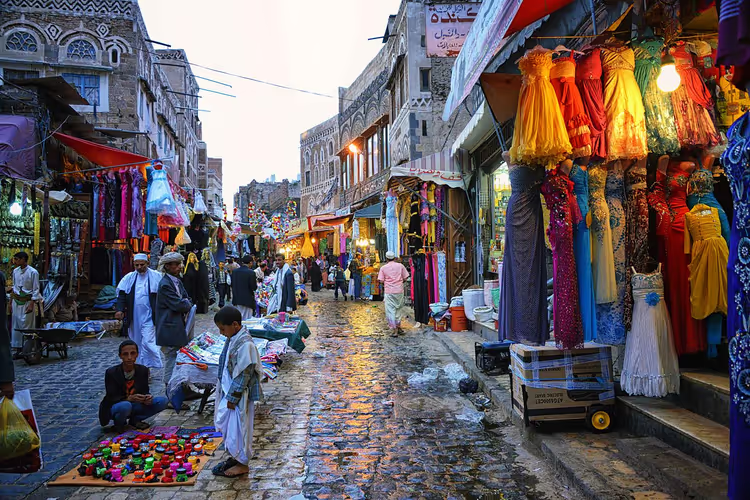
You will not leave Sanaa without a special permit from the tourist police. The city itself is worth staying for: old mosques and the Souk al-Milh market, where artisans sell handmade goods. Aden, a city in the crater of an extinct volcano, is also interesting. But the route from Sanaa to Aden crosses the front line, so such a trip is dangerous. From Aden you can get to Socotra with its endemic plants.
This country cannot be called calm. Hostilities are ongoing here, and ships passing through the Red Sea are shelled from the coast. Fugitive criminals hide in Yemen, and violating local rules that are hard for a non-Muslim to understand carries the death penalty. Before traveling, check the warnings from EU foreign ministries and find out whether your insurance is valid in Yemen.
- The catch: hostilities and the death penalty for violating local laws.
5. Chad: visas and wildlife
The Republic of Chad lies in the center of Africa and is landlocked. A significant part of the country is covered by the Sahara, and the country got its name from Lake Chad, which is partly located on its territory. The water in the lake is dirty and unfit for drinking.
 © John Weir · CC BY-SAPhoto: John Weir, CC BY-SA (https://creativecommons.org/licenses/by-sa/2.0), Wikimedia Commons
Only citizens of a few countries can enter Chad without a visa. Everyone else needs a letter of invitation from a local sponsor. If you do not have a sponsor, you can get an invitation through a hotel booking in N'Djamena: the room is paid in full, and the money is not refunded. If your visa is denied, you will lose the entire amount.
Finding an embassy adds to the difficulty. In Europe, visas are issued in Brussels, Berlin, Paris and Bern, so a UK resident will have to submit documents in France. There is a second option: the stamp is issued on arrival, but you will have to pay extra for police registration within three days.
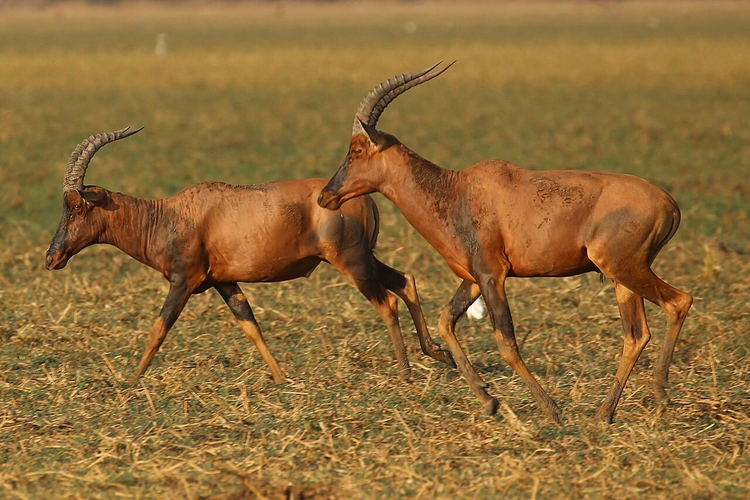
People come to Chad for nature: there are four major national reserves, and one of them, Zakouma, covers 3,000 km². Around 800 elephants live under the park's protection, the result of years of fighting poachers (as of 09/2026, African Parks). Lions and giraffes can be found in the parks.
Many come here for excursions to African tribes where unusual traditions have been preserved. Women of the Sara people insert large plates and saucers into their lips. Similar customs are found among the Mursi tribe in Ethiopia.
For active travelers, Chad offers climbing to the top of an extinct volcano and jeep safaris across the savanna. You should take care of your health here: the country has almost no medical care, there are not enough doctors, and hospitals are staffed by volunteers from international organizations.
- The catch: a visa denial means losing the money for the booking, and medical care is almost nonexistent.
⁉️🤔 Frequently asked questions
Which country on the list is easiest to get into?
Saudi Arabia is the easiest. The tourist visa is processed online, and applications are accepted through the kingdom's visa portal, which is open to citizens of 66 countries. Restrictions still apply: alcohol is banned, Mecca and Medina are closed to non-Muslims, and a swimsuit on the beach is not appropriate. Plan your trip in advance and check the rules before buying tickets.
Can you travel to Somalia as a regular tourist?
Formally yes, but the trip is nothing like a regular vacation. You need an invitation, a permit to move around the region, a guide, and a driver. Going outside after sunset is prohibited, and some areas are controlled by armed groups. Without local escorts, you will not be allowed to go anywhere.
How long is the Afghanistan visa valid and what do you need with it?
The visa is valid for about a month, and the documents include a letter with the exact route. The package is prepared in advance: an invitation from the host, route confirmation, and cash for expenses, because bank cards do not work in the country.
What is there to see in Yemen besides Sanaa?
From Sanaa, you first need to get a permit from the tourist police. After that, it is worth going to Aden, a city in the crater of an extinct volcano, and then to Socotra, where endemic plants grow. See the old mosques of Sanaa and the Souk al-Qat market before you leave.
What is there to see in Chad and how do you get there?
People go to Chad for its national parks, including Zakouma, which covers 3,000 km² and is home to about 800 elephants (as of 09/2026, park website). The visa is issued with a sponsor's invitation letter, or you get a stamp on arrival and register with the police.
The video review below covers places on the planet that are still closed to tourists.
In short: what you should know about closed countries
If you want a trip without guards and permits, start with Saudi Arabia: you can get the visa online, and the country is already open to tourists. If you want real exoticism and are ready for escorts, take a closer look at Somaliland and Chad.
Afghanistan and Yemen are better left for later: the risk there outweighs the experience. Both countries require invitations, permits, and full readiness for the unexpected.
Before buying tickets, check the requirements on the official Saudi Arabia visa portal and confirm the rules for the specific region.

A small editorial team writing guides for independent travel. We travel ourselves, but we haven’t been everywhere, so we check prices, opening hours and how to get there against official sources.