
















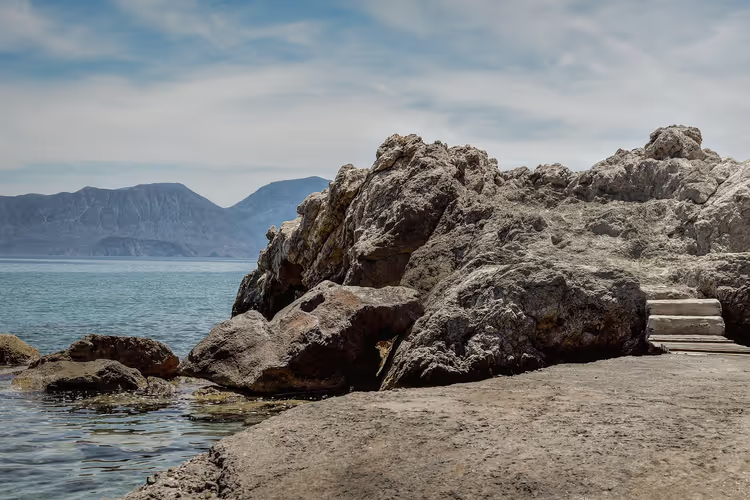
Halkidiki: 25 places from Petralona cave to Varvara waterfalls
Halkidiki looks like a trident. Three narrow "fingers" stretch into the Aegean Sea. Each has its own beaches, monasteries, and old villages. You are unlikely to see everything in one trip.
We have gathered 25 places worth seeing and organized them by "finger." For each spot there is a photo, a short description, and practical details: where to stay, how long the walk takes, and whether you need to buy tickets in advance.
Ad: this article contains affiliate links, we earn a commission if you book through them, at no extra cost to you.
The three "fingers" of Halkidiki and when to go
💡 In short:
- Kassandra: closest to Thessaloniki airport, with more hotels and lively beaches.
- Sithonia: quieter and greener, with the best coves for swimming.
- Athos: monasteries and pilgrimage routes, only men are allowed into the territory.
- Tickets and opening hours for key sites: 09/2026, verified on the Greek Ministry of Culture website.
The peninsula consists of three elongated parts that locals call "fingers." Kassandra lies farthest west, and you can get here fastest from Thessaloniki airport. The middle finger, Sithonia, is chosen by those seeking wild nature: pine trees come right down to the water, and empty coves remain between the resorts. The eastern finger, Athos, is occupied by a monastic republic, and access is by special permit only.
The best time to visit: late May, June, and September. In July and August the sea is warm, but popular beaches are crowded and accommodation prices are higher. The swimming season here starts earlier than in the north of the country, but in May the water is still cool. For traveling between the "fingers," it is better to rent a car: buses run infrequently and distances are long.
Plan your route by "finger," not across the whole peninsula at once. Kassandra and Sithonia are separated by a bay, and the road around it takes a lot of time. In one day you can realistically see three or four nearby sites, so do not try to cover everything in a single trip.
1. Petralona Cave
 © Sven Dittmar · CC BY-SAPhoto: Sven Dittmar, CC BY-SA (https://creativecommons.org/licenses/by-sa/3.0), Wikimedia Commons
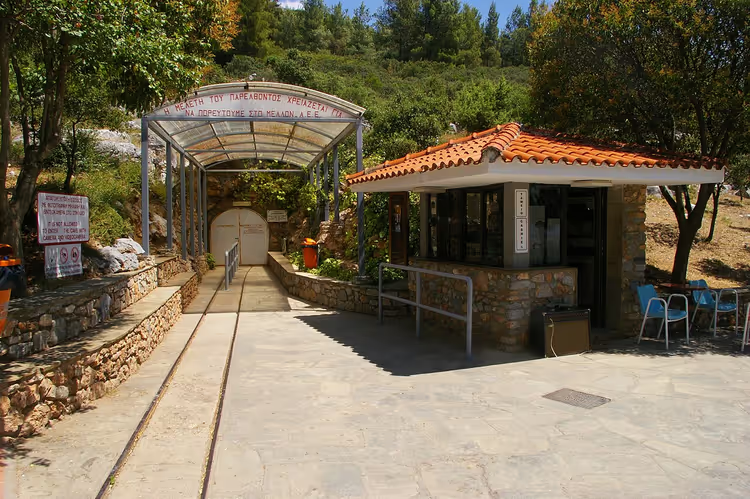
Petralona Cave is located in the western part of Halkidiki, at the foot of Mount Katsika, near the village of the same name. It was discovered by accident by locals who were searching the slope for a water source. Instead of a spring, they found a spacious underground cavern with chambers and narrow corridors.
Inside, you are greeted by stalactites and stalagmites of whimsical shapes. The chambers and passages here stretch for many kilometers, making the cave one of the largest in Greece. Scientists have found underground bones and skulls of people and animals that lived in these places many thousands of years ago. As a result, the cave is recognized as one of the country's most important paleontological sites, and some of the finds are displayed in cases right here.
Nearby there is an Anthropological Museum with tools and remains of ancient inhabitants, described as a visual guide to human development. A cave ticket costs 10 €, reduced 5 €, and a separate museum ticket is 5 € (as of 09/2026, Ministry of Culture rates). It is cool inside no matter how hot it is outside, so bring a jacket.
2. Meteora Monasteries
 © Ioannis Ioannidis · CC BY-SAPhoto: Ioannis Ioannidis, CC BY-SA (https://creativecommons.org/licenses/by-sa/4.0), Wikimedia Commons
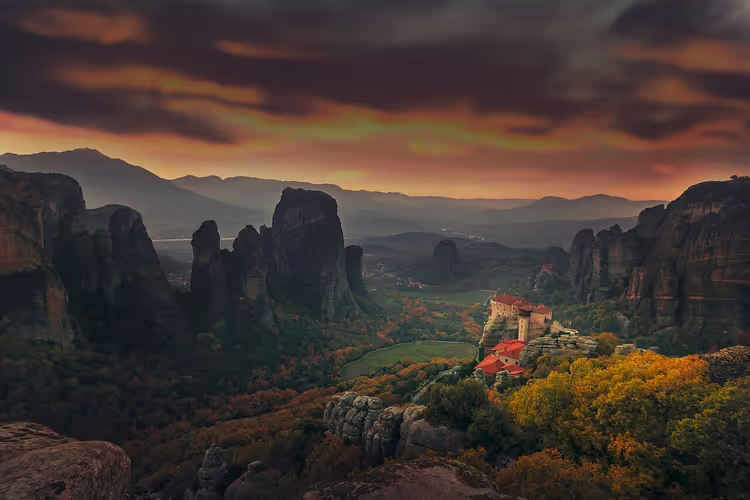
The Meteora Monasteries stand above the town of Kalabaka in the region of Thessaly. These are tall rock formations with nearly vertical walls, and monasteries are built on their summits. The name translates as "hovering in the air." From a distance, the white buildings with red roofs really do seem to hang beneath the clouds.
The first monasteries were founded by monks in the fourteenth century, and climbing the rocks was extremely difficult. Today several monasteries remain active, while the rest have been turned into museums. The largest, the Transfiguration Monastery, or Great Meteoron, occupies a broad ledge of rock. Inside you will see ancient books, manuscripts, and objects of monastic daily life.
A steep paved road leads to the base, so it is more convenient to go with a driver. Entry to each monastery costs 5 € per person, payable in cash (as of 09/2026, Visit Meteora). Each monastery has its own closing day, so check the schedule in advance. The dress code is strict: shoulders and knees must be covered, and women are given long skirts at the entrance. If you do not want to deal with schedules, check out ready-made Meteora tours on GetYourGuide.
3. Ouranoupoli
 © Edal Anton Lefterov · CC BY-SAPhoto: Edal Anton Lefterov, CC BY-SA (https://creativecommons.org/licenses/by-sa/3.0), Wikimedia Commons
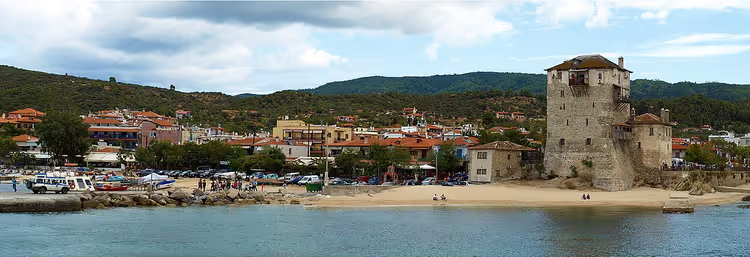
Ouranoupoli stands on a cape right at Athos and serves as the gateway to the monastic republic. According to legend, the city was founded by the philosopher Alexarchus, who wanted to gather people of different languages and equal rights here. The attempt failed, but the name "city of heaven" stuck to the settlement.
Today it is a quiet resort with clear water and pine trees all around. It is well suited for family vacations, and in the evening you can stroll along the waterfront. Boats depart from the local port along the Athos coast, and from the water you can see several monasteries. For women, such a boat trip remains the only way to get close to the holy mountain.
4. Mount Athos
 © Dave Proffer · CC BYPhoto: Dave Proffer, CC BY (https://creativecommons.org/licenses/by/2.0), Wikimedia Commons
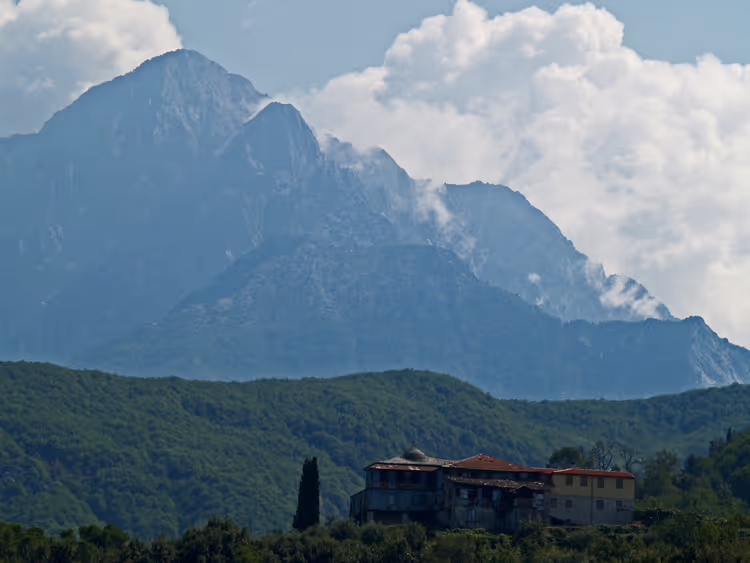
Mount Athos is home to an Orthodox monastic republic. Monks from different countries live here, and the territory itself has a special status. Monasteries, sketes, and cells are scattered across the mountain slopes, surrounded by subtropical greenery.
The republic lives by its own charter, and all the monasteries fall under the spiritual jurisdiction of the Eastern Orthodox Church. Only men can visit the peninsula, and only with a permit arranged in advance. For pilgrims, this is a multi-day journey, while regular tourists usually settle for a boat tour along the coast. Even from the water, the cliffs and monasteries make a powerful impression.
5. Kassandra
 © Максим Улитин · CC BYPhoto: Максим Улитин, CC BY (https://creativecommons.org/licenses/by/3.0), Wikimedia Commons
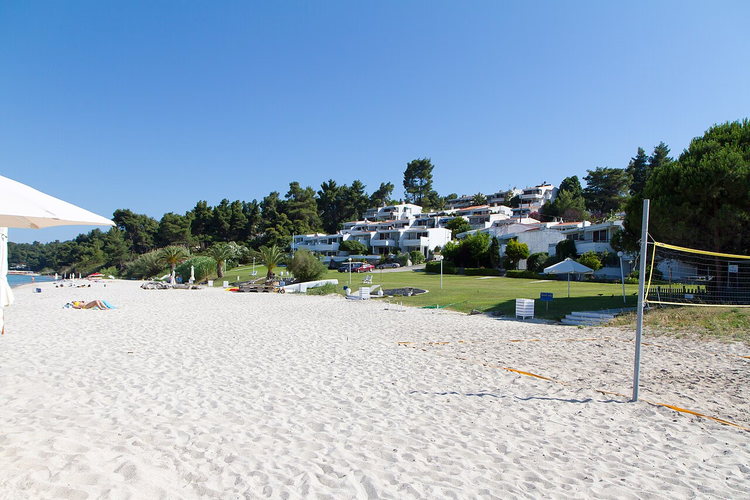
Kassandra is considered the most developed "finger" of Halkidiki. It was named after King Cassander, and the first settlements appeared here in antiquity. Relict caves contain rock paintings that point to the presence of prehistoric people.
The peninsula has preserved ancient sites: the Temple of Zeus, the Sanctuary of Dionysus, and the acropolis of Antigonea. Today Kassandra is a string of resort towns with hotels, tavernas, and beach infrastructure.
On Kassandra you will find Nea Moudania, Nea Potidea, Kallithea, Pefkochori, and Afitos. Almost every town has its own beach and promenade, with buses running between them. The healing sea air and clean beaches make this "finger" the most popular choice for a vacation.
6. Loutra Pozar
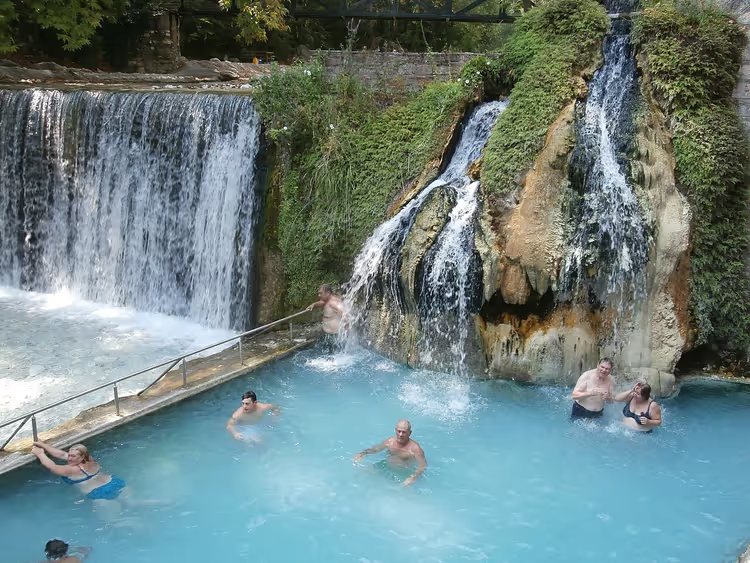
The natural spa resort of Loutra Pozar lies in the mountains, sheltered from cold winds by two peaks. People come here for their health. The hot thermal springs and mountain air help with joint, skin, and respiratory problems.
The mineral water here is not only used for bathing but also drunk: it helps with stomach and kidney conditions and flushes out excess salts. The water is available year-round, and the baths operate in any weather. The village has many small hotels and apartments, and prices stay lower than on the coast.
Between treatments, you can walk the mountain trails around the resort. Locals cook with fresh ingredients, so dinner at a taverna here is also part of the treatment.
7. Afitos
 © MaryGrigoriadou · CC BY-SAPhoto: MaryGrigoriadou, CC BY-SA (https://creativecommons.org/licenses/by-sa/4.0), Wikimedia Commons
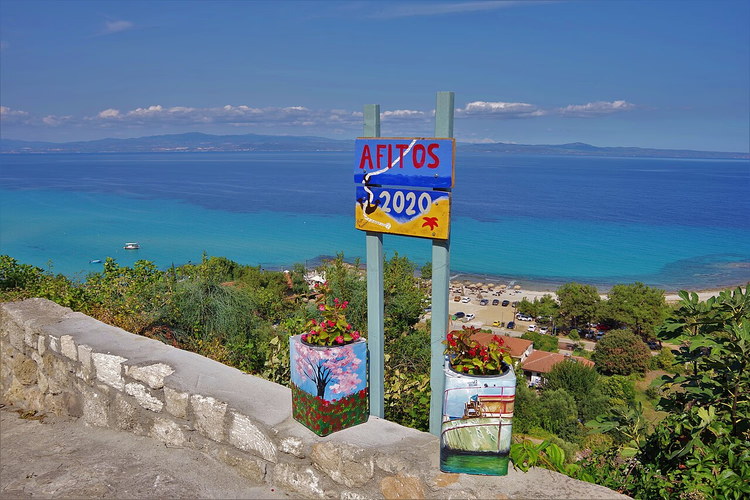
Afitos sits right in the center of Kassandra, making it a convenient base for excursions around the entire peninsula. The town has been known since antiquity: Aristotle, Herodotus, and Thucydides wrote about it. It even minted its own coins.
In past centuries, the town fell into obscurity during the liberation struggle, but later residents returned and rebuilt it. The streets are paved with stone, and the house facades are made of local stone, which is why Afitos has long been a favorite of artists.
The town is home to the Church of Saint Demetrius, a one-of-a-kind domed basilica. Visitors are drawn to the old mansions, and the Vrachos viewpoint offers a view of the bay. Nearby, the ruins of the Koutsomilo acropolis have been preserved.
8. Mount Olympus
 © kallerna · CC BY-SAPhoto: kallerna, CC BY-SA (https://creativecommons.org/licenses/by-sa/4.0), Wikimedia Commons
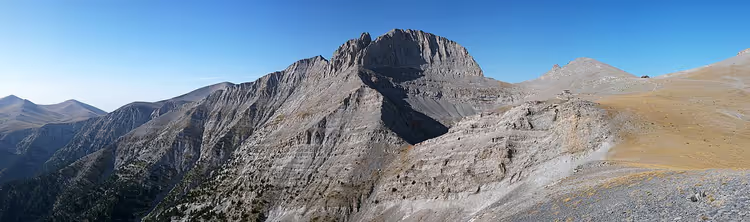
Olympus is considered the highest mountain range in Greece. For the ancient Greeks it was the home of the gods, and today it is a national park with rare ecology. The summit consists of several named peaks, and the highest of them is called Mytikas.
According to legend, people have tried to reach the gods since ancient times, but the path was closed to mortals. The goddesses of the seasons guarded the approaches and sent clouds and hurricane winds. At the foot of the mountain lies the ancient city of Dion, from where, according to legend, Alexander the Great began his campaigns.
You can climb Olympus along marked trails, but you need preparation and comfortable shoes. The old monasteries of Saint Dionysius and the Holy Trinity also stand here, and alpine meadows lie around the peaks. The park was created to preserve rare plants and animals.
9. Nea Fokea
 © Tryfon Manolis · CC BY-SAPhoto: Tryfon Manolis, CC BY-SA (https://creativecommons.org/licenses/by-sa/4.0), Wikimedia Commons
Nea Fokea stretches along the sea on Kassandra. Officially the town dates back to the last century, but people have lived here since ancient times. According to tradition, the Apostle Paul preached nearby, and in memory of this a cave and a spring have been preserved on the outskirts.
A chapel is set up in the front part of the cave, and a narrow passage leads deeper inside. Both tourists and pilgrims come here. A metochion of the Monastery of Saint Paul once stood on this site, and the small houses of the monastery workers remain in the town.
A Byzantine tower stands on the high shore and still serves as a landmark. It protected the monks in troubled times, and beneath it lies the Church of the Twelve Apostles.
10. Nea Potidea
 © DocWoKav · CC BY-SAPhoto: DocWoKav, CC BY-SA (https://creativecommons.org/licenses/by-sa/4.0), Wikimedia Commons
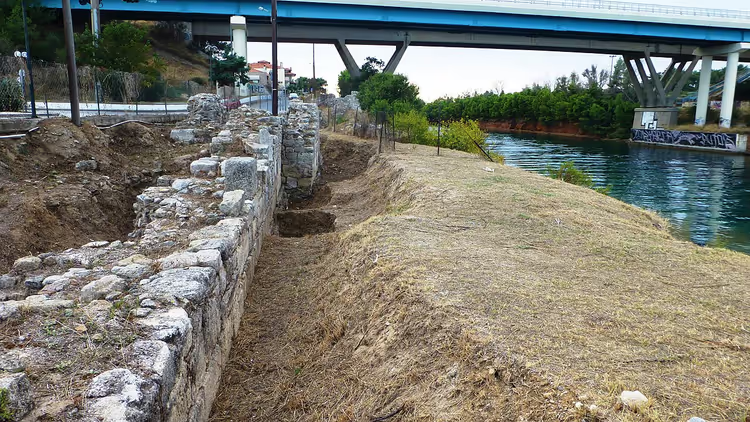
Nea Potidea stands at the narrowest point of Kassandra, by the canal that separates the peninsula from the mainland. In ancient times an important polis stood here, and later the city was named the "Gate of Kassandra". Part of the old walls has survived to this day.
Tourists explore the fortress ruins and the remains of ancient buildings. The wall, erected back in the time of Justinian, protected the city from the canal side. The town has many churches: the Church of the Most Holy Theotokos, the churches of Saint Nicholas and Saint Eustathius.
The Chapel of the Archangels deserves special attention. It was built in the century before last from stones of the ancient city. Today Nea Potidea has become a popular resort with picturesque views and an azure sea.
11. Agia Paraskevi
A small village in a pine forest, a few kilometers from the sea. People come here for the thermal springs: a spa resort operates on their basis. The place will appeal to those who enjoy a quiet holiday and hiking.
On the hill stands the Church of Saint Paraskevi, which gave the village its name. From here you can enjoy views of the peaceful landscapes around. Nearby there is a Folklore Museum with old household items.
A staircase leads from the hill down to the sea, and at the bottom you will enter a cave with stalactites, where mineral water was once discovered. Divers can explore underwater caves here, so the place is popular with diving enthusiasts.
12. Nea Moudania
 © Geraki · CC BY-SAPhoto: Geraki, CC BY-SA (https://creativecommons.org/licenses/by-sa/4.0), Wikimedia Commons
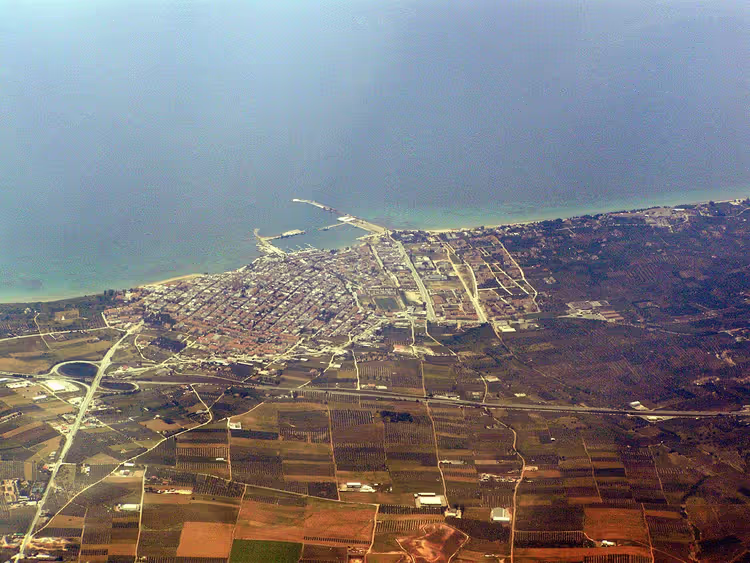
Nea Moudania is considered the second largest town in Halkidiki and its commercial center. Shops, markets, and the liveliest nightlife on the peninsula are concentrated here. Young people go to clubs with famous DJs, while theater lovers watch open-air performances by the sea.
The town's main attraction, a large pink-brick church, is dedicated to Saint George. It is visible from almost anywhere. The church consists of two parts, and the columns around the building have made it the town's calling card.
Nearby there is an ethnographic museum and a fishing museum, since locals have long lived from fishing. In mid-July the town noisily celebrates Sardine Day.
13. Kallithea
The name Kallithea translates as "beautiful view", and this is no exaggeration. One of the most famous resorts on the peninsula attracts many tourists year after year. The water entry here is gentle and the sea is calm, so families with children come here.
The hills shelter the town from strong winds, so big waves are rare. Young people will appreciate the nightlife, while the older generation can enjoy shopping. Among the attractions, the ruins of the ancient temples of Zeus and Dionysus are of interest.
The town has Christian churches of Saint Panteleimon and Saint Nicholas, who is especially venerated in Greece. The observation deck offers panoramas for photos, and in the evening it is pleasant to stroll along the promenade.
14. Hanioti
 © Petar Milošević · CC BY-SAPhoto: Petar Milošević, CC BY-SA (https://creativecommons.org/licenses/by-sa/4.0), Wikimedia Commons
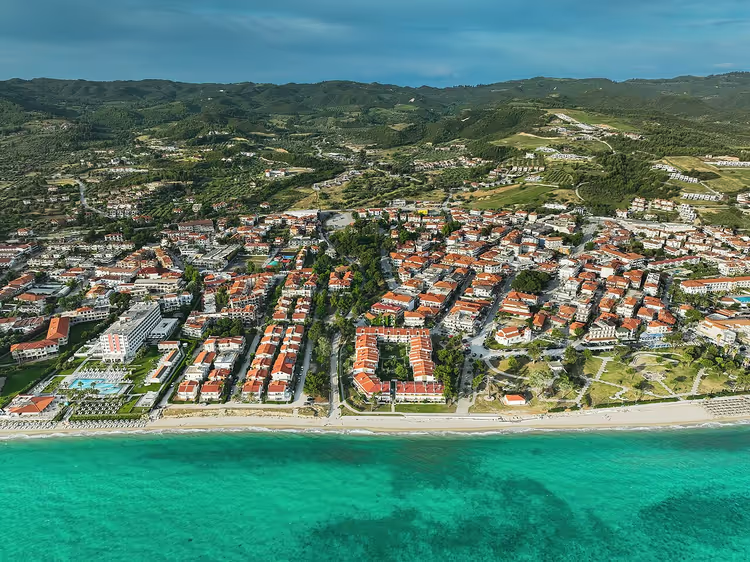
Hanioti is about an hour's drive from Thessaloniki. It is a quiet resort village where holidays unfold at a leisurely pace. Families with children spend their time here peacefully: the sea is close, the beach is equipped, and there is no noisy center.
The settlement appeared in antiquity, as archaeological finds show. The old town was almost completely destroyed by a strong earthquake in the last century, and residents moved their homes closer to the sea. The climate allows growing olives, herding goats, and fishing, so the local cuisine relies on its own products.
From the village it is easy to reach neighboring towns with churches and old quarters. In the evening you can have dinner at a tavern by the water.
15. Souroti
 © User:Galanaki · CC BY-SAPhoto: User:Galanaki, CC BY-SA (http://creativecommons.org/licenses/by-sa/3.0/), Wikimedia Commons
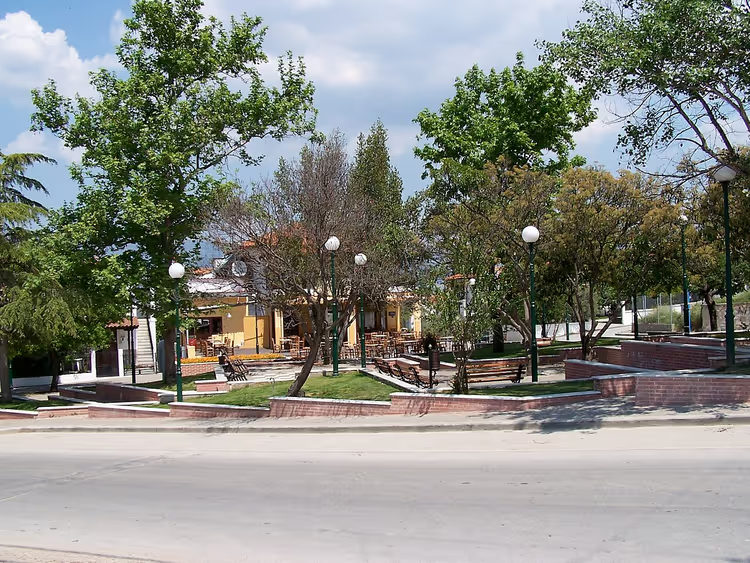
A small village near Thessaloniki is known for its mineral water. It is considered one of the most beneficial in Greece. But people come here not only for the water: Souroti has long been a place of pilgrimage.
An old convent of Saint John the Theologian operates in the village. Paisios of Mount Athos, whom the church venerates as a saint, is buried here. He was born in Cappadocia, became a monk after the war, and founded a convent near Souroti.
The monastery stands on top of a large hill, and from it you can see the olive groves belonging to the convent. Pilgrims come here from different countries, so the courtyard is usually full of guests.
16. Ierissos
 © Саша Шљукић · CC BYPhoto: Саша Шљукић, CC BY (https://creativecommons.org/licenses/by/3.0), Wikimedia Commons
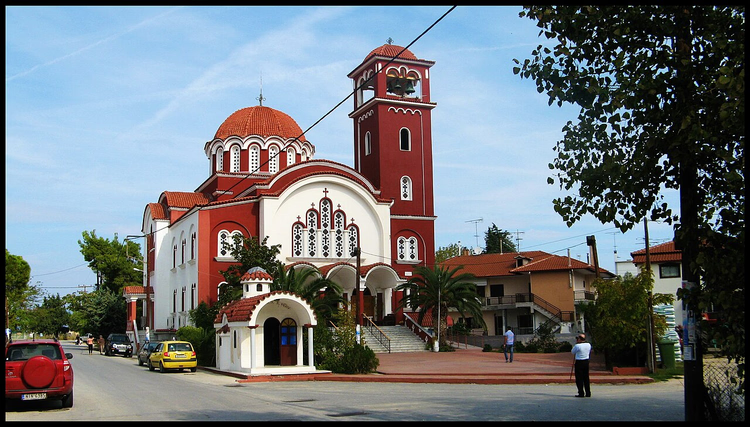
Ierissos dates back to antiquity and was once a significant polis within Macedonia. Locals have long been considered excellent shipbuilders. The secrets of boat building were kept in families and passed down through generations.
Boats are still made here using old techniques from quality pine logs. Walking through the town, you can see the ruins of the fortress wall that protected residents from raids.
On the waterfront stands an Aquarium with inhabitants of local waters. And in the amphitheater, 3D films about Mount Athos and the underwater world are shown: it is the only cinema of its kind in Greece.
17. Polygyros
The full panorama of Polygyros is best viewed from the Chapel of Elijah the Prophet. A walking trail leads from here down to the town, and olive fields lie below. The town itself combines old buildings with modern ones, and this is what makes it interesting to tourists.
The town's main attraction, the Archaeological Museum, stands on Heroes' Square in the center. Its halls contain finds from the Bronze Age to antiquity: weapons, jewelry, and statues. Here you will also see the marble head of Dionysus.
Next to the museum there is a spring with drinking water. The town is rich in churches, and in the old part stands the Church of Saint Nicholas.
18. Agios Nikolaos
White houses with red roofs, pine trees all around, and long sandy beaches along the shore. Agios Nikolaos is considered one of the greenest villages on the peninsula. Locals have long been known as stone craftsmen, so almost every old house here is interesting as a monument.
On the shore stands an ancient tower, next to which the ancient city of Singos was studied. The remains of the acropolis have also survived and can be viewed by anyone. Pilgrims come to the Monastery of Saint Nicholas, the Chapel of Saint George, and the metochion of the Athonite monastery of Xenophontos.
In late July the feast of Saint Paraskevi is noisily celebrated here. If you come at this time, you will join the folk festivities.
19. Stagira
 © G. Fantom · CC BY-SAPhoto: G. Fantom, CC BY-SA (https://creativecommons.org/licenses/by-sa/4.0), Wikimedia Commons
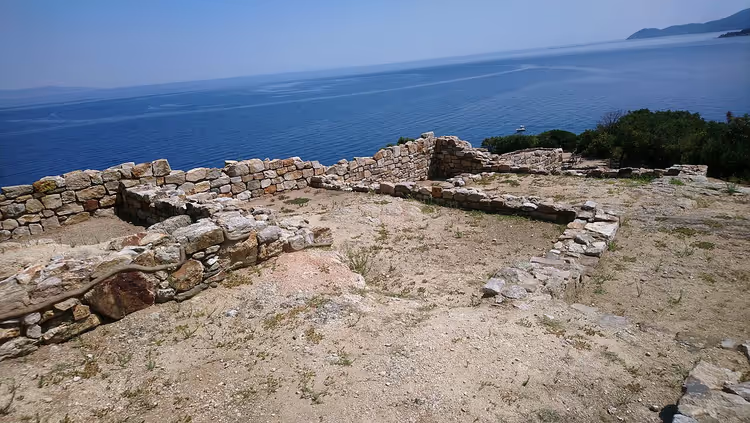
Stagira is known as the birthplace of Aristotle. Aristotle Park on the hill is considered the most significant monument on the peninsula. It features interactive devices that demonstrate the scientist's discoveries: a lens, a telescope, a sundial, and a pendulum.
Opening hours verified 09/2026 on the official website: the park is open from 8:30 to 19:30. From the observation deck you can see the Gulf of Ierissos and Mount Athos. A statue of Aristotle stands on the central square, and every year Stagira hosts the "Aristotelia" festival.
Below lie the ruins of the ancient city with defensive walls and house foundations. Nearby you can find an old bathhouse and the remains of a fortress near abandoned mines.
20. Gerakini
 © Aristolaos · CC BY-SAPhoto: Aristolaos, CC BY-SA (https://creativecommons.org/licenses/by-sa/3.0), Wikimedia Commons
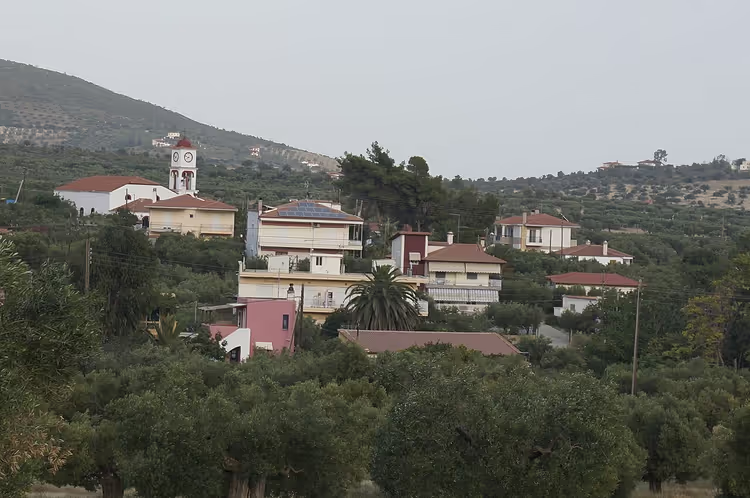
Gerakini grew up next to white stone quarries. This material was shipped not only across Greece but also abroad. In the old part of town you can still see the mines and the miners' quarters.
In the second half of the last century tourists discovered the town and fell in love with it. The simple cobblestone streets with benches and street lamps are also considered a local attraction: they give you a feel for the town's character.
Make sure to include the local monastery on a rocky ledge in your itinerary: it offers a wide panoramic view. Add to that the long beaches, clear sea and mild climate.
21. Vourvourou
 © Sprint28 · CC BY-SAPhoto: Sprint28, CC BY-SA (https://creativecommons.org/licenses/by-sa/3.0), Wikimedia Commons
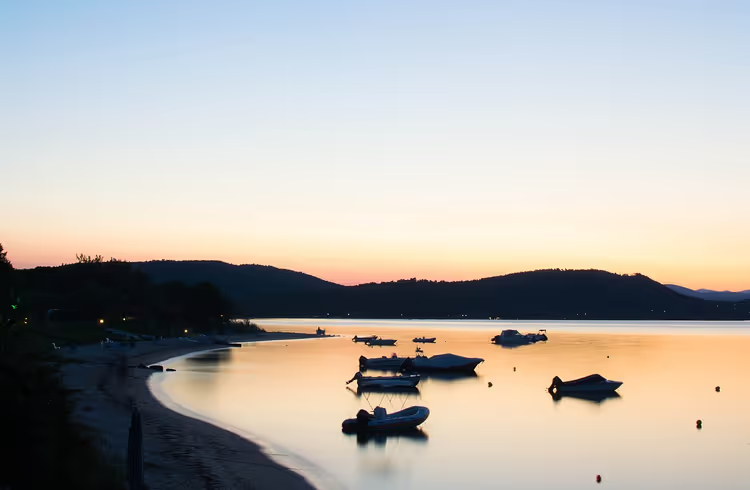
Vourvourou lies on the eastern coast of Sithonia. Its beaches are considered some of the best for families with children. The sea is turquoise and warm, and the beaches themselves are narrow but long and fairly uncrowded.
This is an old fishing village. As you walk around town, you can buy fresh fish right from the fishermen. The unusual layout and architecture draw attention, and some of the houses belong to professors from Aristotle University.
In the northern part of the area, a section of the Great Wall has survived. In ancient times it was meant to protect the entire peninsula, but only small fragments of tightly packed stones have come down to us.
22. Kavourotrypes beach (orange beach)
 © kallerna · CC BY-SAPhoto: kallerna, CC BY-SA (https://creativecommons.org/licenses/by-sa/4.0), Wikimedia Commons
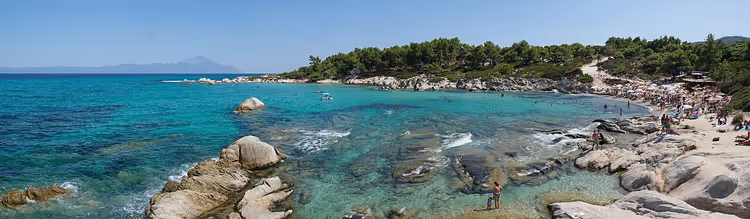
Kavourotrypes, more often called Orange Beach, is north of the town of Sarti, near Vourvourou. The name translates as "Crab holes": the water has carved whimsical openings in the rocks. At dawn the cliffs turn orange, which is why photographers love this beach.
You can get here by car, by public bus or by boat. Don't expect solitude here: the loungers are taken, music is playing, and there are many families with children because the sea is shallow.
The path down is awkward, but along the shore you'll find tiny coves that fit just a couple of people. Wild campers stay here for several days and live in tents.
23. Glarokavos Beach
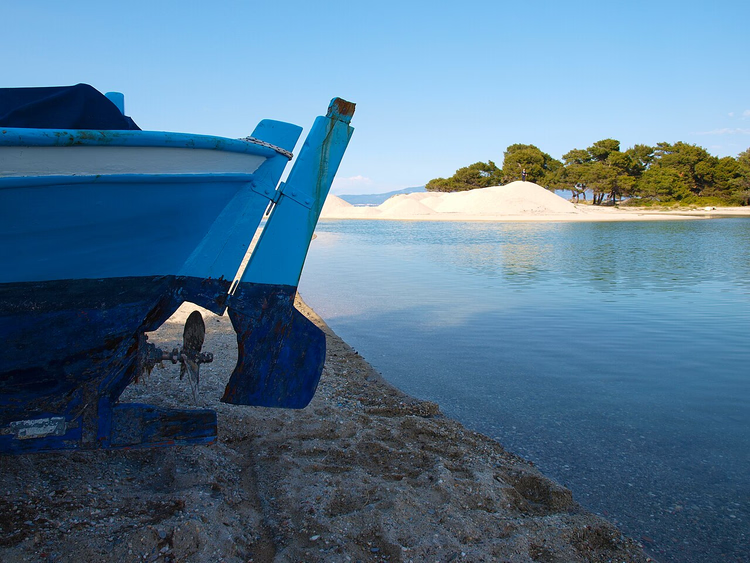
Glarokavos is on Kassandra, not far from Thessaloniki. It's a lagoon with clean light sand and a gentle entry into the water. Tall trees block the wind, so it's almost always calm here with no waves.
 © Mary papadopoulou · CC BY-SAPhoto: Mary papadopoulou, CC BY-SA (https://creativecommons.org/licenses/by-sa/4.0), Wikimedia Commons
Until recently the beach was wild, but now both locals and tourists come here. The spot works well for families with children, and you'll also run into tent campers and divers.
You can get here by car along a dirt road or by boat, which runs from Sithonia in summer. You'll leave your car in a designated or informal parking area. The best time to visit is late spring or September and October; in summer it can get too hot.
24. Armenistis Beach
Armenistis holds a Blue Flag for cleanliness and confirms the designation during regular inspections. It's easy to find: on the Sithonia road between Sarti and Vourvourou there's a sign. The beach is wide and long.
There's plenty of room for volleyball courts, boat moorings, small shops and loungers with umbrellas. There are no villages nearby, but there is a campground with cabins, Wi-Fi and an ATM.
The transparent water is framed by greenery, and Mount Athos is visible in the distance. The gentle entry gives way to deep water after just a few meters. Divers like the rocks that descend underwater in ledges.
25. Varvara Waterfalls
 © Periklis Siopis · CC BY-SAPhoto: Periklis Siopis, CC BY-SA (https://creativecommons.org/licenses/by-sa/4.0), Wikimedia Commons
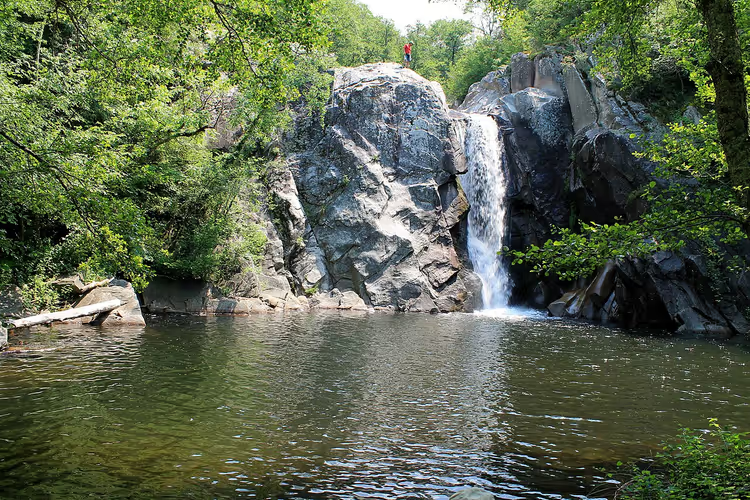
The waterfalls are near the villages of Varvara and Olympiada. A dirt road leads to them, and along the way you'll have to ford a river, so it's better to book a jeep or go with a guide. The site itself has pavilions and paths.
Here you'll find two waterfalls that drop from a small cliff. Beech, hazel and linden trees grow all around, and you can rest in the shade at the viewing platform. The area is rich in birds, butterflies, salamanders and turtles.
You may occasionally encounter snakes and bees, so wear closed shoes and watch your step. But the view of the waterfalls and the forest is worth the trip, and a swim in the cool water is refreshing after the hike.
Tours and tickets in Halkidiki
Guided tours, skip-the-line tickets and activities — most offers can be cancelled free of charge.
See offers on GetYourGuideThe widget loads once you give your consent.
Halkidiki attractions on the map
The map below shows all the places from this list. Mark the points you need and plan your route in advance: driving between distant sites takes an hour or more. If you're planning a multi-day trip, split the route by the "fingers" so you don't waste time on the road.
How to get around Halkidiki
The peninsula is large, and without a car you'll see less than half of the places on this list. Public transport mostly connects major towns, not beaches and remote monasteries. Below we've gathered practical tips that save time.
Car rental. The most convenient option for 25 sites. Pick up the car at Thessaloniki airport: the roads on the peninsula are good and the signs are clear. In high season, book in advance, otherwise the selection will be limited and prices will go up. For the dirt roads to the Varvara waterfalls and wild beaches, a higher-clearance vehicle is better: a regular sedan won't make it everywhere.
Buses. Intercity buses run from Thessaloniki to Kassandra and Sithonia. Within the peninsula there are fewer routes, and they run infrequently. By bus you can reach the major towns, but you won't cover all the sites, so check the schedule the evening before.
Parking. At popular beaches in summer there are few spots. At Kavourotrypes and Armenistis the parking areas are small or informal, so arrive in the morning. In resort towns, look for parking in the side streets rather than on the waterfront: spots by the water are taken all day.
By sea. Some places are easier to see from the water. A ferry to Ammouliani Island leaves from the port near Ouranoupoli, in summer boats run from Sithonia to the wild beaches, and from Ouranoupoli boats depart along Mount Athos. A boat trip often replaces a long drive over land.
Clothing and money. You won't be allowed into the Athos monasteries in shorts or with bare shoulders. Bring closed shoes for mountain trails, a swimsuit, sunscreen and a light jacket: underground in the Petralona Cave and on the peaks it's cool. Cards are accepted almost everywhere, but in small tavernas cash is more reliable.
When to go. Plan day trips for the morning: by midday tour groups pile up at the main sites.
Day-by-day planning
Split your trip by the "fingers", so you drive less and see more. If time is short, pick one "finger" and don't spend a day on transfers.
Kassandra, one to two days. In the morning, visit the Petralona Cave and the Anthropological Museum, then move on to Afitos and Nea Fokea. After lunch, stop by the canal in Nea Potidea and return to Kallithea or Nea Moudania for dinner. This is the most convenient base for overnight stays.
Sithonia, one to two days. Dedicate a day to the beaches and villages of the eastern coast: Vourvourou, Kavourotrypes, Armenistis. Watch the sunset by the water and stay in Vourvourou or Agios Nikolaos. Take a car between beaches: buses hardly run here.
Athos and the east, one day. In the morning, arrive in Ouranoupoli and take a boat along Mount Athos. After the cruise, head up to Stagira to Aristotle Park, and on the way stop at Ierissos with its shipyard and old acropolis.
⁉️🤔 Frequently asked questions
When is the best time to visit Halkidiki?
Late May, June, and September are the most comfortable. The water is already warm, and the beaches are less crowded than in peak summer. July and August are hotter and more expensive, but the sea is at its warmest. In May you can sunbathe, but the water is brisk, so bring warm clothes for the evening.
Do I need to buy tickets in advance?
For the Petralona Cave and the Meteora monasteries, tickets are sold at the entrance, and reservations are not required. There can be lines in high season, so arrive at opening time. For boat trips along Mount Athos and for excursions, it is better to book in advance: in July and August they sell out quickly.
Can women visit Mount Athos?
Women have not been allowed into the monastic republic for many centuries. The only way to see Mount Athos up close is a boat trip along the coast from Ouranoupoli. From the water you can clearly see several monasteries and the cliffs. This route is open to everyone.
Where should I stay to cover all the sights?
It is most convenient to base yourself on Kassandra: Nea Moudania, Kallithea, Hanioti, or Afitos. From there you are close to the western sights and the airport. For Sithonia, choose Vourvourou or Agios Nikolaos, and for Mount Athos, Ouranoupoli works well. You will be driving between the "fingers."
How do I get to hard-to-reach beaches?
Dirt roads lead to Kavourotrypes and Glarokavos, and in season small boats run from Sithonia. For the Varvara waterfalls you need a jeep: you will have to ford a river. Without a car, some places will remain inaccessible, so rent a vehicle or take an excursion with a transfer.
In short: what to book
Let's break the selection down by scenario. If you only have three days, choose Kassandra: Afitos and Nea Fokea are close to each other. If you have a week, add Sithonia and the beaches of Kavourotrypes and Armenistis. For a spiritual trip, choose Mount Athos with a boat trip from Ouranoupoli.
- If this is your first trip: base yourself in Kallithea or Nea Moudania and rent a car.
- If you are traveling with children: the beaches of Kallithea, Vourvourou, and Glarokavos with gentle entry.
- If you are looking for quiet: Sithonia, Armenistis, and the Varvara waterfalls.
- If you are interested in history: Petralona Cave, Stagira, and Nea Potidea.

A small editorial team writing guides for independent travel. We travel ourselves, but we haven’t been everywhere, so we check prices, opening hours and how to get there against official sources.