




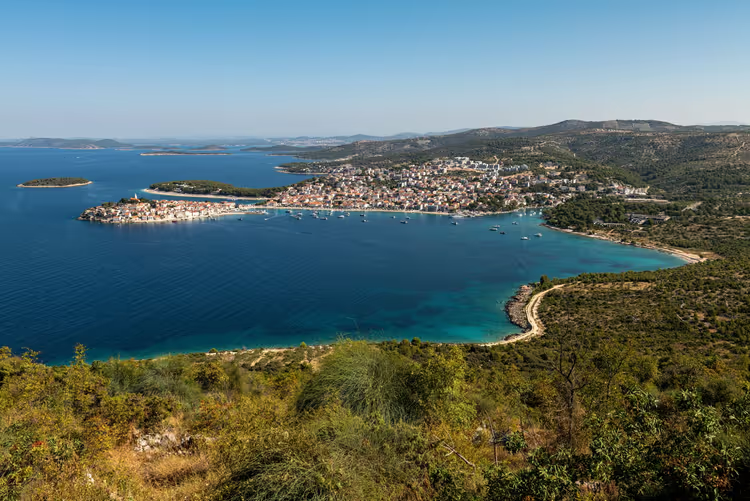
Autumn vacation in Croatia: warm sea, wine and truffles until November
In September, Croatia changes. Families with children leave, beaches empty out, but the sea stays warm, in some places warmer than in June. Prices drop, the heat eases, and the coast suddenly feels spacious.
Those who come in August fight for parking, sunbeds, and restaurant tables. Those who come in September or October get the same Croatia, just more comfortable. Autumn adds what summer never has: the grape harvest, truffle season, fresh olive oil straight from the press, and empty mountain trails.
In short: September gives you a warm sea and minimal tourists, October gives you the best balance of weather and prices, and November is ideal for culture and food. According to the Croatian National Tourist Board (as of 09/2026), you can travel around the country all year round, and autumn reveals the wine and food regions at their best.
Ad: this article contains affiliate links, we earn a commission if you book through them, at no extra cost to you.
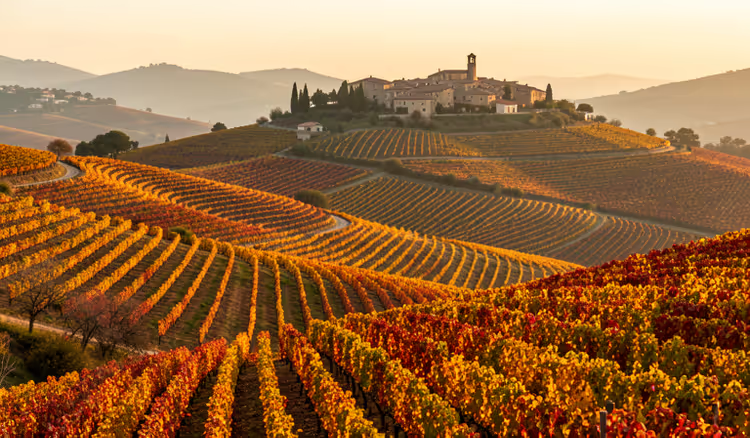 AIIllustrative image: AI-generated
Why autumn in Croatia is better than summer
💡 In short:
- September: air 24-28 °C, water 23-25 °C, fewer people than in August.
- October: the best balance of weather, prices, and food.
- Accommodation and car rental in autumn are roughly half the price compared to August.
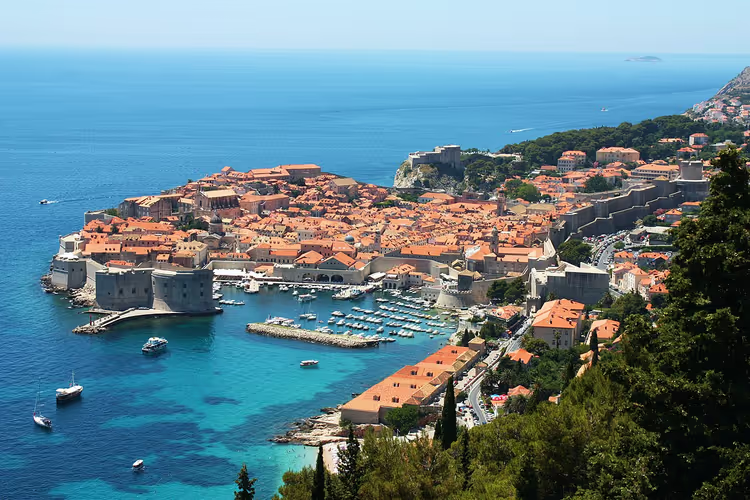 © Bracodbk · CC BY-SAPhoto: Bracodbk, CC BY-SA (https://creativecommons.org/licenses/by-sa/3.0), Wikimedia Commons
Warm sea until October. The Adriatic works as a natural heat reservoir. The air cools down, while the water in October stays at 20-22 °C. In September the water is warmer than in June because the sea has been storing heat all summer. Even in early October, locals still swim every day.
Empty beaches and old towns. School holidays are over, cruise ships leave. Dubrovnik belongs to the locals again, the wooden walkways at Plitvice Lakes no longer sag under the crowds, and in the bays of Vis boats no longer sit side by side. According to the Croatian tourist board's data on autumn parks (as of 09/2026), national parks have noticeably fewer visitors in autumn than at the height of summer. That means short lines and peaceful photos for you.
Lower prices. A night in a sea-view apartment in Makarska or Split costs noticeably less in autumn than in August, and by late October prices fall even further. Hotels in Dubrovnik that charge several hundred euros a night at the height of summer give rooms away in October at the price of an ordinary city hotel.
Comfortable weather for being active. 25 °C instead of 35 °C looks like a small difference, but it feels completely different. In the mountains you can hike again without the risk of heatstroke. Cycling becomes a pleasure rather than an endurance test. The sun sits lower, the light turns softer and more golden, which is why photographers love the coast in autumn.
The culinary peak of the year. The grape harvest, truffle season, figs, olives, chestnuts, game dishes. Autumn brings the best food of the year, and that is no exaggeration. In summer, grilled fish and ice cream dominate the table, but autumn brings a completely different variety.
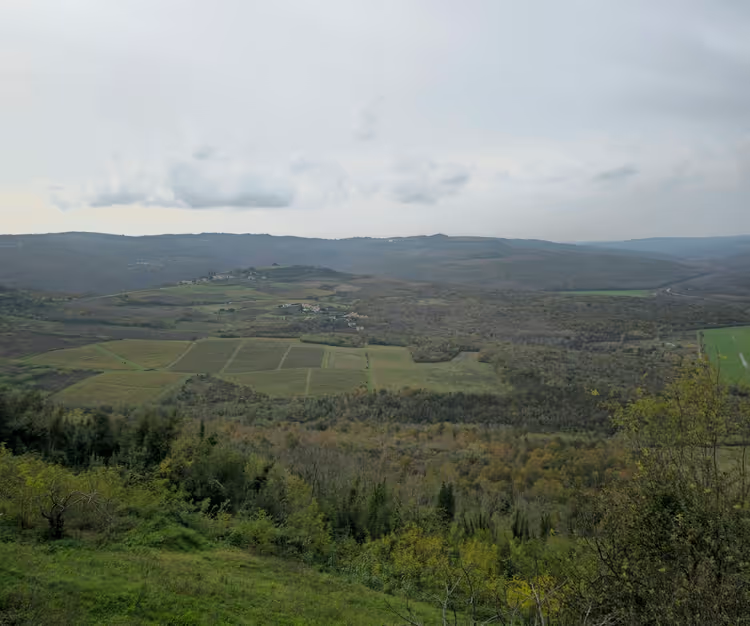
Autumn weather: month by month
Autumn weather in Croatia depends heavily on the region and the month. Below are the honest figures, without embellishment.
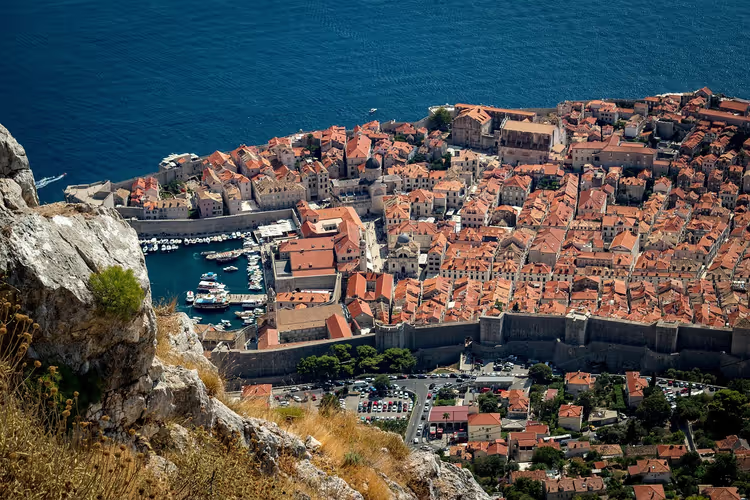
September: summer with a bonus
September extends the summer. Temperatures on the coast stay around 24-28 °C, and the sea is still 23-25 °C. The sun shines 8-9 hours a day. In the evening the air drops to 18-20 °C, which is enough for dinner outside and sleeping without air conditioning.
Region | Air | Water | Rainy days | Sunny hours |
|---|---|---|---|---|
Istria | 22-26 °C | 22-24 °C | 4-5 | 7-8 |
Dalmatia | 24-28 °C | 23-25 °C | 3-4 | 8-9 |
Dubrovnik | 25-29 °C | 24-26 °C | 3 | 8-9 |
Zagreb | 18-24 °C | no data | 5-6 | 6-7 |
Kvarner | 21-25 °C | 22-24 °C | 5-6 | 7-8 |
Honest assessment: September works for almost everyone. The only risk is the first autumn storms. The warm southern wind, the jugo, can pick up from mid-month and make the sea rough for 2-3 days (as of 09/2026, Croatian tourism portal data). One rainy day in two weeks is likely, but there will be no prolonged bad weather. The first half of September is almost identical to August in terms of weather, just with fewer people.
October: an underrated transitional month
October splits into two parts. The first half is often still summery because of the "old wives' summer" (in Croatian, bablje ljeto). Temperatures rise to 22-25 °C and the sky is clear. The second half can turn cool and autumnal: shorter days, more clouds, and sometimes heavy downpours. The sea stays around 20-22 °C. Getting into the water feels chilly, but after two minutes swimming is quite comfortable.
Region | Air | Water | Rainy days | Sunny hours |
|---|---|---|---|---|
Istria | 16-22 °C | 19-21 °C | 6-7 | 5-6 |
Dalmatia | 18-24 °C | 20-22 °C | 5-6 | 6-7 |
Dubrovnik | 19-24 °C | 21-23 °C | 5 | 6-7 |
Zagreb | 12-18 °C | no data | 7-8 | 4-5 |
Kvarner | 15-21 °C | 19-21 °C | 7-8 | 5-6 |
Honest assessment: for active holidays, food, and city trips, October is the best choice (as of 09/2026, tourist office on October weather). For a pure beach holiday it becomes risky because the weather can change within a single day. If you are flexible and do not need to lie on the beach, you will enjoy October. The landscape is at its most beautiful right now: golden vineyards, red-brown beech forests, silvery olive groves.
November: for connoisseurs and foodies
November marks the start of the true low season. The tourist season ends, and many hotels and restaurants close, especially in small seaside towns and on the islands. The weather turns cooler: 12-18 °C on the coast and 5-12 °C inland. Rain falls more often and the days are short. But for cultural trips, food tours, and city breaks, November is surprisingly good. Dubrovnik and Split operate year-round. Zagreb opens its Christmas market season, and truffle hunting in Istria reaches its peak.
Region | Air | Water | Rainy days | Sunny hours |
|---|---|---|---|---|
Istria | 10-16 °C | 16-18 °C | 7-9 | 3-4 |
Dalmatia | 12-18 °C | 17-19 °C | 7-8 | 4-5 |
Dubrovnik | 13-18 °C | 18-20 °C | 6-7 | 4-5 |
Zagreb | 5-12 °C | no data | 8-10 | 2-3 |
The monthly weather tables by region are compiled from Croatian tourism portal data (as of 09/2026). November suits you if you want culture, wine, and truffles without the queues.
Grape harvest: from Istria to Pelješac
From mid-September the grape harvest begins, one of the best times of year in wine regions. The hills of Istria turn gold, winemakers work in the fields, and the smell of young must hangs in the air. Croatia has more than 300 local grape varieties, and many of them are found nowhere else in the world (As of 09/2026, Croatian tourism office on winemaking). Autumn offers the only chance to see winemaking up close.
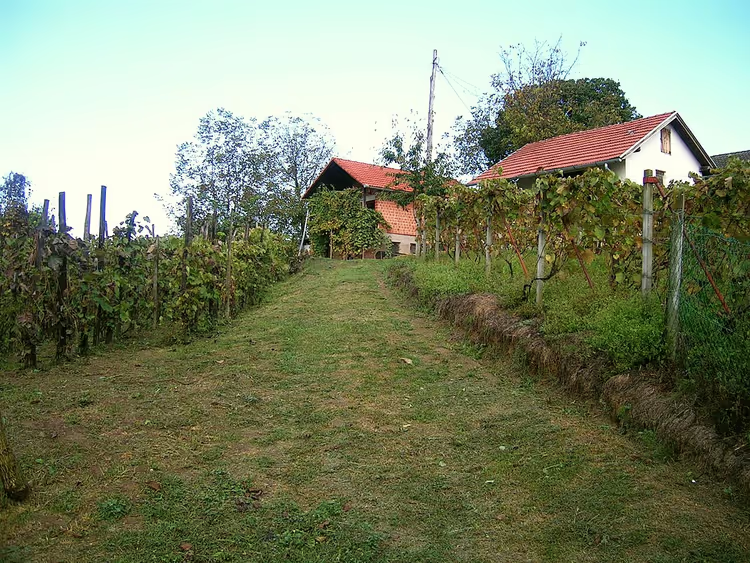 © Zoran Kurelić Rabko · CC BY-SAPhoto: Zoran Kurelić Rabko, CC BY-SA (https://creativecommons.org/licenses/by-sa/3.0), Wikimedia Commons
Istria: Malvasia and Teran among the hills
The wine road between Poreč, Motovun and Buje connects dozens of wineries, and most of them are family-run, working for generations. Malvasia (a white wine, mineral, citrusy) and Teran (a red, earthy, robust wine grown on the red terra rossa soil) are considered the main ones here. Some winemakers let visitors help with the harvest: cutting bunches, placing them in baskets, and in the evening tasting the young must. The Kabola winery near Momjan organizes harvest days for guests with lunch among the vines. Kozlović in Buje has one of the most modern cellars in Istria and offers tastings with a view over the Mirna river valley.
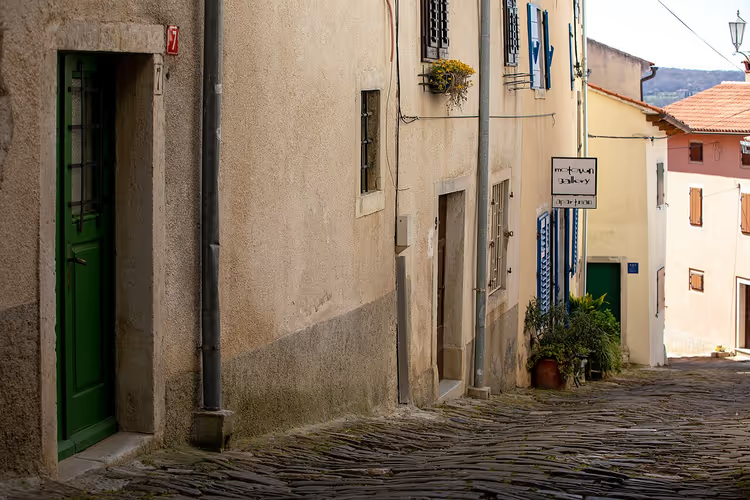 © Jernej Furman from Slovenia · CC BYPhoto: Jernej Furman from Slovenia, CC BY (https://creativecommons.org/licenses/by/2.0), Wikimedia Commons
For those who want to explore the region on two wheels rather than driving from winery to winery, the 68 km Istrian wine road is a good fit (As of 09/2026, Istria tourism portal). In autumn the weather is ideal for it: around 20 °C, bright colors, and a winery waiting after every climb.
Pelješac: Dingač and the steepest vineyards in Europe
The Pelješac peninsula produces Croatia's best red wine. Dingač, the country's first wine with protected designation of origin, grows on slopes almost directly above the sea, and part of the harvest is brought down by cableway. In autumn, when the vines blaze red and gold and the sea behind them shimmers deep blue, these vineyards become one of the most photogenic sights in Croatia (As of 09/2026, Croatia portal on vineyards). The Grgić, Madirazza and Saints Hills wineries hold tastings, often on terraces with panoramic views and a plate of pršut and cheese.
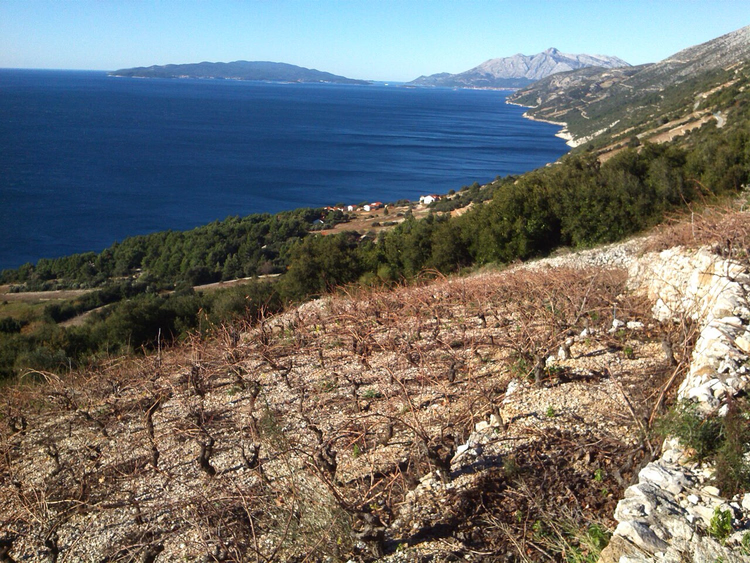 © Quahadi Añtó 09:05, 18 December 2013 (UTC) · CC BY-SAPhoto: Quahadi Añtó 09:05, 18 December 2013 (UTC), CC BY-SA (https://creativecommons.org/licenses/by-sa/3.0), Wikimedia Commons
Slavonia: the forgotten wine region
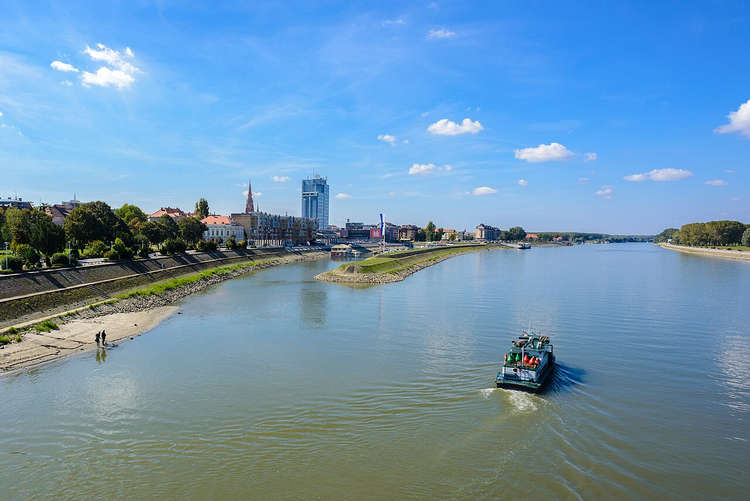
Less known, but an excellent region. The area around Kutjevo and Đakovo produces Graševina (Welschriesling), which is bottled fresh in autumn. The Kutjevo cellars are considered among the oldest in Croatia: they were founded in the 13th century by Cistercian monks. Tourists hardly ever make it here, only wine connoisseurs. That is the charm: authentic tastings in historic cellars, prices three times lower than in Istria, and winemakers who have time to talk.
 © Nick Savchenko from Kiev, Ukraine · CC BY-SAPhoto: Nick Savchenko from Kiev, Ukraine, CC BY-SA (https://creativecommons.org/licenses/by-sa/2.0), Wikimedia Commons
Wine festivals in autumn
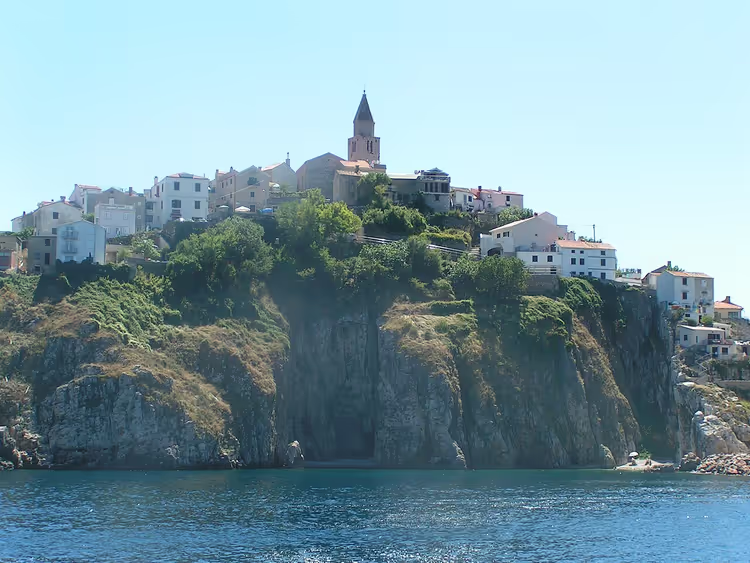
Croatian autumn is filled with wine festivals that are more than organized tastings. In Vrbnik on the island of Krk they celebrate the Žlahtina variety, which grows only there: the narrow streets of the hilltop village fill with stalls, live music and the smell of roast lamb. Poreč hosts Vinistra, the largest wine exhibition in Istria, where the best Malvasia of the year are awarded. And in Zagorje, north of Zagreb, the traditional Brezje wine festival invites visitors to taste young wine accompanied by a brass band and štrukli, filled rolls.
 © harassek · CC BY-SAPhoto: harassek, CC BY-SA (https://creativecommons.org/licenses/by-sa/3.0), Wikimedia Commons
Truffle hunting: the white gold of Istria
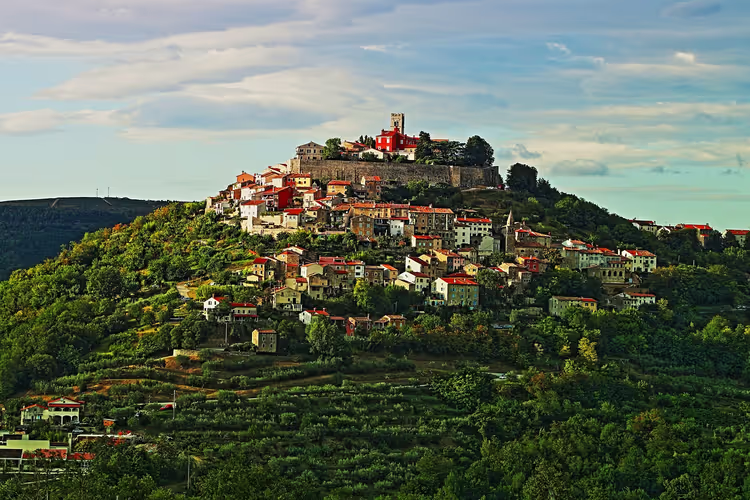
October and November open the truffle season, including the most valuable white truffle (Tuber magnatum), the same species that in Piedmont reaches prices of thousands of euros per kilogram. The area around Motovun and Livade is considered the truffle center of Croatia: oak forests along the Mirna valley, moist soil, an ideal microclimate. In 1999 a specimen weighing 1.31 kg was found here, a world record (As of 09/2026, official Zigante Truffle Days website). Its finder, Giancarlo Zigante, opened a restaurant in Livade that is still considered one of the most famous truffle destinations in Europe.
How truffle hunting works
Organized truffle hunts last 2-3 hours. You meet the truffle hunter, a tartufar, early in the morning at the edge of the forest. His dog, usually a Lagotto Romagnolo or an Istrian mixed breed with a fine nose, starts sniffing the ground excitedly as soon as you enter the forest. Within a few minutes it begins digging. You watch, carefully help with a small spade, and when the truffle appears, the whole forest smells of it: earthy, intense, slightly of garlic. Afterwards they prepare pasta with freshly grated truffle, truffle omelet, sometimes a whole menu.
The best truffle hunting organizers: Karlić Tartufi in Paladini near Livade (the most famous address, also suitable for large groups, with hunting and tasting included), Prodan Tartufi in Livade (family-run, small groups), and Miro Tartufi in Motovun (private tours for couples and small groups). Check prices and program details when booking (as of 09/2026, Istria events calendar). You can book a winery and truffle tour of Istria on GetYourGuide.
Truffle festivals
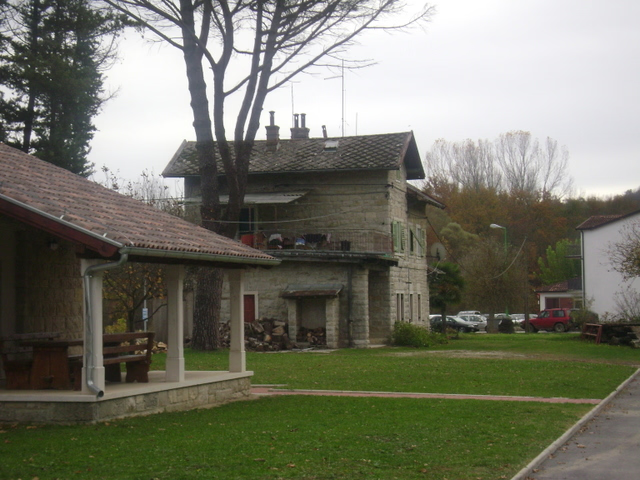
Zigante Truffle Days in Livade turn the tiny village into a gastronomic capital on weekends from late September to early November (as of 09/2026, Livade truffle festival page). Stalls with white and black truffles, truffle oils, pastes, and cheeses line up in rows. Well-known chefs give demonstrations showing what can be done with white gold. In Motovun, the TeTa (Teran & Tartuf) festival in late October is dedicated to the pairing of Istrian red wine and truffles. And in Buzet, which calls itself the city of truffles, a giant truffle omelet is cooked on the main square in September.
 © Kiki273 · CC BY-SAPhoto: Kiki273, CC BY-SA (http://creativecommons.org/licenses/by-sa/3.0/), Wikimedia Commons
Eating truffles without hunting
For those who prefer the table to the forest: konobas and restaurants in the region serve truffle menus from October through December. A plate of homemade Fuži, Istrian pasta, with freshly grated white truffle costs 25-40 €, while in Alba in Piedmont the same dish costs three times as much (as of 09/2026, Istria tourist board). Besides Zigante in Livade, it's worth visiting Restaurant Mondo in Motovun (elevated Istrian cuisine with a truffle tasting menu) and Konoba Doriano in Beram (rustic, honest, huge portions).
Olive harvest: liquid gold from the press
The olive harvest begins in late October. In Istria and Dalmatia it brings villages to life and gathers families together. Every year, Istria wins more awards at international olive oil competitions than some entire countries (as of 09/2026, Croatian tourist board on olive oil). The reason is the Buža and Istarska Bjelica varieties, which produce an especially fruity oil with a peppery note.
Taking part in the harvest
Some agritourism farms and olive growers invite visitors to help with the harvest. It sounds like work, and in reality it is: you stand under gnarled trees, pick olives by hand or with small rakes, and collect them in nets on the ground. After a few hours your hands ache, but the reward comes immediately. The fresh olives go to the mill the same day, and a few hours later you have the freshest oil of your life on toasted bread: olio nuovo, green, intense, with a sharp peppery finish that makes you want to cough.
On the island of Krk, the tourist board in Punat holds "Olive Days" in October with harvest participation, tastings, and a celebration. In Novigrad in Istria, producers like Ipša or San Rocco allow direct participation in the harvest. And on Hvar, the olive harvest becomes a family event: anyone who knows locals or simply asks around in a village will get an invitation to help and a lunch under the olive trees. Check participation and dates locally (as of 09/2026, Croatian tourist board data on olives).
Hiking in fall: finally no heat
Hiking in Croatia in summer is tough: 35 °C in the sun, almost no shade, draining heat. In fall, hiking becomes enjoyable again (as of 09/2026, Croatian tourism office on hiking). Temperatures drop to 15-22 °C, the light turns golden, deciduous forests change color, and the trails empty out.
 © Brigita Plander · CC BY-SAPhoto: Brigita Plander, CC BY-SA (https://creativecommons.org/licenses/by-sa/4.0), Wikimedia Commons
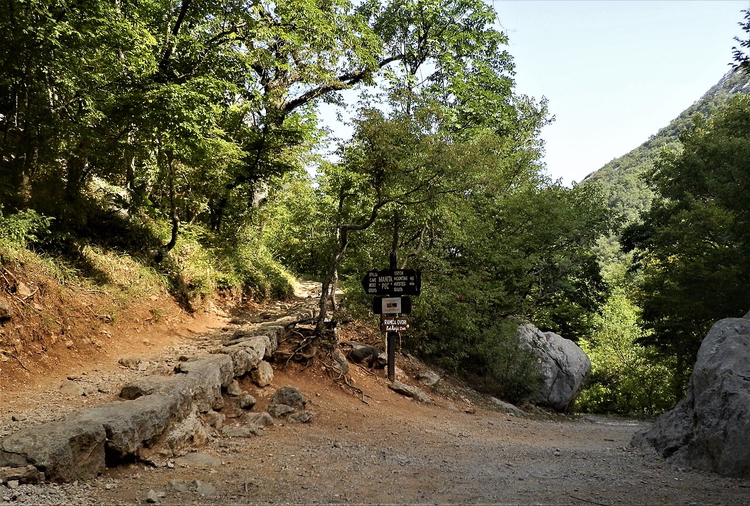
Paklenica National Park. The canyon near Velebit is ideal in fall. The cliffs glow gold in the deep autumn light, the trails are empty, the air is clear. The route through the Velika Paklenica canyon takes about four hours and follows an ever-narrowing limestone canyon with walls up to 400 m high. In summer, heat builds up here; in fall, a pleasant wind blows through the gorge. If you want to go higher: the Paklenica mountain hut offers simple overnight stays and a sunset that makes the climb worthwhile (as of 09/2026, tourism office data on Paklenica).
Plitvice Lakes. The most famous national park is twice as beautiful in fall. The waterfalls are still full after summer, the beech forests turn dozens of shades, and the water reflects the colors like a kaleidoscope. Visitor numbers drop significantly: in August, tens of thousands of people pass through the park every day, in October noticeably fewer, and in November it is almost empty. But keep in mind that fall school holidays in German states in early October cause a short spike, then it gets quiet again. The ticket includes the boat and the panoramic train.
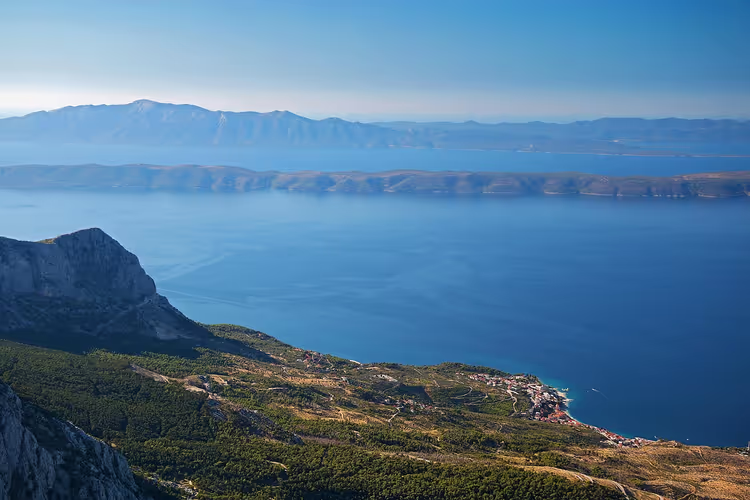
Biokovo. The mountain behind the Makarska Riviera, at 1,762 m, becomes an ordeal in summer: heat, no shade, blinding sun on white limestone. In fall, the climb to the Skywalk viewing platform becomes a pleasure. The glass ledge hangs over the cliff, and on a clear autumn day you can see all the way to Italy. Start in the morning, climb at a relaxed pace, reach the top when the sun is low, and you will remember it for a long time (as of 09/2026, tourism office on Biokovo).
Velebit and the Premužić Trail. Croatia's largest mountain range is at its most beautiful in fall. The Premužić Trail, built in the 1930s by engineer Ante Premužić, stretches 57 km through alpine karst landscapes with constant views of the Adriatic. You don't have to hike the entire distance: day sections of 10-15 km are also worth it. In fall there are no tourists here, but there is a higher chance of seeing wildlife: deer and roe deer are more active during the rutting season, griffon vultures circle above the cliffs, and in the distance you can sometimes hear a bear, although you most likely won't see one (as of 09/2026, Croatian tourism office on Velebit).
If you want more after Velebit: the "wild horizons" route, 45 km long, runs through the interior of the range. Conditions are ideal in fall: cool, empty roads, and the karst landscape looks completely different than in the dry summer.
Cycling in golden light
Fall opens the high season for cyclists in Croatia. The temperature is ideal (18-24 °C), the roads are free, the light is magical (as of 09/2026, Croatian tourism office on cycling tourism). Interior regions that swelter in summer turn into comfortable terrain in fall.
Dalmatia. Coastal roads in fall offer spectacular rides without high-season traffic. The route from Split to Omiš and further along the Cetina canyon becomes a dream at a comfortable temperature, while in August it would be dangerous due to heat and trucks. The karst landscape behind the coast, scorched and gray in summer, unexpectedly turns green in fall because the first rains bring the land back to life.
Istria. The interior is full of color in fall. Vineyards in gold and red, olive groves in silvery green, stone villages on hills, steaming earth after a short downpour. The Parenzana cycling route, a former narrow-gauge railway between Trieste and Poreč, is mostly gravel and flat: ideal for families and leisurely cyclists who don't want to sweat between two wineries.
Islands. Krk, Cres, Hvar, Korčula are empty in fall. Anyone who brings or rents a bike gets the roads almost entirely to themselves. No tourist buses, no RVs, just wind, sea, and the smell of wild rosemary along the roadside.
How much you'll save in fall
The financial difference between peak summer and fall is significant. Below are benchmarks for what exactly gets cheaper.
Category | Summer (high season) | October |
|---|---|---|
Plitvice Lakes entrance | 40 € | 23 € |
Apartment with sea view | peak prices | roughly half the price |
Rental car | peak prices | roughly half the price |
Split-Hvar ferry | often fully booked | seats available |
Restaurant lunch | more expensive | slightly cheaper |
Park entrance prices are taken from the official Plitvice Lakes price list for 2026 (as of 09/2026). The overall takeaway is simple: in the low season you get the same places noticeably cheaper, and the savings on accommodation and car rental are especially significant (as of 09/2026, Croatian tourism office data on seasons).
Specific tips for accommodation
Fall travelers benefit not only from low prices but also from better availability. A few options by region.
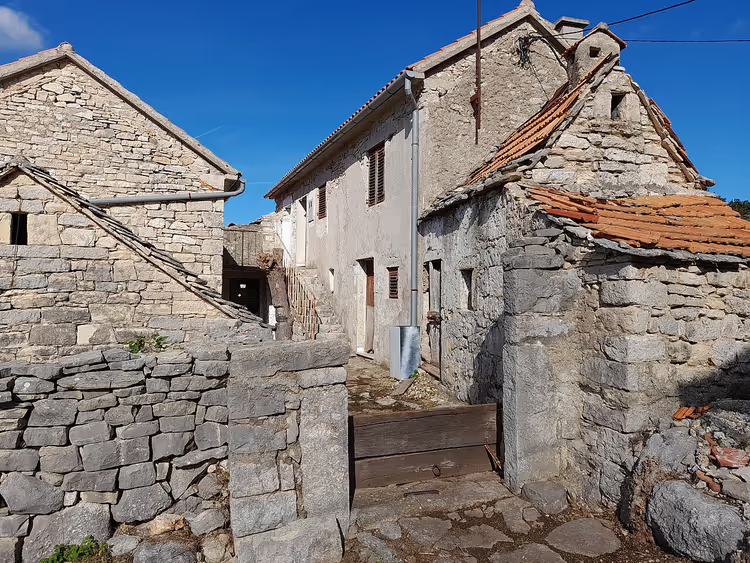
Istria (culinary fall). Agritourism properties in the interior of the peninsula offer the richest fall experience. Stancija Meneghetti near Bale combines a winery, olive grove, and boutique hotel. If you want something simpler: the San Mauro agritourism near Motovun sits in the middle of truffle country and offers bed and breakfast with homemade olive oil.
Dalmatia (cities and beach). In Dubrovnik, hotel prices near the Old Town drop in the fall from summer highs to normal city levels. In Split, a hotel on the Riva waterfront in October costs noticeably less than in August. It's convenient to compare and choose options on Trip.com.
Plitvice Lakes (nature). Hotels right by the park offer fall packages with breakfast. Staying overnight at the entrance lets you start the route before the main crowds arrive.
 © Vurlan · CC BY-SAPhoto: Vurlan, CC BY-SA (https://creativecommons.org/licenses/by-sa/4.0), Wikimedia Commons
Where to go in fall: best destinations
Istria: the number one region
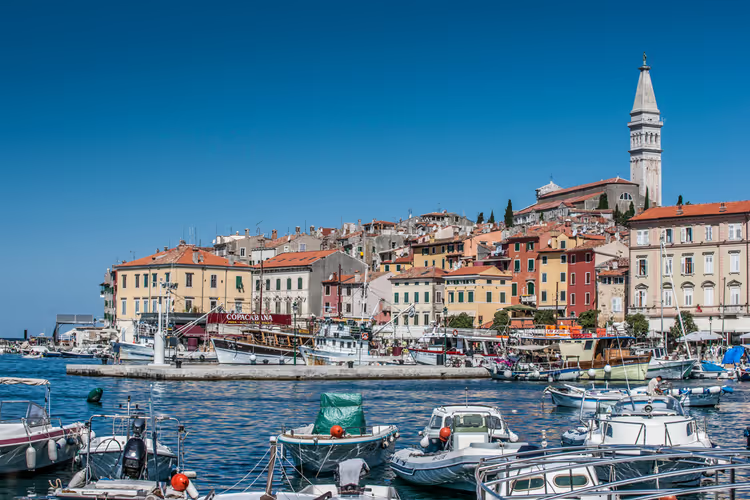
In fall, Istria is unrivaled. The combination of wine, truffles, mild weather, and empty beaches makes the peninsula Croatia's best autumn destination. Rovinj, which groans under the crowds in summer, becomes a quiet fishing village again in October. The streets of the Old Town smell of chestnuts roasting on a street vendor's grill. The art galleries on Grisia Street once again have room for a conversation with the artists. In Pula, you can see the arena without waiting in line and sit at a cafe on the Forum without jostling anyone.
 © Florian Hirzinger - http://www.fh-ap.com · CC BY-SAPhoto: Florian Hirzinger - http://www.fh-ap.com, CC BY-SA (https://creativecommons.org/licenses/by-sa/4.0), Wikimedia Commons
Istrian wine roads in October lead through a landscape that resembles Tuscany: golden hills, cypresses, stone walls, empty back roads. The difference from Tuscany is that here everything is half the price and twice as peaceful.
Dalmatia: quiet islands
The Dalmatian coast is relaxed in fall. Dubrovnik without cruise ships, Split without the crush in Diocletian's Palace, the islands at your disposal. Ferries run regularly until the end of October, then the schedule shrinks, but the main lines remain. Island-hopping between Hvar, Brač, and Vis in October is calmer than ever: lines are shorter, accommodation is cheaper, and the islanders are glad to see guests again after the summer marathon.
 © Zysko serhii · CC BY-SAPhoto: Zysko serhii, CC BY-SA (https://creativecommons.org/licenses/by-sa/4.0), Wikimedia Commons
A tip for those heading to Pelješac: wine tours pair well with a visit to the walls of Ston and oyster tasting in Mali Ston. In fall, the oysters are especially plump and flavorful.
Plitvice Lakes and Lika: an explosion of color
Fall turns Plitvice Lakes into a sea of color. The beech forests around the lakes turn gold and red, the water reflects the colors, and early in the morning fog lies over the lakes, a motif that does not exist in summer. Entrance 1 and the Upper Lakes are especially good in fall because the light passes through the multicolored foliage, and the waterfalls shimmer in warm tones.
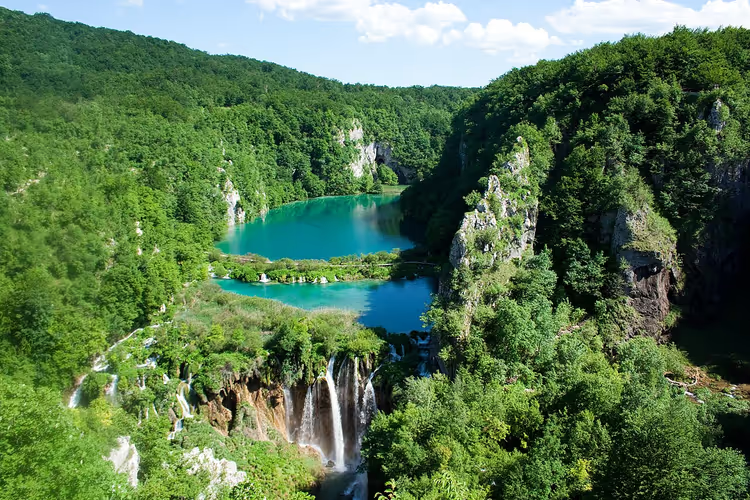 © Pablo BM from London, England · CC BYPhoto: Pablo BM from London, England, CC BY (https://creativecommons.org/licenses/by/2.0), Wikimedia Commons
In the Lika region in fall, it is worth making a detour to the watermills of Rastoke near Slunj, a lesser-known alternative to Plitvice, and to Tesla's birthplace in Smiljan. The roads through Lika are almost empty in fall, the karst landscape looks melancholically beautiful, and the taverns serve game goulash and Lička Janjetina.
Zagreb: cultural season
The capital is lively in fall. Students return, the cultural season opens with theater premieres and concerts, and the cafes on Tkalčićeva Street are full but not overcrowded. The foliage in Maksimir Park and the Botanical Garden changes color, and the Upper Town becomes photogenic. From late November, Advent starts in Zagreb, which has repeatedly been named Europe's best Christmas market.
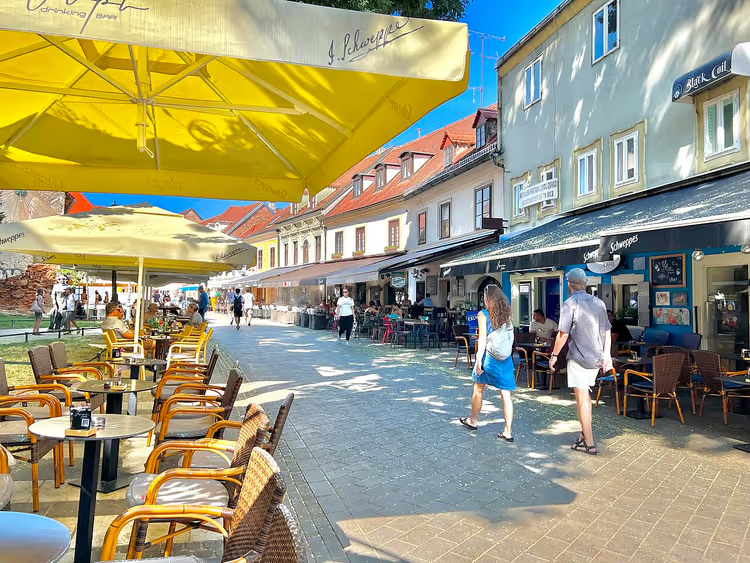 © Sharon Hahn Darlin · CC BYPhoto: Sharon Hahn Darlin, CC BY (https://creativecommons.org/licenses/by/2.0), Wikimedia Commons
Zagreb is convenient as a base for day trips: to the wine region of Zagorje (30 minutes), to the Stubičke Toplice thermal baths (40 minutes), or to the Slavonian wine country around Kutjevo (2 hours). All of these destinations fully open up in fall (as of 09/2026, Croatian tourist board on excursions).
Practical tips for a fall trip
What to pack
Fall in Croatia means layers. In the morning it is around 14 degrees with fog, during the day up to 24 and sunny, and cool again in the evening (as of 09/2026, Croatian tourist board on fall weather). You should definitely pack:
- A light jacket or windbreaker, you will use it every day.
- A sweater or fleece for evenings on the terrace.
- A raincoat, because fall downpours arrive suddenly but end quickly.
- A swimsuit and towel for September and the first half of October.
- Comfortable shoes with tread, because wet limestone is slippery.
- Sunscreen, the fall sun is deceptive, especially on the water.
The fall menu
Fall menus change completely. Fish and seafood remain, but they are joined by plenty of seasonal products that put summer in the shade. Game dishes dominate in inland konobas: venison goulash, wild boar ragout, roasted quail. Mushroom dishes come in every variety: porcini, chanterelles, parasol mushrooms, fresh from the forests. From October, truffles are added, and on the streets a vendor roasts chestnuts over an open fire.
One dish worth trying in fall is called Maneštra: an Istrian bean soup with sauerkraut and smoked meat. Nobody orders it in summer, but in fall, when the evenings are cold and the wind blows from the sea, it hits the spot.
Ferries and transport
Ferry schedules switch from summer to winter in October. That means fewer departures, especially to the smaller islands. Hvar, Brač, and Korčula still have several ferries a day, while connections to Vis, Lastovo, and the Elaphiti Islands drop to one or two a day (as of 09/2026, Croatian tourism portal on ferries). Tip: check the schedule on the Jadrolinija website in advance, and for island transfers in late fall, build in a spare day in case a sailing is canceled. The cold northern bora wind in November can interrupt service across the Kvarner Gulf for 1 to 2 days.
Renting a car in fall
In fall, a car pays off especially well: prices are low, roads are empty, and the most interesting places, wineries, truffle routes, and secluded coves, are often off the bus routes. A small car in October costs several times less than in July, and full insurance with no deductible costs a small daily surcharge and is worth having on Croatian roads: not because of how local drivers behave, but because of potholes on secondary roads and animals roaming freely inland. You can compare rental options on DiscoverCars.
⁉️🤔 Frequently asked questions
Which is better for a trip to Croatia in fall, September or October?
September gives you a warm sea and almost summer-like weather, so it also works for the beach. October gives you the best balance: fewer people, lower prices, and ideal temperatures for cities and nature (as of 09/2026, Croatian tourist board data on the season). For the beach, choose the first half of October; for food and hiking, the second half works too.
Can you swim in Croatia in October?
Yes, especially in the first half of the month. The water stays around 20-22 °C, so getting in feels cool, but after a couple of minutes swimming is comfortable. In September the sea is warmer than in June. By late October it is mostly the hardy who swim, but the beaches are empty (as of 09/2026, Croatian tourist board on the sea).
When is white truffle season in Istria and where should you look for them?
White truffle season runs through October and November, and the heart of the region is around Motovun and Livade. Organized truffle-hunting walks with a dog last 2-3 hours, and prices depend on the organizer and group size. Truffle festivals take place in Buzet in September and in Motovun in late October.
What should you pack for an autumn trip to Croatia?
Layers: a light jacket, a sweater, a raincoat. Evenings on the coast get chilly, so a fleece will not go to waste.
Is it worth driving to Croatia in autumn?
Yes. In autumn rental prices drop, roads are clear, and wineries, truffle routes and quiet coves are easiest to explore by car. Book your car in advance.
In short: what is worth booking
Autumn in Croatia works not as a compromise, but as a full season in its own right for anyone who wants more than a beach and an umbrella. If you have a week in September, go for the Istrian and Dalmatian coast with its warm sea. If you are traveling in October, plan wine roads, truffles and Plitvice Lakes with their golden forests. If your month is November, choose Zagreb and Dubrovnik for culture and food.
The matrix is simple: for the beach pick September, for food and hiking pick October, for cities and truffles pick November. The ideal compromise falls in the first week of October: everything is open, the weather is stable, the colors are at their peak, and truffle season has just begun. Hotels and apartments are easy to compare and book on Trip.com.

A small editorial team writing guides for independent travel. We travel ourselves, but we haven’t been everywhere, so we check prices, opening hours and how to get there against official sources.