















 AIIllustrative image: AI-generated
When to go to Egypt: sea, pyramids and the Nile by month
Egypt stretches across two climate zones, and each has its own season. The same month can be perfect for the beach and completely wrong for sightseeing over sand and stone.
On the Red Sea you can swim in January with water around 21 °C, while in Cairo in July the air rises above 40 °C (as of 09/2026, climate data from ADAC). So the best month depends on the region, not the country.
The short answer: the swimming season on the Red Sea runs from October to April, on the Mediterranean Sea from May to October, and the pyramids and the Nile are best visited in March to May or October to November.
Ad: this article contains affiliate links, we earn a commission if you book through them, at no extra cost to you.
Season in Egypt by region
💡 In short:
- Red Sea: swimming from October to April.
- Mediterranean Sea: season from May to October.
- Nile and Cairo: two windows, in spring and autumn.
- Climate and water temperature: 09/2026, according to ADAC.
Region | Best months | Air and water | Source |
|---|---|---|---|
Mediterranean Sea: Alexandria, Mersa Matruh | May-October | air 25-30 °C in June, water up to 26 °C | |
Red Sea: Hurghada, El Quseir | October-April | air above 35 °C in summer, water 21-30 °C | |
Nile and Cairo: Giza, Luxor | March-May, October-November | air 20-30 °C, no swimming |
The difference between regions is already noticeable in February. In Hurghada people swim and dive at this time, in Alexandria it is cool and windy, and in Cairo it is comfortable to walk around the city during the day. Choose a region based on your plans, not on the date on the calendar.
Mediterranean sea: season from May to October
The Mediterranean coast warms up more gently than the Red Sea. In June the air stays in the 25-30 °C range, the water rises to 26 °C, and in winter it cools to about 18 °C (according to ADAC). This region suits you if you want to swim without exhausting heat and spend a lot of time walking around the city.
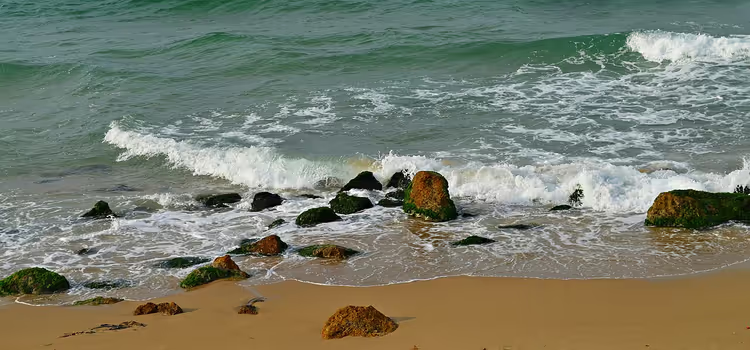 © Faris El-Gwely · CC BY-SAPhoto: Faris El-Gwely, CC BY-SA (https://creativecommons.org/licenses/by-sa/3.0), Wikimedia Commons
November-April: budget season for the northern coast. Accommodation prices are lower, but rain falls more often. In the port cities precipitation occurs about 30 days a year (according to ADAC), so you will not feel much inconvenience. Bring a light jacket for the evening.
Alexandria: catacombs, museum, and library
Alexandria stands at the end of the Nile Delta and remains the main city of the northern coast. The Catacombs of Kom El Shoqafa were carved out in the 1st century, and the galleries go 35 m underground (as of 09/2026, sights overview). Next to them are two more sites that will make you stay longer in the city.
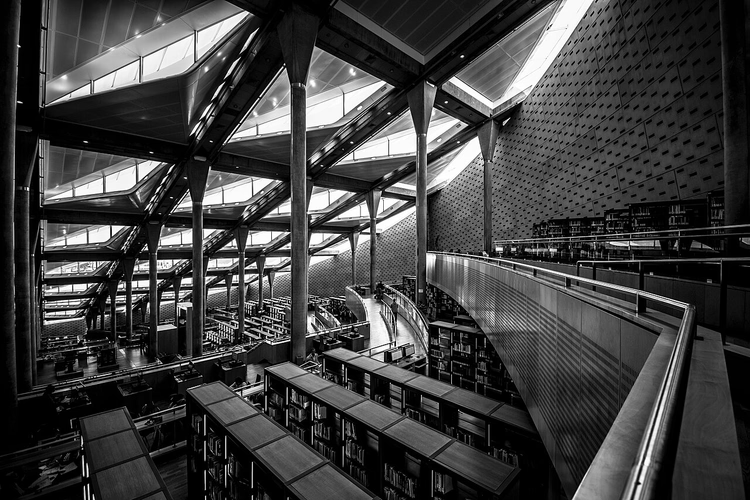 © Original: Mono Abo-Abda Derivative work: Radomianin · CC BY-SAPhoto: Original: Mono Abo-Abda Derivative work: Radomianin, CC BY-SA (https://creativecommons.org/licenses/by-sa/4.0), Wikimedia Commons
- Greco-Roman Museum: papyri, ancient sarcophagi, jewelry, and coins.
- Bibliotheca Alexandrina: a collection of millions of books, reading rooms, and museum exhibitions.
Compare hotels in Alexandria on Trip.com
Mersa Matruh: cliffs and grottoes
In Mersa Matruh the maritime character is visible in the rugged cliffs, grottoes, and long beaches. The season here matches the rest of the northern coast, and from November to March the town empties out. If you want a quiet beach without crowds, plan your trip for May or June.
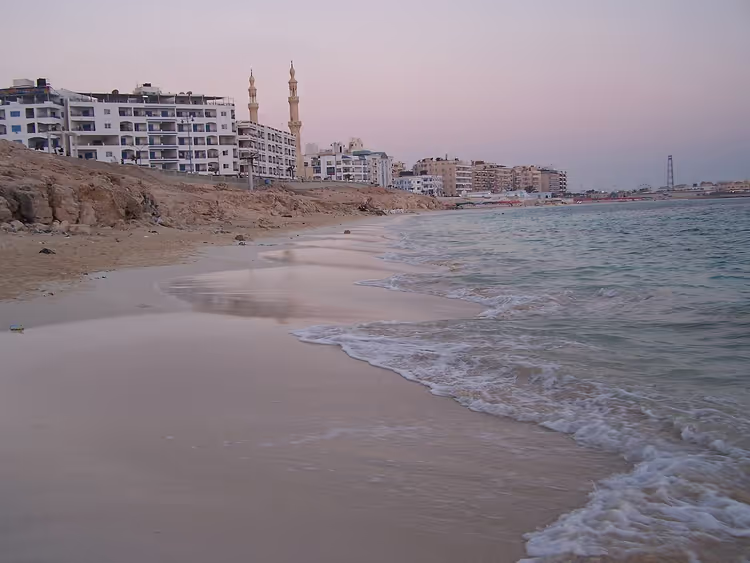
Red sea: season from October to April
The Red Sea remains the most predictable region of Egypt in terms of weather. In July and August, the water warms up to almost 30 °C, in October it stays around 26 °C, in December around 24 °C, and in February it drops to 21 °C (water temperature by month). Air temperatures in summer rise above 35 °C, so most travelers choose to visit between October and April.
 © Максим Улитин · CC BYPhoto: Максим Улитин, CC BY (https://creativecommons.org/licenses/by/3.0), Wikimedia Commons
Rain falls only from December to February, and even then no more than three days per month (according to ADAC). In summer, when temperatures exceed 34 °C, accommodation is cheaper, which appeals to those who can handle the heat.
Diving near Hurghada: Abu Nuhas Reef
Hurghada remains the main base for diving and snorkeling. From October to May, daytime temperatures here are usually below 30 °C, while in June and August the thermometer reaches 38 °C (according to ADAC). In the water you will encounter turtles, bluespotted stingrays, moray eels, octopuses, and dolphins. The main dive site is the ship graveyard at Abu Nuhas Reef.
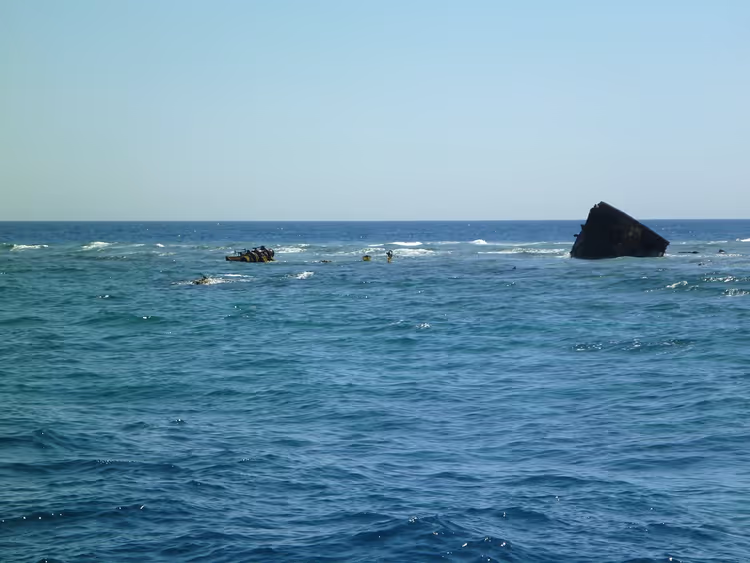 © Wusel007 · CC BY-SAPhoto: Wusel007, CC BY-SA (https://creativecommons.org/licenses/by-sa/3.0), Wikimedia Commons
Compare hotels in Hurghada on Trip.com
El Quseir: fortress and mosque
If you are interested in history and architecture, add El Quseir to your beach itinerary. Sacred buildings around 300 years old survive here, including the Shaykh Al-Farran Mosque. The citadel houses a shipbuilding museum with exhibits on Bedouin life (as of 09/2026, El Quseir overview).
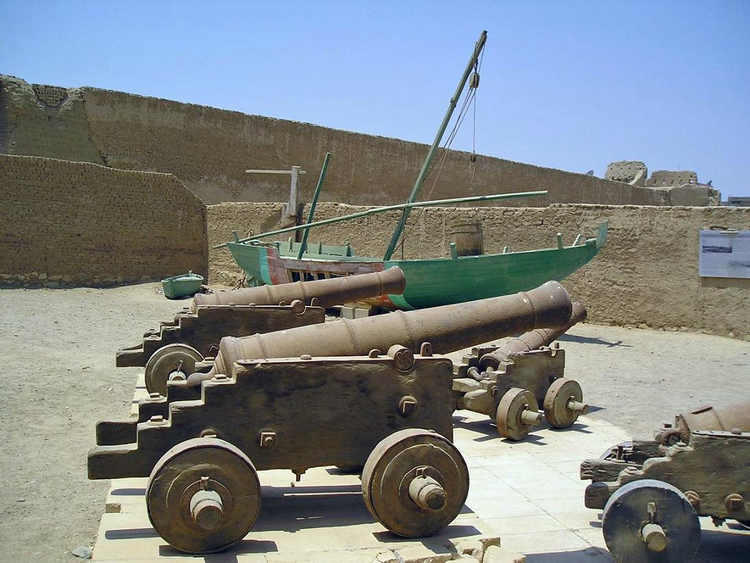 © :de:User:Magellan · CC BY-SAPhoto: :de:User:Magellan, CC BY-SA (https://creativecommons.org/licenses/by-sa/3.0), Wikimedia Commons
The Nile and Cairo: season from March to May and in autumn
The Nile Valley follows a different schedule than the coast. Nile cruises are most popular from March to May and from October to November, when daytime temperatures stay between 20 and 30 °C (according to ADAC). In April and October, the air warms up to 25-30 °C, making outdoor sightseeing easier. In May, Luxor gets noticeably hotter during the day. Plan your sightseeing for the morning, and rest in the shade after lunch.
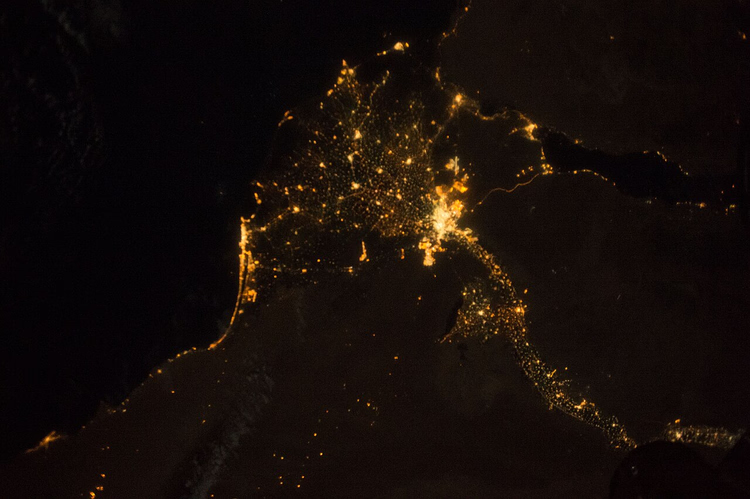
Compare hotels in Cairo on Trip.com
Giza: the pyramids and the Sphinx
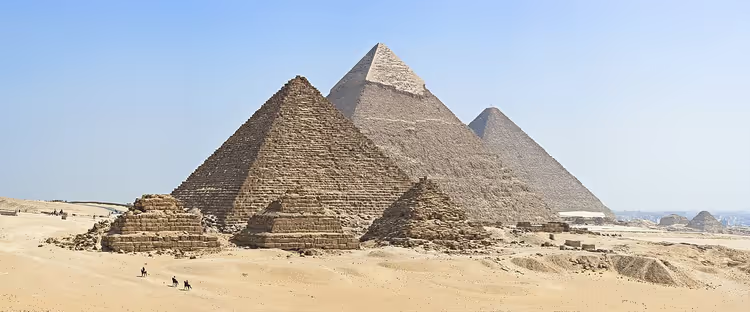
The Nile separates Cairo from Giza, so the pyramids stand on the edge of the city. The Giza Plateau is home to the pyramids of Khufu, Khafre and Menkaure and the Sphinx. The Pyramids of Giza remain the only surviving wonder of the ancient world. Arrive at opening time, before the heat sets in. Tickets are sold online in advance, and check prices and opening hours on the official Giza Governorate ticket page.
 © KennyOMG · CC BY-SAPhoto: KennyOMG, CC BY-SA (https://creativecommons.org/licenses/by-sa/4.0), Wikimedia Commons
Luxor: the Valley of the Kings and the Colossi of Memnon
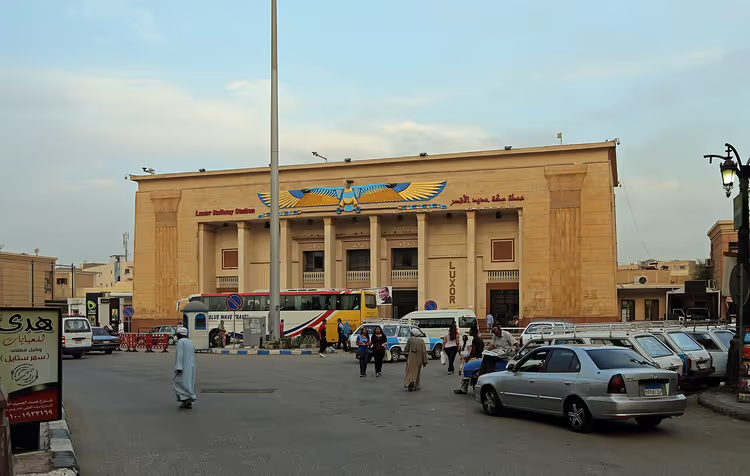
The Valley of the Kings lies about 660 km from Cairo (as of 09/2026, Luxor overview). In 1922, British archaeologist Howard Carter discovered the tomb of Tutankhamun here, but only some of the burial chambers are open to visitors. Nearby stand the Colossi of Memnon, two statues 18 m high.
 © Marc Ryckaert · CC BY-SAPhoto: Marc Ryckaert, CC BY-SA (https://creativecommons.org/licenses/by-sa/4.0), Wikimedia Commons
Visa and trip planning
You need a visa to travel to Egypt, and it is easiest to arrange it online in advance. Applications on the official portal must be submitted at least 7 days before departure, payment is by card, and the finished PDF is printed out and presented at the border (as of 09/2026, official e-Visa portal). Procedure and timelines: checked on 09/12/2026 on the official portal.
Plan your trip in advance if you are traveling in high season. Spring and autumn are peak season on the Nile, while the Red Sea season runs from October to April. Low prices on the Red Sea occur in summer (according to ADAC), but heat above 34 °C is not for everyone.
⁉️🤔 Frequently asked questions
When is the best time to go to Egypt for a beach holiday?
The swimming season depends on the sea. On the Red Sea it is comfortable from October to April, and in winter the water stays warm even in January. On the Mediterranean you can swim from May to October. If you want both to sunbathe and to see the country, choose October or April.
When is the water in the Red Sea warmest?
The peak comes in July and August, when the water warms up to almost 30 °C. The best compromise for snorkeling: October and November, when the heat subsides but the water stays warm.
Which months are comfortable for seeing the pyramids and cruising the Nile?
Best periods: March to May and October to November. Daytime temperatures are 20-30 °C, and you can comfortably spend several hours at an open-air site in Giza or the Valley of the Kings (according to ADAC). In May, Luxor is noticeably hotter during the day. In summer, tours are moved to early morning because the air heats up above 40 °C after midday.
When is a trip to Egypt cheaper?
Low season on the Red Sea falls in summer: accommodation and ticket prices are lower than in the middle of winter. Daytime temperatures at this time rise above 34 °C (according to ADAC). On the Mediterranean, the budget season runs from November to April. If you don't handle heat well, choose spring or autumn.
Do you need a visa and when should you apply for it?
Citizens of EU countries need a visa. It is issued in advance online on the official portal (e-Visa portal). Before submitting your application, check your passport validity on the same portal.
In short: what to book
Seasonal selection matrix:
- If you are traveling in winter for warmth: choose Hurghada and El Quseir.
- If you want to swim without the heat: choose Alexandria and Marsa Matruh.
- If your goal is the pyramids and the Nile: book Cairo for fall or spring.
- If budget matters more than weather: look at summer on the Red Sea or winter on the Mediterranean.
Tours of Giza and the Valley of the Kings can be found in advance on Egypt tours from GetYourGuide.

A small editorial team writing guides for independent travel. We travel ourselves, but we haven’t been everywhere, so we check prices, opening hours and how to get there against official sources.