
















Bohol: Chocolate Hills, tarsiers and what else to see on the island
You can reach the Chocolate Hills and see tarsiers in a single day. Bohol Island lies in the central Philippines, about 630 km south of Manila, in the Central Visayas region (according to Wikipedia on Bohol). By area, it ranks tenth among the islands of the archipelago.
We put together a practical guide to Bohol: what to see, how much tickets cost, when to go and how to get there from Cebu or Manila. Below you will find the tarsier entrance fee and the honest catch of each spot.
Ad: this article contains affiliate links. We earn a commission if you book through them, at no extra cost to you.
What makes Bohol Island interesting
💡 In short:
- You can fit the Chocolate Hills in Carmen, the tarsier sanctuary in Corella, and the Loboc River cruise into one long day.
- Panglao near Alona Beach is a convenient base: the airport, cafes, and dive centers are close by.
- Tarsier entrance fee: 09/2026, verified on the sanctuary's official website.
Most tourists go to Bohol for two things: the Chocolate Hills and the tiny tarsiers. But the island is not limited to that. It has coral gardens for divers, a river cruise with lunch, caves, waterfalls, and a butterfly sanctuary.
Bohol is divided into 47 municipalities and one city centered in Tagbilaran (data on Bohol). The island's capital serves as the gateway: almost every tour starts here. Tagbilaran itself sits on the shore of the strait between Bohol and Panglao.
History and origin of the island
The first Europeans to pass by Bohol were Magellan's ships in 1521, when the fleet was returning to Spain (Bohol chronicle). Spanish rule began later, in 1565, with the landing of Miguel López de Legazpi.
The conquistador then made a blood compact with the local chieftain Sikatuna. Both men each dropped a drop of their blood into a glass of wine and drank it. This treaty opened the island to the Spanish crown. Today, the Blood Compact monument stands near Tagbilaran in memory of it. Locals call the holiday itself Sandugo and still honor it.
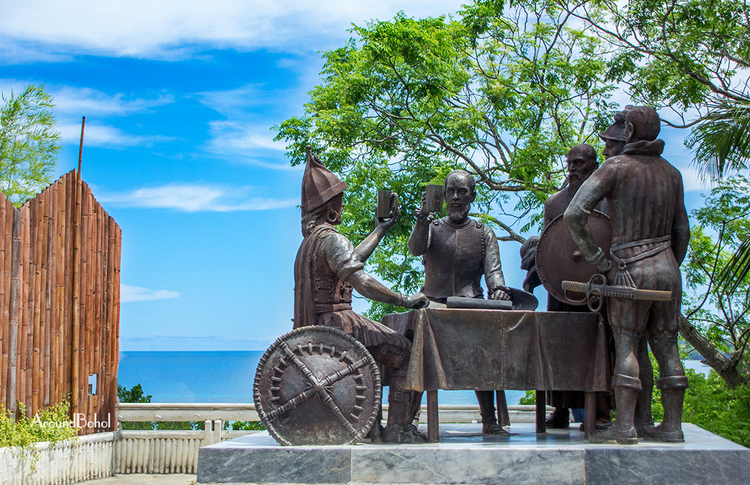 © AroundBohol · CC BYPhoto: AroundBohol, CC BY (https://creativecommons.org/licenses/by/4.0), Wikimedia Commons
The island's name is believed to come from the word "boho," which means "hole" in the local language. The island is literally riddled with caves. Dozens of underground cavities are found near every town, and many of them remain unexplored (island overview).
The highest point of Bohol, Mount Matunog, rises to almost 865 meters above sea level (terrain reference). The island's landscape is hilly, and its coastline is cut by bays and small islets.
Chocolate hills
The main calling card of Bohol and the main reason to head inland. The Chocolate Hills are nearly perfectly smooth cones of grass and limestone. They are scattered across an area of more than 50 km², and the total number is estimated at 1,260 to 1,776 (about the Chocolate Hills).
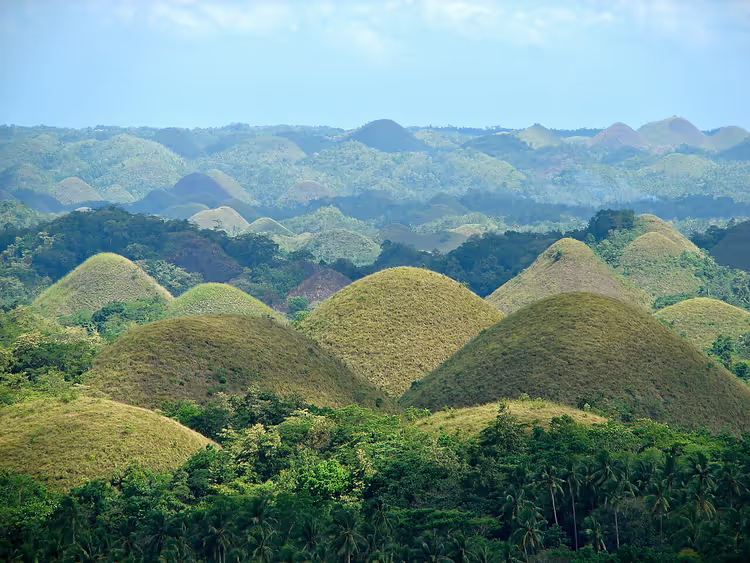 © P199 · CC BY-SAPhoto: P199, CC BY-SA (https://creativecommons.org/licenses/by-sa/3.0), Wikimedia Commons
The cones range from 30 to 50 meters in height, and the largest rises to 120 meters (hill heights). Grass keeps the hills green for most of the year. In the dry season it dries out, and they turn chocolate brown. That is exactly the shade that gave the hills their name.
From a scientific standpoint, these are not volcanoes but weathered marine limestones that rose above the water millions of years ago (geology of the hills). The most convenient way to see the hills is from the Chocolate Hills Complex viewing deck in Carmen, about 55 km from Tagbilaran (viewing deck).
Locals have their own explanations. According to one legend, two giants threw rocks and sand at each other, then made peace and left, leaving behind piles of hills. According to another, the giant Arogo wept for a long time over his lost love Aloya, and his tears turned into the cones (legends of the hills).
- The catch: in the dry season the grass dries out, and the hills stand brown. For bright green photos, come after the rains.
Philippine tarsiers
The Philippine tarsier is one of the smallest primates on the planet. The palm-sized animal with huge eyes and thin fingers lives only on a few islands in the country. It is almost impossible to see one in the wild: the tarsier is cautious, active at night, and hides in the thickets.
 © Patrick Roque · CC BY-SAPhoto: Patrick Roque, CC BY-SA (https://creativecommons.org/licenses/by-sa/4.0), Wikimedia Commons
During the day, tarsiers sleep on branches deep in the forest. To see them, go to the Philippine Tarsier Sanctuary in the town of Corella. Admission costs 150 pesos per person, and 120 pesos for students, seniors, and people with disabilities (as of 09/2026, official website).
Strict rules apply inside the sanctuary. You cannot make noise, touch the animals, feed them, or take flash photos. A guide leads the group along quiet trails and points out the animals sleeping on branches.
- The catch: during the day tarsiers sleep, so you will hardly see any active animals.
Loboc river
The Loboc River flows through the jungle in the center of the island and has long been a local attraction. The main activity here is a cruise on a floating restaurant raft with a buffet lunch. The boat glides along green banks, and at one of the stops local musicians and dancers perform.
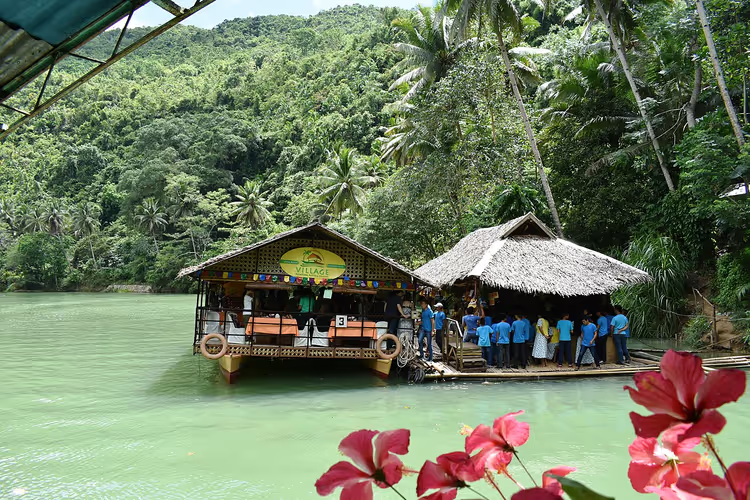 © Ric V Obedencio · CC BY-SAPhoto: Ric V Obedencio, CC BY-SA (https://creativecommons.org/licenses/by-sa/4.0), Wikimedia Commons
Tickets are bought right at the pier in Loboc. It is better to check the price and departure time on the spot: they change by season. The cruise usually takes a couple of hours including lunch. This is a good option for families and for those who want a break from a long journey.
Diving and coral reefs
For divers, Bohol has long been a destination in its own right. The local waters have coral walls and gardens, shipwrecks, and rare fauna. Surgeonfish, scorpionfish, and other reef dwellers are found here, and clear water lasts for most of the year.
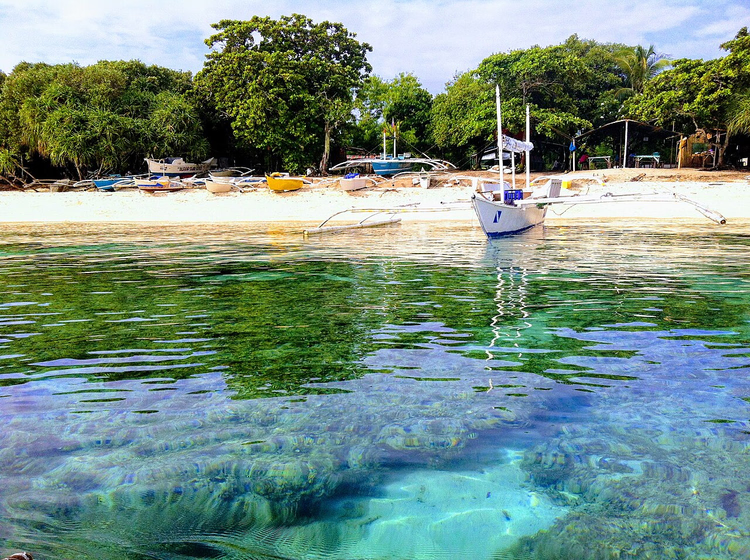 © Marie Antoinette Calvez · CC BY-SAPhoto: Marie Antoinette Calvez, CC BY-SA (https://creativecommons.org/licenses/by-sa/4.0), Wikimedia Commons
Dive centers and schools are located in Panglao and on neighboring islets. Beginners usually need just one introductory program, while experienced divers come for the walls and shipwrecks. Look for equipment and instructors on the spot.
Caves, waterfalls, and the Butterfly Garden
Bohol has a great many caves: large and small, empty and inhabited. For thrill-seekers, tours through underground chambers are offered here. The island has waterfalls, jungle hiking trails, and a Butterfly Garden where the insects land on your hands.
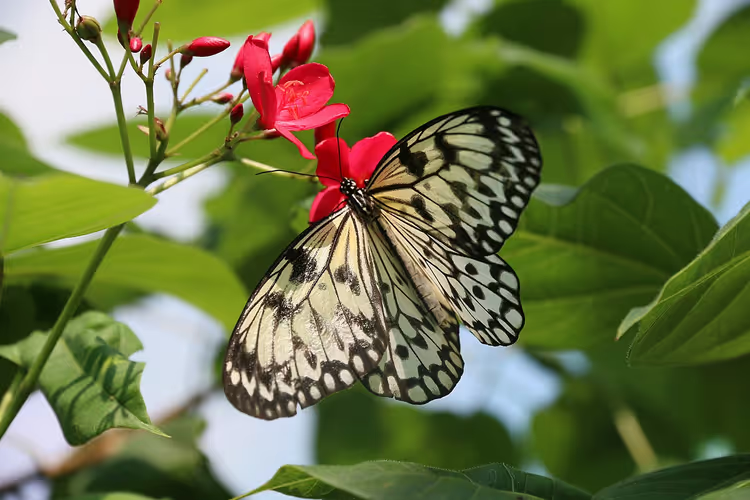 © Øyvind Holmstad · CC BY-SAPhoto: Øyvind Holmstad, CC BY-SA (https://creativecommons.org/licenses/by-sa/4.0), Wikimedia Commons
Bohol has managed to preserve its character even alongside hotels and entertainment. Locals remember their kinship with nature: the island has a "Mother Nature's Manifesto" about treating every living being with care. That is exactly why it is so calm and green here.
Tours and tickets in Bohol
Guided tours, skip-the-line tickets and activities — most offers can be cancelled free of charge.
See offers on GetYourGuideThe widget loads once you give your consent.
When to go and how many days to spend
The island is large, but in one long day you can cover the southern loop. That means the Chocolate Hills, the tarsiers in Corella, and the Loboc River. Getting to know Bohol comfortably takes three to four days. Give the first day to the southern loop, the second to the beaches of Panglao, and the third to diving.
Place | Entry | When to go |
|---|---|---|
Chocolate Hills | paid | dry weekday morning |
Tarsiers in Corella | paid | at opening, no noise |
Loboc River | paid, lunch included | before noon |
Diving in Panglao | arranged with the center | morning, calmer water |
The island's weather is tropical: warm all year round, with rain more frequent during the monsoon season. Plan your trip with an extra day to spare: downpours here are short but sudden.
How to get to Bohol
The island has the Bohol-Panglao International Airport. Domestic flights from Manila and international charters fly here (airport information). The airport itself is on Panglao Island, not far from Alona Beach.
By sea, you reach Bohol through the port of Tagbilaran, where ferries from Cebu arrive (port information). From the port and the airport, a taxi or tricycle will take you to your hotel. A scooter is easiest to rent right in Panglao.
Bohol Island on the map
Open the map to sketch out your route. The Chocolate Hills lie in the center of the island, Corella and Loboc are closer to Tagbilaran, and Panglao is connected to Bohol by a bridge.
⁉️🤔 Frequently asked questions
How many days do you need for Bohol?
For a relaxed visit, plan on three to four days. On the first day you will cover the southern loop with the Chocolate Hills, tarsiers, and the Loboc River. Give the second day to the Panglao beaches, and the third will go to diving. If you are short on time, one long day with a ready-made tour is enough.
When is the best time to go to Bohol?
It is warm here year-round, but the rains are unevenly distributed. The driest months fall at the beginning of the year, while in the second half of the season downpours come more often. For diving and beaches, pick a dry window, and for green hills it is better to go after the rains.
Can you touch the tarsiers?
No. At the sanctuary in Corella, the animals cannot be touched, fed, or photographed with flash. Tarsiers are timid, and touching them is dangerous for them. You view the animals from the path and listen to the guide, who keeps the group at a quiet distance.
How much does entry to the Chocolate Hills cost?
Entry to the viewing platform is paid, and the price changes along with decisions by local authorities. The exact amount will be given at the ticket office of the Chocolate Hills Complex at the top. Cash will come in handy: there may be no card terminals at the platform.
How do you get to Bohol from Cebu?
Ferries run from Cebu to Bohol, arriving at the port of Tagbilaran. You will spend several hours in transit, so take a morning departure. There is also Bohol-Panglao Airport with flights from Manila. From the port or airport to your hotel, a taxi or tricycle will get you there.
In short: what is worth booking
If you have only one day, take a tour of the southern loop: the Chocolate Hills, tarsiers, and the Loboc River in one trip. If you are going for diving, base yourself in Panglao and book dives with a local center. For a quiet stay, choose hotels on the Panglao coast, away from the noisy roads.
Ready-made itineraries and prices are easy to compare on GetYourGuide: see Bohol tours on GetYourGuide.

A small editorial team writing guides for independent travel. We travel ourselves, but we haven’t been everywhere, so we check prices, opening hours and how to get there against official sources.