
















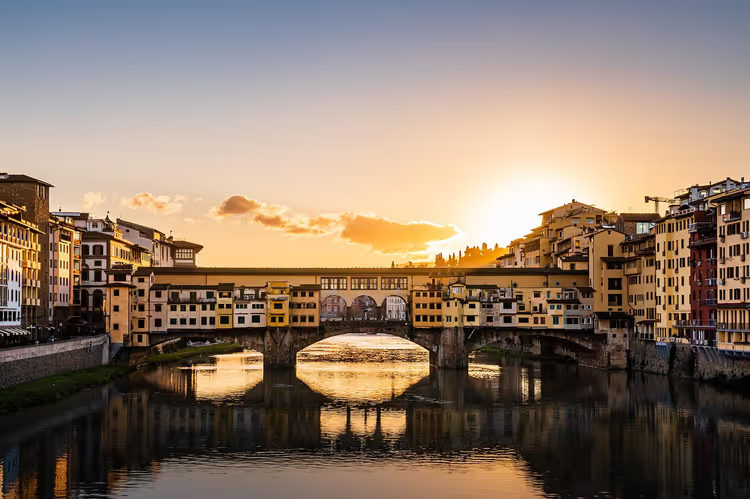
Bologna in a day: walking route and three main dishes
You can see Bologna in one day. From the train station to the main squares, you'll walk about three kilometers on foot.
The city is small but packed. The oldest university in Europe, two leaning towers, and dozens of kilometers of arcades all stand within a single district.
Ad: this article contains affiliate links. We earn a commission if you book through them, at no extra cost to you.
What to see in Bologna in one day
💡 In short:
- The central route takes half a day on foot, plus an hour to climb the Asinelli Tower.
- The Asinelli Tower admits visitors by timed entry and reservation only (as of 09/2026, Torri di Bologna website).
- The Archiginnasio and the Anatomical Theatre admit visitors only with an audio guide or a guide, closed on Sundays (as of 09/2026, source).
- Prices and opening hours: 09/2026, verified on the tower page on Torri di Bologna.
Bologna is called the Red, the Learned, and the Fat. The red color comes from its terracotta rooftops. The city earned the "Learned" title thanks to the oldest university in Europe. And it's called the Fat for the hearty cuisine of Emilia-Romagna.
The first settlement appeared here before our era. Back then the city was called Felsina. Later it was renamed Bononia, and it became Bologna already as part of the Roman Empire.
The first university in Europe opened in the city (according to Università di Bologna). Thanks to it, Bologna became the intellectual center of the region in the 17th century. Today about 400,000 people live here, and every fourth of them is a student (according to Bologna Welcome).
 © FrDr · CC BY-SAPhoto: FrDr, CC BY-SA (https://creativecommons.org/licenses/by-sa/4.0), Wikimedia Commons
The main attractions stand close to each other. You can walk around them without using a bus.
Wear comfortable shoes and take your time. The narrow streets, arcades, and squares are arranged so that each next sight appears unexpectedly.
University of Bologna and its courtyards
The University of Bologna (Università di Bologna) has been accepting students since 1088 (according to the university's official website). Dante, Petrarch, Boccaccio, and Copernicus studied here. The university's structure was unusual: deans were elected by the students themselves, and they also paid the lecturers. If a professor wasn't liked, they were replaced. Over time, this system was abandoned.
Some university courtyards and buildings are open to visitors. Step into the inner courtyard: there are frescoes, sculptures, and quiet between lectures. It will take you about twenty minutes to look around, and it's a good warm-up before the center.
 © Phyrexian · CC BY-SAPhoto: Phyrexian, CC BY-SA (https://creativecommons.org/licenses/by-sa/4.0), Wikimedia Commons
The canal window on Via Piella
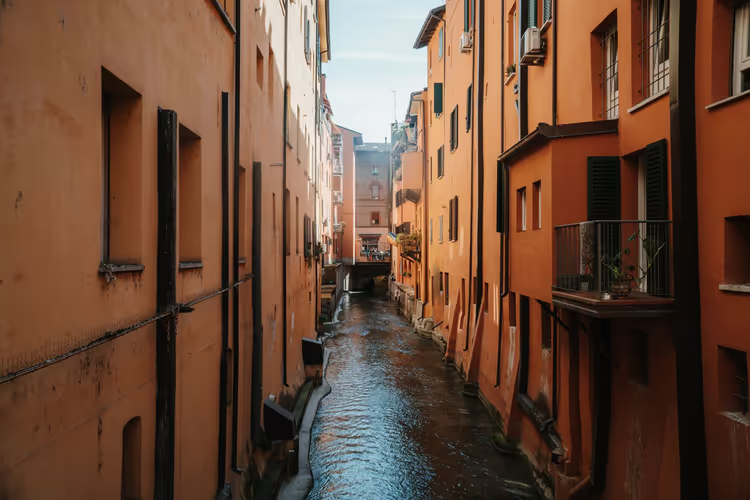
From a small window on Via Piella you can see a canal. Two centuries ago Bologna had many canals; today only one remains. The rest are hidden underground or have dried up.
This is the most photographed spot in the city, so you'll almost always find a line at the window. Come at opening time or closer to the evening. Then you'll get your shot without the crowd.
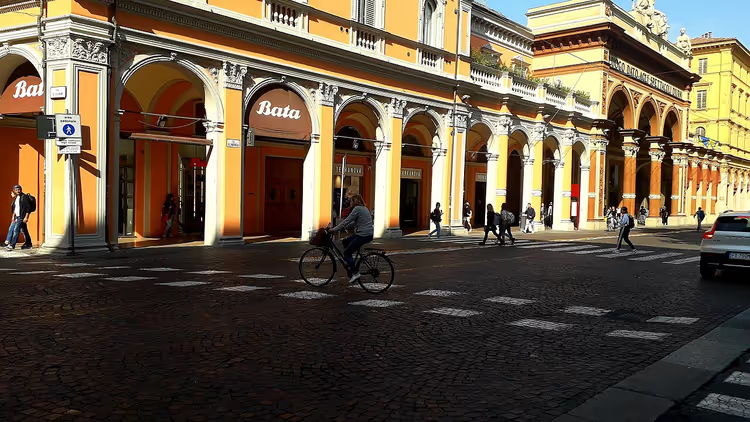
Via dell'Indipendenza from the station to the center
Via dell'Indipendenza stretches from the station to the center. It's the city's main shopping artery, and it appeared less than two centuries ago. Some of the buildings along it date back much earlier.
It's a convenient street for shopping while taking in the facades. Half an hour is enough for your first impressions of the city.
 © PatriaDeTodos · CC BY-SAPhoto: PatriaDeTodos, CC BY-SA (https://creativecommons.org/licenses/by-sa/4.0), Wikimedia Commons
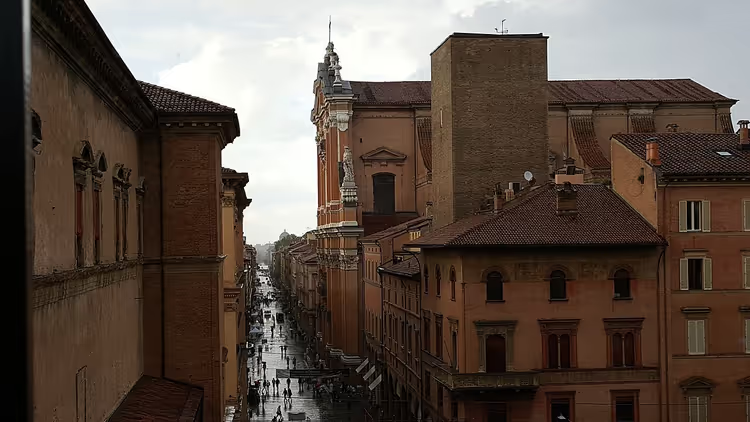
Cathedral of San Pietro
The site of the current cathedral was originally home to an early Christian church. San Pietro was built back in the Middle Ages, but fires and earthquakes destroyed it time and again. It became a cathedral in the 16th century, and its interior was decorated in the Baroque era.
 © Raffacossa · CC BY-SAPhoto: Raffacossa, CC BY-SA (https://creativecommons.org/licenses/by-sa/4.0), Wikimedia Commons
Visitors are admitted between services, and admission is free. Spend some time at the altar: the Baroque decoration here is denser than in the neighboring churches.
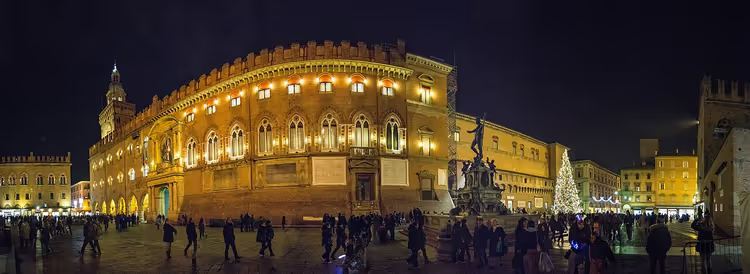
Neptune square and the palace of king Enzo
Neptune Square is home to a 16th-century fountain. The bronze Neptune was sculpted by the master Giambologna. He seems to stand guard over another important building, the Palace of King Enzo (Palazzo Re Enzo).
The castle was built in the 13th century. King Enzo of Sardinia was held prisoner there for more than twenty years, which is how the building got its name. Walk all the way around the fountain: the south side offers the best view of both landmarks.
 © Giorgio Galeotti · CC BYPhoto: Giorgio Galeotti, CC BY (https://creativecommons.org/licenses/by/4.0), Wikimedia Commons
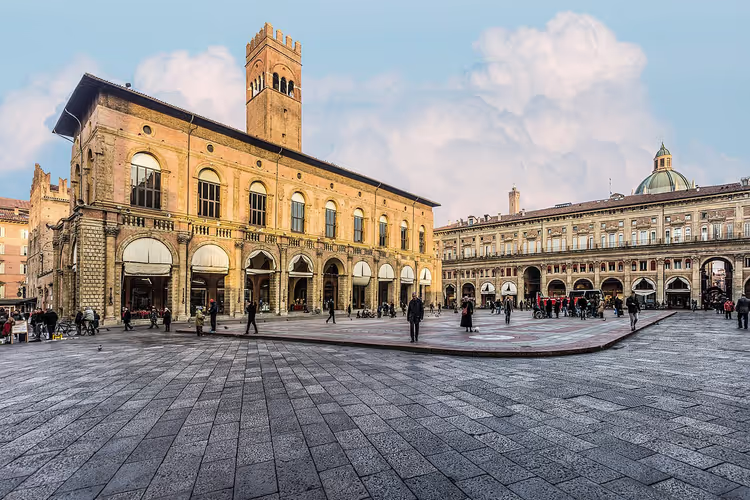
Piazza Maggiore: the city's main square
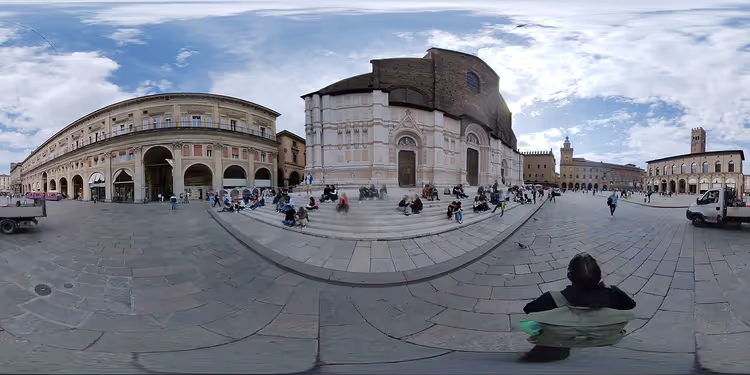
Piazza Maggiore was the main square in the city, and its name says so directly. A market bustled here almost until the end of the 19th century, and important institutions stood around it: the government building, the communal palace, and Bologna's largest church.
That is the Basilica of San Petronio, which you will see just around the corner. Sit on the steps in the shade and take in the whole square.
 © Vanni Lazzari · CC BY-SAPhoto: Vanni Lazzari, CC BY-SA (https://creativecommons.org/licenses/by-sa/4.0), Wikimedia Commons
Basilica of San Petronio
The church was consecrated in honor of Bologna's patron saint. The basilica aimed to be the largest in Italy and could have surpassed St. Peter's Basilica in Rome. The Pope did not allow that plan to come to fruition, so the church facade was left unfinished.
Inside stands Italy's oldest organ, made in the 15th century. On the floor, the astronomer Giovanni Domenico Cassini drew a meridian with zodiac signs. A ray of sunlight falls through an opening in the roof and indicates the month of the year.
Admission to the basilica is free, and it is open daily. Check the official website for exact hours before your trip (as of 09/2026, Basilica of San Petronio).
 © mapconcierge · CC BY-SAPhoto: mapconcierge, CC BY-SA (https://creativecommons.org/licenses/by-sa/4.0), Wikimedia Commons
Archiginnasio and the Anatomical Theater
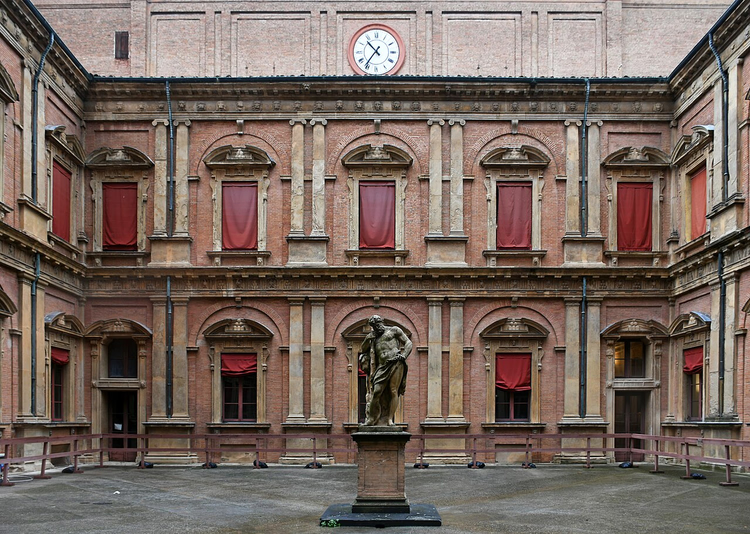
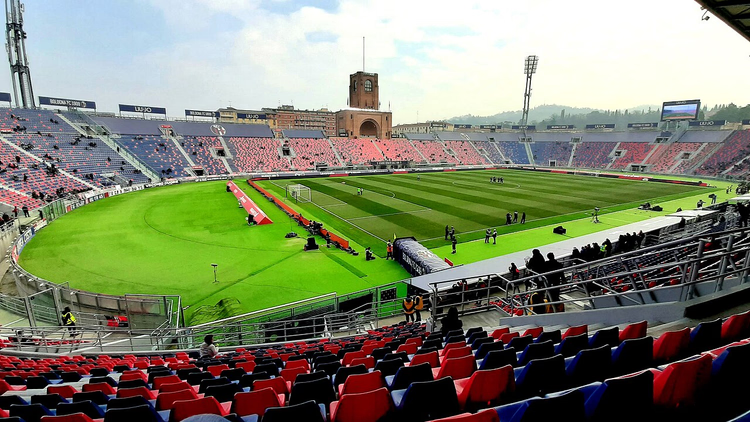
This used to be the main building of the University of Bologna. Today it houses a library and the Anatomical Theater. The wooden amphitheater was built in the 17th century. Coffered ceilings, carved statues, and benches from which medical students observed dissections. Until the 19th century, this was common practice. The palace walls are covered with more than six thousand coats of arms of students and professors (according to Musei di Bologna).
 © Beric Dondarrion · CC BY-SAPhoto: Beric Dondarrion, CC BY-SA (https://creativecommons.org/licenses/by-sa/4.0), Wikimedia Commons
Since July 2025, entry is only allowed with an audio guide or a guide. A full ticket costs 10 €, a reduced ticket 8 €, and on Sundays the palazzo and theater are closed (as of 09/2026, official Archiginnasio website). Take a morning slot at opening time, by 10 a.m.: new groups are formed every ten minutes, and the visit takes about forty minutes.
tickets to Archiginnasio and the Anatomical Theater with an audio guide
Bologna's arcades and the Portico di San Luca
Bologna is called the city of arches. It has more than 60 kilometers of covered galleries, and they are a UNESCO World Heritage site (according to Porticoes of Bologna). The arcades appeared in the Middle Ages not as shelter from the rain, but because of a housing shortage.
Rooms were built above the columns, while the roadway was preserved. The rule was strictly enforced: no city arcade is lower than 2 meters 66 centimeters, so that a rider on horseback could pass freely beneath it. The galleries differ in their decoration: some have wood, some have stucco, and some have graffiti.
The longest arcade leads to the Sanctuary of the Madonna di San Luca on a hill. It is almost 4 kilometers and 666 arches, and the climb takes about an hour one way (according to bologna.travel). Go early in the morning: during the day it gets hot on the open sections.
 © Carlo Pelagalli · CC BY-SAPhoto: Carlo Pelagalli, CC BY-SA (https://creativecommons.org/licenses/by-sa/3.0), Wikimedia Commons
The two towers: Asinelli and Garisenda
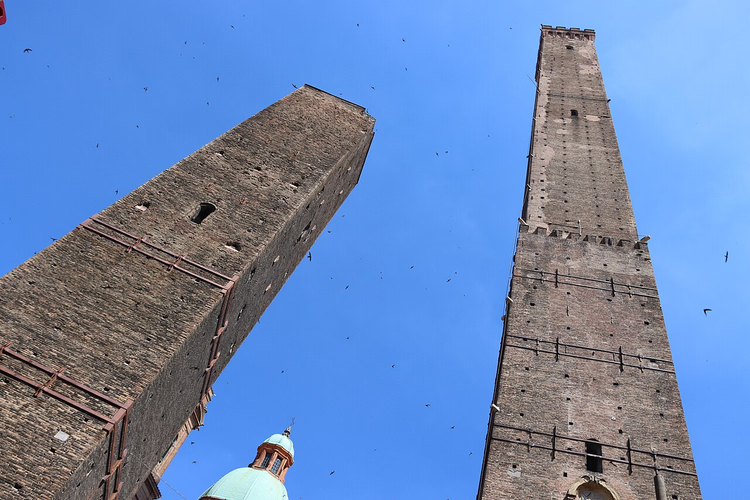
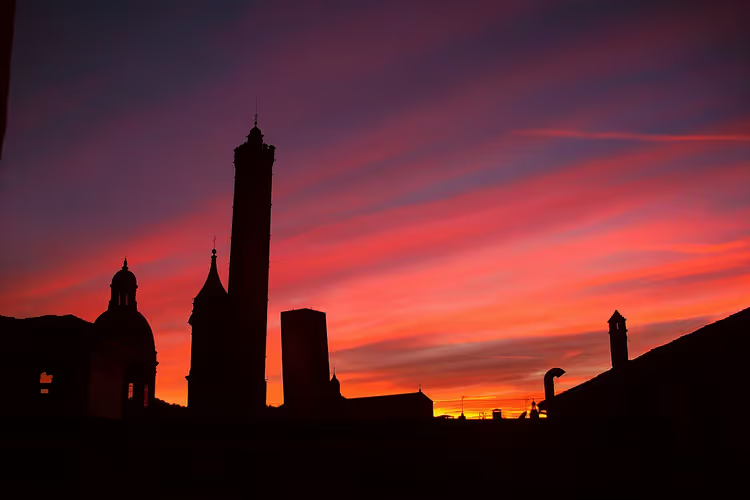
In the Middle Ages, Bologna had about a hundred towers. Only a few have survived to this day. Townspeople competed in wealth: the higher the tower, the richer the family. Two neighboring towers, Asinelli and Garisenda, became the symbol of the city (Le due Torri). They were built by two of the wealthiest families, and the construction techniques were not followed properly. Both towers lean.
Garisenda was shortened in the 15th century from 60 to its current 48 meters, and it is now closed to tourists. The 97-meter Asinelli Tower is climbed via almost 500 steps of a wooden spiral staircase (according to Musei di Bologna). The top has tilted by 2.2 meters, so the tower is constantly being restored. The climb is not easy: there is no elevator, and the staircase is narrow.
A ticket costs 5 €, a reduced ticket 3 €, and entry is by reservation and timed slots only. In summer the tower is open from 9:30 a.m. to 7:30 p.m., with the last entry at 6:30 p.m.; in winter the hours are shorter (as of 09/2026, official tower website). Take a morning slot and comfortable shoes: by midday the line is longer.
Bologna sightseeing tours on GetYourGuide
 © Gianlucab1964 · CC BY-SAPhoto: Gianlucab1964, CC BY-SA (https://creativecommons.org/licenses/by-sa/4.0), Wikimedia Commons
If climbing the tower is too much for you, the neighboring hills also offer a great view of the terracotta rooftops. Many people combine the climb with a short sightseeing tour of the center.
Tours and tickets in Bologna
Guided tours, skip-the-line tickets and activities — most offers can be cancelled free of charge.
See offers on GetYourGuideThe widget loads once you give your consent.
What to be sure to try in Bologna
Bologna is called "the fat one" because of its food. Emilia-Romagna cuisine is hearty and meaty, and portions in trattorias are large.
 © Petar Milošević · CC BY-SAPhoto: Petar Milošević, CC BY-SA (https://creativecommons.org/licenses/by-sa/4.0), Wikimedia Commons
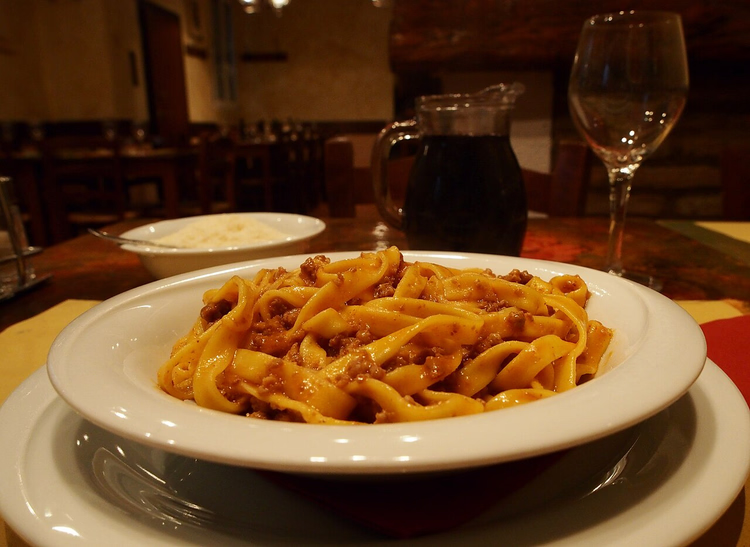
The city is known for three dishes. Bolognese is made from meat and is used to dress lasagna and pasta. Tagliatelle is made with eggs, which gives the pasta a bright yellow color. Tortellini look like small dumplings and are served in broth or with sauce. Order two dishes for two people: the portions here leave no room for dessert.
Another local specialty is mortadella. It is a thick sausage with flecks of fat, sometimes with olives, pepper, or pistachios. Get it at the market or a deli in the center and enjoy it at your leisure.
food tours in Bologna on GetYourGuide
⁉️🤔 Frequently asked questions
How much time do you need for central Bologna?
One day is enough for the main squares, towers, and arcades. You will walk about three kilometers. The Asinelli Tower and Archiginnasio operate on timed entry, so book them in advance. If you are short on time, set aside one evening for dinner in the center.
What should you be sure to try in Bologna?
Three dishes: bolognese, tagliatelle, and tortellini. Add mortadella to those. Pasta is served in almost every trattoria in the center, and portions are large. Two dishes are enough for dinner; get dessert if you still have room.
Can you climb the Asinelli Tower?
Yes, but only with advance booking and timed entry. The staircase is spiral, nearly 500 steps, and there is no elevator. Allow about an hour for the climb (as of 09/2026, official website).
When is the best time to visit Bologna?
From spring to fall, terraces are open in the center and walking around is comfortable. Summer is hot and crowded, so start your route in the morning. In winter there are fewer tourists, but some viewpoints operate on shorter hours. Check the hours before your trip.
Is the Archiginnasio closed on Sundays?
Yes, the palazzo and the Anatomical Theater are closed on Sundays. On other days, entry is only with an audio guide or a guide. On weekdays, arrive at opening time, by 10 a.m. (as of 09/2026, Musei di Bologna website).
In short: what to book
In Bologna, all the main sights are close together. In the morning, get a timed slot for the Asinelli Tower and a slot at the Archiginnasio; in the afternoon, walk around Piazza Maggiore and the Basilica of San Petronio; in the evening, have tagliatelle for dinner.
- If you have one day: the tower and the Anatomical Theater in the morning, Piazza Maggiore in the afternoon, a trattoria in the evening.
- If you are traveling with family: stick to the arcades and Piazza Maggiore, and leave the tower climb to those who want it.
- If you are a foodie: take a food tour of the center and try mortadella at the market.

A small editorial team writing guides for independent travel. We travel ourselves, but we haven’t been everywhere, so we check prices, opening hours and how to get there against official sources.