
















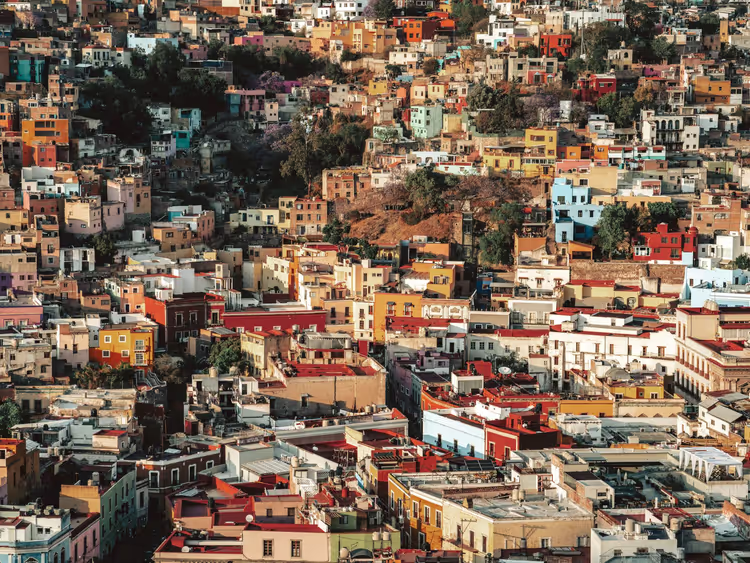
Where to travel safely in Latin America: 6 countries with low crime rates
Conversations about crime in Latin America often exaggerate the risk. The region is huge, and safety varies from country to country. Next to troubled cities, there are countries where a tourist can comfortably walk around even in the evening.
We've put together six destinations that travelers most often recommend and cross-checked them against rankings and official portals. According to the Global Peace Index 2025, the regional leaders are Uruguay, Chile, and Costa Rica. We've added Argentina, the Dominican Republic, and Mexico to the list.
Ad: this article contains affiliate links, we earn a commission if you book through them, at no extra cost to you.
1. Argentina
💡 In short:
- Six countries in the region where a tourist can feel at ease: from Argentina to Mexico.
- Each country includes photos, key highlights, and an honest catch.
- Safety and statistics: 09/2026, based on the peace index.
 © Sebastianalmaraz · CC BY-SAPhoto: Sebastianalmaraz, CC BY-SA (https://creativecommons.org/licenses/by-sa/4.0), Wikimedia Commons
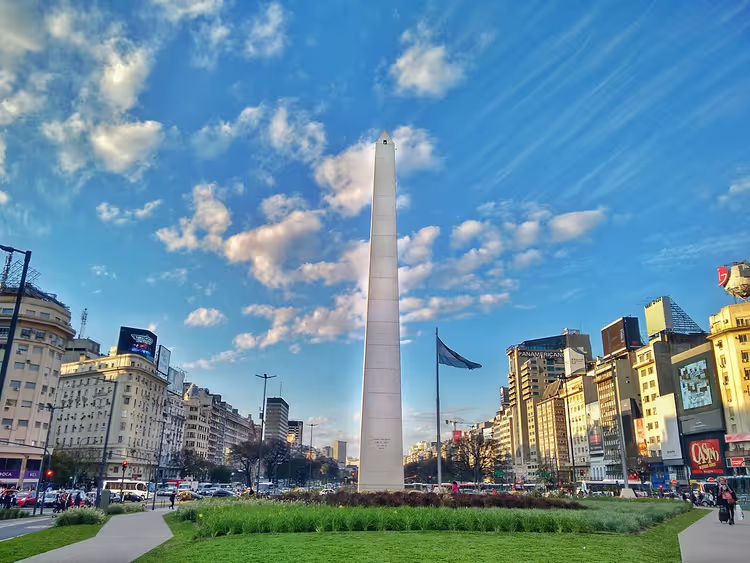
Argentina has consistently ranked among the calmest countries in the region for years. The US State Department places it in the first safety category, alongside Iceland and Finland. In practice, this means standard precautions are enough.
In large cities, keep an eye on your bag on public transport and in markets, and keep your phone and wallet in an inside pocket. At night, stick to well-lit central streets. It's best to avoid unfamiliar neighborhoods.
The country is large, and distances here are significant. The official Argentina portal features routes through Buenos Aires, Patagonia, and Iguazu Falls. These points are several hours apart by plane, so plan your transfers in advance.
- Who it's for: those who want to combine a big city and nature in one trip.
- The catch: distances between regions are huge, so domestic flights are unavoidable.
2. Uruguay
 © Huguitoportal · CC BY-SAPhoto: Huguitoportal, CC BY-SA (https://creativecommons.org/licenses/by-sa/3.0), Wikimedia Commons
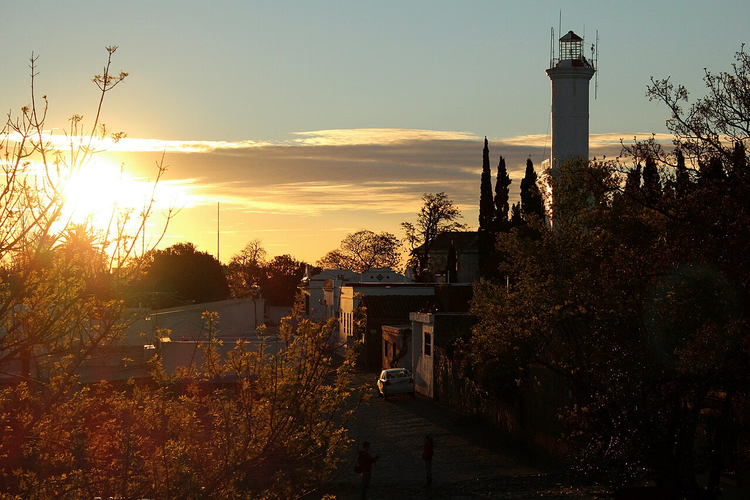
Uruguay borders Argentina and is considered the most peaceful country in South America. According to the Institute for Economics and Peace, it ranks in the world's top 50 countries and has one of the lowest homicide rates on the continent.
The destination is less hyped among tourists, but it offers calm cities, waterfront promenades, and Atlantic beaches. You can easily build a bus route between Montevideo, Punta del Este, and the colonial town of Colonia del Sacramento.
Standard precautions are enough. You won't need to watch your belongings as warily as in the region's megacities, and evening walks in the center are safe.
- Who it's for: those who value a relaxed pace and ocean beaches.
- The catch: the destination is less well known, so there are fewer ready-made tours from Europe.
- Where to stay: hotel prices in Uruguay on Trip.com.
3. Chile
 © Carlos yo · CC BY-SAPhoto: Carlos yo, CC BY-SA (https://creativecommons.org/licenses/by-sa/4.0), Wikimedia Commons
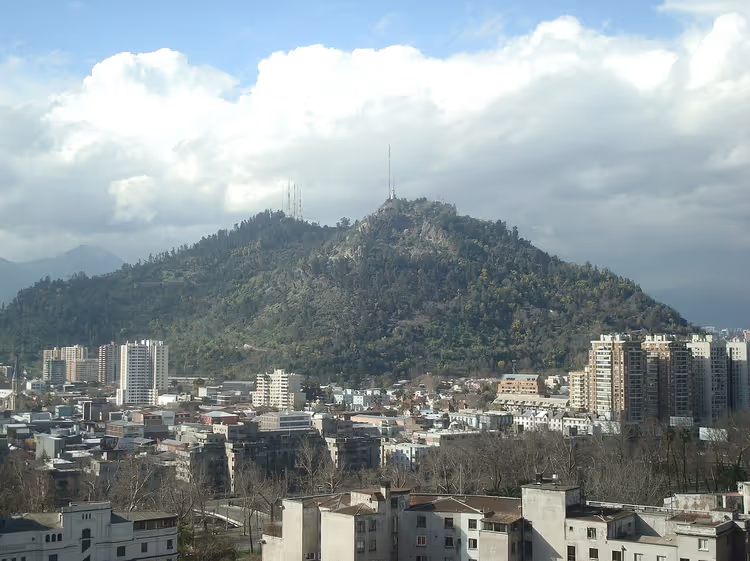
Chile is considered one of the most stable countries on the continent. Robberies and assaults are rare here even in large cities, and tourists usually feel safe in central Santiago. Standard precautions are enough.
You'll find the Atacama Desert, the snow-capped Andes, and the glaciers of Patagonia. On the Chile Travel portal you can plan routes through these regions in advance, so it's worth mapping out your trip before you go.
Earthquakes happen here more often than in Europe, but buildings are designed to withstand tremors. It's useful to know what to do during an earthquake in advance; hotels provide this information.
- Who it's for: those traveling for nature and long routes.
- The catch: the country stretches along the continent, so distances between points are large.
- Where to stay: hotel prices in Chile on Trip.com.
4. Costa Rica
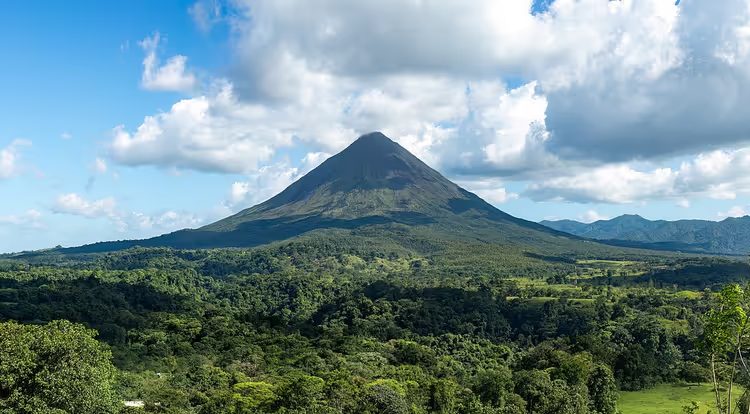 © Rhododendrites · CC BY-SAPhoto: Rhododendrites, CC BY-SA (https://creativecommons.org/licenses/by-sa/4.0), Wikimedia Commons
Costa Rica is considered the calmest destination in Central America. According to the Global Peace Index, the country ranks near the top among states in the region, and it abolished its army back in 1948, redirecting the budget to education and nature conservation.
The country is known for its jungles and nature reserves. The Visit Costa Rica portal lists routes through national parks and to both oceans, so you'll find options for both quiet relaxation and active travel.
The main risks here are related not to violence but to nature. Slippery jungle trails, strong currents on ocean beaches, and downpours in the rainy season require attention, but they don't ruin a vacation.
- Who it's for: those who want volcanoes, jungles, and beaches on two oceans.
- The catch: getting between volcanoes and coastlines takes several hours on mountain roads.
- Where to stay: hotel prices in Costa Rica on Trip.com.
5. Dominican Republic
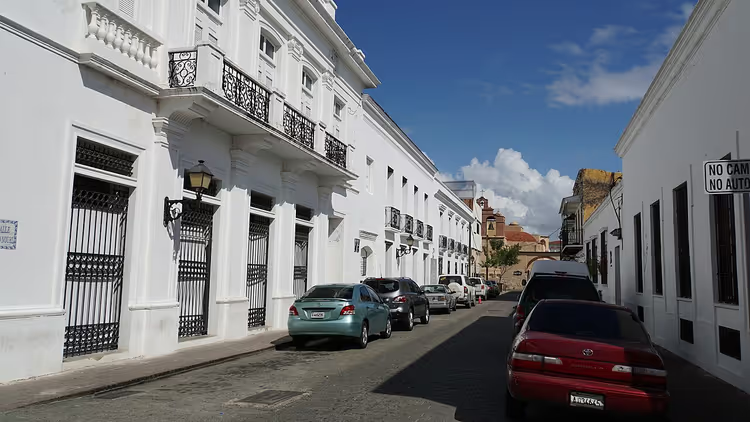 © https://www.flickr.com/photos/miguel_discart_vrac_3/ · CC BY-SAPhoto: https://www.flickr.com/photos/miguel_discart_vrac_3/, CC BY-SA (https://creativecommons.org/licenses/by-sa/2.0), Wikimedia Commons
The Dominican Republic runs on tourism, and resort areas are well monitored here. Hotels and beaches are guarded, so vacations go smoothly.
Outside the resorts, you should be careful. Don't wear expensive jewelry or watches, and don't leave your belongings unattended on the beach. That way you'll avoid most problems.
The Dominican Republic portal describes beaches, colonial Santo Domingo, and reef diving. It's easy to fly here from Europe, which makes the country convenient for a short getaway.
- Who it's for: those who want warm sea and sandy beaches.
- The catch: outside resort areas, it's better not to plan evening walks alone.
- Where to stay: hotel prices in the Dominican Republic on Trip.com.
6. Mexico
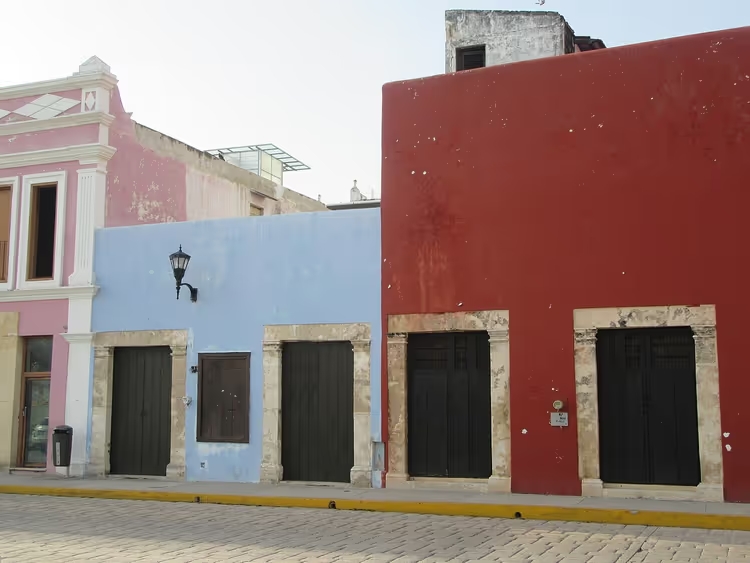 © amanderson2 · CC BYPhoto: amanderson2, CC BY (https://creativecommons.org/licenses/by/2.0), Wikimedia Commons
Mexico receives more tourists than any other country in the region, but safety here depends on the state. Yucatan and Campeche on the Gulf Coast are considered the most reliable.
Germany's Federal Foreign Office advises exercising particular caution in Mexico due to organized crime (as of 09/2026, Auswärtiges Amt). The rules are simple. Travel during the day, use toll roads, and book a car through your hotel.
In Yucatan and Campeche, tourists feel at ease. This is where the Mayan ruins and cenotes are concentrated, with colonial cities nearby. The Riviera Maya resorts belong to the state of Quintana Roo. These are the states you should choose for your vacation.
- Who it's for: those who want to combine the sea, Mayan history, and colonial cities.
- The catch: in some states the situation is more complicated, so it's better to limit your route to Yucatan and Campeche.
- Where to stay: hotel prices in Mexico on Trip.com.
⁉️🤔 Frequently asked questions
Which Latin American country is the safest?
According to the Global Peace Index, Uruguay leads. Chile and Costa Rica are close behind. In these countries, tourists feel at ease both day and night.
How safe is Latin America for tourists overall?
The region is very uneven. Next to troubled cities there are countries with low crime rates that attract millions of tourists. If you stick to tourist areas and don't flash valuables, your trip will go smoothly.
Is it okay to travel to Mexico?
Yes, but with caveats. Mexico is popular with tourists, and the Caribbean resorts welcome millions of visitors. For your vacation, choose Yucatan and Campeche on the Gulf Coast.
Is it dangerous to walk in the evening in the region's cities?
In the calm countries on this list, evening walks in central areas are safe. That's how you'll see cities at their best. In unfamiliar and remote areas, get around by taxi and keep your phone in an inside pocket.
Do I need insurance for a trip to the region?
Medical insurance is useful in any country in the region, especially where there are lots of outdoor activities. It covers treatment and evacuation. It's convenient to compare different plans in advance, before buying tickets.
In short: what to book
If you want a relaxing vacation, start with Uruguay or Chile: minimal risk and clear infrastructure.
- If you're traveling with kids: the Dominican Republic or Costa Rica, calm resorts.
- If you love nature: Chile or Costa Rica, volcanoes, the Andes, and two oceans.
- If you want city and culture: Argentina or Mexico.
- If you need a quiet beach: Uruguay.
Accommodation in high season is better booked in advance, prices rise closer to the dates. It's convenient to compare options ahead of time: see hotel prices in Latin America.

A small editorial team writing guides for independent travel. We travel ourselves, but we haven’t been everywhere, so we check prices, opening hours and how to get there against official sources.