
















Buenos Aires in a week: itinerary, tickets and practical tips
Buenos Aires looks like Paris and Madrid at the same time. Wide avenues, towers, cafes on the ground floors. Except here they dance tango, and the cafes grill steaks.
You can't see the city in one day. Below: the main sights, opening hours, a week-long route, and transportation.
Ad: this article contains affiliate links, we earn a commission if you book through them, at no extra cost to you.
Historic center: Plaza de Mayo and Casa Rosada
💡 In short:
- Plaza de Mayo, Casa Rosada, and the Cabildo are right next to each other, and seeing them takes a couple of hours.
- Recoleta Cemetery welcomes visitors daily; foreign tourists pay an entrance fee.
- Prices and opening hours: 09/2026, verified on the city's official website
Plaza de Mayo
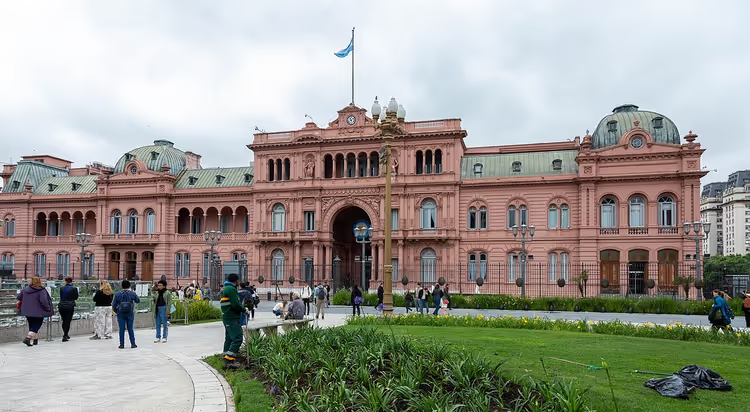
Almost every visitor starts their tour of the city at Plaza de Mayo. Casa Rosada, the Cabildo, and the Metropolitan Cathedral all stand on it. The square got its name from the May Revolution, which began right here. A full walk around takes twenty minutes, but you'll stay longer: every facade has its own story. Come at opening time; by midday the square fills with tour groups.
 © David Brossard · CC BY-SAPhoto: David Brossard, CC BY-SA (https://creativecommons.org/licenses/by-sa/2.0), Wikimedia Commons
Casa Rosada
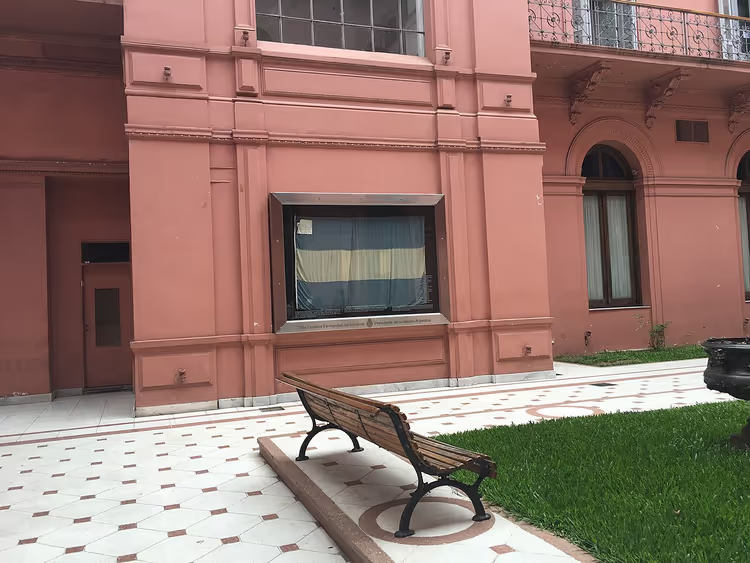
Casa Rosada serves as the official residence of the president. The building stands out for its pink color, and there are two versions of why. According to one, lime was mixed with ox blood to make the paint last longer. According to the other, red was the color of the Federalists, white of the Unitarians, and pink became their compromise.
Visitors are admitted on a schedule. The Casa Rosada Museum is open Wednesday through Sunday from 11:00 to 18:00, last entry at 17:30, closed Mondays and Tuesdays (as of 09/2026, argentina.gob.ar). No advance booking required. In front of the palace stands an equestrian statue of Manuel Belgrano, the creator of the Argentine flag.
 © Casa Rosada · CC BYPhoto: Casa Rosada, CC BY (https://creativecommons.org/licenses/by/2.5/ar/deed.en), Wikimedia Commons
Pirámide de Mayo
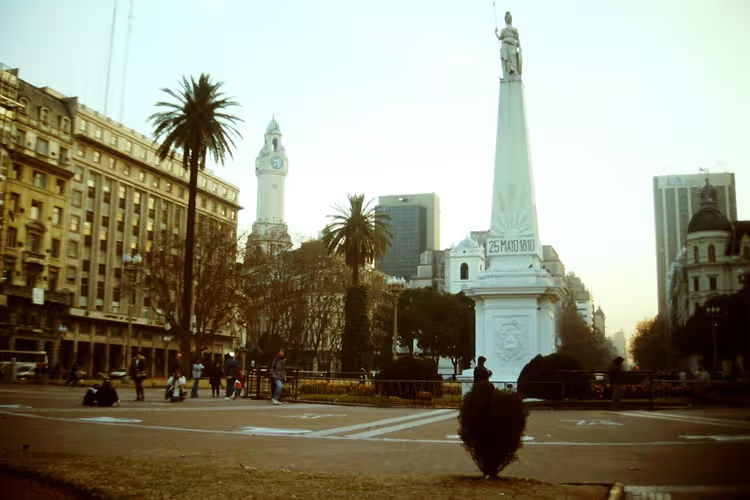
Next, head for the center of the square. The Pirámide de Mayo is considered the city's oldest monument, erected for the first anniversary of the May Revolution. For Argentines, the pyramid became the starting point of the city's history. Celebrations, rallies, and concerts take place nearby. Take photos in the morning: the square is almost empty, and the light falls on the Cabildo's facade.
 © bullit · CC BYPhoto: bullit, CC BY (https://creativecommons.org/licenses/by/3.0), Wikimedia Commons
Metropolitan Cathedral
The next building is easy to mistake for a city theater. Twelve columns and a pediment make the Metropolitan Cathedral look like an ancient temple. Inside it's quieter than on the street: a mosaic floor, a gilded altar, and the tomb of General José de San Martín, the liberator of South America. Go in between services; sometimes the doors are closed during mass.
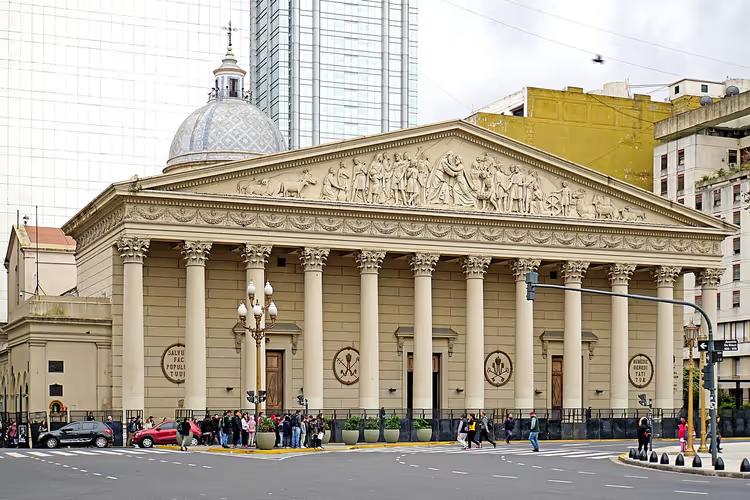 © Dennis G. Jarvis · CC BY-SAPhoto: Dennis G. Jarvis, CC BY-SA (https://creativecommons.org/licenses/by-sa/2.0), Wikimedia Commons
Cabildo
The Cabildo, or town hall, stands to the side of the square. The city council once met here; now it houses a museum. The exhibition is small and not the most engaging, but admission is free, and the courtyard is a pleasant place to rest in the shade. To the left of the town hall stands a building many mistake for a Parisian one: it was designed by Italian and French architects.
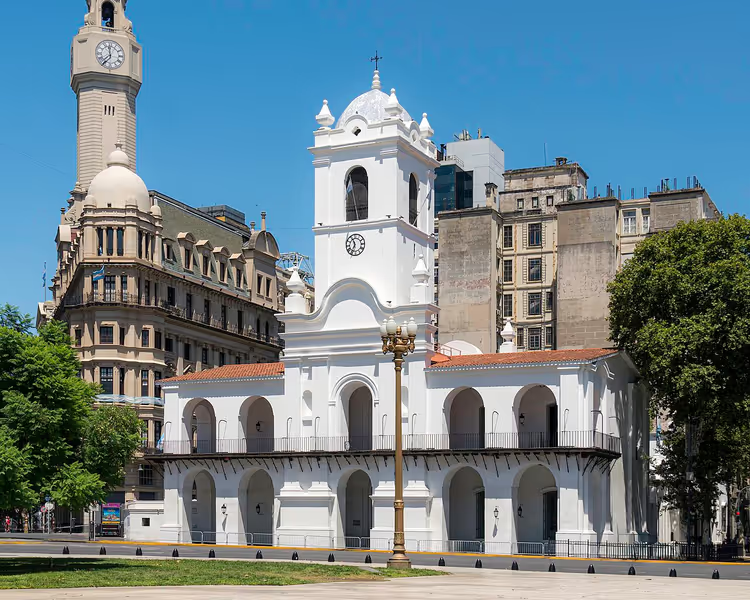 © Fernando · CC BY-SAPhoto: Fernando, CC BY-SA (https://creativecommons.org/licenses/by-sa/4.0), Wikimedia Commons
Nearby, check out the Ministry of Defense building of Argentina and the Basilica of Nuestra Señora de la Merced. This is also where the district of banks and old mansions begins, a pleasant area for a walk.
Puente de la Mujer
After the square, stroll down to the water, to the Puerto Madero district. Puente de la Mujer (Women's Bridge) was designed by Santiago Calatrava. The white mast and suspended section rotate to let boats pass.
The shape was inspired by a couple dancing tango, and the bridge got its name from the women's names of the surrounding streets. Come at sunset: the waterfront lights up, and you will get the best shots. The catch: it gets windy here in the evening, so a jacket is a good idea.
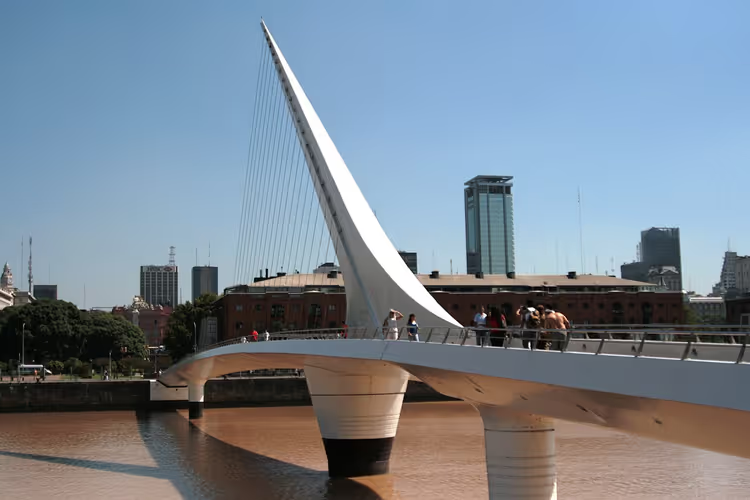 © Carlos Adampol Galindo · CC BY-SAPhoto: Carlos Adampol Galindo, CC BY-SA (https://creativecommons.org/licenses/by-sa/2.0), Wikimedia Commons
Kirchner Cultural Centre
The Kirchner Cultural Centre occupies the old post office building and is considered the largest cultural center in South America. The program changes every week: exhibitions, concerts, lectures. Stop in even for half an hour to see the interiors and the dome. It is a ten-minute walk from Plaza de Mayo.
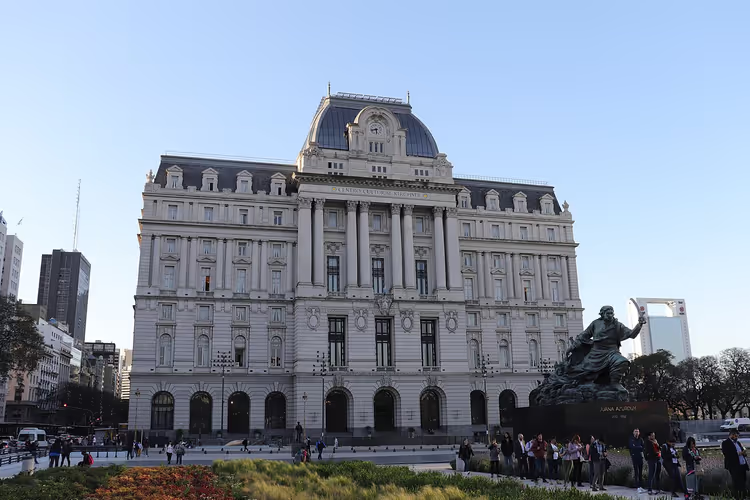 © Andrzej Otrębski · CC BY-SAPhoto: Andrzej Otrębski, CC BY-SA (https://creativecommons.org/licenses/by-sa/4.0), Wikimedia Commons
Plaza de la República and the Obelisk
Further on, the route heads to Plaza de la República, where the obelisk stands. It was erected for the four hundredth anniversary of the city's founding. Today the square gathers sports fans and tourists, and it also hosts the city's main celebrations. There is almost no shade, so see the obelisk in the morning or after sunset, when the lighting comes on.
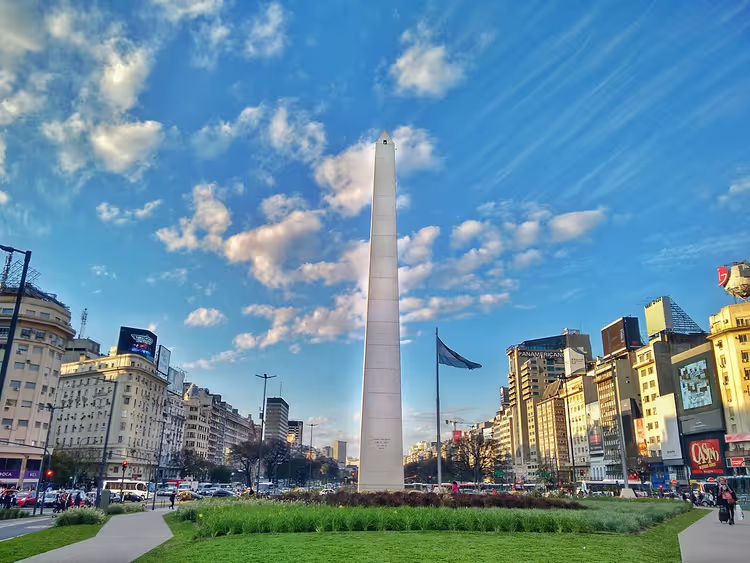 © Sebastianalmaraz · CC BY-SAPhoto: Sebastianalmaraz, CC BY-SA (https://creativecommons.org/licenses/by-sa/4.0), Wikimedia Commons
Recoleta neighborhood and cemetery
Recoleta is considered the most prestigious neighborhood in the city: boutiques, embassies, expensive homes. The contrasts are immediately visible. Next to the shop windows you may encounter people sleeping on the street, and in the evening it is better to keep your phone in your pocket here. The neighborhood's main attraction hides behind a high wall with a colonnade.
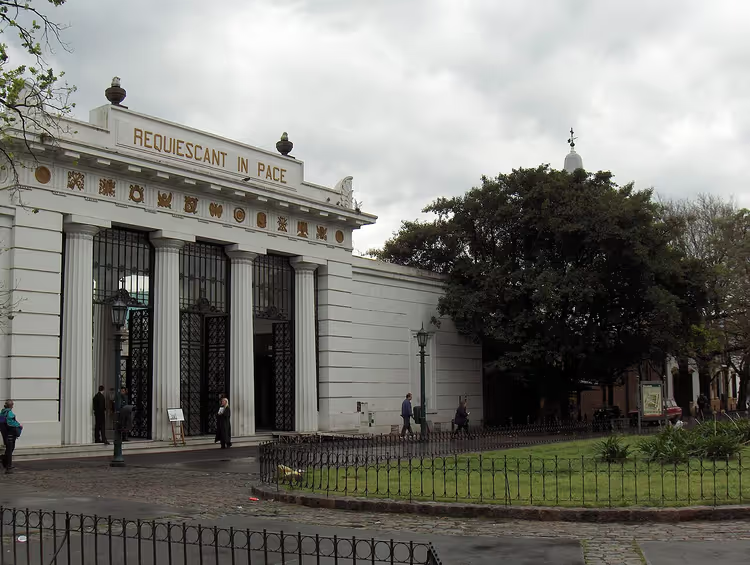 © Sking · CC BY-SAPhoto: Sking, CC BY-SA (http://creativecommons.org/licenses/by-sa/3.0/), Wikimedia Commons
Recoleta Cemetery opened in the early 19th century and over time turned into an open-air museum. More than 200 notable Argentines are buried here, and 90 mausoleums have been declared national monuments. Tourist visits run daily from 9:00 to 17:00, and free guided tours start every hour: on weekdays from 10:00 to 16:00, on weekends and holidays from 9:00 to 16:00. Foreign visitors pay an entrance fee, locals enter free. The most visited mausoleum belongs to Eva Duarte de Perón (as of 09/2026, official city website).
Then walk through the cemetery itself on foot. The mausoleums look like small palaces: in some places a staircase leads deep underground, in others coffins stand at ground level. There are so many details that you can easily spend a couple of hours here. Take your time and peek into the side lanes.
From Plaza de Mayo you can walk to the cemetery in about forty minutes (on the map). Along the way you will see the Parisian part of Buenos Aires: wide boulevards, mansions, and shady bars for a break.
Accommodation in Recoleta is more expensive than in the center, but in the evening it is quiet and green here. Hotels in Recoleta on Trip.com are easy to compare by price and location.
Tours and tickets in Buenos Aires
Guided tours, skip-the-line tickets and activities — most offers can be cancelled free of charge.
See offers on GetYourGuideThe widget loads once you give your consent.
Reserva ecológica costanera sur park
Set aside a separate day for Reserva Ecológica Costanera Sur. The nature reserve stretches along the Río de la Plata and covers about 350 hectares. It is open Tuesday through Sunday and on holidays: in summer from 8:00 to 19:00, in winter from 8:00 to 18:00. The park is closed on Mondays, as well as in strong wind or rain (as of 09/2026, official city website).
Swimming here is not a good idea: the water is dirty. Instead, you will find trails and a picnic by the river.
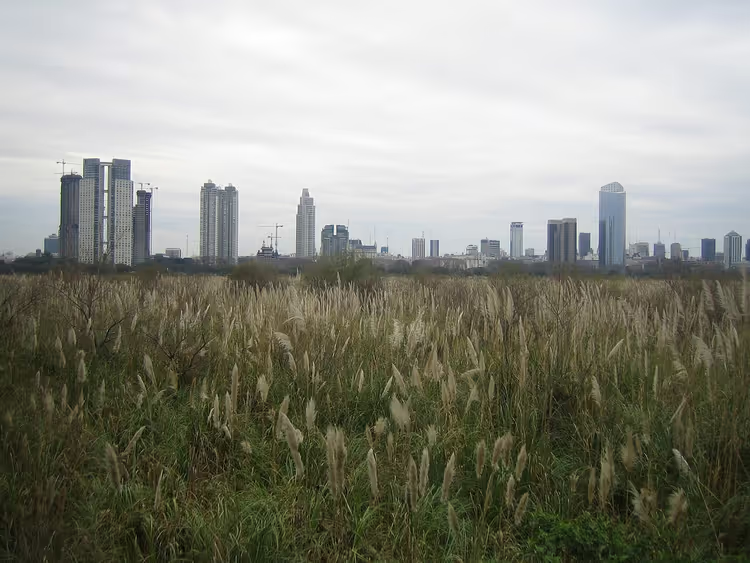
Admission is free. Bring water and sunscreen: there is not enough shade everywhere.
Tango show
If you want to see tango without spending money, head to the city center in the evening. Street couples dance for free, you just follow the sound of music and find yourself in the heart of Argentine culture. For a more refined evening, book an organized show with dinner. Guests are usually picked up from their hotel, brought to the venue, and served an appetizer, steak, dessert, and a bottle of wine.
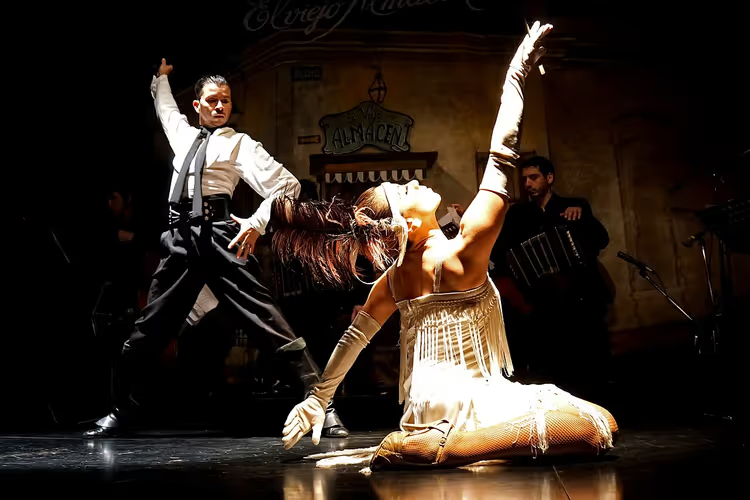 © Dennis G. Jarvis · CC BY-SAPhoto: Dennis G. Jarvis, CC BY-SA (https://creativecommons.org/licenses/by-sa/2.0), Wikimedia Commons
One of the city's oldest venues, El Viejo Almacén, has been operating since 1969 (as of 09/2026, official website). The evening program is similar to other venues: a live orchestra, a pair of dancers, and a singer. Prices depend on the seat category and menu, and options are easy to compare on the tango show tickets page. Book in advance: during high season, the best tables sell out several days ahead.
Galerías Pacífico
Almost every tourist sets aside time for shopping, and Buenos Aires has a museum-level place for it. Galerías Pacífico stands on the corner of Florida Street and Avenida Córdoba. The project was designed in the late 19th century, inspired by Italian galleries. Frescoes have been preserved under the dome, so people come here both for shopping and for photos.
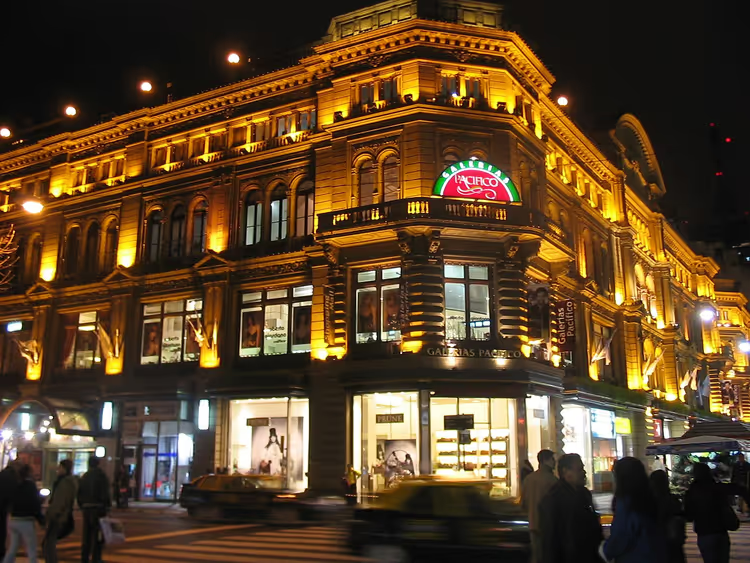 © Rodrigo Galindez from Córdoba, Argentina · CC BYPhoto: Rodrigo Galindez from Córdoba, Argentina, CC BY (https://creativecommons.org/licenses/by/2.0), Wikimedia Commons
The gallery also has a dark chapter. During the dictatorship, the First Army Corps held prisoners here, and traces of torture were only discovered during filming at the end of the last century. Today, stores of well-known brands operate inside. Come at opening time: by midday, the halls are crowded.
Practical tips: transport, money, safety
The metro, buses, and commuter trains only accept the contactless SUBE card. Uber and Cabify work, but during rush hour the metro is faster.
Cash comes in handy at markets and small cafes; large stores accept cards. Exchange rates at currency exchange offices and ATMs differ, so compare before exchanging.
For safety, stick to tourist streets and don't carry your camera in plain sight. Keep your phone in your pocket and hold your bag in front of you. In the evening, choose well-lit streets and stay on the main avenues.
The weather changes quickly: bring sunscreen, a light jacket, and an umbrella.
How to get from the airport
International flights arrive at Ezeiza, domestic flights at Aeroparque Jorge Newbery. The trip from Ezeiza to the center takes about an hour without traffic. Take a taxi from the official counter in the arrivals hall: private drivers will offer you a ride at the exit. At night, it's safer to book a transfer in advance; the driver waits with a sign. Book a transfer from Ezeiza before your trip, and you'll know the price in advance.
One-week itinerary
Getting to know the city takes a week. Below is a plan by neighborhood, without moving around or rushing.
- Day one: Plaza de Mayo, Casa Rosada, Cabildo, and the waterfront near Puente de la Mujer.
- Day two: Recoleta neighborhood and Recoleta Cemetery.
- Day three: the pools at Pileta Parque Norte, where you can swim instead of the dirty bay. You can rent loungers here, and there are food and drink kiosks.
- Day four: Reserva Ecológica Costanera Sur park and the shore of the Río de la Plata.
- Day five: an evening tango show with dinner.
- Day six: the atmospheric streets of the center and Galerías Pacífico.
- Day seven: shopping and the Kirchner Cultural Centre.
If you have more time, stretch the plan: the city has plenty of parks, museums, and theaters. Add one new area each day and keep your evenings free.
⁉️🤔 Frequently asked questions
How many days do you need for Buenos Aires?
A week is enough for the main sights. In seven days you can cover Plaza de Mayo and the historic center, get to Recoleta Cemetery, walk around Reserva Ecológica, and go to a tango show. If you want to add museums and outlying areas, plan for ten days or more.
Can you swim in Buenos Aires?
Not in the bay; for swimming there are the pools at Pileta Parque Norte. The city sits on the Río de la Plata bay, and the Atlantic Ocean is almost three hundred kilometers away (on the map). The water in the bay is dirty, so there's no beach vacation here. But the Reserva Ecológica nature reserve has trails and picnic spots by the river.
How much does entry to Recoleta Cemetery cost?
For foreign tourists the ticket is paid; locals enter for free. Guided tours cost nothing and start every hour from the main entrance. Check the current price and schedule on the city's official website before your trip; the ticket office sometimes closes earlier than the cemetery.
When is the best time to visit Buenos Aires?
The most comfortable time is local spring and fall: mild temperatures and fewer rainy days. In summer it's hot and humid here, and in winter it's cool and overcast. An umbrella is useful in any season; the weather in the city changes within a single day.
How do you pay for transport in the city?
Buy a SUBE card at a kiosk or metro station and top it up with cash or a card. Buses don't accept cash, so everyone needs the card. From Ezeiza airport, it's more convenient to take a pre-booked transfer, especially if you arrive at night.
Where should you stay in Buenos Aires?
The center is convenient for the first days; all the main sights are nearby and you can walk. Recoleta suits those who want a quiet, upscale neighborhood with boulevards. Palermo is chosen for its restaurants and nightlife, and from there it's easy to get anywhere by metro.
In short: what's worth booking
Buenos Aires is best explored by neighborhood, without rushing or moving around. If you have a week, stay in the center or in Recoleta and stick to the plan above. On the fifth evening, book a tango show with dinner, and leave the last day for shopping at Galerías Pacífico. If you're coming for just a couple of days, limit yourself to Plaza de Mayo, Puente de la Mujer, and Recoleta Cemetery. Compare hotels within your budget on Trip.com, and look for guided tours on GetYourGuide.

A small editorial team writing guides for independent travel. We travel ourselves, but we haven’t been everywhere, so we check prices, opening hours and how to get there against official sources.